By Michael Johnson

The quirky mind of composer Erik Satie continues to inspire, amuse and annoy us 100 years after his death, and musicians still cannot quite decide what to make of him. For sure, they can’t ignore him, if only because his monumental Vexations is returning from obscurity in lengthy performances and recordings by well-known keyboard artists in Europe, the United States and Asia.

Igor Levit gave pianophiles a rare musical treat at the Southbank Centre in April 2025, leaving the hardy spectators in the audience mentally exhausted after 840 repeats of this one-page bagatelle. He took four or five short “loo breaks”, but kept himself going onstage with bottled water and a bowl of grapes. (He had previously livestreamed the work from the B-sharp studio in Berlin during the Covid-19 pandemic in 2020 in what he described as “a silent scream” to highlight the plight of artists hit by lockdowns.)

Igor Levit performing Vexations during the Covid pandemic in 2020

Levit kept his bearings during his Southbank centre performance by showing up with a bundle of photocopies of the score, discarding one at a time as he plowed through the piece. By the end, the stage floor was covered with 840 scattered copies.
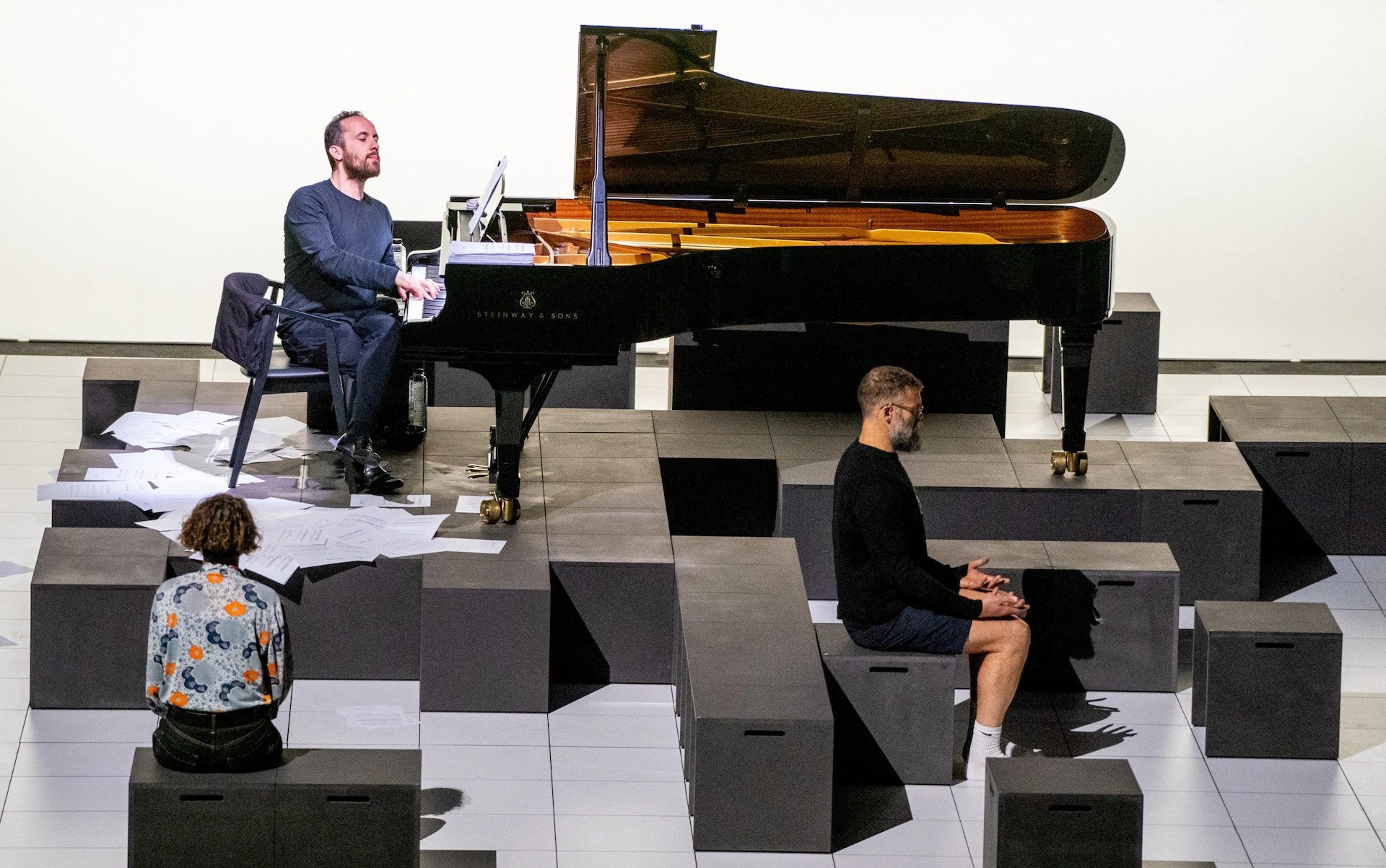
Igor Levit performing Vexations at the Southbank Centre Credit: Pete Woodhead

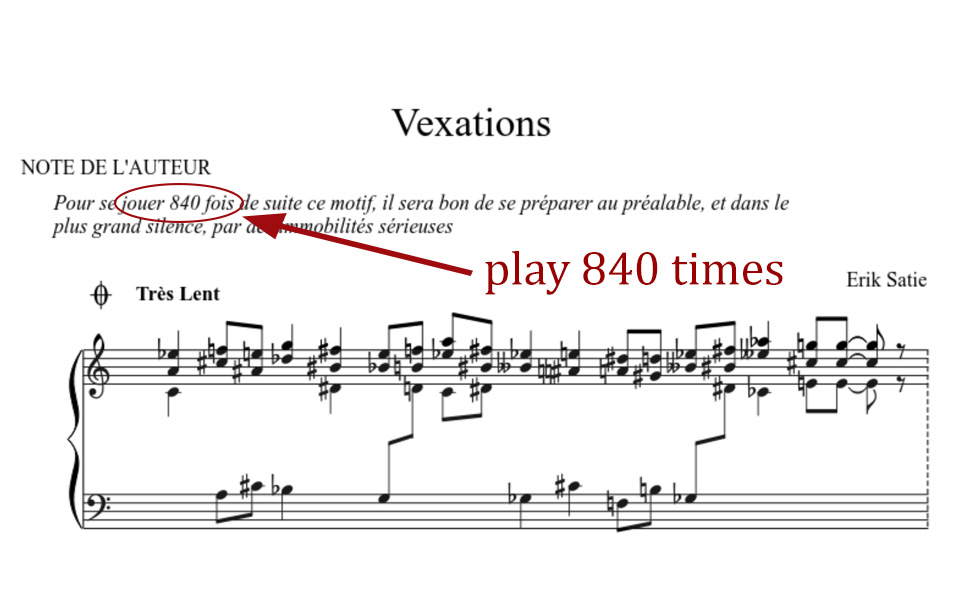
Here is the haunting melody Satie created :

Wrote one spectator: “ I was at Queen Elizabeth Hall just to witness his performance. It was so, so, so intense!”

A couple of years earlier, the young Italian pianist Alessandro Deljavan had sat in the studios of record company OnClassical in Pove del Grappa, filling 12 CDs in 14 hours 28 minutes. He recalled the “intense experience” for me recently. “I felt almost possessed. My mind drifted between shadowy, undefined figures and total emptiness.”

Other pianists also remember hallucinating, and one reported seeing what looked like “animals and things” peering at him between the notes on the sheet music.

One commentator on YouTube ended up deeply conflicted: “This is actually an empty song. Nothing makes sense … Illogical. Sad. Devoid of feeling. I loved it.”

An English critic found the best poetic language. It is a piece of “meandering melancholy,” he wrote. Others report a “spiritual transcendence” evolving from the strange world Satie had created.

OnClassical founder and pianist Alessandro Simonetto is in the process of completing the most extensive project ever devoted to Satie’s complete piano works. Progressively appearing online, he says, it has already reached 30 million streams on Spotify.

Simonetto, a Satie enthusiast of note, calls Vexations “arguably the most extreme and elusive work in the entire history of music”. Living and working out of Pove del Grappa in the province of Vicence, he may eventually bring out a boxed set covering Satie’s complete piano works including at least the one page sample of Vexations. At the moment the project exists only digitally.

Simonetto presided at the marathon recording session with Deljavan, recalling for me that the experience was like an Edgar Allen Poe horror story, with the“ceiling slowly lowering on the pianist’s head”.

Yet the unlikely attraction of this longest piece in piano history refuses to die. More than 20 CDs have appeared in the past few years offering Vexations in part or in full, straight or modified versions. Two prominent French pianists, Jean Marc Luisada and Jean Yves Thibaudet have performed the piece, with all repeats.

Most reviewers have judged the full Vexations experience an endurance test, a prank or a stunt that Satie just tossed off without a second thought. He was known in the creative ferment in 1020s Paris for his musical jokes. He seems to have slid it into a drawer and never heard it played.
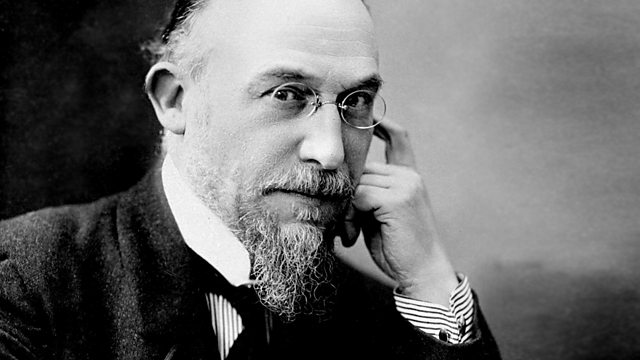
Erik Satie

It’s the mental strain of non-stop repetition that leaves today’s pianists limp as a wet rag, except for Deljavan and the remarkable Levit. Indeed, Satie advised all pianists who try the full version to devote 20 minutes of silent meditation before starting. This became a feature of many modern performances.

But about 40 years ago English pianist Peter Evans played Vexations non-stop for 15 hours, suddenly quitting at repeat No. 593, and hurriedly left the stage without explanation. He later wrote that “people who play it do so at their own great peril”. The performance was completed by another English pianist, Linda Wilson. She later wrote that with each iteration Evans felt his “mind wearing away”. Observers wrote that when he left the stage he was “in a daze”. He recalled that his mind was filling with “evil thoughts”.

A notorious and frustrating episode occurred at Leeds College of Music in 1971 when another team of pianists managed to keep going for 16 hours and 30 minutes, ending at midnight only because school regulations closed the building. One of the team players, Barbara Winrow, explained to a journalist the “real sense of frustration which we felt, and the players’ remarkable reluctance to stop” before they reached the 840 mandated repeats.

A memorable milestone was reached in 1974 in Budapest when a team of pianists played in rotation for 23 hours. The team included at least two young players who went on prominent careers and are still performing today, Zoltan Kocsis and Andras Schiff.

Tracing the chequered past of this work is a major detective job. Musicologists return to the mysterious origins periodically. The manuscript was not played in full until more than 20 years after his death. Who acquired it, when, where, how or why did it change hands? Lawyers today call it a task of establishing the “chain of provenance”.

After gathering dust for years, it came back to life in the hands of John Cage who rescued it and encouraged others to participate in rotations. He first published the one-page treatment in the magazine Contrepoints in 1949. He was the first to interpret Satie’s written instructions as meaning the 840 repeats must be played without interruption – either solo or in rotating teams of pianists.
Cage organized the first public performance of the full version with more than a dozen pianists in rotation. His spectacle in 1963 in New York put his team through 18 hours and 40 minutes of continuous repetition.

John Cage

But can it be played from memory? A vide on clip on Youtube shows Cage declaring that he was never able to memorize it. Other pianists have found it so contrary to accepted compositional norms that they could not absorb it either.

The late English music scholar Richard Toop performed the piece in its entirety several times but took care to approach each run-through with a fresh eye. But he too had a memory block. “Even after a performance,” he wrote, “I was unable to play more than a few beats from memory.”

Tracing the people who had possession of the original score, passing it from hand to hand, is impossible today due to the passage of time and the individuals involved. It is said to be with the Satie Archives in Honfleur, in the Calvados Department three hours northwest of Paris.

Who or what inspired you to take up the guitar and pursue a career in music?

I always knew I would have a career in music. I can’t remember otherwise. I didn’t know exactly what that meant, but I knew I would pursue music. Music in life and life in music has always been in me regardless of outside hurdles.

I started on electric guitar. In high school my curiosity was piqued watching the Eagles on MTV Unplugged play ‘Hotel California’ on nylon strung guitars and learning that Randy Rhodes of Ozzy Ozbourne played classical guitar. Around the same time I saw a video of Andrés Segovia performing Albéniz during my high school Spanish class, so with all of that I pretty much dropped my pick and started studying classical music. It took a bit of time for me to save up enough money to buy a nylon string guitar, but I found a teacher and started practicing. Nobody outside of my teacher played the classical/Spanish guitar and most didn’t know what it was.

Who or what have been the most important influences on your musical life and career?

During and after conservatory I read a lot about the musicians I looked up to: Julian Bream, Andrés Segovia, Sabicas (flamenco), Glenn Gould, Leonard Bernstein and numerous composers: Erik Satie, Heitor Villa-Lobos, George Gershwin, Manuel De Falla, John Cage, Toru Takemitsu, Serge Prokofiev, Astor Piazzolla and so many more.

I also found books on music learning and being an artist like Effortless Mastery by Kenny Werner, With Your Own Two Hands by Seymour Bernstein, Free Play by Stephen Nachmanovitch, and Letters to a Young Poet by Rilke to be extremely helpful during the many challenging times.

I was very inspired by musicians who created their own repertoire that reflected their personal artistic vision and the times in which they lived. It helped that they had such strong personalities and technical facilities that the repertoire became theirs. I am not a composer, but like them I too felt the urge to assist in creation, so I set out to collaborate with composers and hopefully inspire new works. The collection of New Dances by David Starobin (Bridge Records) opened my eyes and inspired me to do my own commissioning project: the New Lullaby Project.

If a composer had already passed, then I looked at how I could explore their music through arrangements. I have done this most recently with the music of John Cage.

Lastly, I think the fact that I have lived without much of a safety net since college has made me commit to my endeavours fully. They can’t be just novelties or something to impress others, but successful endeavours on both the artistic and business front.

What have been the greatest challenges of your career so far?

I had a lot of health issues during my time at conservatory. Some due to sports injuries growing up, and others due to growing up. I deal with them each day and they have less of a hold on me.

Regarding my professional career as a performer and teacher, I think my naïveté about the classical music world/business was hard to swallow. I don’t come from a musical or artistic family, so I had no idea that connections mattered or that established artists could try to sabotage another’s career. It was really eye-opening and also disappointing in many ways to see behind the curtain. Thankfully, I have an amazing team of support with my wife, so I continue to make my way regardless.

Which performance/recordings are you most proud of?

Oh that is so hard; I’m proud of them all. The four solo discs are quite diverse with each representing an artistic place in my life of goals, beliefs and abilities. I take great pride in that each contains a premiere.

‘Tracing a wheel on water’ (2006, Music Life Program) – my first solo endeavour and most conservative, made when I thought competitions and pleasing critics was the goal. Four premieres by Daniel Pinkham, Lior Navok and Kevin Siegfried.

‘New Lullaby’ (2010 Six String Sound) – the first recording where I really pushed the envelope with an album of all contemporary commissions by “non-famous composers” as one critic wrote. The classical guitar is known for putting people to sleep, and contemporary music is completely disconnected from normal life, so I see this album as a double-dog dare to listeners. I’m right.

‘The Legend of Hagoromo’ (2015 Stone Records) – the most technically virtuosic album. It was the first guitar album on the UK label Stone Records and I was the first American artist on the label. Atypically, it has a unifying theme of Japan – yes the guitar can do more than play Spanish repertoire(!) – and includes three commissions by Ken Ueno, Martin Schreiner and Kota Nakamura, along with only the second commercial recording of the insane title track by Keigo Fujii.

‘John. Cage. Guitar.’ (2018 Stone Records) – my latest recording released on November 2nd, 2018 by Stone Records, but more importantly it is truly home-grown and a departure for me on many levels. 1) It does not include a commission, but I made all of the arrangements myself, which are published by Edition Peters (a first for the John Cage estate & classical guitar!); 2) The music surveys a single composer, and 3) includes two collaborations with other artists: violinist Sharan Leventhal (Keplar Qt) and guitarist Adam Levin.

Regarding performances, my multiple solo and chamber concerts in St. Petersburg and Moscow were life-changing. My main teacher, Dmitry Goryachev is from St Petersburg, and I heard so much about Russian audiences that I was quite intimidated by them, but I performed in the country five times in five years (2011-2016) and each time it was huge for my confidence as a player and creator. My first concert in Moscow was a 2.5-hour concert with multiple encores, following a night of trying to sleep a floor above a nightclub!

An all New Lullaby concert for 10-14 year olds at a Moscow area arts school was very special with the director telling me how in shock he was that students loved the works including 12-tone, microtonal and minimalist works. Only in Russia and Germany have I had the audience to clap together as one. These experiences stay close to my heart.

Which particular works do you think you play best?

“Best” is a big word! I think my performance of Keigo Fujii’s ‘Legend of Hagoromo’ and John Cage’s ‘In a Landscape’ are unique and unmatched, at least for now, but what does that mean? I’d love to hear others perform them, and hopefully they inspire me to revisit my own interpretations.

I perform a lot of contemporary music and people are surprised that I am able to keep audiences engaged and awake with such difficult music. I’ve brought tears to eyes performing Romantic and Spanish works, as well as Bach, so if eliciting such emotion is the measure then there we go.

I have a very hard time playing the same music or style of music for a long period of time, so I think I’m quite good at varying my repertoire and presenting it to audiences in a way that makes them part of the creation.

How do you make your repertoire choices from season to season?

Much of it depends what gets booked. Of course a Bach series will feature Bach with music related to him, a performance of my Spanish music and dance ensemble ¡Con Fuego! will feature Spanish music, and a contemporary series will feature contemporary music. On tour I will often have a chamber concert or song recital mixed into a series of solo shows. I try to work with each venue to find the right theme for them.

When I have free choice of the program I try to balance a few standards into my programs, as guitar audiences are fairly conservative, alongside more challenging works for a new listening experience. Now that I have the new Cage release and publications I will include one or two pieces from it whenever possible.

Do you have a favourite concert venue to perform in and why?

Jordan Hall in Boston is very special to me because I sat in it repeatedly as a student and heard my idols dance their music through the space. The sound is luscious!

Salon dei Giganti in Palazzo Te, Mantova, Italy – Such inspiration all around me through the mosaics made for easy music making, and the audience gathered at my feet made for an overwhelming experience.

El Palacio de Linares in Madrid, Spain holds a special place in my heart as my first professional performance in Spain.

Yelegin Palace in Saint Petersburg, Russia is amazing!

Who are your favourite musicians?

I have so many! Most of the people I find inspiration from now are composers: I love experiencing their creations and hearing how they manipulate these black dots on paper to be so amazing and full of life.

I love players and ensembles that are not afraid of exploring new sounds, but are also able to make standards sound fresh and exciting. I love virtuosity, but only if it is multi-dimensional in personality, technique, artistry, and presentation.

There are musicians who have wonderful presentation and repertoire ideas, but not amazing technique, whom I adore, and there are players I only listen to for their technique, usually in very short bursts.

What is your most memorable concert experience?

Easy: Ali Akabar Kahn in Jordan Hall in the late 90s. Blew my mind that such a musician could exist. Fist half was just under 90min, and it felt like 25! A true magician.

As a musician, what is your definition of success?

On a daily scale: Having music in my life each day with good health, family, friends, and great food.

On a yearly scale:

A project completed. A new arrangement published. New works commissioned and premiered. Higher pay scale.

On a life scale:

Recordings devoted to Bach, Mussorgsky, contemporary composers, regular national and international tours.

What do you consider to be the most important ideas and concepts to impart to aspiring musicians?

Copy to learn about others and yourself, but in the end you must be yourself. A career as a musician is possible if you are consistent, patient and creative.

Take care of your health all of the time. We cannot be messengers of sound if our bodies are injured and worn out.

Where would you like to be in 10 years’ time?

Performing full-time. In a castle with the time and money to maintain and enjoy it.

What is your idea of perfect happiness?

Breaking bread, sharing music, solitude with my studies, and recognition for my creations.

What is your most treasured possession?

My guitar

My relationship with my wife, though I do not posses her anymore than she possesses me.

What is your present state of mind?

Curious and positive in my goals and ambitions, which is a first.

Aaron Larget-Caplan’s latest album John. Cage. Guitar. is the first classical guitar recording dedicated to the music of John Cage, and features seven early and mid-career compositions, dating from 1933 through 1950 for solo guitar, violin and guitar, and prepared guitar duo. Now available on the Stone Records Ltd label


alcguitar.com

Guest post by Michael Johnson

Out of nowhere this morning, the ghost of John Cage and his creative genius visited me at a supermarket in Bordeaux, France. I was so glad to be back in touch with the old goat. It had been a while.

But along with a thousand other shoppers jostling for Yuletide goodies, I was being hammered by “Christmas Music”, a Muzak track of Jingle Bells and Silent Night (in English) as I emptied my wallet to bring champagne and foie gras to my home.

Suddenly I heard John whisper in my ear, “Tell them to play 4’33”.” Aha, I thought, that’s the perfect adaptation of a contemporary classic with the trashy earworms we must abide year after year after year. Is there any tune as trite as “Silent Night”? “Adeste Fidelis” and — oh no — “Little Drummer Boy” ! Are there any songs as perfect for the fine hand of John Cage? Silence was his byword, his bible, his autobiography.

I have trotted around the globe for most of my life, finally landing in Bordeaux, which seemed a safe haven from tacky popular culture and seasonal music-making. But it was another disappointment a few years ago to come face-to-face with musical globalization – American tastelessness transported into the heart of Southwest France, the home of Ravel, the birthplace of the Labèque sisters piano duo, the cradle of great writing and great thinking, Mauriac, Montaigne, Montesquieu. The home of soprano Natalie Dessaye, conductor Paul Daniel, and for many years, the adopted city of Roberto Benzi.

Hélas (as the French say), the greatness of the past is being swamped by the dumber tide of the present. Those of us who yearn for a Bach cantata (why not?) cannot even switch off the trash like a smart phone, the other plague of our time. Trivality is in the air, everywhere.

It’s hard to escape the earworm at this time of year, with shopping malls and public streets bombarding us. The less you like these tired tunes, the longer they hang around in the memory cells, circling the mind like fruit flies over an orange.

The late neurologist Oliver Sacks wrote in “Musicophilia” that these awful tunes have subverted the brain, forcing it to fire repetitively. . . “as may happen with a tic or a seizure.”

Sacks quotes a patient recalling a bout of earworms. The song “Love and Marriage” took possession of the man for ten days, leading him to desperate efforts to shut it off: “I jumped up and down. I counted to a hundred. I splashed water on my face. I tried talking loudly to myself, plugging my ears.” It finally subsided, only to return when he told Sacks about it.

Funny. That just happened to me this morning while shopping.


Michael Johnson is a music critic with particular interest in piano. He worked as a reporter and editor in New York, Moscow, Paris and London over his writing career. He is the author of five books and divides his time between Boston and Bordeaux.

Illustration by Michael Johnson

A minute’s silence can feel like a long time when one is required to stop and focus on that time passing – as at 11am on Remembrance Sunday, for example. John Cage’s most famous and most controversial composition, 4’33”, at just over four-and-a-half-minutes, is surprisingly long when one is at a performance of it. Such is the way that this work is presented, one is required to listen, and focus on the performance just as one would any other piece of music performed in a concert.

In the last 18 months, I’ve been to three performances of Cage’s comment on what constitutes “music”, and an important example of conceptual art. The first was last summer in a performance by American pianist Adam Tendler, at which everyone in the tiny exclusive audience knew exactly what was going on (thanks in no small part to Adam’s fascinating introduction to the work – read about the performance here). The other performances have been this year, given by pianist Annie Yim as part of her MusicArt “conceptual concerts”, which combine music, words and art. Each performance has been unique, the experience determined by performer, location and audience, just as Cage intended.

Last week I attended Annie Yim’s latest MusicArt event, a Conceptual Concert in Three Acts, which drew inspiration from the creative collaboration between John Cage and American artist Robert Rauschenberg. The concert took place in a private gallery in Mayfair where Rauschenberg’s “spreads” collages were on display (full review here). Cage’s work was the final act, the finale. At this performance, I felt I came closest to the very first performance of 4’33”, and watching the audience’s reaction was rather fascinating.


As specified by the composer, the piano lid was closed and then raised to signal the start of the work – and subsequently closed and raised to indicate the separate movements (4’33” is scored in three movements). Large mirrors sited on either side of the piano allowed us, the audience, a sense of being on stage with the performers, which created an interesting and witty suggestion of “audience participation”, and reflected our reactions back to us – something I think Cage would have thoroughly enjoyed. As the piece moved inexorably through its silent bars, the ambient sounds of the gallery, the noise of the street outside (including a rather musical motorbike starting up), the constant rumble of a vibrant big city at nighttime, and the living, breathing audience all infused the performance. The audience was not the usual concert audience – many were friends of the gallery, as far as I could ascertain – and some were distinctly unsettled or confused by this “music” which was apparently completely silent (except of course it isn’t!). Ahead of me, a woman looked around anxiously, as if seeking some kind of reassurance that all was well from her fellow audience members. On the front row, someone tapped, somewhat impatiently, their ring on a wine glass, thus creating another note to complement the motorbike. There were embarrassed titters of laughter, some sighing and coughing, quickly suppressed as befits good concert etiquette. Behind me, about 3 minutes in, someone clapped, trying to pre-empt the end of the performance, but no one else joined in and the performers adhered assiduously to Cage’s directions, the work ending when the appropriate time had elapsed and the piano lid was finally closed.

This, for me, was the best performance of 4’33” I have attended so far – because it did exactly what Cage intended and proved that the work still has the power to intrigue, amuse and provoke.

“They missed the point. There’s no such thing as silence. What they thought was silence, because they didn’t know how to listen, was full of accidental sounds. You could hear the wind stirring outside during the first movement. During the second, raindrops began pattering the roof, and during the third the people themselves made all kinds of interesting sounds as they talked or walked out.”
– John Cage, speaking about the premiere of 4’33”

So why is 4’33” so provocative? When John Cage conceived it, in the years immediately after the Second World War, he was attempting to remove both composer and artists from the process of creation. Instead, by asking the musicians specifically not to play, Cage allows us, the audience, to create our own “music”, entirely randomly and uniquely, by listening to the noises around us during four minutes and thirty-three seconds of “silence”, and removing any pre-conceptions or pre-learned ideas we may have about what music is and how it should be presented, perceived and received.

Presenting the work in a gallery full of Rauschenberg’s art was also significant for it was Rauschenberg’s white paintings – seemingly blank canvases simply covered with white paint – which initially inspired Cage to create 4’33” and which, like Cage’s work, rely on the ambiance of the space in which they are presented to bring them to life. There are parallels with other visual artists too, including Carl André and Marina Abramovic, both of whose work explores the relationship between artist, artwork and audience.

But perhaps the most significant aspect of 4’33”, especially in our fast-paced, 24/7 21st-century world, is that it forces us to pause, to really listen, and encourages a special kind of in-the-moment focus, common to the practice of meditation.

homothetic
John Cage: Ryoanji (Galerie Thaddaeus Ropac website)