What is your first memory of the piano?

I saw and played a piano when we were visiting one of my father’s colleagues at his family home. It was a long visit, and I had time to explore: I fell in love with it at first sight and although I was around 4 years old, I remember I sat and tried to play using my fingers. I was glued, and although my parents looked a bit embarrassed I had taken over somebody’s possession, they were clearly impressed. Apparently our hostess tried to impress on my parents I should start lessons.

Who or what inspired you to start teaching?

My piano teacher in Greece, the well-known concert pianist and pedagogue D. Toufexis, a Julliard graduate and former Lateiner pupil along with concert pianist Danae Kara, both staff at The American College of Greece, inspired me to maintain a portfolio career. I loved how I could go see them perform at major venues and festivals and then have the privilege of private conversations and lessons with them.

Who were your most memorable/significant teachers?

The teacher who inspired me to become a musician was the head teacher of a large, state primary school in a well-to-do leafy suburb of Athens. He was himself a frustrated violinist with real passion for music education. His class produced three concert pianists (me included), one musical theatre singer-actress, and a musicologist. Yet the school was an ordinary non-selective state one.

Who or what are the most important influences on your teaching?

I finished my studies at the conservatoire in Greece, yet I knew that I could not trust myself to teach. When I came back from my Master of Music studies in the US at West Chester University of Pennsylvania (1994), I felt I could tackle anything: intensive courses in piano pedagogy were compulsory and included teaching practicums under supervision. At the end of my studies, my teachers were very eager to impress on me the need for certain books which became my bibles, especially the Denes Agay books on Teaching Piano, and were packed in my already impossibly heavy suitcases. Greece at the time felt quite cut off in many ways, and I still remember sending and receiving letters to the US which took about a couple of months: this was the era before Internet and Amazon!

Most memorable/significant teaching experiences?

Despite having taught at all levels for at least 20 years, I still remember being 10 or 11 and helping my friend practice her sonatina. After about 20 minutes her mum couldn’t help herself anymore and stormed in with my mum to stop me from what she thought was merely distracting my friend. My friend whispered “thank you”, as I had helped her to repeat sections rather than play through mindlessly. Years after, when we met again, the first thing she remembered was how grateful she was for helping her practice that one time. I’m sure her mum is still not convinced, but I know it was the earliest confirmation that I could actually be of real help, and is certainly my fondest memory.

What are the most exciting/challenging aspects of teaching adults?

I’ve been teaching adults almost from the beginning of my career. Challenges, except for time constraints, include self-imposed limitations, mainly arising from clashes with self-image, and definitions of achievement and prospects. That’s why my best adult student to date is a hard working dad of three who is totally committed to his lessons because he sees it as personal growth.

What do you expect from your students?

A certain level of commitment: I can inspire, demonstrate and explain, but I can’t force them to practice. There needs to be an initial interest, and in the case of younger students, there has to be parental support.

What are your views on exams, festivals and competitions?

Exams and festivals can be great motivators while providing benchmarks of attainment. Competitions are both exciting and a necessary evil: as long as there are transparent selection processes they have a place in one’s development. I think it is important for a musician to enter any form of competition trying to achieve playing their personal best (rather than focusing on being better than the other competitors). At the same time it is important to come into contact with one’s peers. What I do not like is the message that one has to comply with what’s expected – and certainly there are pianists who are unhappy at the suggestion of modifying their affinities for certain repertoire. I also do not condone excessive emphasis on performativity at younger ages: young children and teenagers should not be criticised for being their awkward selves on stage, especially if this does not interfere with projecting the music.

What do you consider to be the most important concepts to impart to beginner students, and to advanced students?

Smart practice, healthy posture-technique, and fingering, along with reading notation and counting are all concepts presented from the very first lessons and reinforced throughout the studies. Style and phrasing, along with pedalling, however, take a lot of exposure to repertoire and are more gradually introduced.

What are your thoughts on the link between performance and teaching?

My preference is for teachers who teach by example, as I found it most exciting to watch my own teachers perform. I am therefore a performer who teaches pupils how to perform on the piano, rather than how to play the piano. To perform is more than just pressing keys as instructed through notation: it is to communicate without the burden of words. The process of learning to perform is a complicated one of empathy with the perceived intention of the composer, and of enculturation.

Who are your favourite pianists/pianist-teachers and why?

Martha Argerich is a firm favourite for her transcendental technique, as are the Labeque sisters. I saw the Labeque sisters perform live in Greece and their communication and poise were simply amazing. From my own teachers, Dimitri Toufexis taught me a lot about projecting phrasing through physical gestures, Danae Kara stepped in as my mentor at the early stages of my career and pushed for a totality of conception in extended works. Dr. Bedford introduced me to Alexander Technique and Tai Chi to focus the mind, and my dearest Dr McHugh taught me how to control my hands and the piano keys in what she termed “slow key-depression”. Martino Tirimo and Elena Riu will always occupy a special place for being so flattering and incisive as duet coaches.


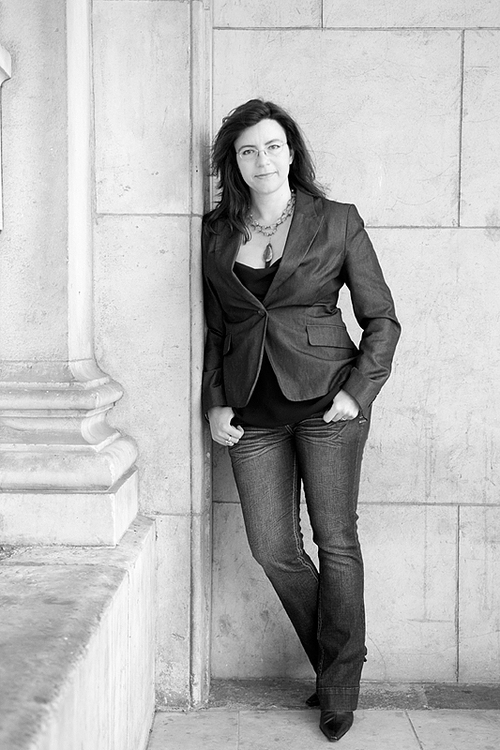
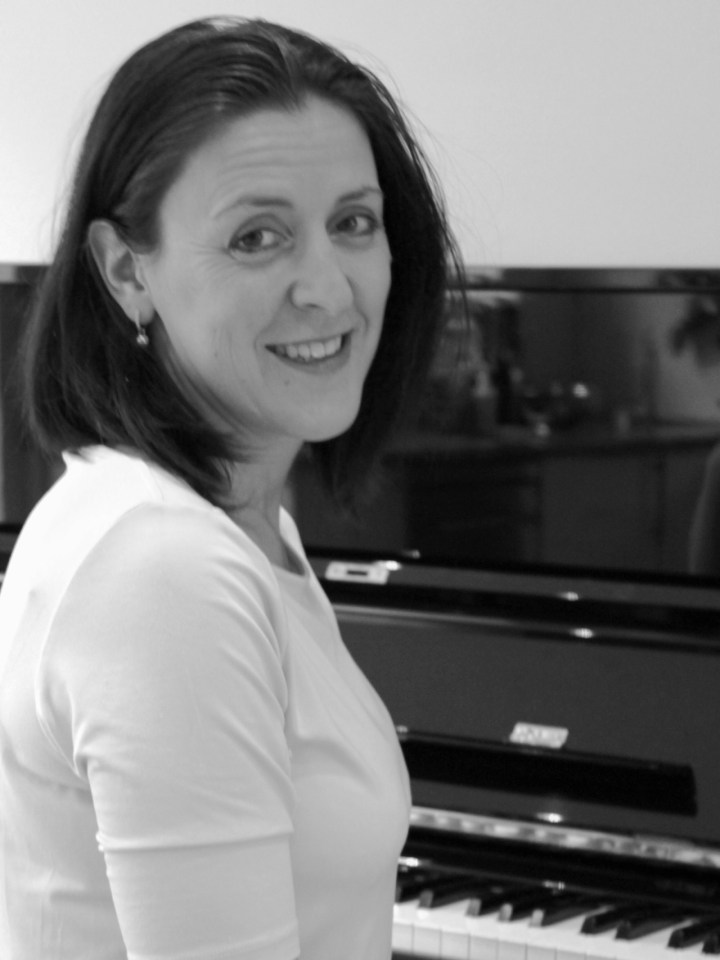
Natalie Tsaldarakis is a concert pianist and member of the Ivory Duo Piano Ensemble. Natalie has also been active as a lecturer, piano teacher and examiner since the 1990s.

In 1994 Natalie was invited to membership by the American National Music Honour Society Pi Kappa Lambda for excellence in performance and she has been the recipient of numerous awards and prizes, including first and second place winners in piano competitions in the US, and Greece (MTNA Wurlitzer Collegiate Competition, West Chester State University Concerto Competition, the Pottstown Orchestra Competition, Deree College Faculty Development Award, WCU Graduate Development Award etc.).

Since 2005 Natalie has been based in London, UK. Between 1995 and until 2005, Natalie was artist teacher in residence at the American College of Greece as well as piano professor and examiner for Greek conservatoires of music including the National Conservatory of Greece.

Natalie has performed extensively at various venues and festivals in the UK and abroad, including the Southbank Centre, St John’s Smith Square, Oxford University, St-Martin-in-the-Fields, Glasgow City Halls, Sibelius Academy, Athens Concert Hall, Fairfield Halls, Winchester Cathedral.

Natalie has recorded both solo and with the Ivory Duo Piano Ensemble for the National Greek Radio (ERA-1, ERA-3), and has appeared on Greek television, and UK’s Resonance FM 104.4. The duo’s CD “Romantic Dance Music for Piano Duet” was requested by the Archive for Greek Music and Musicians (Lilian Voudouris Library, Athens Concert Hall) and hailed as an important musical event of international standing by the Greek specialist press.

http://natalie6784.wix.com/ivoryduopiano

https://m.youtube.com/Ntsaldaraki

http://www.twitter.com/Ntsaldaraki


AndrewEales

What is your first memory of the piano?

I was seven years old. My older sister was taking lessons. I had double-pneumonia, and was recovering in bed. I remember hearing her playing and wishing I could learn too.

Who or what inspired you to start teaching?

A friend of mine was a classroom music teacher. He asked me to give lessons to one of his sixth form students, who had self-taught up to about grade six, but with major flaws in his playing. I was working for EMI Classics and commuting to London – which I hated. So I gave the student an evening lesson, and fairly instantly knew that I had found my vocation.

Who were your most memorable/significant teachers?

I was lucky to have several outstanding teachers. My first teacher was quite scary, and had a reputation for shouting at students, but having made a decision that I wanted to grow up to be a great musician I was happy to take my chances with her. In fact she was always tender and encouraging with me, although she did periodically wander off to another part of the house to shout at her husband! When I told her I liked Grieg, she said that when I grew up I would prefer Sibelius. When I said I had enjoyed hearing Bizet’s ‘Carmen’, she announced that in a few years time I would like Wagner. I think she recognised that I was musically inquisitive and deliberately goaded me, but she knew exactly what she was doing and before long my musical taste grew in many new directions. When I was eleven I won a music scholarship to boarding school, and as a parting gift she gave me a copy of ‘The Fitzwilliam Virginal Book’, an unusual present for sure. That seed lay dormant for many years, but remains one of my favourite possessions in terms of sentimental value.

Many years later I was studying for my music degree at Birmingham University. David Ponsford was assigned to teach me the harpsichord, and he had a very profound influence on me. Of all my teachers he is the one I feel most indebted to, and following on from those lessons I chose to specialise and study the Early Music course at the RCM, where I learnt with Robert Woolley.

My final piano teacher was Joseph Weingarten, the Hungarian concert pianist. He had studied with Dohnanyi at the Franz Liszt Academy in Budapest before coming to the UK in 1934. There was a clear sense that he was connected to this incredible heritage, that his teaching was authoritative, and yet he was so supportive and gently encouraging. He had a perfect balance there, which I can only attempt to emulate!

Who or what are the most important influences on your teaching?

The biggest influence is actually my love for the music itself, and all it communicates. And by that I include music from a wide range of traditions, not just classical. When I hear great music I am just inspired, and want to share it with others, so that informs my teaching from one day to the next. For me, music is an incredible journey of discovery – and my students are also on their own journey, so it’s a privilege to share that and play a part.

My wife Louise works in child and adolescent psychiatry, and it would be remiss of me to ignore the huge influence this also has on my teaching ethos. Her insight into the issues that affect the lives and mental wellbeing of children and families in contemporary society inevitably has a massive impact on my own approach to people.

Most memorable/significant teaching experiences?

Working for the local authority Music Service in schools in the 1990s was formative and very significant, forcing me to think carefully about my understanding of music education. Although a pianist, most of my work at that time was teaching electronic keyboards in a group context. The ensemble programme that I created took me down a very exciting creative route that I wouldn’t otherwise have experienced, and led to a lot of opportunities both here in the UK and in the USA.

What are the most exciting/challenging aspects of teaching adults?

Adults have more understanding of the journey they are on as musicians, and they know what music they like and what they don’t like. So that is a different type of challenge to teaching a child, who might be more open to new experiences. Because my teaching is driven by my own love for music, it’s important that the student’s interests and tastes coincide to some extent with mine. But often I have found that a student’s enthusiasm for a composer or style has fed back into my own interest, and that’s a real joy too – another discovery that feeds my enthusiasm as a teacher.

What do you expect from your students?

Respect. If a person doesn’t respect me – both as a musician and as a human being – then I can’t teach them.

What do you consider to be the most important concepts to impart to beginning students, and to advanced students?

There are the three essentials that underpin all playing: literacy, musicianship and technique. They need to be developed in tandem, and it’s the same whether a player is a beginner or more advanced. And again, the most important thing of all is to develop a proper LOVE for the music. We must be careful not to trivialise music or pretend it has to always be “fun”, but it must never be dull either.

The big enemy (as always!) is tension. I believe that the way to overcome that is to use physical movement away from the piano, and I have developed specific exercises based on Qigong forms and theory, which are proving very effective. Once a player is more relaxed, their musicality and creativity finds better freedom to be expressed.

What are your views on exams, festivals and competitions?

Exams can be great if used as a celebration of achievement, provided we don’t let them dictate the way we teach, or neglect creativity. Most of my students take selected ABRSM Grades, with positive experiences and fantastic results. I use ABRSM because I like the professionalism of their service, the positivism and consistency of the examiners, and the superb published resources.

My students do not compete in festivals. Growing up, I won virtually every competition I ever took part in, but I didn’t enjoy a single one of them. In fact they turned performing into something I dreaded, although I didn’t upset my teachers by admitting that to them at the time!

These days of course we have a much better understanding of the direct link between the public criticism of players and their performance anxiety. The welfare of our students is more important than upholding any tradition, however well intended, and as music teachers we can have a powerful role in remoulding and recasting our performance culture for the better.

What are your thoughts on the link between performance and teaching?

While we are all individuals with different strengths, I believe it is really important for performers to also teach, and for teachers to also perform.

I also believe that all musicians should try to compose and/or improvise. I see creating, performing and teaching as the three key areas of musical activity.

How do you approach the issue of performance anxiety/tension?

Performance anxiety primarily feeds off three things: the fear of failure, of looking silly, and of being compared critically with others. So we have to cut off this toxic food supply. Firstly, we minimise the fear of failure by ensuring students are well prepared, realistically confident, and focussed on enjoying the music they play. Secondly, we can ease their fear of looking silly by diminishing the formality and ritual associated with classical performance. And thirdly we can move away from the practice of having an adjudicator publicly evaluating and comparing performers, and in so doing establish a more positive context for both public performance and private, constructive feedback.

So long as we remember that music is an art form, not a competitive sport, performers and audience alike can all come away from concerts feeling entertained and enriched. Having performed in popular music settings as well as classical, I know the positive feelings that a good concert should engender, but sometimes it appears to me as if the classical world is deliberately trying to eschew enjoyment!

Once we have this basic understanding that performing music should be a celebration, we can start to look at how we approach a performance in terms of our preparation, how to deal with natural nerves and the effects of adrenalin in our system, breathing and stretching exercises, mental control, diet, and so on. This is again an area where I personally believe that Qigong can offer a genuine breakthrough.

ANDREW EALES is a pianist, teacher and educational consultant based in Milton Keynes UK.

His ‘Keyquest’ tuition books for electronic keyboard have sold many thousands of copies in the UK and overseas, and he has contributed to several other publications as composer and author.

To find out more please visit www.keyquestmusic.com

Andrew is also the founder of the online community The Piano Cloud, which brings together creative pianists from around the world. www.thepianocloud.com

Andrew’s next publication, ‘Piano Qigong’, is planned for Spring 2015.

IMG_0085

What is your first memory of the piano?

I was surrounded by music as a child  and I fell in love with music at a very young age. My mother would play piano many evenings and I would lie in bed and listen to Don McLean’s Vincent or Clementi’s  Sonatina  No. 4. At the weekend, my father allowed me to choose music to listen to. This was a wonderful privilege because I was allowed to touch his precious records. My favourite was Lloyd Webber’s Variations on a Theme by Paganini;  I also loved Beethoven (particularly his “Pastel”(!) [Pastoral] Symphony), Miles Davies and Elton John, whose Your Song settled my sons to sleep when they were younger.

By age 10, I was taking piano lessons and wanted to play “like my Mum”. She was perhaps my most inspirational role model because she played for her own enjoyment and seemingly without effort.

Who or what inspired you to start teaching?

In my mid-thirties, I found myself with a husband, two children and a deeply unsatisfying, yet very demanding, career. There was no doubt that my family needed more of my time, but I was equally certain that I needed creative and intellectual stimuli beyond pureed carrots and a 40 degree wash cycle! My husband asked me what I wanted to do when I was little. My answer was simple; “I wanted to be like Becky” – more on her later.

My reasons for becoming a teacher were mostly about the practicalities of my own life. The reasons I am still a teacher – and still love being a teacher – are the daily challenge and reward it brings; the impact I can make on an individual’s life experience; the ‘eureka’ moment when they get it; learning something new about myself, my students, teaching or music every single day; and the sheer joy of working creatively, reactively and proactively alongside children who are joyfully learning. My son (and piano student) gave me a hand-written plaque last year; it said “Teachers who love teaching, teach children to love learning”.

Who were your most memorable/significant teachers?

I started clarinet (age 9) and piano (age 10) with Becky, an enthusiastic graduate, who coached me to ABRSM Grade 5 on both instruments and introduced me to the alto saxophone. I adored Becky and worked hard to please her. My parents say she was an excellent role model and they rarely had to nag me to practice. Silver and gold stars were available for each piece learned and she hosted student recitals at her parents’ house. Quite simply, she made learning music fun.

My second piano teacher, Miss Faulkner, taught at my secondary school. We had musical interaction outside our regular piano lessons through the GCSE music course and other school activities. I learned about music history and the theory and structure of music, which helped me understand what I was playing. This is where I find most technical memories including using variable rhythms to perfect tricky passages, word patterns to master poly-rhythms and using well known tunes to identify intervals aurally. Miss Faulkner used metaphors, analogies and examples and asked me to listen, observe and discover techniques for myself.

Who or what are the most important influences on your teaching?

There are so many; where do I begin?

The foundations of my teaching style are influenced by Becky and Miss Faulkner – simple things like awarding stars and certificates, agreeing objectives with the students and parents and providing a progress reports at the end of each term, motivating students through the thrill of achievement, not through fear of being scolded or failing. Miss Faulkner taught me there is great value in exposing children to the wider possibilities of music making. I enjoy taking groups of students to musical experiences, from youth jazz at The Barbican to FUNharmonics with the London Philharmonic at the Royal Festival Hall; from the London Mozart Players to STOMP!

I read many pedagogy books when studying for my ABRSM Certificate of Teaching and was particularly struck by Harris’ simultaneous learning approach. His book, Improve Your Teaching has been invaluable, and the concept of simultaneous learning is rather succinctly and eloquently summarised in The Music Teachers Companion: ‘integrating aural work with pieces, scales with sight-reading, aural work with scales and so on. The ingredients of musicianship can be both taught and learnt much more effectively when they are seen as being part of a whole. The objective is to make each lesson much more like an organic process. The teacher sets the agenda, is pro-active rather than re-active, and there is a considerable amount of pupil-teacher interaction throughout. This is what is meant by simultaneous learning’.

Simultaneous learning is still a relatively new concept for me and despite my best intentions I know I am still delivering hybrid lessons; combining simultaneous learning with more reactive teaching. As a teacher, it is important to realise that you can’t just wake one morning and decide that you will be teaching simultaneous learning lessons from this day forth; the transition requires time and commitment, thought, exploration and above all, experimentation.

Despite all these experiences and pedagogical experts, it’s the students themselves who have the greatest influence on my teaching. It’s been said before, but I’ll say it again; every student is different and as I collect learning and teaching experiences my musical knowledge grows and my teaching style is constantly evolving. Teaching strategies that work with one student will work with others, but not all of them, and I keep a teaching diary (inspired by my CT) in which I record interesting experiences, what worked, what didn’t, and why.

Most memorable/significant teaching experiences? 

One of my first students – we’ll call him Michael, now age 10 – has been with me for 5 years. Although some students have joined me at a more advanced stage, Michael is the most advanced student I have taught from the beginning of his piano learning experience and is one of my most dedicated students. He presents well-developed technique, keen attention to detail and a love of performing. His meticulous preparation and assured stage presence result in naturally polished performances. Michael has a keen interest in jazz music; he often chooses music to work on independently for his own enjoyment. He has also experimented with improvisation, composition and duets. This year, Michael has made a significant step forward in the way he communicates as he performs. As his technical ability continues to develop, he is learning notes and fingering quickly and consequently spends more time working on interpretation and musicality. He offers robust debate on the merits of his own interpretations and opinions and ultimately implements advice to good effect. We are still on a journey together, as Michael continues to push me to discover new music and challenges for him. There can be no doubt that he is exceptionally bright and very conscientious but I do feel a small amount of personal pride in knowing that I’ve taught him – and I’ve taught him well. I look forward to his lesson every week!

I try to shake up my lessons and do something different every now and then. Sometimes, the most creative ideas come from throwing away the rule book and trying something different and entirely unexpected. One memorable afternoon saw me teaching two brothers without saying a word. We did everything through the music, with call and response activities, working out scales by ear, and a constant pulse throughout the lessons. You can read the full story ‘A Little Less Conversation’ on the Articles page of my website 

Every term I run ‘doubles week’, pairing students to work together in lessons. Last term I introduced an improvising exercise inspired by the legendary Keith Jarrett’s performance of Summertime a the Royal Festival Hall, London. I was immediately struck by an ostinato bass line and resolved to adapt it for my students. In a mentoring session, Mary played the accompaniment and encouraged younger student John to improvise. This was John’s first experience of improvising but he was willing to give it a try; his melodic shape had some appeal but it was rhythmically uninspiring. I took over the bass line and encourage question and answer improvising between the two students. Mary immediately included some swing rhythms which John copied, seemingly subconsciously. When I asked them to summarise their learning experiences, they talked about listening to one another, rhythmic variety and learning from others. They also, unwittingly, hit on the infamous saying about improvising; “if you play a wrong note, play it again!”. I videoed this session and on review, the intense concentration coupled with the progress they made was quite remarkable. Sometimes, as a teacher, the best thing you can do is sit back and let things unfold without interfering. That itself is improvising in its simplest form!

There is one funny story that I simply must share. Several years ago, young beginner Graham was learning to play in triple time with a melody passing between two hands. He left the lesson having mastered the first line with the promise to learn the rest of the piece for homework. At the next lesson his performance was utterly unrecognisable; beyond the correct first note I could not connect the notes he was playing to the notes on the page. His repeat was identical – there was no doubt he had been practising, but what? I was stumped, so I asked Graham to teach me to play the piece the way he played it. We swapped seats and he calmly and logically explained that the time signature was like a fraction; the 3 on the top meant he should play every note on the top stave three times and the 4 on the bottom meant that every bottom stave note should be played four times. I believe this flawed logic was a result of learning to multiply fractions at school and playing from the grand stave for the first time!

What are the most exciting/challenging aspects of teaching adults?

I have mixed feelings about teaching adults and have only a few in my timetable. I tend to avoid adult beginners completely as I had a series of mature students who were very impatient; they thought they were taking on something easy – after all children can do it! – and were reluctant to put in the basic ground work at home. Where children can take time to understand the theory of notation, adults seem to pick it up very quickly. Conversely, adult beginners are not as supple as children and they need to spend much more time developing finger control to deliver even rhythms and tone. I struggled a lot with attendance – last minute cancellations and even no-shows – and don’t get me started on lack of practice! They came with plausible but different excuses every week, ranging from a big project at work, a chicken pox epidemic amongst the kids, the spouse that didn’t cover the babysitting – and there’s not much more you can say other than “try to do more this week”. Of course, when they don’t improve they become frustrated; it’s a vicious circle!

But it’s not all bad. I have a few adult returners who gave up in their teens and have returned to music in their 40s. Susan is very driven; her husband has promised to buy her a grand piano if she can pass Grade 8 by age 50. After 4 years tuition and at 45 she is about to take Grade 6 so she is well on the way. These adult students are much more productive; they learn the notes independently so we can spend a lot more time working on the performance of a piece rather than just getting through the notes. I enjoy these lesson immensely as I can lead the students to work things out for themselves and we have interesting debates and discussions about how to improve their playing. There are still challenges of course; Frank refuses point blank to sight-read and (against my strongest advice) works towards every exam on the basis that he will score 0 for that part of the test. Peter is utterly disinterested in the theory of scales (“don’t start on that technical stuff again, Liz”) and continues to work them out by ear, trial and error.

What do you expect from your students?

I expect my students to turn up on time, with their books and clean hands! Sometimes I have to settle for two out of three!

In terms of technical ability and musical achievements my expectations are different for every student; they all have different priorities in their lives, they are different ages, at different schools, with different musical experiences at home and different learning styles. But I do expect every student to try their best. I expect them to listen in lessons, read the notebook at home and try to improve each time they play. As long as a student is interested and really giving it their best shot, I’m happy! I spend a lot of time coaching students on effective practice strategies, which encompasses time management and fitting in practice around their other commitments, eliminating distractions, the value of reading the practice notebook, the importance of warming up and technical exercises, tools for approaching a new piece of music and techniques for developing the performance of a piece they have learnt. We talk about setting small but manageable goals, celebrating (and rewarding themselves for) successes and making music with and for others – just for fun. There is a clear relationship between regular, effective practice and student success.

I’m also very clear on what I expect from parents. In the Art of Teaching Piano, Denes Agay writes ‘Music lessons are a three-way effort by teacher, student and parents’. Encouraging parents to attain Agay’s ideal of ‘display[ing] a constructive interest…without being overzealous or meddlesome’ is a critical, but often overlooked, aspect of teaching. Parents should expose their children to music, facilitate lessons, encourage practice and provide support. I explore this in more detail in my article ‘Parent Power’ .

What are your views on exams, festivals and competitions?

There is much debate about whether or not students, especially children should sit music exams. One of the main benefits of taking exams is that they are a source of motivation and they provide a strong incentive for students to continue studying their chosen instrument. Exams can be used to chart the musical and technical ability of a students against an existing set of standards which allows teachers, pupils and parents to monitor progress. The feedback received, if delivered in a positive light, can be constructive and inspiring and often reinforces comments that teachers have made. The need to learn repertoire and studies to a very high standard and experience performance pressure should not be under-rated.

Conversely, if the exam system is used inappropriately, it can be demotivating. Students should not follow a curriculum based solely on exam repertoire to the exclusion of all else as this will greatly reduce their enjoyment of playing and the range of their musical experiences. It is of great importance that students sit exams at the appropriate level; an exam that is too easy will not inspire appropriate effort and equally, an exam that is too difficult will leave a student feeling overwhelmed and inadequate. Failing an exam is demoralising for both students, parents and teachers and should be avoided at all costs.

There have been limited opportunities for my students to take part in festivals and competitions, although we had a few placings at Kingston Performing Arts Festival 2013 and at Dulwich Piano Festival in June 2014. As a child, I was encouraged to play in music festivals regularly. I was never expected to win but encouraged to participate nonetheless. It is important both teacher and student have realistic goals. Had I been encouraged to compete with unrealistic ambitions, I would have been disappointed and possibly demotivated.

I think giving pianists – children in particular – the opportunity to perform and to hear their peers performing is invaluable and a critical part of musical learning. It is unlikely that many (if any) of my students will choose a career as a professional performer. But in all likelihood, every single one of them, at some stage in their life, will have to stand up and present a speech, give a presentation, or simply share an opinion amongst a group of friends. I like to think that this early experience of getting up and performing their own composition or their latest exam piece in front of an audience will sow the seeds for these invaluable life skills. Through these performances they learn the importance of disciplined preparation, focusing on the moment, keeping going (even when it goes wrong) and responding appropriately to audience applause.

I am excited to be organising the first Battersea Piano Festival in March 2015. I see this event as a celebration of musical talent in our local area and it will be open to all pianists, regardless of age and experience, with carefully defined competition classes to ensure a fair platform for all participants. A panel of respected adjudicators will join the team to select winners in each class and provide constructive feedback and inspiration to the participants.

What do you consider to be the most important concepts to impart to beginning students, and to advanced students?

It is one thing to master the techniques of playing an instrument. It is quite another to experience and appreciate music.  I was taught the value of both and I strive to pass on to my students a broad musical experience. If I can teach children to love music, whether it be playing, composing or listening, then I’ve done something right. Learn to play music you love and learn to love the music you play.

When a student walks in for a lesson I want them to have enjoy it; to enjoy playing and to enjoy learning. But it’s important to be honest – there will always be moments  when it isn’t fun; I have spent many hours practising huge and painful Rachmaninoff chords and it really wasn’t the highlight of my day. The first week of two handed scales will be agonisingly slow and immensely frustrating. But these are just moments in a whole world of musical experiences and like caterpillars becoming butterflies they should morph into rewarding and uplifting experiences.

What are your thoughts on the link between performance and teaching?

Inspired by Becky, I host student recitals twice a year. A few years ago, one of my students asked me what I would be playing. It had not crossed his mind that I would not take part, any more than it had crossed my mind that the students (and parents) would like to hear me play. Since then, I’ve closed every student recital with a short piece and a little information about what I will be playing.

I avoided any performance for many years, but the feedback from students and parents has inspired me to re-evaluate, along with lots of encouragement from my teacher and my husband. I have found that learning a new work properly – as opposed to tinkling away purely for my own entertainment – has forced me to practise with discipline, address technical difficulties and learn more about the music which, of course, directly translates to my teaching. Lorraine Womack-Banning said in her interview that we should ‘practise what we preach’ and I think she’s right.

How do you approach the issue of performance anxiety/tension?

I’ve been lucky that my young students don’t seem to get too worked up about performing – perhaps because they take part in the recitals right from the first term of lessons. However, I have found that adult students are generally reluctant to play in organised recitals and are much more nervous about exams. Kath (age 40) came out of her Grade 3 and burst into tears declaring it a disaster (she later discovered that she achieved a Merit), and Susan (age 44) was in such distress before she went into her Grade 5 exam that she was unable to find the opening notes of her first piece when she warmed up.

Aside from the obvious points about thorough preparation and a good nights sleep, I think the best way to tackle performance anxiety is just to do it – and lots of it. I recently completed my Advanced Performance Certificate with Trinity. I had not taken a music exam or given a serious piano performance in over 20 years so part of my preparation strategy was to practice performing the music to an audience. I took part in the Dulwich Piano Festival, joined and performed with the London Piano Meetup Group and hosted a concert for friends and family at home. At Dulwich, I was a wreck, my knees were visibly shaking and I felt that my heart was going to hammer through my chest! It was still pounding at the end and I have little memory of what I played. My second performance with the London Piano Meetup Group at the 1901 Arts Club was less nerve-wracking although I did get a fit of the giggles between movements. At my home concert I was almost too relaxed and took some of the trickier passages too quickly necessitating some quick thinking to recover. As a combined result of these experiences, I was very pleased with my performance in the exam, the initial bone shaking nerves had gone, but I was mindful of the need to stay focused. I am thrilled that the London Piano Meetup Group is hosting an event for adult beginners in January 2015, although my student, Susan is less pleased as I have insisted that she performs at least two of her Grade 6 exam pieces!

Who are your favourite pianists/pianist-teachers and why?

I’m always on the look out for concerts that will inspire my students and in particular my son James (age 10). I am particularly drawn to younger performers as children find it easier to make a connection with them.

James and I regularly attend the International Piano Series at Queen Elizabeth Hall; it’s an intimate venue and I choose the seats carefully so we can see the performers’ hands. Last year, we particularly enjoyed performances by Ingolf Wunder and Federico Colli. We were fortunate to have stage seats for The Scott Brothers Duo at Guiting Festival a few years ago. They explained the story of Saint-Saën’s Danse Macabre and it’s still one of James’ favourite CDs, along with Jason Rebello’s Jazz Rainbow.

In September 2012 I heard the British Paraorchestra perform at London’s Southbank Centre. All the musicians were incredibly talented and tremendously inspiring, but naturally the pianist, Nicholas McCarthy stood out for me; I wish I could play half as well as he does. I admire his tenacity, his commitment and his talent. YouTube clips of his performances can be particularly inspiring for students who have broken a finger playing netball and think they should stop lessons and practice for two months! I’m looking forward to experimenting with some of the one-handed piano music McCarthy recently helped promote in International Piano Magazine.

Liz Giannopoulos is a piano tutor and music teacher based in SW London. She founded Encore Music Tuition in 2009 and currently works with three associates, tutoring over 60 piano students. Liz provides curriculum advice and mentoring for her associates and she also teachers Foundation Stage and KS1 music at Alderbrook Primary School.  Liz is founder of the Battersea Piano Festival.


What is your first memory of the piano?

My parents moved from Hammersmith to Surrey when I was 3 years old, and the house they bought came with an old grand piano that was left behind! I remember being fascinated by the keyboard and what went on behind the lid. I had my first lesson when I was 5, and remember my response to my father asking me if I wanted lessons being “yes, but will I have to practise?” The rest is history.

Who or what inspired you to start teaching?

I studied with Judith Burton for a decade until I went to the Royal Northern College of Music in 2000. She was so dedicated, and her devotion to every one of her students filled me with admiration. She has certainly been my biggest influence with regards to teaching; I always used to think, “if I can spend my time doing what Judith does, I’ll be happy.”

My path hasn’t always been that clear. I struggled with my relationship to music in my later years at music college, and despite achieving an MMus degree, I left feeling convinced that I would convert to law! After speaking to many people about it, the woman who helped me to see the wood for the trees was my piano teacher at the time, Carole Presland, who said, “if you say you love to work with people, what more privileged position can you be in, than to teach students on a one-to-one basis, where you really get the chance to make a difference?”. That was enough to help me back onto my path and I’ve never looked back.

Who were your most memorable/significant teachers?

They are all memorable and significant!

Judith Burton I have already mentioned. We are still good friends, and she was my biggest influence and guide when I was young.

At the RNCM, I studied with Kathryn Stott for 2 years, then Carole Presland for 3 years.

After graduating, two teachers have really helped me in different ways:

Vera Müllerová is a Czech teacher and concert pianist who I met while teaching on a Summer residential course. She showed me some finger exercises that, in one session, solved technical problems I’d been having with trilling in 3rds for years! I now visit her in Plzen once or twice a year to take lessons.

On the same summer course, I met a jazz teacher, who persuaded me to join his student trio for 15 minutes one evening to learn a blues. I had never played by ear and was terrified! In 5 minutes, he had me playing “Sunny Moon for Two”, improvising round it, and taking solos with the band. I was elated, and it felt like the first time I’d really had fun while playing the piano. His name is Paul Cavaciuti, and he is now my husband!

Who or what are the most important influences on your teaching?

This is a difficult question to answer!

My own state of mind is my biggest influence on my teaching. As a professional musician, it is easy for our music-making to become something we MUST do, and this can become tiresome. Also, finding a good balance between teaching and playing is not easy and needs constant adjustment. I put a lot of time and energy into maintaining my own love of music, feeling inspired, and ensuring that what I pass on to my students, predominantly, is a love of music and playing the piano. My husband is wonderful and helps me a lot with this. His expertise is in helping people rediscover their love of music and also helping with stage fright. I’m so lucky to have him available to me 24/7!

Other influences, among my own teachers, are Horowitz, Dr. John Diamond (an educator in the US who has created his own system which involves using the arts therapeutically), and our record collection. We have thousands of LPs, most of which are jazz and classical, and every time I listen to one, I’m immediately drawn to the piano to play, or come up with ideas for my students! I’m sure it has something to do with the analogue sound production. I never feel the same when listening to digital.

Most memorable/significant teaching experiences?

Every teaching experience is significant, and sometimes we have to trust that what we show our students now, may not sink in until much later on in life. My most rewarding experiences are when I take on a student who has been traumatised by the grade exams, or is about to quit, and within weeks they have found a new approach to playing, and realised that they do, in fact, love music after all. It brings me such joy!

What are the most exciting/challenging aspects of teaching adults?

One of the most challenging aspects is that many adults have pre-conceived ideas of things, so often they want a detailed explanation of why I’m asking them to do something, rather than just rolling with it and seeing where it takes them. I don’t see it as a negative – it’s natural that adults want to understand first and experience afterwards – however it’s not always the best way to learn.

The most exciting thing is seeing adults enjoying themselves through music, and doing something meaningful with their time. In today’s society, many parents offer the opportunity to learn music to their children, but secretly long to play or sing for themselves. I feel so excited when a parent comes to me and says, “can I have a lesson?” Being an adult brings with it so many responsibilities of the “must” kind. It’s great therapy to commit to something (especially something creative) for the love of it. If I can assist with that, I am delighted to.

What do you expect from your students?

Application. That’s it.

I’m not concerned with achievement or standards. Nor do I mind if their attitude isn’t positive for a while. We all have our struggles, and if I can find a way to use music to help them through troubled times, then my work is done.

What are your views on exams, festivals and competitions?

Firstly, the term festival is misused. A festival is a celebration of something, and we use the term to describe competitions. Lose the competitive element, (but keep the constructive, positive adjudications) and I think they would be fantastic occasions!

I think exams and competitions are a disaster. I won’t blither on for too long about this (that’s for a future blog!), but developed societies are obsessed with assessment and quantifying ability. This has absolutely no place in the arts, especially in music, and the rise of grade exams and competitions has contributed to:

  • an increase in competitiveness among musicians and parents, (e.g. children in the playground saying “what grade are you on” instead of “fancy a play sometime?”)
  • an increase in performance anxiety and even stage fright.
  • a focus on skill acquisition without a true understanding of music being a language, and to the detriment of having something to say through playing or singing.
  • in the words of Horowitz, “standardisation”. Everything is now the same, instead of people playing as individuals. The idea of playing correctly and incorrectly shouldn’t be at the forefront of a musician’s mind, and it is only with note-reading that it’s an issue at all.
  • a feeling of self-worth being attributed to achievement. Musicians who receive distinctions in exams are often the ones who won’t play in restaurants, at parties or among friends. I think that’s tragic.

I could go on, but I should probably stop there. As a teacher, I want to spend my time convincing people that learning music for the sake of the music, and bringing people together, is enough. Benchmarks are not necessary to become a great musician!

What do you consider to be the most important concepts to impart to beginning students, and to advanced students?

To both beginner and advanced students, to love playing music. Another important concept is to realise is that the music comes from the person, not the instrument. The instrument is there to help release the music (though some instruments are more of a hindrance!)

What are your thoughts on the link between performance and teaching?

I think they are very complimentary; however I think the importance of their connection differs depending on whether the musician has been professionally trained or not.

A musician who has trained to perform professionally, should perform. There are too many teachers who have stopped playing in public, and project bitterness and envy onto their students. This is the most destructive thing a teacher can do, therefore maintaining a balance, in my eyes, is essential. (I’m not suggesting we should all be playing at Wigmore, but some kind of performance is important – like nourishment!)

The advantage of having performed is the advice that can be imparted from the experience of having done so. Performing does feel quite different to playing to the four walls and the dog.

An amateur musician who teaches because they love to teach, but has never really performed, or had the opportunity to perform publicly, is unlikely to pass any such negativity onto their students. Their relationship to music is probably quite different and unaffected by the rigours and strains of the profession. For this reason, it isn’t important that they perform.

How do you approach the issue of performance anxiety/tension?

I’ve been through the mill with performing-techniques. Been there, done that, bought the T-shirt. The one thing that has helped me more than anything, and that I do to this day, is sing along internally while I play. I do lots of singing aloud at home (and ask all my students to do the same), then on stage, whatever state I’m in, singing under my breath grounds me, helps me to concentrate without thinking too much, and regulates my breathing perfectly – consequently releasing tension. The ceiling could fall in or Jack Bauer could walk past, and I’d stay focused. It really is the best thing, and I learnt it from my husband!

Who are your favourite pianists/pianist-teachers and why?

My favourite classical pianist has to be Horowitz. Every time I listen to him or watch him on Youtube, I sit at the piano for ages afterwards. He’s so inspiring.

For years, my idol was Alfred Brendel. He has an incredible mind, and a wicked sense of humour. He’s a real artist – I’ve been to many of his concerts, and he played differently every time. On a bad day he was great, on a good day, he was sublime. (I went to his final retiring concert at the RFH, and shed tears on and off all the way home!)

In the jazz world, I adore Art Hodes. He was playing in the US in the 30s and 40s, and had the most incredible groove. The amazing thing about him is that his music is often in the spaces between the sounds. He isn’t flashy or a show-off, but boy does he make you want to tap your foot!

Lastly, (I suppose this counts as he was a pianist and a teacher), it has to be Beethoven. Whoever composes music and says, “Music is the mediator between the life of the senses and the life of the spirit” knows his purpose as a musician, and to elevate others to something higher, is a wonderful purpose.

Nadine’s biography

Nadine André’s website

For the Love of Playing – Nadine’s blog

Nadine on Facebook

Follow Nadine on Twitter

Nadine’s contemporary trio, Trifarious

And on Facebook and Twitter

Classical Babies