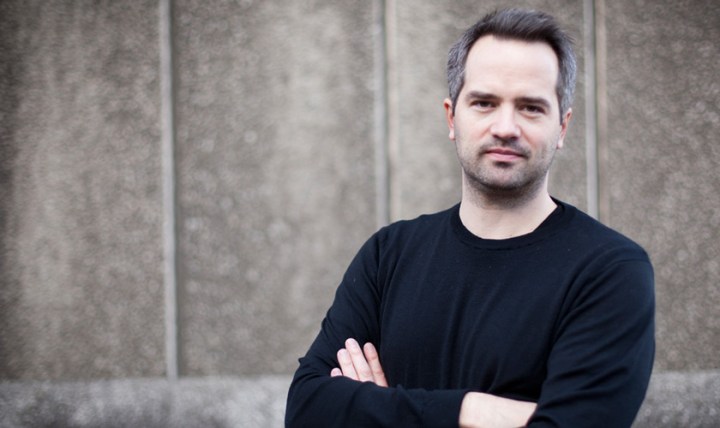
peter_jablonski

©Peter Jablonski

Who or what inspired you to take up the piano and pursue a career in music?

I never took a conscious decision to have a “career in music”. Music was all around me when I was little. I was interested in sport, but my father was a musician, classically trained, from Poland. He came to Sweden in late 60s as the leader of his own jazz quintet, so there was a lot of music at home – jazz and also classical. I grew up with music. I started playing drums early on and that was what I was going to do. I toured and played drums.

At 6 I started having piano lessons with my dad, and then I discovered this amazing instrument and its possibilities, and that got a hold of me. At 11 I went to a Polish piano teacher at the college of music in Malmo. The way he spoke about music – about the smell, sense, colours, pictures of the music – it just opened my mind. And after 4 years study with him I was a pianist.

In my last year at the Royal College of Music, I got a record contract. I had good people around me but I never took a conscious decision to pursue a career in music. It was a need – I couldn’t be without it

When I started on the professional circuit I felt uncomfortable with the “business” side of it – i.e not to cancel, not to use music if one wants to. Things that felt to be anti-artistic to me as a young musician …. I love music, I love being with it, practising, playing. You get into this groove on the professional circuit which can be difficult for a young artist

Who or what were the most important influences on your musical life and career?

In a purely practical sense it was Vladimir Ashkenazy. In a way he “spotted” me, and he is the reason I didn’t have to go down the competition route (I and some colleagues applied for the Tchaikovsky competition in our final year at college). My first recordings with Decca were with Ashkenazy. I encountered him by chance through my Swiss manager who lived in the same village as him. My manager took him a tape and he listened and said he wanted to hear me. It was pure luck.

I did a few local competitions, but I was spared that world. I was lucky enough not to have to go down that route. And I came out of college at the time when recordings still mattered in your career.

What have been the greatest challenges of your career so far?

From a practical standpoint, when you are younger and thrust in to the limelight, the challenge is finding the time to get the repertoire learn and to be a human being. I have a rebel in me that didn’t like being on the road. I loved playing and I liked the solitude. I have a family, a daughter, I basically missed the first 2 years of her life. I struggled with that. I want to live with the music, enjoy it, chew on it, be with it, but the modern career does not allow it. But I think most young performers find this. I wanted other things in my life – family, friends, freedom, I wanted to enjoy the music.

But of course there is an adrenaline high connected with that life. I have colleagues who play 100 concerts a year, but that would just kill me and my love of the music. Some people are at odds with the “career” side of being a pianist.  When you’re on the road and you play a lot, you get to a state of readiness and you’re ready always – but you cannot make it any easier. The requirement of the repertoire is keeping the love for it, it’s difficult when it gets busy. Many different concertos, practising non-stop – sometimes I didn’t even like the piano very much because of the concert schedule.

Which particular works do you think you perform best?

I don’t know…..a very difficult question. That’s for other people to say. Because of my drumming side, I’ve had an affinity for the more rhythmical music (Bartok, Barber for example) but that also applies to Beethoven. I’m feeling more and more comfortable playing Beethoven now. I’m programming Schubert sonatas and Scarlatti – such fresh air! And I’m getting quite heavily into Brahms now

How do you make your repertoire choices from season to season?

I have always loved the nooks and crannies of the repertoire – Szymanowski, Scriabin, Barber, Copland. Incredible music. But of course I have played most of the standard concertos. The only one I’ve stayed away from is Brahms 2 from pure respect and love.

How long does it take you to bring a concerto back into the fingers ready for a concert?

It depends on which one it is. Some I have played so many times (100 times each)  I can play them tonight. I could go and play the Grieg tonight – I have about 10 concertos like that. Then there are a few concertos which are a few days away, then a week, and some I have lost completely.

Are there certain composers/works which always remains difficult?

Beethoven 4 – because I love it too much!

Chopin 2 is immensely difficult. There’s a simplicity/naturalness/ delicacy which is bordering on impossible on a modern piano. You have to over-articulate and then it doesn’t feel like Chopin. It becomes “Panzer Chopin”. It shouldn’t be forceful. Very often today the pianos are voiced quite aggressively so that they carry to the back of the hall over the orchestra. Trying to playing Chopin 2 or Beethoven 4 on those pianos is not easy, it kind of grates.

Do you have a favourite concert venue to perform in and why?

Concertgebouw in Amsterdam is amazing, and the Musikverein in Vienna, but it’s also the history of those places, knowing who played there, who stood on the stage.

In general halls in Asia, in Japan, are wonderful, not least because of the incredible choice of pianos: 5 or 6 pianos to choose from at Suntory Hall. But it’s also incredible difficult. The audiences in Japan are scary. I’ve been to Japan 21 times. At my first recital in Tokyo, there was lots of applause and then the second I sat down they stopped clapping, and it’s almost like you’re alone. It’s spooky. Even in the big halls, it’s the same. They don’t cough, no speaking, no rustling programmes, no one shaking their foot in the front row….. That’s both wonderful and scary. You can literally play to 2000 people without knowing anyone is there. And there is something quite unnatural playing this music to 2000 people. It’s a strange thing to do – to play the piano in public!

For me the music is the most important, it’s not about not me, what I wear…. The only thing you can do is really focus and draw people in. The ideal is when you play in a way which brings people to the music

What is your most memorable concert experience?

There are many for different reasons. For strange reasons, playing Tchaikovsky 1 with the Philadelphia Orchestra outdoors, with Charles Dutoit. And they were going to end with the ‘1812 Overture’ and the canon went off in the slow movement of the piano concerto. It was a like a real bomb! The nerves disappeared after that!

I can’t remember all my concerts, but if someone mentions one to me, the memory of it comes back and I can remember how it went, how it felt sitting on the stage.

On recording

It’s very difficult. I’d much prefer a live concert, the sense of purpose, the adrenaline, which can get lost in the studio. It’s very artificial, it’s a tricky process.

What do you consider to be the most important ideas and concepts to impart to aspiring musicians?

First of all you have to be crazy about music. It starts there. You have to be obsessed without it otherwise don’t do it. You have to have to do it, otherwise the cost is too high.

For young pianists they have to be careful with their repertoire choices. Most people have their strengths, but somehow young prizewinners have to play ‘Feux Follets’, ‘Petrushka’ and late Beethoven sonatas. They are often influenced by teachers and the market. This a big mistake which many pianists make. One needs to have a strong sense of self, which can’t be taught. You have to have a sense yourself of what you feel you can say, you have to live with the music, love it, be with it.

This is the transcription of an interview recorded on 19th April 2016

Peter Jablonski performs music by Chopin, Szymanowski, Bartok and Liszt at Manchester’s Bridgewater Hall on Thursday 20th October. Further information here

Born in the south of Sweden to Swedish and Polish parents, Peter showed an early talent for music when he started playing the drums at the age of five and piano at six. Rapid development on the drums led to performances at some major festivals and venues including the `Village Vanguard` in New York aged nine and with musicians such as Buddy Rich and Thad Jones. Peter even received praise from the legendary Miles Davis.
 
Meanwhile, Peter’s interest developed in the classical piano repertoire which led to his first solo performance aged eleven and his debut with orchestra, playing Mozart’s piano concerto in G, K.453 the following year. At this time he was accepted to the Malmo Academy of Music to pursue studies in piano and percussion and by the time of his graduation he was invited to perform Beethoven’s Concerto No.1 with the Swedish, Danish and Polish radio orchestras.
 
Further studies in piano and conducting followed at the Royal College of Music in London when, in his final year, Peter was heard by Vladimir Ashkenazy who invited him to record his debut disc for Decca with Ashkenazy conducting the Royal Philharmonic Orchestra in London.


lucia-caruso-2

Who or what inspired you to pursue a career in music? 

My father, Alberto Caruso, was a surgeon and the son of an Italian violinist, my grandfather Salvatore Caruso (both my paternal grandparents were Italians from Calabria). He took me to my first piano recital when I was four, then to my first opera, ‘Rigoletto’, when I was six. I grew up listening to classical music at home and going to concerts thanks to my father and my mother, who is also a doctor, and she enjoyed listening to Bach and Mozart while looking at the microscope. My parents told me that when I was a baby, they put me to sleep listening to Chopin Nocturnes. My grandfather used to play the violin for quite a lot when I was a child, and I listened to him for hours delighted. I inherited his violin, the most precious possession he took to Argentina, when he emigrated before World War II started.

Who or what were the most important influences on your musical life and career?

As a pianist, I have always been very influenced by Martha Argerich, Maria João Pires, and Sviastoslav Richter. My first piano teacher was a big influence too, Gustavo Gatica, with whom I studied for about ten years until I moved to New York. Even now, I still think of everything he taught me when I practice or teach piano to others.

As a composer, my strongest influence has been Portuguese composer and guitarist Pedro Henriques da Silva, my husband. I had my first composition lessons with him when we were just friends, and he prepared me to audition for my masters in composition and film scoring at New York University, where he eventually became a member of the composition and film scoring faculty. I learned the most of composition, counterpoint and orchestration with him. Pedro, in his doctorate thesis, compiled more than two thousand modes and scales from all around the world, which I use a lot in my compositions. I learned a great amount of world music and how to compose including many unusual world instruments with their exotic tunings. Pedro has a collection of 25 plucked string instruments from different parts of the world, which certainly influenced my music. For example, I based a few of my compositions on the magical sound of the open strings of the Portuguese guitar (D-A-B-E-A-B), an instrument that is normally just used to play fado music from Portugal.

Film Composer Miklós Rózsa was a huge influence in the way I write my melodies, the modes I use with their modulations, and in the way I orchestrate. He is the film composer I admire the most, especially for his music for the biblical epics of the 50s and 60s. The scores to ‘Ben Hur’ and ‘King of Kings’ were the reason I decided that my life would be music and made me fall in love particularly with the idea of being a film composer. I even started dreaming then that I could be able to make my own films. I was 12 when I discovered Miklós Rózsa, and I feel he opened the door to the film world for me. Tchaikovsky is also a big melodic and orchestral influence in my compositions. Ravel and Liszt would be probably the strongest influence in my piano writing. Ravel is also my favourite orchestrator to learn from, especially for his brilliant orchestral special effects.

My film scoring teacher Ira Newborn during my masters at New York University was a very important influence in my scoring techniques. Ira wrote the scores to ‘Ace Ventura’, ‘Ferris Bueller’s Day Off’, and ‘Naked Gun’, among others.

What have been the greatest challenges of your career so far?

Balancing being a composer and being a performer is always a challenge. But the biggest challenge of all has been how to describe the style of music Pedro and I compose. To classify it in a genre has always been a challenge. So, after many years of trying to fit our music into a style I came up with the idea that I needed: to create my own musical style: “Transclassical Music”. I coined this term to describe exactly the kind of music that my husband and I compose and mostly perform with the chamber orchestra that we founded together in New York: the Manhattan Camerata. Pedro and I work most of the time as a team, I am the Artistic Director and Pedro is the Music Director of the Manhattan Camerata, being both the founders of the ensemble. Transclassical Music, is music that is grounded on classical techniques of performance and composition with the influence of elements from different cultures from all around the world, including improvisation and world instruments. The Manhattan Camerata is the first chamber ensemble to perform Transclassical Music.

Which performance/recordings are you most proud of? 

I am very proud of the recording I did together with my husband of our orchestral music with the London Metropolitan Orchestra at the Abbey Road Studios in London 2012. Besides having our compositions recorded, we also played as soloists on our works for piano and orchestra, and Portuguese guitar and orchestra, respectively. These compositions were commissioned by the Ahae foundation.

Another recording I’m very proud of, is the one Pedro and I did together of two commissioned film scores for full orchestra and choir for two of Georges Méliès’s masterpieces: “Joan of Arc” and “Trip to the Moon”. We recorded the two film scores with an extended version of the Manhattan Camerata to make it a full orchestra, together with Voices of Ascension, one of the best choirs in New York City. We composed the scores together, however the score of “Joan of Arc” is a little more mine and “Trip to the Moon” is more Pedro’s. We recorded at one of the best studios in the U.S., the Dolan Studios at the New York University.  We have the mission to score as many films as we can from 1928 and earlier, because since they were silent films they did not have a score composed for them. We want to help to revive many lost, forgotten, undiscovered, or damaged masterpieces, through music. The idea is to bring old films back to life with newly composed scores, so they can be projected again in theatres. This is one of our main goals with the Manhattan Camerata. Maria H. Connor was the executive producer of this project and recording, with Pedro being the music producer.

I am very proud as well of our latest album of our Tango Fado Project with the Manhattan Camerata. We recorded it also at the New York University Dolan Recording Studios and it was executive produced by Maria H. Connor, and the music producer was Pedro. We had special guests artists: Nathalie Pires, one of the best fado singers of our generation; legendary Daniel Binelli, one of the best living Bandoneon players, who used to perform alongside Piazzolla and Aníbal Troilo, the great masters of Argentinean tango; and Polly Ferman, Uruguayan virtuoso pianist and musical ambassador of the Americas. Pedro and I also perform as soloists on the album, with him on Portuguese and classical guitars, and me on piano. The album was taken by the Sorel Classics label and by Naxos  for international distribution. We are extremely proud of this recording.

I am very proud of two performances at the Versailles Palace of our compositions with a string quartet formed by members of the Orchestre the Paris and the then assistant concertmaster of the London Symphony Orchestra, Tomo Keller, as first violin. The first one of these performances was on June 23rd 2013 and the second one on September 9th 2013. Another performance I am very proud of, is the one we performed of other works of ours with the same string quartet at the Louvre Museum in Paris on June 26th 2012. In most of these compositions, Pedro and I performed alongside the string quartet with me on piano and harpsichord and Pedro on Portuguese and classical guitars. Pedro and I also performed at the Kew Palace in London together with violinist Tomo Keller on August 25th 2011. Totally unexpectedly, they gave me a harpsichord instead of the piano I had asked. So the day of the concert I had to just think fast and rearrange the whole repertoire to be able to play what I could and I improvised solo harpsichord pieces and in duet with Pedro on the Portuguese guitar. Since that day I got new commissions to compose for the harpsichord and I started my studies of harpsichord with one of the most respected harpsichordist of America, Kenneth Hamrick.

Most of our compositions performed at all these concerts I just mentioned, were commissioned by the Ahae Foundation to accompany his photographic exhibit that took place in many countries in the world, including the Louvre Museum and Palace of Versailles in France, Kew Palace in London, Grand Central Terminal in New York City, and Magazzini del Sale in Venice.

I am also very happy to perform and donate my concerts as a fundraiser to the Breast Cancer Foundation “Fundafem”, in Mendoza, Argentina, whose president is Dr. Francisco Gago. The first concert for this foundation was at the Independencia Theatre, the most important theater in Mendoza, Argentina, on May 14th 2014.

Lastly, I am particularly happy about the two concerts we did with the Manhattan Camerata of our Tango Fado Project at Kennedy Center in Washington DC on March 13th 2015 and at Lincoln Center in New York City on August 3rd 2016.

Which particular works do you think you perform best?

I have a great affinity with Mozart, his piano concertos, especially No.13 K415 and No.20 K446. The same goes for Mozart sonatas such as the ones in G Major K.283 and C Major K. 330.

I would say that Debussy’s ‘Estampes’, Chopin ‘sBallade No 1, Ginastera Tres danzas argentinas, Grieg Piano Concerto, Beethoven Sonata No 6, are among the pieces I perform best.

But in the last several years, I have focused on performing my own compositions and Pedro’s, and those are the pieces that I always have ready in my fingers, and if you to ask what pieces I play best, I would have to say that it is our works.

How do you make your repertoire choices from season to season?

I plan according to the concerts I have to play. I mostly perform my own works because of the limited time I have to learn new repertoire besides all the composition commitments I have.

Do you have a favourite concert venue to perform in and why?

Yes, I love performing at le Poisson Rouge and in Lincoln Center in New York City, and at the Monserrate Palace in Sintra, Portugal. Le Poisson Rouge has one of my favorite sound systems and a great piano. I also love the nature of the venue, which is quite creative and multicultural. It looks like a jazz bar or restaurant with tables where you can eat and drink while you enjoy the show, but you don’t necessarily listen to jazz or music that would suggest that kind of ambience. You can listen from classical to any other style of music there. This is for me one of the perfect ways to enjoy classical music: in a more relaxed and enjoyable environment than in a strictly serious one. I love to listen to classical music while enjoying a glass of wine, and not always sitting stiffly in a concert hall. When we perform there, the set up of the tables and the stage creates an intimacy that connects the audience with the performer in a very Close and warm way. It is also located in the heart of the West Village in Manhattan, one of the most alive neighborhoods of the city.

Lincoln Center is just one of the best venues I’ve ever performed in. Great acoustics, fantastic piano, great stage, huge, perfect for a big audience. Another special place where I love to perform is at the music room in the Monserrate Palace in the middle of the Sierra of Sintra (20 minutes from Lisbon) in Portugal. This last one is my favorite in terms of Magic. The room is round and has a gorgeous cupola with the most astonishing decoration, including busts of the nine muses and famous female poets all around it. The acoustics makes the sound go up and swirl around you and everything sounds even more beautiful. It is impossible not to get crazily inspired…This room has one of the best Steinway pianos I have ever played, which belongs to my dear British friend Emma Gilbert. Before Emma owned this piano, it previously belonged to Vianna da Motta, one of the most important Portuguese composers of the 19th century, and a disciple of Franz Liszt. It is a big honor for me to play on that piano. I feel it has a soul and has become one of my closest friends. I don’t only perform at the Monserrate Palace, but I also compose there most of the time when I’m in Portugal (my husband is Portuguese and I have also adopted the Portuguese nationality by marriage, that’s why I often visit). The fact that this palace is kind of hidden in the middle of the forest of the Sierra of Sintra, most of the time surrounded by a fantastical fog, typical of the sierras, it makes the whole experience absolutely magical. The Monserrate Palace is one of my favorite places to work in the world.

Favourite pieces to perform? Listen to?

From the standard classical repertoire I love to perform Mozart concertos, I would actually love to play all of them if I had the time. I also love to perform early Beethoven sonatas, Chopin Ballades No 1, 2, and 4; Schumann’s ‘Carnaval’ Op.9, Schumann ‘The Prophet Bird’ from Waldszenen op.84.

But lately I’ve been more focused on performing my works and Pedro’s works. We’ve been composing difficult music that requires all our focus, such as a piano concerto, other works for piano and orchestra, and chamber and solo pieces that often include difficult virtuosic writing. I love creating something that I will enjoy performing.

I love listening to Medieval and Renaissance music a great deal, some of my favourite pieces of the period being “Viderunt Omnes” and “Beata Viscera” by Pérotin; Cantigas de Santa Maria (12th C.), “Moro lasso al mio duolo” by Gesualdo; Dowland’s “Lachrymae”; Tallis’s “Spem in alium”; and I love everything by Josquin des Prez. My music is somewhat influenced by Medieval and Renaissance music in its colours, modes, and in instrumental timbre. Some of my music has a medieval flavour within the “modern” compositional techniques I use.

I am also a big lover of Celtic music. I am in love with the Celtic harp and bagpipes. I have a big collection of Celtic music from Ireland, Galicia, and Portugal, one of my favourite ensembles being “Strella do Dia” from Portugal.

The classical pieces I like to listen to the most are both of Liszt’s piano concertos; Brahms’s piano Concerto No.2; Tchaikovsky’s “Pathetique Symphony” (which in my opinion contains some of the most beautiful melodies ever written); Puccini’s “Turandot”; “El Amor Brujo” by Manuel De Falla; Wagner’s Ring Cycle; Ravel “Piano Concerto for the Left Hand”; Messiaen’s Turangalila Symphony, “Le banquet Celeste”; Benjamin Britten’s “War Requiem”, Ligeti’s “Lux Aeterna”.

In film music, my favourite scores are: Miklos Rozsa’s “Ben Hur”, “King of Kings” and “Quo Vadis”; Bernard Hermann’s “The Ghost and Mrs. Muir”, “Vertigo” and “Psycho”; Max Steiner’s “Gone with the Wind”; John Williams’s “The Prisoner of Azkaban”, “The Empire Strikes Back”; John Brion’s “Eternal Sunshine of the Spotless Mind”.

Pop Rock and other music I love listening to: Nils Frahm’s albums “Spaces” & “Felt”; Bjork’s albums “Vespertine”, “Post”, “Homogenic” and “Vulnicura”. I like some of the most unusual songs of the Beatles: “Blue Jay Way”, “Within Without You”, “Tomorrow Never Knows”, and also “Girl”, “Norwegian Wood”, and “Dear Prudence”. I am crazy about the song “Nobody Does it Better” by Marvin Hamlisch.

Who are your favourite musicians?

Pianists Martha Argerich, Maria João Pires, Radu Lupu, Daniel Barenboim; violinists Nathan Milstein, Itzhak Perlman, Gidon Kremer; conductors Georg Solti, Carlos Kleiber, Alondra de la Parra; bagpipe player Patricia Pato; guitarist Pablo Sainz Villégas; bandoneonist Daniel Binelli; cellist Sol Gabetta. I have the honor and privilege of being friends with the last five, and have collaborated with most of them.

What is your most memorable concert experience?

One of the most memorable and beautiful concert experiences Pedro and I had was at the Louvre Museum/Jardin des Tuileries with the Orchestre Lamoureux in Paris. We were commissioned the orchestral and chamber music for a big photography exhibit at the Louvre Museum and performed it live outdoors in two concerts at the Tuileries Garden in front of a crowd of thousands in beautiful Paris in summer. My husband and I both played as soloists with this orchestra: him on his Portuguese guitar and orchestra composition “Snow”, and I played as a soloist in my piano and orchestra piece “Clouds”. More orchestral works of ours were performed while beautiful photographs were shown on two giant screens on a huge stage that was built just for these concerts.

The other great experience in performance was the one we had last month at the Lincoln Center Out of Doors Festival in New York City. We performed our Tango Fado Project with our chamber orchestra, the Manhattan Camerata. We also had more than four thousand people in the audience – with a few dozens more standing – and had one of the most positive and effusive reactions from the crowd and the Lincoln Center authorities. An unforgettable evening!

What do you consider to be the most important ideas and concepts to impart to aspiring musicians?

As a composer, I think that the purpose of music is to touch people’s hearts and to be able to produce goosebumps as a symptom of emotional catharsis. This is more important than trying to be original or complex. As a performer, simply enjoy every musical line as if you are making love to your instrument.

Where would you like to be in 10 yearstime?

I want to keep doing what I am doing now, but more so. I want to have more concerts, more compositions and commissions and more recordings at Abbey Road, and more important concerts like the ones I have done at Carnegie Hall, Lincoln Center, Kennedy Center, Palace of Versailles, Louvre Museum, etc. I just want to write more pieces and complete my Portuguese opera and my novel about Sintra. I am at the happiest place I could possibly be right now. Of course I could always have more fame and money, but I am doing exactly what I love: composing and performing concertos and my own music, and I see myself doing the same but more so in ten years. But my greatest ambition is to be able to have a child and being able to continuing doing what I’m doing. I have talked to many artist mothers, and they just wrap their child and play piano, paint, write, and travel with the child to tours and everywhere.

I want to always live in New York, the city where all my dreams came true, but I also want to have a home in the countryside. I see myself in 10 years composing in my own studio or house either in the Catskill Mountains in Upstate NY, or in Rhode Island (US East coast) or somewhere in the countryside in England or in the south of Argentina, in Patagonia… It is crucial and vitally important for me to have a home in the countryside and in the middle of nature, so I can be fully creative.

What is your idea of perfect happiness?

Being able to be eternally in love with the loves of your life, such as romantic love, platonic love, special friends and family members. I love spending time with friends who are as close as family and with family members who are as close as friends. To fall in love with what you do as a profession, and being able to make a living or make that your everyday responsibility, has no price.

What is your most treasured possession?

My grandfather’s violin.

What do you enjoy doing most?

Besides making music, I love traveling around the world and learning as many languages as possible. I love being in the countryside and wilderness. I love riding my bike next to the ocean in Portugal with my father in law, Francisco H. da Silva. I love going to art museums with my mother, Lucia Morales, especially the Metropolitan Museum of Art in New York, and discuss art and painting for hours. I love spending time with my sister Carla, one of my closest friends and favourite people. I love being a Druid and praise nature constantly. I love climbing mountains, as I used to do since I was a child with my father and sister in the Andes Mountains. I love fencing, reading and writing. I love going to Burning Man. I love laying on the ground in the fields, mountains or on the beach to watch the millions of stars above me and look for shooting stars. I love doing wild things… I love being free…

What is your present state of mind?

Constantly in love…

Argentine-born pianist and composer Lucia, will demonstrate her technical and emotional mastery of a concerto premiered by Mozart himself, one of three designed to be accessible and a happy medium between the easy and the difficult, the brilliant and the pleasing, on Tuesday 11th October in ‘Mozart and Friends’ with the Orchestra of the Swan in Stratford-upon-Avon, details here, and further concerts in Birmingham and Cheltenham on 12th and 19th October.

Lucia Caruso’s website


ayako-13

Who or what inspired you to take up the piano and pursue a career in music? 

I hardly remember when I first started to play the piano. I remember that I used to have a red toy piano. My mom bought it when my older sister was born. I grew up playing this toy piano, played some songs which I just learnt by singing. When my grandmother saw me she decided to buy a piano for me.

My family is pretty musical family. My father plays the guitar and sings opera, my mother used to play the Koto (japanese traditional instrument), and my sister played the piano, the clarinet and a bit of the violin. For me it is pretty normal to play some instruments. But I was passionate about the  piano and loved the piano’s sound. But also I played percussion in the kids orchestra and played little bit of the violin.

I have always felt passionate about the beauty of piano sound and the piano pieces composed by others. I tried hard and explored how to get better, how to play that sound, how to express music and I enjoyed those processes…  I love it and I feel restless if I don’t;  so I thought I might as well make it my profession.

Who or what were the most important influences on your musical life and career? 

Alicia de Larrocha definitely comes on top – I used to listen to her Granados/Goyescas and Albeniz/Iberia all the time before studying with her. I became a huge fan and fought for the privilege of becoming her pupil in Barcelona. I succeeded!  I also owe a lot to Carmen Bravo Mompou  – a great pianist and the widow of Frederic Mompou – one of my favourite composers, and Carlota Garriga – also a great pianist and the widow of one of renown conductors, Igor Markevich.

When composing I think I am between Japanese and some mixture of those countries I  was stimulated by  – I intuitively belong to Japanese culture because I grew up there but at the same time I absorbed lots of mixed cultures. I like Japanese composers, such as Toru Takemitsu, Ryuichi Sakamoto, Joe Hisaishi etc. and the most of classical music composers like Debussy, Mompou, Chopin, Granados lots more..

What have been the greatest challenges of your career so far? 

To find my own way and stick to it.  Combining ambitious classical performance with being a composer is not always easy.  I try hard at my composing and my performing leveraging each other.

Which performance/recordings are you most proud of? 

Finishing my ‘Brightwater’ CD gave me a great sense of achievement – I worked on it really hard for more than a year with the help of a number of people, including OBC concertmaster Christian Chivu and the Symphony Orchestra of the Gran Teatre del Liceu the 1st soloist-cellist Cristoforo Pestalozzi.  I should say, as well, that felt really emotional when I played one of my pieces in a full Barcelona’s Palau de la Música in the context of a charity event to raise funds to support people affected by Japan’s big earthquake.

Which particular works do you think you play best? 

Probably French and Spanish classical.  I also get carried away with romanticism in music such as Chopin, Schumann, Mendelssohn lots more… And my own pieces!

How do you make your repertoire choices from season to season? 

I think carefully about how the pieces tie with one another.  I think about the concert as a whole, trying to give it different moments, different emotions and would usually challenge myself to leverage on my cross-cultural musical background to choose the pieces.

Do you have a favourite concert venue to perform in and why? 

I might say there is a venue in each city of each country. I like those places because they are fruits of cultural heritage from there. I especially like Palau de la Música in Barcelona, beautiful architecture, the size of the place and the acoustics are perfect.

Favourite pieces to perform? Listen to? 

Beyond classical, I listen to lots of electronic and ambient music – I like Anohni (Antony Hegarty), Tori Amos, Sigur Ros, etc.

Who are your favourite musicians? 

I would go for Martha Argerich, Maria Joao Pires, Daniel Barenboim, Mitsuko Uchida, Joshua Bell, Ryuichi Sakamoto.

What is your most memorable concert experience? 

Playing Schumann Piano Concert in Bulgaria. I hardly communicated with most of orchestra members because of the language barrier, but on with the conductor, Sir Palikalov who is great musician and speaks English. But through music, we communicated very well and we understood each other. That process was a wonderful experience.

What do you consider to be the most important ideas and concepts to impart to aspiring musicians? 

I guess be ambitious with the quality of the product and be yourself. Never give up making steps ahead.

Where would you like to be in 10 years’ time?  

I would like to have made an impact in the musical circles – big or small – but an impact which I feel proud of.

What is your most treasured possession?  

My Steinway…….

Ayako Fujiki’s new album ‘Brightwater’, featuring her own original pieces, was released on 30th September in UK. Ayako composes her own music, incorporating classical and electronic music techniques.

Born in Tokyo, Ayako Fujiki started playing the piano as a young child and performed her first concert at age seven, playing Beethoven and Chopin.  She has performed in Japan, Spain, UK, Austria, Switzerland, Italy, Colombia and Bulgaria.

ayakofujiki.com

Who or what inspired you to take up piano, and pursue a career in music?

I grew up in a family of musicians. Both my parents are pianists and repetiteurs in different Moscow opera houses and so I was always surrounded by music.  Many of my earliest memories are of the excitement of seeing my parents practicing and performing.  Music came to me very naturally. I was very lucky to have Ada Traub as my first piano teacher.  She was an extraordinary teacher and human being with a special ability to communicate with children and give them crucial skills and a love for music.  I then went on to Gnessin Music School and from there to the Jerusalem Academy and the Royal College of Music. It never really occurred to me to do anything else with my life – I am delighted to say that I still don’t regret it!

Who or what have been the most important influences on your musical life and career?

Each of my four teachers have been hugely significant, each in a different way.  I have already mentioned Ada Traub. My second teacher was Anna Kantor, much more formidable – in fact slightly terrifying to her students.  She had an amazing ear for detail, was very hard-working and a perfectionist.

Through her I met my fellow student Evgeny Kissin, one of the world’s most accomplished pianists. I was present at many of his lessons and went on a couple of tours with him.  His extraordinary talent made a massive impression on me. He inspired me to be a performer

In Jerusalem I was taught by Irina Berkovich. From her I learned much about analysis and structure. Irina Zaritskaya’s approach (at the Royal College in London) focussed on sound and colour. I had a very special bond with her; she was an amazingly caring teacher and herself a wonderful pianist with a sound from the golden age of piano greats.

What have been the greatest challenges of your career so far?

These days musicians lives are crazy.  In order to be “on the scene” and in demand as a performer we often have to take up almost any invitations that come our way which often means learning a huge amount of solo and chamber music repertoire at very short notice.  I find that the most challenging: not only to learn new repertoire but to fill it with meaning and understanding in a very short time.  It can be thrilling but also daunting.  You have to live off adrenaline.  It must be very difficult for musicians who don’t learn fast how to survive in today’s world.

Which performance/recordings you are most proud of?

There were many memorable performances in my life… ( for different reasons!)

One of my most memorable performances was playing complete Brahms piano quartets in Moscow with Boris Brovtsyn, Maxim Rysanov and Boris Andrianov. It was the combination of learning the three Brahms quartets, which I think are some of the very best chamber music works there are, and then performing these pieces with fantastic musicians whom I admire.

As for recordings, I guess my first solo recording of Grieg piano music is something that is very important for me. I visited Grieg’s house outside Bergen in Norway, and played there too. It was such a magical place and it made me want to record Grieg. But I don’t find listening to my own recordings easy: its so difficult to accept the finished product, I always want to change something ..

Which particular works do you think you play best?

So difficult to say… Hard to judge yourself. I guess romantic music suits me most but I think I can play a Haydn sonata decently too… !

How do you make your repertoire choices from season to season?

There are many factors involved… It depends on how busy I am in that particular season and also often there are concerts/festivals for which I am asked to play certain pieces or concertos.

But I do try always to learn something new.  And I try to vary styles in my programmes. I think it’s an art in itself to create a really interesting and exciting programme. It can be crucial to the success of a concert.

Do you have a favourite concert venue to perform and why?

I love the beautiful and very special atmosphere of Wigmore Hall and the unique sense of history pervading the Holywell Room in Oxford.  I generally prefer more intimate venues although I did recently play in the Unam University Hall in Mexico City, which is a very big hall indeed, but i loved the acoustics and felt really good playing there. There are quite a lot of lovely venues around the world, it is impossible to name them all.

Favourite pieces to perform/listen to?

I really can’t name favourite pieces to perform or listen to… I just love too many different things. If I name a couple of pieces, then immediately others will come to mind and so on…   Often I don’t feel like listening to classical music and I switch a nice jazz record on… Or even pop, dare I say.

Who are your favourite musicians?

From past generation – Rachmaninov, Kreisler, Rubinstein, Carlos Kleiber to name a few

Now – Grigory Sokolov, Martha Argerich, Maria Joao Pires, Radu Lupu, but there are quite a few others and not necessarily pianists.

What is your most memorable concert experience?

I will never forget playing in the finals of Leeds Piano Competition. I played Rachmaninov 2nd Piano Concerto and Sir Simon Rattle was the conductor. I never dreamt I would get into the final so I didn’t even bring the score with me… So when I found out I had got through to the final, I had to find the music urgently!  Also I didn’t know it so well… I had two days to revise it. It was a live broadcast on TV and radio and it was definitely the most terrifying experience on stage for me. Working with Sir Simon was really amazing though; he was so kind and encouraging.

What advice would you give to young or aspiring musicians?

We live in a very competitive world. Being proactive and ambitious is good but most important is to be true to music; music requires dedication and commitment – years of learning, studying, exploring, thinking – not just playing your instrument.  If you want to be a performer, you need to have something to say in music, and you need to develop as an individual, as a human being, in order to have something to say.

Where would you like to be in 10 years time?

Hopefully still here with my friends and loved ones near me!  And still enjoying playing the piano as much as I do now.


Katya Apekisheva is one of Europe’s most renowned pianists, in demand internationally as both a soloist and as a chamber musician. Since becoming a prize-winner in the Leeds International and Scottish Piano Competitions and collating awards such as the London Philharmonic ‘Soloist of the Year’ and the Terence Judd Award she has been marked out as a pianist of exceptional gifts, performing with many of the world’s leading orchestras, including the London Philharmonic, The Philharmonia, the Halle Orchestra, the Moscow Philharmonic, the Jerusalem Symphony, the English Chamber Orchestra and the Royal Philharmonic Orchestra, working with conductors such as Sir Simon Rattle, David Shallon, Jan Latham-Koenig and Alexander Lazarev.

Read Katya’s full biography here