Guest post by Michael Johnson

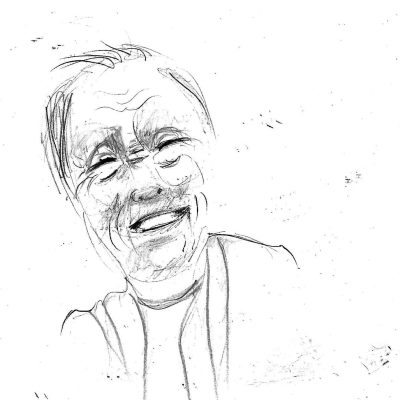
Illustration by Michael Johnson

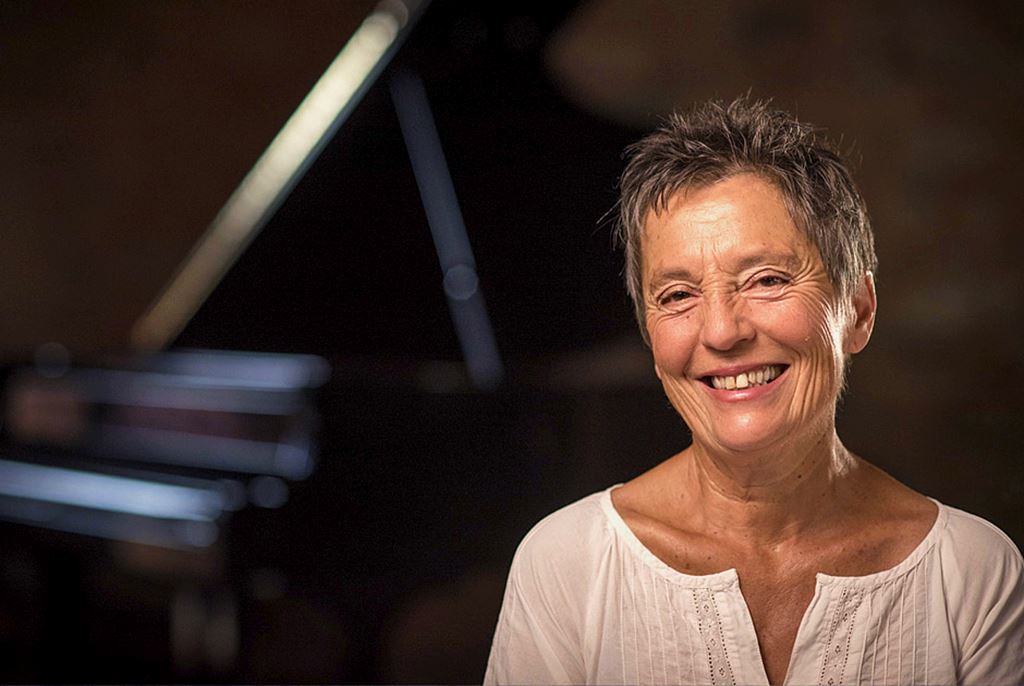
A noticeable stir arose in piano circles around Bordeaux recently when Maria Joao Pires scheduled a rare recital in the city’s Auditorium concert hall. One of the greatest living pianists of our time, she has become increasingly absent from the concert stage in the past few years. Her commitment to interests outside of the music world has taken over much of her time and interest.

In Bordeaux she played a modest programme of Mozart sonatas and two Debussy pieces. For 90 minutes without intermission, she displayed her famous keyboard touch, her blinding virtuosity and her respect for the score. Gracious bows between numbers showed her appreciation for the audience which, she said, came for the music, not the show.

As she said in our interview (below), “It’s not about me, you know.” She believes we have “more values to protect – nature and art, life itself “.

We met backstage at the Auditorium on a sunny June afternoon. She was relaxed in conversation, with an easy smile and a refreshing frankness about the piano world and about the effects of ageing.

A highlight of her teaching avocation was her U.S. production of her Partitura Workshop at Northwestern University in Chicago and at the Gilmore Festival in Kalamazoo, Michigan, last year.

Gilmore director Pierre van der Westhuizen recalled for me the impact she made in Kalamazoo. “Ms Pires took us back to the way music should be instructed,” he said. “These pianists almost became as apprentices. (The six participants) spent the whole day together, learning together, socializing together. Ms Pires asked as many questions of them as they of her.”

Ms. Pires also recalled the warmth and enthusiasm she encountered in Chicago and Kalamazoo.

In our interview, she spoke about life at 80. Her playing is hampered, she said, by a case of dystonia but she is not ready to retire. In the Autumn she heads for Asia, playing in Japan, Taiwan and South Korea. She will skip China because she has been blacklisted there for playing at a conference that the Dalai Lama attended.

She explained her restricted repertoire by showing me her small hands. She placed her palm against my “piano hands”, which easily engulfed hers. She avoids composers such as the big Russians, Rachmaninov and Prokofiev, whose demands on the pianist stretch well beyond the reach of an octave.

In our wide-ranging discussion, she said she still needs to practice, sometimes for one hour a day, sometimes for five hours. “What shrinks is not only your skills, it’s your repertoire. That’s life,” she said.

Here is an edited transcript of our interview.
MJ: At your recent recital in Bordeaux, the audience went wild. You got a standing ovation over your very fine Mozart and Debussy programme.

MJP: It’s not about me, you know. The real ovation should be about the dialogue with the music. We don’t need the ovation because we have more values to protect — nature and art, life itself.

You have just turned 80. Your fans have been expecting you to retire for some time. What does your agenda say?

No, I am not ready to retire. I have a couple of concerts coming soon, then I need a vacation, then in the fall I go to the Far East, to Taiwan, Korea, Japan.

What? Not China, site of the world’s biggest piano craze?

I have played a lot in Japan over my career but I don’t play in China any more because they won’t grant me a visa.

Did they give you a reason?

Yes, at a conference a few years ago l played for the Dalai Lama. To the Chinese leaders, that’s a no-no! But I still have many private students in China working with me online.

In Asia there are large numbers of serious piano students – too many for their local needs. Some of them will become great artists and they will come to the West, won’t they?

Certainly.

Are you concerned about the influx awaiting us?

I’m very concerned . Mainly about the number of people who don’t get the transmission of knowledge from a school or a culture to them, the players.

Your Gilmore workshop in Kalamazoo last year had six students, five of whom were Asians. Is that a sign of the future?

It is. No more comment.

Isn’t piano study a big problem in the USA, with all the electronic games and distractions from music lessons?

The problem is also in Europe. We have lost a lot of quality, in terms of knowledge behind the music. The schools do not make the transmission from the composers to us. We owe that to the composers. And it’s very sad because now we focus on goals and competition, and competition does not go well with art.

You had a life in the competition world, did you not?

Not really. At about age 28 I was obliged to compete because I was chosen by the (Salazar) dictatorship in Portugal and I had to go to the Beethoven Competition in Brussels.

You won that first prize didn’t you?

Yes but I am absolutely not proud at all of that.

Do you have an opinion about competitions?

I have an opinion, a very strong opinion. Competition and art do not go together. Unfortunately young people believe that if they don’t participate in competitions, they cannot earn a living. That’s an illusion, I promise you, it’s a total illusion. A pianist with skills and knowledge can do many other things.

Don’t young pianists from wealthy backgrounds have an easier way forward?

I have nothing against money or rich people. But I have something against how much can this can disturb our view. I see more and more young people being distracted by that idea. Money is replacing everything. It is replacing the clear view over everything. We need more empathy with other people. If we don’t have that empathy we are blind, in terms of consciousness. This is the worst thing that could happen.

Are you still playing regularly?

Yes, but I have a big problem with my right hand dystonia [involuntary muscle contractions in the hands]. This is taking too much effort. I also have small hands, so I always have problems. Age just makes it worse. [She presses her open palm against my “piano hands”. I easily envelope hers in mine.]

Ashkenazy also has tiny hands and yet he manages to jump octaves, even tenths.

Tiny is one thing. This is another. I have a child’s hands and that’s different from “tiny” hands.

Your repertoire seems tightly controlled, with accent on Bach, Mozart, Chopin, Schubert, Debussy.

Even among the French impressionists, I play with great difficulty. It’s not easy. And neither can I do the Russians, Rachmanniov, Prokofiev. But I like to teach pieces that I don’t play.

You have recorded Schumann and Brahms.

Yes, but I play them but in very small amounts.

You have been quoted as blaming Liszt for inventing the modern solo piano format.

No, Liszt was a great composer. How can I blame him? If I cannot play some pieces, it’s my fault, not his.

Over the past twenty years, workshops and teaching are taking you more and more away from the concert stage.

Yes, I have always been interested in the transmission of skills and knowledge. As an adult, I realized that the transmission is cut back. So the transmission of art is not happening any more. I wish we could be stronger in our complaining about what’s going on. We have no clear view over future generations. How to teach them, how to deal with problems.

How much energy do you have left? How much more stamina is there in you, living in hotels, taking planes and trains throughout Europe and Asia? Doesn’t that wear you down?

Yes, it does, and I was sick really badly for six months and this was a very good lesson for me. My body and spirit were saying “Come on, take care of yourself.” I still have a bit of energy but I rest when I need to rest.

You have said you suffer from stage fright.

I have a lot of stage fright. We have this responsibility, and that can give you a lot of pressure. So you don’t want to go on stage. I prefer if I wake up on a day that I have nothing on stage, I am happy. And if I don’t have to go into an airplane, I am happy. It is not a pleasant life. But it is a life that brings a lot of experience. A vision of the world, and of the people — how they react to things.

Are you still uncomfortable playing in public?

Yes, but I am comfortable with people who collaborate with me, people who are there to listen to the music. I feel they are friends.

Do you still need to practice?

Yes, I need to practice more and more. Sometimes an hour a day, sometimes five, sometimes nothing. What shrinks is not only your skills, it’s your repertoire. That’s life.

If you could choose, how do you want to be remembered after your time runs out?

No problem. I have no wish at all. All right, I have one wish. When I die, I don’t want to die stupid or mean.


Michael Johnson and Frances Wilson recently published a collection of interviews with concert pianists, under the title “Lifting the Lid”. The book is available through Amazon.

MICHAEL JOHNSON is a music critic and writer with a particular interest in piano. He has worked as a reporter and editor in New York, Moscow, Paris and London over his journalism career. He covered European technology for Business Week for five years, and served nine years as chief editor of International Management magazine and was chief editor of the French technology weekly 01 Informatique. He also spent four years as Moscow correspondent of The Associated Press. He is a regular contributor to International Piano magazine, and is the author of five books. Michael Johnson is based in Bordeaux, France. Besides English and French he is also fluent in Russian.

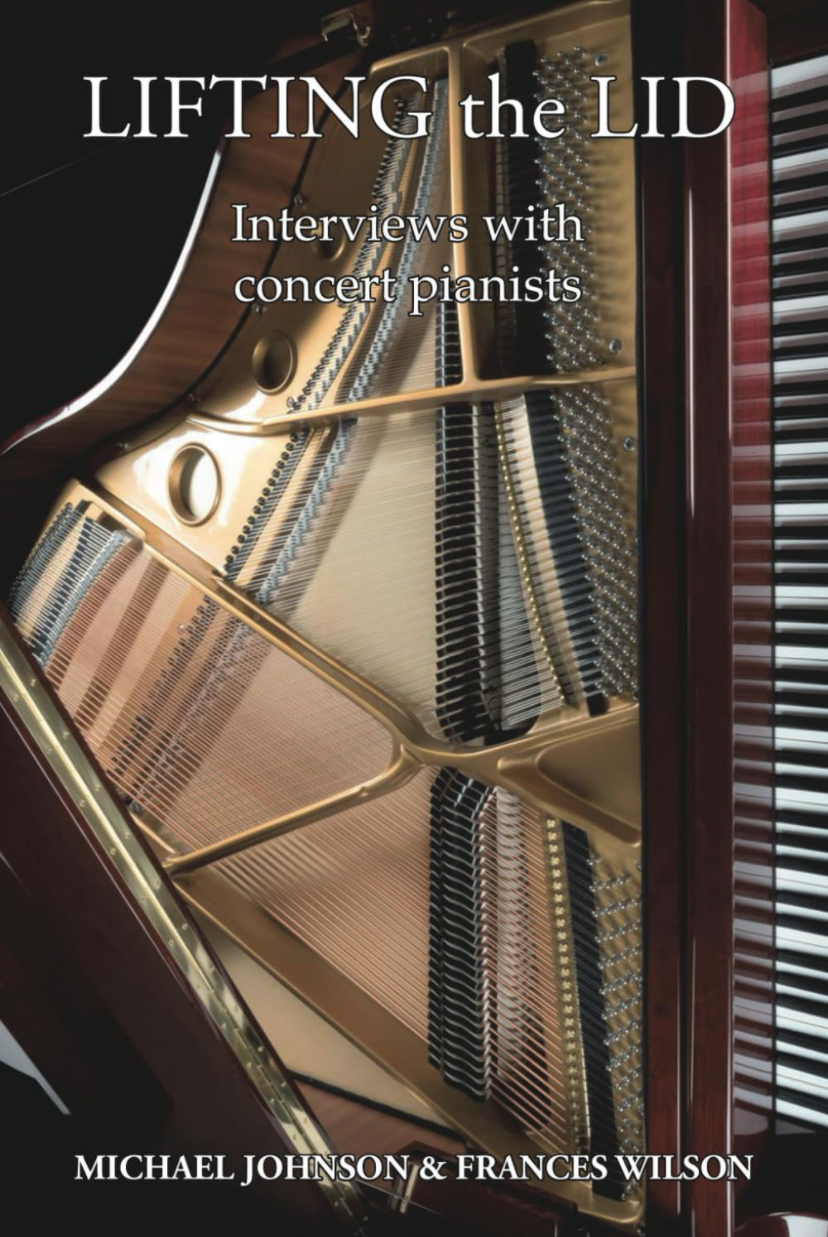
Lifting the Lid: Interviews with Concert Pianists – Michael Johnson & Frances Wilson (AKA The Cross-Eyed Pianist)

Pianists have an aura of mystique. More often than not, alone on the stage with just that box of wood and wires for company, stretched before the performer like a sleek black limousine, pianists seem more removed, almost other-worldly, than other classical musicians.

There is a great curiosity about what classical musicians do, not just life on the concert platform – the visible, public aspect of the profession – but ‘what musicians do all day’, as it were. A certain urban mythology surrounds the working life of the concert pianist; we may imagine pianists slaving away at their instrument for hours on end, cut off from family, a social life, or the normal activities of daily life. For how else could these people learn and finesse so many notes, so many details, in order to bring the music alive for us in performance and on countless recordings?

In reality, the life of the concert pianist today is rather different from the clichéd image of the wild-haired virtuoso, confined to their practice room or studio with only the instrument and its literature for company. A startling level of commitment and executive function is required to learn, memorise and perform complex music; added to that, the profession today is highly competitive, tough, often lonely – yet as these interviews reveal, the instrument and its repertoire exert a strong attraction, seducing would-be professionals from a young age and continuing to bewitch, delight, frustrate and excite.

The interviews in this book offer remarkable and often surprisingly honest insights into life as a professional pianist today – from years of intense study with some of the leading pianist-teachers and pedagogues of our time to practicing and performing, repertoire and recording. There are also more esoteric reflections on the nature of “success” as a musician, and advice for young musicians who are considering a professional career.

I must bore some people because I don’t move around when I play. Some people take this as emotional detachment but my contention is that one should come to concerts to listen, not to watch… Reproducing my gestures just wouldn’t work. (My plain) always looks effortless, like I’m just brushing the keys, but there is force at work, a lot of force.

Marc-André Hamelin

Some of the world’s greatest living concert pianists are included here – amongst them, Marc-André Hamelin, Angela Hewitt, Gabriela Montero, Stephen Hough, Joanna Macgregor, Rudolf Buchbinder, Francois-Frederic Guy and Tamara Stefanovich – but we have also included interviews with lesser-known pianists and younger artists too, who are beginning to make their mark on the international stage.

Think about what the role of a musician is today and how you can be at best useful for today’s society – for me certainly not playing only older repertoire, but thinking how to link music of all times to extraordinary creations of today. Challenge yourself by not copying someone else’s path …In short, less image, more substance

Tamara Stefanovich

The interviews have been selected from face-to-face interviews conducted by Michael Johnson before and after concerts and at music festivals, and from Frances Wilson’s popular Meet the Artist series, launched on this site in 2012 and now comprising a significant archive of over 500 interviews with musicians, composers and conductors active today.

If we are still going to persuade people to come and hear live music, we have to find ways to make that experience more meaningful and relevant, be it collaborating with other genres such as dance, the visual arts or theatre, working with living composers, or simply being able to talk to your audiences in an engaging manner.

Margaret Fingerhut

Following in the footsteps of titles such as Dean Elder’s Pianists at Play and David Dubal’s Reflections from the Keyboard, Lifting the Lid is an important survey of the thoughts and attitudes of today’s professional pianists and a significant resource for all those who are fascinated by the piano and those who play it.

Lifting the Lid is available in paperback from Amazon.com


Frances Wilson writes….. It was one of those serendipitous moments when journalist Michael Johnson contacted me in spring 2020 to suggest a collaboration project. Michael had contributed articles to this site, and I knew Michael’s writing for International Piano and Facts and Arts. It was his idea to pool our joint resources and collaborate on a book of interviews with concert pianists. I probably wouldn’t have agreed to the project had we not been in the grip of the first Covid-19 lockdown; I had very little work at the time, and desperately needed a focus and a distraction from the monotony of lockdown.

We had plenty of material, too much in fact, and so this book represents just a small selection of the many interviews we originally proposed for inclusion. While we have included some of the “big names” of classical piano, the interviews were chosen more for their interesting qualities rather than the reputation of the interviewee. I hope that readers will find these interviews insightful, giving a glimpse “beyond the notes” and the concert stage to the daily exigencies of “being a pianist”.

Frances Wilson, March 2024

“Few people ask musicians more pertinent or revealing questions than Frances Wilson…..and so the answers of her interviewees are always interesting.” – Sir Stephen Hough, concert pianist

“Frances Wilson’s Meet the Artist series is something I read every day to discover what musicians from around the world are doing and thinking. It is a fascinating behind-the-scenes glimpse into their challenges, influences and experiences via probing interviews. I highly recommend it.” – Beth Levin, concert pianist

“Not since David Dubal’s ‘Reflections from the Keyboard’ have I read a set of interviews in which music and the written word join hands so compellingly.” – Jack Kohl, concert pianist and author of ‘Bone Over Ivory: Essays from a Standing Pianist’

“Music critics have an ear. Plastic arts critics have an eye. Michael Johnson has both! This asset gives rhythm and colours to his interviews. He catches the personalities of the great pianists and reveals the little details that make them familiar to us.” – Séverine Garnier, editor of ‘Classique mais pas has been’, critic and music writer

Who or what inspired you to pursue a career in music and who or what have been the most important influences on your musical life and career?

It was at school that my love for the piano blossomed because I heard it every single day in the school assembly. Also, by chance my teacher in infant school happened to have a piano in her classroom, so the tinkling sound of it just occupied me and I loved to explore it and make sounds.

I had formal training as a Junior at the Royal Welsh College of Music and Drama in Cardiff with my teacher, who I still have, Alison Bowring, who took me back to the technical basics and posture, while also understanding what repertoire would suit me. Alison has been a major influence on my career so far from many difference perspectives.

I also did courses with an organisation called Musicians in Focus, a team who focused on visual impairment, which helped to develop me as a musician.

My greatest influences are listening to opera singers so the idea of singing with the piano is always reinforced. Another influence was being a participant on the North London Piano school every summer. The guest teachers really helped me understand about tone production through physical touch. I had never really experienced that sort of connection before, so that memory will stay with me forever. It made me not only improve as a pianist but gave me ways to connect through performance. Pianistically, I love the physical interaction between keyboard and the body becoming one – it’s an amazing experience.

What have been the greatest challenges of your career so far?

I was diagnosed with Asperger’s syndrome, an autism condition, which affects social and communication skills, so I have support assistance to help build my independence and confidence. I actually find my personal organisation to be more challenging than practising at the piano. I can feel anxious when plans change at the last minute, for example, when a train or flight that I am booked on is cancelled. Being totally blind also affects me when I have to travel for performances, as there is no time to become familiar with new locations and therefore I normally require assistance. Being a member of organisations like the Paraorchestra and RNS Moves, an inclusive ensemble based in Gateshead however, helps me to integrate and develop networks and connections with other disabled and non-disabled musicians.

Which performances/recordings are you most proud of?

Performing the Beethoven Choral Fantasia with the Royal Welsh College Chamber Orchestra and Chorus:

My final year recital for my Bachelor degree was very atmospheric and some people I knew from school also attended.

Performing at St. Martin-in-the-Fields in 2019 was thrilling as I was in an open and resonant space, so I had to adjust myself to both the instrument and the acoustic.

Performing the Scriabin concerto in East Dulwich with Michael Cobb conducting the Lambeth Symphony Orchestra. Unfortunately, I am only able to share the encore, an improvisation on some themes suggested by members of the audience.

Which particular works/composers do you think you perform best?

I have a soft spot for Beethoven’s music because both my grandmothers have developed deafness through ageing, especially my grandmother from Northern Ireland on my father’s side. The amazing thing about Beethoven’s music is that it always feels and sounds fresh, however many times you play the same pieces, especially when playing on different instruments and acoustics.

What do you do off stage that provides inspiration on stage?

I love browsing the internet about background of the pieces and always love looking at history and why repertoire was written for specific instruments of the time, especially when dealing with Baroque or Classical period music. Also, I have a grand piano at home that has a distinctive tone colour, which helps me to transfer intimacy across to my public performances. I find that exercise keeps me moving and agile, while breathing exercises or stretches help me to relax before I go on stage.

How do you make your repertoire choices from season to season?

For a recital programme, my teacher and I like to plan the pieces in advance that will complement each other. We always talk about the relationship between each piece regarding tempo and tonality, as well as realistic timelines for learning.

Do you have a favourite concert venue to perform in and why?

I particularly enjoy St. Martin-in-the-Fields as a venue because the acoustics are unlike any other, and it allows the pianist to draw into themselves so the audience can experience the incredible sound. It’s different to a drier acoustic when it sounds like you’re on the same level with the audience when you can hear every nuance. A cathedral is a celestial atmosphere to perform in, feeling like an out of world experience.

What do you feel needs to be done to grow classical music’s audiences?

I like the idea of pre-performance commentary by the artist involved to help make Classical music more accessible and interesting for younger generations. I also like the idea of museum tours (such as Victoria and Albert Museum in London) to explore the instruments for which music was originally written. This provides essential background as audiences are used to modern instruments as the norm.

What is your most memorable concert experience?

Performing in Japan as one of 90 international artists in the True Colours Festival 2022, organised by the Nippon Foundation and live-streamed around the world. The atmosphere was just incredible and I loved having my hair and makeup done for me so I could just sit back and relax. Also, I had never changed into other outfits between musical items, or played with a headset in a live performance. I loved the variety on offer and working with a range of other musicians.

Rachel performing at the True Colours festival in Japan

As a musician, what is your definition of success?

Music is not about competition or who can play the best, it is about connecting and sharing with the audience and developing relationships as they can be vital for the future. Have the right support like a teacher who can understand the way you work, encourage and develop your musical journey.

What advice would you give to young/aspiring musicians?

Embrace every corner or avenue of your instrument from physicality/technique to exploring different music styles, so it becomes a part of you. For example, I love playing Jazz which I believe is interconnected with the classical composers that came before. Patience is always a virtue especially in practicing when you don’t get things right the first time. Keep positive and make the most of every opportunity.

On Saturday 27 May, Rachel Starritt gives a concert by candlelight at the inaugural Ludlow Piano Festival, created by impressionist, comedian and actor Alistair McGowan. Rachel will perform new works by three young composers, written especially for herm, as well as her own improvisations. Info/tickets: https://ludlowpianofestival.com/


Blind from birth, Rachel was born in Bridgend, South Wales in 1994. She has received formal training on the piano since 2006 with Alison Bowring and studied at the Royal Welsh College of Music and Drama (RWCMD) where she recently achieved a distinction in piano performance as a postgraduate student (MMus).

Rachel completed a six month Erasmus placement at the Conservatori Liceu in Barcelona under the tutelage of pianist Alba Ventura.

As a student at RWCMD, Rachel has enjoyed masterclasses with the Labèque Sisters, Stephen Osborne, Peter Jablonski, Angela Hewitt and Valentina Lisitsa. Additionally, she received guidance at the annual NLPS summer course at the Purcell school with renowned professors Dr Michael Schreider (Guildhall), Irina Osipova (Moscow), Irina Berkovich (Israel) and William Fong (RAM).

Rachel’s piano improvisation skills complement her love of jazz and she currently leads a jazz trio ‘The Rachel Starritt Trio’,  which appeared at the Brecon Jazz Festival in 2020 and 2021. At Chetham’s Piano Summer School she studied with Nikki Iles and Douglas Finch and has also received lessons with the renowned Welsh pianist and composer Huw Warren.

Read more

Image credit Daishiro Futakami

On 12 March 2020, pianist Igor Levit tweeted the following:

He then rushed out of his flat to purchase a cheap camera stand, returned home, then realised he also needed a stand for his phone, so he slipped out again. A friend was co-opted to help ensure the livestream was working. At 7pm Berlin time, Igor Levit gave his first livestreamed “haus konzert”.

Two days before, on 10 March, his birthday, Levit gave a concert in Hamburg; the next, in Cologne, the following day was cancelled, and it was now clear that live music, and similar activities, were being shut down, who knew for how long, in response to the global coronavirus pandemic.

Levit gave 52 house concerts via Twitter, dressed casually and livestreamed from his flat, its minimalist decor interrupted only by the shiny grand piano and a striking painting on the wall behind. It became a nightly ritual, for pianist and audience. He performed whatever repertoire “felt right” – from Beethoven to Morton Feldman, Nina Simone to Schubert and Bach; it didn’t matter, for these performances were about being together when we were isolated in lockdown. Hundreds of thousands of people tuned in via Twitter every night and the livestream feed was crammed with comments, compliments, emojis; there was a potent sense of a shared experience, even though we were all listening on our own, separated by lockdown, yet together. Spontaneous and unplanned, these house concerts helped to alleviate Levit’s – and others’ – lockdown despair and isolation, a means of keeping live music going when it was unclear when we would be allowed back into the concert halls to enjoy live music again, together. The Observer chose Levit’s online recitals as number one in its top ten classical picks for 2020.

From a pragmatic point of view, the house concerts were also an incentive for Levit to keep practising, an impulse shared by so many musicians whose performing careers stopped dead in March 2020. Like many of his musician colleagues, in the months before the covid lockdowns of 2020 and 2021, Levit was enjoying a busy career: without concerts, what was the point of practising?

Igor Levit performing in his Berlin flat during lockdown

Igor Levit’s new book ‘House Concert’ (published in the UK by Polity press in November) is about these Twitter concerts – the musician’s need to play, to express oneself through music, and the experience of playing in isolation to an unseen audiences of tens or even hundreds of thousands – but it’s about much more than this too.

Organised in a series of conversations and diary-type entries between Levit and German journalist Florian Zinnecker, ‘House Concert’ explores what it is to be a professional musician in the 21st century, and charts Levit’s career from an unknown young pianist to an internationally-acclaimed performer who plays to sold out houses around the world. It’s about the development of an artist; what it means to “be” a pianist and the need to perform, to share one’s music with others; the role and power of social media, in particular Twitter; the classical music industry; and wider issues of whether it is appropriate for an artist to engage in politics and other pertinent issues of our time – the pandemic, racism, climate change.

Levit’s path to international fame was not an easy one. As anyone who has attended one of his concerts will know, he is an uncompromising player who has a remarkable ability to create an intensity of sound and concentrated emotion when he performs (Alex Ross of The New Yorker describes him as “a pianist like no other”). His choice of repertoire may be considered “narrow” by some: eschewing the big showpieces or “top of the pops” of the pianist’s repertoire, he has instead chosen to focus on a handful of composers, recording and performing the complete piano sonatas of Beethoven, Bach’s Goldberg Variations, and Rzewski’s mighty ‘The People United Will Never Be Defeated’, together with lesser-known works by Busoni, Reger and Ronald Stevenson. As a young pianist at the start of his career, his uncompromising attitude and refusal to “play to the gallery”, as it were, to satisfy the whims of the market by including the popular classics in his programmes, meant that he was overlooked by artist managers and agents who felt he was not sufficiently marketable. This section of the book offers some really fascinating, honest and sometimes brutal insights into the workings and attitudes of the classical music “industry” today – where marketability is placed above artistic integrity. Levit didn’t fit the image that record companies were looking for and he was not willing to compromise; as a consequence it was a long time before he was picked up by a manager who was sufficiently sympathetic to his way of doing things. (An indication of how the industry reacts to the maverick, when Levit recorded Beethoven’s last five piano sonatas for his debut disc, there were more than a few mutterings that he was too young, that it was an impertinence that he should record these works at his age. It was a risk, but it was a worthwhile one: as anyone who has heard Levit perform late Beethoven knows, he is a master in this repertoire.)

The Twitter concerts throw an interesting light on the ecosystem of the classical music business and the power structures within in. In his house concerts, Levit demonstrated that it was possible to reach an audience directly via social media, without the usual tools of the business – marketing, publicity, staging. The simplicity of the Twitter concerts made them special – and for Levit they made him feel strong, that he wasn’t a fake.

For the pianist, Levit makes some challenging assertions regarding interpretation, context and the over-intellectualisation of music and its performance. He eschews the notion that music must have “meaning” or a distinct narrative, or that there is a “right way” to play it, and feels it is “just there to be experienced”. He sees the role of the musician as an “enabler”, one who brings the music to life from the page by making the piece his own.

“I’m telling my own story…the one that’s closest to my heart. The information about what happened to this piece one hundred, two hundred, three hundred years ago isn’t really my business.”

Igor Levit

In the realm of classical music, with all its conventions and tradition, where fidelity to the score and an appreciation of the context in which the music is written is regarded as essential to any “authentic” performance, Levit bucks the trend. Because he’s not interested in tradition or convention; for him it’s all about the music. He’s not interested in whether in his performances of Beethoven we hear the sound of Beethoven. For him, “it’s Beethoven, of course, but played by me.”

A keen activist, the book also explores Levit’s vocal opposition to German right-wing attitudes to immigration, anti-Semitism and online hate crime, and his advocacy for environmentalism, the plight of Syrian refugees. He’s received abuse and even death threats for his views but he refuses to submit to “artistic neutrality”. Does he believe music can make a difference, shift attitudes and effect change? Absolutely not: “If you believe music will make fascists less fascist, then you’re just naive” – and for this reason his music and his activism are kept largely separate, though his large social media following and reputation undoubtedly serves his activism.

This absorbing and highly readable book is neither diary nor straightforward artist biography. It shifts back and forth between periods in Levit’s life, from student days, to now, and explores a variety of themes, not all of them musical. It not only showcases the remarkable achievements of a charismatic classical musician, it also reveals their anxieties and doubts, strengths and weaknesses, and offers an important snapshot of the difficulties faced by professional musicians in a highly competitive industry riven with convention, power structures and tradition. The success of Levit’s house concerts – and similar livestream projects from other musicians all around the world – perhaps prove that the industry does not necessarily need all the trappings of “the business” to communicate and share the power and joy of music with others.

‘House Concert’ is published by Polity books (November 2022). Further information here