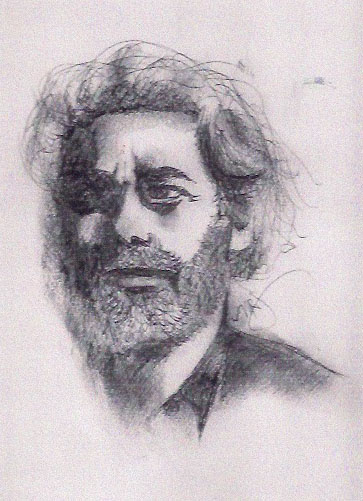
FFGuy for F&AGuest interview by Michael Johnson

François-Frédéric Guy was just finishing his 20th performance at the piano festival of La Roque d’Anthéron in the south of France. The 2200-seat outdoor amphitheatre was almost full as Guy displayed his love of Beethoven – playing two of his greatest sonatas, No. 16 and No. 26 (“Les Adieux”). After the interval, Guy took his place at the Steinway grand again and shook up the audience with the stormy opening bars of the Hammerklavier sonata. It was like a thunderclap, as Beethoven intended. The audience sat up straight and listened in stunned silence. Monsieur Guy joined me and a colleague after his concert for a question-and-answer session about his playing, the role of the piano in his life, and his future as a conductor of Beethoven symphonies.

Question: Can you describe your technique for creating such a stormy opening for Hammerklavier? The audience was thrilled.

Answer: I try to achieve several things at once with those opening bars – signaling immediately the dimension of the complete work, its conquering majesty, and the vital energy that begins to build from those enormous, outsized chords. I try to give it weight and pace, as Beethoven wanted. It is as if Beethoven was saying, “Let’s go conquer the universe!”

Q. And your surprising low-key encore? What were you thinking?

A. I enjoy the idea behind this little piece which is probably the best-known and simplest work of Beethoven. I chose it to come immediately after the most dense and complex of Beethoven’s work, one that is relatively little known to the general public. But “Elise” is also Beethoven and can, as you say, touch people to the point of tears.

Q. What does music mean to you, as a career pianist. Since we have known each other – nearly 25 years – you have dedicated yourself entirely to music.

A. Music fills my life, my existence. Even when I am not at the instrument, even when I am speaking of other things…. Through music, one can express things that words cannot.

Q. I see you are busy – 50 concerts and recitals per year.

A. Yes, now it’s closer to 60, apportioned among concertos, chamber music and solo recitals. I try to maintain a balance of about one-third for each format.

Q. Your new career seems to be taking off – now you are an orchestral conductor …

A. Yes, I am doing some conducting. I started by conducting from the keyboard, the so-called “play and conduct” format. Seven or eight years ago I started doing the Beethoven piano concertos that way, and it’s becoming more a part of my life. Now I have booked about ten play-and-conduct engagements in which I add a performance on the podium, conducting the full orchestra.

Q. Alone on the podium? What drove you to undertake this new challenge?

A. Actually it’s an old dream dating back to adolescence. I started conducting from the keyboard, and gravitated to the podium. My conducting has been well-received so I am continuing. For the moment, I conduct only Beethoven.

Q. Only the symphonies?

A. Yes, I have already done the Fourth and Fifth at the Théâtre des Champs Elysées and will conduct the Seventh in October at the Opéra de Limoges, with its very good orchestra that I have worked with frequently. I enjoy it very much, and will conduct Beethoven’s “Fidélio” there in 2022.
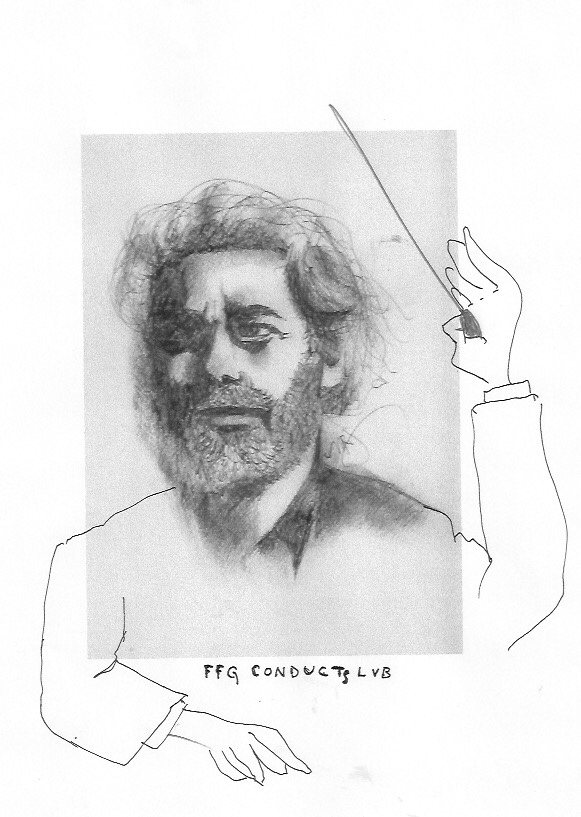
Q. Will you do what Rudolf Buchbiner did in Aix recently, all five piano concertos in one day?

A. Yes, I am scheduled to do just that in January, again at the Théâtre des Champs Elysées. We will start at 7 p.m. with Nos. 1 and 3, then a break, returning for Nos. 2 and 4, and finally at 10 p.m. the Fifth.

Q. This sounds like a major exploit!

A. That’s not at all why I am doing it. I merely want to take the public on a journey with me to better understand the evolution of these concertos. I find this idea very exciting and I think the public will as well. In addition, these concertos are all works of genius and so individual – each one has its own character. They do not encroach on each other. It’s like a great crossing of seas on an ocean liner. I will be taking the public with me.

Q. I was also thinking of it as a physical marathon.

A. Yes, both musically and intellectually. It’s even more true in a play-and-conduct format because I have to control what’s going on around the piano. We must remember, though, that in Beethoven’s time all concertos were performed like this. There were no conductors. Same goes for Mozart.

Q. So you are putting yourself in Beethoven’s and Mozart’s shoes, so to speak?

A. Well yes, somewhat, a bit. It’s a return to the concertos as they were intended. The piano is not king – it’s there for a dialogue with the instrumentalists, like a big family.

Q. Do you like the feeling of disappearing into the orchestra when you play-and-conduct?

A. Yes indeed. The pianist turns his or her back on the audience and is encircled by the other players. So there is a sort of fraternity – no rivalry – but it’s not easy. Sometimes it works, sometimes it doesn’t. But when it does, there is a kind of unity, and that’s what is so interesting.

Q. You have said that keyboard conducting gives you a new understanding of the music. What do you mean? Does it really change your perspective?

A. Absolutely. When you play traditionally with a conductor, one must be familiar with the orchestral parts while concentrating essentially on the piano part – that’s our role. But when the pianist and the conductor are the same person, it becomes clear how completely the piano is integrated into Beethoven’s concept, and Mozart too, and then later Brahms and Schumann.

Q. How did you go about studying for your role as a conductor?

A. Well I am largely self-taught, an autodidact. But I have been counseled by some eminent conductors, notably Philippe Jordan, conductor of the Bastille Opera and soon to direct the Vienna Staatsoper, when he leaves the Bastille next year. He is a fabulous conductor, an extraordinary talent. He has helped me tremendously. And another one is Pascal Rophé, conductor of the Orchestre des Pays de Loire – Nantes and Angers. He has been a big help with the Beethoven symphonies. But I am essentially self-taught and I have no ambitions to become a full-time conductor.

Q. Ah no? That was my question – isn’t there a temptation to leave the piano behind? Solti, Bernstein and many others abandoned the piano to conduct.

A. No, no, that’s not my plan. Conducting is an extension of my interests in music. For example, I have played practically all of Beethoven’s piano music, all his chamber music, all his important piano works. And it seemed natural to try conducting. I could not imagine NOT conducting one of the symphonies. So I had to learn how to do it.

Q. Contemporary music in one of your big interests. You have collaborated with the composer Tristan Murail, I believe, and others?

A. Yes, I am currently on a concerto Tristan Murail is composing for me. What matters for me is new ideas in composition that still retain traditional structures. I want innovation, ideas that change the piano and the orchestra. Sounds we have never heard before. That’s what interests me with Tristan Murail.

Q. Are you spending your life focused solely on the piano to the exclusion of all other activities? Some pianists wear blinkers.

A. I am not wrapped up in a bubble. Nothing stops me from following important events, such as Korea, or the relations between the two Koreas.

Q. You are in touch with people outside the world of music?

A. Yes, I am very involved in astronomy, for example. I study mushrooms!

Q. Mushrooms?

A. Yes. The other day I found ten kilos of cepes on my property in the Dordogne. I have always had a passion for mushrooms of all types.

Q. John Cage was also a mushroom enthusiast. He wrote books about them. He even created the New York Mycological Society for the study of mushrooms.

A. I am a specialist too. I know all the names of different species in Latin.

Q. Tell us about your tenth Beethoven cycle planned for Tokyo. What does it consist of?

A. What it means is that I will play all of the 32 Beethoven sonatas from memory over a ten-day period, about three weekends, for the tenth time. Almost twelve hours of music.

Q. Do you have a loyal fan base in Japan?

A. Yes, yes. I usually play in a very beautiful hall in the Shinjuku district of Tokyo. Two years ago I played there with the Dresden orchestra conducted by Michael Sanderling. And last year I played all the Beethoven violin and piano sonatas there.

Q. If you give 60 recitals and concerts a year, as you said at the start of this interview, can you still find time to develop new repertoire?

A. Yes, I try to master one or two important works every year. I recently accepted to learn and play a concerto by Enescu. I always try to put aside time for new works.

Q. But at your age, don’t you find you learn more slowly?

A. Yes, I am 50 years old. But I have many things I want to do in music. I am not stopping.


Artist portrait by Michael Johnson


Michael Johnson is a music critic with particular interest in piano. He worked as a reporter and editor in New York, Moscow, Paris and London over his writing career. He is the author of five books and divides his time between Boston and Bordeaux. He is a regular contributor to The Cross-Eyed Pianist


(This article first appeared on the Facts & Arts site. Illustrations by the author.)



Who or what inspired you to take up piano and pursue a career in music?

I must say, I don’t know… My parents, although not musicians, are very musical. My father composed some songs for my mother to sing with his guitar accompaniment. There was always much music in the house, mostly classical and what in Russia is called ‘bard song’.

There also was an upright piano and I well remember I was fascinated, enchanted by the sound of major third.

But in the end it all might be even simpler and a bit embarrassing. I was about 6 years old and I went to a symphonic concert to hear a violinist playing. She was wearing a purple velvet dress, a rather unbelievable hue of purple. I thought I’d never seen a colour more sumptuous…and I decided I wanted to play violin. That’s how my path in music started – I am afraid, because of a velvet dress!

Who or what have been the most important influences on your musical life and career?

I am easily influenced in the sense that I am easily fascinated, easily enthused about things. In a way, this can be a disruptive quality sometimes – one needs, perhaps, some distance with the subject to get to the core of it. Inevitably, the list of musicians who left their imprint on my playing is long and eclectic.

My first great musical idol was Sviatoslav Richter. Of course, I heard his recordings very early on, but I “discovered” him in my teens. I then first understood what a word “musician” means, or should mean. A few years later I was struck by Theodor Currentzis who came to my home town in 2004 to start Musica Aeterna. I never knew before how hard one can work and how far one can go in carving ideas and reaching one’s vision. Yet later on I subsequently worshipped Mikhail Pletnev, Dietrich Fischer-Dieskau, then Maria João Pires with whom I studied, and Graham Johnson. During my years at the Moscow Conservatory I was very much under the spell of one of my mentors, Pavel Nersessian, a formidable personality and a very unique musician. Lately, however, I feel more and more that I am influenced, inspired or fuelled by things outside music, be it painting, photography, dance or fashion.

What have been the greatest challenges of your career so far?

The challenge which perhaps is quite specific for the time we live in is to pace oneself and allow the music enough space and time to grow naturally. It is extremely important, but it takes quite some effort to avoid temptations and sometimes work hard against the flow.

Yet a greater challenge is to always try and see – artistically – things as they are, not what you expect them to be. It’s hard work overcoming your own knowledge and experience. It is a paradoxical but, I believe, a necessary task for any artist at some point.

Which performance/recordings are you most proud of?

Perhaps, the Louis Couperin disc was altogether the most ambitious and challenging recording project to date. In Russian we say: “To push a camel through an eye of a needle”. That’s what it was.

Which particular works do you think you play best?

The ones that I am deeply in love with at the given moment.

How do you make your repertoire choices from season to season?

The repertoire choices are painful…. I have big appetite for repertoire, but a pianist has to set the priorities clear early enough as Alfred Brendel once said to me. You learn to live with the thought that you won’t be able to play everything you want, in a lifetime.

Usually, there emerges a certain theme, or a composer, or a piece which attracts me. I then start searching for a concept that would be strong enough to construct a program around it. It is curious that at a certain point there is always an element of surprise, a moment of spontaneity when you suddenly see the possibilities that you didn’t expect at all at first. It’s important not to miss that moment.

Do you have a favourite concert venue to perform in and why?

Perhaps I enjoy the most playing at places that are not regular concert venues. When they sound good, of course.

Who are your favourite musicians?

My most favourite musicians are those that are fearless, selfless and inquisitive.

What is your most memorable concert experience?

When I was 16 years old I went to a music festival in Casalmaggiore. At one point with few friends we went on a day trip to Venice. As we were walking past La Fenice a friend from St Petersburg noticed that Grigory Sokolov was playing that very night. We went in and bought last tickets. I had not a slightest idea who he was. He went on stage and the instant before he started playing I knew I was about to hear something I’d never forget.

As a musician, what is your definition of success?

Success is like food: the quantity and quality of it shapes you in a certain way over the time, whether you want it or not. Have too little or too much of it – and you will die, metaphorically speaking of course.

What do you consider to be the most important ideas and concepts to impart to aspiring musicians?

Funnily, my deep conviction is that no idea or concept of true artistic importance can be imparted or transferred. The real things are those that you grow yourself in your own garden, without anyone overseeing. In that sense art is the land of absolute sole responsibility. There is nothing that cannot be challenged, but in fact there is nothing that has to be challenged at all – quite simply, there really is nothing that is impossible, unless you’ve decided so.


Since becoming Prize Laureate of the Honens Prize for Piano in 2012, Pavel Kolesnikov has performed around the world.  Significant recital and festival appearances include Zankel Hall at Carnegie Hall, Berlin’s Konzerthaus, the Louvre (Paris), Vancouver Recital Society, La Jolla Music Society, Spoleto Festival USA, Canada’s Ottawa ChamberFest and Banff Summer Festival, Plush Music Festival, and the BBC Proms.  Recent and upcoming orchestral appearances include London Philharmonic, Philharmonia Orchestra, Russia’s National Philharmonic, Orquestra Sinfônica Brasileira and Toronto Symphony Orchestra. Pavel is also a member of BBC Radio 3’s New Generation Artists for 2014 to 2016 and RCM Benjamin Britten Piano Fellow for 2015 to 2016.

Read more


(artist photo: Eva Vermandel)

Who or what inspired you to take up the piano and pursue a career in music?

I took up piano as a hobby after my grandmother asked if I’d be interested in learning it. Growing up on a farm in southern Tasmania meant there wasn’t much else to do, so I said yes. I didn’t decide to pursue a career in music until the end of my school years, when the head of music suggested I apply for conservatoires in London.

Who or what have been the most important influences on your musical life and career?

Probably my dad and my teacher. The former because he is inadvertently responsible for much of my taste in music, and my teacher Joanna MacGregor because she allowed and helped me to take a path less travelled in my musical development (no repertoire is off-limits!), and instilled in me a passion for new music.

What have been the greatest challenges of your career so far?

Moving to the other side of the world by myself at age 18.

Which performance/recordings are you most proud of?

I couldn’t say for certain, but in recent times I have been particularly pleased with a performance I gave of Michael Finnissy’s 2nd Piano Concerto with Ensemble x.y and An Assembly. Sometimes things do hold together when you need them to.

Which particular works do you think you play best?

I think I play modern/new music best, but I also like to think that I play Romantic-era works quite well too.

How do you make your repertoire choices from season to season?

Briefly:

It depends on the concert and the context of the concert. One thing I hate vehemently is uninspired programming. A programme needs to be more than a series of pieces one after the other without connection other than ‘similarity’ or ‘contrast’. I like forming narratives, be it stylistic, historical, emotional etc. and I feel it is necessary to talk to an audience (either verbally or through your own programme notes) to offer this information, and offer an approach to listening. I strive to choose programmes that will be relevant to either the venue, the context of the concert or a featured piece. So this is primarily what drives my repertoire choices. It usually means I have to learn new pieces quite regularly, but that’s fine.

Who are your favourite musicians?

I couldn’t say, it would change from week to week or day to day even.

What is your most memorable concert experience?

I don’t know, mostly because I have a bad memory. Although I once did a certain concert with a certain friend of mine where between us we performed about two thirds of Boulez’s output for piano(s) and in retrospect it was a completely ridiculous idea and I have no idea how we pulled it off.

As a musician, what is your definition of success?

Owning a home.

What do you consider to be the most important ideas and concepts to impart to aspiring musicians?

Do things other than music at least as regularly as you do music.

What is your idea of perfect happiness?

I don’t know. But I think if I owned at least three pianos, and a celesta, and maybe throw in a few harpsichords and/or a clavichord and a few other things with keyboards I reckon that would do for a start. You could ask me again then.

Joseph Havlat is a St John’s Smith Square Young Artist for 2019/20


Joseph Havlat was born in Hobart, Australia, and studied at the Royal Academy of Music in London under Prof. Joanna MacGregor from 2012 – 18. Joseph has performed in major concert venues around the UK and in Europe, America, Japan and Australia as a soloist and as part of chamber groups and orchestras. He is a keen sock enthusiast and chamber musician, performing frequently with multiple groups – Tritium (clarinet) trio, Trio Derazey, Duo Ex Libris as well as the LSO percussion ensemble, with whom he toured Japan in 2018 giving the premiere of a work by John Adams. Passionate about contemporary music, he is a founding member and artistic director of contemporary music collective Ensemble x.y and is also an avid composer, having written for the aforementioned ensembles, among others. Having now graduated from the Academy, he is there serving as a Piano fellow for 2018-19, having also been a Chamber music fellow for the previous year.

josephhavlat.com

music.


If you enjoy the content of this site, please consider making a donation towards its upkeep:

Buy me a coffee


Who or what inspired you to take up piano, and pursue a career in music?

My parents introduced me to several activities when I was very young; there was ballet and sports (I reached competition level in swimming). Music was already present in the house – my father was a surrealistic painter and always worked while listening to music in his studio. But it wasn’t until we visited a friend who owned a piano that the idea cthat I could start taking lessons came about.

Later on, growing up, I started making a selection, making my own choices. First, I decided to stop ballet in order to learn the violin. I was already leaning more towards music. But soon I realized that the piano was closer to my heart and my abilities, and at age 12 I told my parents I wanted to pursue music seriously.

Since then, and despite the many ‘detours’ and experiences I had – undergoing an academic course and taking a two-and-a-half-year break from music in my mid twenties –  an inner calling has always led me back to the piano and that motivated me to pursue a career in music. Intuitively, I understood that this professional path would satisfy the needs of my body, mind and soul at the same time. It is a balance of intellectual and manual work. Indeed, I perceive “art” in its full meaning, crystallized by the Ancient Greeks in the word τέχνη (technè), which gave our modern word “technique”, but, depending of the context, could signify both craft-like knowledge, skill and “art” – that is to say, the capacity to express emotions. Another ancient concept that I find particularly interesting to describe a musical career comes from Dionysius from Halicarnassus that talks about introducing “diversity into homogeneity”. What we do is every day the same,  it is never the same. The possibility to reinvent oneself daily and the freedom that it implies in music is something that I very soon understood I couldn’t live without.

Who or what have been the most important influences on your musical life and career?

I have always been in search of a mentor, and wasn’t fortunate enough to find one during my studies. Until recently I have been looking for someone to fit the role, and fate made me meet Jorge Luis Prats, who inspired me for years as a musician, and the polished the artist I wanted to be.

On a personal level, my father’s paintings, work ethic and dedication to art and beauty have been a huge influence in my approach to music. My mother’s sensibility and at the same time practicality helps me to look at the bigger picture whenever I tend to get stuck in small things and details, since I am an eternal perfectionist.

On a larger level, I want to stress that the other art forms have always been an influence on my musical life, and they help to nourish it. Amongst them, poetry – I write poetry myself in Italian, French and English – and dance, everything that has to do with the body’s movement, as for me music is movement, flow.

Nature too, as much as it inspired composers, is something I have to feel close to in order to create.

In the end, I was blessed by my father’s surrealistic philosophy and imagination, by the way he taught me to look at everything that surrounds me with a new and personal perspective, as a potential inspiration, to make it my own. And to take time. To be an observer and a listener. This are crucial components for me in order to be a good musician.

What have been the greatest challenges of your career so far?

Having access to a piano. Having access to a good piano. Nothing is more frustrating than when you want to play or have to practice and you can’t.

Evolving in a very conventional and constrained world – especially in today’s music education system – when you are different and your approach is unconventional. So a real challenge was and is to make my path and my vision accepted and not to be judged for not having done or doing things that are “expected”. Being a free spirit in a way is a challenge in the “business”.

Accepting where you are, being patient in achieving your fullest potential and enjoying the process!

Which performance/recordings are you most proud of?

I can honestly say that I am never satisfied with a performance or recording. The ones that I am most proud would have to be the ones that involve the highest degree of challenge as this is a factor that helps me push my limits. As an example, a recent and improvised recording of 3 contemporary pieces by French composer Jean-Luc Gillet, during an artistic residency with him, done on an old 1984 Steinway that had a very uneven keyboard and piercing sound in the higher register and that hadn’t been played for 15 years. But at the same time that piano had a wonderful soul and sound signature. When I manage to reach new levels of interpretation on challenging instruments, that’s when I am most satisfied.

Which particular works do you think you play best?

It tends to change, as it is deeply connected with one’s maturity and knowledge of certain pieces. But in general, the repertoire that explores the sound possibilities of the piano. I have more a sonic approach to the piano than a technical one. That’s why the virtuoso repertoire doesn’t speak to me as much. I can’t really speak of particular composers or eras, rather a way of writing music. When I see a score, I know instantly if it is music that I will play well. And this goes from Rameau, Scarlatti and Bach, through Brahms, Rachmaninov to contemporary music. Piano is an instrument-orchestra, and I like to play the composers that best keep that in mind.

How do you make your repertoire choices from season to season?

My father always used to tell me that he had more ideas than he would ever have time during his life to paint them all. And he kept lists of all of them so he didn’t forget them and could come back to them later when he has the time or inspiration to accomplish them.

I feel the same about the pieces I want to perform. So I keep a list of composers and pieces that I discover year after year. And by looking at the list, I start creating connections. Sometimes it is between composers and then I would do some meticulous research to find the right pieces to put together. Sometimes, it is precisely while researching on a certain piece that I create connections with others I know or I read about those connections in the literature I am reading.

I particularly like to put unknown or forgotten pieces in my repertoire, and I love to collaborate with contemporary composers and premiere their works.

Do you have a favourite concert venue to perform in and why?

If I had the ideal concert venue, I know I wouldn’t feel the same in it twice. Acoustics are a very subtle matter. They can significantly change between a rehearsal when the hall is empty and the actual performance, where the filling of the hall with members of the audience can sometimes drastically modify your perceptions. For me it is also a matter of having or creating the right energy. Some venues have better “energies” than others, but the audience’s energy is equally important, no matter where you perform. In the end, because these are all factors that you can’t control, I’d like to think that the best concert venue has to be in the musician’s mind, in a process that is close to what Glenn Gould described in the way that you have to recreate a “good piano” conditions in your mind when you have to play on a not so good instrument.

Who are your favourite musicians?

Those who are passionate and have a “signature sound”. But in order to keep an interpretative authenticity, I don’t listen to classical pianists too much. I am fascinated by some conductors – Kurt Masur, Seiji Ozawa, Herbert von Karajan, Zubin Mehta, Lorin Maazel…

Outside the classical world, amongst the ones that I keep going back to and that have emerged as inspirational figures, I would like to mention: Aziza Mustafa Zadeh, jazz pianist, Estrella Morente, flamenco singer, Hayley Marie, lead vocalist of Australian indie rock band “The Jezabels”, the rock band “Dream Theater”, Lisa Gerrard, Rodrigo Costa Felix, fado singer, and many others…

What is your most memorable concert experience?

One where I came out of my body and was able to watch myself perform from the outside, as if I was a spectator.

As a musician, what is your definition of success?

Not just as a musician, but as an artist, the greatest success is when you make the audience feel something, when you surprise them, touch them, and maybe, through your art, make them discover something about themselves; when they walk out of the concert hall and they are a new person; when your art has an impact on someone’s life and is able to bring hope.

What do you consider to be the most important ideas and concepts to impart to aspiring musicians?

Humbleness. To be aware that everything has already been created, and the only approach possible to art is by being true to yourself and authentic.

And to not be afraid to question yourself and not always find the answers. And to take time. Even time off, if needed. Sometimes taking a break will make you evolve much faster afterwards.

Of course, as in all classical disciplines, an almost sacred devotion to music is necessary in order to do it justice (from work ethic and rigour, to the life sacrifices that a musical career involves, to achieving a mind, body and spirit balance…)

And to be smart. You are who you are without all the expectation and pressure or the perspective of what people think of you. Taking all that aside and really homing in on who you are and embellishing it with your craft is the way to go.

Where would you like to be in 10 years’ time?

I live in the moment, and try to be as “present” as possible. I live from day to day and can’t see myself a week from now, let alone 10 years in the future!

What is your idea of perfect happiness?

To be at peace with oneself. Live life to its fullest without having any regrets.

What is your most treasured possession?

My parents’ handwritten notes.

What is your present state of mind?

I am constantly in a meditative state of mind, with a flow of different thoughts in it.


Ida Pellicioli’s website

