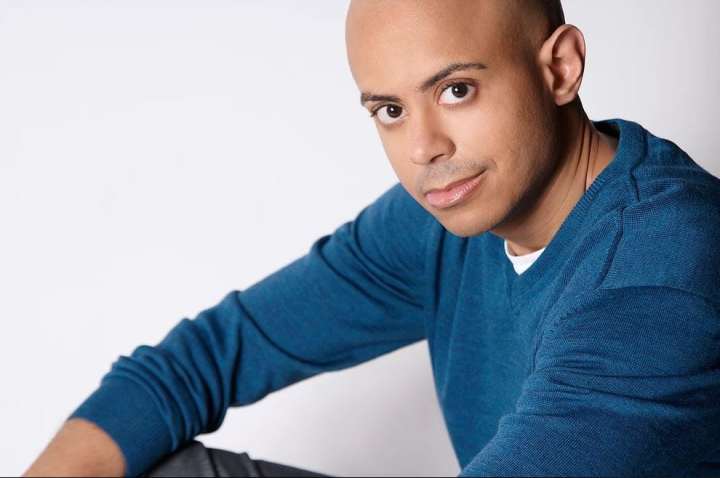
stewart-goodyear-photo-by-anita-zvonar

Who or what inspired you to take up piano and pursue a career in music?

Love and happiness inspired me to take up the piano and pursue a career in music. When I was 3, I was a painfully shy kid, but I wanted very much to communicate to people. Every time I heard music, I would open up…It was the language that spoke to me deeply from the very beginning, the first language that I spoke. Playing the piano was my way of opening my heart to people…and pursuing a career in music was my way of opening my heart to the world.

My first concert was seeing Andre Watts perform in Toronto at Roy Thomson Hall…I will always remember every second of that concert because that experience sealed it for me; I told my mother “This is what I want to do”.

Who or what have been the most important influences on your musical life and career?

The most important influences on my musical life and career have been the support of my friends and family. Their words of encouragement and their unending support inspire me every day.

What have been the greatest challenges of your career so far?

To me, challenges push me to be better…a better musician, and hopefully a better human being. Every chapter of my life shaped the course of my musical journey, and I am thankful for each challenge life throws my way.

Which performances/recordings are you most proud of?

Each performance and recording has been very meaningful to me, from the complete Beethoven sonatas to my latest recording. Each work I have recorded I have lived with almost all my life, and sharing my love of this music to my listeners is a great gift.

Which particular works do you think you play best?

I have tried very hard not to be a specialist in one composer or one genre. For me, each composer demands my complete devotion, attention and understanding.

How do you make your repertoire choices from season to season?

I wish I could say that each season is devoted to a particular repertoire! So far, my concerts are a combination of collaborations with orchestras and chamber musicians, and solo recitals.

Do you have a favourite concert venue to perform in and why?

My favorite venues are those that not only have amazing acoustics, but designed in a way that is an intimacy between myself and the audience. Two of my favorite halls I have performed in are Koerner Hall in Toronto, the Berlin Philharmonie, and the Gewandhaus in Leipzig.

Who are your favourite musicians?

My favorite musicians are those that broke the mould and brought the listeners with them. One of them is Maurice Ravel!

What do you consider to be the most important ideas and concepts to impart to aspiring musicians?

I can sum it up in a few words: Trust your heart and your gut.


Proclaimed “a phenomenon” by the Los Angeles Times and “one of the best pianists of his generation” by the Philadelphia Inquirer, Stewart Goodyear is an accomplished young pianist as a concerto soloist, chamber musician, recitalist and composer. Mr. Goodyear has performed with major orchestras of the world , including the Philadelphia Orchestra, New York Philharmonic, Chicago Symphony, Pittsburgh Symphony, San Francisco Symphony, Los Angeles Philharmonic, Cleveland Orchestra, Academy of St Martin in the Fields, Bournemouth Symphony, Frankfurt Radio Symphony, MDR Symphony Orchestra (Leipzig),  Montreal Symphony, Toronto Symphony Orchestra, Dallas Symphony , Atlanta Symphony, Baltimore Symphony, Detroit Symphony, Seattle Symphony, Mostly Mozart Festival Orchestra, Royal Liverpool Philharmonic, and NHK Symphony Orchestra.

Read more

Who or what inspired you to take up composing, and pursue a career in music?

I came to composing by a rather unusual route. I was studying cello at Birmingham Conservatoire and during a musicianship course was asked to compose a piece in the style of Bartok. I quickly realised how much I had enjoyed doing this and within a few weeks had an interview to change onto the composition course. In the following couple of years I became familiar with Mark-Anthony Turnage’s music and this inspired me to keep going and find my own voice. Two years later, after accepting to teach me for my Masters Degree at the Royal College of Music, Mark continued to inspire me, this time in person.

Who or what were the most significant influences on your musical life and career as a composer?

My family have been the most significant influence. Without their continual support and understanding I am sure I would not have a career as a composer.

What have been the greatest challenges/frustrations of your career so far?

I find the greatest challenge to be balancing my time between composing and all the other things a composer must do to maintain one’s career. Being able to do this successfully whilst still finding the concentration and imaginative space one needs should not be underestimated.

What are the special challenges/pleasures of working on a commissioned piece?

Imagining the sound of the musicians and the process of working together with them on a new piece is something that I find incredibly motivating since this is a highlight of the whole process. When the ideas are flowing, I find the working process of composing very pleasurable.

What are the special challenges/pleasures of working with particular musicians, singers, ensembles and orchestras?

Building a long relationship with a particular ensembles make the experiences of working together all the more pleasurable. Birmingham Contemporary Music Group stands out for me in this regard. I got to know the ensemble and organisation as a student, received opportunities to develop my compositional voice through working with them, and continue to have a strong relationship now in my career as a professional composer. Their virtuosity and brilliance makes every encounter special.

Of which works are you most proud?

When I achieve something in a piece that is ‘new’, adventurous or challenging for me, that is when I am most proud.

How do you work?

I start composing first thing and work through until I feel my concentration diminishing. I work with pencil on paper for much of the process, moving to Sibelius when I feel I have enough of an idea about the piece. I use a keyboard and sometimes my cello too, especially to try things out later on.

Who are your favourite musicians/composers?

My friends. I find nothing more enjoyable that hearing and watching a friend perform or a friends’ music being performed; feeling their sound, expression and interpretation, each time knowing them a little deeper.

What is your most memorable concert experience?

My Proms debut in 2012 with ‘At the Speed of Stillness’. I’ll never forget the feeling of standing on that stage for the first time to take a bow.

What do you consider to be the most important ideas and concepts to impart to aspiring composers?

Write the music that you want to hear.

And performers?

Play music that is being written now, before it is too late.

Where would you like to be in 10 years’ time?

Somewhere unexpected.

The composer Charlotte Bray has emerged as a distinctive and outstanding talent of her generation. Exhibiting uninhibited ambition and desire to communicate, her music is exhilarating, inherently vivid, and richly expressive with lyrical intensity. Charlotte studied under Mark Anthony Turnage at the Royal College of Music and previously under Joe Cutler at the Birmingham Conservatoire. She participated in the Britten-Pears Contemporary Composition Course with Oliver Knussen, Colin Matthews and Magnus Lindberg, and at the Tanglewood Music Centre with John Harbison, Michael Gandolfi, Shulamit Ran and Augusta Read-Thomas.

Read Charlotte’s full biography

(picture © Michael Wickham)

Jess Photo Shoot 117

Who or what inspired you to take up the saxophone and pursue a career in music? 

When I was 7 years old, I went to the Barracudas Carnival Arts Centre with my Dad as he was teaching drums and percussion. In the room next door to him, there happened to be a saxophone workshop and I decided to try it. I picked it up, made a sound and immediately fell in love with the instrument. I haven’t looked back since!

Who or what were the most important influences on your musical life and career? 

I take inspiration from many different saxophonists (and musicians) from hugely different genres. My saxophone role models are Barbara Thompson, Rob Buckland, John Harle and I love the music of King Curtis and Snake Davis’ solos. A family friend first introduced me to the music of Barbara Thompson when I was about 12 and ever since then I have really looked up to Barbara. As well as being such a fantastic musician, she is also such a determined and creative person and this has had a influenced me very much.   

Whenever I am in need of musical inspiration, I listen to Pee Wee Ellis’ solo on the live version Van Morrison’s Tupelo Honey. The way he combines rhythm, melody, harmony and feeling is something I greatly aspire to.

What have been the greatest challenges of your career so far? 

It has taken me a long time to realise that I am never going to be able to give a performance that I am completely happy with and that this is part of the beauty of exploring music. 

Which performance/recordings are you most proud of?

I am most proud of my performance of Michael Nyman’s ‘Where the Bee Dances’ in the BBC Young Musician Final 2016. I had never before been quite as focussed and immersed in the music and that feeling is unforgettable.

How do you make your repertoire choices from season to season? 

I love the versatility and dynamism of the saxophone. It can convey so many different emotions, just like the voice can, and one minute you can be making a hugely powerful, aggressive sound and the next you can be floating the sound and singing out a beautiful, delicate melody, and I try to reflect this as much as possible when choosing repertoire. I try and include repertoire that I can really connect with so that hopefully audiences can enjoy it as much as I do.

Do you have a favourite concert venue to perform in and why? 

I don’t have a particular favourite concert venue; I love performing and would perform anywhere! However, the first stage I ever performed on was the Coronation Hall in Ulverston when I was 9 years old. Since then, I have had so many unforgettable performance experiences on that stage and it always feels like home.

Favourite pieces to perform? Listen to? 

One of my favourite pieces to perform just has to be ‘Where the Bee Dances’, the concerto I performed in the BBC Young Musician Final.  The piece begins with the most beautiful chords and the perfectly paced build to the very last note is something that requires my whole being to concentrate and be completely consumed by the music.

Who are your favourite musicians? 

Creative musicians who manage to convey intense emotion to an audience hugely inspire me. David Bowie is one of my all time favourite musicians as is John Harle. They are both such artistic people who have written music that resonates with so many people.

What is your most memorable concert experience? 

One of my most memorable concert experiences is making a guest appearance with Jools Holland and his R+B Orchestra. I had absolutely no idea what we were going to play until 5minutes before stepping on stage. This made me quite anxious but once we had started playing, I couldn’t have been happier.

What do you consider to be the most important ideas and concepts to impart to aspiring musicians? 

I think to enjoy music is the most important piece of advice I have been given. It makes the hours of practice an absolute joy if you are enjoying being inquisitive, determined and passionate about attempting to master an instrument! Aiming to convey a personal interpretation of a piece of music is also important I think. Music is one of the most powerful forms of communication and can be used to say an incredible amount.

Where would you like to be in 10 years’ time? 

I would love to be regularly performing across the world!

What is your most treasured possession?

Most definitely my saxophones – I don’t know what I would do without them!

18 year old saxophonist Jess Gillam from Ulverston, Cumbria, began playing saxophone 11 years ago, aged 7.

Jess made history as the first ever saxophonist to win the Woodwind Final of BBC Young Musician of the Year and after competing in the Semi Final, she reached the Grand Final where she performed a concerto with the BBC Symphony Orchestra at London’s Barbican to critical acclaim.

Jess was also recently awarded Musician of the Year at the Cumbria Culture Awards presented by Melvyn Bragg. She has a busy performance schedule and has made a guest appearance with Jools Holland and his Rhythm and Blues Orchestra and has performed as a concerto soloist with the Worthing Symphony Orchestra (in the same series as Nicola Benedetti, Emma Johnson and Julian Bliss). Upcoming concerto highlights include performances with the Southbank Sinfonia and the Northern Chamber Orchestra.

Recently, Jess was the youngest of 2,600 delegates to perform at the World Saxophone Congress in Strasbourg. She performed a recital consisting entirely of world premieres by some of the world’s leading saxophonists: Barbara Thompson, John Harle and Rob Buckland as well as one of her own compositions.

Read more about Jess on her website

Who or what inspired you to take up the ‘cello and pursue a career in music?

My father is an amateur violinist and has been playing in string quartets with friends all his life. At the age of two I was allowed to sit in the room when they were rehearsing and I was obsessed with the cello and have been ever since.

Who or what were the most important influences on your musical life and career?

I was extraordinarily lucky with my first cello teacher. I started the piano with my mum, who taught me to read music and was then introduced to my teacher, Dicky Boeke, at the age of six, but didn’t start with her until I was eight as she was so busy. She taught me for 10 years, and not just about cello; it was about art, literature, opera. She helped me audition for the great Dutch cellist Anner Bylsma and I studied with him for two years from the age of 17-19. I have been on my own since then, apart from a year of studies in the US and an unforgettable summer course with William Pleeth in Aldeburgh.

What have been the greatest challenges of your career so far?

I consider my career to have reached its middle length so far, and I still have two decades to go. So of course there are ups and downs and disappointments – everybody has these. One challenge could be physical in terms of injury; however I have been very lucky in that sense. Practising and the relationship with your instrument keeps you inspired.

Which performance/recordings are you most proud of?

My last recordings, although I still hope to keep improving and being more expressive. I’m now at two-thirds of my recording project doing all the sonatas by Schubert and Brahms which include many violin pieces and on the last release is the 2nd Brahms violin sonata, which I believe is a world premiere recording. I also recorded Schubert’s Fantasy for violin and piano, which is technically a very intimidating piece, so getting my teeth into that was great, very stimulating and I am very happy with it. Some recordings just have very happy memories, for instance doing The Walton Concerto with Sydney Symphony Orchestra 7 or 8 years ago in Sydney Opera House, that most glamorous and gorgeous place.

Which particular works do you think you perform best?

I am always happy performing concertos with orchestras, however the Beethoven Cello Sonatas are particularly rewarding to perform, brimming with energy and lyricism, as they are.

How do you make your repertoire choices from season to season?

As I said, I have embarked on this enormous recording project with the Schubert and Brahms pieces so they will appear on my recital program, concertos are up to orchestras that invite me to play and then there are occasional collaborations in chamber music programs, in trio, quartet, quintet or sextet repertoire, but also projects like the one I’m doing next month with a singer and a pianist.

Do you have a favourite concert venue to perform in and why?

I mentioned Sydney Opera House; however another example is the new Melbourne Recital Centre, a stunningly beautiful place in which to perform and listen to music. I will be doing three recitals on three consecutive days in August: Beethoven, Brahms and Bach marathons, a bit of a milestone week for me.

Who are your favourite musicians?

My all-time favourite musician is a singer, Dietrich Fischer-Dieskau, the German baritone. As a teenager I started collecting his albums and still collect today. He is a supreme musician and a fantastically inspiring singer to listen to. I also really respect and enjoy listening to the American cellist YoYo Ma.

What is your most memorable concert experience?

The Walton Concerto with Sydney Symphony Orchestra in Sydney Opera House, but it could also be Teatro Colon in Buenos Aires. In fact it’s hard to say. I enjoyed Paxton last year for example.

What do you consider to be the most important ideas and concepts to impart to aspiring musicians?

I am a professor in a German Musikhochschule and I try to inspire and discipline the students; however what musicians might not realise is that they must work as creative artists. They are of course recreating scores that composers delivered, but it is very important for them to do that with creativity. They must consider traditions, what they mean, and how important and unimportant they are. Also creativity in how you practise and make things better. It is important to keep muscles supple and continue to practise in that way. Also to simply enjoy alternative approaches to keeping your mind fresh.

Where would you like to be in 10 years’ time?

My wife is English so maybe living in the UK once we have raised our kids in Holland.

What is your idea of perfect happiness?

That includes other people around you, conversation and good food.

What is your most treasured possession?

Other than my cello, nothing in the material sense.

What is your present state of mind?

I have just been working as a jury member in Brussels which was an intense period, so I am recovering from that. I am looking forward to the summer festivals, which include Music at Paxton, and also to catching up with my colleagues and working with them. I am also looking forward to going to my little basement cellar to practise!

Pieter Wispelwey performs at Music at Paxton this summer and will also be giving a masterclass:

Sunday 23 July 1.30pm, cello masterclass

An opportunity for advanced students of all ages to learn and gain insight into Bach’s Cello Suites from an acknowledged master. 

Please note places are strictly limited. For further information and application details, please contact info@musicatpaxton.co.uk by 01 June 2017.

Tickets £10.00 (concessions free entry) – unreserved.

NB: free to ticket holders for the evening concert.

Sunday 23 July 7.30pm Pieter Wispelwey in concert

J S Bach Three Suites for solo cello – No 3 in C, No 4 in E flat & No 5 in C minor

Full details and tickets

Pieter Wispelwey is equally at ease on the modern or period cello. His acute stylistic awareness, combined with a truly original interpretation and a phenomenal technical mastery, has won the hearts of critics and public alike in repertoire ranging from JS Bach to Schnittke, Elliott Carter and works composed for him.

Highlights of the 16-17 season include a play-direct project with the Sydney Symphony Orchestra, a performance of the complete Bach suites at Auditorium de Lyon and the City Recital Hall in Sydney, performances of Tavener’s Svyati with the Flanders Radio Choir and two recitals at King’s Place in London as part of their ‘Cello Unwrapped’ season. Pieter will also give series of extraordinary recitals at the Melbourne Recital Centre as part their Great Performer Series, where he will perform the complete Bach Suites, Beethoven’s complete works for cello and piano, and the two cello sonatas by Brahms over the course of three consecutive evenings.

Pieter Wispelwey enjoys chamber music collaborations and regular duo partners include pianists Cédric Tiberghien and Alasdair Beatson and he appears as a guest artist with a number of string quartets including the Australian String Quartet.

Wispelwey’s career spans five continents and he has appeared as soloist with many of the world’s leading orchestras including the Boston Symphony, Dallas Symphony, St Paul’s Chamber Orchestra, NHK Symphony, Yomiuri Nippon, Tokyo Philharmonic, Sapporo Symphony, Sydney Symphony, London Philharmonic, Hallé Orchestra, BBC Symphony, BBC Scottish Symphony, Orchestra of the Age of Enlightenment, Academy of Ancient Music, Gewandhaus Orchester Leipzig, Danish National Radio Symphony, Budapest Festival Orchestra and Camerata Salzburg. Conductor collaborations include Ivan Fischer, Esa-Pekka Salonen, Herbert Blomstedt, Yannick Nézet-Séguin, Jeffrey Tate, Kent Nagano, Sir Neville Marriner, Philippe Herreweghe, Vassily Sinaisky, Vladimir Jurowski, Louis Langrée, Marc Minkowski, Ton Koopman and Sir Roger Norrington.

With regular recital appearances in London (Wigmore Hall), Paris (Châtelet, Louvre), Amsterdam (Concertgebouw, Muziekgebouw), Brussels (Bozar), Berlin (Konzerthaus), Milan (Societta del Quartetto), Buenos Aires (Teatro Colon), Sydney (The Utzon Room), Los Angeles (Walt Disney Hall) and New York (Lincoln Center), Wispelwey has established a reputation as one of the most charismatic recitalists on the circuit

In 2012 Wispelwey celebrated his 50th birthday by embarking on a project showcasing the Bach Cello Suites. He recorded the complete Suites for the third time, released on the label ‘Evil Penguin Classics’. The box set also includes a DVD featuring illustrated debates on the interpretation of the Bach Suites with eminent Bach scholars Laurence Dreyfus and John Butt. A major strand of his recital performances is his performances of the complete suites during the course of one evening, an accomplishment that has attracted major critical acclaim throughout Europe and the US. “On paper it is a feat requiring brilliance, stamina and perhaps a bit of hubris. In practice Mr. Wispelwey proved himself impressively up to the challenge, offering performances as eloquent as they were provocative” ( New York Times).

Pieter Wispelwey’s impressive discography of over 20 albums, available on Channel Classic, Onyx and Evil Penguin Classics, has attracted major international awards. His most recent concerto release features the C.P.E. Bach’s Cello Concerto in A major with the Musikkollegium Winterthur, whilst he is also midway through an imaginative project to record the complete duo repertoire of Schubert and Brahms. Other recent releases include Lalo’s Cello Concerto, Saint-Saen’s Concerto no.2 and the Britten Cello Symphony with Seikyo Kim and the Flanders Symphony Orchestra, Walton’s Cello Concerto (Sydney Symphony/Jeffrey Tate), Prokofiev’s Symphonie Concertante (Rotterdam Philharmonic/Vassily Sinaisky.

Born in Haarlem, The Netherlands, Wispelwey’ studied with Dicky Boeke and Anner Bylsma in Amsterdam and later with Paul Katz in the USA and William Pleeth in the UK.
Pieter Wispelwey plays on a 1760 Giovanni Battista Guadagnini cello and a 1710 Rombouts baroque cello.

www.pieterwispelwey.com

(photo credit: Carolien Sikkenk)