Who or what inspired you to take up composing, and pursue a career in music?

The joy of discovering new things in music inspired me. I was self-taught, and I just found the notion of making music such a thrilling adventure.

Who or what were the most significant influences on your musical life and career as a composer?

I think a composer draws inspiration from all of the events in their lives. But looking back, I’m pretty sure some of the music I listened to when I was young provided some serious influence…the Beatles in particular. My flute teacher, Judith Bentley was also a huge influence. And then there are all of my colleagues…they continue to inspire me every day.

What have been the greatest challenges/frustrations of your career so far?

Starting out in my undergrad not knowing much of anything about classical music was an incredible challenge. For a long time I felt that I was climbing a huge mountain of knowledge, trying to pick up as many “pebbles” as I could manage to carry. But every step made me smarter and stronger. Along the way, I realized that one spends an entire lifetime learning.

What are the special challenges/pleasures of working on a commissioned piece?

Every piece is a challenge. To create something from nothing is a big thing. Sometimes I’m learning about a particular instrument’s needs (I just finished a tuba concerto…so I studied a lot of the repertoire and talked with various players to get a sense of what would be ideal in the piece). Other times, I’m trying to craft something that works for the performer(s). Then there is the challenge of getting notes on a page, which I hope the performer and listener will find interesting.

What are the special challenges/pleasures of working with particular musicians, singers, ensembles and orchestras?

I don’t think it’s possible to make a generalization about this (I’m so lucky to be able to work with such a huge assortment of performers)…each piece is different and the challenges and pleasures change daily and yearly.

Of which works are you most proud?

I don’t know if it’s possible to be proud of one particular work. They all reflect so many things for me. But the one that feels very personal is “Blue Cathedral” … it seems to affect so many people. I’m sometimes surprised at how many instrumentalists and composers tell me this is the first piece of contemporary music that they encountered when they were younger. Even more surprising is how many people have performed it more than once. That’s one of the things that makes it special.

How would you characterise your compositional language?

I let other people decide that for themselves.

How do you work?

I try to work every day, composing 4-6 hours a day: consistently, persistently, and conscientiously.

Who are your favourite musicians/composers?

Impossible to name as there are literally thousands!

What is your most memorable concert experience?

I’m lucky to have had many incredible and memorable experiences. One of the most life changing was the Philadelphia Orchestra premiere of my “Concerto for Orchestra” which took place at the League of American Orchestras’ Conference. My life changed over night after that performance. Suddenly I was known, and commissions started coming in.

What do you consider to be the most important ideas and concepts to impart to aspiring musicians?

Make sure you love what you’re doing, as you’ll spend so much of your waking time doing it. Work hard and do it to the best of your ability. Share the joy with as many other people as you can.

Where would you like to be in 10 years’ time?

Composing in my studio

What is your idea of perfect happiness?

Composing in my studio


Pulitzer Prize-winner Jennifer Higdon (b. Brooklyn, NY, December 31, 1962) is one of America’s most acclaimed and most frequently performed living composers. Higdon started late in music, teaching herself to play flute at the age of 15 and beginning formal musical studies at 18, with an even later start in composition at the age of 21. Despite this late beginning, she has become a major figure in contemporary Classical music and makes her living from commissions. These commissions represent a range of genres, including orchestral, chamber, choral, vocal, and wind ensemble.

Higdon holds a Ph.D. and a M.A. in Music Composition from the University of Pennsylvania, a B.M. in Flute Performance from Bowling Green State University, and an Artist Diploma in Music Composition from The Curtis Institute of Music in Philadelphia.

Hailed by the Washington Post as “a savvy, sensitive composer with a keen ear, an innate sense of form and a generous dash of pure esprit,” her works have been performed throughout the world, and are enjoyed by audiences at several hundred performances a year and on over sixty CDs. Higdon’s orchestral work, blue cathedral, is one of the most performed contemporary orchestral compositions by a living American with more than 600 performances worldwide since its premiere in 2000.

Her list of commissioners and performing organizations is extensive and includes The Philadelphia Orchestra, The Chicago Symphony, The Atlanta Symphony, The Baltimore Symphony, The Boston Symphony Orchestra, The Cleveland Orchestra, The London Philharmonic Orchestra, the Luzern Sinfonieorchester, The Hague Philharmonic, The Melbourne Symphony, The New Zealand Symphony, The Pittsburgh Symphony, The Indianapolis Symphony, The Dallas Symphony, as well as such groups as the Tokyo String Quartet, eighth blackbird, and the President’s Own Marine Band. Higdon has worked with musicians that include Nathan Gunn, Isabel Leonard, Hilary Hahn, and Yuja Wang.

Her Percussion Concerto won the Grammy for Best Contemporary Classical Composition in January, 2010. Higdon also received the 2010 Pulitzer Prize in Music for her Violin Concerto, with the committee citing Higdon’s work as “a deeply engaging piece that combines flowing lyricism with dazzling virtuosity.”

Among her national honors, Higdon has received awards from the Guggenheim Foundation, the American Academy of Arts & Letters (two awards), the Koussevitzky Foundation, the Pew Fellowship in the Arts, Meet-the-Composer, the National Endowment for the Arts, and ASCAP. She was also honored by the Delaware Symphony with the A.I. DuPont Award for her contributions to the symphonic literature. Most recently, she was awarded the Distinguished Arts Award by Pennsylvania Governor Tom Corbett.

Higdon has been a featured composer at many festivals including Aspen, Tanglewood, Vail, Norfolk, Grand Teton, and Cabrillo. She has served as Composer-in-Residence with several orchestras across the country including the Philadelphia Orchestra, the Pittsburgh Symphony Orchestra, the Fort Worth Symphony, the Green Bay Symphony Orchestra, the Wheeling Symphony and the Arkansas Symphony Orchestra. Higdon was also honored to serve as one of the Creative Directors of the Boundless Series for the Cincinnati Symphony.

One of Higdon’s most current project was an opera based on the best-selling novel, Cold Mountain, by Charles Frazier. It was co-commissioned by Santa Fe Opera, Opera Philadelphia and Minnesota Opera in collaboration with North Carolina Opera. All performances in Santa Fe were sold out and Higdon’s opera became the third-highest grossing opera in the company’s history at Opera Philadelphia. Higdon recently won the International Opera Award for Best World Premiere.

Dr. Higdon currently holds the Milton L. Rock Chair in Composition Studies at The Curtis Institute of Music, where she has inspired a generation of young composers and musicians. Her music is published exclusively by Lawdon Press.

For more information: www.jenniferhigdon.com
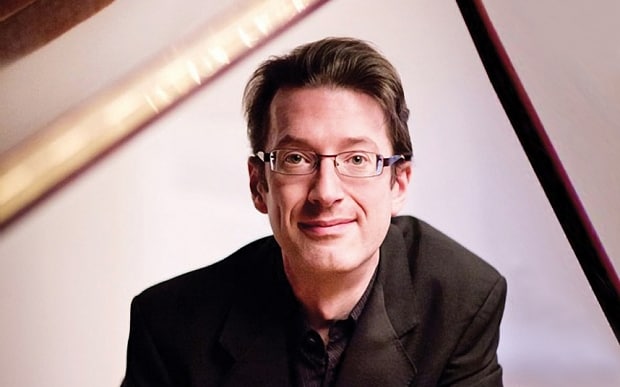
Who or what inspired you to take up the piano and pursue a career in music?

My mother studied piano and has taught piano all of her adult life. Her father has also played the piano since childhood, and has a keen interest in music, so any musical inclination comes from my mother’s side. There was always a lot of music in our house. My brothers all played something, though none of them persevered past their early teens – unfortunately I missed out on the opportunity to play in any kind of family band. Past that point there were also the sounds of more modern genres coming from different parts of the house.  I was first introduced to the piano aged five but at first didn’t really take to it, even though it seems there were things I could do without needing much instruction.  About a year later, I found that some school friends had begun regular piano lessons.  I didn’t like the idea of their being better than me, so from that point I started to take it more seriously! As I moved onto more challenging works, and to those by the great composers, I really felt a strong connection to music, and it was only a few years later that I realised that I wanted to be a musician.

Who or what have been the most important influences on your musical life and career?

My mother was my first teacher. She realised quite early that I needed additional guidance and, age 9, I also began to have lessons with Hilary Coates, and then soon after with Hilary’s husband, Christopher Elton, who is professor of piano (and at the time Head of Keyboard) at the Royal Academy of Music.  Hilary helped to focus and fine tune my technical development in those early stages, and Christopher guided me musically through my teens and into adulthood.

My first inspirations among other artists were some of those whose recordings were in our collection – pianists like Horowitz, Argerich and Rubinstein. I recall at that time being particularly inspired by listening to Rubinstein playing Chopin – in particular his carrying of a cantabile melody mesmerised me. In my early teens, I became interested in the playing of other pianists born or active in the first half of the century – Cortot, Rosenthal, Friedman, Edwin Fischer, Feinberg, Schnabel amongst others – and found in their playing particular aesthetics, ideas and inspiration to inform and enrich my own approach.  I also became interested in other historical performers.  Wilhelm Furtwängler’s conducting was a particular inspiration – the wholly ‘organic’ way in which he applied often acute agogics, always maintaining fluidity, was remarkable, as was the depth of the sonority he drew from the string sections.

What have been the greatest challenges of your career so far?

After the success in the BBC Young Musician Competition when I was 11, there was some pressure to become a full-time performer, but I’m glad that my parents and I resisted this, retaining two periods of a month each year in which I’d give concerts, but with the majority of my time reserved for music lessons and my wider education.  However, the transition from this pattern to performing more or less the whole year round in my late teens was a challenge.  I’d been used to the luxury of having relatively long periods for preparation and only playing one or two concerti and one recital programme each season.  The need to have a good deal more repertoire on the go at any given time meant I needed to make changes to my preparation regime.  It was tough at the outset of having to make these adjustments, but I managed to soldier through this period and realised that this was very much part of being a concert pianist.

Which particular works do you feel you play best?

I can’t answer this directly because I don’t think about works in quite this way.  Rather, I look at repertoire to which I feel a genuine connection (above all on an emotional level).  This could be a work by Couperin from the early Baroque or, as with this coming season, the Berg Sonata.  The question of whether a particular performance is any good or not is a separate issue, but I don’t personally feel that I’m best in, say, a given composer or period.

How do you make your repertoire choices from season to season?

I enjoy variety from one season to the next – while also striving to expand my musical horizons over time – and similarly within programmes. I can listen with pleasure to a recital of three Schubert sonatas, say, but I know that this kind of programming is not for me as a performer.  Perhaps I could flesh out my approach using this season’s programme as an example.  I enjoyed greatly playing Bach’s 4th Partita five years ago and wanted to play another of the suites, choosing the fifth French Suite which is one of my favourites.  I was considering programming Brahms op.119 – having performed a number of the chamber works and his 1st Piano Concerto I wanted now to explore some later works – when Brett Dean sent me his pieces Hommage à Brahms, written for Emmanuel Ax as interludes between each of the four Brahms Op.119 works. I thought it was very effective as a set, with the Dean pieces providing illuminating contrasts to the Brahms, and that it was fascinating to have this juxtaposition of old and new.

I have felt close to Berg’s music since performing some of his songs during my Royal Academy days. I also relished getting to know his violin concerto by reading it through with a friend who was preparing it. I love this rich and dense harmonic world, with its tonal ambiguity, whole-tone scales and chromaticism.   I think it is fascinating to consider that Debussy’s Prélude à l’apres midi d’un faune was written just a year after the Brahms op.119, and it is an ideal preface to the Berg sonata – Pierre Boulez called Debussy’s Prélude à l’après-midi d’un faune the beginning of modern music.  Debussy had used whole-tone scales and also unstable tonality, evoking atmospheres in sound that had not been known in Western music until that time.  Of course, Debussy’s work is for orchestra… However, Debussy’s champion and friend George Copeland had made a transcription for piano, as had Leonard Borwick.  There is a telling quote from Copeland about his arrangement: “I spoke to [Debussy] of my desire to transcribe some of his orchestral things for the piano — music which I felt to be essentially pianistic. He was at first sceptical, but finally agreed, and was in complete accord with the result. He was particularly delighted with my piano version of L’après-midi d’un faune, agreeing with me that in the orchestral rendering, which called for different instruments, the continuity of the procession of episodes was disturbed. This has always seems to me the loveliest, the most remote and essentially Debussyan, of all his music, possessing, as it does, a terrible antiquity, translating into sound a voluptuous sense that is in no wise physical.” Everyone knows this work and the orchestral original is indelibly imprinted.  I suppose the wanton challenge of playing a piano transcription thus appealed to me all the more…  In the end, I felt that Borwick’s was more effective in many sections (Copeland could be somewhat sketchy), so what I’m playing is mostly Borwick, with some bars from Copeland and some of my own.  I’m ending the programme with Gaspard.  I’d played and recorded this in my late teens, but I love this music and felt it was time to return to it.

Do you have a favourite concert venue to perform in and why?

Although the acoustic of the Royal Albert Hall is not a friendly one for piano (it is cavernous and projection will always be an issue), I particularly enjoy the atmosphere at the Proms. The audience is so responsive, yet they are so very quiet before you start playing. It’s hard to think of another venue where one can so immediately feel the response of audience members.

What is your most memorable concert experience?

It would be difficult to pick out one…but if I had to I might pick out the Proms once again! I have been lucky enough to have played both on the First and Last nights, which are both unique events. Certainly for my first Proms experience as a performer, playing Liszt 2 on the first night was very memorable indeed.

As a musician, what is your definition of success?

I’m sure whole books could be written on the subject of how to define success in music!  For me, having given a performance that seems to have been genuinely appreciated by colleagues brings what most feels like ‘success’.  This is one of the reasons I am increasingly drawn to chamber music.  It’s lovely if a conductor or the leader of an orchestra says something truly complimentary after a concerto, for example, but playing with a handful of colleagues and finding during the performance and afterwards that we seemed all to be firing off one another’s imagination and involvement is a wonderful feeling.

What do you consider to be the most important ideas and concepts to impart to aspiring musicians?

I don’t feel qualified to give any general answer, not least as I sense that each person needs to find his or her way of connecting deeply to music.  It could be that a promising young musician listens to the most magical (to me) performance of a Chopin Nocturne and is not particularly moved, but is shaken to the core by the last movement of Mahler 6.  I don’t want to sound in the least didactic but I have the feeling that seeking that deep connection – via whichever route works best – is the necessary starting point.  After that, ideas and concepts will begin much more easily to fall into place.


British pianist Benjamin Grosvenor is internationally recognized for his electrifying performances and insightful interpretations. His virtuosic command over the most strenuous technical complexities underpins the remarkable depth and understanding of his musicianship. Benjamin is renowned for his distinctive sound, described as ‘poetic and gently ironic, brilliant yet clear-minded, intelligent but not without humour, all translated through a beautifully clear and singing touch’ (The Independent), and making him one of the most sought-after young pianists in the world.

Benjamin first came to prominence as the outstanding winner of the Keyboard Final of the 2004 BBC Young Musician Competition at the age of eleven, and he was invited to perform with the BBC Symphony Orchestra at the First Night of the 2011 BBC Proms at just nineteen. Since then, he has become an internationally regarded pianist and was announced in 2016 as the inaugural recipient of The Ronnie and Lawrence Ackman Classical Piano Prize with the New York Philharmonic. As part of this he returns to New York in April 2018, performing Beethoven’s Piano Concerto No. 3 under the baton of Esa-Pekka Salonen as well as chamber music with members of the orchestra at the Tisch Center for the Arts at 92nd Street Y.

Read more

(photo: Patrick Allen/Opera Omnia)

Who or what inspired you to take up singing and pursue a career in music?

When I was a student at university I was expecting to begin a career as a classroom music teacher.  It was only through watching fellow choral scholars begin their professional lives in London choirs that awoke me to the idea that you could sing for a living.  My colleagues and I often have people ask us, post concert, “so what’s your day job?” but that could so easily have been me asking that question.  It was when I observed the early career paths of ex-students like John Mark Ainsley and Paul Agnew that it dawned on me that this was an actual profession and that I might have a go at it.  I have my wife to thank for giving me the impetus and courage in my early twenties to give up my teaching job and try becoming a freelance singer.

Who or what have been the most important influences on your musical life and career?

My musical education has been fairly sponge-like and I have been happy to learn from anyone.  My earliest singing teachers gave me a grounding which I never forget: Valerie Heath Davis was a chorus member at ENO who gave me my first singing lessons outside school and taught me how to breath for singing.  She prepared me for my choral trials.  Janet Edmunds looked after me during university and introduced me to this thing called Lieder.  One of her mantra’s was ‘Sing for the joy of singing’.  I never understood it at the time but I most certainly do now.  Then came David Mason and David Pollard, the latter introducing me to the idea that I could be a soloist and that I might consider retraining at the Guildhall School of Music & Drama.  All these people have had a huge influence on the direction of my life and career.

What have been the greatest challenges of your career so far?

I don’t feel my career has been that full of challenges in all honesty.  It’s not that I’ve taken the easy road, but that I have enjoyed myself in practically everything I do.  I try not to commit to work that I think I am unable to fulfil – something that is too high, too low, to heavy a voice type or whatever – and so far I think I have sung within my comfort zone. I have been surrounded by people who support what I do, especially my family, and this has made my life pretty easy, in the scheme of things.  I have no complaints.

Which performance/recordings are you most proud of?

I have very warm memories of Vaughan Williams’ The Pilgrim’s Progress at Sadlers Wells with the Philharmonia Orchestra, conducted by Richard Hickox.  The cast was magnificent and made up pretty much of my friendliest colleagues.  I hugely enjoyed that experience.  I also treasured being Billy in Britten’s Billy Budd at Opera North last year, directed by my sister-in-law Orpha Phelan and conducted by Garry Walker.  That was also a perfect storm of artistic elements.  I try not to listen to my own recordings in general; I’m very glad other people enjoy them but it’s too much like listening to your own voice on your answer-phone message.

Which particular works do you think you perform best?

I like the ambiguity of this question because it implies that, although you might think you play or sing something especially well, others listening might shake their head in disbelief.  One’s own perception of a performance is often at odds with how others witness it.  Sometimes I have been in vocal difficulties, have managed to make it through a show on a wing and a prayer, and people have come up afterwards and said how wonderfully they thought I had performed.  On the other hand, times when I’ve thought I was in glorious voice have sometimes been met with a friendly nod.  I have no real answer to this question otherwise.

How do you make your repertoire choices from season to season?

Repertoire choice is not always something over which one has final control.  In terms of recital programmes, I can offer promoters my current choice (and my Schubert cycle project at the moment is very palatable, it would seem) but even then music societies and festivals often have a particular theme or composer’s anniversary that they would like you to match and I do my best to accommodate that.  As for opera roles, I have very little choice in what is offered to me.  I can accept or decline the work; that’s where my power ends.

Do you have a favourite concert venue to perform in and why?

There are two recital venues I have sung in recently that have stood out in my mind as being exceptional and for different reasons.  One is the Park Avenue Armory in Manhattan, one of the wood-panelled, upstairs officers’ quarters that are used for recitals.  The acoustic was so generous to me as a singer, without being too washy, that I hardly felt I needed to sing at all.  The other is the small studio at the Crucible, Sheffield, home of Music-in-the-Round where I am singer in residence.  I love the intimacy of this venue and its re-invention of the concert space.  It re-defines one’s relationship with the audience.

What is your most memorable concert experience?

The 2014 Last Night of the Proms was very memorable although, when I think back on it, my time on stage was a bit of a blur.  What I remember most is finishing my last item, rushing back to my dressing room as the post-adrenalin hysteria began to kick in, changing out of my tails and into normal clothes and slipping back into the hall, high up in the audience, so that I could witness the last few pieces on the programme.  The atmosphere was electric.  I also vividly recall Peter Sellar’s semi-staging of Bach’s St John Passion at the Philharmonie in Berlin, with Sir Simon Rattle conducting the Berlin Philharmonic.  I didn’t have all that much to sing in fact but the experience of performing Christus right in the centre of that drama was overwhelmingly intense.

As a musician, what is your definition of success?

This is a question I sometimes ask of conservatoire students – otherwise we may not always be sure what it is we are aiming for.  I’ve decided my goal is to be happy, to be able to work with wonderful musicians at a high level, enough to live comfortably but not so much that the stress becomes a burden.

What do you consider to be the most important ideas and concepts to impart to aspiring musicians?

All the predictable things, really: professionalism, which means decent preparation, time keeping (as in one’s diary rather than being on the beat!), being an open, supportive colleague, self-discipline, that sort of thing.  Those things form the basic grounding that I would hope any musician, any person, would value as being important.  The idea that being an extraordinary artist allows one to overlook these ‘because you’re special’ doesn’t really wash with me.  Other than that, for singers especially I would promote honesty of communication with one’s audience as being something worthwhile fostering.

Where would you like to be in 10 years’ time?

Still working at the highest level I can manage but also ready for approaching retirement, whatever that may mean.  If that means teaching/coaching a little more, perhaps writing more music, then so be it.

What is your idea of perfect happiness?

The knowledge that the people I love are safe, comfortable and happy.  A beautiful view on a glorious day with me striding through the middle of it.  I don’t even need to be with my loved ones, I am happy to be on my own in peace and quiet, but to know that they are content while I’m out and about puts me in my best head-space.

What is your most treasured possession?

I thought a lot about this question; in the end, I guess I’m not so keen on the idea of a possession being that important to me.  People are important but of course I do not own any of them.  So my answer has to be my voice.

What do you enjoy doing most?

This is a really hard question too; doing something for fun, like hiking a beautiful trail in wonderful scenery or doing professionally?  The most enjoyable thing?  I don’t know.  But It’s very likely to be singing, especially in rehearsals.

What is your present state of mind?

I’m content.  That’s what Billy says in Billy Budd and it struck quite a chord with me then.  “That’s all right, Sir, I’m content”.  Yup, that’s me right now.

RW: Here’s an extra question for fun.

If I weren’t a singer, what would I like to have been?

In my next life, I want to come back as a dancer.  I wish I could move like those amazing dancers, classical ballet, jazz, tap, latin, I don’t mind what.  And I wish I could lead my partner with confidence rather than have them tut, give up on me and just take over.  Happens every time!

RW: And another – is there anything you wish you could do better?

I can’t hula-hoop.  Every time I try, it has my wife in stitches of laughter.  It just drops off my waist and round my ankles.  Very embarrassing.  Also, when I try to swim front crawl but legs alone, with a float or whatever, I go backwards.  My wife finds this hysterically funny also.

Roderick Williams’ new CD, with Susie Allan, piano, ‘Celebrating English Song’ is available now on the SOMM label. Further information here


Roderick Williams encompasses a wide repertoire, from baroque to contemporary music, in the opera house, on the concert platform and in recital. He won the Singer of the Year Award in the 2016 Royal Philharmonic Society Awards and was awarded the OBE for services to music in June 2017.

He enjoys relationships with all the major UK opera houses and is particularly associated with the baritone roles of Mozart. He has also sung world premieres of operas by, among others, David Sawer, Sally Beamish, Michael van der Aa and Robert Saxton.

Roderick Williams has sung concert repertoire with all the BBC orchestras, and many other ensembles including the Royal Scottish National Orchestra, the Philharmonia, London Sinfonietta, Manchester Camerata, Royal Liverpool Philharmonic Orchestra, the Hallé, Britten Sinfonia, Bournemouth Symphony, Scottish Chamber Orchestra, Deutsches Symphonie-Orchester Berlin, Russian National Orchestra, Orchestre Philharmonique de Radio France, Ensemble Orchestral de Paris, Academy of Ancient Music, The Sixteen, Le Concert Spirituel, Rias Kammerchor and Bach Collegium Japan. His many festival appearances include the BBC Proms, Edinburgh, Cheltenham, Aldeburgh, Bath and Melbourne.

In 2015 he sang Christus in Peter Sellars’ staging of the St John Passion with the Berlin Philharmonic conducted by Sir Simon Rattle – a performance now available on DVD.  He will sing this role again with both the Berlin Philharmonic and the Orchestra of the Age of Enlightenment in 2019.

Recent and future engagements include Oronte in Charpentier’s Medée, Toby Kramer in Van der Aa’s Sunken Garden and Don Alfonso/Così for English National Opera, the title role in Eugene Onegin for Garsington Opera, Van der Aa’s After Life at Melbourne State Theatre, Van der Aa’s Sunken Garden at Opera de Lyon, the Amsterdam Sinfonietta and with Dallas Opera, the title role in Billy Budd for Opera North and at the Aldeburgh Festival, Papageno Die Zauberflöte and Ulisse  Il Ritorno di Ulisse in Patria for the Royal Opera House, Covent Garden, a concert performance of Ned Keene/Peter Grimes with Accademia Nazionale di Santa Cecilia in Rome, the Last Night of the 2014 BBC Proms, as well as concert performances with many of the world’s leading orchestras and ensembles. He is also an accomplished recital artist who can be heard at venues and festivals including Wigmore Hall, Kings Place, LSO St Luke’s, the Perth Concert Hall, Oxford Lieder Festival, London Song Festival, the Musikverein, Vienna, the Concertgebouw, Amsterdam and on Radio 3, where he has participated in Iain Burnside’s Voices programme.

His numerous recordings include Vaughan Williams, Berkeley and Britten operas for Chandos and an extensive repertoire of English song with pianist Iain Burnside for Naxos.

Roderick Williams is also a composer and has had works premiered at the Wigmore and Barbican Halls, the Purcell Room and live on national radio. He was Artistic Director of Leeds Lieder + in April 2016.


(Artist photo: Groves Artists)

Who or what inspired you to take up the piano and pursue a career in music?

I used to listen to a lot of music (mainly vocal) when a young child and so my parents decided to buy a piano for me.

Who or what have been the most important influences on your musical life and career?

I’m largely self-taught as a pianist but have been inspired at different times by recordings of artists such as Richter, Gilels, Barenboim, Brendel and many others.

What have been the greatest challenge of your career so far?

Performing all the Beethoven sonatas in two weeks during the 2011 Edinburgh Festival.

Which performance/recordings are you most proud of?

I have just finished recording most of the Beethoven solo piano music and I’m currently listening to the tapes to work out whether I can be proud of them or not.

Which particular works do you think you play best?

I think that’s probably for other people to decide.

How do you make your repertoire choices from season to season?

I usually devise a large-scale project for the season such as a Beethoven or Schubert cycle but it’s also important to play as many different composers as I feel comfortable with. Inevitably I have to deal with requests from promoters which mean I always play more repertoire than is ideal each year.

Do you have a favourite concert venue to perform in and why?

The Concertgebouw in Amsterdam (both large and small halls) has amazing acoustics and I have fond memories of my Carnegie Hall debut.

What is your most memorable concert experience?

Possibly my debut at the Edinburgh International Festival in 2003 or returning there to play Charles Ives’ mind-bogglingly complicated Concord Sonata.

As a musician, what is your definition of success?

Being able to go to sleep after a concert and forget about it, not lying awake thinking that it wasn’t good enough.

What do you consider to be the most important ideas and concepts to impart to aspiring musicians?

The idea that music-making is not a circus and that we’re not necessarily interested in how fast you can play. Use imagination in choosing and exploring lesser-known parts of the repertoire as there is a risk that all young pianists now want to play the same pieces.


