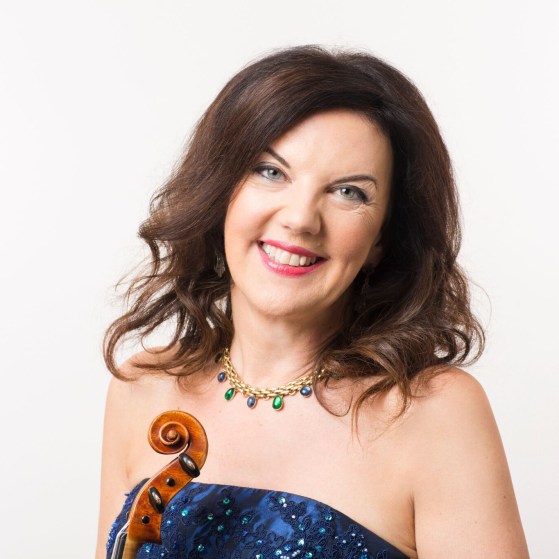
Who or what inspired you to take up the cello, and pursue a career in music?

When I was growing up, there was always music playing in the house, and my parents started me on the recorder at 4, the piano at 5, and then the cello at 6. I was very lucky to start with a fantastic cello teacher (Marina Logie) who is a family friend and lives very close by. She really instilled a love and curiosity for music in me, and also set me up very well technically. When I began with my current teacher, Leonid Gorokhov, at 11, this feeling was encouraged even more, and I think that I have them both to thank for my career in music!

Who or what have been the most important influences on your musical life and career?

Apart from my two teachers, the pianist Alison Rhind (who coached me for several years) was incredibly important in my musical development. I am lucky to have worked with some amazing musicians who have very much influenced my playing and my development as a person, including Petr Limonov, Tom Poster, Huw Watkins, and Krzysztof Chorzelski.

Winning the BBC Young Musician Competition definitely shaped the trajectory of my career, and left me with a really special relationship with the BBC.

Which performance/recordings are you most proud of?

I am really proud of the CD ‘1948’ I recorded with Petr Limonov, as we took every effort to approach the project with great care and love for the music. I also am proud that I had the courage to wait until I felt I was ready to record my first CD, which isn’t always easy with the pressures of the music industry!

Do you have a favourite concert venue to perform in and why?

So far I am really enjoying exploring lots of different venues, but I think that the Wigmore Hall could come to have a special place in my heart. The acoustic is stunning, and its history of having hosted such incredible performers makes it very exciting to perform there!

Who are your favourite musicians?

That’s a very hard question, as I find inspiration in so many people’s playing (and there are so many insanely talented people around at the moment!). I’m a huge fan of the ‘old-style’ musicians including Heifetz, Szeryng, Shafran, Piatigorsky, Fritz Wunderlich and many more.

What is your most memorable concert experience?

I think that the final of the BBC Young Musician will always be up there with the most memorable performances for me, as it was the first time I had played with such a good orchestra and conductor, in such an amazing hall.

As a musician, what is your definition of success?

For me, it is to find, and stay true to, my own voice. Success is to never stop learning; complacency would be failure for me. I also think that being able to collaborate with people who inspire me is a form of success!

Where would you like to be in 10 years’ time?

In 10 years I would like to have 10 years of exciting new experiences behind me, with lots of travel and playing in many different situations with different people. At that point I might consider getting a teaching position somewhere, but It’s too far ahead to know how my desires will change in the process!

What is your most treasured possession?

Definitely my cello. I am so so lucky to have been given a beautiful Ruggeri cello by some private benefactors. It makes (almost) every practice session a joy


Winner of the 2012 BBC Young Musician of the Year Competition, Laura van der Heijden has been making a name for herself as a very special emerging talent, captivating audiences and critics alike with her imaginative interpretations and probing musicianship.

Laura van der Heijden’s critically acclaimed debut album ‘1948’ (Champs Hill Records, 2018), with pianist Petr Limonov, focuses on music for cello and piano from the Soviet era, and has received BBC Music Magazine’s Newcomer of the Year award.

Read more


If you enjoy the content of this site, please consider making a donation towards its upkeep:

Buy me a coffee

Who or what inspired you to pursue a career in music?

Music has always been a part of my life to the point that I could not envision a career outside of music. During my undergraduate study, I found myself more drawn to musicology than performance. However, it wasn’t until my PhD that I realised the power in forging a career that bridges both.

Who or what have been the most important influences on your musical life and career?

My parents encouraged me to pursue music. My professors at university opened up so many possibilities for what that path could look like. I found wonderful support during my study abroad year at McGill University. That is where I first learnt about the composer Florence Price. Studying the history of this incredible woman of African descent then opened up the career path I’m on now.

What have been the greatest challenges of your career so far?

As I’ve begun to grow more into my identity as a pianist-scholar, one of the biggest challenges has been embracing public performance. Musicology has always felt much safer and a little more anonymous—the perfect match for my introvert self! But public performance has pushed me to embrace more open and vulnerable ways of communicating my passion.

Which performances/recordings are you most proud of?

I am most proud of my Four Women recording. The album focuses on four composers from the first half of the twentieth century: Florence Price, Vítězslava Kaprálová, Ethel Bilsland and Margaret Bonds. The album title alludes to Nina Simone’s 1966 song of the same name. I have always been so moved by Simone’s aspiration to become a classical pianist and wanted to bring her influence into the recording. Four Women is very autobiographical and represents my first real venture into communicating my passion with openness and vulnerability.

Which particular works do you think you perform best?

Florence Price’s Fantasie Negre and Vítězslava Kaprálová’s Dubnova Preludia (April Preludes), Op. 13.

As someone who champions music by women composers, how do you make your repertoire choices?

My repertoire choices are often inspired by the kind of research I’m doing. For example, my research on Florence Price and her Chicago community has led me to programme works by Chicagoan African-American women composers, past and present. Other times, my choices are inspired by collaborations. Working with violinist Er-Gene Kahng has broadened my repertoire to encompass more duo and chamber material by Price and her peers. I am also excited to be in the midst of preparing Doreen Carwithen’s Concerto for Piano and Strings as part of a collaboration with the Singapore-based organization Music For People.

What is your most memorable concert experience?

Earlier this year, I gave a recital at the Chicago Cultural Center. The programme was called Of Folk, Faith & Fellowship: Exploring Chicago’s African-American Women Composers. I performed Florence Price and Margaret Bonds alongside Regina Harris Baiocchi and Dolores White. Baoicchi and White are contemporary composers and it was such an honour to have them attend the concert. What’s more is that the Chicago Cultural Center used to be a library and Price and Bonds would regularly visit. The whole performance was so immersed in the wonderful history that it sought to present. It was an unforgettable experience.

As a musician, what is your definition of success?

Defining success became much easier once I formed a mission statement for my work as a musician. I recognized that my mission would evolve alongside my own creative growth. But as it stands, my mission is to challenge systems of oppression and amplify historically silenced voices. My success is defined by every opportunity I have to perform or record the music of marginalized composers, particularly as these moments are often grounded in even greater historical or cultural significance. And so, my definition of success stems from my ability to fulfil my mission.

What do you consider to be the most important ideas and concepts to impart to aspiring musicians? 

To not be afraid to shape your path in your own image. Championing music by women composers has been empowering for me. And so, to aspiring musicians, I encourage you to embrace and involve your fullest self along your journey.

What is your present state of mind?

A mix of hopeful, excited, determined and eager.


Samantha Ege is a British scholar, pianist and educator. Her PhD (University of York) centres on the African-American composer Florence Price. As a concert pianist, Ege’s focus on women composers has led to performances in Singapore, Australia, the UK and the US Ege has also championed Florence Price’s repertoire alongside violinist Er-Gene Kahng with duo recitals in Singapore, Hong Kong and the US.

Ege released her debut album in May 2018 with Wave Theory Records, entitled Four Women: Music for solo piano by Florence Price, Vítězslava Kaprálová, Ethel Bilsland and Margaret Bonds. The album featured the world première recording of Bilsland’s The Birthday Party, which led to Ege preparing an edition of the suite, now published by Faber Music. Four Women has been described as “an impressive collection…performed with virtuosic assurance.” Ege has also been commended “for her goal to bring the music of these composers to greater public awareness.”

www.musicherstories.com


If you enjoy the content of this site, please consider making a donation towards its upkeep:

Buy me a coffee

tasmin-little

Who or what inspired you to pursue a career in music?

It was quite by chance – I feel ill with chicken pox and was bored so I began to teach myself the recorder. I really loved playing an instrument and when I was better, I started the piano and the violin

Who or what have been the most important influences on your musical life and career?

Yehudi Menuhin was a huge influence of course…..but I think that all the teachers at school had their own influence and we learned from all of them. Since leaving school and performing professionally, many conductors have influenced me, especially Richard Hickox and Sir Andrew Davis

What have been the greatest challenges of your career so far?

Performing the Ligeti violin concerto – it’s hugely difficult and really challenges the player in every way!

Which performances/recordings are you most proud of?

I am very proud of my Elgar concerto with Andrew Davis and Royal Scottish National Orchestra. It won a Classic BRIT Award and I felt very happy as I waited a long time to record it, so I felt I gave my very best.

Which particular works do you think you perform best?

I’d like to think that I am able to bring some insight into every composer that I choose to perform. If I don’t feel an empathy with a composer or piece, I prefer not to play it! I’d rather leave it to people who like it, and play the things that I like most. That said, I have a huge repertoire so I haven’t exactly limited myself!

How do you make your repertoire choices from season to season?

There are various factors to consider – who I’m playing with and the repertoire that they like. Orchestras often have their own ideas regarding repertoire and then I like to learn new pieces every year so I am always programming new things.

Do you have a favourite concert venue to perform in and why?

I adored playing in Carnegie Hall – the floorboards are alive with history, it’s so inspiring!  I was playing with Simon Rattle and the Berlin Philharmonic Orchestra so I was in amazing company!

What is your most memorable concert experience?

It’s hard to choose because I have had so many fantastic experiences but probably my concert in the Royal Albert Hall at the Last Night of the Proms – the atmosphere was so amazing and so friendly! I also enjoyed playing for 40,000 people in Hyde Park – very exciting indeed to see all those faces!

As a musician, what is your definition of success?

My definition of success is simply to be playing to the very best of my ability.

What do you consider to be the most important ideas and concepts to impart to aspiring musicians?

The most important thing is to be yourself. Anything less than that will come across as un-natural and superficial so it’s important to be authentic

Where would you like to be in 10 years’ time?

I’d like to be enjoying a career in broadcasting, as well as some motivational speaking, plus finding some time for hobbies and seeing plenty of my friends and family!

Tasmin Little performs at Music at Paxton with pianist Piers Lane on 23 July in a programme including music by Schubert, Brahms, Ireland, Vaughan Williams and Franck.

Further information


Tasmin Little has firmly established herself as one of today’s leading international violinists. She has performed on every continent in some of the most prestigious venues of the world, including Carnegie Hall, Musikverein, Concertgebouw, Philharmonie Berlin, Vienna Konzerthaus, South Bank Centre, Barbican Centre and Royal Albert Hall, Lincoln Center and Suntory Hall.

Read more

Who or what inspired you to take up piano, and pursue a career in music?

My parents introduced me to several activities when I was very young; there was ballet and sports (I reached competition level in swimming). Music was already present in the house – my father was a surrealistic painter and always worked while listening to music in his studio. But it wasn’t until we visited a friend who owned a piano that the idea cthat I could start taking lessons came about.

Later on, growing up, I started making a selection, making my own choices. First, I decided to stop ballet in order to learn the violin. I was already leaning more towards music. But soon I realized that the piano was closer to my heart and my abilities, and at age 12 I told my parents I wanted to pursue music seriously.

Since then, and despite the many ‘detours’ and experiences I had – undergoing an academic course and taking a two-and-a-half-year break from music in my mid twenties –  an inner calling has always led me back to the piano and that motivated me to pursue a career in music. Intuitively, I understood that this professional path would satisfy the needs of my body, mind and soul at the same time. It is a balance of intellectual and manual work. Indeed, I perceive “art” in its full meaning, crystallized by the Ancient Greeks in the word τέχνη (technè), which gave our modern word “technique”, but, depending of the context, could signify both craft-like knowledge, skill and “art” – that is to say, the capacity to express emotions. Another ancient concept that I find particularly interesting to describe a musical career comes from Dionysius from Halicarnassus that talks about introducing “diversity into homogeneity”. What we do is every day the same,  it is never the same. The possibility to reinvent oneself daily and the freedom that it implies in music is something that I very soon understood I couldn’t live without.

Who or what have been the most important influences on your musical life and career?

I have always been in search of a mentor, and wasn’t fortunate enough to find one during my studies. Until recently I have been looking for someone to fit the role, and fate made me meet Jorge Luis Prats, who inspired me for years as a musician, and the polished the artist I wanted to be.

On a personal level, my father’s paintings, work ethic and dedication to art and beauty have been a huge influence in my approach to music. My mother’s sensibility and at the same time practicality helps me to look at the bigger picture whenever I tend to get stuck in small things and details, since I am an eternal perfectionist.

On a larger level, I want to stress that the other art forms have always been an influence on my musical life, and they help to nourish it. Amongst them, poetry – I write poetry myself in Italian, French and English – and dance, everything that has to do with the body’s movement, as for me music is movement, flow.

Nature too, as much as it inspired composers, is something I have to feel close to in order to create.

In the end, I was blessed by my father’s surrealistic philosophy and imagination, by the way he taught me to look at everything that surrounds me with a new and personal perspective, as a potential inspiration, to make it my own. And to take time. To be an observer and a listener. This are crucial components for me in order to be a good musician.

What have been the greatest challenges of your career so far?

Having access to a piano. Having access to a good piano. Nothing is more frustrating than when you want to play or have to practice and you can’t.

Evolving in a very conventional and constrained world – especially in today’s music education system – when you are different and your approach is unconventional. So a real challenge was and is to make my path and my vision accepted and not to be judged for not having done or doing things that are “expected”. Being a free spirit in a way is a challenge in the “business”.

Accepting where you are, being patient in achieving your fullest potential and enjoying the process!

Which performance/recordings are you most proud of?

I can honestly say that I am never satisfied with a performance or recording. The ones that I am most proud would have to be the ones that involve the highest degree of challenge as this is a factor that helps me push my limits. As an example, a recent and improvised recording of 3 contemporary pieces by French composer Jean-Luc Gillet, during an artistic residency with him, done on an old 1984 Steinway that had a very uneven keyboard and piercing sound in the higher register and that hadn’t been played for 15 years. But at the same time that piano had a wonderful soul and sound signature. When I manage to reach new levels of interpretation on challenging instruments, that’s when I am most satisfied.

Which particular works do you think you play best?

It tends to change, as it is deeply connected with one’s maturity and knowledge of certain pieces. But in general, the repertoire that explores the sound possibilities of the piano. I have more a sonic approach to the piano than a technical one. That’s why the virtuoso repertoire doesn’t speak to me as much. I can’t really speak of particular composers or eras, rather a way of writing music. When I see a score, I know instantly if it is music that I will play well. And this goes from Rameau, Scarlatti and Bach, through Brahms, Rachmaninov to contemporary music. Piano is an instrument-orchestra, and I like to play the composers that best keep that in mind.

How do you make your repertoire choices from season to season?

My father always used to tell me that he had more ideas than he would ever have time during his life to paint them all. And he kept lists of all of them so he didn’t forget them and could come back to them later when he has the time or inspiration to accomplish them.

I feel the same about the pieces I want to perform. So I keep a list of composers and pieces that I discover year after year. And by looking at the list, I start creating connections. Sometimes it is between composers and then I would do some meticulous research to find the right pieces to put together. Sometimes, it is precisely while researching on a certain piece that I create connections with others I know or I read about those connections in the literature I am reading.

I particularly like to put unknown or forgotten pieces in my repertoire, and I love to collaborate with contemporary composers and premiere their works.

Do you have a favourite concert venue to perform in and why?

If I had the ideal concert venue, I know I wouldn’t feel the same in it twice. Acoustics are a very subtle matter. They can significantly change between a rehearsal when the hall is empty and the actual performance, where the filling of the hall with members of the audience can sometimes drastically modify your perceptions. For me it is also a matter of having or creating the right energy. Some venues have better “energies” than others, but the audience’s energy is equally important, no matter where you perform. In the end, because these are all factors that you can’t control, I’d like to think that the best concert venue has to be in the musician’s mind, in a process that is close to what Glenn Gould described in the way that you have to recreate a “good piano” conditions in your mind when you have to play on a not so good instrument.

Who are your favourite musicians?

Those who are passionate and have a “signature sound”. But in order to keep an interpretative authenticity, I don’t listen to classical pianists too much. I am fascinated by some conductors – Kurt Masur, Seiji Ozawa, Herbert von Karajan, Zubin Mehta, Lorin Maazel…

Outside the classical world, amongst the ones that I keep going back to and that have emerged as inspirational figures, I would like to mention: Aziza Mustafa Zadeh, jazz pianist, Estrella Morente, flamenco singer, Hayley Marie, lead vocalist of Australian indie rock band “The Jezabels”, the rock band “Dream Theater”, Lisa Gerrard, Rodrigo Costa Felix, fado singer, and many others…

What is your most memorable concert experience?

One where I came out of my body and was able to watch myself perform from the outside, as if I was a spectator.

As a musician, what is your definition of success?

Not just as a musician, but as an artist, the greatest success is when you make the audience feel something, when you surprise them, touch them, and maybe, through your art, make them discover something about themselves; when they walk out of the concert hall and they are a new person; when your art has an impact on someone’s life and is able to bring hope.

What do you consider to be the most important ideas and concepts to impart to aspiring musicians?

Humbleness. To be aware that everything has already been created, and the only approach possible to art is by being true to yourself and authentic.

And to not be afraid to question yourself and not always find the answers. And to take time. Even time off, if needed. Sometimes taking a break will make you evolve much faster afterwards.

Of course, as in all classical disciplines, an almost sacred devotion to music is necessary in order to do it justice (from work ethic and rigour, to the life sacrifices that a musical career involves, to achieving a mind, body and spirit balance…)

And to be smart. You are who you are without all the expectation and pressure or the perspective of what people think of you. Taking all that aside and really homing in on who you are and embellishing it with your craft is the way to go.

Where would you like to be in 10 years’ time?

I live in the moment, and try to be as “present” as possible. I live from day to day and can’t see myself a week from now, let alone 10 years in the future!

What is your idea of perfect happiness?

To be at peace with oneself. Live life to its fullest without having any regrets.

What is your most treasured possession?

My parents’ handwritten notes.

What is your present state of mind?

I am constantly in a meditative state of mind, with a flow of different thoughts in it.


Ida Pellicioli’s website