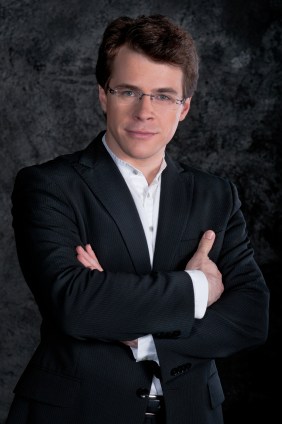
jakubhr_852420ar20-20please20credit20zbynek20maderyc20-20resized
(photo credit: Zbynek Maderyc)

Who or what inspired you to take up conducting and pursue a career in music?

There were lots of influences. Examples of many famous and less famous conductors. Among all, I’d mention the American Leonard Bernstein and in my own country Jiří Bělohlávek, whose conducting I could observe personally. It happened when I was a teenager. I found out for myself then that I wanted MUSIC to be a central point of my life. My psyche and specific talents somehow indicated conducting would be the best path, although at that time I could imagine to go into many other professions.

Who or what were the most important influences on your musical life and career?

Definitely my parents and grandparents at first (even though no one in my family is a professional musician), then my music teachers (especially my trombone and other brass instruments teacher at a primary art school Jiří Vrtek who was also a very skilled and passionate leader of many sorts of wind bands in which I played already as a kid), then the conductor of my student symphony orchestra in Brno Tomáš Krejčí who gave me my first, highly desired conducting opportunities and found me a conducting teacher – and finally aforementioned Jiří Bělohlávek with whom I studied at the Academy of Performing Arts in Prague after I had graduated from what we call “gymnasium” (a grammar school in English). And obviously a lot of splendid (and less splendid) recordings – LPs, cassettes, later CDs.

What have been the greatest challenges of your career so far?

There is a lot of details which I cannot mention. Difficult to choose. Some of my “jump-in” experiences (Carmen or La bohème without rehearsals), some of the difficult operas, even if rehearsed (Mihalovici’s Krapp or The Last Tape, for example), some of the contemporary premieres (lately Olga Neuwirth’s percussion concerto Zero-Zone, for instance), first Le Sacre also wasn’t as easy. These particularities shouldn’t cover the substantial challenge, though: to find the most direct and inspirational way how to communicate with every orchestra one leads so that both the players and the audiences are enriched and happy…

Which performance/recordings are you most proud of? 

I think both Má vlast recordings I’ve made so far – the first with The Prague Philharmonia, taken live in 2010 at the Prague Spring Festival, and the second the brand new now with the Bamberg Symphony – are both quite representative. That’s as for recordings. I cannot say about the performances. There were too many (and too many details!) which I really loved. I was rather proud as I graduated ambitiously from the Academy in 2004, performing my beloved Asrael Symphony by Suk by heart. I kind of tasted where my abilities could go.

Which particular works do you think you perform best?

Works with great intelligence and highly emotional contents.

How do you make your repertoire choices from season to season?

It’s always a complex decision. I’m personally putting a great deal of new pieces for me to learn each season, to make progress in my knowledge (and enjoyment) of a wide repertoire. “My” orchestras (such as Bamberg now) have their own portfolios with which I’m working closely and sensibly. As soon as the main focuses are clear, I’m also trying to enable myself (and my orchestra[s]) to get deeper in the pieces – and that means repeating them, also at various places. And I have been trying to find the right balance for years now between orchestral stuff and opera. Some seasons are more operatic, some less. (I think my programmes are very well balanced in terms of Czech/Slavic/European/international music now. The same for all possible styles, even if, roughly put, years 1750–1950 prevail.)

Do you have a favourite concert venue to perform in and why?

Several of them. I would definitely mention some of the older halls in Europe and America, above all my national “home” at Rudolfinum in Prague, Musikverein in Vienna, Concertgebouw in Amsterdam or Severance Hall in Cleveland. And then some of the newer marvels: Suntory Hall in Tokyo and the Symphony Hall in Osaka, Philharmonie in Berlin, Gewandhaus in Leipzig, the new Helsinki Music Centre, the Los Angeles Walt Disney Concert Hall… I like my professional home in Bamberg, too. And I’m looking forward to performing at the Philharmonie in Paris where I haven’t been on stage yet. I liked it in the audience a lot.

Who are your favourite musicians?

So many that it wouldn’t fit on one page.

What do you consider to be the most important ideas and concepts to impart to aspiring musicians?

Never to stop working hard – but in a relaxed manner. And to be personal – without wilfulness.

What about your new position at Bamberg excites you the most?

The amazing and open-minded musicality of the players there – combined with great characters (in playing/music and in psychology). And the city’s devotion to culture.

What is your idea of perfect happiness?

A complete balance – of mind (brain), emotions and spiritual connections, of work and doing nothing, of pleasing myself meaningfully and serving others, of Dionysian and Apollonian……And that also accompanied by sounds of blissful music.

Born in the Czech Republic and described by Gramophone as ‘on the verge of greatness’, Jakub Hrůša is Chief Conductor of Bamberg Symphony, Permanent Guest Conductor of the Czech Philharmonic, Principal Guest Conductor of Tokyo Metropolitan Symphony Orchestra (TMSO), and served as Music Director and Chief Conductor of PKF–Prague Philharmonia from 2009 to 2015.

He is a regular guest with many of the world’s greatest orchestras. Recent highlights have included Bohemian Legends and The Mighty Five – two major series specially devised for the Philharmonia Orchestra; a two-week focus on Martinů and Roussel for Orchestra Philharmonique de Radio France; and performances with the Leipzig Gewandhaus Orchestra, The Cleveland Orchestra, Vienna Symphony, DSO Berlin, The Philadelphia Orchestra, and Los Angeles Philharmonic. Last season, he made his débuts with the Royal Concertgebouw Orchestra and Filarmonica della Scala.

www.jakubhrusa.com


5f3e69_e385f87332164cdbbb4075d6aa12adf3

Who or what inspired you to take up conducting, and pursue a career in music?

My journey into conducting was slightly unusual: I became interested in music ‘accidentally ‘ aged around 10, thanks to some Sibelius and Beethoven on vinyl, and the only classic music in my parents’ collection. No music was made at home, no family member encouraged it, I was just fascinated. A neighbour heard I was interested and offered me free trombone lessons as he had been a professional, so that instrument became my first outlet. I just knew I wanted to conduct too, and put on a charity concert aged 16 (Fauré Requiem), then gained a place to study trombone at the RAM. I played in orchestras, early music ensembles, theatre and chamber groups until my early 30’s when conducting took over, thanks to a Junior Fellowship at Trinity Laban Conservatoire, funded and appointed by Sir Charles Mackerras. This is the short version! But perhaps differently to a number of others in my profession, I didn’t formally study conducting, and I didn’t do an undergrad at Oxbridge. That would have been nice.

Who or what have been the most important influences on your musical life and career?

People who have supported me over the years include Sir Charles Mackerras, and the composers Matthew Taylor and James Francis Brown. Each have done so in very different ways, but each have inspired me through their all-consuming passion for music, their artistic integrity, and (perhaps more important than anything else) simple ‘gestures of friendship’. Also, outside of the purely music world the theatre director Peter Avery, who has opened my eyes to so many things about performance, art and life in general.

In terms of musical influences, I feel I am still discovering them day by day. In terms of interpretation I have been fascinated by many involved with ‘historically informed practices’, such as Harnoncourt, Mackerras, Herreweghe etc. More recently I have observed fascinating work being done by Sakari Oramo and Ivan Fischer, who seem to have no fear about introducing imagination and experimentation into their work with the exceptional musicians they lead: The Budapest Festival Orchestra’s appearance at the Southbank centre earlier this year may just have been the best concert-going experience of my life – despite my not agreeing with some of the interpretation! The sense of engagement in their performance, and the generosity with which they delivered the music, was just exceptional.

In the recorded sphere, I have noticed how many times I listen to Sir Neville Marriner and feel he has hit tempi spot-on. Also listening and watching online, Andrew Manze seems to offer fascinating perspectives: I want to get to one of his live performances now.

I have also been hugely inspired by people I have seen combining what I loosely call ‘theatre pratices’ with stunning all-round musicianship: I have watched them work utter magic on younger people at the Ingenium Academy Summer School (an International Summer School for musicians held in Winchester). There have been many, but those I have worked with more closely include Matthew Sharp and Dominic Peckham. I think their styles are the future of music education, frankly.

An unexpected inspiration has also come through my work in Palestine with the Edward Said National Conservatory of Music and Palestine Youth Orchestra: My eyes have been opened not only to the reality of the Palestine – Israel conflict, but also how much we can assume here in the West that we ‘own’ classical music. Wait until you hear these guys play….

What have been the greatest challenges of your career so far?

Trying to swap from one genre (playing) to another (conducting) in a profession where people pigeon-hole each other mercilessly. What on earth would I know about string playing, for example?! And working with non-professionals and youth orchestras as often as I do, I know that others will assume that my approach wouldn’t transfer into working with established professional ensembles.

Also something I have only realised relatively recently , which is that conducting appears to be quite an upper/upper-middle class business. I’m state educated, from the West Midlands and don’t have family connections in music, arts management or banking. People talk a lot about how being female is a barrier to becoming a conductor, but actually I think there’s a much greater demographic/class barrier in the way.

Which performances are you most proud of?

A number with my ensemble sound collective: A performance of Britten’s Serenade for tenor, horn and strings in 2014 at the Little Missenden Festival with Robert Murray lingers in the memory, also world and London premières of music by Matthew Taylor – most recently his Concerto for Flute and Orchestra with Daniel Pailthorpe; a UK première of a super-funky overture by Carl Nielsen Amor øg Digteren (with Sinfonia Tamesa) and the first performances of a secular oratorio by Rachel Stott about William Blake, Companion of Angels.

I have been quite proud of performances of Sibelius Symphony No.7 with Sinfonia Tamesa, Beethoven’s Eroica with sound collective and the Fifth Symphony with the Palestine Youth Orchestra. Just a few weeks ago I was privileged to accompany cellist Matthew Sharp and the Hertford Symphony Orchestra in an extraordinary performance of the Dvorák concerto.  I’m not sure the roof is back on the concert hall yet.

As well as the above, projects that stand out for different reasons include a production of Kurt Weill’s Die Dreigroschenoper in London and Berlin with a cast of over 60’s who had never sung before in public, and an outreach project with sound collective in Somerset, where teenagers composed companion pieces to Stravinsky’s The Soldiers Tale.

Which particular works do you think you perform best?

I think my main strength lies in conducting symphonic repertoire. Sibelius, Beethoven, Brahms, Nielsen and Dvorák – with Schumann in development at the moment – are all composers with whom I feel a great affinity. I try very hard to get close to what they intended, and pray I can spend the rest of my life doing so. I also love tone poems with a solid narrative; Tschaik Romeo & Juliet, Sibelius Pohjola’s Daughter… That sort of dramatic, fantastical stuff!

How do you make your repertoire choices from season to season?

There are so many variables in the business of programming, from soloists you want to work with through to acknowledging composer anniversaries. I find myself now working two years ahead to ensure I have enough time to properly think, and properly research new ideas.Sadly, money comes into it too: Late Romantic and 20th century works are often expensive, with music hire and PRS to consider but also all those wonderful colourful instruments that cost a bomb, such as percussion, harp, celeste, vibraphone…and if that piece isn’t some form of guaranteed box office winner, you can be in real trouble. In a conversation with someone recently who was railing about the conservative programming that’s prevalent and  the need for the classical music business to take up an alternative approach to programming, I felt it appropriate to (slightly misquote) Bill Clinton’s election campaign strategist in 1992: It’s the economy, stupid.One thing I try to do is ensure each season has a balance with music that is new to me, and if possible something brand-new. I also try to ensure that I have allowed nothing onto programmes that I don’t have huge enthusiasm for – it’s absolutely fatal for conductors to end up rehearsing and performing music that means nothing to them. It never goes well when that happens, believe me.

Do you have a favourite concert venue to perform in and why?

Symphony Hall in Birmingham is a fabulous space which, as huge as it is, feels intimate and warm to perform in. I’d also like to return to the Philharmomie in Luxembourg and Vienna’s Musikverein as a conductor, having loved playing in both halls.

Favourite pieces to perform? Listen to?

There isn’t much to beat a Beethoven Symphony in terms of energy, drive and sheer joy in performance. Also Sibelius. I would love to do more opera in the future, having got a huge emotional kick out of Poulenc’s Dialogues des Carmélites, Puccini’s La bohème and Stravinsky’s The Rake’s Progress when I had chance to conduct them.To listen to….I really couldn’t choose a one single ‘Desert Island disc’, so as a cop out I think the music I no longer get the chance to perform: Bach, Monteverdi, Gabrieli.

Who are your favourite musicians?

The ones who genuinely care, and who genuinely put themselves last and the music first. You won’t that find many out there, but they do exist.

What is your most memorable concert experience?

It’s hard to choose as performances come with so many different aspects – the music, the perfomers, the venue, and of course those rare ones where something magical occurs and everyone just feels it.But (also with a really driven and energetic Beethoven 5 during the concert as a part of the memory) I don’t think I will ever forget giving a concert with the Palestine Youth Orchestra in Amman, Jordan, during the Gaza conflict of 2014. The concert was given in aid of the Edward Said music school in Gaza, and afterwards I was interviewed by Gaza Television, who asked me to send a message to the people there who had watched the concert….I forget now what I actually said, but I do remember thinking any words could not have conveyed the humanity inside Beethoven’s music.

What do you consider to be the most important ideas and concepts to impart to aspiring musicians?

  • Sing
  • Read books around your subject, such as history and literature (conductors)
  • Sing first, practice second (instrumentalists, conductors)
  • Ignore the cynicism which is so prevalent and easy to join in with’ but be realistic about what you can achieve in non-commercial music, unless you have a private income
  • Sing
  • Don’t work for less than you know you should – you devalue it for everyone else as well as yourself when you do
  • Understand how harmony works
  • Do some more singing

Tom Hammond is Co-Artistic Director of the Hertfordshire Festival of Music. Further details here

Appointed by Sir Charles Mackerras as the first Junior Fellow in conducting at Trinity Laban Conservatoire, Tom Hammond has  developed a rich and musically diverse career that encompasses working with top-flight  professionals, youth orchestras, non-professionals, and devising and leading education and outreach projects. 

Winning awards and critical acclaim en route, Tom has built a reputation for developing ensembles musically and artistically, whilst encouraging thoughtful programming, championing new music and developing relationships with outstanding soloists. In 2011 Tom was appointed an Associate of the Royal Academy of Music, in recognition of his achievements in conducting.

Tom Hammond is Artistic Director of sound collective, Music Director of Sinfonia Tamesa, the Essex Symphony Orchestra and the Hertford Symphony Orchestra, a Principal Conductor at the Ingenium Academy International Summer School, Guest Conductor of the Palestine Youth Orchestra, and Principal Conductor and Music Director of the Yorkshire Young Sinfonia.

Soloists with whom Tom has collaborated include Øystein Baadsvik, Philippa Barton, Dimi Bawab, Richard Birchall, Jonathan Byers, Simon Callaghan, Jonathan Dormand, Sadie Fields, Susana Gaspar, Christopher Guild, Amy Green, Emma Halnan, Pamela Hay, Anna Harvey, Fenella Humphreys, Boyan Ivanov, Matthew Jones, Amanda Lake, David le Page, James Mainwaring, Elisabeth Meister, Robert Murray, Mohamed Najem, Daniel Pailthorpe, Olivia Ray, Catriona Scott, Alicja Smietana, Veronika Shoot, William Stafford, Matthew Sharp, Reem Talhami and Andrew Zolinsky.

www.tom-hammond.org.uk

Twitter : @tomhammond music


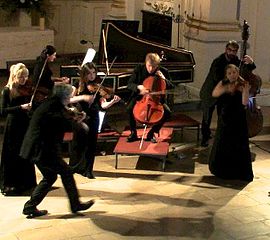
fda20c_c850cb4dd0214ff688db33d783c0140fMusic-in-Motion is a revolution in classical music performance, conceived and developed by conductor John Landor. The musicians perform without music stands or chairs, using movements and gestures designed to clarify the structure, drama and emotional impact of the music.

I met with John Landor to talk about early musical influences, significant teachers, the impetus for creating Music-in-Motion, and more…..


Who or what inspired you to pursue a career in music?

Although none of my family were professional musicians, my father was a keen jazz trumpeter in his youth, and my mother loved the arts and played piano. We had a rather large family of six children and we did a lot of singing as a family. I was born in the Midwest USA and I remember vividly evenings “on the porch” singing all the old American favourites like ‘She’ll Be Comin’ Round the Mountain’, all that homespun stuff.

All my siblings learnt musical instruments, so I just assumed it was something everyone did. I remember proudly carrying home my first violin, the sense of ownership of something special. But almost as soon as I started lessons the family moved around a lot, which meant that it was difficult to get any regular teaching. At age ten I ended up as a chorister at Westminster Cathedral Choir School. There was no violin teacher, so I spent every morning break teaching myself, and also started to compose little pieces.

At WCCS I absorbed the whole Italian Catholic choral tradition. With 10 services to sing each week we all essentially became professional musicians at an early age. Although I hated being away from home (we were all boarders) the music was my great solace.

Was violin your first study instrument at Royal Academy of Music?

No, I decided there wasn’t much point in pursuing it as I was never going to play at the level I wanted to. My first experience of conducting around age 15 (one of my own compositions at school) was an epiphany. I walked around for days in a state of bliss and knew from that moment that this was what I wanted to do. I went to Oxford University to get a music degree and spent all my time forming orchestras and conducting concerts and went on to the Academy for conducting and composition.

ld38439

Significant influences or teachers?

My huge inspiration was Ilya Musin. At 34, I took some time for an artistic ‘re-fresh’ and went to study for a few months with him at the St Petersburg Conservatory. It was a revelation. Musin didn’t speak English but he spoke what I felt was my musical language, far more than anything I had encountered in all my years of study. I really felt I had ‘come home’, and fell in love with Russia in the process – such a fascinating country and people, complex, difficult, but so beguiling. He was the first teacher who talked about ‘character’ in music and that was a light-bulb moment. In my classes at RAM everyone talked about the nuts and bolts of conducting, but no one said anything about character. If the character of the music is absorbed, everything else starts to happen on its own. It was a total Eureka moment. I spent three months in classes with astonishment, amazement and relief, and it had a deep impact on my conducting.

This experience helped in the creation of Music-in-Motion?

Yes, although not directly. My finding the concept of Music in Motion was a slow evolution. It all started with the Mini Maestro family concerts I gave at St Martin-in-the-Fields around 2000 with LMA Orchestra. Because the sightlines there are not ideal for small children I started to send the orchestra out into the audience to play, with the kids holding their music. It gave them a chance to hear and see professional musicians close-up. But an important by-product was that it showed me that musicians can play perfectly well together even if spread out over a relatively large area.

I also realized that audiences just love being close to, or even in the middle of, the musical action – they’d say “wow! An oboist is playing in my face while I’m holding the music!”. And that face-to-face interaction with their audience gave the musicians a real buzz too – they felt more that they were artists in their own right communicating as individuals as well as a collective.

Then it occurred to me that if the musicians were able to move around while playing, they could perform more like actors on a stage and I could ‘choreograph’ the movements to show the interactions in the music. We started doing demonstrations of this in my Meet-the-Music discovery sessions in the interval of some of our evening concerts. The audience reaction was so extraordinary, it was clear that we had found something that was unusually powerful and inspiring. Instead of a static group of musicians seated in front of music stands, here was a living, moving, breathing musical organism.

Since then I have realized that this way of playing has almost limitless uses. For a start it’s ‘educational’ almost by default as it makes clear visually what is happening in the music without need for verbal explanation. All those people who like (or want to like) classical music but are put off by traditional concerts might find this a great way in. And for any musician it’s a great training for general expressivity as it challenges them to think more about how they communicate.

What influences would you say led you to the idea of Music-in-Motion?

First, Lindsay Kemp’s work, which made me understand how important context is to a performance. Secondly, a performance by the Mark Morris Dance Company where I ‘saw’ as well as heard a fugue being performed – a musical ‘line’ of dancers animated each voice of the fugue in a way that was incredibly clear and expressive. And finally, and most directly, Jonathan Miller’s production of the St Matthew Passion. In the arias with obbligato instruments, both singer and instrumentalist stood face to face, and I found it so direct, human and intimate compared to how it is normally done – just amazing. That deeply impressed me.

Is there a historical precedent for this?

Not that I can find or think of! For an idea that seems so obvious to me now, I find it almost unbelievable that there seems to be no historical precedent. Of course there has been quite a lot of work in the past few decades where musicians move on stage with dancers or act while playing. But these I find essentially use music to enhance a theatrical experience – whereas I am using theatre to enhance a musical experience.

I want to emphasise that Music-in-Motion is about revealing and highlighting the choreography, drama and acting that is intrinsic to the physical act of playing music already – not adding show or gimmicks! I am acutely aware that the moment you add a dancer, actor, video projections or have artists painting during a musical performance, the music itself becomes background. It’s incredibly vulnerable to that. So, while I whole-heartedly endorse the concept of musical performance in these kind of theatrical or dramatic contexts, that is the complete opposite of what I am trying to achieve. In a nutshell: a theatre of music, not music of theatre!

Do you feel any music could undergo the Music-in-Motion treatment?

Undergo? I think ‘thrive with’ is more the phrase I would use!

I’ve been purposefully focusing on core repertoire that isn’t overtly ballet or dance-inspired. In the Bach double violin concerto where the ripieno music interjects we had the players stepping out and back like a backing group to the soloists. It made the structure of the music so crystal clear to the audience.

In Mozart’s Jupiter, there’s this little Alberti figure in the second violins accompanying the tune. Normally it barely features in the aural landscape, it simply fills in the harmony. But then we musicians know it is in fact a completely wonderful, busy little conspiratorial moment in its own right. So we got all the second violins to play it in a huddle. All the sudden it became a vital part of the performance, not just an accompanying figure.

I want every and any audience to be fascinated by the riches contained in every single bar of a Brahms Symphony or a late Beethoven quartet – and not needing to be a connoisseur to appreciate it to the fullest extent possible, even on a first hearing.

How do you find musicians respond to Music-in-Motion?

Funnily enough the only run-ins I’ve had were with double basses! They felt it was a gimmick. Mostly, musicians start out pleasantly bemused, but once they get a taste of the sense of liberation from the normal hierarchies of traditional performance they love it! It makes each member of the ensemble feel they really count as individuals. Of course a certain level of stagecraft needs to be learned if it is not all to look a mess and distract from the music.

Does it affect the sound?

Yes it does, in several ways. The sound is much better. Music stands block sound, so when they are all removed there is better overall projection of the music. Even when a player turns while playing, the acoustic changes, so there’s yet another aspect of Music-in-Motion that can be used to enhance the experience of listening. Though it must only be used to clarify the music.

What do you consider to be the most important ideas or concepts to impart to aspiring musicians?

Be yourself and know what you are communicating.

Because the space we need to play our instruments is relatively small and, after all, most instruments are attached to our bodies in some way, many musicians naturally tend to focus inwards. The next point of focus is “am I playing well?”, then “what would my teacher think?”, then “I hope I am living up to the composer’s expectation” then “will I get a good review?’ – and only then the ‘end-user’, the audience, is considered! Music-in-Motion starts with the audience. How can we inspire, delight and fascinate them with what we do? If we can do this, I have no fears about the future of classical music.

Music-in-Motion – Shostakovich String Quartet No.8 performed by the Konvalia Quartet


John Landor is Music Director of London Musical Arts Orchestra, based at St Martin-in-the-Fields. He has been developing a new concept in orchestral and ensemble performance called Music-in-Motion since 2013.

Musicians and ensembles interested in exploring the concept are warmly invited to apply for one of his Music-in-Motion Workshops held regularly in London. Further information here


Who or what inspired you to take up conducting, and pursue a career in music?

Carlos Kleiber! More seriously, I was feeling a bit frustrated playing the cello, not having the big picture. The instrument seemed to be almost “getting in the way” of the music and me. Also I have always enjoyed managing people and was excited by the added challenge of getting the musicians to feel they are fully part of the creative process. Finally I felt I had something to say and express about music. 

Who or what have been the most important influences on your musical life and career?

I have met some fantastic people in my life, ranging from my nursery school teacher to my passionate cello teacher when I was a teenager, and my music teacher in high school. Working with Benjamin Zander was also a great experience. He taught me a lot as a musician and as a person. I believe it is crucial as an artist to keep learning from others throughout your life. It is often said that a great musician should know about philosophy and other arts, cultures etc. and this is absolutely true.

What have been the greatest challenges of your career so far?

Getting it started!

Which performance/recordings are you most proud of?

My concert last year with Sinfonia Tamesa, when we performed Nielsen (Aladdin), Grieg (Peer Gynt) and Rimsky-Korsakov (Sheherazade), was pretty amazing – really electrifying and colourful! I was also thrilled to perform Albéric Magnard’s Hymne à la Justice last year on the 100th anniversary of his death. He hasn’t been played at all in France and for me it is a real shame! I am also very proud to be conducting a concert on 11 November at St James’s Piccadilly with the amazing Sarah Connolly in aid of UNICEF Syria Children’s Appeal. Such a worthy and important cause.

Which particular works do you think you play best?

I experience and therefore conduct the music in a passionate way. Of course there is always a necessary intellectual approach to the score: you’ve got to analyse it and understand the notes and their relationship, but what’s most important is to love the music, to feel it and make the audience experience it with you. I particularly relate to powerful and expressive composers like Beethoven, Mahler, Sibelius, Bruckner etc. Plus I am an advocate of playing unknown composers; the feeling of discovering something new, another language, another personality is always extremely rewarding and motivating.

How do you make your repertoire choices from season to season?

I always try to put three kinds of pieces in my programmes: something famous to attract the more traditional audience, a premiere or contemporary piece, and a little-known piece or composer to feed the audience’s curiosity. There are so many wonderful things out there we haven’t heard yet!

Supporting new music is also essential. I believe performers should be more involved and work with composers themselves. For example, I think what Fenella Humphreys did with Bach to the Future was really inspiring.

Do you have a favourite concert venue to perform in and why?

I have played in too few venues to have a favourite. Maybe the state-of-the-art concert hall which Simon Rattle has been calling for in London?

Favourite pieces to perform? Listen to?

I can be quite obsessive sometimes, and right now I am completely mad about Bruckner’s 8th Symphony. It’s incredibly powerful, meditative, epic…

Otherwise, I like to listen to YouTube channels featuring unacclaimed masterpieces and other hidden gems. The Corymbus blog is also definitely worth following!

Who are your favourite musicians?

Carlos Kleiber (again)! He is such an inspiration. He breathes the music, loves it so much that the way he conducts seems so organic. I’ve also always been fascinated by Furtwängler and his bizarre but magical conducting. Of course we’ve got some fantastic conductors today as well: Mariss Jansons, Sir John Eliot Gardiner, Andris Nelsons, Sir Simon Rattle.

What is your most memorable concert experience?

Probably my very first concert as a conductor in 2009! Hopefully there is much more to come. The UNICEF concert on 11 November promises to be quite a highlight too and because of the cause it supports, a memorable one too.

What do you consider to be the most important ideas and concepts to impart to aspiring musicians?

“You know nothing!” No matter where you are or how good you are, you have to keep learning and be humble. But remember if music is life, life is not only about music!

What is your most treasured possession?

The St Christopher pendant my grandmother gave me a long time ago. Not for religious reasons at all but because it is a reminder of where I come from. Also my cello: it symbolises the efforts and sacrifices I had to make to get where I am and all the support I got from my parents. And very soon my wedding ring!
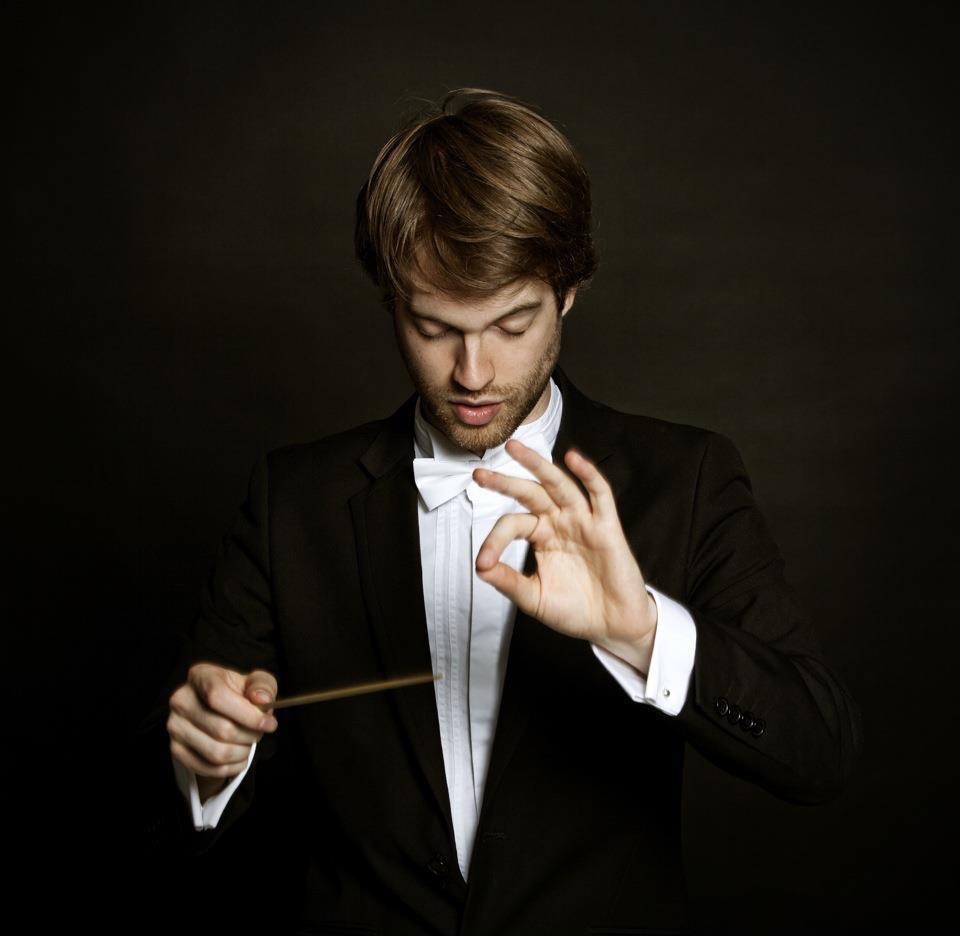
Sarah Connolly and some of the top professional musicians in London are uniting under the direction of Nicolas Nebout in a special fundraising concert for Syrian refugee children. The concert takes place on 11th November 2015, 7.30pm at St James’s Piccadilly, London W1

Programme:

Ludwig van Beethoven – Symphony No.5

Gustav Mahler – Kindertotenlieder (soloist: Sarah Connolly)

Malek Jandali – Phoenix in Exile (World Premiere)

Book tickets http://www.brownpapertickets.com/event/2265817

Donate https://www.justgiving.com/MusiciansForSyria/
Nicolas Nebout’s website http://www.nicolasnebout.com

