18-04-18_gregory_rose_web

Who or what inspired you to take up conducting and pursue a career in music?

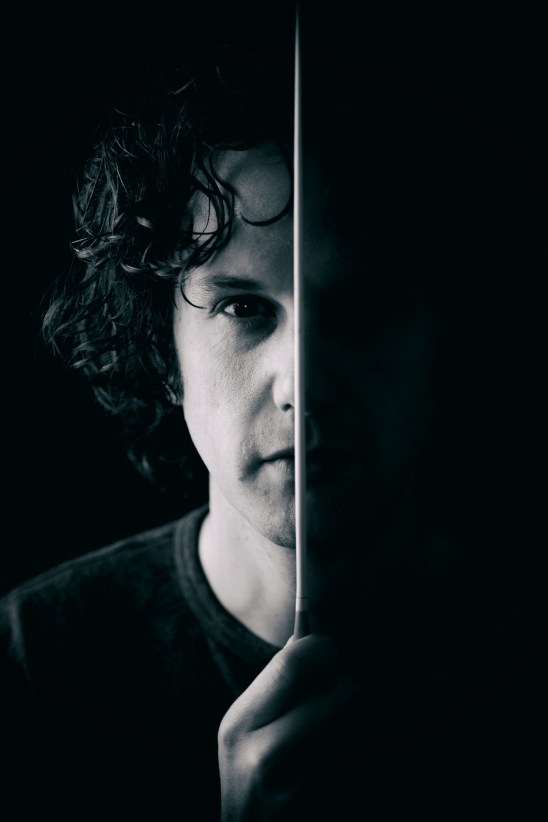
I was born into a musical environment: my father, Bernard Rose, was a huge inspiration. He was a conductor, composer, scholar, organist, horn player, singer, inspirational teacher. I studied with him at Oxford and sang in his daily choir at Magdalen College, but before that I was a chorister at Salisbury Cathedral, as was my father, his brother and both my brothers. At Salisbury we had about 8 services a week, with about 12 rehearsals, from the age of 8-13. I remember thinking at the age of 12 or so that I wanted to be in music, and thought conducting would be good. My father sent me to have lunch with his old teacher at the Royal College of Music, Sir Adrian Boult, and Boult gently grilled me for over an hour over lunch, insisting that I should only pursue conducting if I really wanted it. This helped focus my mind. Leopold Stokowski used to stay frequently at our house from when I was very young, and I think this must have had an influence on me also. As soon as I went to Oxford I began serious conducting, having already taken on a small Oxfordshire choral society.

Who or what are the most significant influences on your musical life?

In the early days Christopher Dearnley, Organist at Salisbury Cathedral, and my first piano teacher, was a strong influence. Then at my senior school my teacher for A-level played me Stockhausen’s “Gesang der Juenglinge”. I was 15 years-old, and it blew my head off. I knew from that moment that I would dedicate much of my life to ‘living’ music.

When I left school I studied ’12-note music’ in Vienna with a former pupil of Arnold Schoenberg, and this has been a strong influence all my life. Whilst at Oxford I became fascinated by the conducting of Pierre Boulez, and used to go to watch him conduct. This was my main conducting influence.

What, for you, is the most challenging part of being a conductor? And the most fulfilling?

The most challenging aspect is inspiring musicians, professional, students or amateur, to create exciting musical sounds, and, hopefully, display their enjoyment of this to the audience. Certainly, it is very fulfilling teasing the written notes into audible sounds, whether it be medieval music, Classical or music of today.

As a conductor, how do you communicate your ideas about a work to the orchestra?

Through gesture as much as possible. When teaching conducting I stress the importance of “less talking is more music”. The fact that in the concert or recording venue at the moment of impact there is no speaking is a vital aspect of communication from conductor to musicians.

How exactly do you see your role? Inspiring the players/singers? Conveying the vision of the composer?

My first role as conductor is my being the representative of the composer in the room, from whatever period. I always do masses of research into the composer’s background at the time of composition, etc, before studying a work. I have had the pleasure of working directly with many hundreds of living composers, and I am a composer myself, so feel I am “on their side”! If the piece is not written out logically I do all I can to persuade the composer to make the scores as logical as possible.

Is there one work which you would love to conduct?

Stravinsky “Sacre de Printemps”

Do you have a favourite concert venue to perform in?

The Philharmonic Hall in St Petersburg, Russia, is unbelievable!

Who are your favourite musicians/composers?

There are too many to list. It goes from Perotin in the 1150s through to Machaut, Byrd, Tallis, Sheppard, Monteverdi, Bach, Mozart, Hummel, Beethoven, Mahler, Schoenberg, Berg, Webern, Stockhausen, Ligeti, Xenakis, Arvo Paert, Steve Reich…

As a musician, what is your definition of success?

Achieving a fine/masterful performance.

What do you consider to be the most important ideas and concepts to impart to aspiring musicians?

The joy of performing at the highest possible standard; rehearsal, rehearsal, rehearsal!

Where would you like to be in 10 years’ time?

Still conducting and composing internationally

What is your idea of perfect happiness?

The morning after a great concert!

What is your most treasured possession?

The autograph score of Bach’s B Minor Mass

What is your present state of mind?

Good! I’ve just finished editing a new CD in Latvia and am preparing for my 70th birthday concert in April. I am a lucky person!


Gregory Rose’s 70th birthday concert is on 18 April 2018 at St John’s Smith Square. The programme includes several premieres, including a piece for solo voice with Loré Lixenberg and a new Violin Concerto, specially composed for the acclaimed violinist, Peter Sheppard Skærved.

Full details here


Gregory Rose is particularly noted for his performances of the romantic and contemporary repertoires, having conducted over 300 premieres of orchestral, choral and ensemble music throughout Europe and the Far East. He studied violin, piano and singing as a young child and was a pupil of Hans Jelinek (Vienna Academy) and Egon Wellesz (Oxford University), both former students of Arnold Schoenberg, and of his father, the late Bernard Rose.

Gregory is Music Director of the Jupiter Orchestra, Jupiter Singers, Singcircle and CoMA London Ensemble. He has conducted many concerts and operas for Trinity College of Music, including concerts with the Contemporary Music Group, and operas by Poulenc, Stravinsky, Virgil Thomson, Scott Joplin, Berthold Goldschmidt, Samuel Barber, Nino Rota and Malcolm Williamson. He is a professor of conducting at Trinity Laban Conservatoire.

Full biography


davan-wetton-hilary-mar-13

Who or what inspired you to take up conducting and pursue a career in music?

The decision to become a musician was a gradual one; my first post – as organist at Brixton prison when I was 16 – showed that it was possible to be paid for doing what I enjoyed – and my first paid conducting performance (Messiah, when I was 17) further convinced me that this was a congenial way to make a living. It was Adrian Boult, however, who wholly changed my focus of ambition. I went to a concert of his in Oxford during my post-graduate year and suddenly became aware of what a conductor could achieve. I pushed a note under his door in the Randolph Hotel asking if he would take me as a student. Characteristically, he replied the next day inviting me to audition for his advanced course at the RCM and that began a learning process that continued almost until he died. He was unquestionably the most significant influence on my musical life.

What, for you, is the most challenging part of being a conductor? And the most fulfilling aspect?

The most challenging part of being a conductor in this country is that you’re almost always trying to work with a short amount of rehearsal time, so you tend to depend more than you should have to on your musicians being prepared to fill in the gaps for you. That is not the case in the United States and in Europe, where you are given more rehearsal time with professional musicians; the more relevant challenge there is developing the sense of urgency you need for a rehearsal without being over-demanding.

The most fulfilling aspect is the sense of making music with a number of other people, some of whom you’ve known for many years, and still deriving the same intense pleasure from doing so – in some 30 years after our first collaboration. Whether the players feel the same, of course, I cannot say!

As a conductor, how do you communicate your ideas about a work to the orchestra?

I believe the conductor’s job is to communicate as much as possible by gesture; too much talking is a well-known conductors’ disease. That said, offering an orchestra/choir what you hope are helpful images to clarify the sound or character that you are trying for can be beneficial if you can find the right metaphors.

How exactly do you see your role? Inspiring the players/singers? Conveying the vision of the composer?

A conductor needs to be both a manager and a bit of a visionary. Helping musicians to feel that what they do is important and worthwhile – and valued by the conductor – is important, but clearly the composer should be the fundamental reference point for all performers.

Is there one work which you would love to conduct?

There are several works I would like to conduct, which have so far eluded me: Walton’s First Symphony and Cello Concerto, Mahler’s Second Symphony and Morning Heroes by Bliss. More pressingly, there are works I would love to conduct more often – particularly Beethoven’s Glorreiche Augenblick, The Kingdom or the symphonies by Elgar and such neglected masterworks as the Holst Choral Symphony, and the marvellous tone poems by Bax.

Do you have a favourite concert venue to perform in?

I love both the Bridgewater Hall in Manchester and the Symphony Hall in Birmingham, though I also love Dalhalla in Sweden, which is an open-air venue – constructed out of a gravel pit – with a fantastic atmosphere and acoustic. The only drawback is that the conductor has to be rowed to the venue and I can’t swim.

Who are your favourite musicians/composers?

My favourite composers are always the ones I’m currently working on. When you’re preparing something for performance, it occupies the whole of the forefront of your mind and that means you are very closely entwined in what you hope to be the intentions of that particular composer at that particular time.

It is very difficult to identify favourite musicians; almost all of my colleagues are helpful and collaborative. You soon discover the handful who are not, and as far as possible you give them a wide berth. One of my absolute favourites, though, is the marvellous South African baritone, Njabulo Madlala. Brought up in Durban he has made his way to the forefront of the classical music scene purely on merit and a determination which never prevents him from being entirely charming and delightful.

We performed Elijah together four years ago in Leicester. He sang it wonderfully, and I’m thrilled to be able to do it again with him in the Barbican Centre on 13th February. Elijah is one of those works that has drifted slightly out of fashion – a real mistake, as it is full of inspired melody and dramatic invention. And, of course, it brings together professional orchestral players and soloists with one of our leading amateur choirs. A combination which often leads to the best result possible: professional expertise with amateur commitment and enthusiasm.

As a musician, what is your definition of success?

Being the best possible conduit between the composer and the audience. If the audience leaves the concert saying what a wonderful piece they have heard, I think we’ve done the best we can.

What do you consider to be the most important ideas and concepts to impart to aspiring musicians?

Fidelity to the composers’ intentions. We live in a time of absurdly elevated personality cults; the job of the performer is to focus the audience on the composer’s personality and not his or her own.

Hilary Davan Wetton conducts the City of London Choir and Royal Philharmonic Orchestra in Mendelssohn’s ‘Elijah’ at the Barbican Centre on Tuesday 13th February at 7.30pm. Soloists are Rachel Nicholls, Diana Moore, Daniel Norman and Njabulo Madlala as Elijah. More information and tickets


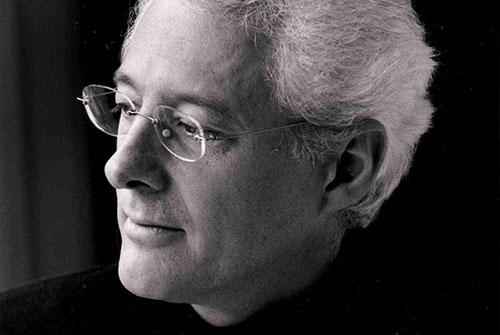
Hilary Davan Wetton has been Artistic Director and Principal Conductor of the City of London Choir since 1989. One of the country’s most distinguished choral conductors, he was founder/conductor of the Holst Singers, and is Conductor Emeritus of the Guildford Choral Society and Artistic Director of Leicester Philharmonic Choir. He is also Associate Conductor of the London Mozart Players and Conductor Emeritus of the Milton Keynes City Orchestra.

Educated at Brasenose College, Oxford and the Royal College of Music, Hilary studied conducting with Sir Adrian Boult and was awarded the Ricordi conducting prize in 1967. Over a career spanning 50 years, he is particularly admired for his interpretations of 20th century British music, conducting many first performances for British composers as well as neglected works by Gardner, Parry, Holst, Dyson, Bridge, Sterndale Bennett and Samuel Wesley.

His extensive discography includes recordings for Hyperion with both the Holst Singers and Guildford Choral Society, a series of acclaimed recordings for Collins Classics with the LPO, including Holst’s Planets, Elgar’s Enigma Variations and Mozart’s Jupiter Symphony, and discs for Naxos and EM Records with the City of London Choir. He received the Diapason d’Or for Holst’s Choral Symphony (Hyperion, 1994). In Terra Pax: A Christmas Anthology (Naxos, 2009) reached number two in the Gramophone classical chart and enjoyed wide critical success. Beethoven’s Der Glorreiche Augenblick (Naxos, 2012) has also been much admired, receiving a five star review in BBC Music Magazine; and Flowers of the Field (Naxos, 2014) with the City of London Choir, London Mozart Players, Roderick Williams and Jeremy Irons went quickly to number one in the Specialist Classical Chart.

Hilary has broadcast frequently for the BBC and Classic FM. For six years, he was presenter/conductor for Classic FM’s Masterclass, and he was Jo Brand’s organ teacher for the BBC 1 series, Play it Again. He has been awarded honorary degrees by the Open University and De Montfort University and is an Honorary Fellow of the Birmingham Conservatoire.

www.hilarydavanwetton.co.uk

Who or what inspired you to take up conducting and pursue a career in music?

I don’t know if there was one person or event in particular that led me to pursue this career. I wanted to be a conductor and to have a new platform to communicate with musicians, music lovers and people who are not aware of classical music. I wanted to have an opportunity to inspire the future generation of young musicians. I also wanted to engage people who are not fans of classical music and get them excited for it. I know many colleagues who always dreamed about being a conductor but I came to that realization when I was 22.

What, for you, is the most challenging part of being a conductor? And the most fulfilling aspect?

The most challenging part of being a conductor or a Music Director of a group is inspiring musicians to accept the challenges I present. New music is a challenge, unique collaborations are a challenge and these are paths that every orchestra (youth, community, professional) should take from time to time. As a leader one should find the determination to excite the orchestra to take on challenges with no fear. The fulfilling aspect is the final product, the inspired musicians, the excited audiences and most importantly the feeling of accomplishing something that presented a challenge.  

How exactly do you communicate your ideas about a work to the orchestra?

Every orchestra I work with I learn from. Communication is a complex topic and there are no masters. I work hard in diversifying my approach and with each experience I realize that it’s not just about the music but about the people. In my communication with the orchestra I try to inspire them with my passion and love for the music, I engage them to be collaborators and of course teach them through this process. To maximize the potential of any group it requires the energy of each individual and this can be achieved through communication not only on the podium but off the podium as well.

How exactly do you see your role? Inspiring the players/singers? Conveying the vision of the composer?

The role of a Music Director should be all encompassing. As a MD one should inspire the players through passion and enthusiasm for the music, engage audiences, and be in constant search of projects and collaborations. MD should also find ways to challenge to musicians and audiences because that is the only way we grow; that is the only way to the future. As an MD one should never assume that people know the music or the history and stories beyond the score. As conductors we have to educate not only the musicians but the audiences from the stage. Pre-concert talks do not provide a direct tool to teach and one never engages everyone in attendance. I believe that collaborations are vital for the growth of arts and classical music specifically. I think we live in a time where we absolutely have to collaborate with artists and other fields to maximize the reach of our art form.Which performances/recordings are you most proud of?I am always proud of the youth I work with and I am proud of them for accepting my challenges. I have commissioned new works, initiated unique collaborations with many organizations and invited artists from many genres to work with us. I want to thank the many young musicians I have had the privilege to work with and know that they will be leaders and inspiring individuals no matter what they do. Stepping on the podium to work with the future generation of rock stars is the greatest joy in my life, I feel honoured.

How do you make your repertoire choices from season to season?

Picking repertoire for youth and community orchestras is tough. This is something I constantly think about. I try to include a piece that will challenge the orchestra, a piece that will be fun for the audiences, and a piece that the orchestra will not feel overwhelmed with.

Do you have a favourite concert venue to perform in and why?

There are many beautiful spaces I have conducted in and can’t pick one in particular. I like spaces with windows and no formal stage. I like the orchestra to be surrounded by the audience and to feel as close to the people as possible.What is one piece that you’ve always wanted to conduct? And have you had that chance yet?

There is a wonderful Armenian composer Avet Terterian and I would love to conduct any of his symphonies when I have an opportunity to do so.

As a musician, what is your definition of success?

I currently work with many youth and community orchestras in the U.S. state of Washington. My definition of success is the consistent growth of the musicians I work with, the development of their understanding of music and most importantly the continuous passion, love and care for classical music. I want to see the youth in my orchestras be passionate advocates for arts and culture regardless of what they pursue as a career. Decades later I want to see a world full of people from diverse professional and cultural backgrounds support the arts in large numbers. As an educator and conductor I want to instill in them the importance of music.

What do you consider to be the most important ideas and concepts to impart to aspiring musicians and conductors?

As conductors it is important to understand our role within the music organization and in our community. It does not matter if you conduct the greatest orchestras in the world, a community group or a youth organization you have to stay grounded and understand the importance of impacting the youth and community. I don’t mean just advocating for the arts but actually getting your hands dirty in the daily, weekly projects of inspiring the community. There are many great conductors in the world but one thing that is evident with many is the lack of consistent commitment to youth, community and outreach events. I want to see more conductors involved in outreach events, these concerts are not just for assistant and pops conductors. Music Directors are equally responsible for these performances and should do more than just a few in a year. I want to see the role of the Music Director taken more seriously. We live in a world that is fast paced and it is easier than ever to travel across the world. Holding more than one major symphony conducting role is not only disrespectful to the orchestra but most importantly it is disrespectful to the city and community the conductor is serving. A major symphony is one of the most important cultural organizations in a city and we need to have the Music Directors fully involved in the community which again is a rare fine these days. Classical music is suffering and this is definitely one of the factors. We need our leaders a lot more than just 12-15 weeks out of a year while the rest of the year they are holding other “full-time” jobs and guest conducting 30 other orchestras.Where would you like to be in 10 years’ time?

I want to continue working with orchestras whether they are professional or not, I want to keep inspiring the youth and the community it serves.  

What is your idea of perfect happiness?

I don’t know if that exists for me but I am content with the constant challenges despite the absence of perfect happiness.

What is your most treasured possession?

I don’t know about possessions but I have treasured people who are: my wife, my brother, my parents, family, friends and the many people who help and inspire me.

What is your present state of mind?

The moment.

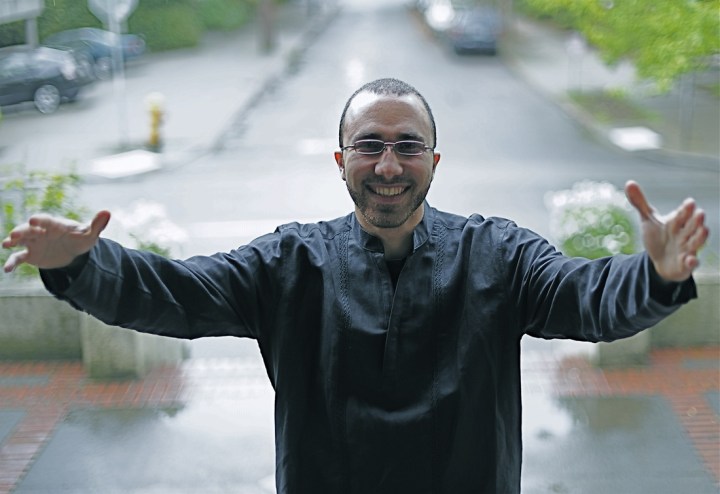
Armenian-American conductor Tigran Arakelyan is the Music Director of Bainbridge Island Youth Orchestras, the Federal Way Youth Symphony Orchestra and the Artistic Director /Conductor of Port Townsend Community Orchestra. Arakelyan held conducting positions with California Philharmonic, Los Angeles Youth Orchestra, Whatcom Symphony Orchestra, Rainier Symphony and the Northridge Youth Philharmonic. His primary conducting studies were with renowned conductors Ludovic Morlot and David Alexander Rahbee.

His recent conducting engagements were with the Fort Wayne Philharmonic, Olympia Chamber Orchestra, Armenian Pops Orchestra, Centum Youth Orchestra (S. Korea) and the Northwest Mahler Festival Orchestra.  Arakelyan toured South Korea twice (2014, 2017) with the Federal Way Youth Symphony conducting over a dozen concerts from Seoul to Busan. He recently initiated the Inaugural Bainbridge Island String Orchestra Festival with award winning guest artist Andrew Joslyn. Arakelyan also commissioned/premiered a work by international award winning composer Yiğit Kolat. 

Previously, he was the Music Director of Whidbey Island Orchestra (WA), Lark Musical Society Youth Orchestra (CA) and the Founder Conductor and Artistic Director of Cadence Chamber Orchestra (WA). At the university level Arakelyan was the Music Director of the University of Washington Campus Philharmonia and UW Summer Orchestra. He has been instrumental in initiating innovative collaborations with composers, soloists, visual artists, dancers, and choirs. Arakelyan helped in creating youth scholarship programs, festivals, young composer competitions, and led orchestral performances at unconventional venues. 

Arakelyan conducted the Pacific Northwest premiere of Paul Hindemith Kammermuzik Nr. 1. He has also conducted the Yakima Symphony Chamber Orchestra, University of California Los Angeles Philharmonia, Redmond Academy of Theatre Arts, Korean Music Association Choir (WA), Inverted Space Modern Ensemble, U.W. Symphony, California State University Northridge Symphony, CSU Northridge Discovery Players, and the Nimbus Ensemble (CA). A strong advocate of new music, he premiered works by Iosif Andriasov, Stepan Rostomyan, Eleanor Aversa, Jeff Bowen, Jon Brenner, Arshak Andriasov, and Felipe Rossi. 

Arakelyan played alongside Sir James Galway during his induction into the Hollywood Bowl Hall of Fame with the Los Angeles Philharmonic. He is a recipient of numerous awards including: Armenian General Benevolent Union (AGBU) Performing Arts Fellowship (2013, 2014, 2015), Edward Hosharian Award, and the Armenian Allied Arts Competition (1st place), among others.  Arakelyan participated in the Conductors Guild Workshop, Pierre Monteux School for Conductors, Idyllwild Music Festival, Dilijan Chamber Music Series, Seasons Festival Academy, and Fairbanks Summer Arts Festival. He conducted in masterclasses with notable conductors David Loebel, Frank Battisti, Donald Thulean, Ennio Nicotra, David Effron, Neal Stulberg, Michael Jinbo, and Lawrence Golan. 

Arakelyan received a Doctorate in Musical Arts degree in conducting from the University of Washington. His primary conducting studies are with Ludovic Morlot, David Alexander Rahbee, John Roscigno and flute studies with Paul Taub, John Barcellona, Laura Osborn, Stephen Preston, and Shigenori Kudo.​ Outside of conducting, he is the founder/director of the Armenian Orchestral Music Project and the Classical Program Coordinator at Music Works Northwest. Arakelyan is also the founder and host of Off The Podium-Music Podcast where his guests are renowned musicians and artists. 

www.tigranarakelyan.com

nc_bw_1_credit-jim-hinson

Who or what inspired you to pursue a career in music?

I suppose my family – I was surrounded by music form a young age and never considered anything else really!

Who or what were the most important influences on your musical life and career?

My teachers (including my grandmother on piano and mother on violin!), youth orchestra and choir conductors such as Adrian Brown and Ralph Allwood, and of course a host of colleagues and conductors who I have had the privilege to assist or work with, from Mark Elder to Vladimir Jurowski.

What have been the greatest challenges of your career so far?

Keeping up with learning all the repertoire! Juggling family….

Which performance are you most proud of? 

I feel that our recent memorised performances with Aurora Orchestra have genuinely broken new ground. Some of the Proms with these have been quite special.

Which particular works do you think you perform best?

Ask me in 40 years

How do you make your repertoire choices from season to season?

With difficulty! A mixture of repertoire I know, to alleviate the burden on learning, plus taking the right repertoire to new orchestra.

Do you have a favourite concert venue to perform in and why?

Nothing beats a Prom at the Royal Albert Hall

What is your most memorable concert experience?

Playing the violin in the National Youth Orchestra with Berlioz’ Symphonie Fantastique under the baton of Sir Roger Norrington – I had an out-of-body experience!

What do you consider to be the most important ideas and concepts to impart to aspiring musicians?

Relax – it’s an obsession, a career, an ambition, yet it’s also a way of life!

Nicholas Collon and Aurora Orchestra continue an extraordinary once-in-a-lifetime journey through the complete cycle of Mozart’s piano concertos. Staged over five years (2016–20) and featuring a host of stellar guest pianists and other collaborators, Mozart’s Piano presents all 27 concertos as part of a single series for the first time in the UK.   

The concerts uses the piano concertos as a starting point for a kaleidoscopic journey across centuries and contrasting repertoire.  The result is a virtuosic, vibrant and playful series which illuminates Mozart’s life, music and legacy in new and unexpected ways. 

Further information

Nicholas Collon is founder and Principal Conductor of Aurora Orchestra and Principal Conductor of the Residentie Orkest in The Hague, a position he takes up in 16/17. His skill as a communicator and innovator has been recognised by both critics and audiences alike – he was the recipient of the 2012 Critics’ Circle Award for Exceptional Young Talent – and he is known as an imaginative programmer encompassing an exceptionally wide range of music.

Under Nicholas Collon’s artistic direction, Aurora Orchestra have an enviable reputation in the UK and increasingly abroad and are recognised for their creative programming and concert presentation. 2016 will see the launch of two major series in London; as Resident Orchestra at Kings Place they will begin a 5-year cycle of the complete Mozart Piano Concertos, and as Associate Orchestra at the South Bank Centre they will present a new series ‘The Orchestral Theatre.’ They have appeared at the BBC Proms every year since 2010, including performances of Mozart’s 40th symphony and Beethoven’s 6th, in which the entire orchestra performed from memory.

For Warner Classics Nicholas and Aurora have released two critically acclaimed recordings: ‘Road Trip’featuring music by Ives, Copland, Adams and Nico Muhly (winning the prestigious 2015 Echo Klassik Award for ‘Klassik Ohne Grenzen’) and ‘Insomnia’ with music by Britten, Brett Dean, Ligeti, Gurney and Lennon & McCartney.

In addition to his work with Aurora, Nicholas is in demand as a guest conductor with other ensembles in the UK and abroad. A regular guest with the Philharmonia, City of Birmingham Symphony Orchestra and BBC Philharmonic, in recent seasons he has also worked with the London Philharmonic; BBC Symphony; Zurich Tonhalle; Brussels Philharmonic; BBC National Orchestra of Wales; Spanish National Orchestra; Hallé Orchestra; Orchestre national du Capitole de Toulouse; Trondheim Symphony; Danish National Symphony Orchestra; Orchestre National de Lyon; Bamberg Symphony Orchestra; Les Violons du Roy; Scottish Chamber Orchestra; Warsaw Philharmonic; Academy of Ancient Music; London Sinfonietta; Royal Northern Sinfonia and Ensemble Intercontemporain and collaborated with artists such as Ian Bostridge, Angelika Kirchschlager, Vilde Frang, Pekka Kuusisto, Francesco Piemontesi, Steven Isserlis and Jean-Efflam Bavouzet.

Future engagements include returns to the Philharmonia Orchestra, Orchestre national du Capitole de Toulouse, BBC Philharmonic, City of Birmingham Symphony Orchestra, Trondheim Symphony, Danish National Symphony Orchestra, the Hallé and Academy of Ancient Music and debuts with Deutsches Symphonie-Orchester Berlin; Gurzenich Orchestra; Finnish Radio Symphony Orchestra; Mozarteum Orchester Salzburg; Les Siècles; National Youth Orchestra of Great Britain and Orquesta Sinfónica de Galicia.

In opera Nicholas has worked with English National Opera The Magic Flute, Welsh National Opera Jonathan Harvey’s Wagner Dream and Glyndebourne on Tour Rape of Lucretia. Future projects includeTurn of the Screw at Aldeburgh and LSO St Luke’s with Aurora Orchestra.  A champion of new music Nicholas has conducted over 200 new works including the UK or world premieres of works by Unsuk Chin, Phillip Glass, Colin Matthews, Nico Muhly, Olivier Messiaen, Krzysztof Penderecki and Judith Weir.


(Photo: Jim Hinson)