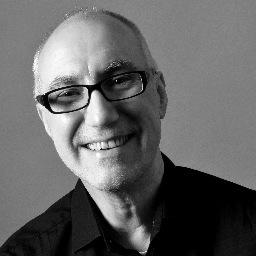
Photo: Christian Hartlmeier

Who or what inspired you to take up composing, and pursue a career in music? 

I was taken by surprise – I had always enjoyed music and played the piano for quite a while, without becoming truly excellent. Then I was asked to play keyboards in a school band and suddenly found I enjoyed both playing and composing much more than I had thought. Soon I became absolutely obsessed, practicing 10 hours a day to make up for the lazy time before. And then I became increasingly frustrated with the limitations of band playing and veered more towards contemporary and classical music. I think that impressing the girls was also an extremely strong motivation. I was 15.

Who or what were the most significant influences on your musical life and career as a composer? 

I listened to a lot of classical music LP’s when I was a kid, also to more progressive pop music like Emerson, Lake and Palmer (which impressed the hell out of me back then). My mother is a theatre photographer, so I was confronted with long and boring operas from a very early age on. I guess I like them more now. My favourite record for 5 years was a recording of “Pictures at an Exhibition” played by Svjatoslav Richter, I played that record so often it completely wore out. I was distinctly aware that composing music was something magical and important, and I constantly heard my own music in my head but didn’t really know what to do about it. Later Erik Satie was the first composer I fanatically loved. I was always – and I still am – especially interested in the outsiders and eccentrics of music. Charles Ives was also very important. I was also lucky to have teachers who showed me interesting music and widened my horizon.

What have been the greatest challenges of your career so far? 

Realizing that not everyone will love what you do, regardless of how hard you try. And then having the constant courage to give a damn about it, to follow your own instincts, to follow your own intuition. Dealing with envy, your own and that of others. All of this is a constant challenge. Every morning I wake up and try to handle it a little better.

What are the special challenges/pleasures of working on a commissioned piece? 

I only work on commissioned pieces, so I don’t really know the difference anymore. But of course I remember a time when I didn’t have commissions at all, and back then it was much more difficult to focus and to work with discipline, as there was no real goal, no performance ahead. Dealing with deadlines is harsh, but it has made me a better composer. The secret is to not accept commissions for which you cannot find inspiration, or even better: to have ideas that actually create the commissions you want.

What are the special challenges/pleasures of working with particular musicians, singers, ensembles and orchestras? 

It is always an advantage knowing who will perform your music, especially in the case of singers. But then you should always write in a way that everybody can perform your music, at least in theory, so I try not to get too carried away if great virtuosos perform my music. Of course that doesn’t always work. An orchestra too can be like a person, either you get along well or you don’t. I write easier for an orchestra that I already know, that has already played my work. But it is not essential, I also had very positive experiences with performers who I didn’t know before at all.

Which works are you most proud of?

I try to not give anything to anybody that I am not proud of in a way. And then I actually also try to not be too proud, to not constantly look at what I have done. I never listen to old pieces and bask in my glory. But in general the things I am the most “proud” of are my operas, my songs, my orchestra music, my chamber music. Which is already a lot of different things. It would feel strange to single out something, which does of course not mean that everything is equally good. But I really do not contemplate my work, I’m too busy writing it.

Who are your favourite musicians/composers? 

Too many to list here. This is not a cop-out – I truly feel that music history (including the present) is so diverse and rich that singling out anybody feels strange. All the names we know from the past usually deserve to be known, which still doesn’t mean I’m a big admirer of Richard Wagner. But I also respect his work of course. I constantly discover new things, and I also change my mind about composers. I used to loathe Feldman, now I like him. I used to like Prokoffieff, now I find him a bit dull. I felt nothing for Mahler, now he is extremely dear to my heart. I loved the first piano sonata from Kabalevsky, now I feel it’s a horrible, vacuous piece. If there is one composer who I always greatly admired and have never felt any different about it is Schumann. But there are more like him!

What is your most memorable concert experience? 

Playing a mixed program of contemporary and classical music to an audience coming from a slum in Lomé, Togo (West Africa). They had been lured into the concert hall by free food and had never heard any piano music in their life. I think they were the most open-minded and enthusiastic audience I ever had. But there were other memorable experiences – like failing to play a concert in Tijuana, Mexico, because there was no piano chair to be found…anywhere. True story, but I’ll tell it another time.

What do you consider to be the most important ideas and concepts to impart to aspiring musicians? 

To never make the mistake to believe that anybody actually really knows what they are doing. To not listen to people who think they know what they are doing. To instead listen to people who are honest in their constant curiosity. To not listen if somebody says you shouldn’t do something, because then you should do it. In art – other than in life – it is really important to do the things that people do not expect from you. And this might also mean breaking rules that everybody thinks are set in stone. To realize that nothing is set in stone. To realize that all the music world is nothing but a big meaningless circus of vanities and to find the strength to believe in the musical truth that many don’t dare to confront because they take the easy way, because they are too scared. To acknowledge that the wonderful thing about music is that a lot of it is coming from a great unknown that we can (luckily) not map or fathom in its entirety. To be generous, to your friends and also to your colleagues. To absolutely believe in your own inspiration, no matter where it will take you. To take example in musicians and composers that you admire. To love. To write about what you love, not about what you think others might love.

Where would you like to be in 10 years’ time? 

At home with my family, working on a new opera.

What is your idea of perfect happiness? 

Being at home with my family, working on a new opera.

What is your most treasured possession? 

Sadly I have a collector’s heart and have many treasured possessions, among them a collection of 1500 board games, single malt whiskies, comics, films, books…sometimes it becomes too much. So I would probably answer that my single most treasured possession is my firm belief in the freedom and necessity of imagination.

What do you enjoy doing most?

Living and learning.

What is your present state of mind? 

Hoping that the idiots don’t succeed.

Moritz Eggert’s new CD was released on 13th April 2018 by NEOS. It features two new works, “Muzak” and “Number Nine VII: Masse”, premiered and recorded by the Bavarian Radio Symphony Orchestra, conducted by David Robertson (Muzak) and Peter Rundel (Number Nine VII: Masse)


Moritz Eggert was born 1965 in Heidelberg, Germany. After early piano studies he began his music education at Dr.Hoch’s Konservatorium in Frankfurt, first in piano (with Wolfgang Wagenhäuser) and theory, then in composition (with Claus Kuehnl). After finishing school he studied piano with Leonard Hokanson at the Musikhochschule Frankfurt. 1986 he moved to Munich to study composition with Wilhelm Killmayer at the Musikhochschule Muenchen. Later he continued his piano studies with Raymund Havenith in Frankfurt, and his composition studies with Hans-Jürgen von Bose in Munich.

In 1992 he spent a year in London as a post-graduate composition student with Robert Saxton at the Guildhall School for Music and Drama. His main duo partner is the cellist Sebastian Hess. In 1996 he presented the complete works for piano solo by Hans Werner Henze for the first time in one concert, a programme that he continues to play with great success. In 1989 he was a prizewinner at the International Gaudeamus Competition for Performers of Contemporary Music.

As a composer Moritz Eggert has been awarded with prizes like the composition prize of the Salzburger Osterfestspiele, the Schneider/Schott-prize, the “Ad Referendum”-prize in Montréal, the Siemens Förderpreis for young composers, and the Zemlinsky Prize. 1991 he founded – together with Sandeep Bhagwati – the A*Devantgarde festival for new music, which has taken place for the 6th time in June 2001. His concert-length cycle for piano solo, Haemmerklavier, has been a great international success with reviewers and audiences alike. Moritz Eggert has covered all genres in his work his oeuvre includes 5 large-scale operas, ballets, and works for dance and music theatre, often with unusual performance elements. 1997 German TV produced a feature-length film portrait about his music.

Among his more recent important works are the concert-length cycle for voice and piano Neue Dichter Lieben featuring 20 love poems by contemporary german authors, and the orchestra piece Scapa Flow. His next projects include the children’s opera Dr. Booger’s Scary Scheme for the opera Frankfurt (with Andrea Heuser) and the ongoing internet project Variations IV.XX for 21 composers and live musicians.

www.moritzeggert.de

(Photo: Christian Hartlmeier)

shiva-feshareki-8-e1466601768353

Who or what inspired you to take up composing, and pursue a career in music?

I’ve always been obsessed with making music. I was improvising with pots and pans when I was a toddler and a small child. I had set-up a station in the corner of the kitchen that I would use to experiment with sounds. Since then, it’s simply been the same idea but in different contexts.

Who or what were the most significant influences on your musical life and career as a composer?

My everyday surroundings, the spaces I occupy, and my friends and family are my biggest influences. My idols are Eliane Radigue and James Tenney.

What have been the greatest challenges/frustrations of your career so far?

I constantly re-shape and re-think the way I compose and the contexts and people I work with. All in all it is hugely rewarding, but it also feels like I am starting from scratch all the time.

What are the special challenges/pleasures of working on a commissioned piece?

Challenges on working on commissions are making sure that the organisers and funders trust and respect your vision and don’t try to compromise it (although I do pick commissions carefully). The pleasure is having the space and time to be able to be truly creative on a daily basis and make a living out of it.

What are the special challenges/pleasures of working with particular musicians, singers, ensembles and orchestras?

I have this new rule now that I only work with people who are down to earth and easy to get on with, so that the creative process feels free and not rigid. I don’t really mind if they’re musicians or not, or what their background is, as long as they’re nice and we can form a bond. Only then can creativity flow and can we utilise each other’s strengths.

Of which works are you most proud?

I don’t really have a singular work that I am most proud of, but I am proud of the way I have grown immensely as a person and composer in the past year especially. I feel like I understand things more clearly and what things are truly important in life and art.

How would you characterise your compositional language?

Physical.

How do you work?

I try to change-up the way I compose constantly, so that nothing is ever on autopilot. Sometimes it’s with a manuscript, or at my turntables, or maybe I’m in a club dancing and composing at the same time. But my music is experiential, so I try to really mix-up my processes.

Who are your favourite musicians/composers?

I think my favourite artists are the people I have recently collaborated with such as Haroon Mirza. I am forever grateful for how he has transformed my attitude on art and experience.

What is your most memorable concert experience?

Probably performing my composition for turntables and orchestra at the Roundhouse in front of the LCO way back in 2010. We were all so young and relatively inexperienced then, yet so much drive, commitment and a unanimous want between us all to take risks. It was incredible. I didn’t know it was going to be such a big gig. People were queuing up literally round the roundhouse to try and get returns when I was arriving.

What do you consider to be the most important ideas and concepts to impart to aspiring musicians?

To stick to your ideas, have faith in them, and commit. Don’t waste your time getting frustrated. Go with the flow. Enjoy.


Shiva Feshareki (b. 1987) is a composer and turntablist working closely with the physicality of sound. With electronics, she focuses on sampling, as well as analogue and bespoke electrics that generate ‘real’ and pure sounds of electricity, over computer products. With acoustic instruments, she is concerned with the interaction of tone, orchestration, texture, movement and space. Since 2013, Shiva works mainly as a collaborative composer, and uses deep improvisation, explorations into different worlds, or chance events, to create her collaborative teams. She also works with children and young people in a variety of creative environments, and does seminars and projects at universities and music/art colleges.

A scholar and graduate of the Royal College of Music under Mark-Anthony Turnage, Shiva has awards ranging from the Royal Philharmonic Society Composition Prize, to British Composer Award shortlisted works. She has had performances at major UK venues such as the Royal Festival Hall, Royal Albert Hall, Institute of Contemporary Art, Barbican, Roundhouse, and has had working relationships with the London Philharmonic Orchestra, London Philharmonia, London Sinfonietta and London Contemporary Orchestra. She also works in and around a variety of contexts and bespoke environments to create spatialised site-specific works. Additionally, Shiva has worked and toured with musicians ranging from cellists Natalie Clein, Oliver Coates and Colin Alexander, to video-gamer/youtuber Freddie Wong, jazz organist Kit Downes and artists Simon Fisher-Turner and Haroon Mirza. She sometimes DJs, and presents experimental classical music on NTS Radio in Dalston.

Future projects include a realisation of Daphne Oram’s groundbreaking work ‘Still Point’ for Double Orchestra, 78 rpm vinyl discs and microphones in collaboration with composer and Oram-specialist James Bulley. ‘Still Point’ predates the work of an entire generation of composers and artists in its radical use of live electronics (including turntable manipulation and sampling with live orchestra) and is one of the earliest known examples of a work for turntables and orchestra.

London Music Masters


qbk-joyqWho or what inspired you to take up composing, and pursue a career in music? 

As a child there was no real music in our house, or reading materials as such, mainly due to my mum’s mental illness. As a result of this, and of course other problems in the family, I didn’t actually speak or really communicate until about 6 or 7 years of age. However, I had obviously listened to much music, both radio broadcasts and recordings, mainly at schoolfriends’ houses, or at school itself, which I totally soaked up at each opportunity – everything from the Beatles and the Monkeys to Beethoven and Mancini. When I got my first musical instrument, a guitar which was purchased through a shopping catalogue operated by a friend’s mum, and for which I paid by doing potato picking on farms, and  as a newspaper delivery boy, I sort of just started playing back what I’d heard, improvising along the way of course, trying to pin down correct pitch, melody, rhythm, etc. of each song/piece until I’d got it as close as the original. I didn’t know what I was doing at the time of course.

Who or what were the most significant influences on your musical life and career as a composer?

From above, you can obviously see I didn’t have the possibility of music lessons, so I am completely self-taught in music. However, I studied very hard, seeking the knowledge of this strange craft known as music notation, and how to turn ideas in my head into something I and others might play one day – daydreams, maybe, but a very determined Yorkshire boy/man I became, constantly trying to hear/read more music all the time. Many musicians have been an influence, and still are, on my life really: Elgar, his struggle for recognition as an artist, plus his wonderful musical structures enchanted me early on; Neil Young, his stories of life in both his lyrics and musical arrangements, appealed to a young teenager in the 70’s; Gershwin, with his amazing cohesion of jazz and classical genres were to lead me to  carry on this ‘cross genre/culture’ idea in all my later work! Of course, as a fifteen year old boy I truly had no idea where I was going with this magical thing called music, with its strange terms, dots, lines all over the place, but I read everything from ABRSM theory books to  Antony Hopkins books on music and listening/analysis,etc and from Ferdinando Carulli’s great little book ‘Guitar Method’ to the symphonies of Mozart, etc. too – all an education. After school, I was determined to write music one way or another and now I had found a way of communicating my thoughts and feelings I was on a roll!!

What have been the greatest challenges/frustrations of your career so far? 

When I left school at 15/16 years of age, I wasn’t sure how I would do it, but boy was I gonna try and write music as I thought it should sound, and whatever meant something to me,`i was really hoping that somehow people would understand my thoughts and what I was trying to say. Of course, easier said than done, but I learnt very quickly how to be flexible, playing in theatre pits, busking, pop bands, teaching, as well as giving recitals with my own music, I managed to build a small, very small, reputation on the large music scene in UK. Persevering however, I accepted my first true commission for a soundtrack to a lecture series at a local art school, which I both arranged and and multi tracked on two cassette players – a truly awful result I’m sure, but people liked and used it, so a win win situation, as people say now, eh. Of course, frustrations come as an artist, as you try to get to where you think your journey should take you, but as always in life, you carry on, taking rough with smooth and never regret artistic choices, or directions, as you always learn something from the experience – well I certainly did, and after over 40 years of being a composer I’m still getting a thrill and learn something new every work I produce.

What are the special challenges/pleasures of working on a commissioned piece? 

I work in all genres of music: film, theatre, pop/rock music, animation, concert works,etc, and, or so, because of this cross genre working, I have worked and continue to work and learn from such a variety of musicians and their different backgrounds and approaches to music, its really a truly pleasurable experience and exciting, each time am opportunity occurs for me to share ideas and develop my thoughts into musical sounds form the performers. I am not very computer literate at all, I have no music software, and no idea how it works. When younger, I actually wrote all the parts out by hand, even the large orchestral works, brass band pieces and songs. Luckily, for me, I now have an assistant who I get to turn my stuff into files, which then can be emailed around the world the same day, which I find pretty amazing, although slightly confusing how it does so, at the same time! I am very lucky that I have found a career in something, i.e.; which is truly all I know about, and that people approach regularly for new works – now an animation, then a concerto, now a theatre piece, then an album for a rock band to arrange/produce,etc – all of both equal importance in the musical world and in my life.

What are the special challenges/pleasures of working with particular musicians, singers, ensembles and orchestras? 

I always approach my work in the same way now, as when I was a young boy. First of all, I try to arrange a meeting, face to face, as I don’t like the impersonal, remote meetings; phone, emails; Skype, etc, however, this can be impossible sometimes; for example, I have a long term project in Japan, and another project coming up in Poland, so will have to talk on Skype, etc, until each visit, but otherwise I’ll jump on a train – my favourite form of transport – and meet to discuss/talk through everything over either a lunchtime meal, or a few pints in the pub, as either way is very constructive to me! Meeting musicians, either in concert hall, or in the studio is always a pleasure and, to be honest, an honour too to me. I am very happy to enjoy what I do and also appreciate that I’m fortunate that I found how to both express my life, thoughts, emotions, etc, through music, whilst at the same time making a living at it too. This is important part of my philosophy, as coming from a working class background and growing up on a large council house estate in the north of England, I’m very proud of my roots, therefore wish to share with others! I’m also very lucky that all the musicians I work with from any of the genres, seem to respect my thoughts and expertise in composition, although of course, when it comes down to specific technical things like fingering, bowing, phrasing etc ,etc I am always totally in their hands – a genuine collaboration I like to think.

Of which works are you most proud? 

I have composed so much stuff over the years, and have been so lucky that nearly everything I’ve written has been either performed, recorded or broadcast at some point. So trying to pick a particular work out is very difficult, as you could imagine, but maybe I can quickly suggest a few that stick in mind. ‘Suffolk Serenade’ (mezzo,horn+strings) was a joint commission with my wife (writer Gillian) to write a ‘complimentary’ piece to Benjamin Britten’s ‘Serenade’ for the Britten centenary. At the interval, the concert was actually down in Suffolk of course, I was approached with a dilemma – the audience would like to hear it again! Yikes, I thought, as did the conductor too, as it lasted over 30mins in total – although, I may add the orchestra and conductor were very keen and seemed to like it thoroughly too. Anyway, that was amazing that an audience and musicians enjoyed my scribblings so much that they were willing to suffer more tonal distress….hee, hee, from me and was great for a premiere of a contemporary piece of music was accepted on first hearing. Another important piece was a work I wrote for the theatre entitled ‘The In Between Space’. I was composer in residence for Converge at the time, which helps provide student lessons in music, drama, dance, creative writing,etc,for people with mental health issues. I wrote the incidental music soundtrack and was invited to attend the two days of performances – truly wonderful they were too.The last one I choose is the most recent too. I am at present working on a joint project with Japanese composer Nobuya Monta; we are having joint concerts and recordings of our music,both in UK and Japan.On Sunday 17th July this year he visited the UK and we launched our first event: Concert and CD launch of ‘Heading for the Hills’ at Blueprint Studios ( where we recorded it) an album of Japanese and British music for string quartet. First the Strata String Quartet played a selection of the tracks from the CD, then, whilst the studio played back the whole album, we toasted a new adventure in Japanese/British musical culture which we hope to develop over the next few years. It took a lot organising, as you can imagine, bringing performers, studio and record label all together and on board for a journey which was developing as we went along – a truly musical adventure,but if you want it to happen, it will.

How would you characterise your compositional language?

I suppose my musical language is really a combination of many styles, it crosses many musical boundaries really. To be honest, I’ve never actually paid any attention to trying to write in any style at all, whatever comes out of my head I scribble down, then wait to hear the performance – either live or recorded. As I have worked with so many musicians and on so many projects over the years on numerous variety of commissions, I’ve no doubt been subconsciously influenced on what I’ve heard and learnt from each experience and each project – which is exactly what I did when I started at this composing malarkey I suppose. One thing I’m very certain of of though a lot of my individual voice emanates from Elgarian melody, jazz harmony and rock/folk rhythms – all styles of music I liked when I was a youngster and still enjoy listening/playing now too!

How do you work? 

When I receive a commission, for film, concert hall or studio work, I tend to think a lot about the project and meet with the performers to discuss my ideas. Collaboration is very important to me as a composer,sharing thoughts with the players is pretty inspiring to me,as we bounce around ideas off each other and I get to know them and likewise – this so important,I feel anyway. Then I think a little bit more, often walking around, or on my many train travels, until the piece is completed in my head and I have a clear vision of the finished work. I then sit down to use pen and paper to write the score; it doesn’t matter if it’s for full orchestra or a soundtrack for animation etc, I still like the intimacy and immediacy of ink and stave – transferring thought directly to paper. If I need to get score/parts to the other side of the world, I’ll get someone to turn my manuscript into computer ‘stuff’ and email it to players,otherwise I’ll pop in post, or better still, I’ll revisit them and hand over in person.

Who are your favourite musicians/composers? 

I love concerts and enjoy the ‘buzz’ even the tuning up at the beginning has always made the hairs on the back of neck stand up – although,alas, a few less hairs these days! I enjoy a wide variety of musical genres, but I suppose Elgar, Rodrigo, Michael Nyman, Neil Young, Led Zeppelin, Radiohead are all composers and musicians I enjoy listening to regularly and still get great inspiration from. I enjoy listening either live performances – which I much prefer – although I enjoy broadcasts and recordings too of course.I used to do a lot of teaching, which I really enjoyed and which taught me a lot, I actually think we learnt off one another, they from my knowledge and experience,me from their open minds,new exciting ideas, my students would bring along a selection of stuff they were enjoying,o ften from musicians I’d never heard of, which have become favourites, like Arcade Fire, and Einaudi too. Whilst I do a little teaching now, mainly as a guest lecturer at different universities/colleges, etc, I still find it invigorating to listen, explore and find new sources of musical sounds and ideas – I think this is very important for a composer.

What is your most memorable concert experience? 

Other than the excitement at my first rock concert aged 12, by prog-rock band Hawkwind, which was scary and amazing, in equal measure, I seem to remember one of the most memorable and truly overwhelming was a performance Elgar’s cello concerto – many years ago, at York University Central Hall. In the final, agitated fast movement, there occurs a refrain from the slow movement, of that delicious, hauntingly beautiful melody, which builds then dies away bit by bit. Well, in this performance as the slow theme dissipates to Elgar’s dynamic instruction, probably a ‘ppp’ the melody did just this and also something else, which I still can’t quite figure out how, but however the cello sings totally solo then ..gets, quieter ….quieter, quieter, slower……….then almost inaudible. At this moment I and I believe everyone else in the audience held their breath………then after what seems like ages the baton beats and were off for the final orchestral flourish and crashing last few bars. But,the few seconds took me to a really musical and totally magical place that I still recall, not all the concert, but that moment, and I wish I had experienced more of these moments in time – although I’ve been at a few others,close but not so sublime!

What do you consider to be the most important ideas and concepts to impart to aspiring musicians? 

I think, just my personal thoughts these of course, that a musician should always strive to be themselves. Yes, learn from others, study the works of others, but please develop your own style. As composers, we feel we have something individual to say, so it’s very important that we develop our own voice to say and express this. Also, to enable this to happen I feel it’s very important to listen to as wide as possible, and practical, as much music from as varied sources and genres as possible. It’s very important to not become stagnant, or complacent in your music, audiences and musicians deserve better than this and more importantly so do you as a composer. I enjoy writing, listening and learning, still, absorbing from anywhere and everywhere; art, theatre, concerts, broadcasts, socialising, travel, all are very important to me to help keep my feet on the ground, except on a plane of course, but also keep my mind, eyes and especially my ears open and help me continue to work in the 21st Century.

Where would you like to be in 10 years’ time? 

I hope I’ll continue to learn more of the art of composing music from around this small world of ours. It’s a small, but beautiful planet with a wide variety of peoples and cultures and as the technology develops it brings both closer together and hopefully understand one another through art, and particularly in my case music.Sharing our musical ideas across the globe helps composers across the globe develop a new ‘palette’ from which to draw their individual colours to express. I for one, will strive for another ten years to do this. Continuing to have the opportunity to explore new new musical horizons, writing more compositions which cross the boundaries of musical genres.

What is your idea of perfect happiness?

Sitting in a pub beer garden drinking a nice glass of cold cider and eating a cheese ploughman’s with my wife; I believe the nicest things in life are often the simplest.

What is your most treasured possession? 

My Parker fountain pen, with which I sign all my finished scores.

‘Heading for the Hills’, Peter Byrom-Smith’s new album for string quartet is available now

Peter Byrom-Smith is an internationally renowned composer. Writing for and performing with many musicians from across a wide spectrum of genres, Peter’s musical journey has taken him on many trips around the world. His music has been performed, broadcast and recorded in U.K, Europe, Singapore,  Japan and U.S.A. by numerous musicians. He is as happy to have his music performed in small country churches as he is at Liverpool’s Philharmonic Hall. 

His music crosses boundaries: a melange of sounds, bringing together elgarian melody, jazz harmonies and rock rhythms. 

In an ever growing portfolio of work, which includes pieces written for full orchestra and chamber musicians. He also regularly works with pop/rock musicians, both in the studio and in live performance, as well as writing sound tracks for film and theatre.  Peter’s work is performed regularly and he receives frequent commissions for new music.  

www.peterbyromsmith.com


Established in 2012, the weekly Meet the Artist interview slot, in which musicians and composers reflect on various aspects of their creative lives, has gone from strength to strength and is now an integral and very popular part of The Cross-Eyed Pianist’s content. To celebrate this, Meet the Artist now has its own dedicated website.

Meet the Artist interviews will continue to appear on this site every Thursday, while the new site will act as a supplement with a growing catalogue of interviews with both well-known classical musicians and composers and young and up-and-coming artists. Do consider following the site in order to receive updates every time a new interview is released. In addition to interviews there will also be news, reviews and other articles relating to the artists featured on the site.

I feel very privileged to have the opportunity to share so many fascinating and often unexpected insights from such a wonderful range of musicians and composers, and I would like to take this opportunity to thank everyone who has taken part in the Meet the Artist project so far for their contributions to the series.

header