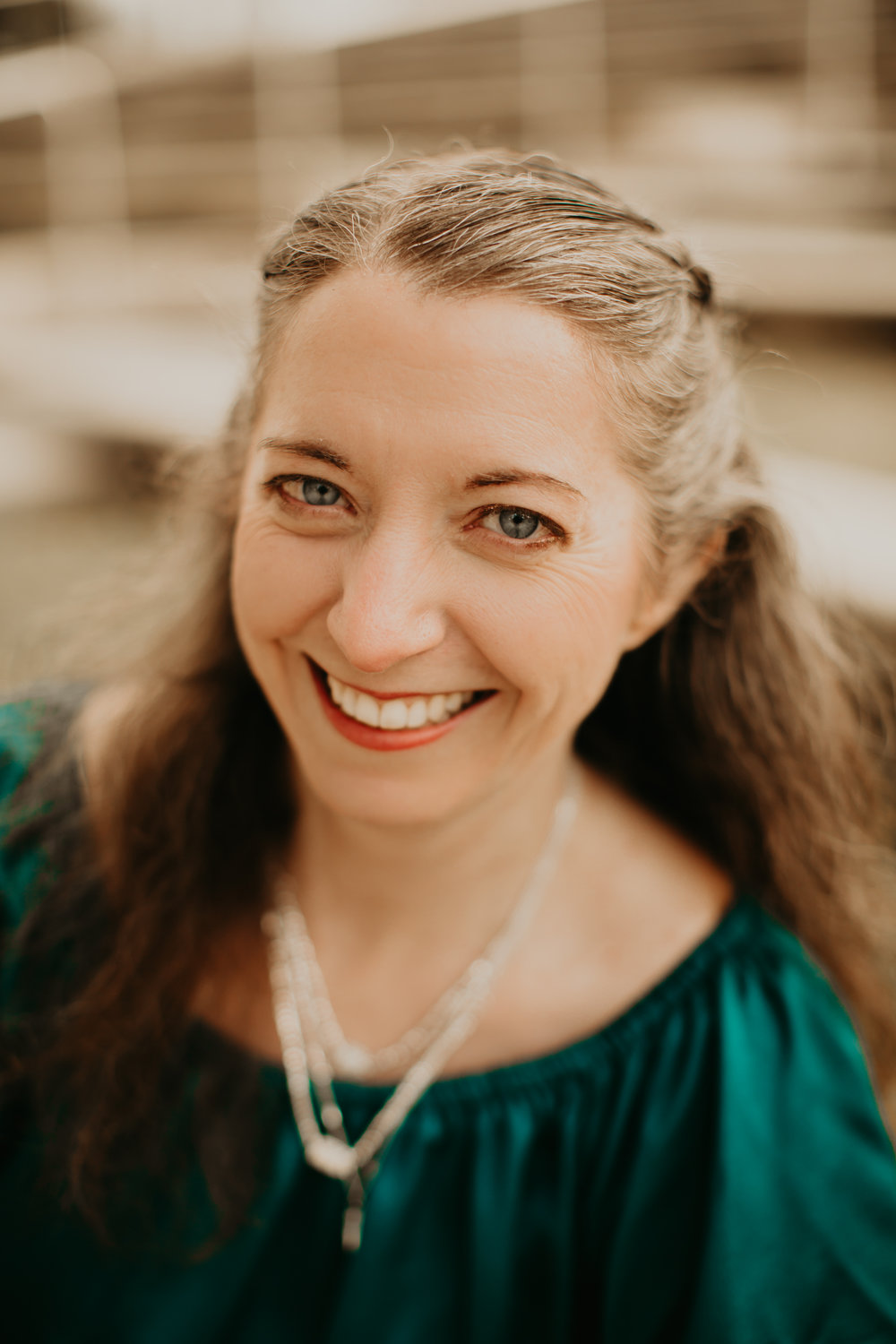
In this guest post, pianist and teacher Helen Reid outlines her approach to teaching and the creation and ethos of her new online piano courses for advanced pianists.


The route towards creating this course – primarily during lockdown, though the idea has been in my mind for some time – has been a fascinating one. Many people have talked about lockdown being a time of creativity, and social media has seen no shortage of incredible video montages and moving living room performances. For many, however, that hasn’t been the case, and indeed the very proliferation of musical offerings on social media platforms has been confusing. Many musicians have felt the uncertainty of the next performance date putting them off playing their instruments altogether. For some, financial fears have far outweighed the desire or ability to think creatively. I found myself falling somewhere in the middle. I struggled to play the piano for myself, but the shift to online teaching, despite the crazily quick need to adapt, also inspired me to expand my teaching skills and techniques. In addition, having to find different ways to motivate students who were no longer going to perform their end of year recitals was a very interesting and important challenge, and I found that no two student routes were the same.

For some students, being released from the pressure to take the exams has allowed more time to work on technical issues around the pieces they were playing. We have explored the musical context in more depth and looked at issues of mental practice and preparation. Other students were excited about their performances and we have had to look at ways of adapting emotionally to the disappointment, devising alternative performance plans, both during and post-lockdown. I have considered this such an important responsibility to my students, to respond to each situation individually, and of course this is what we should aim for continually as teachers.

For many years, I have loved the idea of creating courses which place solo piano at the core and yet encompass many different facets. Just as we talk about portfolio careers, students (both young and old!) can benefit from a ‘portfolio course’. There are so many different skills needed to succeed as a musician. One has to be sensitive to produce beauty in performance, yet have an armoury to deal with the different types of rejection which might occur as a result of auditions, competitions and so on. Musicians must spend many hours in isolation, and yet also be happy in company, travelling to play concerts in varying locations, with different musicians and new audiences. Marketing and networking skills are important; teaching skills will more often than not be needed – the list continues. Lockdown encouraged me to put my thoughts into action, and to take time to create something which I hope can continue when normal life returns.

As Course Leader of the Professional Studies course, delivered to all the first years at the Guildhall School, I am acutely aware of how we must respond to the current situation in the content of what we offer our young musicians. We must give them the skills to help them on their way to a successful career at what is a very challenging period for music making. I am determined to address this with a sense of excitement and potential.

At the Guildhall School, I also work as a mentor on the PGCert in Performance Teaching. In 2014 I created an early years’ curriculum for 3.5 to 7 year olds, building a musical foundation in a holistic manner (www.blackbirdeym.com). I have contributed and led several research projects, primarily around the health of musicians. For the last six years, I have taught piano and accompanied recitals at Bristol University, as well as working privately with advanced students. I wanted to create a course which could combine all these aspects, and respond to some of the issues which arise frequently among my piano students.

The new online courses I have devised consist of focused one-to-one lessons, working on whatever the student wishes to bring. These are complemented by webinars, looking at issues such as structuring practice and other practice techniques, fulfilling potential in performance, keeping our body and mind healthy as musicians and considering how we communicate through our music performance. The webinars are also influenced by questions posed by the students during the course, so that we gain the benefit of exploration as a learning community. In addition, Dr Jonathan James delivers webinars looking at the wider musical context – exploring Bach’s 48 Preludes and Fugues and Beethoven’s Sonatas, for example. Jonathan is a fine speaker and I know he will bring an extra dimension to the courses. The students receive ongoing email support, so that they can ask advice or make suggestions as things occur to them during the course.

The first course takes place in June and is for Advanced Adult Pianists. The following two courses for advanced pianists will start in July and September, with the September course running all the way until Christmas. I was initially sceptical about online teaching, as I think perhaps we all were, and I was very nervous about how the first few lessons might go. However, given a reliable connection, I have found that it has enabled me to build more creativity into my teaching. This has been an exciting personal development and beneficial to my students. The current situation is a challenge for all artists, but the potential is there to connect with people all around the world, and expand our skills and understanding.

For more information on the courses, please visit helenreidpiano.com or email helenreidpiano@yahoo.co.uk


publicity photo.jpg.cropped525x195o73,-13s377x259Helen Reid first came to public attention when she appeared on BBC2 in the National Keyboard Finals of the BBC Young Musician competition in 1998. In 2000 she won first prize in the Karic International Piano Competition. In 2006 she was hailed as a ‘rising star’ in The Independent magazine.

Helen has given recitals all around in England, at venues including the Wigmore Hall, Purcell Room, Fairfield Halls and Blackheath Halls, London, St. George’s, Bristol, Cheltenham, the Bridgewater Hall, Manchester and the Aldeburgh and Buxton Festivals. She has performed in Spain, Slovakia, Hungary, Germany, Austria and the Czech Republic. Concerto performances have included Rachmaninov’s second Piano Concerto with the Westmoreland Orchestra and Gershwin’s Rhapsody in Blue with the Aurelian Ensemble at Blackheath Halls and the world premiere of David Matthews’ Piano Concerto, at Dartington International Summer School. Helen has played a wide range of chamber music, with artists such as Paul Archibald – trumpet, John Kenny – trombone, Sheida Davis – cello, and Fenella Humphreys – violin.

Helen studied at Chetham’s School, Royal Holloway University and Cologne Music College, completing a Master’s Degree at City University and the Guildhall School of Music. She is currently professor of piano at Bristol University; runs the Professiona Studies course at the Guildhall School of Music and Drama, and has been invited to give masterclasses at Gdansk Conservatoire, Wells Cathedral School; The Universities of Bath, Royal Holloway and Hull, Dartington International Summer School and Pro Corda.

Future plans include an exciting new solo programme – Visions of Night, featuring music by Poulenc, Martin Butler, Michael Berkeley, Faure and Schumann. Currently booking for 2020-22.

Guest post by Dr James Holden

I’ve always really enjoyed playing the piano. However, I’ve always avoided doing my piano practice. This spring I decided to put an end to that. I was particularly motivated by the start of the annual 100 Day Project, in which people commit to doing something creative for 100 days. I determined that my project would be to teach myself how to play Chopin’s Nocturne op. 27 no. 2, a piece I’ve always loved but lacked the impetus and dedication to learn. To do this, I committed myself to practising for at least 30 minutes every day. What’s more, I decided to make myself publicly accountable by streaming my practice sessions on my Twitch channel.

In case you’re not aware, Twitch is a streaming platform usually used by gamers to broadcast themselves playing videogames. However, it’s also used by artists and other creatives to stream their ongoing work. At any one time you can usually find several pianists playing live in the ‘Music & Performing Arts’ category. These players are often watched by hundreds of viewers as they perform arrangements of popular songs and other tunes, improvisations and more.

If these pianists are giving online concerts, they are less like modern concerts than they are nineteenth-century salon performances. Twitch allows real time interaction through a chat window which means that these pianist-streamers can engage with their audiences in real time between and even during pieces, and are therefore able to perform requests, respond to suggestions and otherwise chat with viewers.

My own Twitch streams are a little different. Firstly, my standard of playing is generally lower: I am an intermediate level amateur at best with limited repertoire (largely the result of my limited practice!). Secondly, I’m not attempting to give salon style performances. Instead, I’m ‘just’ broadcasting my daily piano practice.

Practice is normally private not public. It’s what precedes a performance; it’s not the performance itself. And yet, the simple act of streaming it on a public media platform means that my private practice does take on a performative aspect. Even if no one is watching – and that’s often the case on my channel – people could be watching. And that makes all the difference.

The performative aspect of my streams has necessarily altered my relationship to my practice. It has introduced an implied need to make it enjoyable to watch. This means, in the first place, choosing to work on a piece that will appeal quickly to viewers surfing between channels. The Chopin nocturne I’ve chosen is a beautiful work with relatively immediate appeal. However, it simply doesn’t have the mass recognition or popularity that a cover of a hit song would have. Secondly, the need to make my streams an enjoyable watch potentially risks altering how I practice. It feels as though I should play the work through coherently ‘in flow’ rather than working in a more deliberate, detailed fashion. It’s just not that much fun to watch someone play one bar over and over, or play a phrase slowed down to the point of unrecognizability. And yet, that is the kind of effort that is often required when practising.

On the plus side, Twitch’s interactivity means that it’s possible to get immediate positive reinforcement during practice. I was genuinely thrilled when a viewer typed in chat that my playing sounded good. The comment led me to think about the broader possibilities of learning on stream. I can imagine a practice session becoming something like an informal masterclass with knowledgeable viewers offering encouragement and advice.

chopinpaintingsmall

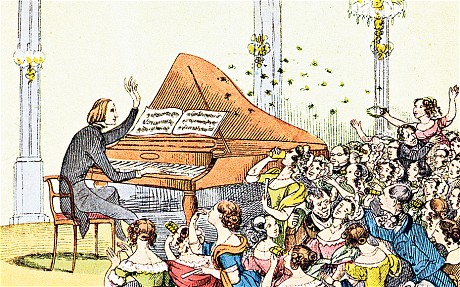
Given my chosen piece, I can’t help thinking about all these issues in relation to the Romantic virtuosos. Chopin himself, of course, was a brilliant performer but famously averse to giving large concerts. Perhaps he would have enjoyed playing in the privacy of his own home to an invisible public audience on Twitch. I’m not sure how he would have felt about making the private work of practice public though. I certainly know how the older Liszt would have felt. It’s probably true that during his years as a touring virtuoso the younger Liszt did much of his practice in public on the concert platform itself. However, in later life as the stern master of Weimar he was famously dismissive of pupils who displayed poor technique during his masterclasses, berating them with the declaration: “Wash your dirty linen at home!” I am literally counting ledger lines during my streams so am certainly, musically speaking, washing my dirty linen in public.

AD5728
Franz Liszt in concert in the 1840s

I’m only a short way into #the100dayproject. Despite the complications it has introduced, the decision to stream has already had several positive effects. Firstly, it has given me the necessary commitment to keep practising. My advertised stream schedule makes me publicly accountable for my practice in a way I’ve never been before, not even when I had lessons as a kid. I have, as a result, stuck to the task far more than I would have done otherwise, and my playing has genuinely improved as a result. I’ve certainly made solid progress with the nocturne. Whilst it’s true that I’m still stumbling over the more challenging passages and continue to play wrong notes, I at least play them better than I did before. It turns out that regular practice really does make a difference!

A second consequence of my decision to stream my practice is that I now have a video archive of my progress. I can compare the video of my day 1 stream with, say, that of my day 21 stream and quickly see the progress. This is a source of positive reinforcement that offers continued motivation when things seem challenging. More immediately, the fact that Twitch makes streams available as VODs means that I can watch myself back straight after I finish my practice. I can listen to my playing divorced from the act of playing itself, which means I can hear things much more clearly. The critical reflection for which this allows feeds back into my following practice sessions.

Thirdly, I have become somewhat used to the idea of others watching me play (if not perform exactly) – which was a rare occurrence before. In particular, I’m more accustomed now to the idea of people seeing me struggle with a piece and play wrong notes. I’ve had to get over any embarrassment about my lack of technical ability or competence, and my playing is probably becoming freer as a result. I think, overall, that streaming is making me more forgiving of my mistakes.

I’m excited about where my 100 Day Project is heading. I’m certainly looking forward to hearing the improvements I’m sure to make in the days and weeks ahead, and to exploring new pieces alongside my current choice of nocturne.

I’ll be streaming my practice on my Twitch channel at 6pm UK time for about 30 minutes every evening until I reach day 100. It’d be great if you could tune in, say hi in the chat and give me some encouragement. Please do give the channel a follow whilst you’re there too. Can’t make it at 6pm? Don’t worry, you can always find videos of all of my previous practice sessions, so do stop by.


James Holden is an independent writer and academic. He is a Lisztian, a Proustian and a Nerd. He is currently streaming his piano practice every day at 6pm on his Twitch channel. Find out more about his work and publications on his website. You can also follow his progress on Twitter and Instagram.

Guest post by Nick Hely-Hutchinson

The first in a series of guest articles exploring people’s personal responses to or relationship with Beethoven and his music.


Beethoven and me go back a long time. I recall precisely the first occasion I heard his music.

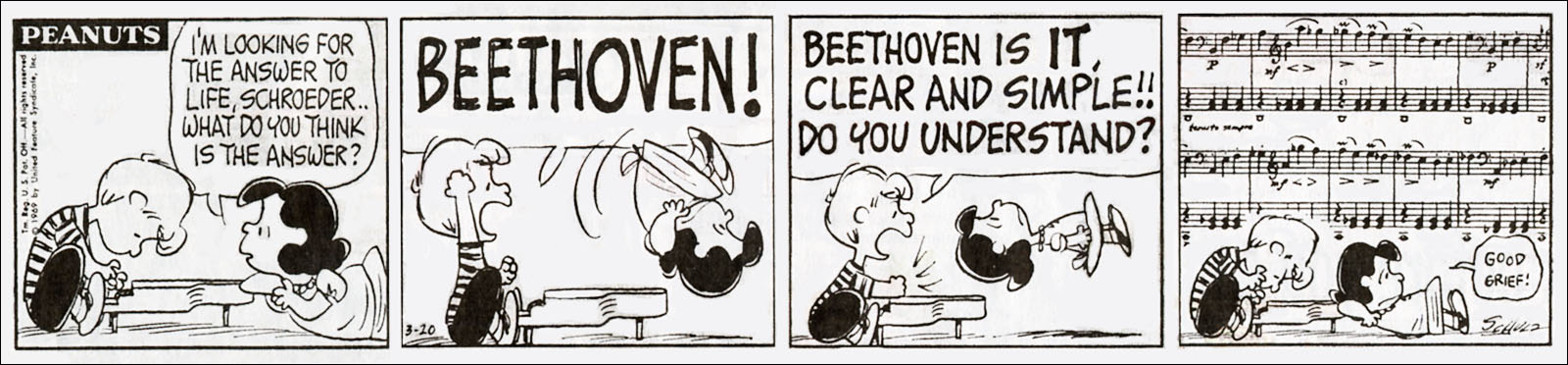
I was taken as a young child to one of the early Charlie Brown films. Along with Linus and Snoopy the dog, Schroeder is Charlie Brown’s closest friend. But the other passion in Schroeder’s life is Beethoven. He is, you might say, nuts about him.

beethoven1600x372

During the film, Schroeder plays the slow movement from the Pathétique sonata, and I went home resolved to learn the piece. (Battling the two outer movements came some years later. This became something of a pattern for me – “Oh, I could play that!”, only to discover that Beethoven rarely composed simple stand-alone works.)

You are going to read a great deal about this complex man during 2020, this being the 250th anniversary of his birth. I am no expert, no musicologist, just an amateur enthusiast, but Ludwig van Beethoven gets my vote as being one of the most influential people ever to grace the planet. The simple truth is that he threw away all the rules, and nothing in music, perhaps even the wider arts, was the same after him.

Readers of my blog, manuscriptnotes.com, will know that Schubert is my favourite composer. But if I had to single out the one composer who had, has, the greatest impact on me in so many ways, it would have to be Beethoven. In the context of classical music, I am minded to replace the word ‘music’ in John Miles’s famous lyric to read ‘”Beethoven was my first love and he will be my last.”

Why so?

It may sound hokey, but in Beethoven’s music you have everything of what it means to be human. Schulz’s cartoon above says it all. His irascibility, temper, scruffiness, woeful love-life, manifold dwellings, poor personal hygiene are all well known; as is his near thirty-year struggle with deafness, a particularly cruel infliction for a composer. All of these traits and frustrations are writ large in his music: never before has the personality, the humanity, of a composer been so glaringly revealed in his output, whether symphony, concerto, sonata, choral work, or chamber. All his music speaks to us of life itself.

Lest you charge me with spewing out sentimental nonsense, let me try and demonstrate it with a piece of music with which you may not be familiar.

Beethoven wrote sixteen string quartets, a form first used by Haydn, then developed by Mozart. Conveniently, these fall into three periods in his life, early, middle, and late, and it is the slow movement of one of the late ones, no.13, which sums up this humanity more than any other piece I know.

Writing about music is notoriously difficult, and nothing demonstrates that better than this. The 5th movement, the Cavatina, does not have a tune per se that will leave you humming it later. Marked molto espressivo, you may not ‘get’ it at first. I didn’t. But after a few listens you will want to submit to its profound and indescribable beauty, yearning for it to go on when it comes to a sudden halt. At its heart is a searing violin, the music soon enfolds you in this heart-wrenching blanket of tenderness. Half way through, there is a brief ‘choke’, a change of tempo, and it is widely believed that a blotch on the original score is a tear from the eyes of its composer.

Beethoven could only hear these notes in his head – he couldn’t test anything out on a keyboard. Composed less than two years before his death, you can feel the aching sorrow at his condition, but also a sense that after all the bang, crash, wallop we associate with Beethoven, this, more than anything else, (and he wrote some truly gorgeous slow movements) is the purest summation of the man, his music, his life – and, by extension, humanity itself.

If that consigns me to Pseud’s Corner, I go willingly.


Nick Hely-Hutchinson worked in the City of London for nearly 40 years, but his great love has always been classical music. The purpose of his blog, Manuscript Notes, is to introduce classical music in an unintimidating way to people who might not obviously be disposed towards it, following a surprise reaction to an opera by his son, “Hey, dad, this is really good!“. He is married with three adult children and is a regular contributor to The Cross-Eyed Pianist.

Guest post by Erica Ann Sipes

A few years ago I found myself in the middle of a musical mid-life crisis. I started playing music when I was five and went to music school for my undergraduate and graduate degrees but after that I opted for getting married and shelving my dreams of being a high-level performer. (These two things don’t have to go hand and hand but I decided to link the two.) As with so many people who study music throughout their lives, music has always played a huge role in my life. Without it I am simply not me. So along with playing my roles as wife, mother, library supervisor, and toystore manager, I have also always worn a musical hat; I’ve played for church and school choirs, accompanied students and professionals, and have been a practice coach to others. My musical mid-life crisis occurred several years ago, not because I wasn’t incorporating music into my life but because I wasn’t giving enough value to that musical hat. I was judging it against my immature notions of what I had always thought it meant to be a successful professional musician.

One of the problems with devaluing our musical hat’s worth is that it can often keep us from sharing our gifts and the gift of musicking* with others who need it – in other words, just about everyone. As I’ve engaged others in conversation both in person and on social media and as I’ve dealt with my own struggles, I have come to the worrying conclusion that too many of us aren’t sharing our gifts as much as we can and perhaps should, largely because of labels and misguided notions that make us question what we have to offer. Post-musical mid-life crisis, I am here to help redirect as many of us as I can to a healthier respect for our musical selves by looking at some typical devaluing roadblocks that we set up for ourselves and that can keep us from feeling confident that we have something to offer others as musicians. Here are a handful of these roadblocks:

  • I can’t deliver perfect, flawless performances.
  • I can’t easily perform by memory.
  • I can’t perform difficult, virtuosic music.
  • I like to perform music that’s not considered legitimate classical.
  • I don’t get invited to perform at the best venues or around the area, country, or world.

All these statements are ones that I myself can claim. A few years ago they would have driven me back into my shadows but now I gladly accept them because I realize I am no longer a child. With becoming an adult we can shed these expectations that for many of us aren’t possible or practical. We no longer need to use them as our measuring sticks for success because we can reframe them to motivate us rather than cripple us. Here’s some reframing in action:

  • Perfect, flawless performances are miracles, at least they are for me. And audiences rarely hear mistakes. What’s important to me is delivering the essence of a composition, its composer, and myself. If I can move the audience in some small way – to smile, to reminisce, to cry, to laugh, to dream – I have succeeded. 
  • There is no need to perform by memory unless I want to. These days, with the advent of iPads and page-turning pedals, with a flesh and blood page turner, or with a little paper and tape ingenuity, having music in front of me doesn’t make me any less of a musician. I’d rather perform with music than not performing at all because I’m not comfortable playing by memory.
  • I have small hands and have struggled throughout my life with overuse and misuse injuries so it’s not in my best interest to perform virtuosic works. There are plenty of amazing pieces out there to perform that can impress the audience but won’t jeopardize my body’s health.
  • I enjoy performing music of many different styles even though I’ve mostly received training in classical music. Jazz, ragtime, blues, minimalism, movie soundtracks…it just doesn’t matter. If I like what I’m playing I’m more likely to play it well. Audiences also like variety. If someone has an issue and doesn’t like something, oh well! There’s always going to be pieces on any given program that someone doesn’t like. And because I’m not a famous pianist I don’t have to worry about bad reviews.
  • There are wonderful venues in the most unexpected places and for me, personally, satisfaction comes more from the audience anyway. I’d rather play in a restaurant with a decent piano and an appreciative, engaged audience than I would a famous venue with an audience that isn’t receptive. Would I turn down an opportunity to play at a great hall? Of course not. But not being invited to perform at them does not meet I don’t have something to offer.

Ever since my musical mid-life crisis I have worked to move roadblocks from my life that keep me from doing what I love. I’ve also learned to take off my musical hat and to really look at it in order to evaluate its true value. Upon doing so, I’ve discovered my hat is in fact invaluable. Music brings me together with people and is a bridge to my communication with strangers, whether they’re in the audience or sharing the stage with me. Music gives me an outlet where I can tell my story. Music gives me a chance to prove to myself that I am a legitimate musician.

I strongly believe that there are more of us out there with these golden musical hats – we just need to get some dynamite and blast the roadblocks away…or chip away at them slowly if that’s more your style. As I’ve been doing that, I’ve been able to truly listen to and appreciate the feedback from audience members and what ’ve learned from them is how much music can heal, restore, and inspire others, myself included. I don’t think there’s a limit to how much of that the world can hold.

So let’s take another look at our musical hats, get rid of some roadblocks and grow up, shall we? The world needs you to.


* ‘Musicking’ is a term I got from Christopher Small’s wonderful book by the same name. A definition of the term that I love can be found in the abstract for one of his articles in the Journal of Music Education Research: Musicking is part of that iconic, gestural process of giving and receiving information about relationships which unites the living world, and it is in fact a ritual by means of which the participants not only learn about, but directly experience, their concepts of how they relate, and how they ought to relate, to other human beings and to the rest of the world. These ideal relationships are often extremely complex, too complex to be articulated in words, but they are articulated effortlessly by the musical performance, enabling the participants to explore, affirm and celebrate them. Musicking is thus as central in importance to our humanness as is taking part in speech acts, and all normally endowed human beings are born capable of taking part in it, not just of understanding the gestures but of making their own.”


14Erica Ann Sipes, pianist, received her bachelor’s and master’s degrees in piano performance from the Eastman School of Music. She has been an adjunct faculty member at Radford University and at the Governor’s School for the Arts, and has freelanced as a piano collaborator and coach in Michigan, Idaho, and Virginia. For the past two years she has led the piano intensive program at the Roanoke Youth Orchestra’s Summer Institute.  She has also performed with the Roanoke Symphony on occasion and has performed as a piano soloist with the New River Valley Symphony.  In the summer of 2012 Erica officially launched her own business as a practice coach, Beyond the Notes, offering coachings, workshops, planning sessions, and practice boot-camps for anyone that could use some help with practicing.

Erica can often be found talking about practicing, piano, and music or livestreaming her practice sessions on Twitter (@ericasipes). She has also been a prominent blogger, writing frequently about her views on performing, learning music, and the classical music world in general.  Her blog, “Beyond the Notes” can be found at http://ericaannsipes.blogspot.com.