“Schubert’s music is the most human that I know.” – Sir András Schiff, pianist

I will never quite have the words to express what Schubert’s music has meant to me…and I will never stop looking for them. His ability to convey loneliness — and console in its wake — is perhaps his most ineffable quality…” – Jonathan Biss, pianist
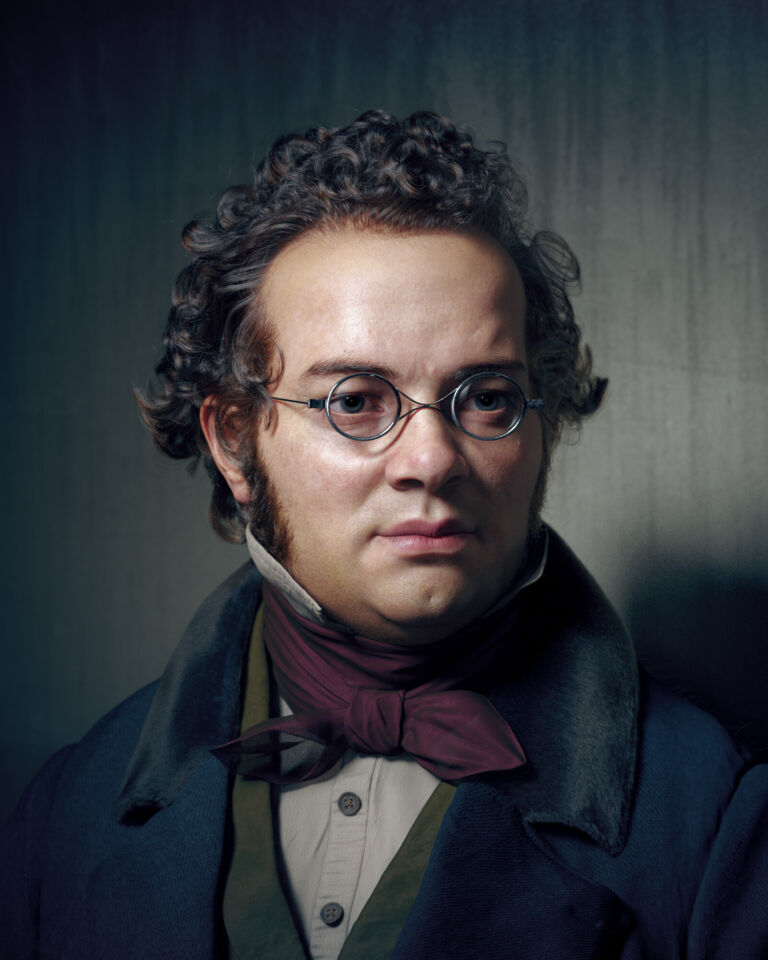
Image credit Hadi Karimi

Schubert’s music provides the bridge between the classical and romantic eras. Yet his music was not well known during his lifetime outside of Schubert’s own intimate circle of friends. His piano music was largely neglected right up to the early part of the 20th century when it was given the attention it deserved by pianists such as Artur Schnabel, who can be partly credited for introducing it into the regular concert repertoire with pieces such as the late piano sonatas, the two sets of Impromptus, the Moments Musicaux, and the “Wanderer fantasie”. Today, these works are staples of the pianist’s repertoire, much loved by performers and audiences alike.

Schubert’s musical sensibilities and invention were inspired by the human voice – he wrote over 600 songs – and lyrical melody and long-spung cantabile lines are distinctive elements of all his music.

For the pianist, his music remains an interpretational challenge and the best Schubert players have absorbed the essentials from his songs and chamber music. Because of his proximity, and admiration for Beethoven, there is a tendency among some players to approach his music like Beethoven’s; but Schubert is a composer who speaks more quietly and introspectively, even in his more declamatory moments. The skill in playing his music well is a sensitivity to these aspects without sentimentality.

British pianist Clifford Curzon (1907-1982) had a special affinity for Schubert, fostered by his studies with Artur Schnabel. His performance of Schubert’s last sonata, the D960 in B-flat, is considered by many to be one of the greatest performances ever. In this recording, his concentration and nervous intensity are so palpable it is almost like eavesdropping.

Clifford Curzon Plays Schubert’s Piano Sonata in B-flat major, D.960

A protégé of the great Russian pianist Sviatoslav Richter, himself a fine Schubert player, Russian pianist Elisabeth Leonskaja is noted for her performances and recordings of Schubert’s piano music. As an artist, she is unfailingly intelligent, tasteful and musical, whose performances display great refinement, romantic fervour, delicacy, and power, all underpinned by commanding technique.

Franz Schubert: Fantasy in C Major, Op. 15, D. 760, “Wandererfantasie” – Allegro con fuoco ma non troppo (Elisabeth Leonskaja, piano)

No appraisal of Schubert pianists would be complete with András Schiff, who really honours every work, and who has recorded the piano music on Schubert-era instruments, offering listeners an intriguing insight into the range of colours and nuances afforded by Schubert’s writing. Always fastidious in his close attention to the details of the score, Schiff really gets to the heart, soul, and fundamental humanity of Schubert in his playing and brings a compelling intimacy to his performances, even in the largest of concert halls.

The great Romanian pianist Radu Lupu, who died in April 2022, was described by Gramophone magazine as “A lyricist in a thousand”, who placed Schubert’s music at the centre of his repertoire throughout his career. Sensitive to Schubert’s mercurial moods, his playing demonstrates immense control, subtlety of shading and dynamic nuance, an almost ethereal luminosity of sound, and a myriad range of colours which fully reveals Schubert’s inventiveness and imagination, the rich seam of his ideas, and his forward vision.

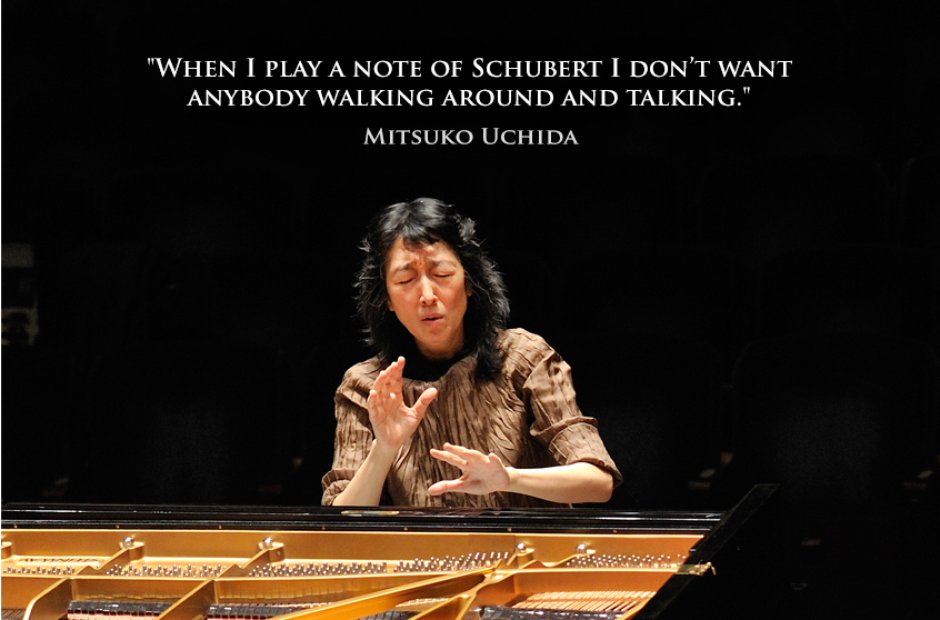
Like András Schiff, Mitsuko Uchida has an unerring ability to bring an intimacy and sense of a conversation to her performances of Schubert’s music, and she does so with clarity, commitment, and a clear sense of the narrative line, the lightness and lyricism, and also the roughness in his music. Uchida is very alert to Schubert’s idiosyncrasies, his chiaruscuro and elusive, shifting moods: beauty and delicacy, poignancy and loneliness abound in her performances of this composer whose music has been a lifelong presence for her.
Other fine Schubert players to explore include Shura Cherkassy, Rudolf Firkusny, Walter Gieseking, Rudolf Serkin, Wilhelm Kempf, Paul Lewis, Maria João Pires, Alexander Lonquich, Imogen Cooper, Krystian Zimerman, Murray Perahia, and of course Alfred Brendel. Of the younger generation, recent discoveries include Inon Barnatan, Yehuda Inbar, Pavel Kolesnikov and Samson Tsoy

An earlier version of this article appeared on the InterludeHK website


Support The Cross-Eyed Pianist

This site is free to access and ad-free, and takes many hours to research, write, and maintain. If you find joy and value in what I do, why not
Schubert…..makes tears catch at the edge of my eyes; such fragile hope, such powerful emotions.

Ian McMillan, poet (via Twitter)

I was reminded of Ian McMillan’s quote while listening to the final lunchtime lockdown concert from London’s Wigmore Hall, a devastatingly beautiful, austerely unsentimental yet profoundly poignant rendering of Schubert’s late great song cycle Winterreise, performed by tenor Mark Padmore with pianist Mitsuko Uchida. Music so fitting for these strange days, with its narrative of loss, longing and separation.

Schubert is the composer for our corona times. Listening in isolation to performers playing to an empty hall, this acccount of isolation, its chill frequently tinged with the tenderest poignancy, seemed particularly appropriate. We are at home, but we are separate, living in our “bubbles”, unable to hug our family and friends, yet finding a sense of closeness, warmth and solace through music.

That same sense of isolation is evident in the Andantino from Schubert’s penultimate piano sonata, or the bare “horn call” first subject of the F minor Fantasie, D940, the fearful tread of the second movement of the Trio, D929, or the haunting opening measures of the unfinished sonata D 571. There are numerous other examples, of course….

In both the Andantino of D959 and the D929, it is those unexpected modulations into the major key, when the sun comes out to warm one’s skin and the chill of winter momentarily recedes, that make this music so magical, so breathtakingly extraordinary in its harmonic and emotional volte-faces. And then, only a few bars later, the melancholy and the sorrow flood back…. Often even more tragic in the major key, it is as if Schubert recognises the darkness visible, acknowledges and accepts it.

No one does chiaroscuro quite like Schubert: he mixes light and dark more subtly than any other composer and colours his musical palette with an elusive hue of mystery. Light and dark, levity and depth all reside in close proximity in Schubert’s music, perhaps even more so than in Mozart’s (and Mozart too is a master of light and shade).

I’ve loved Schubert’s music, and, more specifically, his later piano music since I was a child. I grew up listening to my parents’ recordings on LP of the ‘Trout’ Quintet, the Unfinished and ‘Great’ Symphonies, the string quartets, and The Shepherd on the Rock, which my father would play on the clarinet – and, when I became a more competent pianist, I would accompany him. When I was about 12, still a fairly novice pianist, my mother gave me an Edition Peters score of the Moments Musicaux and both sets of Impromptus – works which portray in perfect microcosm the breadth and variety of Schubert’s artistic vision and emotional landscape. I stumbled my way through these works, mostly too advanced for me at the time, though there were fragments of each which I could actually play. I took the A-flat Impromptu to my then teacher and instead of ticking me off for trying to learn music which was far in advance of my capabilities, she helped me find my way through the score. At this time, in the late 1970s, Schubert was regarded as the poor relation to Beethoven, his melodies sweet as sachertorte, his structures incoherent, and his emotions too introverted. Then I had little knowledge about Franz Schubert beyond the notes on the page, but there was definitely something that drew me to his unique soundworld….

Much as I love Beethoven, his gruffness and uncompromising spirit, as I’ve grown older I turn more and more to Schubert’s introspection, his tenderness and his intimacy. He speaks more softly, more personally than Beethoven for me. His unmatched gift for melody enables him to spin the agony of desire, melancholy and sorrow, and the joy of living  – and a whole gamut of emotions in between. He has a remarkable ability to switch rapidly between terror and lyricism, from the darkly tragic and melancholic to golden transcendence or joyous other-worldliness, all rendered in music of incredible, almost revolutionary inventiveness. Often this is achieved through the most miraculous modulations, an unexpected sonic shift and, for me, as a synaesthete who sees the musical keys in colour, a completely new luminosity.

His other great skill is in managing rests and pauses. Silences abound, freighted with poetic imagination and who knows what, suspending time and offering pause for reflection, while also clarifying the structural expansiveness of the music, his “heavenly length”. In addition, Schubert’s use of dynamics is often ‘psychological’ rather than purely physical, suggesting an intensity of feeling rather than volume of sound. As pianists, we shouldn’t play Schubert as if you would Beethoven (though some do!). Even in his grandest gestures, for example the fff passages in the first movement of the Sonata in G, D894, there’s a restraint. His generous use of pianissimo in particular creates an ethereality in his music as if hovering between different states of mind.

In those moments, his music makes you feel as if you are the last person in the universe…..

How does one explain Schubert? The simple answer is – one can’t.

Steven Isserlis, cellist


When you see such a fragment, it brings you slightly closer to the struggles of the composer

Yehuda Inbar

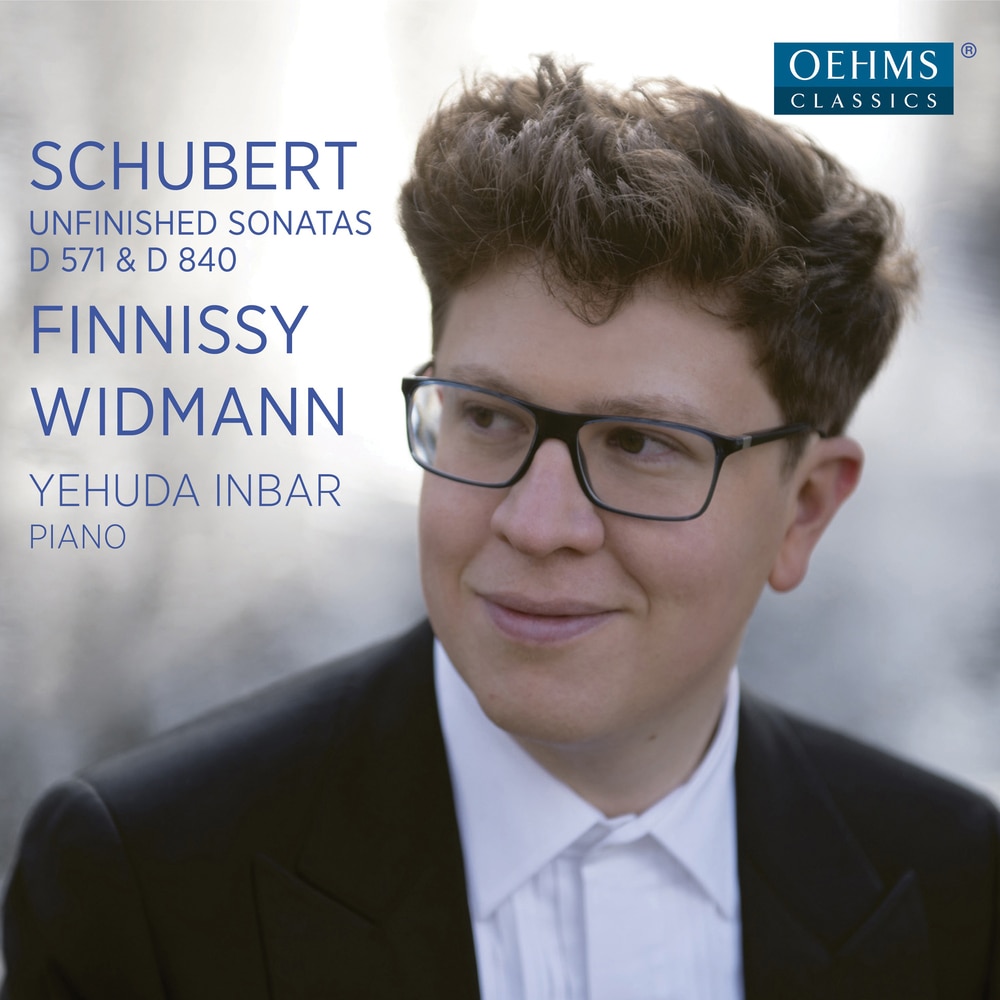
4260330917126-cover-zoomWhy did Schubert leave so much music unfinished? Was it the rapidity and volume of his compositional output that works were set aside, and not revisited? Did he feel dissatisifed or struggle with certain pieces? In this impressive debut disc, Israeli pianist Yehuda Inbar seeks to throw light on the conundrum of the unfinished piano sonatas by this most introspective composer by presenting the fragmentary Sonata in F-sharp minor, D571, and the ‘Reliquie’ Sonata in C major, D840 together with Michael Finnissy’s Vervollstandidung von Schuberts D840 (in effect the third and fourth movements of the Reliquie) and Jorg Widmann’s Idyll und Abgrund.
There have been some notable completions of the D571, enabling pianists to perform a “complete” sonata in concert, but Inbar chooses to present this work in its incomplete form, finishing without warning before the recapitulation, a fleeting 7 minutes of extraordinary, intimate poignancy. Inbar’s account is elegantly paced with a warm, richly-hued sound (recorded on a concert Bechstein as opposed to a Steinway). The highlighting of certain details, including interior voices and bass accents, reveals the Mozartian clarity of Schubert’s writing and his fondness for long-spun songlines.

By contrast the C major sonata, probably the most significant of Schubert’s unfinished works, is Beethovenian in its grander orchestral textures and gestures, yet always shot through with the most intimate, introspective writing, its ambiguity made even more explicit through Schubert’s fondness for unusual harmonies and unexpected modulations. The transition between the F-minor sonata and this one works here because the C major Sonata opens with a sense of uncertainty, a spare, haunting motif rather than an emphatic statement. Inbar’s account is robust when required, but he is also acutely sensitive to the mercurial nature of this music.

Michael Finnissy’s piece is a stand-alone work but also completes the D 840 and was written for Inbar, who premiered it in May 2017. Finnissy describes Schubert as someone who has been “heavily marketed by the media, whose personality has been very frequently discussed….We don’t know our last moments and we shouldn’t think we know Schubert’s last moments either…I didn’t want a slow decline into an autumnal coda. I just wanted it to stop, almost with a question mark. Has it finished, has it not finished? What more do we know about Schubert from listening to this?” The work intriguingly interleaves distinctly Schubertian idioms and motifs with instances of unexpectedly crunchy dissonances and dramatic outbursts. Like the D571, it ends ambiguously. If you half-listen you might think this is pure Schubert in a particularly idionsyncratic mood, and, taken with the Widmann which follows, it’s instructive in revealing the essence of Schubert’s writing and the influence and pull of that writing on composers who followed him. Here, the new shines a light on the old, and vice versa.

The extremes of Schubert’s emotional landscape are reflected and distorted in Jorg Widmann’s Idyll und Abgrund, six little Schubert ‘reminiscences’ which combine dreamscapes, brilliance, drama and violence with fragments of Viennese waltzes, raunchy Ländler, and even a child’s music box, complemented by a whistle by the pianist, all handled with immediacy and panache by Inbar.

Highly recommended


Yehuda Inbar: Schubert – Finnissy – Widmann is available on the Oehms Classics label


xl1430177

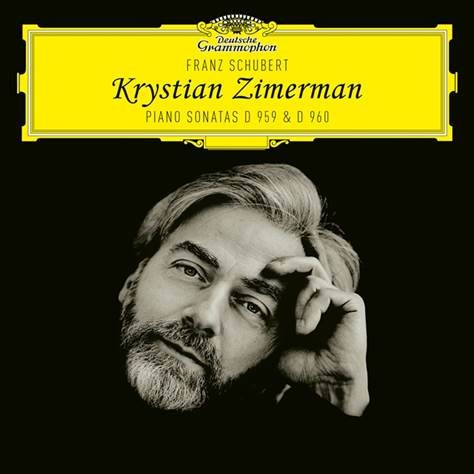
I missed Krystian Zimerman’s London concert last April when he stood in for the indisposed Mitsuko Uchida and gave what was by all accounts a remarkable performance of Schubert’s last two sonatas, works written in the dying embers of the young composer’s life yet imbued with nostalgia, warmth, an intoxicating bitter-sweetness and, ultimately, hope.

It’s rare for Zimerman to come to London; even rarer for him to release a new disc. He feels that high-quality digital recordings have created a homogeneous sound and style, robbing art music of spontaneity and leading audiences to expect perfection on disc and in concert (something I largely concur with, based on my regular concert-going). Thus, he’s very particular about what and when he records. This is his first recording of Schubert’s last two sonatas and his first solo album for a quarter of a century – and my goodness it was worth the wait! The recording was made in Japan using a Steinway with Zimerman’s own keyboard (which, incidentally, he made himself) inserted into the instrument (like the great pianists of the past, such as his mentor Arthur Rubinstein, he travels on the condition that his own instruments and/or separate, particularly-voiced keyboards accompany him, to suit the repertoire he is performing). The result is impressive, the bespoke action producing a sweetly singing tone and wonderful clarity. In the liner notes (which take the form of an interview) Zimerman explains that the special piano action “is designed to create qualities Schubert would have known in his instruments. Compared to a modern grand piano, the hammer strikes a different point of the string, enhancing the ability to sustain a singing sound…..

But of course it’s not just the bespoke action which makes Zimerman’s sound so special. No, there is more, much more to this performance. Overall, there is an immaculate sense of pacing, so sensitive and natural; the first movement of the final sonata, for example, unfolds like a great river plotting its final course, the hymn-like first subject theme imbued with joyful purpose which gives the music forward propulsion without ever sounding hurried (it’s a leisurely mässig). In the first movement of the D959, the grandeur of the opening sentence gives way to the wistfulness and intimacy of an impromptu  – and immediately Zimerman’s sense of phrasing is revelatory, shedding light on details hitherto skimmed over by others and demonstrating a complete understanding of Schubert’s architecture and narrative, both within movements and the works as a whole.

Throughout, there is subtle rubato in his contouring of phrases, thoughtful use of agogic accents to highlight intervallic relationships or strikingly piquant harmonies (so much a feature of Schubert’s late music), a Mozartian clarity in the passage work and repeated chords (for example in the development sections of both first movements) and an understanding of Schubert’s very specific rests and fermatas – attention to tiny details which create remarkable breathing spaces and enhance the structural expansiveness and improvisatory character and modernity of this music. Restrained use of the sustain pedal creates transparent textures, most notably in the slow movements: the Andantino of the D959, too often the subject of musical “psychobabble” and emotional wallowing, has a desolate gracefulness in its outer sections which contrast perfectly with the hysteria of the central “storm”. When they come, the Scherzi (both marked Allegro vivace) are light and ebullient, though Zimerman is always aware that Schubert is often more tragic when writing in the major key. In sum, every bar is carefully considered and insightful, yet at no point does this music sound fussy, overly precious or reverential. This is some of the most natural Schubert playing I have encountered and it suggests an artist with a long association with and deep affection for this music

As regular readers of this blog will know, I have spent the last three years studying and learning Schubert’s penultimate piano sonata, D959. It has become something of an obsession for me, initially forming the bulk of my programme for a Fellowship Performance Diploma and now a piece of music I simply can’t let go of. I have heard many recordings of the sonata from Schnabel and Cherkassy to Andsnes, Leonskaja and Barnatan, in addition to five live performances (including by Piers Lane, Andras Schiff, Richard Goode and mostly recently Paul Berkowitz). When one spends so much time with a single piece of music, one can grow fussy, pedantically so, about how this music is presented in concert and/or on disc – so much so that I have stopped seeking out the work in concert because I listen far too attentively and critically for my own good…..and talking of “Goode”, the one and only live performance I really enjoyed, the one which left me with the feeling that this was how Schubert would have wanted his music performed, was by the American pianist Richard Goode at the Royal Festival Hall in May 2016 (of which more here). In Krystian Zimerman I have found my new benchmark, not just for the D959 but as a demonstration of how Schubert’s piano music should be played.

Very highly recommended

Such is the spell of your emotional world that it very nearly blinds us to the greatness of your craftsmanship

– Franz Liszt on Franz Schubert

Franz Schubert/Krystian Zimerman/Piano Sonatas D 959 and D 960

Deutsche Grammophon

00028947975885


