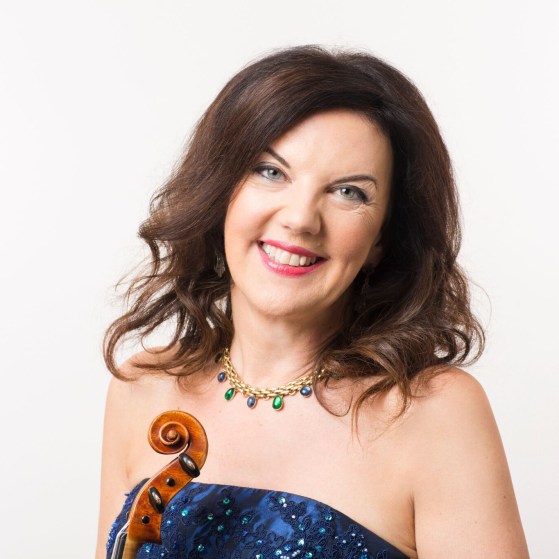
tasmin-little

Who or what inspired you to pursue a career in music?

It was quite by chance – I feel ill with chicken pox and was bored so I began to teach myself the recorder. I really loved playing an instrument and when I was better, I started the piano and the violin

Who or what have been the most important influences on your musical life and career?

Yehudi Menuhin was a huge influence of course…..but I think that all the teachers at school had their own influence and we learned from all of them. Since leaving school and performing professionally, many conductors have influenced me, especially Richard Hickox and Sir Andrew Davis

What have been the greatest challenges of your career so far?

Performing the Ligeti violin concerto – it’s hugely difficult and really challenges the player in every way!

Which performances/recordings are you most proud of?

I am very proud of my Elgar concerto with Andrew Davis and Royal Scottish National Orchestra. It won a Classic BRIT Award and I felt very happy as I waited a long time to record it, so I felt I gave my very best.

Which particular works do you think you perform best?

I’d like to think that I am able to bring some insight into every composer that I choose to perform. If I don’t feel an empathy with a composer or piece, I prefer not to play it! I’d rather leave it to people who like it, and play the things that I like most. That said, I have a huge repertoire so I haven’t exactly limited myself!

How do you make your repertoire choices from season to season?

There are various factors to consider – who I’m playing with and the repertoire that they like. Orchestras often have their own ideas regarding repertoire and then I like to learn new pieces every year so I am always programming new things.

Do you have a favourite concert venue to perform in and why?

I adored playing in Carnegie Hall – the floorboards are alive with history, it’s so inspiring!  I was playing with Simon Rattle and the Berlin Philharmonic Orchestra so I was in amazing company!

What is your most memorable concert experience?

It’s hard to choose because I have had so many fantastic experiences but probably my concert in the Royal Albert Hall at the Last Night of the Proms – the atmosphere was so amazing and so friendly! I also enjoyed playing for 40,000 people in Hyde Park – very exciting indeed to see all those faces!

As a musician, what is your definition of success?

My definition of success is simply to be playing to the very best of my ability.

What do you consider to be the most important ideas and concepts to impart to aspiring musicians?

The most important thing is to be yourself. Anything less than that will come across as un-natural and superficial so it’s important to be authentic

Where would you like to be in 10 years’ time?

I’d like to be enjoying a career in broadcasting, as well as some motivational speaking, plus finding some time for hobbies and seeing plenty of my friends and family!

Tasmin Little performs at Music at Paxton with pianist Piers Lane on 23 July in a programme including music by Schubert, Brahms, Ireland, Vaughan Williams and Franck.

Further information


Tasmin Little has firmly established herself as one of today’s leading international violinists. She has performed on every continent in some of the most prestigious venues of the world, including Carnegie Hall, Musikverein, Concertgebouw, Philharmonie Berlin, Vienna Konzerthaus, South Bank Centre, Barbican Centre and Royal Albert Hall, Lincoln Center and Suntory Hall.

Read more

Who or what inspired you to take up the violin, and pursue a career in music?

As a child, in Cape Town, I played recorder and then classical guitar, and at the age of 9 I started violin lessons as I really wanted to be in the school orchestra. Already then, the lure of making music with others took hold. But it was not a given that I would be a musician. My secondary school was sporty and academic, and I got a scholarship to study medicine at University. However a gap year convinced me that a career in music would be infinitely more exciting than life as a medic, albeit far more insecure, and I headed to the Guildhall School of Music in London to concentrate on the violin, a decision I have never regretted!

Who or what have been the most important influences on your musical life and career?

I would say violin lessons with Gyorgy Pauk and Sandor Vegh, and chamber music coaching from members of the Amadeus Quartet (especially Siegmund Nissel) were a real inspiration to me, musically. But I was also an avid concert-goer, and a love of live music-making was instilled in me from an early age.

What have been the greatest challenges of your career so far?

Fitting everything in, and finding time for recharging those batteries! I was luckily born with a lot of stamina, and I have certainly needed it.

Which performance/recordings are you most proud of?

The complete cycle of Shostakovich Quartets which I recorded for Chandos with the Sorrel Quartet, and played live over a weekend in Cratfield Church in Suffolk. Nothing will compare to that epic journey, both emotionally and physically. One of the great excitements of now joining the Brodsky Quartet is that they have shared similar Shostakovich journeys and I am looking forward to comparing “travel notes”.

Do you have a favourite concert venue to perform in and why?

I can think of two, straightaway. The first, Wigmore Hall, London. Perfect acoustic, perfect size, wonderful audience, and the sense of history walking onto that stage, well-documented in all the photos lining the Green Room walls. I made my solo debut there at the age of 21, and I vividly remember playing the Bach Chaconne as part of the programme in that heavenly acoustic, and thinking how amazingly fortunate I was to be there. The second, Snape Maltings near Aldeburgh. Every creak and groan from the wooden structure has one imagining Benjamin Britten’s presence still there in those rafters. Years ago, when they replaced the bluffs on the roof, my then quartet, spending a winter in residence in Aldeburgh, was sent as a publicity stunt to be pictured with instruments (luckily not our own!) on the roof…and oh, the view across the marshes, with the steel grey water meandering in loops through the reeds! You never see that from ground level. A very special place indeed.

Who are your favourite musicians?

Too many to list, but currently: Maria Joao Pires, Henning Kraggerud, Kristine Opolais, Paul Lewis

What is your most memorable concert experience?

As a child, hearing the Berlin Philharmonic Orchestra at the Alhambra Palace in Granada. The setting, the architecture and the music made such an impression on me.

As a musician, what is your definition of success?

I think if one feels successful, one might as well retire! As musicians we are so fortunate to be involved in a career we love, where we can continue learning and being curious and growing in experience throughout our life. Sharing this passion and enthusiasm with audiences or students is surely the most rewarding part of our life? If just one person is moved or changed in some way by their experience in a concert hall then perhaps we have been successful in our mission?

What is your most treasured possession?

I know I should say my violin! But actually it is a string of pearls which belonged to my Austrian/Italian mother, and her mother before that, the only piece of her jewellery which travelled from Europe to South Africa and was not stolen in a burglary. My only sadness is I cannot wear it when playing violin!

What do you consider to be the most important ideas and concepts to impart to aspiring musicians?

Work hard – nothing valuable is ever gained without that – but be open to inspiration from a broad range of genres. Do not spend all your day in a practice room. Walk in nature, visit an art gallery, go to the theatre, read, explore… you will need far more than an assured technique if you are to have something interesting to share with an audience. And every time you play a piece, find something new in it, and take risks.

Gina McCormack will join the Brodsky Quartet from May 2019. Find out more


Gina McCormack is well established as one of Britain’s leading artists, with regular solo appearances at London’s Wigmore Hall, the South Bank Centre and at venues across the country. She has performed at many British Festivals, including the City of London, Henley, Edinburgh, Buxton, Aldeburgh and Salisbury Festivals, and has appeared as soloist in the UK with the Hallé and Royal Philharmonic Orchestras and the former Bournemouth Sinfonietta. Tours abroad have taken her to France, Norway, Denmark, the Czech Republic, South Africa and South America, and most recently to Austria and Switzerland.

Gina studied with György Pauk at the Guildhall School of Music and Drama, London, and attended masterclasses with Sandor Vegh (at the Salzburg Mozarteum and at Prussia Cove in Cornwall), Dorothy DeLay, Andras Mihaly and Siegmund Nissel (from the Amadeus Quartet). While still a student, she was a prizewinner at the Royal Overseas League Music Competition in London and at the International Young Concert Artists’ Competition in Tunbridge Wells, where she has since returned to serve on the jury.

For thirteen years Gina was the leader of the Sorrel Quartet, with whom she was frequently heard on BBC Radio Three. The quartet made twelve CDs for Chandos Records, of works by Britten, Mendelssohn, Schubert and the complete cycle of Shostakovich quartets. Their Elgar CD was chosen as one of Classic FM’s records of the year and was Editor’s Choice in Gramophone Magazine. The group also recorded John Pickard’s Quartets on the Dutton label.

She then led the Maggini Quartet for two years, and decided to leave the group in March 2010 to focus on her solo work, continuing a long association with her duo partner, pianist Nigel Clayton. Since then the duo has had engagements in Holland, Switzerland, Denmark, and all around the UK.

Gina McCormack is also well-known as a teacher, having spent 11 years as professor of Violin at Trinity Laban Conservatoire of Music and Dance (formerly Trinity College of Music) in London. She is currently teaching at the Royal Northern College of Music, Manchester and the Royal Conservatoire of Scotland, Glasgow.  She also gives regular masterclasses both in the UK and at summer festivals abroad.

ginaviolin.com


artist photo: Melanie Strover


If you enjoy the content of this site, please consider making a donation towards its upkeep:

Buy me a coffee

yn475w58

Who or what inspired you to take up the violin, and pursue a career in music? 

I was growing up around music. My parents are musicians and they practised at home, so when I received a little Chinese Strad violin for my 4th birthday, I thought music was something every one did. Music eventually turned out to be a big part of my everyday life and naturally progressed into becoming my profession.

Who or what have been the most important influences on your musical life and career? 

When I was a child, probably my parents. I was going on tours with my father, who is a clarinettist, and was present at his rehearsals and concerts; he played lots of chamber music and as a soloist. My mother was a cellist in the orchestra of Ljubljana’s Opera House, which was almost like my kindergarten.

Some of my teachers, like the legendary Ruggiero Ricci, influenced me a lot and so did cellist Bernard Greenhouse and violist Rivka Golani. It is amazing how much we learn from other instrumentalists.

Chamber music was for me probably one of the best ways to learn about musicianship. It works both ways; you can be inspired and you can inspire. It is a conversation and a great way of training the intuition! I have been probably influenced by all people I have ever played chamber music with and especially by working and performing with world class artists, particularly Yuri Bashmet and Sreten Krstic.

What have been the greatest challenges of your career so far? 

The most memorable challenges have been:

  • Performing half of the concert with someone else’s violin after mine exploded (the tailpiece flew off during the concert with my string quartet)
  • Last minute call to step in for a concert (actually a couple of hours before the beginning, at the London’s King’s Place).
  • Being asked to dance while performing a solo piece with Shanghai Symphony Orchestra in China with Tan Dun in front of 5000 people

Which performance/recordings are you most proud of?  

Brahms Violin Sonata No.3 from the Wigmore Hall with pianist Simon Lane,

Bach Chaconne, Franck Violin Sonata from the concert in Girona with pianist Maria Canyigueral and Vivaldi double concertos with Sreten Krstic and the Slovenian Philharmonic Chamber Orchestra.

Which particular works do you think you play best? 

I believe I play best what I really like. For example: Brahms violin sonatas, Baroque; Bach solo sonatas, Vivaldi concertos…

How do you make your repertoire choices from season to season?

These are a combination of my wish list, my standard repertoire and particular programmes that some concert promoters ask for. I always make a few drafts of various recital programmes and a few concertos.

Do you have a favourite concert venue to perform in and why? 

My favourite venue is always the most recent one as I am still feeling the energy from the concert. So, a recent venue my violin particularly liked was the Lisinski Hall in Zagreb. I don’t know the reason why, but apparently my Da la Costa sounded really strong but sweet and warm. I also enjoy playing chamber music in smaller halls; the intimate setting brings audience closer to the performer and that creates a special atmosphere (the Wigmore Hall).

Favourite pieces to perform? Listen to?

Bach Harpsichord concerto in D minor, Schubert String Quintet in C major, Schubert Piano Trio in E flat major, Brahms Piano Trio No.1 op.8, Shostakovich Symphonies, Prokofiev Piano concerto No.2, Prokofiev Violin concerto No.1

Who are your favourite musicians? 

Ivry Gitlis, Martha Argerich, Glen Gould, Janine Jansen…

What is your most memorable concert experience? 

About six years ago I was performing Mozart Violin concerto in Dartington and just before the orchestra tutti  I finished my solo with a big show off gesture and my bow slipped from my hand, flying into the orchestra. Fortunately the tutti gave me enough time to pick it up and return to the position just before my next entrance… Some of the audience thought we were putting on a show and were asking: ”how many times did you rehearse the part where you throw the bow into the orchestra?”

What do you consider to be the most important ideas and concepts to impart to aspiring musicians? 

We all know it is hard work pursuing career in music. But following our hearts and not giviving up is the key! We are so lucky to be doing something so beautiful; music is a world without borders, where all nations meet and connect with universal language. It is worth it!

Where would you like to be in 10 years’ time? 

10 years ago (!)

What is your idea of perfect happiness? 

Love + Freedom + Creativity + roof over my head = perfect happiness

What is your most treasured possession? 

Generosity. I would never give it away!

What do you enjoy doing most? 

Visiting wonderful places of the world and performing

What is your present state of mind? 

United state

Lana Trotovsek’s new CD of music for violin and piano by Granados, Franck, Finzi and Skerjanc, with pianist Maria Canyigueral, is available now.

Lana Trotovsek was a student of Ruggiero Ricci in Mozarteum Salzburg. In September 2014 she appeared in two concerts with Yuri Bashmet and the Moscow Soloists performing Mozart’s Sinfonia Concertante and made her debut with Valery Gergiev and Mariinsky Theatre Orchestra in 2012 with Prokofiev Concerto No.1

Recent performances have included a recital in the Wigmore Hall, the Prokofiev Violin Concerto with the LSO and Gianandrea Noseda, performance of the violin concerto by Tan Dun under his baton with Orchestra Teatro Verdi, Slovenian Philharmonic Orchestra and Shanghai Philharmonic Orchestra, Tchaikovsky concerto with RTV Slovenia Symphony Orchestra and conductor George Pehlivanian, Tchaikovsky concerto with Sarajevo Philharmonic and conductor Uros Lajovic, Brahms concerto with Kalamazoo Symphony Orchestra, Michigan in USA, Beethoven concerto with Zagreb Philharmonic in Lisinski Hall with conductor Hans Graf and Mendelssohn concerto with Chamber Orchestra of Philadelphia and Dirk Brosse in USA.

 Trotovsek has performed in the Wigmore Hall, Konzerthaus in Vienna, Teatro la Fenice in Venice, Concertgebouw in Amsterdam, Muziekgebouw Frits Phillips in Eindhoven and elsewhere in Europe, China, UAE and USA with a number of orchestras including the Mariinsky Theatre Orchestra, Moscow Soloists, Slovenian Philharmonic, Lithuanian Chamber Orchestra, RTS Symphony Orchestra Belgrade, Pilsen Philharmonic Orchestra, Vienna Concert Verein Orchestra, Chamber Orchestra of Slovenian Philharmonic among others.

Her performances have been broadcast on BBC Radio 3, Arte TV (France) and RTV (Slovenia). Lana has recorded for Meridian, Signum, Champs Hill and Hedone records.

She started to play the violin when she was 4, with teacher Majda Jamsek. At the age of 17, Lana was taken under the auspices of Ruggiero Ricci, who was her mentor for 18 months at the Academy Mozarteum Salzburg. She has also been guided by Ivry Gitlis, Ida Haendel, Pierre Amoyal, Tasmin Little, Georgy Pauk, Edith Peinemann, Bernard Greenhouse and Menahem Pressler and has studied with Volodja Balzalorsky and Primoz Novsak at the Academy of Music Ljubljana,  Vasko Vassilev and Rivka Golani at Trinity College of Music and at the Royal College of Music in London with Itzhak Rashkovsky.

Lana Trotovšek was the recipient of the prestigious Prešeren Award from the University of Ljubljana, Slovenia, which she received for her performance of the Khachaturian violin concerto in Slovenian Philharmonic Hall with Slovenian Philharmonic Orchestra under George Pehlivanian in 2005.

Lana is an assistent professor at the Trinity Laban Conservatoire of Music and Dance in London in the class of Boris Brovtsyn and in the class of Volodja Balzalorsky at the Academy of Music Ljubljana, Slovenia.

She plays on Pietro Antonio dalla Costa violin made in 1750 on loan from a private benefactor.

www.lanatrotovsek.info


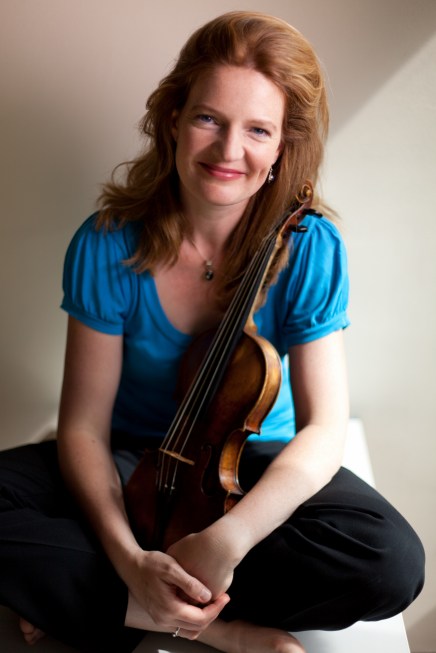
rachel_podger_photo
(Photo: Jonas Sacks)

Who or what inspired you to take up the violin, and pursue a career in music?

Playing or hearing music around me was such a normal occurrence when I was growing up. From an early age I was involved in many concerts a year, whether playing or singing, that I didn’t need to choose whether to do music; the choice was more about which directions within music to take, and also where to study after school in Germany.

Who or what have been the most important influences on your musical life and career?

Peter Werner, a Eurythmy teacher and conductor at the Steiner school I went to in Kassel, Germany was an important influence on me. He had enormously creative energy which sometimes became feverish. His rehearsal technique was engaging and involved every player in the (big) school orchestra, and he taught me how to listen. I remember hearing Gidon Kremer and Reinhard Goebel in Kassel and being stuck by their different sound worlds and charismata.  And then of course my violin teacher at the Guildhall School of Music, David Takeno, who was much more than a violin teacher, but connoisseur of all musical styles with an uncanny musical intelligence, knowledge and generosity in his teaching.

What have been the greatest challenges of your career so far?

Apart from playing concerts when I’m jetlagged or ill (!), the hardest thing for me was playing Bach solo recitals after I had my first baby, (15 years ago) when I could hear her screaming backstage because the milk had run out, and all my instincts were telling me to run to her – but I was in the middle of the C major Fugue!!

Which performance/recordings are you most proud of?

Tricky one, as there are always things you want to play again when you come off the stage… But I quite like the Biber Passacaglia on my disc the ‘Guardian Angel’ and also the Bach A minor Concerto with my group Brecon Baroque on the Bach Violin concerto disc (both Channel Classics).

Which particular works do you think you play best?

That’s another tricky one to answer… I commit myself entirely to whatever it is I’m playing, and I adore most of what’s on the musical menu. But Bach, Mozart and Vivaldi stand out for me…

How do you make your repertoire choices from season to season?

Repertoire choices are often decided by the theme of a festival, or the preferences of a promoter, recording plans and the recording back catalogue, so in the end there actually isn’t that much choice left! Who knows, if I had a completely new season to choose without any strings attached (as it were!) I might come up with Schubert and Brahms!

Do you have a favourite concert venue to perform in and why?

There are a few concert halls I’ve played in that seem to make you play like a dream…one of them is the Symphony Hall in Boston, another the Suntory Hall in Tokyo and then I absolutely adore playing at the Wigmore Hall in London.

Favourite pieces to perform? Listen to?

I adore listening to styles I don’t get to play like polyphony, music from the Renaissance, symphonic repertoire, Jazz…I get to listen to some pop too since I have teenage daughters…I always wake up to ‘Breakfast’ on  BBC Radio 3 and look forward to their ‘Bach before 7’ slot, but am continually intrigued by all I get to hear.

Who are your favourite musicians?

Creative ones! I’ve been lucky to play/work with many of them…Trevor Pinnock, Gary Cooper, Pamela Thorby, Richard Egarr, Phoebe Carrai, Elizabeth Blumenstock, Pavlo Beznosiuk, Jane Rogers, Alison McGillivray, Marcin Swiatkiewicz, Robert Hollingworth, Julian Podger (yes, my brother!), Alfredo Bernadini and many more…and then there’s the amazing Kris Bezuidenhout!

What is your most memorable concert experience?

There are many amazing moments I’ve been lucky to be part of, and often while performing with a larger group of musicians when there is a sense of unity within the music making.

Once while playing the Biber Mystery Sonatas in concert I was struck by the physicality in the ‘Crucifixion’ Sonata and got so involved in that aspect that I didn’t hear the applause afterwards and just stood there for a while (or so I’m told!) looking like I’d been the one crucified…

Another time playing the ‘Erbarme Dich ‘ aria from the Matthew Passion with Trevor Pinnock and The English Concert when I was pregnant and my unborn baby was utterly still while I stood up alongside the alto and played that heartfelt piece about mercy. Afterwards when I sat down the baby kicked and danced to the rest of the piece!

What do you consider to be the most important ideas and concepts to impart to aspiring musicians?

Practise intelligently, i.e. use your time well and efficiently and set yourself goals, even if it’s within a ten minute time frame, or even within one phrase. The relationship between musical intention and execution is essential, and it’s good to ask yourself how you’ll best get from one to the other. Aimless practice might help some mechanical workings, but is less effective. If your musical intention is unclear or confused, read the score in your head, sing it or parts of it, imagine how it might sound, play one part and sing the other, read it like a book on the train! Self-belief is utterly important, but so is an acute self-awareness. Lastly: try to keep the big picture in view!

Where would you like to be in 10 years’ time?

Happy, healthy, loving life and playing music.

What is your idea of perfect happiness?

Happiness is fleeting – I’d like to make sure I never miss one of those uplifting moments that seem to come out of nowhere and are a complete gift.

What is your most treasured possession?

My violin.

What do you enjoy doing most?

Looking at the sunset over the Brecon Beacons sipping a glass of white wine with my partner.

What is your present state of mind?

Looking forward to getting home! (Am writing this on a plane after a concert with EUBO in Regensburg!)


Over the last two decades Rachel Podger has established herself as a leading interpreter of the Baroque and Classical periods and has recently been described as “the queen of the baroque violin” (Sunday Times). In October 2015 Rachel was the first woman to be awarded the prestigious Royal Academy of Music/Kohn Foundation Bach Prize. She was educated in Germany and in England at the Guildhall School of Music and Drama, where she studied with David Takeno and Micaela Comberti.

Rachel Podger’s website