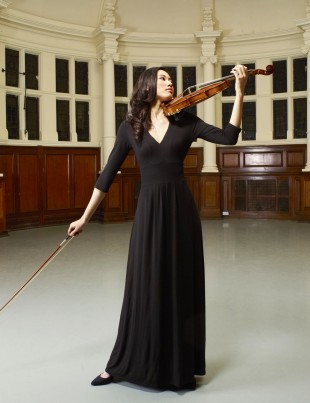
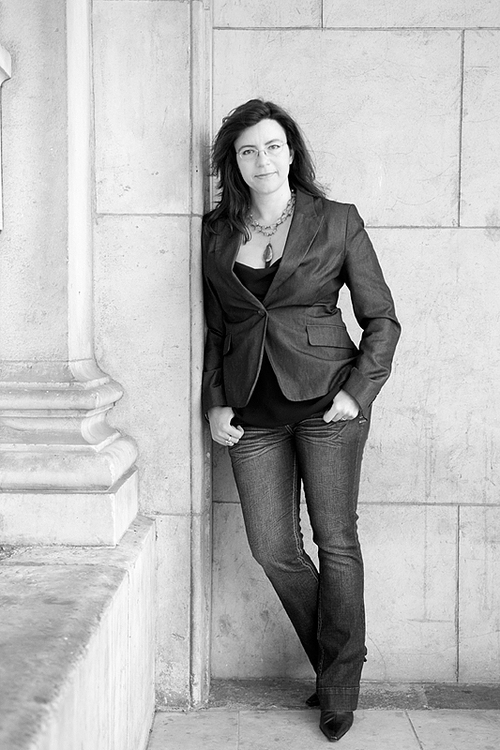
Who or what inspired you to take up the piano and pursue a career in music? 

My mother is a piano teacher. I used to crawl under the piano when my mother was teaching – I am talking about when I was not even a year old.  So, it was totally natural for me to take up piano lessons.  As for pursuing a career, I am still looking for the secret to succeed.  Quite honestly, I still feel like a music college student because the basics of my life have been the same (whether piano practise is done or not is a major issue of the day).

Who or what were the most important influences on your musical life and career? 

My mother Michiko for a start.  As for teachers, I am really grateful to two teachers, Mr. Hironaka who taught me in Japan and Benjamin Kaplan who coped with me in London.  Ben was the one who told me how to look at the music, how to analyse, and how to perform.

What have been the greatest challenges of your career so far? 

I cannot think of anything much off the top of my head. Coming from a family with a piano teacher with absolutely no connection to any ‘important’ people in Japan, let alone outside Japan, I feel I have done pretty OK.

Which performance/recordings are you most proud of? 

Recordings…. Takemitsu piano music because it was the first CD of the journey with Robert von Bahr and BIS (now, I have recorded 33 CDs with them!!!!).  I am proud of the most recent recording, SATIE with an 1890 Erard Piano.  I was asked to perform a recital on an Erard piano once.  I was reluctant because I am not a period instrument specialist, but the piano was so wonderful that I fell in love immediately.  As soon as I played the concert, I grabbed the arm of the owner of the instrument.  I asked him if I could use the piano for a CD recording. I am totally fascinated by Erik Satie at the moment. His music is raw, but the ideas he came up with are 20-30 years ahead of his time. I feel privileged to have this opportunity to re-discover his ability, to look into his musicality with more respect. Satie has been underestimated for a long time. Having the Erard for the recording has helped me to realise his genius approach, just because I love this particular instrument so very much!!

Which particular works do you think you perform best? 

Debussy, Takemitsu for sure because I like working on ‘beauty of sound’ at the piano.  And some Rachmaninov.  I say this because every time I work with Russian orchestra, they tell me I have a ‘quasi-Russian’ heart.  Personally, I like performing Schumann and Liszt very much and I have been including their pieces in my solo recitals this year because 2016 is marks anniversaries of their deaths [Schumann 1856, Liszt 1886]. They show me the depth of piano music. Very often, I am totally emotional and shaken by their music when I walk off the stage after a performance.

How do you make your repertoire choices from season to season? 

Nowadays, it is important to know ‘anniversaries’ of composers or any musical events.  When I find my favourite composers’ anniversaries, I feel as though I won a lottery.  It doesn’t mean I am worked up with it.  In reality, I speak to the promoters of concerts and build programmes.  So, each concert is unique.

Do you have a favourite concert venue to perform in and why? 

I am one of the advisors of Muza Kawasaki Symphony Hall in Japan.  It is a magnificent concert hall.  Of course, Royal Festival Hall, Barbican, Wigmore, Cadogan, Kings Place in London are all very special to me.   Personally, I am happy wherever I am taken.  A school classroom can be a wonderful venue if I establish rapport with the audience.

Who are your favourite musicians? 

I like my close colleagues rather than superstars in the world. I get excited when I get to see what is so amazing about them close up – Peter Donohoe, Martin Roscoe, Kathryn Stott, Ronan O’Hora, Charles Owen, Katya Apekisheva to name a few.

What is your most memorable concert experience? 

When a huge black hairy spider came out from ‘between keys’ on the piano after I finished playing the first item.  The spider looked massive and dramatic against very white keys!

What do you consider to be the most important ideas and concepts to impart to aspiring musicians? 

One has to go through very tough practising.  It is important to have that level of work to get out there.  On top of it, there are many things one has to have in order to make career. Noticing a moment of ‘chance’ is important. I am talking about all yjr practical bits. Of course, talent and enthusiasm have to be there too.

Where would you like to be in 10 years’ time?

The same… if I can still manage the same things in 10 years from now, I would be delighted.

What is your idea of perfect happiness? 

Happiness is something every individual decides. I am happy when I am pottering around the house. Equally, I am very happy when I receive some good feedback from the audience. I nearly forgot to say this… I am very happy when a performance has gone well. But even happier when I have done my piano practice according to my plan (most of the time, everything gets delayed, I don’t complete my plan)

What is your most treasured possession?

I have been keeping my diary for the last 30 some years, nothing detailed, it is more like a log, just a record what I have done that day. I often think what would be my luxury on a desert island. Nail clippers!


Noriko Ogawa has achieved considerable renown throughout the world since her success at the Leeds International Piano Competition. Noriko’s “ravishingly poetic playing” (Telegraph) sets her apart from her contemporaries and acclaim for her complete Debussy series with BIS Records, confirms her as a fine Debussy specialist. Her Images Book I and II were chosen as the top recommendation ‘exquisite delicacy’, BBC Radio 3’s CD Review, January 2014. Noriko’s latest recording for BIS records is of solo piano music by Eric Satie.

Noriko appears with all the major European, Japanese and US orchestras including the Polish National Radio Symphony Orchestra, Tchaikovsky Symphony Orchestra of Moscow Radio, BBC Philharmonic Orchestra, Czech National Symphony Orchestra, St. Petersburg Symphony Orchestra, as well as the BBC Symphony Orchestra for the world premiere of Richard Dubugnon’s Piano Concerto. Noriko made her BBC Proms debut in August 2013 and appeared again in 2014 with the Endymion Ensemble. She was the Artistic Director for the Reflections on Debussy Festival 2012 at Bridgewater Hall. In 2015 she continued as Associate Artist for Ravel and Rachmaninov Festival.

As a recitalist and chamber musician, with her piano duet partner Kathryn Stott, Noriko has performed Malcolm Arnold’s Concerto for Two Pianos at the 2013 BBC Proms.

Noriko regularly judges the BBC Young Musician, Munich International Piano Competition, Honens International Piano Competition and the Scottish International Piano Competition. Noriko has been appointed as Chairperson of the Jury for Japan’s prestigious 10th Hamamatsu International Piano Competition in 2018.

Noriko’s Japanese translation of Susan Tomes’s book Out of Silence – a pianist’s yearbook has been reprinted due to popular demand.

Noriko is passionate about charity work, after the tsunami in Japan in 2011, she has raised over £40,000 for the British Red Cross Japan Tsunami Fund. Noriko founded Jamie’s Concerts a series for autistic children and parents and is a Cultural Ambassador for the National Autistic Society.

Noriko is a professor at Guildhall School of Music and Drama.
norikoogawa.co.uk

Finding clothing to perform in which is stylish, flattering, and, above all, comfortable and practical can be tricky and high street stores tend not to cater that well for performers. We need clothes which allow freedom of movement, which do not distract us when we play (there is nothing worse than a tickly label or zip), which look good when we stand to take a bow and when we are seated at the piano. The type of venue and time of day also dictate what to wear: one does not need a full-length evening gown for a lunchtime concert, for example.

It’s much easier for the men. Now that the very formal attire of white tie and tails has largely disappeared, men can choose to wear a dark suit or dark shirt and trousers. Some favour a dark tee-shirt under a dark jacket, others tend towards the Nehru jacket. .

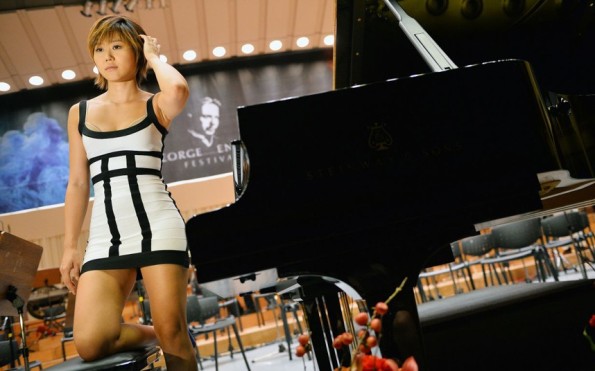
Women, on the other hand, are still expected to turn out in full-length gowns which hark back to the age of Dame Moura Lympany. There are of course exceptions: the Chinese pianist Yuja Wang has made a name for herself almost as much through her daring dresses and vertiginous stiletto heels (how on earth does she pedal in them?) as through her playing. She has been criticised for her risky hemlines, but as she herself says “I can wear long skirts when I’m 40”; she is a young woman who clearly loves fashion and has an enviably svelte figure.

wang_2812135k
Yuja Wang (photo: The Telegraph)

Sadly, I do not have the body and legs of Yuja wang, so I prefer concert clothes which cover my legs, draw attention away from the “lumpy, bumpy” parts of my middle-aged body, and which make me feel graceful and elegant and, importantly, comfortable when I perform. Tight bodices or restrictive sleeves are a no no, as are strapless dresses (and frankly I don’t have the gym-honed arms for such attire). The British women’s fashion chain PhaseEight creates elegant and affordable maxi dresses in a fluid silky jersey fabric which are flattering and comfortable to wear. They also offer more formal full-length gowns, embellished with sequins and beads, for special occasions. I have also worn long skirts by Ghost: their signature “bias cut” dresses and skirts suit most sizes and shapes, and their crepe fabric packs well for travelling – another consideration if you’re a musician who lives out of a suitcase.

KATHLEEN_dress-310x403
‘Kathleen’ dress
Alert to the needs of musicians, a new clothing company called Black Dress Code has launched a collection especially for musicians. Those who play in orchestras or sing in choirs are well aware that a fairly plain black outfit is the dress code for such organisations and Black Dress Code has created stylish and practical clothes with this in mind. In addition to the very elegant full-length black ‘Kathleen’ dress, there are midi dresses, a jumpsuit and palazzo pants (especially useful for cellists and bass players), simple black tops with 3/4 sleeves and silky sashes to enhance skirts and trousers. The designers have clearly thought about what musicians do with their bodies when playing and how clothing “interacts” with gestures and movements. There is a small range of skirts for girls, and a men’s range is in preparation. My only criticism is that the largest size is a UK 16 (because, sadly, some of us do not have the slim proportions of Yuja Wang or Khatia Buniatishvilli). If you’re looking for something to wear for an audition or ensemble work, I would certainly recommend taking a look at Black Dress Code’s collection. When I posted a link to BDC’s site on Facebook, many of my female colleagues and friends reacted very positively and enthusiastically to the collection.

View the Black Dress Collection here

What is your first memory of the piano?

I saw and played a piano when we were visiting one of my father’s colleagues at his family home. It was a long visit, and I had time to explore: I fell in love with it at first sight and although I was around 4 years old, I remember I sat and tried to play using my fingers. I was glued, and although my parents looked a bit embarrassed I had taken over somebody’s possession, they were clearly impressed. Apparently our hostess tried to impress on my parents I should start lessons.

Who or what inspired you to start teaching?

My piano teacher in Greece, the well-known concert pianist and pedagogue D. Toufexis, a Julliard graduate and former Lateiner pupil along with concert pianist Danae Kara, both staff at The American College of Greece, inspired me to maintain a portfolio career. I loved how I could go see them perform at major venues and festivals and then have the privilege of private conversations and lessons with them.

Who were your most memorable/significant teachers?

The teacher who inspired me to become a musician was the head teacher of a large, state primary school in a well-to-do leafy suburb of Athens. He was himself a frustrated violinist with real passion for music education. His class produced three concert pianists (me included), one musical theatre singer-actress, and a musicologist. Yet the school was an ordinary non-selective state one.

Who or what are the most important influences on your teaching?

I finished my studies at the conservatoire in Greece, yet I knew that I could not trust myself to teach. When I came back from my Master of Music studies in the US at West Chester University of Pennsylvania (1994), I felt I could tackle anything: intensive courses in piano pedagogy were compulsory and included teaching practicums under supervision. At the end of my studies, my teachers were very eager to impress on me the need for certain books which became my bibles, especially the Denes Agay books on Teaching Piano, and were packed in my already impossibly heavy suitcases. Greece at the time felt quite cut off in many ways, and I still remember sending and receiving letters to the US which took about a couple of months: this was the era before Internet and Amazon!

Most memorable/significant teaching experiences?

Despite having taught at all levels for at least 20 years, I still remember being 10 or 11 and helping my friend practice her sonatina. After about 20 minutes her mum couldn’t help herself anymore and stormed in with my mum to stop me from what she thought was merely distracting my friend. My friend whispered “thank you”, as I had helped her to repeat sections rather than play through mindlessly. Years after, when we met again, the first thing she remembered was how grateful she was for helping her practice that one time. I’m sure her mum is still not convinced, but I know it was the earliest confirmation that I could actually be of real help, and is certainly my fondest memory.

What are the most exciting/challenging aspects of teaching adults?

I’ve been teaching adults almost from the beginning of my career. Challenges, except for time constraints, include self-imposed limitations, mainly arising from clashes with self-image, and definitions of achievement and prospects. That’s why my best adult student to date is a hard working dad of three who is totally committed to his lessons because he sees it as personal growth.

What do you expect from your students?

A certain level of commitment: I can inspire, demonstrate and explain, but I can’t force them to practice. There needs to be an initial interest, and in the case of younger students, there has to be parental support.

What are your views on exams, festivals and competitions?

Exams and festivals can be great motivators while providing benchmarks of attainment. Competitions are both exciting and a necessary evil: as long as there are transparent selection processes they have a place in one’s development. I think it is important for a musician to enter any form of competition trying to achieve playing their personal best (rather than focusing on being better than the other competitors). At the same time it is important to come into contact with one’s peers. What I do not like is the message that one has to comply with what’s expected – and certainly there are pianists who are unhappy at the suggestion of modifying their affinities for certain repertoire. I also do not condone excessive emphasis on performativity at younger ages: young children and teenagers should not be criticised for being their awkward selves on stage, especially if this does not interfere with projecting the music.

What do you consider to be the most important concepts to impart to beginner students, and to advanced students?

Smart practice, healthy posture-technique, and fingering, along with reading notation and counting are all concepts presented from the very first lessons and reinforced throughout the studies. Style and phrasing, along with pedalling, however, take a lot of exposure to repertoire and are more gradually introduced.

What are your thoughts on the link between performance and teaching?

My preference is for teachers who teach by example, as I found it most exciting to watch my own teachers perform. I am therefore a performer who teaches pupils how to perform on the piano, rather than how to play the piano. To perform is more than just pressing keys as instructed through notation: it is to communicate without the burden of words. The process of learning to perform is a complicated one of empathy with the perceived intention of the composer, and of enculturation.

Who are your favourite pianists/pianist-teachers and why?

Martha Argerich is a firm favourite for her transcendental technique, as are the Labeque sisters. I saw the Labeque sisters perform live in Greece and their communication and poise were simply amazing. From my own teachers, Dimitri Toufexis taught me a lot about projecting phrasing through physical gestures, Danae Kara stepped in as my mentor at the early stages of my career and pushed for a totality of conception in extended works. Dr. Bedford introduced me to Alexander Technique and Tai Chi to focus the mind, and my dearest Dr McHugh taught me how to control my hands and the piano keys in what she termed “slow key-depression”. Martino Tirimo and Elena Riu will always occupy a special place for being so flattering and incisive as duet coaches.


Natalie Tsaldarakis is a concert pianist and member of the Ivory Duo Piano Ensemble. Natalie has also been active as a lecturer, piano teacher and examiner since the 1990s.

In 1994 Natalie was invited to membership by the American National Music Honour Society Pi Kappa Lambda for excellence in performance and she has been the recipient of numerous awards and prizes, including first and second place winners in piano competitions in the US, and Greece (MTNA Wurlitzer Collegiate Competition, West Chester State University Concerto Competition, the Pottstown Orchestra Competition, Deree College Faculty Development Award, WCU Graduate Development Award etc.).

Since 2005 Natalie has been based in London, UK. Between 1995 and until 2005, Natalie was artist teacher in residence at the American College of Greece as well as piano professor and examiner for Greek conservatoires of music including the National Conservatory of Greece.

Natalie has performed extensively at various venues and festivals in the UK and abroad, including the Southbank Centre, St John’s Smith Square, Oxford University, St-Martin-in-the-Fields, Glasgow City Halls, Sibelius Academy, Athens Concert Hall, Fairfield Halls, Winchester Cathedral.

Natalie has recorded both solo and with the Ivory Duo Piano Ensemble for the National Greek Radio (ERA-1, ERA-3), and has appeared on Greek television, and UK’s Resonance FM 104.4. The duo’s CD “Romantic Dance Music for Piano Duet” was requested by the Archive for Greek Music and Musicians (Lilian Voudouris Library, Athens Concert Hall) and hailed as an important musical event of international standing by the Greek specialist press.

http://natalie6784.wix.com/ivoryduopiano

https://m.youtube.com/Ntsaldaraki

http://www.twitter.com/Ntsaldaraki


This post marks the first birthday of the ‘Meet the Artist’ series, and to celebrate this, I am delighted to present an interview with pianist Lara Melda, winner of the 2010 BBC Young Musician of the Year.

Who or what inspired you to take up the piano and make it your career?

I originally started playing the piano after my sister began taking lessons. I was always trying to learn as she was practising! And from the moment I began lessons myself, I knew that I wanted to be a pianist.

Who or what are the most important influences on your playing?

My teacher, Ian Jones is a great influence to me; I am so grateful for his guidance and wisdom! And secondly my mother, who has stood behind me every step of the way – I would not have got to where I am without her constant support.

What have been the greatest challenges of your career so far?

Sometimes it can be hard to balance school, a social life and the hours of practise required, especially when I was at the beginning of my journey, but now I have found ways to make it all work!

What are the particular challenges/excitements of working with an orchestra/ensemble?

It is always such a pleasure to work with orchestras, as pianists can get quite lonely on stage! Playing with others is always extremely inspiring, especially when I have been lucky enough to work with some wonderful orchestras such as the BBC National Orchestra of Wales, the Aurora Orchestra, Borusan Philharmonic, Northern Sinfonia, Sinfonia of Leeds, English Chamber Orchestra, the Maidstone, Aylesbury, Royal Tunbridge Wells and Worthing Symphony Orchestras.

Which recordings are you most proud of?

At the moment I haven’t made any recordings, as I am waiting for the right time and, to try and think of an extraordinary program to make my first CD, as I want it to be really special.

Do you have a favourite concert venue?

I am a huge fan of the Wigmore Hall – I have had the pleasure of performing there once. The acoustic is wonderful, and I especially love the intimacy of the hall.

Who are your favourite musicians?

Martha Argerich is my favourite pianist; her passionate playing has always been one of my biggest inspirations.

What is your most memorable concert experience?

The finals of the BBC Young Musician has to date been the most exciting performance of my life, coupled with the fact that it was the performance to change my life forever, it was a night that I will never forget!

What is your favourite music to play? To listen to?

I love playing music from the Romantic era, especially Chopin and Rachmaninov. They are both composers who really stir something in my soul; I feel so at one with their music that it feels completely natural to play.

What do you consider to be the most important ideas and concepts to impart to aspiring musicians/students?

Practise makes perfect! There are always periods of difficulty, and times when you may feel like you are not getting anywhere, but with persistence and determination, anything can be achieved.

What are you working on at the moment?

I am working on a programme consisting of the following, for my next recitals in April:

BACH Prelude and Fugue in C sharp minor, Prelude and Fugue in D major from Well Tempered Clavier Part 1

CHOPIN Étude in C minor Op. 10 No. 12, Étude in F major Op. 10 No. 8 Nocturne in B major Op. 32 No. 1, Nocturne in G major Op. 37 No. 2, Scherzo No.1 in B minor

DEBUSSY Les sons et les parfums tournent dans l’air du soir Les collines d’Anacapri Des pas sur le neige La cathédrale engloutie, Minstrels from ‘Préludes, Livre 1’

LISZT ‘Les Cloches de Genève’ from Années de pèlerinage, Book 2; Concert Paraphrase on Rigoletto (after Verdi)

Where would you like to be in 10 years’ time?

I would really like to have launched my international career, and have made some recordings that I can be proud of!

What is your idea of perfect happiness?

To be with the people I love most, and doing the thing that I love most – playing the piano.

Lara Melda performs at St James’s, Piccadilly, London W1 on 10th July in a charity concert for Street Child World Cup Rio 2014. Further information here

At the age of sixteen Lara Melda won the BBC Young Musician 2010 competition, performing Saint-Saëns’ Piano Concerto No.2 in the final round, with Vasily Petrenko and the BBC National Orchestra of Wales in Cardiff. The competition had an international following via television and radio broadcasts on the BBC. Since then she has also performed Mozart Concerto K466 with the BBC National Orchestra of Wales and next season will return to Cardiff to play Beethoven Piano Concerto No 3.

Lara’s concerto performances last season included the Northern Sinfonia with Kirill Karabits, Sinfonia of Leeds, Watford Philharmonic, and the Maidstone, Aylesbury, Royal Tunbridge Wells and Worthing Symphony Orchestras. Previous London concerto engagements have included Mozart with the Aurora Orchestra and Nicholas Collon (Kings Place) and English Chamber Orchestra (Cadogan Hall) and the Grieg Concerto with English Sinfonia (St John’s Smith Square).

Lara Melda performs regularly in Turkey and made her debut at the International Music Festival in Istanbul in June 2011, playing the Grieg Concerto with the Borusan Philharmonic. She has also been presented by the ‘Istanbul Recitals’ piano series and performed at the Antalya Piano Festival and Bogazici University. In 2012 she received the prestigious ‘Promising Young Artist’ award from Kadir Has University.

Recital appearances have included Les Sommets Musicaux in Gstaad (Switzerland), Mecklenburg-Vorpommern Festival (Germany) and the Wigmore Hall. During this season Lara will perform at the Wiltshire Music Centre and many other venues in the UK.

Lara is a student at the Royal College of Music where she is a Queen Elizabeth Queen Mother Scholar supported by a Musicians’ Company Lambert Studentship. She began piano lessons with Emily Jeffrey at the age of six and currently studies with Ian Jones. Lara is also an accomplished viola player and enjoys playing chamber music on both piano and viola. In 2009 she was a finalist in the International Franz Liszt Piano Competition in Weimar, Germany.

Lara Melda is very grateful for support from Non Worrall and Richard Williams.

Lara’s biography courtesy of Askonas Holt