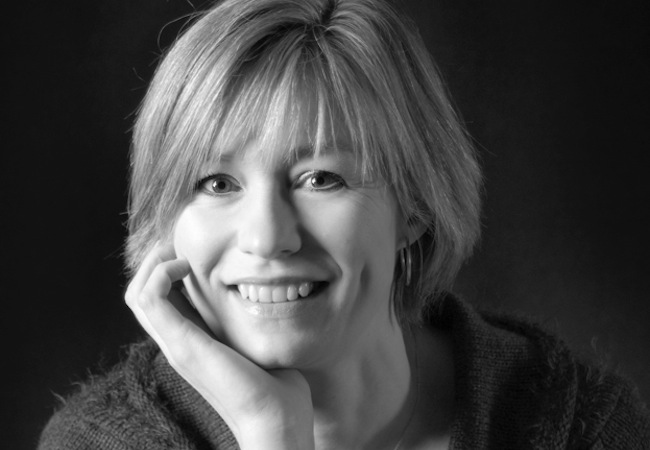
susie_allan_c-_simon_denison_bw_main

Who or what inspired you to take up the piano and pursue a career in music?

We had an upright piano in the corner of the dining room, which one of my older sisters was learning on. Aged about 6 I used to sit at it, crashing about on the keys and flailing my arms around as I imagined concert pianists did –  maybe I saw one on the TV. I think my parents realised my enthusiasm needed channelling and took me to a teacher who reminded me of Cruela de Vil – brown hair on one side and blonde on the other! I had a wonderful teacher at secondary school, Elaine Hugh-Jones, who was very inspiring and supportive. For a long while I toyed with becoming a solo pianist, but turned down the opportunity to study piano at the RNCM in preference to taking up an instrumental scholarship at Oxford. Over time I began to realise that my musical temperament did not lean towards life as a soloist, and there were many other ways to pursue a performing career. The Guildhall School of Music and Drama (GSMD) held those answers for me.

Who or what have been the most important influences on your musical life and career?

A chance conversation with Roger Vignoles prevented me from giving up altogether…I needed a teacher who knew about accompanying-he suggested some lessons with Paul Hamburger, and, as well as with him, at the GSMD I had the chance to work intensively with Graham Johnson, Martin Isepp and Iain Burnside, who were all hugely inspirational to me in their different ways. Playing for masterclasses at Snape for wonderful singers/teachers such as Elly Ameling, Anthony Rolfe Johnson and Elizabeth Soderstrom were also fantastic learning opportunities. In latter years, especially after moving to Shropshire, I have Roddy (Roderick Williams) to thank for continuing to take me with him on his musical journey, whilst it may have seemed I disappeared off the musical world’s radar; and for his natural, intelligent, sublime interpretations. Oh, and his irrepressible sense of humour.

What have been the greatest challenges of your career so far?

Trying to keep it going!! The move to Shropshire, having three children in close succession, and getting divorced made it particularly challenging to carry on playing at all.

Musically, I think some of the contemporary works I’ve performed have challenged me greatly, such as the four Songs by Torsten Rasch, commissioned for Gloucester Three Choirs Festival; and more recently getting out of my comfort zone and having to use an elbow in a new work called “The Rain is Coming” by Emily Levy.

Which performance/recordings are you most proud of?

Going way back, one which comes to mind is playing for Nathan Berg in the Gold Medal final at GSMD. He was singing Mahler’s Ruckert Lieder – trying to do these incredible songs justice for Nathan meant so much to me I was sick beforehand! Luckily it paid off – and he won. A recent performance of Die Schöne Mullerin with Roddy had a feeling of musical and emotional synchronicity – I was so glad to be part of that performance too. And I’m really proud to have been given the opportunity to record the new SOMM CD, songs that I have performed with Roddy many, many times over the years, all of which I adore.

Which particular works do you think you play best?

You may have to ask others about that!

Accompanists have to be like chameleons. It’s important to be able to feel comfortable in as many styles as possible. I like to think I can play best whatever I happen to be working on. Having said that, I have a particular penchant for the serious and intense, for example I think I can put across a pretty convincing “Ich bin der welt abhanden gekommen” (Mahler)… I also feel I now have a more confident approach to playing Schubert – Die Schöne Mullerin is a personal favourite; although tomorrow it may be Schwanengesang, and the day after, Winterreise.

How do you make your repertoire choices from season to season?

As an accompanist with many other demands made on my time, these choices are frequently not mine. Quite often my job is to fall in love with whatever repertoire I am tasked with – I enjoy that challenge.

Do you have a favourite concert venue to perform in and why?

Roddy and I did a tour of Schwanengesang in 2016. One of the venues was the Sam Wanamaker Theatre at the Globe in London. It was a very special place to play. It is an utterly beautiful bijou Jacobean-style space for starters, and as the performers, we were cocooned by the audience above us and around us, all of us bathed in the most atmospheric candlelight – a truly memorable experience.

What is your most memorable concert experience?

A festival in 2013 – memorable for the wrong reasons! I was attempting to give my all in an exceptionally beautiful postlude of Richard Sisson’s “So Heavy Hangs the Sky”, when the city council rudely began to empty the huge glass-recycling bins outside the venue – the sound continued for a good ten seconds… The second half of the concert was accompanied by reversing vehicle noises, pretty much matching the pulse, but not the atmosphere of Britten’s “The Sunflower”. The audience were not happy!

As a musician, what is your definition of success?

The ability to be able to move an audience through musical communication.

What do you consider to be the most important ideas and concepts to impart to aspiring musicians?

Respect the composer’s intentions, whatever you perceive them to be; try to communicate the spirit of the piece; enjoy the practice journey; have fun. Respect and support your colleagues.

Where would you like to be in 10 years’ time?

Back at the Wigmore Hall

What is your idea of perfect happiness?

The Beach House Goa Retreat

What is your most treasured possession?

My Steinway piano, given to me when I was 14

What do you enjoy doing most?

Walking the dog in the Shropshire hills with my kids

What is your present state of mind?

Busy!


Roderick Williams’ new CD, with Susie Allan, piano, ‘Celebrating English Song’ is available now on the SOMM label. Further information here

Susie Allan studied Music at Worcester College, Oxford, as a Hadow Instrumental Scholar, and Piano Accompaniment at the Guildhall School of Music and Drama. She won the GSMD Accompaniment Prize, the Gerald Moore Award, and a Geoffrey Parsons Memorial Award. Her teachers included Paul Hamburger, Graham Johnson and Iain Burnside. She has accompanied many masterclasses at the Britten-Pears School at Snape Maltings, Suffolk and elsewhere, and has been a Professor of Accompaniment at the RCM and the RWCMD.


Meredith Monk Ellis Island

Phillip Glass – Études Nos 9 and 2

Debussy Études Book 1

Christina McMaster, piano

My second trip to Wimbledon International Music Festival proved as rewarding and enjoyable as the first. As part of the Festival’s New Generation Artist Series, pianist Christina McMaster gave a lunchtime concert featuring music by living American composers Meredith Monk and Philip Glass, together with Études by Claude Debussy.

Christina studied with Joanna Macgregor at the Royal Academy of Music and I think the influence of her mentor shows in her imaginative and eclectic programmes and the clarity, panache and vivid colour of her playing. Monk’s ‘Ellis Island’ was written to accompany a short silent film of the same name, which celebrates the gateway to the USA for thousands of immigrants in search of a better future. The music, originally scored for two pianos (I assume the transcription for solo piano was arranged by Christina herself), has a lilting Gaelic flavour, a reminder that many people from Scotland and Ireland emigrated to America. The overall message of the music is hopeful and joyful, though a quieter section at the end suggests eagerness tinged with anxiety at what the future may hold. Christina created a lovely bright, crystalline sound with a great sense of energy throughout, though the music never felt relentless, but rather light and dancing.

Fellow New Yorker Philip Glass is regarded as the master of minimalism, but his piano music when played with sensitivity can feel almost romantic, and this was certainly Christina’s approach to the two Études by Glass in this programme, one frenetic and urgent, the other more reflective with its Schubertian long-spun motifs, spaciousness and unexpected harmonic shifts. Her sense of pacing, elegantly nuanced dynamics and tempo made these works the highlight of this excellent programme for me.

Debussy’s Études follow Chopin’s model – short pieces written to exercise and improve the pianist’s technique, and like Chopin’s Opp 10 and 25 Études, Debussy elevates the pieces from student exercises to exquisite concert miniatures. The first Étude of Book 1 is dedicated to “Monsieur Czerny” and is an amusing take on Carl Czerny’s rather tedious five-finger exercises which many young piano students have had to endure (I know I did!). Cheeky interjections from rogue fingers hint at the student’s frustration at having to remain in a five-finger position on the keyboard and the work grows more expansive and virtuosic towards the end. It was despatched with playfulness and wit. The other Études were played with similar character, their individual quirks and delights carefully delineated by Christina. There were so many moments to savour – great delicacy of touch, subtle shadings, natural rubato and rhythmic vitality, and the entire performance was vibrantly coloured and very stylishly presented. The encore, Debussy’s ‘Girl With the Flaxen Hair’, was played with equal poise and elegance. 
(Photo: Dominic Farlam)


lisa_smirnova_presspic2
Who or what inspired you to take up the piano and pursue a career in music?
It was an coincidence that I took up the piano. But later I chose independently to pursue a career as a musician, because I noticed that nothing other than making
music made me feel great.

Who or what were the most important influences on your musical life and career?
Practically, it was my teacher Karl Heinz Kaemmerling, and my wonderful colleague, the violinist Benjamin Schmid – both during my studies at Mozarteum in Salzburg. Exposure to Friedrich Gulda and Nikolaus Harnoncourt were turning
points and led to greater inspiration for my musical understanding.

You are performing in the London Piano Festival this October – tell us more about this?
I loved Katya and Charles’ idea of performing what one likes most, and immediately said “yes”. Repertoire from the baroque and classical periods is my best repertoire. My interests and performing style have nothing to do with the “Russian piano school”, and I am deeply convinced that the modern piano offers the widest range of possibilities to create the sound appropriate for these works.
So I chose three composers: Scarlatti – his sonatas, of which there are so many, are one better than the next and always perfect for a discovery. Mozart is simply my favourite composer – I feel very close not only to his music, but to his entire personality. And Handel’s Suite is part of my award winning recording project for ECM.

What have been the greatest challenges of your career so far?
To start up from absolute zero with no money whatsoever. And to realize later on, that it is not only the musicianship, but Marketing and PR that you have to put your efforts in – a very disappointing discovery.

Which performance/recordings are you most proud of?
The already mentioned Handel Suites for ECM, and the brand new Mozart Piano Concerti with my New Classic Ensemble Vienna – we just recorded and produced them for the Austrian Broadcasting Corporation.

Which particular works do you think you perform best?
Mozart Piano Concerti

How do you make your repertoire choices from season to season?
It is a mixture between requests from promoters and the works I would like to study or perform again – I try to find challenging combinations.

Do you have a favourite concert venue to perform in and why?
The Concertgebouw Amsterdam. Everything feels perfect to me: The size, the acoustics, they always had a wonderful piano when I played…. and the red carpet on the stairs when you come down on stage feels like Hollywood….

Who are your favourite musicians?
Glenn Gould, Maria Callas, Friedrich Gulda, Nikolaus Harnoncourt, Andras Schiff

What is your most memorable concert experience?
The one when my “plan” with a certain piece of music worked out, and fortunately there have been many.


What do you consider to be the most important ideas and concepts to impart to aspiring musicians?

To be honest, I don’t know, as I am still learning something new myself each day.

What is your idea of perfect happiness?
Happiness is the flow to be so entirely occupied with what you do at the moment that nothing else exists. Naturally this cannot last your whole life, but also happiness cannot.

What is your most treasured possession?
My time.

Lisa Smirnova performs in the 2017 London Piano Festival at Kings Place in two concerts on 7 October. Further information and tickets here


Austrian-Russian pianist Lisa Smirnova is an internationally recognized concert artist renowned for her interpretations of baroque and Classical repertoire. The Frankfurter Allgemeine Zeitung recently remarked that her “sense of style, use of phrasing and ornamentation and tempi, that make the piano an instrument of harmony of vibrating strings, gave her performance its transcendent and unmistakable character.”
(picture © Lisa Smirnova)

Who or what inspired you to take up the piano and pursue a career in music?

I played all kinds of instruments when I was young, but the piano is like a universe. You can use it to compose and to perform – it represents so many different styles of music from early French keyboard music and Bach, to Beethoven and John Cage, jazz and blues. I’ve always loved the piano, and loved listening to other pianists.
I’m devoted to practicing and studying music, mainly. It’s the physical and intellectual stamina it requires that I still find so exciting; I really enjoy talking a pencil and marking the score, and spending hours with a work. It’s allowed me to travel all over the world, which I never expected, as a performer. I love teaching, and collaborating with other artists and composers.

Who or what were the most important influences on your musical life and career?

My mother had me when she was young, and I was her first piano student. She was very imaginative in her musical tastes: together we played Bach, Mozart, Dave Brubeck’s Take Five, Beatles songs, and gospel music. Being taken on by YCAT (Young Concert Artist Trust) in my twenties was a fantastic apprenticeship; I built up a big repertoire, and learnt to communicate with audiences.

David Sigall was also undoubtedly a major influence. He was my manager until he retired last year. He taught me to see the long game, and encouraged me to be a curator and artistic director. He seemed totally unfazed by anything I got up to, whether it was starting a record label, conducting or collaborating with world musicians.

I’ve also been heavily influenced by jazz musicians; the way they collaborate, make things happen, hang out together, and support each other’s gigs.

What have been the greatest challenges of your career so far?

I’ve always loved playing at the BBC Proms – my first one was nearly thirty years ago! And broadcasting live is tough – you have to be on top of everything.
My most treasured memory is working with Pierre Boulez, twice; first on a European tour with the Philharmonia and later with the Chicago Symphony Orchestra. He was witty, warm, elegant, gossipy and just a gorgeous musician to be with, both on and offstage.

Which recordings are you most proud of?

Impossible to say, as they’re all flawed to my ears, of course. But for different reasons, Messiaen’s Vingt Regards; Deep River with the saxophonist Andy Sheppard, which explored music of the Deep South; and my most recent recording, the complete Chopin Mazurkas.

Very early on in my career I recorded Charles Ives’ First Sonata, an absolute epic, at Snape Maltings. I still love his music very deeply.

Which particular works do you think you perform best?

I seem to gravitate towards intense miniatures – Gubaidulina’s Musical Toys, Chopin Mazurkas – or huge cycles – Messiaen, Beethoven, Bach’s Well-Tempered Clavier. I like architecture; on the other hand I also like playing in the moment. I find so much music is a mixture of structure, and unfolding, like following a fork in the road.

How do you make your repertoire choices from season to season?

It depends on the venues, and what I’d like to add to my repertoire. I still learn new pieces – this year it was Schubert’s last sonata in B flat, coupled with some late Liszt and Ligeti. I’m not at all rigid about the number of recital programmes or concertos I’ll carry around in any one season. It depends on all the other collaborations and new work I’m doing; I always seem to be working on new projects with poets or artists, as well as other musicians.

Do you have a favourite concert venue to perform in and why?

Many favourites – the Mozarteum in Salzburg, the Bimhuis in Amsterdam; the Wigmore Hall, the medieval hall at Dartington. Something to do with intense atmosphere and audiences.

Favourite pieces to perform?

I always love Bach and Beethoven; I love practising them. I’m heavily into Chopin’s fifty-eight mazurkas at the moment, played chronologically; rather like reading someone’s personal diary.

Who are your favourite musicians?

So many. The pianists I listen most to (at the moment) are Edwin Fischer, Rubinstein and Maria João Pires. I adore spending time with Alfred Brendel; I admire great improvisers and slip into their concerts all the time.

What is your most memorable concert experience?

Probably playing Shostakovich First Piano Concerto at the Last Night of the Proms – memorable for all kinds of reasons, including the controlled hysteria backstage. Being invited to play the Goldberg Variations at the Albert Hall by John Eliot Gardiner was pretty exciting for me.

What do you consider to be the most important ideas and concepts to impart to aspiring musicians?

Individuality, fearless talent, creativity, and the ability to design opportunities – fundamental to building a long career. The piano students at the Royal Academy of Music (as Head of Piano there I mentor them all) come with a very high degree of technical skill and musicianship. But I encourage them to develop other skills—curating, improvising, working with multimedia, commissioning composers, conducting from the keyboard, having a working knowledge of early keyboards—that will help them flourish at the beginning of their careers. Every summer we run a Piano Festival, which is largely curated now by the students themselves, and it’s a testament to their imagination and unstoppable energy.


Joanna MacGregor is one of the world’s most innovative musicians, appearing as a concert pianist, curator and collaborator. Head of Piano at the Royal Academy of Music and Professor of the University of London, Joanna MacGregor is also the Artistic Director of Dartington International Summer School & Festival.

As a solo artist Joanna has performed in over eighty countries and appeared with many eminent conductors – Pierre Boulez, Sir Colin Davis, Valery Gergiev, Sir Simon Rattle and Michael Tilson Thomas amongst them – and orchestras, including London Symphony and Sydney Symphony orchestras, Chicago, Melbourne and Oslo Philharmonic orchestras, the Berlin Symphony and Salzburg Camerata. She has premiered many landmark compositions, ranging from Sir Harrison Birtwistle and Django Bates to John Adams and James MacMillan. She performs regularly at major venues throughout the world, including Wigmore Hall, Southbank Centre and the Barbican in London, Sydney Opera House, Leipzig Gewandhaus, the Concertgebouw in Amsterdam and the Mozarteum in Salzburg.


