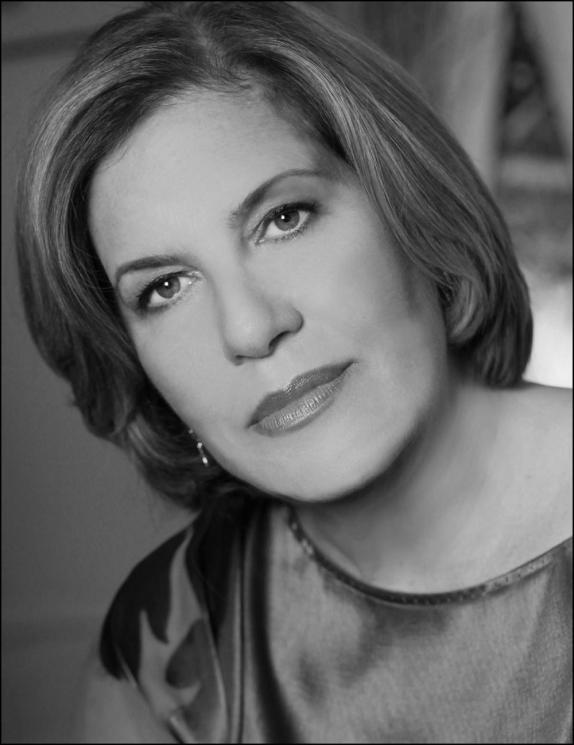
Beth Levin’s latest disc Bright Circle is available now on the Navonna Records label. Details here 

Beth Levin’s latest disc Bright Circle is available now on the Navonna Records label. Details here 
Who or what inspired you to take up the piano, and make it your career?
I really do not know, perhaps my older sister’s lessons which I liked to listen to from the age of 3. She was not doing very well, in fact she hated practising the piano ( although she always loved the music but not the work involved) ,but I was learning a lot behind closed doors. We had a lovely grand piano and the piano & me were inseparable, very strange for a child of that age. I was also constantly glued to the radio, in those days in Poland, all you heard was either classical music or propaganda programmes. I chose music!!
Who or what were the most important influences on your musical life and career?
My Russian teacher Professor Tatjana Kestner in Moscow, Professor Wanda Losakiewicz, Professor Zbigniew Drzewiecki in Poland and my last teacher, Professor Ryszard Bakst at The RNCM in the UK.
What have been the greatest challenges of your career so far?
Challanges? In a musician’s life there are always plenty of challenges. You have to challenge yourself all the time otherwise your standards will drop. As I have had a long break from the piano for various reasons, my biggest challenge is to re-establish myself again on the concert platform.
Which performance/recordings are you most proud of?
I am very proud of my recital performance I gave few years ago at Chethams School of Music during their annual International Summer School Festival for Pianists in Manchester (where I am a frequent member of the Piano faculty) just few weeks after my beloved sister Eliżbieta lost her long battle with cancer. It was a very difficult recital for me to play, in fact I was not sure if I could get through it. I have dedicated that performance and a CD which was recorded live during that recital to her memory. It was a very memorable and moving experience, and I received a standing ovation…
Which particular works do you think you play best?
I love playing Bach, Brahms, Beethoven, most romantic composers – and Chopin of course.
How do you make your repertoire choices from season to season?
It depends what I am asked for. I find that very often I will be asked to give all-Chopin recital. But I like to mix my programmes and deliver a variety of styles: it makes it so much more interesting and demanding, as you can show the different sounds and colours of the piano, especially when playing Debussy and Ravel.
I still like to add new works to my repertoire, and I enjoy learning new pieces although it is not quite as straightforward as it used to be!!
Do you have a favourite concert venue to perform in and why?
I think the most fantastic venue I ever performed in was La Scala Theatre in Milan. The atmosphere on the stage and backstage was incredible. To think of all those wonderful singers like Caruso, Pavarotti, Callas, Frenni and so many others using the same dressing rooms: unbelievable!! (By the way, dressing rooms were not all that grand!!) Sheer beauty of both, recital room and the main hall, is something I will never forget and will treasure for ever. Wigmore Hall is another wonderful place. And of course very close to my heart is Chopin’s birth place, Żelazowa Wola, and Lazienki Park in Warsaw where you perform in the open air underneath Chopin’s monument. Sometimes you think he is going to say something to you – a bit scary!!
Favourite pieces to perform? Listen to?
Chopin’s 4th Ballade and 1st Piano concerto, Schubert’s B-flat major Sonata D960 and Franck’s Prelude, Chorale & Fugue all feature very highly as my favourites but….. There are just so many pieces I love playing and fugues are amongst my favourites, in any style. Give me a fugue and I can spend hours poring over it!
Who are your favourite musicians?
Rubinstein, Richte, Gilels, Argerich to name just a few….
What is your most memorable concert experience?
There are a few, but most probably the most intense and memorable because of where it was – Mozart’s Piano Concerto KV 466 in La Scala ,Milan.
What do you consider to be the most important ideas and concepts to impart to aspiring musicians?
It is very important to play to others, especially if it involves a new piece never performed before. Play with a second piano if performing a concerto, and make sure that you study the orchestral score well so when it comes to first rehearsal you are not put off by some new tune you have not heard when playing with second piano! Also learn to take criticism and benefit from it. It is not always right, but there is always some truth in it, so do not be put off, and persevere .
What is your idea of perfect happiness?
Very happy to be on the beach in Villajoyosa in Spain or walking around Old Town in Warsaw.
What is your most treasured possession?
My piano and my cat Pudding.
What is your present state of mind?
Feeling hopeful that some of my wishes connected with stage comeback will come true.
Alicja Fiderkiewicz was born in Warsaw, Poland and began to learn the piano at the age of seven. Her studies continued at the Central School of Music in the Moscow Conservatoire, Warsaw School of Music and finally at The Royal Northern College of Music in Manchester where she was a student of Professor Ryszard Bakst.
Full biography on Alicja’s website:
Who or what inspired you to take up the piano, and make it your career?
One of my early piano teachers, Christopher Vale. He is one of those amazingly enthusiastic musicians and teachers who couldn’t fail to inspire anyone. His passion for music was contagious at a very crucial time in my life.
Who or what were the most important influences on your musical life and career?
My conservatoire teachers: Richard Ormrod, Alexandre Léger, and Rolf Hind. And Nelly Ben-Or and Chris Cullen for an inspiring and timely introduction to both the Alexander Technique and to mindfulness. And I really appreciate the time I spent away studying in France.
What have been the greatest challenges of your career so far?
The realisation that what I’ve decided to do with my life will be hard and likely not bring much certainty or security, but that somehow I have to do it regardless.
Which particular works do you think you play best?
Messiaen Cantéyodjayâ, Bartók Out of Doors, Ives ‘Concord’ Sonata
How do you make your repertoire choices from season to season?
I pick things that I like – that excite me – and that I want people to hear. And I play new works, which is exciting in itself as I don’t always know what I’m going to get.
Favourite pieces to perform? Listen to?
Listen to: Bartók Piano Concerto no. 2. Watch: Globokar Corporel. Play: Reich Sextet.
Who are your favourite musicians?
Bartók, Ligeti, Kate Bush.
What is your most memorable concert experience?
Playing Feldman’s For Philip Guston (a four-and-a-half-hour-long trio) during which the venue’s heating stopped working (in February). Both musicians and (most) audience members powered through the cold to the end.
What do you consider to be the most important ideas and concepts to impart to aspiring musicians?
Keep at it – something is bound to happen.
What do you enjoy doing most?
Watching birds and doing a jigsaw.
Siwan Rhys is a Welsh pianist based in London. She currently holds the position of Artist Fellow at the Guildhall School of Music and Drama, specialising in contemporary piano music, and also teaches piano at City University, London. Recent concert engagements include performances of Stockhausen’s Kontakte and of Feldman’s four-hour work For Philip Guston

Who or what inspired you to take up the piano and make it your career?
I was inspired by my much older cousin Geoffrey who was at the Royal College of Music in London playing the piano when he and his parents came to us for Christmas. We had a good upright piano at home.
Who or what were the most important influences on your musical life and career?
Ruth Railton of the National Youth orchestra and teachers Dorothy Hesse and Maria Curcio.
What have been the greatest challenges of your career so far?
The greatest challenges have been getting to the top venues in the world.
Which performance/recordings are you most proud of?
A performance in Carnegie Hall New York, after which I was signed up by a big agent.
Which particular works do you think you play best?
Beethoven, most of the Romantic composers and Debussy.
How do you make your repertoire choices from season to season?
It depends whether I’m preparing for a recording and include that repertoire, and playing works which didn’t feature in the previous season. Also learning something new.
Do you have a favourite concert venue to perform in and why?
The Wigmore Hall since I played there when I was twelve and it was the most exciting place in the world to me then. I love the warm intimate atmosphere.
Favourite pieces to perform? Listen to?
Beethoven Op. 2 no. 3, the ‘Appassionata’, Debussy’s Estampes and the Chopin 4th. Ballade. I love listening to Martha Argerich playing Gaspard de la Nuit.
Who are your favourite musicians?
Schnabel, Lipatti, Julius Katchen, Vlado Perlemuter Rubenstein and Argerich.
What is your most memorable concert experience?
First time in the Royal festival Hall with Tchaikovsky 1 and the RPO.
What do you consider to be the most important ideas and concepts to impart to aspiring musicians?
To play through repertoire to people prior to a performance, and a concerto with someone accompanying on another piano, and to feel absolutely prepared for a performance. Also to learn how to look good, to walk and bow, and not to be put off if things don’t go well. Go back to the drawing board and try your best to put things right.
What are you working on at the moment?
The Chopin B flat minor Sonata & the 4th Ballade and the Schumann and Gershwin concertos.
Where would you like to be in 10 years’ time?
In 10 years’ time I would like to have gained greater recognition and have become a name synonymous with the top pianists in the world.
What is your idea of perfect happiness?
Either being on a horse or on a beach in the Bahamas.
What is your most treasured possession?
My cats and my grand piano.
What do you enjoy doing most?
Practising, and parties after concerts that have gone really well.
What is your present state of mind?
Optimistic.
Angela Brownridge performs Beethoven’s Piano Sonata in F minor, Op 57 as part of the third St Barnabas Beethoven Piano Sonatas Festival, 17-18 May 2014. Full details here
Angela’s playing restores spontaneity, character, and beauty of sound to the platform… Hailed as a major star in classical music Angela Brownridge has been compared with such pianists as the legendary Solomon, Rachmaninov, Cherkassy, and Bolet. She began her life in an atmosphere of freedom and individualism virtually impossible to find today. Under the guidance of Maria Curcio, who had been a pupil of Schnabel for many years, she absorbed the ability to produce every nuance of the piano, and to present music flexibly and persuasively instead of concentrating on a single method of technique or continual displays of brilliance, learning to deal with the differing requirements of a varied range of composers which recalls Cortot in his prime. Indeed, by realising that many pianists of a bygone age played with far more individuality, magic, and inspiration than has become the fashion, she was able to develop her own unique personality. In an age which has become over-fascinated with mere technique, and which seeks the degree of ‘perfection’ offered by over-edited CDs, Angela’s playing restores spontaneity, character, and beauty of sound to the platform.
A child prodigy, equally talented in composition, extemporisation, and technically brilliant, Angela first performed in public at the age of seven, and a year later had several pieces published. By the age of ten she had given her first concerto performance, and in her early teens was appearing regularly as a recitalist and concerto performer throughout Great Britain and abroad. She later won a piano scholarship to Edinburgh University, and after graduating B. Mus. was awarded a further scholarship for a two-year period of study in Rome with Guido Agosti. As the winner of several competitions she was able to continue her studies with Maria Curcio in London, where she now lives. Since then Angela has appeared in all the major London concert halls, and has visited Eastern and Western Europe, the USA, Canada, and the Far East, as well as performing extensively in the UK. She has been a soloist with many leading orchestras and conductors, and Festival engagements include Bath, Edinburgh, Warwick, Newport Rhode Island, Bratislava, Brno, Hong Kong, and Maastricht.
Her recorded repertoire is very varied, including some first ever collections of the complete piano music of Barber and Gershwin. Her recordings have received worldwide critical acclaim, several being voted “Critics’ Choice” by Hi-Fi News. She has also appeared on BBC TV in programmes which have involved her in discussion about the music she has performed. She often gives lecture recitals and master classes, and maintains her love of improvisation which has led her on occasions into the world of jazz. In 2004 Angela recorded the complete piano works of Kenneth Leighton who was her professor in harmony, counterpoint, and composition at Edinburgh University where she was on a piano scholarship. Leighton, who died in 1988 has been described as “the most important British composer of piano music of the twentieth century”. The three CD set is available on the Delphian label: DCD 34301. (Source: Mary Kaptein Management)


