‘….simply beautiful choral writing by someone who knows, from a singer’s perspective, how to compose music which every choir will want to sing.’ Sir John Rutter CBE, composer
Following Heaven to Earth, Joanna Forbes L’Estrange’s first album on Signum Classics, Winter Light is an album of works (complete with some world premiere recordings and new arrangements) celebrating the season of Winter, as well as Christmas and Advent. The common themes linking all 19 tracks are of light triumphing over darkness, good overcoming evil and, ultimately, love conquering all.
The first 12 tracks tell the familiar Christmas story, from the eager anticipation of the saviour’s birth (Advent ‘O’ Carol, track 1) and its foretelling by the prophet Isaiah (Isaiah’s Prophecy, track 2) to the Annunciation (I Will Hold Him, track 3, and O Virgo Virginum, track 4), to the birth itself (Carol of the Crib, track 5 and Jesus Christ is Born Today, track 7) and its significance for humankind (In the Bleak Midwinter, track 8, and Love Came Down, track 9). Thereafter, the visitation from the shepherds (Song of the Shepherds, track 10) and the arrival of the magi at Epiphany (A Present for the Future, track 12) remind us that we, like the shepherds and wise men, need also to follow the light (A Story of Light, track 11). In the midst of this nativity narrative sits the title track (Winter Light, track 6) whose words mark the transition from darkness to light.
The second part of the album takes on an altogether different tone to reflect secular winter themes. As a professional singer Joanna Forbes L’Estrange is known for performing in a wide variety of styles and this is reflected in her compositions. Whereas the first half of this album is stylistically largely within the familiar realms of the sacred choral music tradition, the latter leans towards jazz and folk. The Three Wise Women (track 13) was written in response to a commission from St Swithun’s School in Winchester. ‘There are numerous pieces in the Christmas choral repertoire about the three wise men so it was about time for the women to have their own song,’ says the composer. The remaining six tracks explore various winter themes. Winter Songs (tracks 14-16) was composed for the 60th anniversary of Finchley Children’s Music Group. Though conceived for children’s voices, the songs’ themes of hibernation, homelessness and human kindness are relevant to all ages. Green Christmas (track 17) was written during the first covid lockdown and is a subtle play on Irving Berlin’s classic, White Christmas. Track 18, Spring Will Come Again, is a folk-style song about the cyclical nature of the seasons. The album concludes with an arrangement of Auld Lang Syne (track 19) which Joanna wrote many years ago when she was Musical Director of The Swingle Singers.
Joanna Forbes L’Estrange says, ‘The impetus for recording this album sprang from my desire to present choirs with some contemporary yet singable Winter/Christmas-themed pieces which they might like to add to their repertoire.’
Praise for Joanna Forbes L’Estrange ‘Joanna has an amazing understanding of both the human voice and the human heart. The result: quality music making effective use of the voice, with tunes and harmonies and a wonderful storytelling quality to the songs which lift the hearts of singer and listener heavenward. These will surely be part of the Christmas choral canon for centuries’ – Ken Burton, conductor, composer & arranger
‘…an album of fresh new gems, full of Christmas warmth and great tunes’ – Louise Clare Marshall, singer
‘Forbes L’Estrange seems to have been born with catchy melodies coursing through her veins’ – BBC Music Magazine
Winter Light is released on 18 October on the Signum Classics label on CD and streaming. Joanna Forbes L’Estrange, composer London Voices Ben Parry, conductor Richard Gowers, organ Olivia Jageurs, harp Harry Baker, piano
This interesting new release from British pianist Duncan Honeybourne, with British-American violinist Leora Cohen, introduces the hitherto little-known music of Jessy Reason, known somewhat cryptically during her lifetime as “J. L. Reason”.
A long-forgotten, enigmatic figure, Jessy Lilian Reason, née Wolton, was born in London in 1878, the daughter of a wealthy hop merchant. In 1902, in Cornwall, she married a gentleman of private means twenty years her senior, with whom she settled firstly in Devon and later in Tonbridge, Kent. In the late 1920s the couple made a final move, to Reading, where Jessy died in 1938.
In May 1992 a writer called Alan Poulton discovered a large stack of handwritten music manuscripts in a second-hand bookshop. He purchased the collection and during the 2020 Covid lockdown, now retired and with time on his hands, he set about exploring and cataloguing the manuscripts, and researching the life of the woman who had composed 70 handwritten works in the early decades of the twentieth century. The paperwork accompanying the collection reveals that Mrs Reason studied composition with the renowned composer and conductor Eugene Goossens; she was then in her mid-40s, her tutor some 15 years younger. How much of Reason’s music was performed during her lifetime remains unclear: all that has come to light so far is a performance of a single song at London’s Wigmore Hall and a song cycle given at a minor concert in West London, all in the early 1920s. (The current catalogue of Reason’s music, compiled by Alan Poulton, can be found on the British Music Society website.
Pianist Duncan Honeybourne is a passionate advocate for lesser-known and rarely-performed music, and this new release by Prima Facie Records reflects his unerring ability to unearth really fine music and bring it to a wider audience by recording and performing it (see also his release, also on the Prima Facie label, of piano music by William Baines). On this recording he is joined by young British-American violinist Leora Cohen. She brings a wonderful range of colours and nuance to the Three Poems for Violin and Piano, matching Honeybourne’s playing with a remarkable sure-footedness, sensitivity and musical maturity.
This disc presents Jessy Reason’s entire output for solo piano, together with the Three Poems, and as such is a wonderful introduction to Reason’s writing. She was clearly a highly-skilled yet largely self-taught composer and musician (her writing for piano reveals an intimate knowledge of the geography of the keyboard): in his biography of his mother, Richard Reason describes her as “an ardent musician, with a fiery style of violin-playing . . .teaching herself the whole technique of writing for full orchestra”. Her scores, some of which I have seen, thanks to Duncan Honeybourne, are elegantly crafted and neatly laid out.
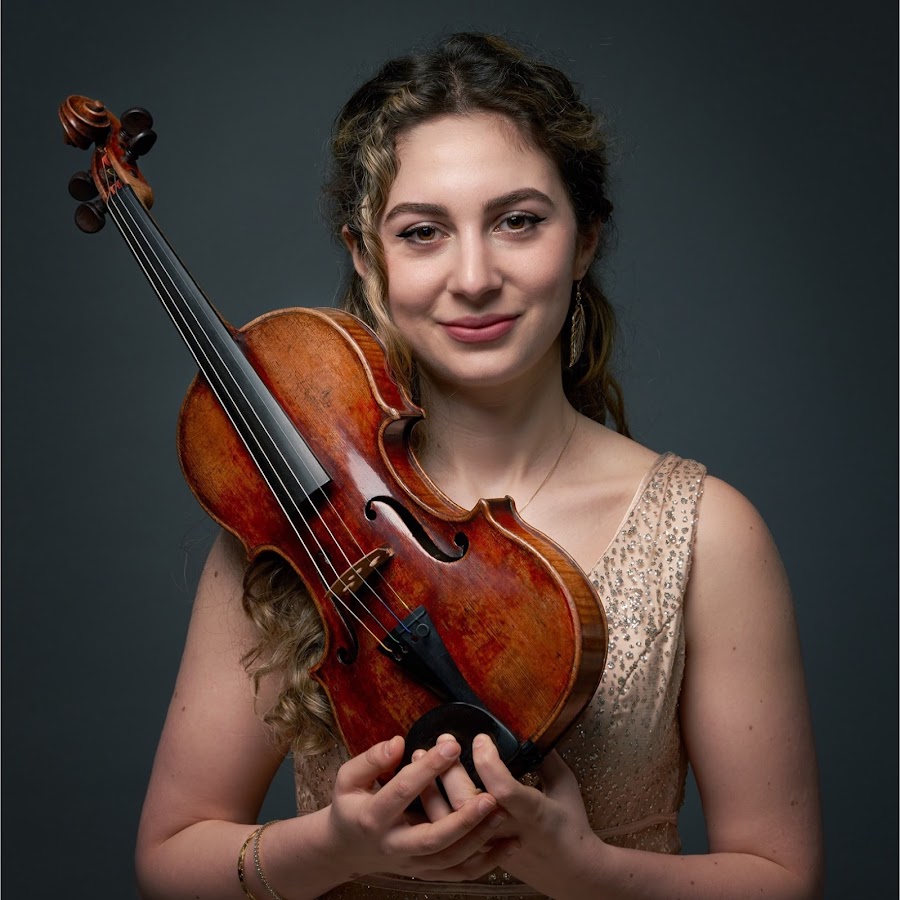
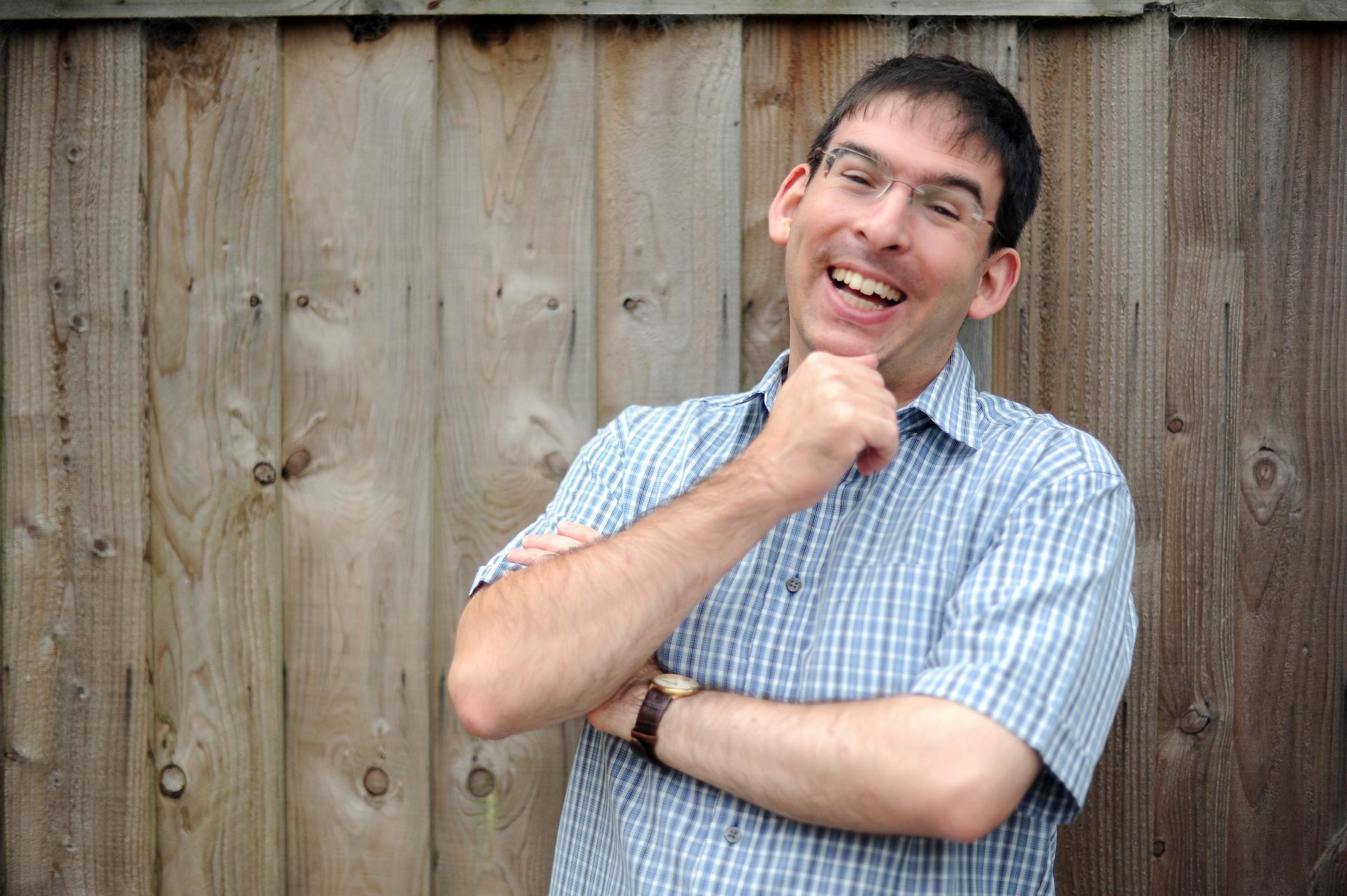
Leora CohenDuncan Honeybourne
By turns richly romantic, impressionistic, darkly lyrical, sensuous and harmonically complex, there are hints of late Brahms, Debussy, Ravel, even early Messiaen in Reason’s sophisticated, inventive music. This inspiring legacy of work is brought vividly to life by Duncan Honeybourne on a piano contemporaneous with the music, a 1922 Bösendorfer.
Piano and Chamber Music by Jessy Reason
Duncan Honeybourne (piano) with Leora Cohen (violin)
Korean-born composer Unsuk Chin is one of the featured artists at this year’s Aldeburgh Festival, which is celebrating its 75th anniversary. Find out more about Unsuk Chin’s influences, working methods, and thoughts about classical music in general in this insightful, thoughtful interview:
Who or what are the most significant influences on your musical life and career as a composer?
The most formative influences are probably those from childhood when the senses react to everything around them in a more ‘holistic’, immediate approach. Then, there was the time of my studies: immersing myself in European avant-garde music in the early 80s was vital, as I had before that known ‘Western’ musical history only until Stravinsky’s Violin Concerto. Conversely, the experience of studying with Ligeti, who denounced the avant-garde, requested utterly original music of excellent craftsmanship from himself and his students, asking me to throw away my prize-winning works, was a pivotal moment. Indeed, moments of crisis and subsequent attempts to find a way out are essential moments and threshold experiences.
The excellent Danish poet Inger Christensen wrote that the major influences on her work were creative stumbling blocks, irritations that, in the long term, made her question and develop her approach. For me, such a moment was when I worked, in the late 80s, and after a writer’s block of almost three years, for a couple of years at a studio for electroacoustic music. Through this, I could re-evaluate the essential elements of my compositional approach and expand the basis of my music. Another significant experience was, in the 90s, longer stays in Bali, where I studied Gamelan music – the acquaintance of a different tradition of great refinement and quality deeply rooted in the society was a discovery.
What have been the greatest challenges of your career so far?
That was to realise my childhood dream of becoming a professional musician and fighting my way out of difficult circumstances – in the 1960s and 1970s, South Korea was a poor post-war country on the periphery, and it was not easy to start as a female Asian composer in Germany.
What are the special challenges and pleasures of working on a commissioned piece?
Without a commission or deadline, I would never compose a work. One needs much pressure from the external world to get through this crazy process. I don’t have any works in my drawer. Writing a new piece is a very demanding process and can take years. I wouldn’t go for it without external pressure and the adrenaline rush. At the same time, I would never accept a commission with conditions that don’t fit into the musical thoughts and goals I am working with during a specific period.
What are the special challenges and pleasures of working with particular musicians, singers, ensembles or orchestras?
I always choose very carefully which commissions I accept. One has to prioritise. It almost needs to be a compulsion: if I don’t have an idea what to write for a certain instrument or concept, I won’t do it. For example, I wrote my First Violin Concerto in 2001 and was convinced I would never write another one. But then, when there was a possibility to write for Leonidas Kavakos, I reconsidered, and the work, 20 years later, is very different from the first one.
Of which works are you most proud?
I move on and try to do something new with every piece. I have removed several earlier works from my work list as I am not content with them. As for the remaining ones, I accept them, but there are also pieces to which I feel more emotional distance than others – which is unsurprising when one revisits works from several decades ago. But I can also name a counterexample – my Piano Concerto, which is from 1995 but which wasn’t much performed before the Deutsche Grammophon recording two decades later. This is a work into which I put all the energy and frenzy of my then 34-year-old self – I wouldn’t compose in this manner any more, but I feel emotionally close to it.
How would you characterise your compositional language?
I prefer not to, as it may make it more difficult for the listener to approach the work without prejudices. Besides, when I compose a new work, the most important thing for me is its unique shape. Of course, as a composer, you have a particular craft; you prefer certain materials and draw on compositional techniques acquired through the years. You cannot and perhaps shouldn’t avoid that. Nonetheless, it is important for me to attempt each work to be singular in character. Pablo Picasso once expressed it this way: style holds the painter captive in the same point of view, in a technique, in a formula, but he always wants to make something that is new and unknown to himself.
How do you work?
With pen and paper. Composing is, above all, waiting — days, sometimes weeks, before the empty staves. And then, suddenly, a door opens in the head. With age and experience, one develops trust that this door opens at some point if one tries hard enough. The music is in my head. I sometimes jot down ideas, plan harmonies, etc., but for me personally, it is an abstract process without piano or other devices. It can take several years for thoughts and concepts to mature. And when the pressure is great enough, it’s like giving birth: the thoughts have to come out, then you write.
As a musician, what is your definition of success?
That I am fortunate to be performed by several excellent musicians.
What advice would you give to young or aspiring composers?
To think carefully if one really wants to have a life as a professional composer. It is usually a back-breaking and lonely job, and the financial prospects are often non-existent. If one really wants to do it, one should, but one should be aware what price it takes.
What do you feel needs to be done to grow classical music’s audiences?
This is not easy since, nowadays, there is a tendency to think more and more in purely economic and functional categories, on top of which you have to add the quickness of modern mass media. Besides, there exists a mistaken notion that classical music would be something ‘elitist,’ which is why the notion that society should support artforms that only a small minority will engage with has lost traction. All of this does not mean that things were better during other times. However, it is concerning and a scandal that music is often no longer even considered a minor subject in schools due to very obscure claims of competitiveness and economic success – claims often made, for example, by numerous politicians. It is wrong to withhold from children the experience of art, which is one of the things that distinguishes human beings from AI, not to mention that art often provides indispensable solace and a utopia. Anyway, there are also ‘late bloomers’, audiences that can be won over with creative ideas and new approaches even if they won’t have had previous exposure to classical music; after all, the experience of great music can be a deeply emotional one. The methods and approaches used to try to develop classical music’s audiences depend on the place and context. But the main thing, I believe, is trust. Trust in quality, the hard work of serious performers and composers, the slow progress of building audiences and overcoming obstacles, an almost aggressive defence of artists’ quality and hard work, the audience’s right to hear this music, and the need for financial support of the whole musical ecosystem.
What is the one thing in the music industry we’re not talking about but you think we should be?
I doubt that such a thing exists as ‘the music industry’ – fortunately, we live in a diverse world. At the same time, of course, certain tendencies exist, but these are intertwined with societal developments. Our times are obsessed with the speed of information, packaging, and the surface, which can be problematic for developing sustainable quality standards. Also, the future of classical music institutions in many places is endangered. That leads often to market-think and occasionally to a winner-takes-it-all mentality. At the same time, fortunately, there are many niches and different initiatives. It was much more polarised in the 50 years after the Second World War: there was the established conservative music world, and then there were the rebellious circles of both the avant-garde and the early-music revival, who not infrequently fractured into warring factions. But every time has its challenges.
What do you enjoy doing most?
Playing the piano. If I need a break during an intense compositional process, I might play fugues by Bach for hours. This helps me clear my mind and persevere.
On Wednesday 12th June Tenebrae give the first UK performance of Unsuk Chin’s Nulla est finis – a prelude to ‘Spem in alium’ in Ely Cathedral as part of this year’s Aldburgh Festival. Find out more about Unsuk Chin’s music at Aldeburgh Festival here
A SEASON TO SINGby British composer Joanna Forbes L’Estrangeis a brand new 40-minute work for SATB choir/organ or piano, inspired by Vivaldi’s The Four Seasons
Joanna Forbes L’Estrange
A Season To Sing will be published by the Royal School of Church Music (RSCM) in 2025, marking 300 years since the publication of The Four Seasons. This choral re-imagining of Vivaldi’s enduringly popular set of violin concertos weaves texts from poetry and the Bible on the subject of spring, summer, autumn and winter into Vivaldi’s much-loved melodies. It will also include a new setting by Joanna Forbes L’Estrange of Ecclesiastes 3:2 – To everything there is a season. With its seasonal theme, A Season To Sing can be performed at any time of the year, and is expected to become a firm favourite with choirs throughout the world.
Joanna Forbes L’Estrange recalls, “The Four Seasons is the first piece of music I can remember hearing from my childhood. I used to dance around the sitting room to it! I thought a great way to mark its 300th anniversary would be to make it possible for choirs to perform it. Vivaldi’s tunes are so magnificent they deserve to be sung!”
To make this commission possible, the RSCM is inviting choirs to contribute £300 ($500) each to participate in this project, for which each choir will:
have the opportunity to perform the piece before its general publication
meet Joanna Forbes L’Estrange for a Q&A session via zoom
be listed in the vocal score as one of the commissioning choirs
receive a limited-edition, hardback copy of the vocal score, signed by the composer
This exciting opportunity is open to all choirs, large and small, professional and amateur, and to individual supporters. Deadline for registering – 31 August 2024.
Joanna Forbes L’Estrange (b.1971) is a multifaceted musician who performs, composes, records, directs and produces music in a wide variety of genres. Her career began with seven years as soprano and Musical Director of the five-time Grammy® award-winning vocal group The Swingles, with whom she toured the world and produced six albums. Specialising in contemporary crossover music, Joanna is a regular soloist for Mass in Blue by Will Todd (which she recorded for the Convivium label) and Duke Ellington’s Sacred Concert. With the world’s leading orchestras and contemporary music ensembles she performs works by Steve Reich and Luciano Berio and has sung on over 300 film soundtracks.
One of the Royal School of Church Music’s best-selling composers, Joanna was commissioned to compose an anthem to mark the coronation of King Charles III. The Mountains Shall Bring Peace was sung by over 600 choirs around the world including in the USA, South Africa, Australia, New Zealand and throughout Europe and the UK. Her music has been performed and recorded by Tenebrae, The King’s Singers, The Swingles, The Military Wives Choirs, The National Youth Choir and London Voices. Television credits include Fleabag, which featured her 1940s-style song You Are, and Glee, which featured her Moonlight Sonata arrangement, written for and recorded by The Swingles.
Joanna has written many songs and choral pieces in support of equal opportunities for women: We Will Remember Them (for the Military Wives Choirs of Great Britain), A Woman (Wearing Bloomers) On A Wheel (made into a film by the National Youth Girls’ Choir), Suffragette March (part of a larger work, Freedom! The Power of Song, composed in collaboration with her husband Alexander L’Estrange), A place for us maids (commissioned to mark 40 years of female undergraduates at Trinity College, Cambridge), The Three Wise Women (commissioned to mark the 135th anniversary of St Swithun’s School, Winchester) and Byrd Song (commissioned to mark the 400th anniversary of the death of William Byrd). In 2018 Joanna founded the all-female vocal group AQUILA and, in the same year, made history by organising the first ever all-female recording session at Abbey Road Studios in London, recording her single Twenty-first-century Woman for International Women’s Day.
The Royal School of Church Music (RSCM) is the Salisbury-based, national, independent charity enabling the flourishing of church music. As the central ‘home’ of church music, RSCM provides relevant education, training and resources to its membership, the wider church, and beyond. It is committed to encouraging the best of music in worship, and to advocating music as a tool for growth of the church.
The RSCM supports thousands of member churches across the UK and worldwide through its international partners. In addition, it also supports many schools and Individual members, and its work is sustained by thousands of Friends, Regular Givers and other donors.
The RSCM is an open, life-long learning organisation, offering face-to-face and distance education and training through its programmes, published resources, courses and activities.
Founded by Sir Sydney Nicholson in 1927, the RSCM’s original emphases were English and choral. Now, in a diverse international context, the RSCM’s work is far broader and more diverse, and aims to make all its work ecumenical in purpose, nature and content.
His Majesty King Charles is the RSCM’S Royal Patron, and its president is The Most Revd and Rt Hon The Lord Archbishop of Canterbury. The organisation celebrates its centenary in 2027.
The Cross-Eyed Pianist is free to access and ad-free, and takes many hours every month to research, write, and maintain.
If you find joy and value in what I do, please consider making a donation to support the continuance of the site








 The Cross-Eyed Pianist