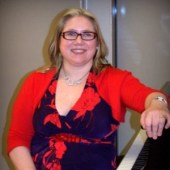
Weymouth Lunchtime Chamber Concerts (WLCC) is delighted to announce its 2021/22 season of concerts which take place once a month at St Mary’s Church, Weymouth. This season is particularly special as not only does the series return to full capacity concerts, it also celebrates its 20th anniversary in 2022.

Despite the disruption caused by the coronavirus pandemic, WLCC was able to present four concerts in its 2020/21 season which were enthusiastically received by a socially-distanced audience – proof that people really craved and appreciated live music.
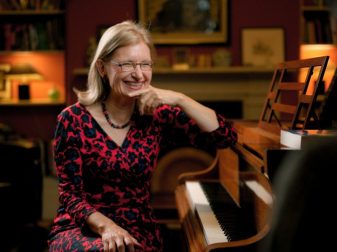
The first concert of the 2021/22 season will be given by Penelope Roskell, who was brought up in Weymouth, and was fortunate to study piano with Elsie Monckton from an early age. As a child she played regularly at Weymouth Arts Centre. Since then, she has gone on to a stellar career as an international concert pianist, writer and Professor of Piano at Trinity Laban Conservatoire of Music and Dance. Penelope’s programme features three much-loved works for piano by J S Bach, Fryderyk Chopin and Franz Schubert, spanning over 100 years from the Baroque period to the Romantic era.

Future performers include pianists Margaret Fingerhut, Jelena Makarova, Nina Savicevic, Alan Schiller, John Humphreys and Duncan Honeybourne, violinist Peter Fisher, bassoonist Antonia Lazenby, and cellist Ulrich Heinen.

Founded in in 2002 by concert pianist and Weymouth resident Duncan Honeybourne, Weymouth Lunchtime Chamber Concerts presents high-quality chamber music in the heart of Weymouth and offers a platform for musical partnerships with friends and colleagues, many of whom enjoy international acclaim. The concerts also give young musicians, often recent graduates from conservatoire or university, valuable performing experience to a friendly, loyal audience.

WLCC programmes are varied and imaginative, mixing well-known works with lesser-known repertoire and composers, and all concerts take place in the attractive, welcoming surroundings of St Mary’s Church, Weymouth. WLCC is very fortunate to have use of an excellent Yamaha grand piano maintained by Weymouth Pianos Ltd. Tickets cost just £5, which represents extremely good value considering the very high quality of WLCC performers and programmes. WLCC is grateful for the support of staff at St Mary’s Church in ensuring concerts are covid-secure, safe and enjoyable for performers and audience alike.

Penelope Roskell performs on 15th September 2021 at 1pm. BOOK TICKETS

Full details of WLCC’s concerts can be found at weymouthchamberconcerts.com/.

Weymouth Lunchtime Chamber Concerts provide the whole musical package. Their programme includes established artists and emerging talent; and the conditions are superb for audience and performer alike.

Under the professional and experienced guidance of Duncan Honeybourne and Frances Wilson, Weymouth is truly fortunate to have a concert series that benefits both local people and the wider musical community…..this is a valuable initiative that deserves continuing support and celebration.

James Lisney, concert pianist

The series is organised by Duncan Honeybourne and Frances Wilson (The Cross-Eyed Pianist)
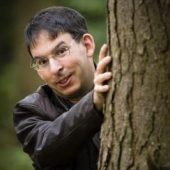

Duncan Honeybourne – Founder/Artistic Director

Commended by International Piano magazine for his “glittering performances“, Duncan enjoys a diverse profile as a pianist and in music education. His concerto debut in 1998 at Symphony Hall, Birmingham, and the National Concert Hall, Dublin, was broadcast on radio and television, and recital debuts included London, Paris, and international festivals in Belgium and Switzerland. Duncan has toured extensively as soloist and chamber musician, broadcasting frequently for the BBC and radio networks worldwide. His many recordings reflect his interest in 20th and 21st century British piano music. He is a Tutor in Piano at the University of Southampton.

duncanhoneybourne.com

Twitter: @DuncanHoneybou1

Frances Wilson – Concerts Manager

Frances is a writer, reviewer and publicist. Described by international concert pianist Peter Donohoe as “an important voice in the piano world“, Frances’ blog The Cross-Eyed Pianist has an international reputation and enjoys a large following. She also writes for Hong Kong-based classical music website Interlude and has contributed articles to Pianist magazine and The Schubertian, the journal of the Schubert Institute UK. She has appeared on BBC Radio Three’s Music Matters programme to discuss the role of music criticism today and the effect of the internet on music journalism. An advanced amateur pianist, Frances holds Licentiate and Associate Diplomas in Piano Performance (both with Distinction) and has studied with or received mentorship from a number of distinguished pianist-teachers, including Penelope Roskell, Graham Fitch, Murray McLachlan, Stephen Savage and James Lisney.

Twitter: @crosseyedpiano

Piano music commissioned and recorded during lockdown to support musicians struggling during the Covid-19 crisis

There have been many initiatives to keep the music playing and support musicians during these difficult times. What all of these initiatives demonstrate is that musicians are, despite straitened circumstances, determined to keep playing and to continue to share their music with audiences. It also sends a powerful message to government that the industry is determined to survive, to let the music play, come what may.

I have a personal interest in this wonderful project by pianist Duncan Honeybourne: Duncan and I are friends, and also colleagues – together we run a lunchtime concert series in Weymouth.

During the UK lockdown, Duncan decided to offer short video recitals from his home every day. He called them ‘Piano Soundbites’. The series proved very popular and within a few weeks, Duncan had the idea to approach composers to ask them to write new piano pieces for him, to be premiered as ‘Contemporary Piano Soundbites’ in his video recitals. Alongside this, Duncan set up a Just Giving page to raise funds for Help Musicians UK (formerly the Musicians’ Benevolent Fund). The response was incredible – the project, which was ranked in the top 10% of Just Giving fundraisers nationally during April 2020, has already raised well over £2000 for Help Musicians UK, supporting musician colleagues struggling in the current situation.

‘Contemporary Piano Soundbites’ celebrates the diversity of styles embraced by a broad cross-section of professional composers working today. Featured composers include Sadie Harrison, Graham Fitkin, John McLeod, David Lancaster, Francis Pott, Luke Whitlock and John Casken, as well as younger and emerging composers, and each piece is no more than 6 minutes long at the most. These piano miniatures represent an important contribution to the ever-expanding repertoire for the instrument, to be enjoyed by amateur, professional and student pianists alike.

pianist Duncan Honeybourne

“….it was an invigorating experience to record an entire disc of pieces which hadn’t existed less than four months earlier! Especially stimulating and exciting is the juxtaposition of several leading senior composers with some of their most gifted younger colleagues. Several young composers make their first appearances on disc.

My objective, as I stated in my invitation to composers, was fourfold: to imaginatively harness the zeitgeist of our present situation: to bring comfort and enjoyment to a large ready-made audience stuck at home, to aid musicians badly affected by the “cultural lockdown” and to add to the contemporary repertoire, creating an artistic keepsake of this extraordinary phase in our history.

My long term plan is that, as well as helping our colleagues at a time of need, the collection will provide a snapshot of reflections and musings by some of the finest and most distinctive composers of our time at a unique and unprecedented moment in our history. I hope the disc will make for a refreshing, enriching, stimulating and quirky listening experience too!”
Duncan Honeybourne, September 2020

The music was recorded in late July 2020 in the new Gransden Hall at Sherborne Girls School, Dorset.

The disc is released on the Prima Facie label and is available to order now

For review copies, sample tracks, interviews with Duncan and other press information please contact Frances Wilson


Meet the Artist interview with Duncan Honeybourne


This site is free to access and ad-free, and takes many hours to research, write, and maintain. If you find joy and value in what I do, please consider making a donation to support the continuance of this site

Make A Donation

17-20 September

CityMusic Live, a new online concert platform, announces its 2020 Piano Fest

Over four days, pianists Warren Mailley-Smith, Yuki Negishi, Daniel Grimwood, Duncan Honeybourne, and Julian Jacobson will present concerts online in a celebration of the piano.

The extended weekend of concerts begins on Thursday, 17 September with Warren Mailley-Smith in a programme featuring works by Beethoven, Brahms and Ravel.

Piano Fest continues on Friday 18 September with Duncan Honeybourne’s programme Forest Idylls featuring enchanting, evocative works by Sibelius, MacDowell and Schumann echoing nature. Known for his technical precision and warm musicality, Duncan Honeybourne has been lauded as “heroic” by Musical Opinion and “a gifted pianist in whom a spirit of adventure meets high musicianship” by MusicWeb International.

Saturday 19 September features two concerts. At 6:00 PM, Daniel Grimwood presents Nocturnes and Variations featuring one of his own compositions, “Variations on a Theme by Field”. Daniel Grimwood’s playing has been characterised as “stimulating and revelatory in equal measure” by The Telegraph, and his programme promises to exhibit both his virtuosity and his intellectual sensibility. Following at 8:00 PM, Yuki Negishi performs a concert entitled Passion, featuring works by Franck, Chopin and Beethoven. Praised for her “Piano Music by Women” series in June and July, Yuki Negishi was chosen in the Top 5 online performances for the week of 29 June by Pianist Magazine.

The weekend continues on Sunday with a matinee performance which celebrates The Piano Sonata by renowned pianist and Royal College of Music professor, Julian Jacobson. The programme features sonatas by Scarlatti, Berg and Beethoven. The weekend comes to a close on Sunday evening with Warren Mailley-Smith’s celebration of Chopin, a composer very close to his heart – he was the first British pianist to perform Chopin’s complete works for solo piano from memory in a series of 11 recitals at St John’s Smith Square in 2016.

Single tickets and festival packages are available. Book tickets

All concerts will be streamed to worldwide audiences through www.citymusiclive.co.uk

City Music Live is in the brainchild of pianist Warren Mailley-Smith. Since lockdown began in March, has presented over 30 online concerts through social media with over 400,000 total views, reaching audiences world-wide.


[source: press release]

Who or what inspired you to pursue a career in music?

I started my musical life as a chorister at Ripon Cathedral in Yorkshire. Exposure to the greats of choral music was the basis for becoming a composer and conductor, and was a great introduction to the technical as well as the aesthetic aspects of music.

Who or what were the most significant influences on your musical life and career as a composer?

In my teens I corresponded quite a bit with Benjamin Britten in the later years of his life, and he gave me a lot of ideas and encouragement to become a composer. Studying music at Christ Church, Oxford as an undergraduate was also an important step on the road.

What have been the greatest challenges/frustrations of your career so far?

The greatest challenges revolve around presenting pieces to audiences which require active listening on their part. People are everywhere bombarded with noise, and commercial music of all kinds, which requires no active participation from the listener. This puts them off the idea of listening to something and being challenged to think about what the music is trying to say to them.

Of which works are you most proud?

The Sonata for Organ, which was premiered and recorded by Clive Driskill-Smith; Suite – King Richard III for Solo Violin, premiered and recorded by Rupert Marshall-Luck; the works I have written for Christ Church, Oxford (especially King Henry VIII’s Apologia); the setting of the Jubilate Deo (in Zulu) which I wrote for the 750th Anniversary of the foundation of Merton College, Oxford; and a number of choral pieces for choirs in Germany, especially the Frankfurt Canticles and Responses, and the Berlin Canticles and Responses. I have also had a number of commissions from the London Festival of Contemporary Church Music. My Sonata for Piano is just about to be premiered in London, and this is a major piece.

What are the special challenges/pleasures of working on a commissioned piece?

Making sure that we are all agreed at the outset as to what exactly is being requested, and the reason why the person is commissioning the piece. However, it is a very rewarding experience to deliver a new work to someone who has commissioned it. People are very generous in their appreciation of new works like that. It is very exciting to be writing for a distinguished performer or ensemble, in particular to write a work which fits their style of performance, their character, and their ethos. The challenge is to write something which is appropriate to the performer, and is a work that they will want to play frequently and be identified with. Of course, they can be very demanding (!), but that is also good, because it means they have thought a lot about what they are looking for and why.

What are the special challenges/pleasures of working with particular musicians, singers, ensembles and orchestras?

Mainly this is a great pleasure, because the reason they will want to play your music is because they choose to. This enables one to develop a longer-term relationship with performers who are looking to include this type of music in their repertoire. Then a very fruitful discussion about new pieces can ensue, and trying new things which enhance the appeal of the performer to the audience.

How would you characterise your compositional/musical language?

It varies from very simple tonal pieces (especially some of the pieces for church choirs), through to more complex works, like the larger Sonatas. Maybe it could be see as being a continuation of the English musical tradition, from VW, Howells, Finzi, Britten, Tippett, Leighton, Lutyens.

How do you work?

I do like things to be organised, because I really do not like missing deadlines! A lot of planning goes into each piece. They will have been forming in my mind for many months (sometimes even years) before the pencil even hits the paper. I tend to write things out long-hand, and then put them onto Sibelius. Then it’s off to the publishers.

As a musician, what is your definition of success?

That people are interested enough to listen to the music, and that if they studied it in detail, they would appreciate the logic, structure, and meaning of the pieces I have written. Where listeners have done this, they tell me the music appeals to the ear, the heart, and the brain. It’s lovely when you get feedback like that.

What do you consider to be the most important ideas and concepts to impart to aspiring musicians?

To work hard, listen to the great music, and enjoy what you are doing. You have an individual voice as a composer or performer, and you need to find ways to express yourself. Others will guide you, but your voice is your own.

Richard Pantcheff’s Piano Sonata is premiered by Duncan Honeybourne on 6 November 2019 at the 1901 Arts Club, London. Introduction by Richard Pantcheff. More information


Richard Pantcheff is internationally renowned as a composer in many genres, and has established a prominent reputation as a composer of Choral, Organ, Chamber and instrumental music of the highest quality. His musical career commenced as Head Chorister at Ripon Cathedral, in England. During his five years as a Music Scholar at senior school, he corresponded regularly with Benjamin Britten, who acted as occasional mentor to him in composition. Thereafter, he graduated with Honours in Music at Christ Church, Oxford University, under Simon Preston and Francis Grier.

Read more

You can see most of Richard’s music on his publisher’s website : www.musicaneo.com