Who or what inspired you to take up conducting and pursue a career in music?
I would say it was a mixture of circumstances: parents, musicians, the environment in which I grew up, and an intuitive love for music and instruments. I was just a normal child until the turning point at the age of 13, when I made the decision to pursue a career in music (as a conductor). It engaged a personal responsibility for that decision, which was —and still remains —a motor in my professional life.
Who or what are the most significant influences on your musical life?
My father, who was a prominent Ukrainian composer, Ivan Karabits, and my teachers at the music academies in Kiev, Vienna and the Bach Academy Stuttgart. Today, I hugely respect musicians and personalities that remain true to themselves and “serve music” rather than their personal careers and ambitions. Artists I respect include: Yuri Temirkanov, Ivan Fischer, Mikhail Pletnev and a few others.
What, for you, is the most challenging part of being a conductor? And the most fulfilling aspect?
The most challenging part is the daily life of travel and inconstancy, and how to balance that with family and relationships, with friends and the close circle of relatives and colleagues. Also, keeping in good shape —physically and mentally —remains a challenge. The greatest fulfillment comes from music-making with great orchestras around the world, it simply breaks boundaries, and gives a feeling of being useful in changing the world for the better. Being Chief Conductor at the Bournemouth Symphony Orchestra (BSO), an orchestra with a clear mission to serve its communities throughout the South West of England, is great; we engage with all ages both on and off the stage.
As a conductor, how do you communicate your ideas about a work to the orchestra?
Through my gestures and expressions first of all, then come words.
How exactly do you see your role? Inspiring the players/singers? Conveying the vision of the composer?
My role is to put together several elements —the audiences, musicians in front of me and the composer’s message written in the score —and my job to make those elements collaborate and harmonically function together. The methods of achieving that harmony can vary: it might be inspiring musicians, or just helping them to play together; communicating more with the audience; and sometimes it just happens during the concert without any special effort, but it is rare. I’ve been Chief Conductor of the BSO for over 10 years now, and the way in which I’m able to work with the players has become gradually more instinctive, this has been one of the greatest achievements of my career and it’s a great feeling.
Is there one work which you would love to conduct?
I try to follow the principle that the work (a score) that is on my table today is the best and I would love to conduct it.
Do you have a favourite concert venue to perform in?
I like my home venue (Lighthouse, Poole) and other places with a warm atmosphere and audiences, like Musikverein, in Vienna, or the Lincoln Center in New York.
What are you looking forward to in the coming BSO season of concerts? Any particular highlights?
Every single concert is a highlight for me, but I especially look forward to conducting Elektra by Strauss (18 March, Poole, 21 March, Birmingham) and Schubert’s Symphony No. 5 (19 February, Poole, 20 February, Basingstoke). This year, we released recordings of music by Terterian and Lyatoshynsky on Chandos, as part of our Voices from the East series. I’m really looking forward to exploring music by Chary Nurymov with the BSO in a programme that also features Mahler’s Fifth Symphony, in May.
As a musician, what is your definition of success?
Success to me is when at least one member of the audience comes away having felt special during your performance. Also success is a feeling that your dreams come true.
What do you consider to be the most important ideas and concepts to impart to aspiring musicians?
Being honest.
What is your idea of perfect happiness?
Perfect happiness to me is a state of mind when you love yourself and every moment of your life as it is.
Kirill Karabits is Chief Conductor of Bournemouth Symphony Orchestra. Forthcoming performances include: Handel’s Messiah(18 December, Poole), Beethoven 250 (29 January, Poole, 1 February, Barbican Centre, 22 February, Sage Gateshead), Haydn, Mendelssohn, Schumann and Schubert with Jeremy Denk (19 February, Poole, 20 February, Basingstoke), Richard Strauss’ Elektra (18 March, Poole, 21 March, Birmingham)
Music-in-Motion is a revolution in classical music performance, conceived and developed by conductor John Landor. The musicians perform without music stands or chairs, using movements and gestures designed to clarify the structure, drama and emotional impact of the music.
I met with John Landor to talk about early musical influences, significant teachers, the impetus for creating Music-in-Motion, and more…..
Who or what inspired you to pursue a career in music?
Although none of my family were professional musicians, my father was a keen jazz trumpeter in his youth, and my mother loved the arts and played piano. We had a rather large family of six children and we did a lot of singing as a family. I was born in the Midwest USA and I remember vividly evenings “on the porch” singing all the old American favourites like ‘She’ll Be Comin’ Round the Mountain’, all that homespun stuff.
All my siblings learnt musical instruments, so I just assumed it was something everyone did. I remember proudly carrying home my first violin, the sense of ownership of something special. But almost as soon as I started lessons the family moved around a lot, which meant that it was difficult to get any regular teaching. At age ten I ended up as a chorister at Westminster Cathedral Choir School. There was no violin teacher, so I spent every morning break teaching myself, and also started to compose little pieces.
At WCCS I absorbed the whole Italian Catholic choral tradition. With 10 services to sing each week we all essentially became professional musicians at an early age. Although I hated being away from home (we were all boarders) the music was my great solace.
Was violin your first study instrument at Royal Academy of Music?
No, I decided there wasn’t much point in pursuing it as I was never going to play at the level I wanted to. My first experience of conducting around age 15 (one of my own compositions at school) was an epiphany. I walked around for days in a state of bliss and knew from that moment that this was what I wanted to do. I went to Oxford University to get a music degree and spent all my time forming orchestras and conducting concerts and went on to the Academy for conducting and composition.
Significant influences or teachers?
My huge inspiration was Ilya Musin. At 34, I took some time for an artistic ‘re-fresh’ and went to study for a few months with him at the St Petersburg Conservatory. It was a revelation. Musin didn’t speak English but he spoke what I felt was my musical language, far more than anything I had encountered in all my years of study. I really felt I had ‘come home’, and fell in love with Russia in the process – such a fascinating country and people, complex, difficult, but so beguiling. He was the first teacher who talked about ‘character’ in music and that was a light-bulb moment. In my classes at RAM everyone talked about the nuts and bolts of conducting, but no one said anything about character. If the character of the music is absorbed, everything else starts to happen on its own. It was a total Eureka moment. I spent three months in classes with astonishment, amazement and relief, and it had a deep impact on my conducting.
This experience helped in the creation of Music-in-Motion?
Yes, although not directly. My finding the concept of Music in Motion was a slow evolution. It all started with the Mini Maestro family concerts I gave at St Martin-in-the-Fields around 2000 with LMA Orchestra. Because the sightlines there are not ideal for small children I started to send the orchestra out into the audience to play, with the kids holding their music. It gave them a chance to hear and see professional musicians close-up. But an important by-product was that it showed me that musicians can play perfectly well together even if spread out over a relatively large area.
I also realized that audiences just love being close to, or even in the middle of, the musical action – they’d say “wow! An oboist is playing in my face while I’m holding the music!”. And that face-to-face interaction with their audience gave the musicians a real buzz too – they felt more that they were artists in their own right communicating as individuals as well as a collective.
Then it occurred to me that if the musicians were able to move around while playing, they could perform more like actors on a stage and I could ‘choreograph’ the movements to show the interactions in the music. We started doing demonstrations of this in my Meet-the-Music discovery sessions in the interval of some of our evening concerts. The audience reaction was so extraordinary, it was clear that we had found something that was unusually powerful and inspiring. Instead of a static group of musicians seated in front of music stands, here was a living, moving, breathing musical organism.
Since then I have realized that this way of playing has almost limitless uses. For a start it’s ‘educational’ almost by default as it makes clear visually what is happening in the music without need for verbal explanation. All those people who like (or want to like) classical music but are put off by traditional concerts might find this a great way in. And for any musician it’s a great training for general expressivity as it challenges them to think more about how they communicate.
What influences would you say led you to the idea of Music-in-Motion?
First, Lindsay Kemp’s work, which made me understand how important context is to a performance. Secondly, a performance by the Mark Morris Dance Company where I ‘saw’ as well as heard a fugue being performed – a musical ‘line’ of dancers animated each voice of the fugue in a way that was incredibly clear and expressive. And finally, and most directly, Jonathan Miller’s production of the St Matthew Passion. In the arias with obbligato instruments, both singer and instrumentalist stood face to face, and I found it so direct, human and intimate compared to how it is normally done – just amazing. That deeply impressed me.
Is there a historical precedent for this?
Not that I can find or think of! For an idea that seems so obvious to me now, I find it almost unbelievable that there seems to be no historical precedent. Of course there has been quite a lot of work in the past few decades where musicians move on stage with dancers or act while playing. But these I find essentially use music to enhance a theatrical experience – whereas I am using theatre to enhance a musical experience.
I want to emphasise that Music-in-Motion is about revealing and highlighting the choreography, drama and acting that is intrinsic to the physical act of playing music already – not adding show or gimmicks! I am acutely aware that the moment you add a dancer, actor, video projections or have artists painting during a musical performance, the music itself becomes background. It’s incredibly vulnerable to that. So, while I whole-heartedly endorse the concept of musical performance in these kind of theatrical or dramatic contexts, that is the complete opposite of what I am trying to achieve. In a nutshell: a theatre of music, not music of theatre!
Do you feel any music could undergo the Music-in-Motion treatment?
Undergo? I think ‘thrive with’ is more the phrase I would use!
I’ve been purposefully focusing on core repertoire that isn’t overtly ballet or dance-inspired. In the Bach double violin concerto where the ripieno music interjects we had the players stepping out and back like a backing group to the soloists. It made the structure of the music so crystal clear to the audience.
In Mozart’s Jupiter, there’s this little Alberti figure in the second violins accompanying the tune. Normally it barely features in the aural landscape, it simply fills in the harmony. But then we musicians know it is in fact a completely wonderful, busy little conspiratorial moment in its own right. So we got all the second violins to play it in a huddle. All the sudden it became a vital part of the performance, not just an accompanying figure.
I want every and any audience to be fascinated by the riches contained in every single bar of a Brahms Symphony or a late Beethoven quartet – and not needing to be a connoisseur to appreciate it to the fullest extent possible, even on a first hearing.
How do you find musicians respond to Music-in-Motion?
Funnily enough the only run-ins I’ve had were with double basses! They felt it was a gimmick. Mostly, musicians start out pleasantly bemused, but once they get a taste of the sense of liberation from the normal hierarchies of traditional performance they love it! It makes each member of the ensemble feel they really count as individuals. Of course a certain level of stagecraft needs to be learned if it is not all to look a mess and distract from the music.
Does it affect the sound?
Yes it does, in several ways. The sound is much better. Music stands block sound, so when they are all removed there is better overall projection of the music. Even when a player turns while playing, the acoustic changes, so there’s yet another aspect of Music-in-Motion that can be used to enhance the experience of listening. Though it must only be used to clarify the music.
What do you consider to be the most important ideas or concepts to impart to aspiring musicians?
Be yourself and know what you are communicating.
Because the space we need to play our instruments is relatively small and, after all, most instruments are attached to our bodies in some way, many musicians naturally tend to focus inwards. The next point of focus is “am I playing well?”, then “what would my teacher think?”, then “I hope I am living up to the composer’s expectation” then “will I get a good review?’ – and only then the ‘end-user’, the audience, is considered! Music-in-Motion starts with the audience. How can we inspire, delight and fascinate them with what we do? If we can do this, I have no fears about the future of classical music.
Music-in-Motion – Shostakovich String Quartet No.8 performed by the Konvalia Quartet
John Landor is Music Director of London Musical Arts Orchestra, based at St Martin-in-the-Fields. He has been developing a new concept in orchestral and ensemble performance called Music-in-Motion since 2013.
Musicians and ensembles interested in exploring the concept are warmly invited to apply for one of his Music-in-Motion Workshops held regularly in London. Further information here
Who or what inspired you to take up conducting and pursue a career in music?
There were a number of “wow” moments that inspired me as a kid. I still remember the first time I heard an orchestra live (it was my local youth orchestra playing Shostakovich 5). I was only three, but that moment stuck with me and I started going to grown-up concerts very young, maybe five or six years old (worth noting given recent controversies about kids at concerts). There were other pieces, like the Shostakovich, that had a huge impact on me when I first encountered them- symphonies by Mahler, Beethoven and Bruckner for example.
My parents bought us a wonderful series of LPs called “The Stories of the Great Composers Told Through Their Music.” I must have played the Mozart, Bach and Beethoven records hundreds of times.
I was not a very motivated young pianist (it’s a pity nobody told the seven-year-old Ken about the link between keyboard proficiency and conducting), but I loved the cello, and when I started playing real repertoire in good orchestras, that was a major turning point. I still remember playing Schumann 2 for the first time in my high school orchestra, and when James Smith took over my youth orchestra that was an eye opener. I’d never played under a great conductor before. That was the first time I understood what an orchestra can be when everyone is giving their best.
Who or what were the most important influences on your musical life and career?
My teachers, chamber music coaches and mentors. My main cello teachers, Parry Karp (Pro Arte Quartet), Lee Fiser (LaSalle Quartet) and Fritz Magg (Berkshire Quartet) had a huge impact on me. Their teaching went way beyond cello playing, and taught me a lot about score study and chamber music. Henry Meyer (LaSalle Quartet) and Peter Oundjian (Tokyo Quartet) were very important chamber music mentors- my whole approach to conducting was shaped in significant ways by studying and performing the string quartet literature. Gerhard Samuel was incredibly generous with me when I was his conducting student in Cincinnati. Take one more step beyond the scope of the teachers I saw every week as a student, and the list of important mentors gets absurdly long, but they’re all important and inspiring.
What have been the greatest challenges of your career so far?
The hardest thing about being a conductor is that your time with the orchestra is always finite. I’m glad I can pick up a cello and play Bach without having to raise money, go to committee meetings, or set a rehearsal schedule. There’s so much great repertoire that one wants to learn (more than you could do justice to in three lifetimes), and so much that one could do in rehearsal, and yet the clock is always ticking. I’d love to be able to work with really great orchestral colleagues in the kind of detail we do in my string trio, but nobody wants to pay an orchestra to rehearse so it’s always a balancing act.
Which performances/recordings are you most proud of?
I’ll always remember conducting my first complete Mahler symphony (the Second) with the Oregon East Symphony. That was a huge undertaking for everyone involved- so many people worked very hard and the concert felt like a real spiritual coming together. The final concert with Orchestra of the Swan in our Gál/Schumann cycle was memorable and moving- the end of a fantastic journey through that repertoire, and they played out of their skins.
For me, one of the joys of playing in a chamber group is revisiting pieces over and over until we feel like we really own them. When Ensemble Epomeo play the Schnittke String Trio, it’s always an event for us, and it felt much the same whenever my string quartet used to play Bartók no. 2. When you’ve invested years in a piece with your colleagues, you know you have to savour every performance together.
As far as recordings– the Gál/Schumann discs have been special. Gál was a recent discovery I felt lucky be entrusted with, but I’d wanted to do the Schumann symphonies since I was a teenager. The recent Nimbus recording of Philip Sawyers’s Second Symphony, Cello Concerto and Concertante was also a labour of love. Introducing unknown music to a wider public is surely the most important thing a recording can do, and Philip’s music is wonderful and very important.
Which particular works do you think you play/conduct best?
I find a huge range of music both rewarding and challenging. I don’t believe in specialities, because everything not on the list of things you do particularly well then suffers. I’m an intense guy, and I suppose I’m most at home in music that uses that intensity constructively.
How do you make your repertoire choices from season to season?
It’s a balance of what I want to do (some works stay on my wish list for 15 years before I get a chance to programme them), what my colleagues and employers want me to do, and what we have to do to stay in business.
Do you have a favourite concert venue to perform in and why?
My friends from home will laugh because it’s not a great venue, but Mills Concert Hall in Madison, Wisconsin. It’s where I first heard an orchestra when I was tiny. I’ve given recitals, played in all kinds of cello sections, played concert concertos, chamber music, heard amazing performances by friends and teachers, conducted and taught. It’s where music was born for me as a kid.
Favourite pieces to perform? Listen to?
As a listener, I tend to cycle through obsessions. I might listen voraciously to late Shostakovich, Schumann piano works, Debussy and Ravel, or early Beethoven string quartets, for two or three weeks, then not touch it again for a couple of years.
Who are your favourite musicians?
I like musicians who combine a certain amount of serious mojo with craftsmanship and honesty. My favourite performers are the ones who can put across a distinctive point of view about the music they play. My favourite composers engage heart, head and guts.
What is your most memorable concert experience?
Hearing Shostakovich’s Seven Romances on Poems of Alexander Blok with the Dubinsky’s and Fritz Magg with soprano Gloria Davey at Indiana University when I was 18. I still don’t think I’ve recovered.
What do you consider to be the most important ideas and concepts to impart to aspiring musicians?
Cultivate a love of music that will sustain your efforts as an instrumentalist- too many young musicians are more interested in playing their instrument than in the music they play.
Rhythm is the foundation of music. Playing in time is hard, but you can only play with true freedom if you’re in total command of tempo, pulse, meter and time.
What is your idea of perfect happiness?
Camping with Suzanne and the kids (while knowing that I’ve got something nice in the diary when we get home)
Kenneth Woods conducts the English Symphony Orchestra at St John’s Smith Square on 24th April in a concert of music by Handel and W F Bach which explores the origins of Mozart’s Requiem. Further information and tickets here
Hailed by Gramophone as a “symphonic conductor of stature,” conductor, cellist, composer and author Kenneth Woods has worked with the National Symphony Orchestra (USA), Royal Philharmonic, Cincinnati Symphony, BBC National Orchestra of Wales, Budapest Festival Orchestra, Royal Northern Sinfonia and English Chamber Orchestra. He has also appeared on the stages of some of the world’s leading music festivals such as Aspen, Scotia and Lucerne. In 2013, he took up a new position as Artistic Director and Principal Conductor of the English Symphony Orchestra, succeeding Vernon Handley.
Who or what inspired you to take up conducting, and make it your career?
As a cellist I was playing in orchestras right from the start and immediately loved the colours and drama of the orchestra. Then as I progressed and began to play more demanding works I fell completely in love with the orchestral repertoire.
Who or what were the most important influences on your conducting?
I love German conductors like Furtwangler, Karajan and also Carlos Kleiber. I went to the Jarvi Summer Academy in 2007 and saw Neeme Jarvi and his son Paavo conducting. Apart from their musical personas, I was greatly impressed by their technical command of the orchestra. They both have masterful conducting techniques that are able to ‘play’ the orchestra as if it were an instrument – which of course it is – a complex and wonderful instrument. They are both trained in a ‘Russian School’ of conducting – Maestro Neeme Jarvi studied with Rabinovich in St Petersburg in the room next to Ilya Musin’s class, and Paavo studied with Maestro Leonid Grin, a graduate of Moscow Conservatory, who studied with Leo Ginsberg and Kyrill Kondrashin. He then went on to be the Associate Conductor of The Moscow Philharmonic before defecting to to the West. After working with me at the masterclass and seeing me performing in the concerts, Paavo Jarvi kindly recommended me to Leonid Grin, with whom I began studying in 2008.
What have been the greatest challenges of your career so far?
Finding my way from a rather lovely but rather small town in NZ to Leonid Grin.
Which performances/compositions/recordings are you most proud of?
It was a great pleasure and privilege for me to perform with Viktoria Postnikova. We performed the Schnittke Concerto for Piano and String Orchestra together last year in London. For me she plays that work magnificently and she was the first to record the work with her husband, the legendary conductor Gennadi Rozhdestvensky. They were both friends of Schnittke’s and his wife, and it very much felt like a kind of meeting with the composer himself. Also, Leonid Grin knew him well, so he was able to give further insights about both the work and the composer.
Do you have a favourite concert venue to perform in?
It’s always a real pleasure to perform in spaces that allow the audience and the orchestra a certain intimacy, and in this sense the Royal Albert Hall is very interesting. But the acoustic of a venue is usually the most significant factor in creating something.
Favourite pieces to perform? Listen to?
Whatever I am working with/performing at that moment.
Who are your favourite musicians?
For me it depends on the repertoire, but I love artists such as Maria Callas, Jacqueline du Pré, and the Russian pianist Maria Yudina for me is extraordinary.
What is your most memorable concert experience?
When I was young my mother took me to hear the Borodin String Quartet playing Beethoven in what must have been its second incarnation, I think. It gave me an early experience of what was possible when you have a great composer being performed by wonderful artists.
What do you consider to be the most important ideas and concepts to impart to aspiring musicians?
To find every way to love what you do and transmit that.
What are you working on at the moment?
Tchaikovsky and Shostakovich.
Where would you like to be in 10 years’ time?
Working in a challenging and creative environment
What is your idea of perfect happiness?
see above
Rachael Young makes her Cadogan Hall debut on 23 November 2012, conducting the Russian Virtuosi of Europe in a programme of music by Schnittke, Prokofiev, Shostakovich and Tchaikovsky.
Rachael Young began her conducting career in 2007, having been a professional cellist, first in her native New Zealand, and then in the UK. Rachael is trained in the Russian system of conducting, and for the last three years has been under the tutelage of renowned conducting teacher Maestro Leonid Grin – Paavo Jarvi’s former teacher and former assistant to Leonard Bernstein throughout the 1980s.
Rachael has worked with a number of ensembles, including the St Petersburg State Academic Symphony Orchestra, the London Soloists Chamber Orchestra, the South Bohemian Chamber Orchestra, the Kharkov Philharmonic Orchestra, the English Sinfonia and the Russian Virtuosi of Europe.
She has participated in a number of prestigious conducting masterclasses, including Neeme Jarvi’s Summer Academy in Estonia, the Celebidache Foundation Masterclass held in the Czech Republic, and ‘The London Masterclasses’ at The Royal Academy of Music, and classes with Jorma Panula.
Recent engagements include guest conducting the Kharkov Philharmonic Orchestra in the Ukraine in a programme of works by Haydn and Mozart, and conducting the English Sinfonia and Lara Melda at St John’s Smith Square, London in May 2011, and with Viktoria Postnikova in September 2011. For the 2012/2013 season Rachael is embarking on a series of concerts with the Russian Virtuosi of Europe at London’s Cadogan Hall.
Rachael began her musical studies at 13 and went on to take her B.Mus at Victoria University, Wellington. A scholarship from The Boston Conservatory, Massachusetts enabled her to pursue post graduate studies in America. In 1994 Rachael came to England and, with the help of a New Zealand Arts Council grant, studied ‘cello with William Pleeth (teacher of Jaqueline du Pré) and later Moray Welsh.
The Cross-Eyed Pianist is free to access and ad-free, and takes many hours every month to research, write, and maintain.
If you find joy and value in what I do, please consider making a donation to support the continuance of the site

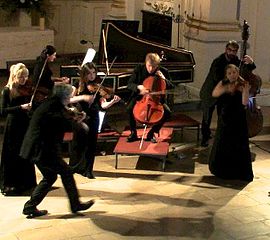 Music-in-Motion is a revolution in classical music performance, conceived and developed by conductor John Landor. The musicians perform without music stands or chairs, using movements and gestures designed to clarify the structure, drama and emotional impact of the music.






 The Cross-Eyed Pianist