The genteel Wigmore Hall audience was startled by the abrupt slamming of the lid of the piano, heralding the start of a brand new work by a composer celebrating a significant birthday on the day of the concert. The pianist was Igor Levit, always very popular with Wigmore audiences, and the composer was Frederic Rzewski. As a student Levit was captivated by Rzewski’s music and asked the composer to write a new piece. The work premiered at this concert was commissioned by Wigmore Hall for Levit to play.

Read my full review here

jeremydenk_3226643k

When the concert is perfect, does that make the reviewer redundant?

As regular readers of this blog will know, I enjoy writing about the concerts I attend but I also struggle with the purpose and value of concert reviews. At the most fundamental level, a review is a record of the event, setting it in context and as a moment in history. A review should also offer readers a flavour of the event and the thoughts and opinion of the reviewer about that event. When I left Milton Court last night I told my concert companion I could not write about the concert we’d just attended because it was so perfect that to write about it could not possibly do justice to the quality of the performance…..

Last night I attended American pianist Jeremy Denk’s concert at Milton Court, one of London’s newest concert venues and, in my opinion, the finest for piano music because of the clarity of its acoustic. Add a pianist whose musical insight and intellectual clarity, magical touch and sense of pacing bring the music to life so that you want to hear him “no matter what he performs” (NY Times), and we have the makings for an evening of exceptionally fine pianism.

It was a typically piquant programme, changed from the published version to include just three works – two magisterial, transcendent late sonatas by Beethoven and Schubert and Prokofiev’s Vision Fugitives, twenty fleeting miniatures, by turns quirky, ethereal, rambunctious, grotesque, poetic, delicate, fragmentary….. Denk revealed their individual characters so carefully, so delightfully that each tiny gem felt like a stand alone piece in its own right.

Beethoven’s piano sonata in E, op 109, the first of his triptych of last sonatas, also opens with a fragment – a tiny arabesque of just two notes in the right hand to which the left hand replies with a similar figure. It’s not a melody, yet that opening is immediately memorable. In Denk’s hands the music unfolded before us, its narrative flow so naturally paced. A muscular middle movement which dissolved into a theme and six variations, surely some of the most transcendent Beethoven ever wrote and handled with a delicacy and robustness, when required, by Denk which pulled one into this otherwordly soundworld so completely that one was transported, fully engaged and utterly overwhelmed. It was akin to meditating.

It felt almost wrong to leave the auditorium for the interval and face the noisy crush around the bar, but we knew the second half would take us to another special place, the unique world of late Schubert, his final sonata completed just a few months before his death.

Is the Sonata in B flat, D960 Schubert’s “final word”? A valediction for his departure from this world? I’ve always been suspicious of this view of this great sonata, whose expansive opening movement is like a great river charting is final course before the ocean, and whose finale is a joyful outpouring of hope, a reminder perhaps that Schubert had more, much more to say, had he lived longer. This was certainly Denk’s take on Schubert’s last sonata. The opening movement’s first theme had the serenity of a hymn, the second theme more unsettled, but the overall sense of repose remained, occasionally interrupted by dark, but never ominous, rumbling bass trills.

The meditative quality of the Beethoven variations was felt again in the slow movement of the D960. In some pianist’s hands, this movement can sound funereal, but Denk gave it a mystical grace and a sense of forward movement, so that the warmth of the A major middle section when it came infused rather than surprised the ear. The Scherzo poured forth with the agile freshness of a sparkling mountain stream, but the Trio reminded us that melancholy is never fair away in Schubert’s world, the bass accents (too often overlooked in other performances/recordings) here perfectly highlighting the change of mood….

The finale opens with a bare G, potentially as cold as the opening of the first Impromptu, but a dancing sprightly rondo quickly ensures, rising to a joyous conclusion, all masterfully and imaginatively presented by Denk. The overall pacing of this Sonata, like the Beethoven, was so elegantly managed: it is a long work (around 40 minutes) yet Denk’s clear sense of a through narrative and overall architecture of the music ensured there were no longueurs, not a moment when the mind wandered to other realms.

The encore was Brahms’ ever popular Intermezzo in A, from the Op 118. Tender and poignant, it was a lovely conclusion to an exceptionally fine evening of pianism.

when I have felt in the moment of the performance I have brought the notes on the page to life in a weird way which is outside of me – that is the kind of success that I am after

– Jeremy Denk (interview with The Cross-Eyed Pianist)


Meet the Artist – Jeremy Denk

Bela Bartók – Six Dances in Bulgarian Rhythm from Mikrokosmos
Paul Constantinescu – Cântec

Paul Constantinescu – Dobrogean dance: Toccata
Franz Liszt – Hungarian Rhapsody No 5 in E minor
Franz Liszt – Mephisto – Waltz No 1

Florian Mitrea, piano

Tuesday 30th January 2018

St Martin’s in the Fields, an elegant neoclassical church in the heart of London, resonated to the colourful, earthy sounds and rhythms of Eastern Europe in Florian Mitrea’s lunchtime concert. In an interesting and contrasting programme he offered a “taster” of his debut disc ‘Following the River’ with works by Bela Bartok, Paul Constantinescu and Franz Liszt

Fresh from winning fourth prize in the inaugural International Music Competition in Harbin, China, Florian betrayed no sign of lingering jet lag (he flew back to London from China on Sunday) in an energetic and committed performance book-ended by dances by Bartok and Liszt. The vibrant sounds and asymmetrical rhythms of Bartok’s Six Dances in Bulgarian Rhythm were despatched with muscular verve and nimble articulation. Hearing Liszt’s Mephisto Waltz in the same programme as the Bulgarian Dances reminded us of Liszt’s eastern European heritage, and here this work was less a devilishly tricky crowd-pleasing virtuosic romp and more a fitting companion piece to Bartok’s dances which opened the concert. Equally, Liszt’s Hungarian Rhapsody No 5 was given a noble grandeur, imbued with a sweeping romanticism but also deeply connected to the composer’s heritage.

The middle of the programme was occupied by two works by Romanian composer Paul Constantinescu (1909-63). Cântec, a set of variations on a Romanian folksong, was infused with a bittersweet nostalgia, while Dobrogean dance: Toccata recalled the off-beat folk rhythms of Bartok in a work which combined glittering virtuosity with poignant lyricism. Both works were beautifully paced, sensitively shaped, and highly evocative.

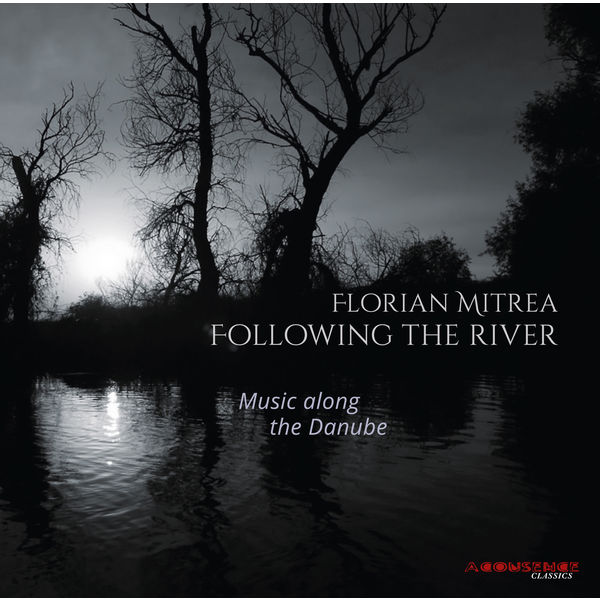
These two works appear on Florian’s debut disc, Following the River, inspired by childhood memories of “hot summer nights spent on a boat in the middle of a channel, deep in the heart of the Danube Delta” (FM). The Danube, the longest river within today’s European union, flows through 10 countries and four capital cities – Vienna, Bratislava, Budapest and Belgrade – and carries with it stories, folklore, memories and more. In Following the River we find quite a different version of the river from “An der schönen blauen Donau”, by the Austrian Johann Strauss II, which celebrates the great river in Vienna; this is a far more personal evocation. The selection of pieces by Bartok, Schubert and Liszt and Romanian composers Sigismund Toduta, Paul Constantinescu and Radu Paladi all call on the folk heritage and music of eastern Europe in works of rich textures, dynamic rhythms, piquant harmonies and simple yet haunting melodies. Schubert’s Hungarian Melody is given a more earthy treatment, with a strong focus on its offbeat rhythms which turns in from a salon piece into a true folk melody. The disc introduces listeners to the varied and intriguing piano music of lesser-known composers Toduta, Constantinescu and Paladi, complemented by well-known works by Liszt. This is a very personal and meaningful selection of music, elegantly presented and masterfully played, with a deep appreciation of and affinity with the folk heritage which lies at the heart of all this music.
Highly recommended

Following the river: Music along the Danube

Bela Bartok, Six Dances in Bulgarian Rhythm from Mikrokosmos Sz. 107
Sigismund Toduţă, Twelve Variations on a Romanian Christmas Carol
Franz Schubert, Hungarian Melody D 817
Paul Constantinescu, Variations on a Romanian Folksong
Paul Constantinescu, Joc Dobrogean. Toccata (Dobrogean dance)
Franz Liszt, Hungarian Rhapsody No. 5 ‘Héroïde-élégiaque’ in E minor
Sigismund Toduţă, Suite of Romanian Songs and Dances
Radu Paludi, Rondo a capriccio
Sigismund Toduţă, Chorale on ‘God, have mercy’ and Toccata

© and ℗ 2017 ACOUSENCE records (ACO-CD 13317) www.acousence.de


Meet the Artist – Florian Mitrea


nzso20yevgenysudbin-4416

Haydn Sonata in B Minor HobXVI/32
Beethoven Bagatelles Op.126
Tchaikovsky Nocturnes, Selection from the Seasons
Scriabin Prelude & Nocturne for the left hand Op.9, Sonata No.5, Op.53

Yevgeny Sudbin, piano

Monday 13 November 2017, St John’s Church, Wimbledon

This was my first visit to Wimbledon International Music Festival, though I have been aware of the festival for some years. Now in its ninth year, the two week festival is very well established and offers an impressive roster of international musicians, together with opportunities and support for young and emerging artists. Concerts take place in a number of attractive churches and halls dotted around the hill leading up to Wimbledon village and are very well organised, with friendly helpful staff. This is in no small part due to the efforts of Anthony Wilkinson, festival director, who is, by his own admission, passionate about music and has created “a festival sharing the experience of hearing and meeting world class artists in the company of friendly festival audiences“.

The theme of this year’s festival is capital cities and Russian pianist Yevgeny Sudbin, who hails from St Petersburg, presented a programme featuring composers from two of the greatest European cultural capitals – Vienna and Moscow – represented by Haydn, Beethoven, Tchaikovsky and Scriabin. Vienna has always had a strong hold over the imagination of Russian composers, artists and performers, and although Tchaikovsky was born in St Petersburg, he spent time in Moscow teaching at the conservatory, which since 1940 has born his name, and where Moscow-born Scriabin studied under Anton Arensky.

Described by the Telegraph as “potentially one of the greatest pianists of the 21st century“, Yevgeny Sudbin possesses that rare talent of being able to move with apparent ease between different composers, eras and genres, yet always delivering pianism of the highest order, rich in expression and musical thought. I have enjoyed fine performances by him at London’s Wigmore and Queen Elizabeth Halls and have been impressed in particular by his performances of music by Scriabin and Scarlatti (Sudbin’s playing of this composer’s miniature sonatas is exquisite – poised, shapely and expressive – and confirms that this music can and should be played on a modern piano).

It is also rare to be at a concert where one is utterly captivated from the first note until the very last has faded to silence, but this was definitely my experience at Sudbin’s Wimbledon recital. He’s a modest presence on stage, restrained in gesture, so that the music can speak for itself. His Haydn was poised and precise, darkly-hued, the first movement paced to allow us to appreciate the composer’s rhetoric and wit and delight in the possibilities of the (then) recently invented pianoforte. The second movement was elegant, lyrical and intimate, while the Presto finale was delivered with an insistent pulsing intensity, replete with fermatas and false cadences to keep the audience guessing.

Beethoven’s Opus 126 Bagatelles were published almost 50 years after Haydn’s B minor sonata, the product of the same period in his compositional life as the Ninth Symphony and the late string quartets. Although a set of six miniatures, these are works of the profoundest emotions and a sense of “otherworldliness”, particularly in the slower works. Sudbin caught the individual character of each Bagatelle with supple phrasing and nuanced dynamics. The final movement, in E flat, was almost Schubertian in its expansiveness and long-spun melodies of its middle section.

More miniatures in the second half, this time by Tchaikovsky. Two Nocturnes and two movements from ‘The Seasons’, all tinged with a heartfelt poignancy and delivered by Sudbin with sensitivity and expression. Scriabin’s Prelude and Nocturne for the left hand offer the pianist technical and expressive challenges – to shape a melodic line with an accompaniment using the left hand alone. This was an impressive performance, graceful and intense. Sudbin launched into the Fifth Sonata with hardly a pause for breath. It opens like the Haydn, with a growling, rumbling figure deep in the bass, but that is where the similarity ends. This work is sensuous, and declamatory. Sudbin capered through it, artfully bringing together all the seemingly disparate elements and abrupt contrasts, from toccata-like scurryings to passages of swooning lyricism, and mercurial changes of rhythm and harmony (some of the more surreal tonalities look forward to Mahler and Schoenberg, who lived in Vienna). The final flourish was delivered with a cool wit and humour.

The Scarlatti encore felt like a palette cleanser after the perfumed excesses of Scriabin, played with an understated elegance and a wonderfully translucent sound, bringing to a lose this absorbing and varied programme.

(artist picture courtesy of the NZSO)