What does it mean to be “a pianist”?

Pianists do not devote their lives to their instrument simply because they like music….there has to be a genuine love simply of the mechanics and difficulties of playing, a physical need for the contact with the keyboard….inexplicable and almost fetishistic….

– Charles Rosen

The members of my piano Meetup group, my students, the people who play street pianos – they are all “pianists” to me.

Yet in the research for this article, I discovered that many people believe the title “pianist” assumes a certain level of capability and should only be conferred upon a select few – professional concert pianists or those who have achieved an extremely high level of musical attainment.

“Oh I’m not a proper pianist!” is a common refrain from the amateur pianists I meet regularly, some of whom are very advanced players. But what is a “proper” pianist? Is it someone who can perform complex repertoire from memory, with confidence, poise and flair, who has undergone a rigorous professional training, who has 50-plus concertos “in the fingers”….? Or is it simply a person who self-identifies with playing the piano?

Google isn’t much help either. Type in “Being a pianist” and the search throws up any number of “How to be a better pianist” sites,  “top 10 worst things about being a pianist” or “15 steps to become an amazing piano player” (if only it were that easy!).
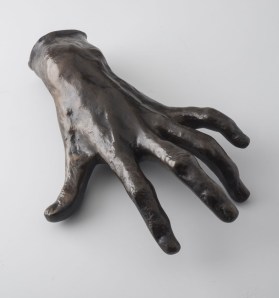
hand-of-a-pianist-rodin
Hand of a Pianist by Auguste Rodin

A confession: although I have played the piano for nearly two-thirds of my life, it wasn’t until I had secured my first professional qualification (a performance diploma, taken in my late 40s), that I felt I could justifiably describe myself as “a pianist”, rather than someone who “plays the piano”. When I started to give public concerts, sometimes for real money, I stopped feeling like I was playing at being a pianist, a fraudulent concert pianist.

Being a pianist implies an intensity of connection, commitment, passion and focus. For those who play professionally, it can be all-embracing, sometimes overwhelmingly so, for one must live and breathe the instrument and its literature. Work shapes every hour of the day, the cadence by which one sets one’s life, always feeding the artistic temperament, the pressure to achieve matched only by the pressure to sustain, and always the uncomfortable knowledge that one is only as good as one’s last performance. In addition, the competitive nature of the profession coupled with its job insecurity leads many professional pianists to pursue, by necessity, what is fashionably called a “portfolio career” which may include teaching and lecturing, running summer schools, arts administration or even roles outside the music industry. “Being a pianist” can feel distinctly unglamorous, restrictive, sometimes lonely, often badly paid….

“I play the piano” suggests a more casual relationship with the instrument, something one does occasionally, at weekends, on Sundays….Yet many of the amateur pianists I  encounter display a passionate commitment to the instrument which borders on obsession, regardless of the level at which they play. These people are not dreaming of the stage at Wigmore or Carnegie Hall; no, they play and practise for a personal challenge and fulfillment, a sense of one’s own accomplishment, to be better than one was yesterday while working towards tomorrow, and the next day, and the next…..It’s addictive, constant and consistent, sometimes therapeutic, often frustrating, but always, always compelling….It’s founded on love, of the instrument and its literature, and it is this love which drives these people to practise, to take lessons, and to strive to improve their playing, cherishing precious moments in their busy lives to find time to spend at the piano.

It’s a state of madness. Unless you’re any good. Even then, you drive yourself half mad and waste precious time proving yourself to idiots who haven’t a clue – David, professional pianist

There’s a frustration with which many of us who play at an advanced level are familiar – that people don’t really understand or appreciate what we do, or how hard it is (“does it get easier as you get better?” a friend of mine asked me recently. “No“, I replied. “You just get more efficient at working out how to do it!“).  I remember the parent of one of my students commenting admiringly that it was “amazing” how the music just “came out” of my fingers. “How do you do it?” she asked. I felt like asking her whether she had ever considered why her daughter, my student, was required to practise regularly…. Yet for audiences and onlookers the magic, the mystique, of the pianist is very potent, and to reveal too much about our craft and art would dispel that.

Frustration, physical pain and constant setbacks. Sadly it doesn’t seem to be a mantle I can take off though – it’s just what I am

– Dave

It’s my passion, frustrating, challenging and rewarding every day

– Teresa

It is the most important thing in my life, it makes me profoundly happy to play and teach this beautiful instrument and its wonderful repertoire. I never take it for granted. When I play, I am transported somewhere else beyond my music studio…

– Caroline

It means I can be pro-active with the world of music, and not just a bystander

– Terry

It means feeling alive, it’s who I am. My life would be useless without music

– Tricia, professional pianist

Being a pianist puts us in touch with a vast repertoire, a rich seam of creativity, and some of the finest music ever written, and still being written. By engaging with it, we bring these works to life, like a conservator or gardener, every time we play. It puts us in touch with emotions and sentiments which are common to us all; it reminds us of our humanity, yet also transcends the pedestrian, the every day. In this way, for many of us being a pianist is an escape: as a child, I regarded the piano as a playmate, a place where I could go to weave stories and set my imagination free. Why should that be any different when one reaches adulthood?

For all of us who play the piano – amateur or professional – being a pianist offers limitless possibilities in what we can create and experience.

The real question is – what would you be without the piano?


If you enjoy the content of this site, please consider making a donation towards its upkeep:
Buy me a coffee

It always surprises me how entrenched people are on the subject of memorising music, especially with regard to pianists, and it was probably a mistake on my part to argue on Twitter for a relaxation in playing from memory in concert (and elsewhere) with a professional pianist whose attitude and approach to memorisation was inculcated from a young age and reinforced during professional training in conservatoire.

There are sound reasons for playing from memory and it should not be regarded simply as a virtuoso affectation (the ability to memorise demonstrates a very high degree of skill and application). It can allow the performer greater physical freedom and peripheral vision, more varied expression and deeper communication with listeners. But the pressure to memorise can also lead to increased performance anxiety – I have come across a number of professional pianists who have given up solo work because of the unpleasant pressure to memorise and the attendant anxiety. I have also heard of promoters who won’t book a pianist who doesn’t play from memory. To play or not to play without the score should surely be a personal artistic decision?

The custom of the pianist playing an entire programme from memory was established in the mid-nineteenth century, Clara Schumann and Franz Liszt setting a trend for concert pianists which persists to this day. Beethoven disapproved of the practice, feeling it would make the performer lazy about the detailed markings on the score; and Chopin is reported to have been angry when he heard that one of his pupils was intending to play him a Nocturne from memory.  Today it’s considered de rigueur – for concerts, competitions and auditions – and is a significant aspect of the pianist’s skill set.

Somehow the idea persists that for a pianist to use a score in a performance suggests a lack of mastery or sufficient preparation

– Anthony Tommasini, New York Times

Audiences too have fairly trenchant views on the subject and expect a professional pianist to play an entire programme from memory. It’s all part of the virtuoso ‘persona’, and it’s almost as if they think the pianist who uses the score is not up to the job; yet more and more I am seeing pianists in concert playing from the score or using an iPad (a more discreet way of playing from the score). Notable examples include Alexandre Tharaud, Artur Pizzarro and Richard Goode (whose wife turns the pages for him). For some pianists (and, I suspect, many more than who would admit it openly) memorisation can actually limit the range of repertoire performed in concert as some soloists won’t commit themselves to more than a handful of works each season because of the burden memorization places upon them.

Playing with the score on the music desk of the piano doesn’t mean you don’t know the music. Far from it – and if you watch a well-prepared pianist playing “from the score” you will notice that they don’t actually look at the music that often. The entire work may be memorised but having the score there can remove a layer of anxiety which may enable one to play better. I don’t think it should be seen as some kind of crutch or security blanket. It is also common to see a performer using the score for very complex contemporary or new music, and one rarely encounters collaborative pianists playing from memory.

In amateur piano clubs and meetup groups, attitudes to memorisation are amongst the most fervent I have ever encountered, perhaps because many members of these groups revere the great pianists and aspire to their skills, of which playing from memory is seen as the apogee of pianistic brilliance. To these people a “proper” pianist plays from memory. (Those of who do not, such as myself, are therefore “improper pianists”?!). Such is the need to prove oneself in the (sometimes) competitive environment of the piano club, that members will attempt to play from memory, often failing dismally because of 1) lack of proper preparation; 2) anxiety; 3) ego (this is the person who doesn’t even have a copy of the score in her bag, just in case, at the meetup event).

As a regular concert-goer, I am less concerned with how the performer transmits the music to me, and more interested in the performer’s ability to communicate the music, to weave stories, create myriad musical colours, provoke an emotional response (for isn’t that the primary reason why we go to hear and enjoy music?). If you get that right, nothing else should matter…..

For me there was something touching about seeing a great pianist play a Bach prelude and fugue using the score. Every wondrous element of this complex music is right on the page. It looks almost as beautiful as it sounds.

– Anthony Tommasini, New York Times


Header image: the author’s 1913 Bechstein model A piano with scores of music by Fryderyk Chopin, Joseph Schwantner and John Adams on the desk


The late great Sviatoslav Richter playing Schubert from the score


Beyond the Notes

…a virtuoso was, originally, a highly accomplished musician, but by the nineteenth century the term had become restricted to performers, both vocal and instrumental, whose technical accomplishments were so pronounced as to dazzle the public.

Music in the Western civilization by Piero Weiss and Richard Taruskin

Google “virtuoso pianist” and the image search will throw up pictures of Richter, Brendel, Rubenstein, Argerich, Arrau, Rachmaninoff, Liszt, Ashkenazy, Barenboim, Lang Lang, Yuja Wang, Trifonov, Pollini, Cziffra, Gould, Kissin, Uchida, Hough, Pires, Ogdon, Schiff, Cliburn, Hamelin, Schnabel, Cortot, Horowitz, Hess, von Bulow, Andsnes….. The list is seemingly endless, with every significant or “great” pianist of today and previous eras afforded the accolade of “virtuoso”. Along with the pictures there are 100s of articles ranking pianists – the 25 greatest pianists of all time, the 10 greatest living pianists, 50 legendary virtuoso pianists……

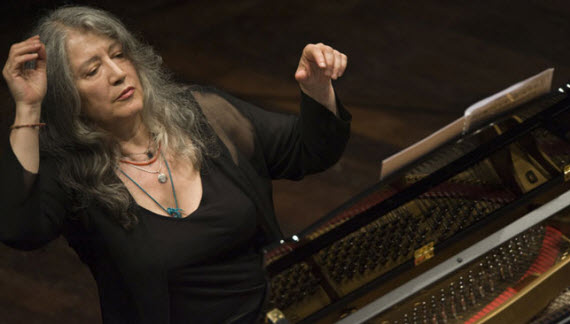
martha-argerich
Martha Argerich

The word “virtuoso” literally means “a person who is extremely skilled at something, especially at playing an instrument or performing“. It describes an individual with exceptional and extraordinary technical and musical abilities, but as the opening quote notes, the word is more usually associated with dazzling displays of piano pyrotechnics.

Today virtuosity in the sphere of classical music has become almost synonymous with an over-developed technical facility without a comparable level of musical understanding/interpretation or broader musical education. The word has been misappropriated and more often than not is now attached to the performer who simply plays very fast and loud, or one who attracts more attention to themselves than the music (I am sure we can all think of a few examples…..). It troubles me when the word is used to describe young children playing (seemingly) complex piano repertoire, whose irritating videos are posted across the internet. How many of these “piccoli virtuosi” will actually grow up to be true virtuosi, in the purest, most romantic sense of the word? As we gasp in amazement at these pianists’ fleet fingers and glittering pianistic athleticism, the word has come to mean something rather superficial and derogatory.

Virtuosos are constantly tempted to indulge in an undue exhibition of their wonderful technic, and as many have succumbed to the temptation, the term virtuoso has come to be considered by many as slightly depreciatory, and the greatest artists usually object to having it coupled with their names

W.L. Hubbard et al, 1908

For me, and I suspect others who appreciate the art and craft of pianism, virtuosity transcends technique. It is less about the ability to play the fastest, most treacherous passages of Rachmaninoff or Liszt or to scale the high Himalayan peaks of works like Gaspard de la Nuit or Islamey, or to perfectly execute thousands of scales and other ‘technical exercises’ with amazing dexterity, but rather an aggregate of many skills which enable the pianist to play a million different passages, and to adjust finger and arm weight and touch accordingly to achieve particular effects and sounds, as well as learning to ‘speak’ the language of music through one’s playing and an ability to stand back from the music to allow it to speak on its own terms. Nor is it about flashy piano pyrotechnics and extravagant gestures, which may wow the audience but do not serve the music. Indeed, a number of pianists whom I regard as true virtuosi are also some of the most “immobile” in the profession – Marc-André Hamelin, Murray Perahia and Stephen Hough being notable examples.

A true virtuoso “must call up scent and blossom, and breathe the breath of life”

Franz Liszt

Franz Liszt is usually held up as the first great virtuoso pianist, yet for many he remains merely a “showman” whose virtuosity was a negative attribute. A poseur and a charlatan, superficial and bombastic, whose playing and music was affected, grandiose and vulgar. But Liszt was no superficial showman: in addition to playing his own music, he played all the best music of his day and all the best music which had been written for the piano. He was “the very incarnation of the piano”. In addition, he was a pioneering conductor, concert promoter and champion of young composers (notably Wagner, who described him as “the most musical of all musicians”). His musical outlook in general was noble, transcendental, sacred, orchestral and metaphysical – surely attributes to be admired rather than denounced?

With Liszt, one no longer thinks of difficulty overcome; the instrument disappears and music reveals itself

Heinrich Heine

The virtuoso appreciates and understands that each performance is a “critique” in the purest sense of that term; it is a profoundly thoughtful, insightful, penetrative response to the music in which the performer invests his or her own self in a symbiotic process in which he/she becomes not a re-creator but a collaborator with the composer. The virtuoso respects the demands placed upon him/her by the composer by playing the music with passion, poetry and extraordinary technical ability.

In concerts, the virtuoso approaches each performance, each interpretation as a unique occasion – something I feel is increasingly hard for performers when high-quality recordings are so readily available, benchmarks by which pianistic prowess is measured and which lead audiences to expect a certain manner of playing in live concerts. The virtuoso appreciates that there is no one “perfect” rendition of a Beethoven Concerto or Chopin Étude; that one should never aspire to have the “last word” on any work. It is for this reason that many of us seek out the same virtuoso performers in the same repertoire, either on disc or in concert, to hear how their view of certain works changes and develops over time. Yet for some musicians the constant revisiting of certain works (the Beethoven piano sonatas, for example), or playing them on different instruments (fortepiano, for example) suggests an overly reverential or literal attitude to the composer’s “intentions” as they perceive them, and a wish/need to make a final statement on this music and set it in stone. Such performances, for me at least, may come across not as virtuosic but rather as academic, mannered or overly precious.

…the further a performance must travel to reach the origin of the music, the more the artist demonstrates the measure of both his conscience and his genius: his virtuosity

Mark Mitchell, Virtuosi!

The virtuoso takes risks in performance – by which I do not mean coming to the stage ill-prepared. Indeed, the most risk-tasking, vertiginous, exciting or profound performances are often the result of many long hours – nay, years – spent living with the music. Even a flawed virtuoso performance can excite, delight and enthrall far more than a perfect non-virtuosic performance: technique over artistry nearly always fails to impress.

The virtuoso understands that while there is no “definitive” performance, one can create, in that “existing in the moment” of the live concert experience a performance whose communicative and emotional power renders it “perfect”. Audiences know this too – these are the performances during which we enter a state of wonder, from which we emerge speechless, hardly able to put into words what we have just heard (often the hardest concerts to review, in my experience!) because the experience of the performance has awakened in us what it means to be a sentient, thinking, feeling, living, breathing human being. I would cite concerts by Maurizio Pollini (in Pierre Boulez’s Second Piano Sonata), Steven Osborne (in Messiaen’s Vingt Regards), Marc-André Hamelin (in Liszt, Ives and Stockhausen) and Richard Goode (in Schubert’s last three piano sonatas) which transported me into that particular state of wonder.

The miracle of an aristocratic performance lies in its capacity to vaporize everything that surrounds it, and in particular all efforts to appropriate it.

Mark Mitchell, ibid.

And there’s more – because for me true virtuosity goes beyond the notes. It includes the ability and willingness to tackle a wide range of repertoire. By which I do not mean playing a lot of pieces, as some younger performers feel they should be doing, but rather playing a broad range of music. One of the chief exponents of this art is, in my humble opinion, Maurizio Pollini. Not many pianists would programme Chopin’s 24 Preludes, a selection of Debussy’s Preludes Book 1 and Pierre Boulez’s Sonata No. 2 in the same concert. Stephen Hough and Marc-André Hamelin are also notable examples in their championing of lesser-known repertoire and their own compositions.

People will always be impressed by fleet fingers and noisy piano acrobatics, but for me the most profound musical experience often comes in the quietest, slowest or most intimate moments in music when a venue as large as the Royal Festival Hall shrinks to the size of Schubert’s salon through the pianist’s power of expression and musical intuition and understanding. That is true virtuosity.


Guest review by Hilary Haworth

Lifting the lid on the intrigue and intense rivalries of the concert artist’s world, That Iron String unearths shocking violence with quite clinical detachment, in a way that endures the story will live with the reader for some time after the turning of the final page.



Two healthy baby boys are discovered, together with three corpses, on an abandoned boat off the north shore of Long Island. Port and Boston are raised by those presumed to be family in separate houses on the same street, both become accomplished pianists but Port, our narrator, stays local while his cousin takes to the road on the competition circuit. After ten years of silence, Boston’s piano arrives, then several letters from him, which the family inexplicably leave unopened. When he finally puts in an appearance in person, it is with a train of notoriety – disastrous competitions, a public seemingly turning against him, bizarre accidents befalling those close to him…

As a core fan of the crime fiction genre, with a great interest in the unusual and intriguing world of competitive pianism,  I really should have loved this novel.

However, it is peppered with structural and technical flaws that ultimately make Jack Kohl’s This Iron String an unsatisfactory read.

From the brief synopsis above, one might expect an atmosphere of menace and mystery to build from the start. But Kohl makes such efforts to avoid sensationalism that his novel is simply too clean and quiet to successfully engage our curiosity.  It is like a pianist misjudging an opening pianissimo, making a sound too shy to draw us in.  This reticence lasts well into the second half of the novel.

Port is also highly proprietorial about his own narrative.  He hands out those details he thinks we warrant knowing in miserly portions, and always reported in his own words, so that his characters seem entrapped by his summaries and corrections.

This is odd in that large parts of the book are in the form of letters from Boston, the enfant terrible who is marked out for pianistic glory. But Boston’s voice is so very like Port’s in its didactic self-importance that this doesn’t truly freshen things.

As events take a darker turn, Boston’s letters increasingly  substitute unhinged but very intellectual rants for Port’s poetic forays. For there is true poetry here, small prose poems trapped in the novel like jewels in sand, or like a rich subterranean tenor melody which the pianist’s left hand sustains beneath a stern and chromatic étude. A beautiful description of child’s play at a piano is one particularly enjoyable one, although most such moments are more sombre.

Direct speech is so rare in this novel that when it comes it has the shock value of colloquial spoken language in an opera. Unfortunately Kohl’s conversational dialogue never seems to be character-revealing or quirky but is nearly always dully functional. As a result, every character is shadowy, practically gagged, filtered as they are through the reporting of them by Port. People become types- the gym-honed divorcée, the vain and absentee conservatoire professor, the woolly headed elderly aunt.  Even a late-night, whispered phone conversation between Port and Lana, a childhood almost-sweetheart, is glossed in this way.  Port tunes us out almost at “hello” and tells us we would be better to hear just his own version of events as his memory is better!

One is left with many unanswered questions so in some ways the book does succeed in living on in the mind long after it is put down. Unfortunately this is mainly because the mysteries, miracles and murder that are at work through the plot seem to hold absolutely no curiosity for Port, his family, the conservatoire –  or even the local crime department!


There is certainly much evidence of poetic promise here.  But sadly, what lingered for me was not fascination but more a sense of disappointment. An undoubtedly inspired idea for a narrative – and a setting rich with dramatic possibility – had sadly been submerged by an incomplete technical and interpretive mastery.  

‘That Iron String’ by Jack Kohl is published by The Pauktaug Press and is available from Amazon and other online retailers