Unearthed manuscripts reveal a new side of the eccentric French composer, brought to life by pianist Alexandre Tharaud in a recording of previously unheard works
A century after the death of Erik Satie, 27 never-before heard works are released to the public for the first time. The landmark digital album, Satie: Discoveries, performed by acclaimed pianist Alexandre Tharaud, is now available on Erato, just days ahead of the centenary of Satie’s death on 1 July 1925.
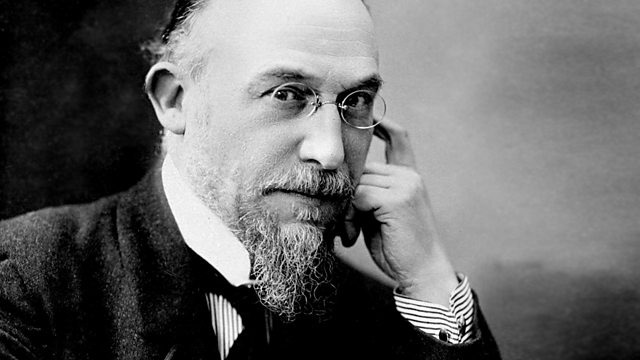
Erik Satie
The collection sheds new light on one of music’s most enigmatic figures. Reconstructed from forgotten manuscripts and unfinished sketches, these pieces, ranging from playful cabaret songs to minimalist nocturnes, were originally written by Satie for performance in the bohemian cafés of Montmartre, where he worked as a pianist in the late nineteenth century.
The album is the result of painstaking musicological research by Sato Matsui, a Japanese composer and violinist, and James Nye, a British musicologist and composer. The duo independently tracked down lost materials in the Bibliothèque nationale de France and a private archive in Boston, piecing together and reconstructing Satie’s sketches into fully performable scores. Some of these are to be published by Éditions de la Fabrique Musique.
Among the newly discovered gems are pieces in the same free, minimalist style of Satie’s Gymnopedies and Gnossiennes (for example, Réflexions nocturnes and Autour du 1st Nocturne). Other works draw on familiar dance styles, (including several Parisian Valses), the café-concert song and operetta arias (‘Le Champagne’, ‘Pousse l’amour’ and ‘Chanson andalouse’).
Further pieces reveal a more experimental Satie, such as the Esquisses bitonales (Bitonal Sketches) or the Soupirs fanés (Faded Sighs), a collection of miniatures with evocative titles such as ‘Poil’ (Hair), ‘Barbouillage’ (Daubings), ‘Familial désespoir’ (Domestic Despair) and ‘Souvenirs fadasses (Dusty Memories).
Though most of the tracks feature pianist Alexandre Tharaud performing solo, three also feature the acclaimed Serbian violinist Nemanja Radulović. Radulović’s violin takes on the role of the singer in a mélodie and two cabaret songs where the lyrics are now lost.
In addition to these 27 world-premiere recordings, two already familiar pieces are included: the hypnotic ‘Chinese Conjuror’ from the ballet Parade, for piano four hands with Gautier Capuçon, and the ‘Chanson andalouse’, originally intended for the never-performed operetta Pousse l’amour. The ‘Cancan Grand-Mondain’ (High-Society Cancan) from La Belle Excentrique is recorded here in a new version for solo piano by Tharaud himself.
Alexandre Tharaud said of the album: “Satie remains very much an enigmatic figure today, held in enormous regard at the same time as being largely misunderstood and almost unknown…it is up to us to look beyond the Gnosiennes and the Gymnopédies, to try our sincere best to get closer to the music and to pay real attention.”
Satie: Discoveries is out now on Erato on all streaming services
Tuesday 24 June at 1.15pm St Bride’s Church, Fleet Street, LondonEC4Y 8AU
World premiere performance of ‘Metropolis’, six songs by British composer Bernard Hughes and lyricist Chinwe D John that capture the pulse of a modern metropolis. These songs, which explore aspects of urban life, romantic love, and resilience, bring the emotional essence of our shared experience into stark and beautiful view. Soprano Isabelle Haile and pianist Asako Ogawa infuse their sublime artistry through the songs, creating an unforgettable musical experience.
This free lunchtime concert also includes music by Francis Poulenc, chosen to complement the songs. Find out more here
Metropolis appears on the album ‘Songs for Our Times’, released to critical acclaim in 2023 on the Divine Art label. ‘Songs for Our Times’ features composers Bernard Hughes and Staurt MacRae, lyricist Chinwe D John, pianist Christopher Glynn, soprano Isabelle Haile and tenor Nick Pritchard. The project, from its conception by Chinwe D John to the enthusiastic participation of the artists, exemplified by the premiere organised by soprano Isabelle Haile and pianist Asako Ogawa, speaks to the spirit of collaboration and shared interest in engaging current and future listeners.
Composer Bernard Hughes says, ‘I hadn’t written any solo songs when the opportunity to work with Chinwe came up. It was really interesting to work with lyrics by someone from such a different background to me. She pointed me towards some music styles I wouldn’t have otherwise encountered, and these formed the inspiration for the piano parts of several of the songs. It was a very collaborative process…I liked working on the songs as a cycle: there is a definite thread running through them. It was a delight working with Isabelle Haile on the recording. She is an exceptional talent and I’m so pleased she is giving the live UK premiere of Metropolis.’
Praise for Songs for Our Times – Metropolis
‘As a poet writing texts for songs, John has a very clear, direct voice, with the ability to craft memorable, evocative phrases and use short bursts of lyricism. Rarely do her texts feel too wordy or too over-written, there is space for the music….. Haile sings with a lovely bright, focused soprano tone’ – Robert Hugill
‘Here is music to enjoy but to make you think as well!’ – British Music Society
‘This is a capable and sensitive player who is intelligently inside the music, and quite capable of drawing us into it.’ – Early Music Review on Asako Ogawa
When the first notes of Chopin sound through the concert hall there is a happy sign of recognition. All over the world men and women know his music. They love it. They are moved by it. When I play Chopin I know I speak directly to the hearts of people.
Arthur Rubinstein
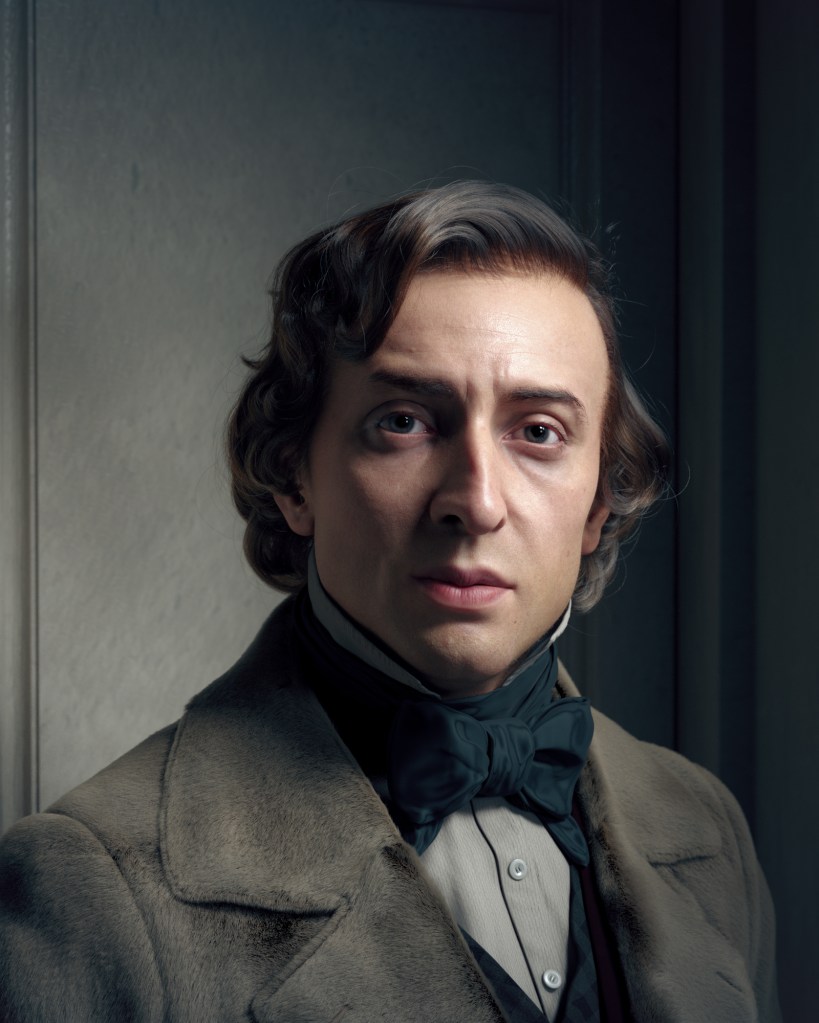
Virtuosic, imaginative, and emotionally profound, Chopin’s music offers pianists a wealth of expressivity, requiring a combination of superior technique, which always serves the music (rather than as an end in itself), refined touch, a beautiful cantabile (singing) tone, highly nuanced dynamic shading, supple phrasing and rubato, and an appreciation of the interior architecture of this multi-layered music. Chopin is also symbolic of Poland, the country of his birth, whose musical idioms are evident in almost all his music, most obviously, the Mazurkas and Polonaises.
When asked, the great Chopin player Arthur Rubinstein could not explain why Chopin’s music spoke to him, but like the music of J.S. Bach (which Chopin greatly admired and studied), it expresses universal humanity which, combined with a certain vulnerability, speaks to so many of us, and on many different levels.
An unrivalled authority and one of the greatest interpreters of the music of Chopin, Rubinstein brought great dignity and refinement to the music, avoided unnecessary mannerisms and sentimentality, and revealed the structural logic of Chopin’s writing. His playing is memorable for its elegant vocal phrasing, beauty of tone, and natural yet sophisticated shaping.
Arthur Rubinstein Plays Chopin’s Polonaise in A Flat Major, Op.53
“A master of the keyboard” (Harold C Schonberg), Dinu Lipatti was the pupil of an older Chopin master, Alfred Cortot.
Lipatti’s immaculate performances of the waltzes, in particular, are spontaneous, light and nimble, lyrical and suitably dancing, with subtle rubato and great charm.
“It’s very inner music and very deep,” Maria João Pires has said of Chopin. For her, he is “the deep poet of music”. That depth is really evident in Pires’ playing of the Nocturnes: intimate, refined and passionate, her interpretations eschew drawing room night-time sentimentality and capture all the drama and emotional intensity of these much-loved pieces.
Described by one critic as “the greatest Chopin player to have emerged from Italy since the Second World War”, Maurizio Pollini’s association with Chopin goes right back to the beginning of his professional career when he won the Chopin Competition in Warsaw when he was just 18. His unsentimental, cultivated interpretations are notable for their clarity of expression, perfectly judged poetry, and close attention to the bel canto melodic lines which make Chopin’s music so immediately appealing.
Alfred Cortot is one of the most celebrated Chopin interpreters, combining flawless technique with a deep appreciation of the structure, voicing, and textures of Chopin’s music. His recordings are acclaimed to this day, and his detailed, annotated editions of Chopin’s music remain highly prized among pianists and teachers.
Hailed by her mentor Arthur Rubinstein as “a born Chopin interpreter”, Polish-Canadian pianist Janina Fialkowska captures the soul of Chopin, in particular in her performances of the Mazurkas, works which reveal Chopin’s patriotism and innermost sentiments towards his homeland. Fialkowska is sensitive to both the humble, peasant origins of the Mazurka and Chopin’s elevation of the genre into concert pieces. She really captures the poetry, poignancy, and whimsical emotions of these Polish folk dances, and her rubato is perfectly judged, especially important in these pieces where suppleness of pace lends greater emphasis to the emotional depth of the music.
It’s funny how some random experiences can teach us important lessons in life. On an Air France flight across the Atlantic recently, I clapped on a new set of Bose wireless headphones and within minutes a stewardess was squeezing my shoulder. I looked up and saw her mouth flapping – but she made no sound. All I could hear was Rachmaninoff’s Concerto No. 3 that I was playing through my headphones. It took me a few seconds to regain my composure. No, I didn’t need any more café, I told her. Back to the music, I was experiencing the true meaning of “active listening”.
The sharp trebles and thunderous basses of quality headphones create a private world of pure music. Was I listening? Of course. One can hardly avoid listening to the Arkady Volodos performance of this brilliant concerto.
Best of all, on headphones nobody yells at me, ”Turn it down, for God’s sake!”
And yet ironically, the advent of listening through high-tech recording systems has in some ways been harmful, not helpful, to the modern world of serious music. We have removed much of music from the intimacy of live salon style performances and created the sterile experience of playing a CD or downloading tracks from the Internet. Just 60 or 70 years ago it was only the live performance that brought audiences to the music and the player. Everybody got involved, everybody listened. Now that is largely gone, as concert venues sell us the super-stars such as Volodos, Yevgeny Kissin, Yuja Wang, and possibly Khatia Buniatishvili. The second tier players attract mainly aging retirees, some of them asleep by the end of the first movement.
“We seem to have mastered the art of hearing without listening.” Christy Thomas, Yale Center for Teaching and Learning. “Active learning is a frequent topic of discussion in pedagogical circles today, but the notion of active listening is rarely addressed—if at all.”
But now, waking up and learning to listen may turn out to be the saving grace of the classical tradition. The salon style in various forms can help, and it seems to be in vogue again. Both solo and ensemble players are happy to play in private homes with only 50 or so seats.
Natasha Cherny, New York-based artist manager and producer, tells me her salons in past years “were infinitely more satisfying from every perspective”. Her recital-goers were encouraged to mingle before and after the program “always including protracted conversations with the artist”. And former Juilliard professor David Dubal, pianist, pedagogue and accomplished painter, has been running his series of ‘Piano Evenings’ in New York for 30 years. His aim is to bring “the glories of the piano repertoire, in an intimate setting, dedicated to the art of listening”. He calls it “a site for collective learning through the exchange between teacher and student, performer and listener”.
Indeed, recorded music, no matter how perfect, misses the point. “We kind of caused the problem,” admits Andrew Scheps, an American recording engineer, by making it too easy to hear the notes while missing the intimate experience that players, especially solo pianists, want and need.
Pianists in this overcrowded field find that much of their recorded music ends up in background. An Italian pianist friend tells me the world of recordings has never been such a waste. “There are too many CDs. We can never get noticed.” Too often, a fine piano talent merely exists for his or her background noise. In Bordeaux, for example, the main underground car park offers Chopin Nocturnes murmuring along with honking horns and shouts from angry French drivers, hardly a perfect venue. The artist remains mercifully anonymous. Worse, nobody is listening to Chopin.
A comprehensive treatment of regaining that connection is explored in the book Music: The Art of Listening by Jean Ferris, a former music history and appreciation professor at Arizona State University. “Listening to classical music is itself an art,” she writes, “and good listening is an active, creative experience.”
The personal experience is further investigated in a recent documentary of a similar name, “The Art of Listening”, available free on YouTube:
There are perhaps two kinds of pianist, those that just hammer the clavier louder and faster and those like Volodos who listen intently to themselves as they brush the keyboard with their fingertips. In this recording, Volodos playing Rachmaninoff was all ears, and so was I:
Working as a critic, I am pleased to find more and more attention to listening skills, a mini-movement on an international scale. Indeed, learning to listen is perhaps the best hope for rescuing classical music from the dustbin of history. Statistics are at an all-time low, ranking rock and hip-hop, rap, electronic dance music (EDM), country and jazz comfortably ahead. Classical occupies only about 4 percent of this world. Could it be true that there is nowhere to go but up?
Many others in the realm of classical music have joined the movement. Julian Blackmore, a British composer and sound designer, takes a professional interest in absorbing and processing music in the brain. He calls it “active listening” and says it leads to a far deeper understanding and appreciation of complex compositions.
Being prepared makes all the difference. “As woo-woo as this sounds, it’s a unique and priceless kind of satisfaction that money can’t buy,” he adds.
The online ‘Piano Encyclopedia’ promises that as you immerse yourself, “an ordinary auditory experience becomes a profound connection – a kind of bond. Each note played has purpose and intention. By being fully engaging with the music, it speaks to your very soul.”
Learning to listen can provide this profound satisfaction, for example, in impressionist music. Creating color rather than line might seem elusive but through “active listening” this rich artistry can be appreciated.
Help is increasingly available. A wide choice of advice, courses and instructional videos from experts flood the internet today. My favorite for beginners is a talk about how to take in what you are hearing: “How to Listen to Classical Music: Sonata Form”, accessible through this link:
And French musicologist Jean-Jacques Griot has marketed his “Ecoute Classique” (Listen to Classical) Zoom sessions effectively to internet users throughout the francophone world. He tells me he now has some 3,500 paying customers eager to follow his lessons for learning. He does not try to make it easy. “”It takes time because learning classical music is a progressive process of assimilation,” he writes in his book Ecoute la musique classique – it can be learned”.
The late philosopher Rudolf Steiner wrote that music is the only art form that flows from the spiritual world, not from the material world as in architecture, painting, ballet, sculpture. If you step back and listen a great player such as Volodos, Yevgeny Kissin or the late Glenn Gould, you might agree with Steiner that music plays to your inner sense of well-being, as he wrote in his essays, compiled and published as The Inner Nature of Music: The Experience of Tone.
To take listening to classical music seriously is to find solace, reduce stress in your life and even improve your memory. Personally and for all these reasons, my life is filled with classical music, live and recorded. The sad opposite is also true: the latest fad fades away in seconds. When you listen to Rachmaninoff in the hands of Volodos you carry it in your head forever.
Michael Johnson is a music critic and writer with a particular interest in piano. He has worked as a reporter and editor in New York, Moscow, Paris and London over his journalism career. He covered European technology for Business Week for five years, and served nine years as chief editor of International Management magazine and was chief editor of the French technology weekly 01 Informatique. He also spent four years as Moscow correspondent of The Associated Press. He has been a regular contributor to International Piano magazine, and is the author of five books. Michael Johnson is based in Bordeaux, France. Besides English and French he is also fluent in Russian. He is co-editor with Frances Wilson of Lifting the Lid: Interviews with Concert Pianists.
The Cross-Eyed Pianist is free to access and ad-free, and takes many hours every month to research, write, and maintain.
If you find joy and value in what I do, please consider making a donation to support the continuance of the site






 The Cross-Eyed Pianist