I hate to say it, but classical music still suffers from an image problem; an image crisis in fact. Despite the best efforts of performers, promoters, venues and music lovers, the artform is perceived by many as elitist and only accessible to the few, not the many. It wasn’t always like this: when I was growing up in the UK in the 1960s and 70s, there seemed to be classical music everywhere – on the radio and tv (including live broadcasts of orchestral concerts and wonderful programmes presented by André Previn), in tv adverts and in shops.

Now if you mention you are a fan of classical music, people may look at you slightly askance. Or, as has happened to me on several occasions, ask, “did you come to like classical music as you got older?” – because, yes, the demographic for classical music is generally in the over 50 bracket. (I’ve always liked classical music, ever since I was a little girl.)

Yet venues and promoters obsess about capturing that elusive (and often not especially interested) “younger/youth audience”, at the risk of alienating their core audience/demographic. One particularly depressing current example of this is London’s Southbank Centre, which is “leaning more heavily on describing classical music with a different language. Well-meant pieces to camera demystify the genre for this untapped, cynical and supposedly disinterested audience, the word ‘bangers’ used to describe popular works and sundry other nerve-jangling scores.” (Thoroughly Good blog). Alongside this, the venue has launched a classical music podcast for which “you don’t need a PhD to listen to”.

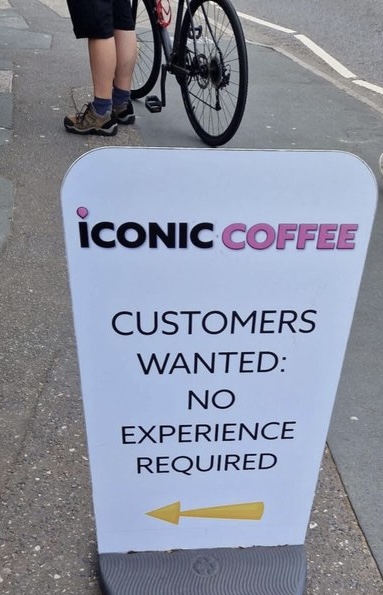
It has never been necessary to hold a PhD to enjoy classical music – or indeed any genre of music (though I might make an exception for jazz, which I find far more esoteric,  exclusive and mystifying than classical music – but that’s just me!). Which is why I am drawn to this phrase “audience needed – no experience necessary” (borrowed from this image):

The phrase “audience needed – no experience required” reframes classical music from something exclusive and intimidating into something open, welcoming, and participatory. It signals that listeners don’t need prior knowledge, training, or cultural “credentials” to belong – only curiosity and willingness to listen. Added to that, it doesn’t patronise or use “trendy” language. It tells newcomers that their lack of expertise isn’t a disadvantage but rather an asset, a starting point for discovery.

Musicians can use the message to bridge the gap between performer and audience. It frames them not as distant experts, but as fellow explorers eager to share something beautiful and immediate.

And instead of focusing on technicalities (composers, historical context, musical analysis), this kind of marketing can tap into the emotional and sensory appeal of live performance – the sound, the atmosphere, the shared moment. The phrase evokes a sense of adventure and discovery.

It also connects with modern cultural values. Today’s audiences respond to inclusivity, authenticity, and accessibility. “No experience required” aligns with those values, suggesting classical music is for everyone – not a rarefied art form, but a living, breathing experience.

This site is free to access and advert-free, and takes many hours each month to compile and edit. If you find value and joy in this site, please consider making a donation to support its continuance:

The Hertfordshire Festival of Music (HFoM) is a community-based arts charity (registration number 1175716), founded in 2016 by conductor Tom Hammond and composer James Francis Brown. HFoM aims to bring world-class professional artists to perform alongside local musicians in community locations, giving the widest possible audiences opportunities to learn more about, and experience classical music.

Having run successful programmes over the last 7 years, HFoM wants to remain relevant and be able to continue to effectively contribute to the cultural life of the county of Hertfordshire. This survey aims to ascertain the interests and preferences of those who already know about and may have attended Festival events, alongside those who have not yet engaged with HFoM but may do so in the future.

This survey is anonymous. No identifying data will be linked to your survey responses when they are analysed. Personal data will only be retained (for the sole purpose of future communication with you about the Hertfordshire Festival of Music) if you have given your explicit permission to do that. There is the option to share your details, should you wish, at end. (Privacy Policy)

HFoM would be most grateful if you could spare the time to complete the survey – estimated 12 minutes. (You can submit the survey at any point – partial information would still be useful.) And please feel free to share the survey with your friends and contacts to maximise participant numbers.

Thank you.

Hertfordshire Festival of Music

In the apparent constant need by concert promoters, venues and others to attract “younger audiences” to classical concerts and to make them more “inclusive”, it seems to me that the artform’s core audience is being overlooked or even alienated.

John Thomson, Jazz Club from The Fast Show

The latest suggestion to “trendify” classical music and make concerts more appealing to that elusive younger audience is posited in an episode of BBC Radio 3’s The Listening Service, presented by the affable Tom Service. In it he suggests that audiences should be more vocal; that they should chill, let it all hang out, and behave more akin to their rowdier 18th- and 19th- century concert-going predecessors, or be more like audiences at jazz or even pop gigs where a great improv sequence or a particularly juicy number is met with applause, whistling and more. In short, he wants us whooping in the stalls (the inference here being that silence is terribly elitist and all this listening quietly makes classical music hugely inaccessible and exclusive; nevermind that the same etiquette applies to theatre performances….).

When, 3 minutes into the Tristan prelude you next see me leap to my feet yelling “Whoo! F**king NAILED that cor anglais solo!” you must accept that this is precisely what Wagner would have expected and wanted…

– Richard Bratby on Twitter

For many of us, the chief attraction of classical music concerts, apart from the music itself, of course, is the opportunity to escape into quiet introversion for a few hours. There is also the ‘social code’ of the classical concert: knowing when to keep quiet for the benefit of other people, including the performers. We’ve all been to concerts which have been marred by people whispering loudly, opening blister packs of cough sweets, or – horror of horrors! – a mobile phone going off. I was at a recital of Scriabin piano music at Wigmore Hall some years ago where a couple a few rows ahead of me snogged loudly throughout the performance, and were reprimanded with a sharp rap on the shoulders with a rolled up programme by the person immediately behind them. And quite right too! They should have got a room, not seats at WH!

Joking apart, and at the risk of coming over all communist about it, it’s really a simple case of accommodating the many not the few: because even a small interruption can spoil the experience for the majority. It’s also a basic common courtesy to one’s fellow concert-goers.

And, curious as this may seem in our noisy, extrovert modern times, classical music audiences actually like to listen in silence so that they can enjoy and appreciate the music being performed.

So let’s let classical audiences remain quiet. We show our appreciation in other ways – by applauding, cheering and bravo-ing at the end of the performance, and while these behaviours may seem antiquated, or even elitist (they’re not!) to some, to the regular concert-goer this is what comes out of silence.

Just like the music.

A painter paints his pictures on canvas. But musicians paint their pictures on silence. We provide the music, and you provide the silence.

– Leopold Stokowski, May 1967

The first post-pandemic full season of Weymouth Lunchtime Chamber Concerts (WLCC) drew to a close with a beautiful rendition of Liszt’s transcription of Robert Schumann’s Widmung, played by pianist and artistic director of the series, Duncan Honeybourne. This glorious piece of music was written by Schumann as a gift to his beloved Clara; for Duncan, playing it at the close of his concert, and the finale to the series’ 20th anniversary season, it also felt like a gift to our audience to thank them for their ongoing support.

I’ve been Concerts Manager for WLCC since November 2019. Shortly after I took over the role, the pandemic hit and we were forced to suspend all our performances. We resumed in a limited way in the autumn of 2021, presenting just two socially-distanced concerts before we were obliged to suspend the series once again. Throughout this time, our audience supported us, returning enthusiastically, though in vastly reduced numbers due to the constraints of socially-distanced performances (we could only allow 25 people in a church which normally seats 80), and adapting to new ways of doing things, including an online box office and advance booking system.

Having now completed my first proper season as Concerts Manager (absent a Christmas concert due to the omicron wave), I have seen at first hand the importance of trust between artistic director/organiser and the audience. In fact, it was my husband, who has been regularly attending WLCC concerts in recent months, who highlighted this significant aspect of the series’ success. Our audience place a great deal of trust in Duncan Honeybourne’s stewardship of and artistic vision for the series and because of this, they reward us with their loyalty, returning to the concerts month after month, regardless of who or what we are presenting.

So how does this trust manifest itself? For some audience members, Duncan is a friend, and this friendship fosters a sense of trust. He is also well-known and highly regarded in the local community, as well as in the wider British musical world, with a 20-year record of running WLCC, a reputation that counts for a lot. But I think above all it is Duncan’s unsnobbish, authentic and enthusiastic approach to music-making which makes audiences feel confident that they will enjoy the concerts. (And it’s worth noting at this point that the series specialises in presenting lesser-known and rarely-performed music and composers alongside classical favourites and well-known works.)

Promoters, programmes and audiences

As concert life returns to normal after covid, promoters and venue managers – and musicians too – need to rediscover or reconfirm a sense of trust with their audiences. From the most basic aspect of making people feel comfortable and safe when visiting the venue to the planning of programmes and featured repertoire, I believe a sense of trust should be cultivated at all times.

Unfortunately, it strikes me that some venues have a rather casual, untrusting or even antagonistic attitude to their audiences, and I see this most clearly in the type of programmes being presented. I sense a certain unwillingness to trust audiences’ taste/discernment and instead to impose programmes, repertoire and composers on the audience. In some instances, especially with regard to contemporary music, a didactic, almost patronising attitude prevails – that one must listen to this music because “it is good for you” or because it has “an important message”. This misses the point of why, in general, people go to concerts: most of us want to escape the hectoring and finger-wagging of politicians, public health “experts”, commentators and others, at least for a few hours, rather than endure a polemic in music. And now, more than ever, because of the lack of live music over the past two years, many of us want to go to concerts to socialise as well.

Concert managers and promoters need connect with their audience in such a way that shows they understand them: the most basic aspect of this is presenting the music the audience wants to hear. If you’re spending upwards of £25 on a concert ticket, in addition to the effort and expense of traveling to the venue, you probably want a guarantee that you’re going to enjoy the concert.

The anti-popular, anti-classical favourites advocates seek to impose their ideas of what audiences should be listening to and then wonder why tickets don’t sell and concert halls are half-empty.

Sadly, an attitude prevails in the contemporary music world in particular that the music matters far more than the audience and that considering the audience is an egregious form of pandering which devalues the “art”.

Music is there to be heard – a particular concern for contemporary classical music. But that music won’t be heard if the audience feels alienated by the way it is programmed and/or presented. Advocacy of new or neglected music is important, and audiences should be given the chance to hear that music for themselves. But in the end, however hard you argue a case for the music, audiences either will or won’t like the way it sounds, and there’s not much one can do about that!

A more trust-oriented way of doing things would be to plan programmes which include well-known repertoire as a “hook” to entice audiences, while also featuring more unusual, less familiar, rarely-performed, or contemporary music. Presented in a non-didactic way, audiences may enjoy the chance to discover new music, while hearing it alongside the more familiar. Thus, you can build a degree of trust with your audience by gradually expanding the repertoire alongside popular classical favourites. Open the concert with something familiar, so people don’t arrive late, then give them something new or less familiar. Programme another such piece after the interval but close with a box-office favourite so people stay to the end.

Musicians and audiences

The relationship between the musician and their audience is, or at least should be, founded on mutual trust.

If the audience doesn’t trust you, it won’t turn up for the concert. If there is no trust, people will be reluctant to listen to and engage with the performance – and, by the way, audiences are very good at sensing whether or not the performer trusts them!

When I hear of A Famous Pianist complaining about audiences or insisting that they sit through 2-hour programmes without applause or a comfort break because that would “interrupt the flow” of the performance, or who sneers at a perceived ignorance or lack of discernment in current audiences, I sense a lack of trust between performer and audience. In fact, this musician perhaps does not trust audiences at all, instead preferring to impose his will upon them.

Many performers are expert at creating a sense of connection and trust between themselves and audience from the moment they walk on stage – or even beforehand through posts and exchanges on social media (the British pianist Sir Stephen Hough is particularly skilled at this). Verbal and non-verbal cues can quickly set up a sense of shared experience and even friendship between artist and audience. Speak to the audience but in a language they can understand. Introduce the programme in a way that allows audiences to feel a connection to the performer – why is this music meaningful to them, for example? – rather than simply parrotting programme notes. Know your audience and where they’re coming from and respond accordingly. Show your gratitude to the audience – by playing encores (if appropriate) or by greeting them after the concert in the green room or at a CD signing, for example.

Concerts are a customer-facing activity, and while some may baulk at such a phrase in relation to classical music, accepting and understanding this can go a long way to making audiences feel welcome and trusting. Do more “Put the customer first”, and audiences will reward you with their support and loyalty.


Photo by Melanie Deziel on Unsplash