The choir of All Saints Aston in the Diocese of Sheffield are embarking on a rather exciting project for their Lenten Cantata. They’ve dusted off a very old and obscure choral work by the English composer, Thomas Adams. In this article, Director of Music, Elliott Walker introduces the work and talks about the pleasures and challenges of working on it with the choir.

Can you give us a brief background to this piece?

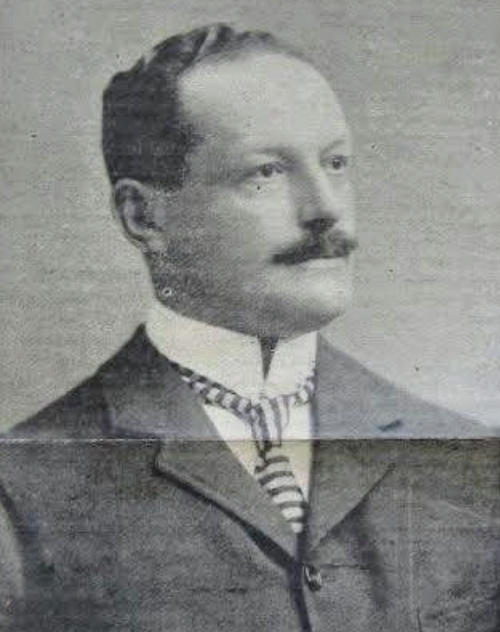
Thomas Adams (note that there are two composers of this name!) was a Victorian/early Edwardian composer and organist based in London. He was Organist and Director of Music at St Alban’s, Holborn, from June 1888 until November 1918 where he died in post. The church itself was heavily shaped by the Oxford Movement, a tradition which it still up holds to present day. The cantata is a devotional work focused on the meaning of the Cross. Rather than retelling the story of Christ’s crucifixion – as in The Crucifixion by John Stainer – it instead offers a reflection on sacrifice, love, and discipleship. The text draws on scripture, including Psalm 91, Corinthians, Matthew, Genesis, and others.

Scored for chorus with soprano, tenor, and bass soli, the work is, in its simplest form, a piece of devotional music intended to transport a congregation into a state of wonder, reflection, and piety.
How did you discover this music and what drew you to it?

I think it is an exceptional privilege that, as musicians, we are not only artistic creatives but also custodians and historians of the rich tradition of church music. On a weekly basis, we carry the responsibility of reinventing the archaic, returning to familiar repertoire, and exploring the modern expressions of the genre.

We have this precious window of opportunity to delve into the archives, to rediscover music that once served its purpose in the Victorian period, and to reimagine it in a 21st-century context—something I am sure the original composer could never have envisaged.

I spent time researching what cantata we can do this year. I wanted to do something obscure as a challenge to the choir. I was personally drawn to this work by the opportunity to dust off music from the archives and bring it back to life. Like most Directors of Music, I also approached it with a practical eye, considering the timescales required to learn the work and how it would fit within an already full term schedule.

You say there are no recordings of it. How has this influenced your preparation of the music with the choir/soloists? What kind of interpretative decisions have you made with no “benchmark” recording to refer to?

Whenever musicians perform a piece, it is essential that they understand what they are actually performing. For example, there is little value in singing music in Latin if one does not understand the text or its meaning. A clear grasp of the words is crucial if we are to convey them with integrity and convincingly.

Although the score provides some tempo and dynamic indications, these are often quite general, and so our approach must be more analytical. We begin by asking fundamental questions: what is the text saying? How does the harmony support the word-painting? How is tonality being used? How do the voices interact with one another?

One of my favourite moments (spoiler alert!) occurs in a choral movement where there is a sudden shift from E major to C major – initially quite surprising. However, when the text is examined closely, the modulation makes perfect sense, serving to uplift and intensify the meaning of the words at that point.

Listening to and studying other Victorian repertoire has also helped to establish a broader stylistic context and offered valuable insight into the musical language of the period—though I appreciate that Victorian church music is not every church musician’s cup of tea!

What are the most challenging aspects of singing this work, and the most enjoyable?

Most enjoyable:
– It feels like piecing together a jigsaw, with each individual movement gradually forming part of a larger, unified picture.
– Sharing the cantata’s purpose and historical context with the choir, and inspiring them through a deeper understanding of the work.
– Finding every possible opportunity to be excited about church music and to pass that enthusiasm on.
– Offering the piece as an act of worship rather than as a concert performance, which gives it an entirely different interpretative lens and depth of meaning.

Most challenging:
– Working from what is essentially a blank canvas, while finding creative and imaginative ways to shape the music.
– Reading and navigating an older style of musical typography.

– Many of the choir, some of which have sung with us for a long time, are enjoying learning new hymns! The combination of learning hymns where both words and music are new is a welcome (and refreshing!) challenge.

What do you hope your audience will take away from hearing this work at your Lenten performance?

Our performance will be part of a service – whether you are attending for worship purposes, or curiosity, we hope that the listener will take away one or more:

  • Through music and text, be transported to a space of reflection on the meaning of the cross.
  • A chance to listen to music of a forgotten time.

Tell us more about your choir at All Saints Aston.

The Choir of All Saints, Aston, stands at the heart of the church’s worshipping life, upholding a rich tradition of Anglican choral music within our vibrant parish community. With a commitment to musical excellence and reverent service, the choir seeks to enhance the liturgy through music that inspires devotion and reflects the beauty of the Christian faith.
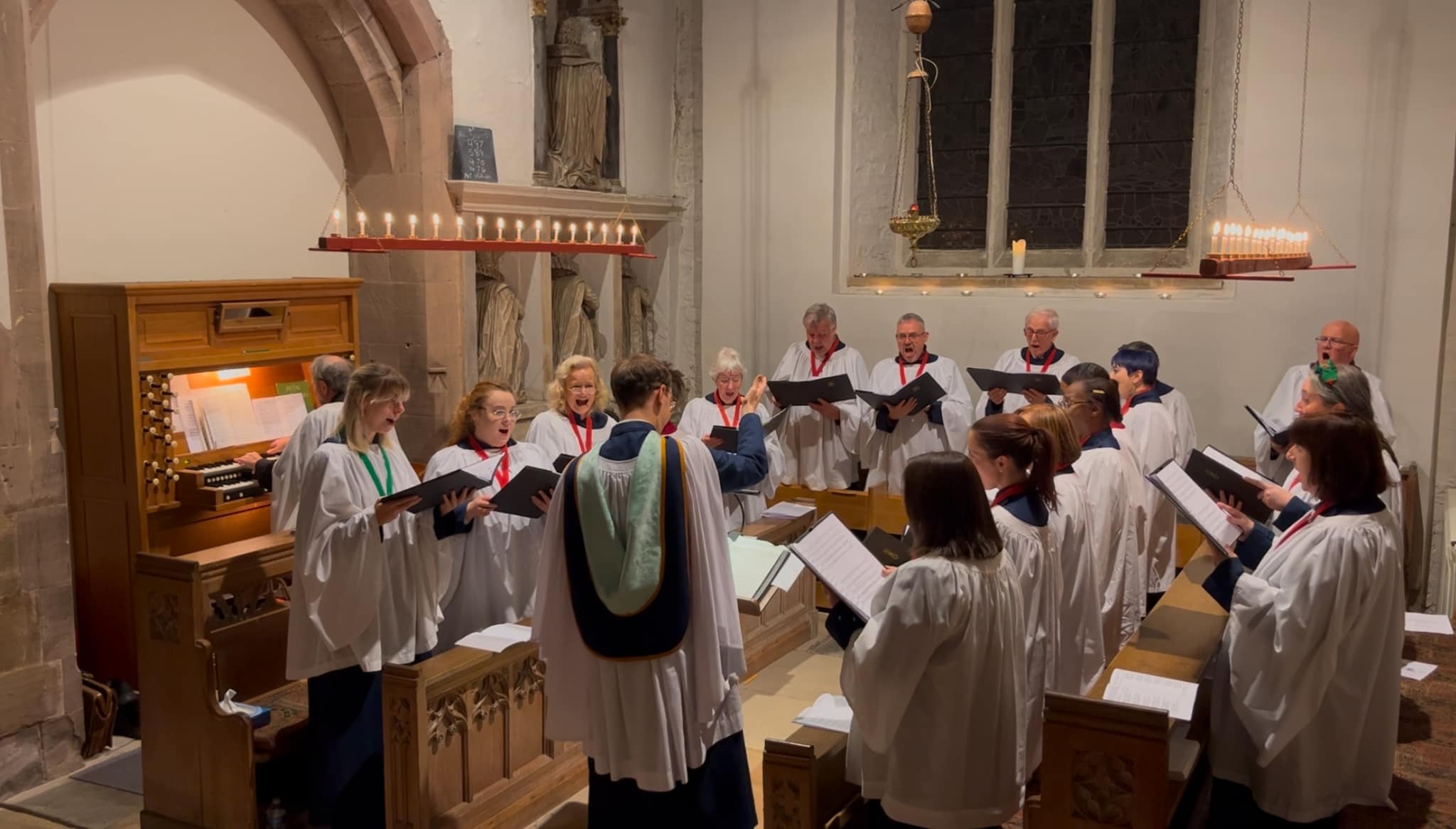
We sing a wide variety of sacred music drawn from across the centuries – from early choral works and Anglican repertoire to modern settings by contemporary composers. The choir leads the musical worship at services throughout the liturgical year, offering both congregational and choral music that enriches our worship and deepens our sense of praise. Regular choral services such as Choral Evensong and Sung Compline form an important part of our musical life, alongside occasional services of Choral Matins, special festivals, and other significant occasions in the church calendar.

Our mixed adult SATB choir, under the direction of our Director of Music, Elliott Walker, comes from a range of backgrounds and musical experiences, united by a shared love of singing and service through music. We all have a shared vision of upholding the highest standards of liturgical music-making. We take what we do with pride, but also with great joy.

The choir has also been involved in new music, including the premiere of a commissioned composition, Ave Verum, by composer Joseph Shaw, furthering our commitment to supporting living composers and expanding the Anglican choral tradition. In addition, we have hosted “Come and Sing Evensong” events for churches across the Diocese, encouraging participation in choral worship and nurturing a wider appreciation of Anglican liturgy and music. Last year, we performed Stainer’s The Crucifixion as our Lenten offering.

How do you feel the Royal School of Church Music (RSCM) supports church music in the UK and choirs such as yours?

The RSCM plays a vital role in supporting church music in the UK and choirs such as ours by enabling worship to flourish through music in all its forms. As a church with 45 years of affiliation to the RSCM, we wholeheartedly uphold its mission, values, and virtues.

This support is not limited to any single style of church music. Whether through contemporary worship, traditional choral repertoire, or lesser-known cantatas, the RSCM’s inclusive and fluid approach affirms the richness and breadth of sacred music. Through this openness and encouragement, the RSCM continues to nurture choirs, musicians, and congregations alike, ensuring that church music remains vibrant, relevant, and spiritually enriching.

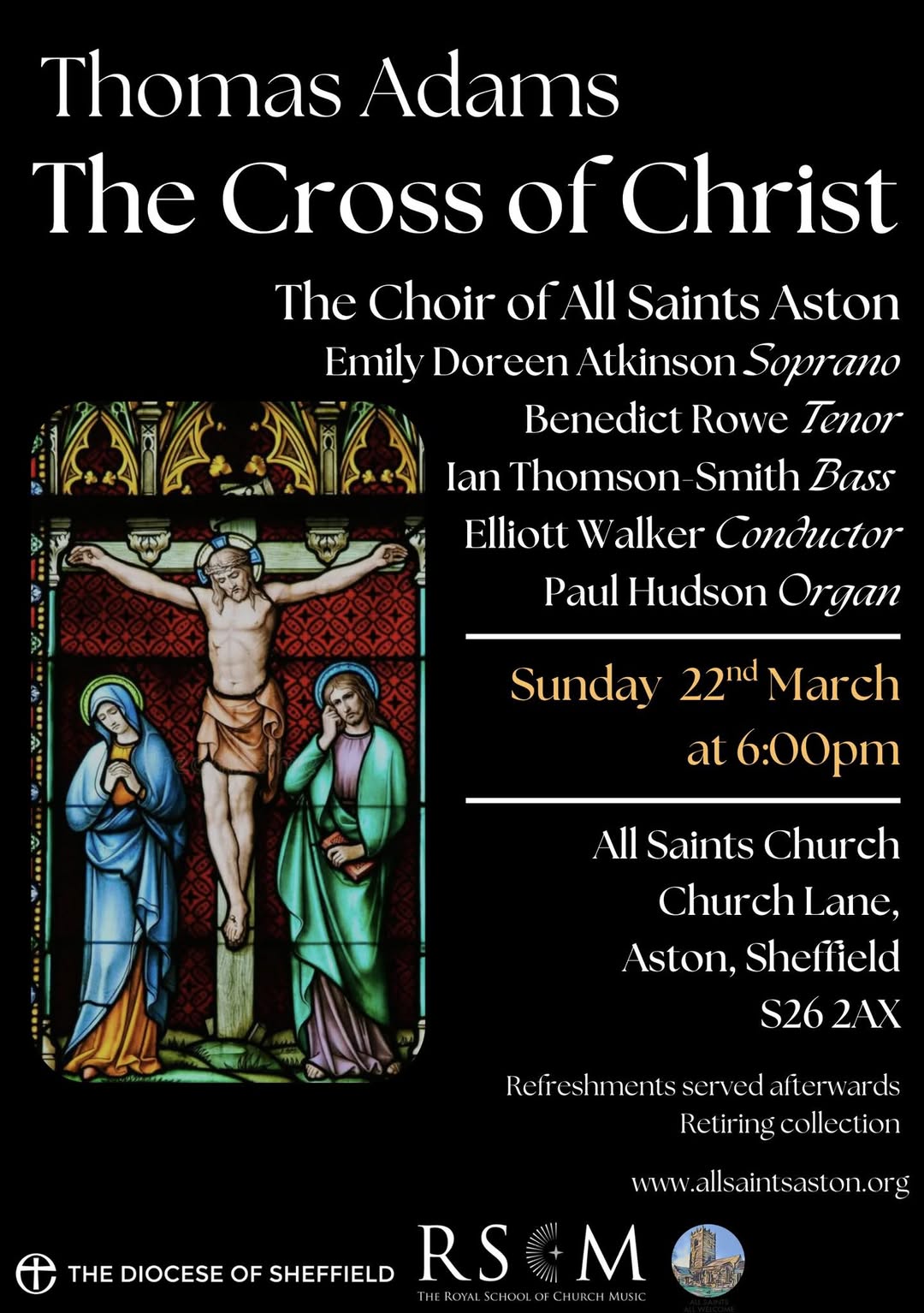
Performance is on Sunday 22nd March at 6pm

All Saints Aston, Church Lane, Aston, Sheffield, S26 2AX

We are exceptionally excited to be working with our talented soloists: Emily Doreen Atkinson (soprano), Benedict Rowe (tenor), Ian-Thomson Smith (bass), and Paul Hudson (organist).

Keep up to speed with how we are getting on by finding our Choir’s Facebook page: Choir of All Saints Church Aston.
SONGS OF THE SPIRIT Music & words by Thomas Hewitt Jones

The Royal School of Church Music launches a major new choral commission as part of its centenary celebrations in 2027.

Songs of the Spirit is an exciting new suite of songs by award-winning British composer Thomas Hewitt Jones, created to uplift and inspire singers of all ages and backgrounds. With accessible yet impactful music, this 40-minute piece is perfect for community choirs, youth ensembles, chamber choirs, church choirs and can be performed in a wide range of settings. 

At its heart, the work explores a deeply human theme – the longing for safety and belonging in an increasingly complex world. Rooted in Christian values, the piece offers a message of kindness and hope, whilst inviting reflection on profound questions about identity, purpose and the human spirit in 2026 and beyond.

Unforgettable melodies, lyrical clarity, and radiant harmonies will all weave into a musical tapestry expressing the emotional weight and beauty of the themes at play. 

The piece is scored for SATB but is flexible and will include movements suitable for children’s choir alone, and a rousing final hymn-like movement with the option of audience participation. It will be suitable for performance either as a whole, or as standalone movements, with scoring options for piano, organ and strings. 

Listen to an excerpt here:

Following the success of A Season to Sing, the RSCM’s previous co-commissioning project with composer Joanna Forbes L’Estrange and over 50 choirs worldwide, the RSCM now invites choirs to be part of its centenary celebrations. In exchange for a donation of £300, co-commissioning choirs will have the exclusive right to perform Songs of the Spirit during its first year, and also receive the following benefits: 

  • A commemorative, hard-bound signed score 
  • Your choir’s name in the list of commissioners in the printed score 
  • 30% off all scores purchased for your choir within the first year of publication. 
  • Access to full support resources to aid learning 
  • Media promotion of your choir and its performance of the piece 
  • A personalised video message from Thomas Hewitt Jones for your choir 

This is an exciting opportunity to bring a powerful, appealing and uplifting new work to the contemporary choral music repertoire while allowing choirs to share their journey with the RSCM to ensure choral music stays accessible and widespread.

Songs of the Spirit will be available from September 2026

The success of a previous jointly commissioned work, A Season to Sing by Joanna Forbes L’Estrange (premiered in Spring 2025, with over 50 performances world wide to date), demonstrates the value of this model, with co-commissioning choirs praising the excellent resources provided, efficiency, and feeling valued throughout the process.

Award-winning British composer Thomas Hewitt Jones has written a brand new hymn especially for the Royal School of Church Music’s Big Hymn Sing for Music Sunday. With words by Dr Gordon Giles, Canon Chancellor of Rochester Cathedral, Sing to the Lord, a new song of creation is a wonderfully rousing hymn in five verses, with a soaring descant in the final verse.

Thomas Hewitt Jones says, “Gordon Giles and I have had enormous fun writing this new hymn for the RSCM’s Music Sunday. It celebrates in words and music the joy of singing together in a spiritual context – one of the most uplifting things that any of us can do. I’ve written tune in E-flat major, which is a very warm key, and there are one or two harmonic surprises which I hope reward both singer and listener alongside Gordon’s beautiful text. Here’s to us all lifting our voices together for the fantastic cause of encouraging and protecting the value of singing together – and thinking beyond ourselves – both now and in the future.”

Gordon Giles says, “With this hymn specially written for music Sunday, inspired by Thomas’ magnificent tune, I wanted to write a set of words which ebbed and flowed, rose and fell with the arc of the tune, and which not only drew on scripture but enabled us to sing about singing and its purpose in worship – to praise God. Drawing on the theology of Dietrich Bonhoeffer (who was an accomplished pianist) and Paul Tillich, I wanted to reference the idea of God not just as ground of our being, but ground bass – the metaphorically musical foundation of all the spiritual counterpoint that our lives weave above and around the fundamental concept of God as creator, saviour and inspirer of everything, including faith, hope and love.

There is also something essentially trinitarian about the harmony of earth and heaven, expressed in the triad – the three-in-one chord, which is both the basic structure and harmonic variation of music with endless and eternal possibilities.  The harmonies we make and sing with our God-given voices are expressions of both divine and musical trinities of melody, harmony and counterpoint all working together yet sounding as one.”

Music Sunday, which this year takes place on Sunday 9th June, is an annual event presented by the Royal School of Church Music (RSCM) to celebrate and give thanks for the music and musicians that enhance worship in such a meaningful and powerful way. Participating churches in 2023 included Winchester Cathedral, Llandaff Cathedral, Peterborough Cathedral, Dulwich College Chapel Choir, and St Michael and All Angels in Colombo, Sri Lanka.

This year the RSCM is encouraging churches to put on a Big Hymn Sing For Music Sunday and it has created resource pack which can be downloaded from the RSCM’s website. Churches are encouraged to do something special – it might be their own Big Hymn Sing for Music Sunday, holding a special service, using special prayers, putting on a concert or having a social event. Above all, Music Sunday is about celebrating church music and the work of all church musicians.

The other hymns in the RSCM’s Music Sunday Big Hymn Sing resource pack were selected following a public vote and include well-known, much-loved hymns such as Dear Lord and Father of Mankind, Guide Me, O Thou Great Redeemer and Love Divine, All Loves Excelling.

Full details of the Big Hymn Sing for Music Sunday, including the downloadable hymn pack and a toolkit to help plan and advertise events, can be found here: https://www.rscm.org.uk/whats-on/music-sunday/

In a transformed landscape in the aftermath of Covid, the RSCM is reaching out with a vision to involve churches and communities nationwide, as well as overseas, to celebrate the role of church music in worship and the dedication of all church musicians. The RSCM, as an educational charity, supports the church and church musicians to make the best of music in worship, and RSCM Music Sunday is a powerful way to provide a positive solution for everyone to come together to celebrate. From extended services to afternoon teas; from recitals to cake sales; from sponsored hymns to small churches joining together, there are so many ways to join in.  


The Royal School of Church Music

The Royal School of Church Music (RSCM) is the Salisbury-based, national, independent charity enabling the flourishing of church music. As the central ‘home’ of church music, RSCM provides relevant education, training and resources to its membership, the wider church, and beyond. It is committed to encouraging the best of music in worship, and to advocating music as a tool for growth of the church.

The RSCM supports thousands of member churches across the UK and worldwide through its international partners. In addition, it also supports many schools and Individual members, and its work is sustained by thousands of Friends, Regular Givers and other donors.

The RSCM is an open, life-long learning organisation, offering face-to-face and distance education and training through its programmes, published resources, courses and activities.

Founded by Sir Sydney Nicholson in 1927, the RSCM’s original emphases were English and choral. Now, in a diverse international context, the RSCM’s work is far broader and more diverse, and aims to make all its work ecumenical in purpose, nature and content.

Her Majesty Queen Elizabeth was RSCM’S Royal Patron from 1952 until her death in 2022, and its president is The Most Revd and Rt Hon The Lord Archbishop of Canterbury. The organisation celebrates its centenary in 2027.

www.rscm.org.uk

Registered charity no: 312828