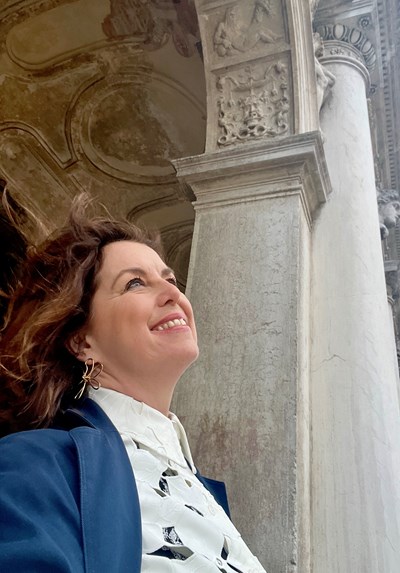
An interview with composer Russell Hepplewhite

What was the initial inspiration behind the Living Voices project?

Firstly, I love working with words – almost all the music I compose is to be sung. I’d been talking with the publishers Stainer & Bell about a new collection of choral works for a while, and so I began thinking about texts. I came to the realisation that I’m not really interested in setting words by deceased poets anymore – it’s too one-sided with no possibility of collaboration! Instead I wanted to create a connection with living writers, to communicate and work together; to better understand their words with honest conversations about their intentions; and to hear their responses to my music. So the idea was born – and the next step was to find the ten poets I most wanted to work with, and to see if they might be interested in being part of the project. The final step was to choose a theme, and so I decided to go for as broad a subject as possible, to enable as wide a variety of responses as I could obtain. I therefore asked each poet to write about something connected with ‘life,’ and said they could choose to write in any style and with any tone.
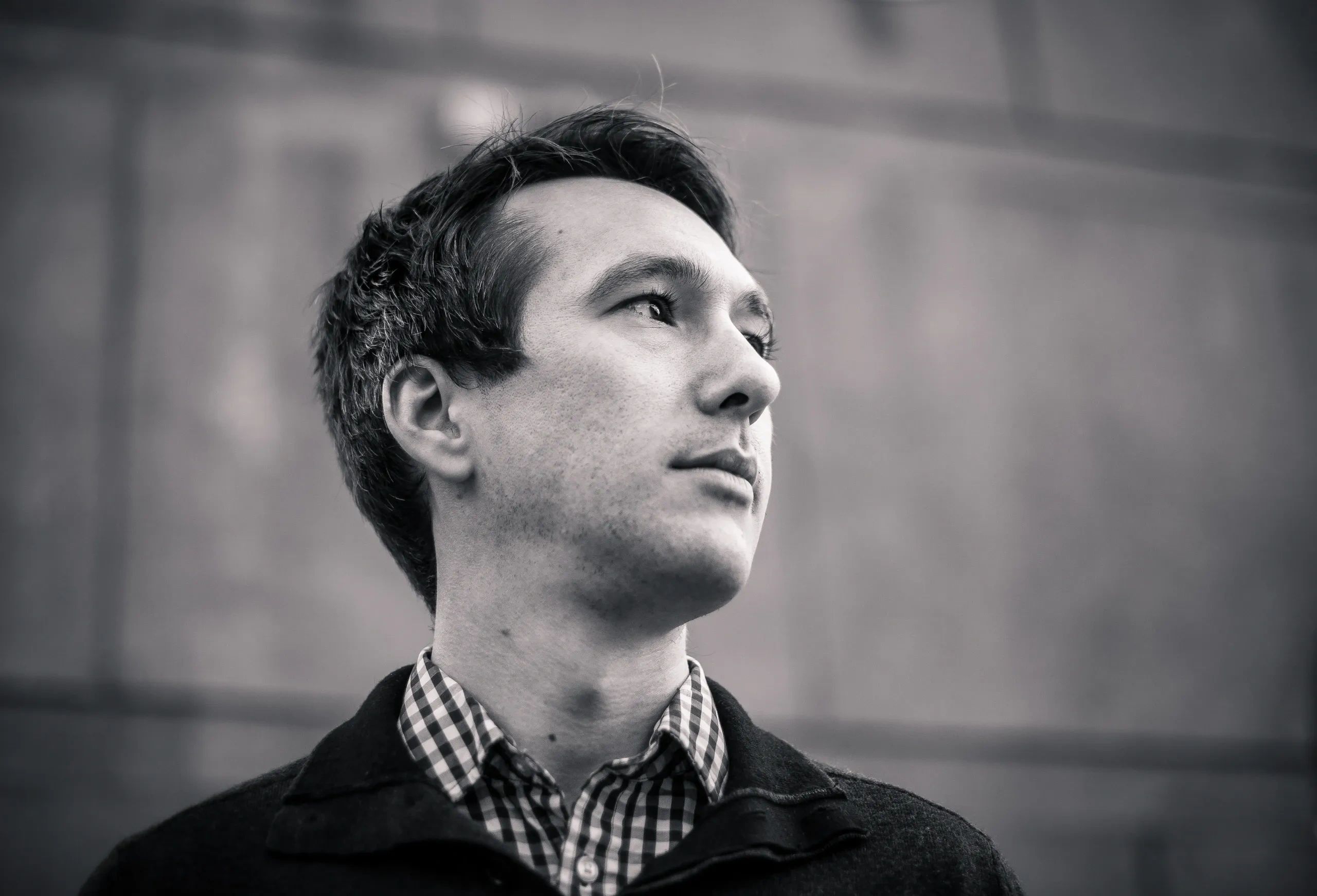
Russell Hepplwhite, composer

Tell us more about the process of selecting the ten poets and how their diverse writing styles/voices and perspectives informed the overall collection?

I simply selected truly brilliant writers that I really wanted to work with. All the writers share something – an ability to write directly, with laser-like clarity, and also a sense of accessibility. I’m interested in poetry that can be understood on first hearing/reading, but that also has more layers to be appreciated upon further exploration. Setting the various poems was fascinating, because I could see whether my own compositional style changed according to the poet that I was setting. I like to think the collection has lots of variety within it as a result of this approach, but that it all still sounds like my music.

How did you approach setting the texts to music for SATB choir and piano, particularly considering the range of themes/emotions explored in the poems?

When I was setting the texts, it was all about the words. So I read the poems, re-read several times, worked out the underlying tone or emotion, and then without any further ado, began setting them. With everything I compose the very first step is the absolutely crucial one – if I can’t find a way in then nothing else can follow; whereas once the piece is underway it becomes like a game of chess – a series of next moves to be made. So, with each poem I was looking for that first step – and mostly this happened very quickly – in the case of some poems it was a couple of chords I liked, with others it was a rhythmic pattern to fit a specific pair of words for example. Something that did surprise me on this journey though was how my appreciation of the poems changed and grew as I went along. At some stage, I can honestly say that each of the ten poems has been my personal favourite.

How has your other choral and opera writing informed your compositional approach/choices for Living Voices and the aim to create a “vibrant collective choral sound”?

With this collection I worked hard to create pieces that are colourful and imaginative, but fundamentally I wanted to do justice to the original poems. The aim was to compose music that would be accessible to the vast majority of choirs, but that still has enough challenges to keep everyone interested. I guess my other work has just made composing a lot easier since I have strategies and familiar processes which I adopt when composing. I also no longer feel any pressure about what I compose – I just write what I want to listen to, and hope others will feel the same.

Given the themes of Living Voices encompass aspects of modern life such as birth, death, youth and memory, what do you hope audiences will take away or reflect upon after experiencing these pieces?

I hope people can relate to both the words and the music, and to appreciate how the two fit together. Some of the texts pack a profound punch on first reading, such as Joseph Coelho’s ‘The Diarist’s Pages’ which tackles the idea of things in life coming round in circles, while others take a more light-hearted approach to make an equally significant point – I’m thinking of Roger McGough’s ‘The Good Ship Attenborough,’ for example, where the climate emergency is explored courtesy of a particularly playful approach.

And what do you hope choirs will take away from singing these pieces?

Goes without saying really, but I want people to enjoy singing them, and to get involved with the ambition of the collection – if they like singing one of the works I really hope they will be inspired to learn another one!
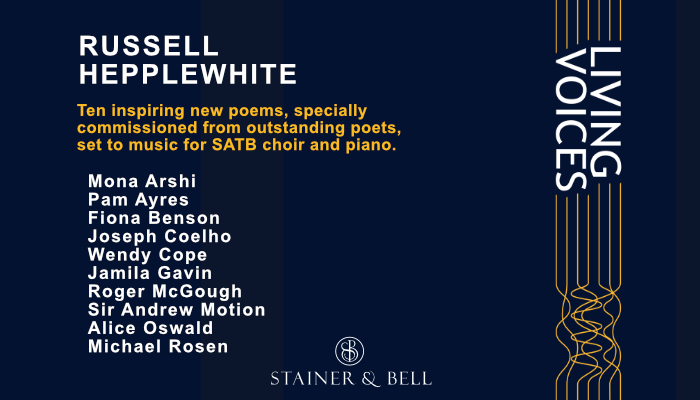

Living Voices is a new collection of ten inspiring choral pieces composed by Russell Hepplewhite. This innovative project brings together the talents of Hepplewhite and ten of Britain’s most outstanding contemporary poets, each commissioned to create poetic responses to our world today.

Find out more here
Ahead of the official launch of A Season To Sing, a reimagining of Vivaldi’s evergreen The Four Seasons for mixed voices and organ, composer Joanna Forbes L’Estrange offers insights into her compositional processes involved in rearranging this popular work for choir and explains why this piece is so appealing to her personally.

The work receives its London premiere on Saturday 22 March at St Bartholomew the Great in the City of London, perfomed by Luminosa Voices and organist Gavin Roberts. Info/book tickets here


Why Vivaldi’s The Four Seasons?

The Four Seasons is the first piece of classical music I remember listening to as a child. I have very vivid memories of dancing around the room to the 3rd movement of Autumn which is in 3/4 – my dad used The Four Seasons as a way of teaching me about 2/4, 3/4, 4/4 and 6/8 time signatures!

When I realised that 2025 will be the 300th anniversary of its publication I thought, “now’s the perfect time to make it possible for choirs to sing it!”

What is the appeal of this music for you?

One of the reasons that this particular work is so famous is because it’s programmatic – in other words, the music describes something specific – and was published with a programmatic title. Everyone, wherever they are in the world, can relate to the changing of the seasons and what makes each season different from the next. A piece called Violin Concerto in E major RV269 Op.8 No.1 has far less appeal to your average music-lover than a piece called Spring! Whereas Beethoven’s Piano Sonata No.14 in C# minor Op.27 No.2 wasn’t given the title ‘Moonlight Sonata’ until long after the composer’s death, The Four Seasons was published with that title. It was a genius move!

Vivaldi is known to have loved a series of paintings of Italian landscapes by his contemporary Marco Ricci, who was living in Venice at the same time, one of which we’ve used as the cover for the vocal score. The paintings inspired Vivaldi to write sonnets describing the seasons; the sonnets inspired the violin concertos and the violin concertos inspired me to write A Season to Sing. Perhaps A Season to Sing will inspire a choreographer to turn it into a ballet. Who knows?! This is the wonderful thing about art and artists – there are endless possibilities and inspiration comes from anywhere and everywhere.

How did you go about arranging the orchestral music for voices? Were there any particular challenges in this process, and what did you enjoy most about it?

The first stage was to study the score and work out which bits were singable. Last April, when I was just beginning to write A Season to Sing, I spent a few days in Venice to get into the zone. While I was there I attended a performance of The Four Seasons in Vivaldi’s church, sitting in the audience with the score on my lap, circling any bits which I knew would be good to sing. I’ve always approached choral composing very much from a singer’s perspective because it matters to me that everything I write feels nice to sing. With many of the movements the solo violin part became the right hand of the organ accompaniment while the choir parts were derived from the accompanying string lines of the Vivaldi. The slower movements (usually middle movements within each season) leant themselves more easily to being sung. Vivaldi’s melody-writing is absolutely sublime – sometimes I had to pinch myself to realise that they’d been written 300 years ago.

I decided early on that I wanted to keep all of the keys the same as in Vivaldi’s original. Sometimes, when you’re arranging instrumental music for voices, it makes sense to transpose into a different key, as was often the case when I was singing Bach in the Swingle Singers. I’m pleased that I chose to keep Vivaldi’s key structure because it helps my piece to retain more of the spirit of the original. Keys have certain colours and Vivaldi’s choice of keys fits perfectly with each season: the bright and joyful E major for Spring, the languid G minor for a hot and stormy summer and so on.

Tell us more about the texts you have chosen for A Season To Sing….

Sourcing the poems, hymn texts and Bible passages for each movement was an integral part of the process. It mattered to me that the words might sound as if they could have inspired the music, even though it was the other way round, of course! This meant matching their rhythms, rhyme schemes, phrase lengths and cadences to Vivaldi’s melodies whilst simultaneously enhancing his musical descriptions of different aspects of the seasons.

Vivaldi’s manuscript helpfully contains the Italian sonnets he wrote as the basis for his music. For the opening movement of Winter, I chose to adapt one of these sonnets, L’inverno, to create a soundscape. This is followed by the only wordless movement of the piece which I arranged in homage to Ward Swingle, the founder of The Swingle Singers, who became a close friend during my tenure as the group’s Musical Director. The remaining texts are from the Old Testament (Genesis, Exodus, Psalms, Song of Solomon and Zechariah), poems by two 19th-century English poets Emily Brontë and Eliza Cook, a hymn by Henry Alford and a Thomas Morley madrigal. It’s an eclectic mix into which I added the words of Ecclesiastes 3:1-8 (beginning ‘To every thing there is a season’) and set them in two movements which serve as bookends to the twelve Vivaldi movements.

In the final movement I’ve worked in a phrase from the Requiem Mass, Dona nobis pacem, (grant us peace) which helps to emphasise the ‘time of peace’ from the Ecclesiastes passage. Our world needs peace now more than ever.

What do you hope choirs/singers will enjoy in singing and performing this music?

My intention is for choirs to have a lot of fun with this piece, especially with the passages which are not so much “sung” as “performed”. For example, in SPRING there’s the birdsong chorus of whistlers and the nasal, bagpipe drone; in SUMMER there’s the call of the cuckoo and a storm created with body percussion; in AUTUMN, what were originally hunting horns are now a trumpet fanfare in praise of harvest; in WINTER the opening movement is half-sung/half-whispered to give the effect of the cold and the singers are required to shiver from time to time to maximise the effect!

As I always do when I’ve finished a new piece, I (together with my brilliant husband) have recorded every vocal line so that I can make sure that they all feel good to sing. Anything that feels awkward gets changed. So choirs can expect to have a lovely time learning and performing this piece. Nothing sits too high or too low and it’s deliberately on the easier side because I want all choirs to be able to sing it, from church choirs and chamber choirs to choral societies and community choruses and everything in between.

And what do you hope audiences will take away from the performances of A Season To Sing? I

imagine most people, even those who would profess to know nothing about classical music, have heard at least some parts of The Four Seasons before so I’m hoping that, as the performance unfolds, the audience will be thinking “ooh, I recognise that tune” from time to time. I’m also confident that by hearing a performance of A Season to Sing people might come to appreciate the genius of Vivaldi’s original concertos in a new way. Not only did he write great music but it is describing different aspects of the seasons – so clever!

Mostly I want audiences to feel joy when they hear this music. Performances should be visually as well as aurally entertaining and, because of the seasonal theme, they can happen at any time of the year. I love the idea that some concerts will be in the height of summer and others in the depths of winter! In 2025 there are performances happening all over the world. I’ll publish the list of dates and places as soon as it’s ready. I hope that everyone will be able to locate a performance happening near them and that all of the choirs who put on a concert will have a lovely, big audience of smiling faces.


A Season to Sing by Joanna Forbes L’Estrange is a choral re-imagining of Vivaldi’s The Four Seasons to mark its 300th anniversary in 2025.

Arranged for mixed voices and organ, A Season to Sing weaves into Vivaldi’s well-loved melodies with texts from poetry and the Bible on the subject of spring, summer, autumn and winter. The 40-minute work also includes a new setting by Forbes L’Estrange of Ecclesiastes 3.2 – To everything there is a season.

“…simply beautiful choral writing by someone who knows, from a singer’s perspective, how to compose music which every choir will want to sing.” – SIR JOHN RUTTER CBE, composer

A Season to Sing is a co-commissioning project with the Royal School of Church Music. The music is published by RSCM Publications and will be available from June 2025.

A Season to Sing events:

A Season to Come and Sing – a full day singing workshop, hosted by Joanna Forbes L’Estrange, followed by an informal concert. 15 March, St Thomas on the Bourne church, Farnham, Surrey. Full details/tickets

A Season to Sing – official launch concert. Saturday 22 March, St Bartholomew the Great, Smithfield, City of London. Full details/tickets

‘….simply beautiful choral writing by someone who knows, from a singer’s perspective, how to compose music which every choir will want to sing.’ Sir John Rutter CBE, composer

Following Heaven to Earth, Joanna Forbes L’Estrange’s first album on Signum Classics, Winter Light is an album of works (complete with some world premiere recordings and new arrangements) celebrating the season of Winter, as well as Christmas and Advent. The common themes linking all 19 tracks are of light triumphing over darkness, good overcoming evil and, ultimately, love conquering all.

The first 12 tracks tell the familiar Christmas story, from the eager anticipation of the saviour’s birth (Advent ‘O’ Carol, track 1) and its foretelling by the prophet Isaiah (Isaiah’s Prophecy, track 2) to the Annunciation (I Will Hold Him, track 3, and O Virgo Virginum, track 4), to the birth itself (Carol of the Crib, track 5 and Jesus Christ is Born Today, track 7) and its significance for humankind (In the Bleak Midwinter, track 8, and Love Came Down, track 9). Thereafter, the visitation from the shepherds (Song of the Shepherds, track 10) and the arrival of the magi at Epiphany (A Present for the Future, track 12) remind us that we, like the shepherds and wise men, need also to follow the light (A Story of Light, track 11). In the midst of this nativity narrative sits the title track (Winter Light, track 6) whose words mark the transition from darkness to light.

The second part of the album takes on an altogether different tone to reflect secular winter themes. As a professional singer Joanna Forbes L’Estrange is known for performing in a wide variety of styles and this is reflected in her compositions. Whereas the first half of this album is stylistically largely within the familiar realms of the sacred choral music tradition, the latter leans towards jazz and folk. The Three Wise Women (track 13) was written in response to a commission from St Swithun’s School in Winchester. ‘There are numerous pieces in the Christmas choral repertoire
about the three wise men so it was about time for the women to have their own song,’ says the composer. The remaining six tracks explore various winter themes. Winter Songs (tracks 14-16) was composed for the 60th anniversary of Finchley Children’s Music Group. Though conceived for children’s voices, the songs’ themes of hibernation, homelessness and human kindness are relevant to all ages. Green Christmas (track 17) was written during the first covid lockdown and is a subtle play on Irving Berlin’s classic, White Christmas. Track 18, Spring Will Come Again, is a folk-style song about the cyclical nature of the seasons. The album concludes with an arrangement of Auld Lang Syne (track 19) which Joanna wrote many years ago when she was Musical Director of The Swingle Singers.

Joanna Forbes L’Estrange says, ‘The impetus for recording this album sprang from my desire to present choirs with some contemporary yet singable Winter/Christmas-themed pieces which they might like to add to their repertoire.’

Praise for Joanna Forbes L’Estrange
‘Joanna has an amazing understanding of both the human voice and the human heart. The result: quality music making effective use of the voice, with tunes and harmonies and a wonderful storytelling quality to the songs which lift the hearts of singer and listener heavenward. These will surely be part of the Christmas choral canon for centuries’ – Ken Burton, conductor, composer & arranger

…an album of fresh new gems, full of Christmas warmth and great tunes’ – Louise Clare Marshall, singer

‘Forbes L’Estrange seems to have been born with catchy melodies coursing through her veins’ – BBC Music Magazine

Winter Light is released on 18 October on the Signum Classics label on CD and streaming.
Joanna Forbes L’Estrange, composer
London Voices
Ben Parry, conductor
Richard Gowers, organ
Olivia Jageurs, harp
Harry Baker, piano

Regards from Rochester by award-winning British composer Thomas Hewitt Jones was commissioned by Rochester Choral Society to celebrate its 150th anniversary in 2023. The work received its premiere on 18th March 2023 in Rochester Cathedral and was subsequently performed in Wells and Glastonbury respectively in April 2023.

The town of Rochester in Kent is drenched in history. Regards from Rochester celebrates the rich history of the Medway Towns, exploring themes and valuable human stories while relating them to contemporary society. From the first Saxon settlement through to historic stronghold, from pillar of British naval history through to industrial centre and inspiration for Charles Dickens, composer Thomas Hewitt Jones feels that this “postcard from Rochester” celebrates and exudes compassion for our planet, social conscience, humanity and kindness – values that are incredibly important to our world today.

Director of Music, John Mountford, says: “Rochester Choral Society has passed some significant milestones recently, with 2022 marking the 100th anniversary of our first performance in Rochester Cathedral. We wanted to commission a piece which reflected the diversity of this area’s rich and turbulent history, with a historically accurate, humorous and engaging new piece. We wanted to find somebody with a connection and passion for the Medway Towns and who wanted to help raise awareness of the cultural and social heritage of the area.”

Composer Thomas Hewitt Jones, who lives in Rochester, says: “I was delighted when John Mountford approached me to commission this work for Rochester Choral Society’s very exciting 150th anniversary. Quite early on in our discussions, we decided that the richness of Medway’s history was conducive to a new text, so the result is a 10-movement oratorio which we hope tells the story of the area with sweeping melody and angularity where appropriate. I have written it to be as both engaging and as musically interesting as possible.” 

John Mountford believes that choral societies are an essential part of national music-making after the COVID era. “Music is central to the lives of so many people; it binds community and enhances wellbeing for singers and audiences alike.

For Thomas Hewitt Jones, writing Regards from Rochester has been an extremely fulfilling and wholesome commission, not only given the richness of local history, but also due to the strength of the musical heritage of Rochester Choral Society dating all the way back to 1873.

“It was a privilege and a pleasure to discover many historic riches of the Medway area, which is often referred to in relation to Charles Dickens, the former Dockyard and as a stronghold to and from London, but in fact contains numerous other riches. Spending extensive time in Rochester library and reading around the history in detail, it became swiftly apparent that the area’s rich social history made up for any perception Medway may have externally of lack of charm; as the text and music were forming, I was delighted to have conversations with local Medway Council operative John Lester, who is an 8th generation of the Lester family in Rochester and who offered personal anecdotes of life in Medway since the Victorian era, some of which I have incorporated into the work. Above and beyond the history books and local connections, in this work I have aimed to reflect throughout the work on the nature of life in 2022, both beyond the recent pandemic (which let’s face it indelibly changed life as we know it) and also in the shadow of contemporary issues that affect our society, not least our collective sense of identity and perhaps most importantly, the current climate change crisis.”

This debut recording of Regards from Rochester features the BBC Singers, the Royal Ballet Sinfonia and Rochester Choral Society, with Harriet Mountford (soprano) and Simon Thorpe (baritone), conducted by John Mountford

Recorded at Henry Wood Hall, London, Regards from Rochester is released by Vivum Music Ltd on all streaming platforms. Physical CDs available from the Rochester Cathedral shop and Rochester Choral Society


For further press information/review copies/interviews, please contact Frances Wilson frances_wilson66@live.com