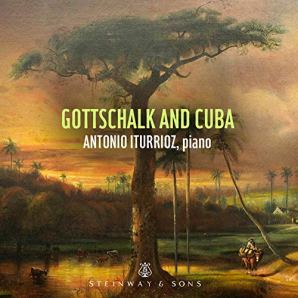
51elFUJVORL._SS500 “Give me your hand, my child; I predict that you will become the king of pianists.

So said Fryderyk Chopin to American pianist and composer Louis Moreau Gottschalk, after hearing him perform at the Salle Pleyel in Paris. Alkan and Liszt also recognised Gottschalk’s impressive talents, and, perhaps in homage to his European virtuoso counterparts, there are distinctly Lisztian idioms in the Symphonie Romantique “La nuit des tropiques”, which opens Cuban-American pianist Antonio Iturrioz’s new recording ‘Gottschalk and Cuba’.

The Symphonie Romantique is especially significant as this is a world premiere recording of the first American symphony, transcribed in its entirety for one piano, as Gottschalk originally intended it and based on Antonio Iturrioz’s extensive research. The second movement, ‘Fiesta Criolla’, is heard in Iturrioz’s own transcription for one piano for the very first time, thus making this a historic recording. In its solo piano form, the work has a Lisztian grandeur with many complex virtuosic passages and rich textures.

Gottschalk was America’s first important pianist-composer. He was also an extraordinary traveler, giving virtuoso performances in Europe, Central and South America and the Caribbean. He fell in love with Cuba and its music, and lived there for extended periods. As a composer, his music combined his Creole heritage with the American, Latin American and Afro-Caribbean influences he absorbed during his travels – all expressed within the boundaries of classical piano writing prevalent in the 19th century.

The Symphonie Romantique provides the starting point for a chronological tour through Cuban classical music, much of it never before recorded. Piano music by Manuel Saumell Robredo, Nicholas Ruiz Espadero, Ignacio Cervantes, Hubert de Blanck, and Ernesto Lecuona features on this album, revealing Gottschalk’s influence and the high regard with which he was held by those who followed him. Many of the works show the influence of nineteenth-century European virtuoso pianist-composers – Chopin, Liszt, Alkan – shot through with the distinctly Afro-Cuban, Cuban and Creole rhythms and folk idioms. There are hints of ragtime and jazz too – a reminder of Gottschalk’s wide-ranging influence on American music of the 20th century. The album closes with Gottschalk’s El Cocoye, Op 80.

Iturrioz’s own Cuban heritage allows him to really get to the heart of this music, and his understanding and insight is clear from the outset. The sensuous, foot-tapping rhythms feel natural and uncontrived, heady harmonic shadings are neatly caught, while the virtuosic passages are executed with aplomb. The overall sound is warm, romantic, lush and exotic.

A generous introduction to the classical piano music of Cuba and an important contribution to the appreciation and understanding of Gottschalk’s work and influence. Includes detailed liner notes by Gottschalk biographer, Dr. S. Frederick Starr.

Released on the Steinway & Sons label and available as a CD or digital download.

Recommended.

Meet the Artist interview with Antonio Iturrioz
 

Guest review by Adrian Ainsworth

Rick Wakeman has been a consistently fascinating artist throughout his decades-long career. As a fan of both classical and progressive rock music, I feel he’s been a constant presence, his cape sweeping nonchalantly across any so-called dividing lines between genres and styles.

In contrast to the grandeur of some of his earliest and most familiar work, Wakeman’s most recent releases have felt more intimate and introspective. The 2017 album ‘Piano Portraits’ was just that: solo piano treatments – somewhere between arrangements and variations – of an eclectic range of pieces that covered Debussy and Fauré, Elgar and Holst, Bowie and the Beatles… and not to leave out his own band, Yes.

This new album, ‘Piano Odyssey’, is in many ways a sequel with seemingly deliberate echoes of its predecessor. As before, there are two Beatles tracks, and just the one from Bowie this time, amid other carefully chosen cover versions. Yes is represented by two new arrangements. On the classical team are Liszt, Dvorak and Handel.

As the album title suggests, though, a journey of some kind has taken place. Rather than simply repeat himself, Wakeman has added strings and a choir more or less throughout, diluting the forensic focus on the lone piano. However, the lush arrangements can’t disguise the fact that this feels like an even more personal project, surveying Wakeman’s career more incisively and giving it a perhaps unexpected unit

I think this unity is behind the quality I loved most about the disc, which is that it sounds exactly like something its creator would pull together – and yet at the same time, it feels like a surprise, not quite like anything else. In theory, given the forces involved, the classical feel should dominate, but that isn’t what happens. Instead, it’s rather more like listening to a kind of ‘chamber’ prog: Wakeman often deploys his string players and singers as if they were band members, the choir in particular performing ‘solos’, moving in and out of tracks as needed rather than saturating them. His own distinctive playing has him operating like a combined rhythm and lead guitar might, capturing the melodies at the top end with great delicacy (and some very agile embellishments!), without sacrificing a sense of real propulsion.

As a result, the pieces that really hit home for me are the two Yes songs, in particular ‘And You & I’, and the reworks of two of his solo tracks, ‘After the Ball’ (now merged with Liszt’s ‘Liebestraume’), and ‘Jane Seymour’ (originally composed on organ, and with Bach coursing through its bloodstream). In the CD liner notes, Wakeman explains how the new versions make what he was trying to do clearer, more audible. And there’s no doubt that ‘Piano Odyssey’ is giving him the opportunity to shine a light on his practice: without trying to ‘match’ or ‘outdo’ Liszt, he has deliberately designed his medley to show how the composer influenced him. (Elsewhere, he uses this technique to illuminating effect in ‘Largos’ – merging Dvorak and Handel with the utmost respect, but a refreshing lack of deference.) Equally, in ‘And You & I’, the sparkling high-pitched melody is so evocative of Jon Anderson’s vocal it’s somehow uncanny.

I don’t think the record is totally flawless. How you react to the more familiar covers will inevitably depend on your relationship to the originals, and what you want a new version to achieve. I felt ‘The Boxer’ was a misfire: to me, the song, while tender, has an underlying resolve and pugnacity that befits its title. Here, the slow pace fatally weakens it, along with oppressive strings and the choir contributing isolated ‘lie la lie’s with no context. On the other hand, a similarly sentimental treatment of ‘While My Guitar Gently Weeps’ fits the song like a glove. The version of ‘Bohemian Rhapsody’ is shot through with wit, subverting any bombastic expectations the listener might have – even Brian May’s guitar cameo appears out of nowhere.

Two completely new compositions again emphasise the personal – named for two adopted moon bears, Rocky and Cyril (Wakeman is a passionate animal rights advocate). Writing from scratch in this idiom allows Wakeman to produce probably the most nakedly emotional tracks on the record, the signature traits (again, the steady motor, the climb to the high register) reflecting how much of himself he has put into these pieces. And I think it’s fair to say that the whole album – a heart-on-sleeve musical autobiography-of-sorts – wins through as an accomplished yet totally sincere attempt by the artist to communicate a true audio sense of himself.

Rick Wakeman’s ‘Piano Odyssey’ is available now on the Sony Classical label.

Meet the Artist interview with Rick Wakeman


Adrian Ainsworth writes for a living, but mostly about things like finance, tax and benefits. For light relief, then, he covers his obsessions – overwhelmingly music, but with sprinklings of photography and art – on the ‘Specs’ blog, which you can find at

Twitter: @adrian_specs

Adrian is a regular guest writer for The Cross-Eyed Pianist


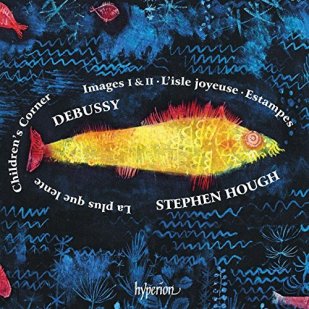
debussy-piano-music---stephen-hough-hyperion-1515405549…….make sure it’s Stephen Hough’s new disc of piano music by Debussy (Hyperion).
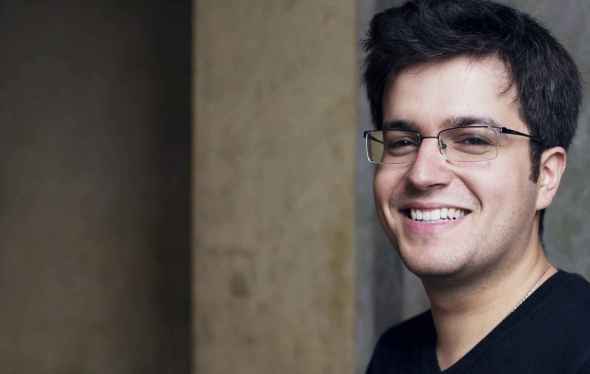
I read Stephen’s illuminating article about Claude Debussy (New York Times, 2 March 2018) and then listened to his new disc of Debussy’s piano music (Estampes, Images, Children’s Corner, La plus que lente and L’isle joyeuse). Here is Stephen writing on Pagodes, the first piece on his new disc:

[Debussy’s] use of its tonal color………is not so much a translation of a foreign text as it is a poem written in a newly learned, fully absorbed language

Stephen could be describing his own playing here (though he is far too modest to do so!). For those more used to hearing him play Liszt with cool yet colourful virtuosity, his Debussy playing is deliciously liquid, lucid, perfumed, sensuous and elegant. The phrasing and pacing is so natural and supple, fermatas and pauses so sensitively judged, touch, articulation and pedalling so clear and carefully nuanced, one has the sense that Stephen has also “fully absorbed” the composer’s language.

Take Pagodes, for example, the piece which opens this disc. Textures and lines emerge, blur and recede with all the ethereal delicacy of watercolour painting (and the suite Estampes is a reminder that Debussy loved art), but there is clarity too, so that every note sounds like a crystalline droplet. Reflets dans l’eau is similarly coloured, glistening and shimmering with subtlety and elegance. There’s nothing fussy or contrived in Stephen’s account of this music, and his assertion in the NYT article that Debussy was a “modern” composer is more than confirmed in his highlighting of the composer’s fondness for piquant or erotic harmonies, surprising melodic fragments (often using the pentatonic scale) and rhythmic quirks.

Children’s Corner proves as much a delight for adults as the young ones: snow dances with feathery delicacy, while The Little Shepherd a study in tender simplicity, tinged with poignancy. Strictly for adults, La plus que lente is wonderfully louche and languorous, with its late-night cocktail bar swagger. L’isle joyeuse closes this fine recording with a sparkling clarity, wit and sunlit joie de vivre

Highly recommended

Claude Debussy (1862-1918) / Piano Music / Stephen Hough (piano) / Hyperion CDA68139


Meet the Artist – Stephen Hough

Bela Bartók – Six Dances in Bulgarian Rhythm from Mikrokosmos
Paul Constantinescu – Cântec

Paul Constantinescu – Dobrogean dance: Toccata
Franz Liszt – Hungarian Rhapsody No 5 in E minor
Franz Liszt – Mephisto – Waltz No 1

Florian Mitrea, piano

Tuesday 30th January 2018

St Martin’s in the Fields, an elegant neoclassical church in the heart of London, resonated to the colourful, earthy sounds and rhythms of Eastern Europe in Florian Mitrea’s lunchtime concert. In an interesting and contrasting programme he offered a “taster” of his debut disc ‘Following the River’ with works by Bela Bartok, Paul Constantinescu and Franz Liszt

Fresh from winning fourth prize in the inaugural International Music Competition in Harbin, China, Florian betrayed no sign of lingering jet lag (he flew back to London from China on Sunday) in an energetic and committed performance book-ended by dances by Bartok and Liszt. The vibrant sounds and asymmetrical rhythms of Bartok’s Six Dances in Bulgarian Rhythm were despatched with muscular verve and nimble articulation. Hearing Liszt’s Mephisto Waltz in the same programme as the Bulgarian Dances reminded us of Liszt’s eastern European heritage, and here this work was less a devilishly tricky crowd-pleasing virtuosic romp and more a fitting companion piece to Bartok’s dances which opened the concert. Equally, Liszt’s Hungarian Rhapsody No 5 was given a noble grandeur, imbued with a sweeping romanticism but also deeply connected to the composer’s heritage.

The middle of the programme was occupied by two works by Romanian composer Paul Constantinescu (1909-63). Cântec, a set of variations on a Romanian folksong, was infused with a bittersweet nostalgia, while Dobrogean dance: Toccata recalled the off-beat folk rhythms of Bartok in a work which combined glittering virtuosity with poignant lyricism. Both works were beautifully paced, sensitively shaped, and highly evocative.

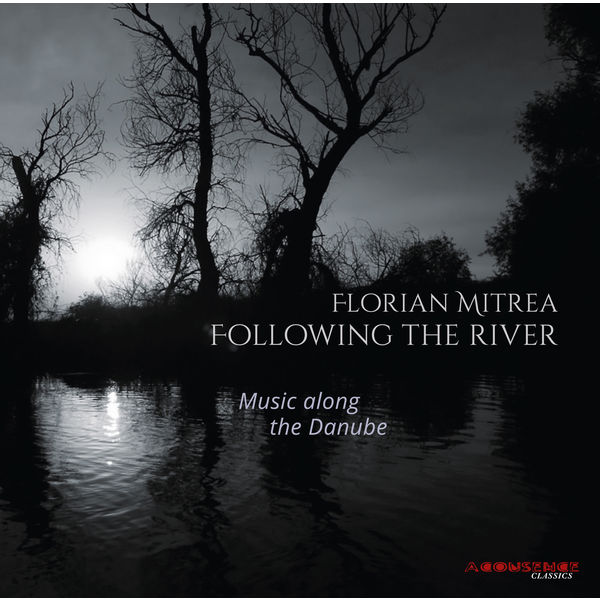
These two works appear on Florian’s debut disc, Following the River, inspired by childhood memories of “hot summer nights spent on a boat in the middle of a channel, deep in the heart of the Danube Delta” (FM). The Danube, the longest river within today’s European union, flows through 10 countries and four capital cities – Vienna, Bratislava, Budapest and Belgrade – and carries with it stories, folklore, memories and more. In Following the River we find quite a different version of the river from “An der schönen blauen Donau”, by the Austrian Johann Strauss II, which celebrates the great river in Vienna; this is a far more personal evocation. The selection of pieces by Bartok, Schubert and Liszt and Romanian composers Sigismund Toduta, Paul Constantinescu and Radu Paladi all call on the folk heritage and music of eastern Europe in works of rich textures, dynamic rhythms, piquant harmonies and simple yet haunting melodies. Schubert’s Hungarian Melody is given a more earthy treatment, with a strong focus on its offbeat rhythms which turns in from a salon piece into a true folk melody. The disc introduces listeners to the varied and intriguing piano music of lesser-known composers Toduta, Constantinescu and Paladi, complemented by well-known works by Liszt. This is a very personal and meaningful selection of music, elegantly presented and masterfully played, with a deep appreciation of and affinity with the folk heritage which lies at the heart of all this music.

Highly recommended

Following the river: Music along the Danube

Bela Bartok, Six Dances in Bulgarian Rhythm from Mikrokosmos Sz. 107
Sigismund Toduţă, Twelve Variations on a Romanian Christmas Carol
Franz Schubert, Hungarian Melody D 817
Paul Constantinescu, Variations on a Romanian Folksong
Paul Constantinescu, Joc Dobrogean. Toccata (Dobrogean dance)
Franz Liszt, Hungarian Rhapsody No. 5 ‘Héroïde-élégiaque’ in E minor
Sigismund Toduţă, Suite of Romanian Songs and Dances
Radu Paludi, Rondo a capriccio
Sigismund Toduţă, Chorale on ‘God, have mercy’ and Toccata

© and ℗ 2017 ACOUSENCE records (ACO-CD 13317) www.acousence.de


Meet the Artist – Florian Mitrea

