
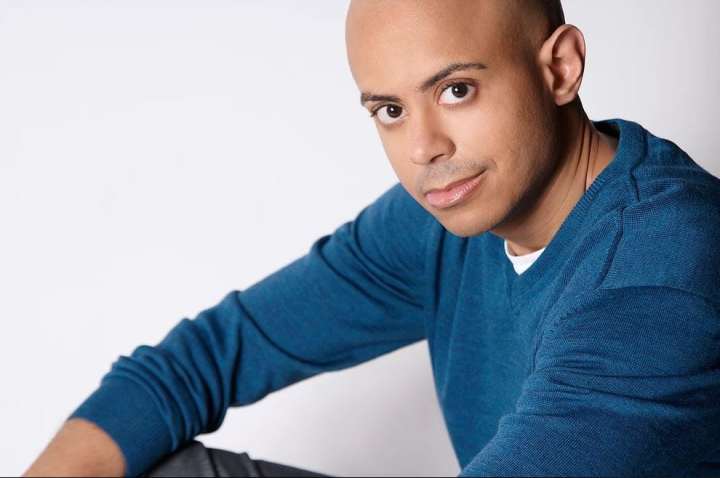
Who or what inspired you to take up piano and pursue a career in music?
Love and happiness inspired me to take up the piano and pursue a career in music. When I was 3, I was a painfully shy kid, but I wanted very much to communicate to people. Every time I heard music, I would open up…It was the language that spoke to me deeply from the very beginning, the first language that I spoke. Playing the piano was my way of opening my heart to people…and pursuing a career in music was my way of opening my heart to the world.
My first concert was seeing Andre Watts perform in Toronto at Roy Thomson Hall…I will always remember every second of that concert because that experience sealed it for me; I told my mother “This is what I want to do”.
Who or what have been the most important influences on your musical life and career?
The most important influences on my musical life and career have been the support of my friends and family. Their words of encouragement and their unending support inspire me every day.
What have been the greatest challenges of your career so far?
To me, challenges push me to be better…a better musician, and hopefully a better human being. Every chapter of my life shaped the course of my musical journey, and I am thankful for each challenge life throws my way.
Which performances/recordings are you most proud of?
Each performance and recording has been very meaningful to me, from the complete Beethoven sonatas to my latest recording. Each work I have recorded I have lived with almost all my life, and sharing my love of this music to my listeners is a great gift.
Which particular works do you think you play best?
I have tried very hard not to be a specialist in one composer or one genre. For me, each composer demands my complete devotion, attention and understanding.
How do you make your repertoire choices from season to season?
I wish I could say that each season is devoted to a particular repertoire! So far, my concerts are a combination of collaborations with orchestras and chamber musicians, and solo recitals.
Do you have a favourite concert venue to perform in and why?
My favorite venues are those that not only have amazing acoustics, but designed in a way that is an intimacy between myself and the audience. Two of my favorite halls I have performed in are Koerner Hall in Toronto, the Berlin Philharmonie, and the Gewandhaus in Leipzig.
Who are your favourite musicians?
My favorite musicians are those that broke the mould and brought the listeners with them. One of them is Maurice Ravel!
What do you consider to be the most important ideas and concepts to impart to aspiring musicians?
I can sum it up in a few words: Trust your heart and your gut.
Proclaimed “a phenomenon” by the Los Angeles Times and “one of the best pianists of his generation” by the Philadelphia Inquirer, Stewart Goodyear is an accomplished young pianist as a concerto soloist, chamber musician, recitalist and composer. Mr. Goodyear has performed with major orchestras of the world , including the Philadelphia Orchestra, New York Philharmonic, Chicago Symphony, Pittsburgh Symphony, San Francisco Symphony, Los Angeles Philharmonic, Cleveland Orchestra, Academy of St Martin in the Fields, Bournemouth Symphony, Frankfurt Radio Symphony, MDR Symphony Orchestra (Leipzig), Montreal Symphony, Toronto Symphony Orchestra, Dallas Symphony , Atlanta Symphony, Baltimore Symphony, Detroit Symphony, Seattle Symphony, Mostly Mozart Festival Orchestra, Royal Liverpool Philharmonic, and NHK Symphony Orchestra.
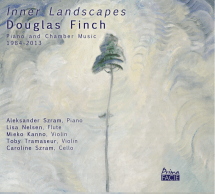 Inner Landscapes, the first ever recording of composer and pianist Douglas Finch’s piano and chamber music, is a compelling collection of ten works which capture an ‘inner world’ of a particular landscape – in Canada, Germany, North Wales and New York. Finch was drawn to the art of Canadian painter Emily Carr (1871-1945), who has long been one of his favourite painters, in particular for her landscape paintings of the west coast of British Columbia which evoke feelings of “loneliness and quiet rapture”, and his music explores similar themes of solitude, mourning and spiritual longing.





 The Cross-Eyed Pianist