JS Bach – Chaconne from Partita No.2 in D minor, BWV.1004 arr. Busoni for piano
Busoni – Berceuse élégiaque (Elegy No.7), Op.42
Chopin – Sonata No.2 in B flat minor, Op.35 (Marche funèbre)
Stephen Hough – Sonata No.4 (Vida breve)
Liszt – Funérailles from Harmonies poétiques et religieuses, S.173; Mephisto Waltz No.4 (unfinished); Mephisto Waltz No.1

Stephen Hough, piano

Tuesday 19 November 2019, Tuner Sims, University of Southampton


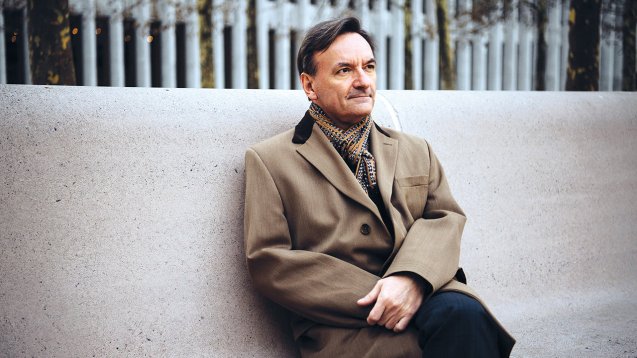
My first visit to Turner Sims concert hall at the University of Southampton, and a treat of an evening in the company of British pianist Stephen Hough playing music by Bach arr. Busoni, Busoni, Chopin and Liszt.

This was a typical Hough programme, thoughtfully conceived and superbly presented, deadly serious, for the theme of the concert was death – pieces inspired by or identified with death, including Chopin’s Piano Sonata No. 2 with its famous Marche Funèbre, and Liszt’s Funerailles, written in the same month as Chopin died and at the time of the violent Hungarian revolution of 1849.

stephenhoughcjiyangchen-1

Superlatives quickly become redudant when describing a pianist of Hough’s calibre, whose wide-ranging intellectual acuity always informs his programmes and his playing; therefore this is not a review, rather some reflections on what I thought was a most absorbing programme, especially the first half. In addition to the thematic asssociations between the pieces, there were musical connections too: the dark rumbling bass octaves in the Bach/Busoni Chaconne were reiterated in Chopin’s Marche funèbre – a plangent left hand accompaniment which, in the reprise of the famous theme dominated, with a dark tolling grandeur. And this figure was later heard again in the opening of Liszt’s Funerailles. Likewise, the haunting, unsettling soundworld of Busoni’s Berceuse (more a mourning song than a lullaby) was reflected in the finale of the Chopin Sonata, a curious, hushed fleeting stream of consciousness, and then in the wayward uncertain harmonic language of Liszt’s ‘Bagatelle without tonality’.

The Bach/Busoni Chaconne was a magnificent, emphatic opener for this concert, and Hough gave it a multi-layered, orchestral monumentalism. The Berceuse was a remarkably contrasting work, interior, intimate, mysterious and disquieting, and by segueing straight into the Chopin Sonata, Hough infused this work with a similarly discomforting atmosphere. With agitated tempi the Sonata moved forward with an anxious intensity but Hough lingered over the more lyrical Nocturne-like moments in the opening movement and the Scherzo. Like the Chaconne, the funeral march was magisterial rather than simply funereal and the tender, dreamy middle section lent an other-worldliness to the music’s atmosphere before the tolling bass and mournful theme returned.

Hough’s own piano sonata No. 4 ‘Vida Breve’ opened the second half of the concert, an abstract work constructed of five tiny motivic cells (including a quotation from the French chanson En Avril à Paris, made famous by Charles Trenet) lasting a mere 10 minutes, a comment on the transient, fleeting nature of life, its passions and turmoil. The concert closed with three pieces by Liszt – Funerailles, whose meaning is obvious, and two Mephisto Waltzes, devilish in their whirling virtuosity and frenetic, tumbling notes.


Stephen Hough plays the same programme at the Royal Festival Hall in March 2020. Details here

95e3b5_65c5b215787c4d3d9eb4d405329d650e.jpg_srz_588_410_85_22_0.50_1.20_0

Who or what inspired you to take up piano and pursue a career in music?

I remember being drawn to the piano as a very young child. I had a French aunt who was a superb pianist. When she came to visit and sat to play at the old Bechstein grand that we had at home, a kind of magic descended on the household. I naturally enjoyed starting lessons at the age of seven. It was only quite late in my life that my mother confessed to me that she had listened to gramophone records incessantly while she was pregnant with me, with the express intention of producing a musical child (my older brothers had not shown great interest in music…). I was a bit taken aback to think that I had been brainwashed in the womb, but, on reflection, I am quite grateful!

Who or what have been the most important influences on your musical life and career?

I could make a long list of people who have been important in shaping my musical life, amongst whom would be many composers and colleagues, not least my fellow players in the Schubert Ensemble (which has remained unchanged for 22 years). But three teachers stand out above all others. My greatest debt of gratitude goes to Rosemary Hammond, a local schoolteacher and choir director, who took me under her wing when I was eleven years old and floundering at an unmusical boarding school. She was no great performer, but had an infectious love of music and was an inspirational teacher. She introduced me to playing on clavichord and fortepiano as well as modern piano, taught me to compose and encouraged me with astonishing warmth and generosity. In my twenties I was lucky enough to study with Vlado Perlemuter, whose honest and unmannered musicality is still an inspiration to me, and also with Peter Feuchtwanger, a maverick and unorthodox teacher who taught me to open my eyes and ears in unexpected ways and gave me the courage to shape my career by following my enthusiasms.

What have been the greatest challenges of your career so far?

It may sound simplistic to say this, but the biggest challenges of my career have been developing that career in the first place and then sustaining it. I can honestly say that I have loved my professional life, but for years it involved a huge amount of hard work and uncertainty about the future, together with the constant battle of trying to juggle travelling and working at unsociable hours with bringing up a family. These pressures are common to many freelance professions, but we pianists inhabit a world overcrowded with dazzling talent and I can’t think of a single moment over the years when I have felt I could take my career for granted. The musical challenges (of which there have been many!) have felt easy by comparison.

Which performance/recordings are you most proud of?

Without any hesitation, I would hold up my recording of Pavel Zemek Novák’s 24 Preludes and Fugues, which came out on Champs Hill Records in 2011. It is a monumental work lasting around 75 minutes, which was written for me over a 17-year period from 1989 to 2006. I found the pieces incredibly difficult to play (and to read – they were written in manuscript and almost every page was covered in dozens of corrections!) and the recording took a huge amount of preparation. It was a labour of love, but massively rewarding. The Preludes and Fugues comprise some of the most important and original piano music that I have ever played. Pavel is not hugely well known outside the Czech Republic, but I am convinced that his music will become better and better known. Of the 45 or so CD recordings that I have made over the years, I think this is the one most likely to outlive me.

Which particular works do you think you play best?

I am probably the last person who should try to judge what I play best, but I feel especially at home playing Schubert, Chopin, Fauré and Janáček, and if I had to single out one work of each composer, they would be the Wanderer: Fantasie, the First Ballade, the Sixth Nocturne and In the Mists.

How do you make your repertoire choices from season to season?

I like to introduce new works into my repertoire each season and to return to works I have not played for a while. Recording plans and new commissions also affect the make-up of programmes, and large-scale projects too at times. At the moment my programmes are built around love songs for solo piano, both romantic pieces and a large collection of newly commissioned works.

Do you have a favourite concert venue to perform in and why?

I tend to judge venues as much by the pianos they offer as well as their acoustic. The Wigmore Hall ticks all boxes for me. While I love performing in its acoustic, it also has one of the best-maintained Steinways in the country. Next year will be the fortieth anniversary of my first concert there, so I can add familiarity and decades of happy memories to its attractions! Competing with the Wigmore is the medieval Great Hall at Dartington, which is a beautiful space to perform in, and is also full of memories for me. I heard many of the most memorable concerts of my life there as a student at the Summer School in the late 60s and 70s and it always gives me a huge thrill to be playing there myself.

Favourite pieces to perform? Listen to?

It would be too difficult to choose my favourite pieces to perform – they tend anyway to be what I am working on at any given time. Naming my favourite pieces to listen to is easier. They would be Mozart’s G minor String Quintet and Janáček’s Second String Quartet.

Who are your favourite musicians?

I have too many favourite musicians in the present who I could list – composers, instrumentalists and fellow pianists who are friends and many others who I admire from afar – so I will stick to those from the past who I heard play live and whose recordings I still love to listen to Artur Rubinstein, Vlado Perlemuter, Shura Cherkassy, and Rudolf Serkin.

What is your most memorable concert experience?

Nearly 20 years ago the Schubert Ensemble launched a project called Chamber Music 2000, in which we commissioned several dozen new chamber works for young pianists and string players. We put on over twenty public concerts in venues all over the UK, including the Wigmore Hall and South Bank Centre, in which young musicians, mainly teenagers, performed whole concerts of works by living composers. These concerts had a wonderful spirit of engagement and adventure and were some of the most memorable I have attended as a listener.

What do you consider to be the most important ideas and concepts to impart to aspiring musicians?

It is the privilege of older musicians to specialise (if they want to!), but I think for younger and aspiring musicians a broad experience of music is essential. It is important to hear lots of live performances and to study as wide a repertoire as possible, and, very particularly, repertoire beyond that written for your own instrument. And I firmly believe that working with living composers can teach us an enormous amount about how to approach interpreting music from the past.

What is your present state of mind?

I feel very positive about life at the moment! I am enjoying playing the piano more than ever right now and I have a number of projects on the go that I am finding fascinating and challenging.


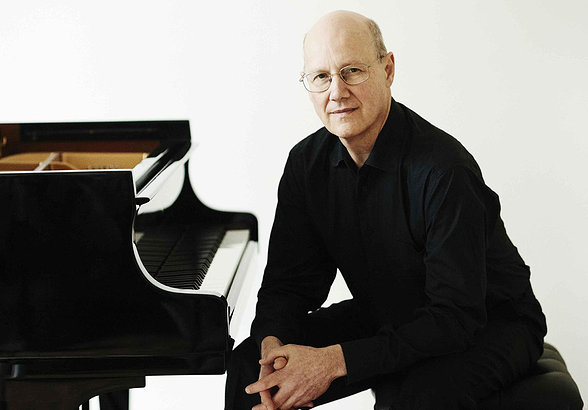
William Howard is established as one of Britain’s leading pianists, enjoying a career that has taken him to over 40 different countries. His performing life consists of solo recitals, concerto performances, guest appearances with chamber ensembles and instrumentalists, and regular touring with the Schubert Ensemble of London, Britain’s leading group for piano and strings and winners of the Royal Philharmonic Society Award for Best Chamber Ensemble. He can be heard on around 40 CDs, released by Chandos, Hyperion, ASV, NMC, Collins Classics, Black Box, Champs Hill, Nimbus and Orchid Classics.

His solo career has taken him to many of Britain’s most important festivals, including Bath, Brighton and Cheltenham, and he has been artist in residence at several others. He has performed many times in the Wigmore Hall and the South Bank in London and has broadcast regularly for BBC Radio 3. For many years he has been invited to perform and teach at the Dartington International Summer School. His recording of Dvořák Piano Works was selected in the Gramophone Critics’ Choice, and his recording of Fibich’s ‘Moods, Impressions and Souvenirs’ won a Diapason D’Or award in France.

Recent solo engagements have included a performance at the 2015 Bermuda Festival, the premiere of David Matthews’s Four Portraits at the Spitalfields Festival in London and performances at the Cheltenham, Deal, Leamington, Petworth and Paxton Festivals, at Kings Place in London, in Brno (Czech Republic), Italy and Oregon, USA. In 2011 he made a recording of Pavel Zemek Novák’s extraordinary 75-minute cycle of 24 Preludes and Fugues. A double five-star review in the BBC Music Magazine described the performance as “superb” and the music “a real discovery”. His most recent album, Sixteen Love Songs, released in June 2016 on Orchid Classics was selected as ‘Drive Discovery of the Week’ on Classic FM.

He is passionate about 19th century piano repertoire, especially Schubert, Chopin, Schumann and Fauré. He also has a strong interest in Czech piano music, and has been particularly acclaimed for his performance of Janáček, for which he received a medal from the Czech Minister of Culture in 1986. Many leading composers of the present day have written for him, including, Sally Beamish, Petr Eben, Piers Hellawell, David Matthews, Pavel Novák, Anthony Powers, Howard Skempton and Judith Weir. In 2016 he launched a project to commission sixteen love songs for solo piano from leading composers in the UK and abroad, including Elena Kats-Chernin, Nico Muhly, Richard Reed Parry and Judith Weir. He also set up an international composing competition for writing piano love songs that attracted over 500 entries from 61 countries.

Who or what inspired you to take up your chosen instrument, and pursue a career in music?

I remember being fascinated by the piano in my grandmother’s house, and this led to my mother teaching me to read music at the age of three.I do not remember,as a child, hearing much music, none of my friends played an instrument, but I remember my grandmother played by ear, and sang music-hall songs to me, which I loved. They must have embedded themselves deep in my memory, as I still remember many of these, including all the words!

One strange memory stands out. My mother, before her marriage, had worked in the office of a local chemist, a Mr. Lester, of whom she spoke occasionally, with the greatest respect and admiration. I had never met this gentleman before, but on one memorable occasion I was taken, by my mother, to visit him at his home. He possessed a fine gramophone, and played me some of his precious 78rpm records. I was about 6 years old at the time. Two recordings stand out in my memory. One was the Grieg piano concerto, which I was hearing for the first time. It made a tremendous impression on me, and I determined that I would one day perform it,(which I did.) The second recording was an odd choice to play to a child, but I was overwhelmed. It was Kirsten Flagstad singing Sibelius songs, and it was one of the most powerful musical experiences of my life. I had never heard anything like it, the powerful intensity of this magnificent voice, and the vivid colours of this unfamiliar music made a huge impression on me. I never saw Mr. Lester again, but he brought magic into my life.

And when I gave my first public performance, at the age of seven, the feeling of engaging with an audience , and sharing  this magical world of music was so exhilarating,that I knew, without a doubt, that I wanted to be a pianist.

Further motivation and inspiration came from my repeated reading of ‘Prelude’,a book based on the early life of Eileen Joyce, who was arguably the most famous concert pianist at that time in Britain. I was captivated by this highly romanticised account of a child from a very ordinary background being swept into the extraordinary and exciting world of music. I devoured the stories of her inspiring lessons with eminent European teachers, and the manic regimes of practising, which all culminated in a dazzling career. It was heady stuff, and I became even more determined to enter this fascinating world myself one day.

I was taken to hear Eileen Joyce play on one  occasion by a family friend, who took me backstage afterwards to meet this glamorous superstar of the classical music world. I remember her gorgeous frocks, and, in marked contrast, her workmanlike hands. As she shook my hand, I remember being struck by their immense power.

Who or what have been the most important influences on your musical life and career?

The first time I heard a great pianist in recital was in my early teens, when I I attended a Sunday afternoon concert given by Artur Rubinstein at the Royal Festival Hall. I was mesmerised by the sheer joy and freedom of his playing. This represented the ideal of piano playing that I would, from then on, aspire to.

At the age of seventeen I began my studies at the Royal Academy of Music, where my teacher was Vivian Langrish, who had been a student of Tobias Mattay, alongside Myra Hess. He taught me the importance of sound quality and variety of colour, and greatly expanded my tonal range. Also, while a student, I played for many singers, and was hugely influenced by the great singing teacher, Flora Nielsen, who first revealed the wonders of French song to me, opening the door to the exquisite music of Debussy and Faure in particular.

But I think the greatest inspiration and influence on my playing came from two violinists, the remarkable Hungarian violin professor, Bela Katona, and the legendary violinist Nathan Milstein.

Bela had the most extraordinary ability to reveal the inner life and structure of the music, while at the same time demanding a meticulous attention to detail.

One of the greatest experiences of my life was playing with Nathan Milstein. Every rehearsal was a lesson with a great master. He would demonstrate on the violin what he wanted me to do on the piano. I learnt so much just trying to develop my touch to match his attack on the string, and the freedom of his bow arm to make the gestures of the music. It was awe-inspiring. And throughout, there was always his insistence on the vital importance of the bass line. I learned to focus my attention on a fully independent and fully present and vital bass line, which underpins everything.

Finally, I must acknowledge the influence of jazz, in particular, great jazz pianists, most notably Oscar Peterson Bill Evans and Erroll Garner. From first hearing jazz in my early teens, I knew that I wanted to play classical music with the freedom, spontaneity and immediacy of these artists. This is still my ideal.

What have been the greatest challenges of your life so far?

One’s life as a musician is a continuous, never-ending series of challenges, and it is in meeting these challenges that one develops. But two huge personal challenges stand out for me.

The first was a very serious illness at the age of 28, when , quite suddenly, all my joints, right down to fingers and toes, seized up, and I became completely immobilised. I spent some weeks in hospital, where the doctors were completely baffled, and considered that I would never walk again, and certainly never play the piano. Eventually, however, slowly and painfully, movement returned, curiously, one joint at a time. The fingers were the last to return, taking several months. I gradually eased back into playing again, finding my way back gently into professional work by doing a little accompanying, and then duo playing and chamber music, as my strength returned. I did not return to solo playing in public, as, due to my illness, I had developed severe anxiety about performing from memory. I was now teaching at the Royal Academy of Music, and was also invited to teach at TrinityCollege, and to establish an ensemble class there. Thus I found myself enjoying a thriving and fulfilling career, performing and teaching, which continued over the following three decades.

And then, shortly after my 60th birthday, came my second huge challenge, when I lost most of my sight, due to haemorages behind the retinas of both eyes. It was extraordinary timing, as, just four years earlier, I had begun training in NLP, ( Neuro-Linguistic-Programming), during which, using one of the very powerful processes we were being taught, I succeeded in eliminating my memory anxiety. I had been looking forward to performing solo again when this new catastrophe struck. Recitals had already been booked, and these, of course, now had to be postponed, while I adjusted to a new, and frightening reality, but I knew that, although I had to give up all ensemble playing due to my severely impaired sight, I would be able to perform solo, from memory. Now there were new challenges, but my desire to continue to play carried me through, and again, I rebuilt my strength and my career, with the support of my wonderful husband Ian, and an amazingly loyal and devoted group of ex-students, who had become wonderful friends over the years.

Which performances/recordings are you most proud of?

My last CD , of solo piano music by Fauré, and the previously-released disc of music by Saint-Saens.

Which particular works do you think you play best?

I think that is for others to express their opinions. During the past few years I have felt a particular affinity with the music of Chopin, Fauré, Debussy and Ravel.

How do you make your repertoire choices from season to season?

I allow ideas, or the desire to play particular works, to come to me, and then I play around with them, experimenting, until they come together to form programmes. It’s a creative process.

Do you have a favourite concert venue to perform in and why?

The Holywell Music Room, Oxford. It has special personal memories for me, and I love its intimacy and unique history.

Who are your favourite musicians?

Gyorgy Cziffra, Dinu Lipatti, Clara Haskil, Vladimir Horowitz, Claudio Arrau, Emil Gilles, Artur Rubinstein, Marta Argerich, Nathan Milstein, Beaux Arts Trio.

Jazz pianists, Erroll Garner, Oscar Peterson, Bill Evans.

What is your most memorable concert experience?

My most memorable concert experience was when I performed in the Memorial concert for John Bingham In 2005, at Blackheath Halls in London.

John was a wonderful pianist and a very special colleague and friend. We had met at Harold Craxton’s studio when we were both 16 years old, and entered the Royal Academy of Music together the following year as scholarship students. We resumed our friendship later when we were both teaching at Trinity College of Music.

At the same time as John was suffering his final illness, leading to his tragic and untimely death, I also had been ill, and had lost most of my sight. Despite my extreme physical weakness at that time, I felt compelled to volunteer to play at John’s memorial concert, such was the bond between us. I knew exactly what I should play— the Fourth Ballade of Chopin, a work which had been special to both of us since our student days.

This would be a momentous experience for me for another reason. As I have related earlier, I had not performed solo in public since a previous illness three decades earlier had left me unable to perform from memory in public. I also described how I had cured this anxiety, and was able to resume performing solo again. This performance at John’ s concert was to be my first solo appearance for more than thirty years. As the date for the concert drew near,  I became apprehensive, thinking how crazy I had been to volunteer, when I knew that, not only would I be performing alongside some very eminent musicians, but that the hall would be packed with many distinguished pianists and other highly respected members of the music profession.

The little sight I had left was also highly distorted at that time, so, on the day, before the concert, I practised finding my way to the piano, which, fortunately, was at ground level, with no treacherous stairs to negotiate.

When the time came for my entrance, the doors opened, and then the most extraordinary thing happened. As I tentatively began to walk forward, I found myself following the figure of a woman, who I instinctively knew was another version of myself. She was taller than me, with hair much darker and longer than mine, but I had no doubts as to her identity. And I suddenly felt quite confident, knowing that she would lead me safely to the piano. As I sat down on the stool, I sensed her sitting down by my side, ( although there was no actual chair there.) I felt entirely at ease, and as I played the opening bars I felt her gradually drift away. I felt inspired, with a sense that all was well, and the music seemed to play itself. Afterwards I received a wonderful ovation from the audience, and I knew that this  was a turning point in my life. I have no explanation to offer, but assumed that my mysterious guide must have been a kind of doppelgänger.

As a musician, what is hour definition of success?

For me, success is when I experience the sense of being ‘in the flow’ in a performance, truly in the moment, being at one with myself, with the music and the audience, in a kind of ‘magic loop’. The music seems to play itself. One cannot make this happen. One can only prepare meticulously, and in a way which creates the greatest potential for this to happen. Then, miraculously, sometimes the gods will smile on us!

What do you consider the most important ideas and concepts to impart to aspiring musicians?

Be curious, allow yourself to experiment.

Ask the question How?

Be kind to yourself.

Embrace uncertainty.

Do not strive for perfection, but follow your dreams, and move step by step towards your goals. Enjoy the journey. Remember that we ‘play’ a musical instrument!

What is your most treasured possession?

I have two. My beloved Steinway piano, and my beautiful Cornish Rex cat, Leo.

What is your present state of mind?

Curious.
Christine Croshaw’s recording of piano music by Gabriel Fauré is available now


Christine Croshaw has enjoyed a long and successful career as a solo pianist, accompanist and chamber music player.

Her concert engagements have taken her to most major venues around the U.K., including many appearances at the Wigmore Hall, Queen Elizabeth Hall and Purcell Room.

She has performed across the Continent in France, Germany, Austria, Spain, Portugal, Italy, Malta, Norway and Denmark, Finland, Poland and Switzerland, and also in North America. Festival appearances include Cheltenham, Lichfield, Kensington and Chelsea, Ludlow, Chichester, Lisbon, Bermuda and Taomina.

Read more

La and Leo – Christine’s Croshaw’s blog

Who or what inspired you to take up your chosen instrument, and pursue a career in music?

I remember being fascinated by the piano in my grandmother’s house, and this led to my mother teaching me to read music at the age of three. I do not remember, as a child, hearing much music, none of my friends played an instrument, but I remember my grandmother played by ear, and sang music-hall songs to me, which I loved. They must have embedded themselves deep in my memory, as I still remember many of these, including all the words!

One strange memory stands out. My mother, before her marriage, had worked in the office of a local chemist, a Mr. Lester, of whom she spoke occasionally, with the greatest respect and admiration. I had never met this gentleman before, but on one memorable occasion I was taken, by my mother, to visit him at his home. He possessed a fine gramophone, and played me some of his precious 78rpm records. I was about 6 years old at the time. Two recordings stand out in my memory. One was the Grieg piano concerto, which I was hearing for the first time. It made a tremendous impression on me, and I determined that I would one day perform it,(which I did.) The second recording was an odd choice to play to a child, but I was overwhelmed. It was Kirsten Flagstad singing Sibelius songs, and it was one of the most powerful musical experiences of my life. I had never heard anything like it, the powerful intensity of this magnificent voice, and the vivid colours of this unfamiliar music made a huge impression on me. I never saw Mr. Lester again, but he brought magic into my life.

And when I gave my first public performance, at the age of seven, the feeling of engaging with an audience, and sharing this magical world of music was so exhilarating, that I knew, without a doubt, that I wanted to be a pianist.

Further motivation and inspiration came from my repeated reading of ‘Prelude’,a book based on the early life of Eileen Joyce, who was arguably the most famous concert pianist at that time in Britain. I was captivated by this highly romanticised account of a child from a very ordinary background being swept into the extraordinary and exciting world of music. I devoured the stories of her inspiring lessons with eminent European teachers, and the manic regimes of practising, which all culminated in a dazzling career. It was heady stuff, and I became even more determined to enter this fascinating world myself one day.

I was taken to hear Eileen Joyce play on one  occasion by a family friend, who took me backstage afterwards to meet this glamorous superstar of the classical music world. I remember her gorgeous frocks, and, in marked contrast, her workmanlike hands. As she shook my hand, I remember being struck by their immense power.

Who or what have been the most important influences on your musical life and career?

The first time I heard a great pianist in recital was in my early teens, when I I attended a Sunday afternoon concert given by Artur Rubinstein at the Royal Festival Hall. I was mesmerised by the sheer joy and freedom of his playing. This represented the ideal of piano playing that I would, from then on, aspire to.

At the age of seventeen I began my studies at the Royal Academy of Music, where my teacher was Vivian Langrish, who had been a student of Tobias Mattay, alongside Myra Hess. He taught me the importance of sound quality and variety of colour, and greatly expanded my tonal range. Also, while a student, I played for many singers, and was hugely influenced by the great singing teacher, Flora Nielsen, who first revealed the wonders of French song to me, opening the door to the exquisite music of Debussy and Faure in particular.

But I think the greatest inspiration and influence on my playing came from two violinists, the remarkable Hungarian violin professor, Bela Katona, and the legendary violinist Nathan Milstein.

Bela had the most extraordinary ability to reveal the inner life and structure of the music, while at the same time demanding a meticulous attention to detail.

One of the greatest experiences of my life was playing with Nathan Milstein. Every rehearsal was a lesson with a great master. He would demonstrate on the violin what he wanted me to do on the piano. I learnt so much just trying to develop my touch to match his attack on the string, and the freedom of his bow arm to make the gestures of the music. It was awe-inspiring. And throughout, there was always his insistence on the vital importance of the bass line. I learned to focus my attention on a fully independent and fully present and vital bass line, which underpins everything.

Finally, I must acknowledge the influence of jazz, in particular, great jazz pianists, most notably Oscar Peterson Bill Evans and Erroll Garner. From first hearing jazz in my early teens, I knew that I wanted to play classical music with the freedom, spontaneity and immediacy of these artists. This is still my ideal.

What have been the greatest challenges of your life so far?

One’s life as a musician is a continuous, never-ending series of challenges, and it is in meeting these challenges that one develops. But two huge personal challenges stand out for me.

The first was a very serious illness at the age of 28, when , quite suddenly, all my joints, right down to fingers and toes, seized up, and I became completely immobilised. I spent some weeks in hospital, where the doctors were completely baffled, and considered that I would never walk again, and certainly never play the piano. Eventually, however, slowly and painfully, movement returned, curiously, one joint at a time. The fingers were the last to return, taking several months. I gradually eased back into playing again, finding my way back gently into professional work by doing a little accompanying, and then duo playing and chamber music, as my strength returned. I did not return to solo playing in public, as, due to my illness, I had developed severe anxiety about performing from memory. I was now teaching at the Royal Academy of Music, and was also invited to teach at Trinity College, and to establish an ensemble class there. Thus I found myself enjoying a thriving and fulfilling career, performing and teaching, which continued over the following three decades.

And then, shortly after my 60th birthday, came my second huge challenge, when I lost most of my sight, due to haemorages behind the retinas of both eyes. It was extraordinary timing, as, just four years earlier, I had begun training in NLP, ( Neuro-Linguistic-Programming), during which, using one of the very powerful processes we were being taught, I succeeded in eliminating my memory anxiety. I had been looking forward to performing solo again when this new catastrophe struck. Recitals had already been booked, and these, of course, now had to be postponed, while I adjusted to a new, and frightening reality, but I knew that, although I had to give up all ensemble playing due to my severely impaired sight, I would be able to perform solo, from memory. Now there were new challenges, but my desire to continue to play carried me through, and again, I rebuilt my strength and my career, with the support of my wonderful husband Ian, and an amazingly loyal and devoted group of ex-students, who had become wonderful friends over the years.

Which performances/recordings are you most proud of?

My last CD , of solo piano music by Fauré, and the previously-released disc of music by Saint-Saens.

Which particular works do you think you play best?

I think that is for others to express their opinions. During the past few years I have felt a particular affinity with the music of Chopin, Fauré, Debussy and Ravel.

How do you make your repertoire choices from season to season?

I allow ideas, or the desire to play particular works, to come to me, and then I play around with them, experimenting, until they come together to form programmes. It’s a creative process.

Do you have a favourite concert venue to perform in and why?

The Holywell Music Room, Oxford. It has special personal memories for me, and I love its intimacy and unique history.

Who are your favourite musicians?

Gyorgy Cziffra, Dinu Lipatti, Clara Haskil, Vladimir Horowitz, Claudio Arrau, Emil Gilels, Artur Rubinstein, Martha Argerich, Nathan Milstein, the Beaux Arts Trio.

Jazz pianists: Erroll Garner, Oscar Peterson, Bill Evans.

What is your most memorable concert experience?

My most memorable concert experience was when I performed in the Memorial concert for John Bingham in 2005, at Blackheath Halls in London. John was a wonderful pianist and a very special colleague and friend. We had met at Harold Craxton’s studio when we were both 16 years old, and entered the Royal Academy of Music together the following year as scholarship students. We resumed our friendship later when we were both teaching at Trinity College of Music.

At the same time as John was suffering his final illness, leading to his tragic and untimely death, I also had been ill, and had lost most of my sight. Despite my extreme physical weakness at that time, I felt compelled to volunteer to play at John’s memorial concert, such was the bond between us. I knew exactly what I should play— the Fourth Ballade of Chopin, a work which had been special to both of us since our student days.

This would be a momentous experience for me for another reason. As I have related earlier, I had not performed solo in public since a previous illness three decades earlier had left me unable to perform from memory in public. I also described how I had cured this anxiety, and was able to resume performing solo again. This performance at John’ s concert was to be my first solo appearance for more than thirty years. As the date for the concert drew near,  I became apprehensive, thinking how crazy I had been to volunteer, when I knew that, not only would I be performing alongside some very eminent musicians, but that the hall would be packed with many distinguished pianists and other highly respected members of the music profession.

The little sight I had left was also highly distorted at that time, so, on the day, before the concert, I practised finding my way to the piano, which, fortunately, was at ground level, with no treacherous stairs to negotiate.

When the time came for my entrance, the doors opened, and then the most extraordinary thing happened. As I tentatively began to walk forward, I found myself following the figure of a woman, who I instinctively knew was another version of myself. She was taller than me, with hair much darker and longer than mine, but I had no doubts as to her identity. And I suddenly felt quite confident, knowing that she would lead me safely to the piano. As I sat down on the stool, I sensed her sitting down by my side, ( although there was no actual chair there.) I felt entirely at ease, and as I played the opening bars I felt her gradually drift away. I felt inspired, with a sense that all was well, and the music seemed to play itself. Afterwards I received a wonderful ovation from the audience, and I knew that this  was a turning point in my life. I have no explanation to offer, but assumed that my mysterious guide must have been a kind of doppelgänger.

As a musician, what is hour definition of success?

For me, success is when I experience the sense of being ‘in the flow’ in a performance, truly in the moment, being at one with myself, with the music and the audience, in a kind of ‘magic loop’. The music seems to play itself. One cannot make this happen. One can only prepare meticulously, and in a way which creates the greatest potential for this to happen. Then, miraculously, sometimes the gods will smile on us!

What do you consider the most important ideas and concepts to impart to aspiring musicians?

Be curious, allow yourself to experiment.

Ask the question How?

Be kind to yourself.

Embrace uncertainty.

Do not strive for perfection, but follow your dreams, and move step by step towards your goals. Enjoy the journey. Remember that we ‘play’ a musical instrument!

What is your most treasured possession?

I have two. My beloved Steinway piano, and my beautiful Cornish Rex cat, Leo.

What is your present state of mind?

Curious.
Christine Croshaw’s recording of piano music by Gabriel Fauré is available now


Christine Croshaw has enjoyed a long and successful career as a solo pianist, accompanist and chamber music player.

Her concert engagements have taken her to most major venues around the U.K., including many appearances at the Wigmore Hall, Queen Elizabeth Hall and Purcell Room.

She has performed across the Continent in France, Germany, Austria, Spain, Portugal, Italy, Malta, Norway and Denmark, Finland, Poland and Switzerland, and also in North America. Festival appearances include Cheltenham, Lichfield, Kensington and Chelsea, Ludlow, Chichester, Lisbon, Bermuda and Taomina.

Read more

La and Leo – Christine’s Croshaw’s blog