Graham Fitch
Graham Fitch

What is your first memory of the piano?

It is a very strong memory of visiting my grandparents and being drawn to this huge thing against the wall, with its ivory teeth, ornate carvings and candlesticks! We didn’t have a piano at home, so every time I visited I sat for ages completely fascinated and oblivious not only to the passage of time but also to the irritation my infantile experimentation must presumably have caused my captive audience. I was completely passionate about the piano from that time onwards!

Who or what inspired you to start teaching?

I started formal lessons very late, so I learned everything the hard way – through sheer hard work and determination. I was lucky to have had extremely good teaching every step of the way but because of my age, it all went in consciously. I wish I had been through that unconscious stage that young children experience, when playing the piano is as natural as breathing and you don’t have to think about anything. Because of my enquiring mind, I always asked my teachers a lot of questions. I needed to understand how it all worked. I think I was destined to be a teacher from the start, I really do see it as a vocation rather than a choice.

Who were your most memorable/significant teachers?

I don’t believe there is any such person as the one ideal teacher for everyone. Each teacher I studied with gave me different pieces of the puzzle. My first teacher, Val Dickson, set extremely high standards and instilled in me a sense of musicianship and discipline. Philip Fowke, a consummate pianist, similarly inspired me not only with his playing but by showing me exactly how to practise. I owe him a huge debt of gratitude for that. Stephen Savage, my first professor at the RCM back in the mid 70s was an extremely thorough and skilful teacher of piano, and a great inspiration as a musician. He brought vibrancy and energy to each and every lesson. It is hard to overestimate what I gained from my second teacher at the RCM, Peter Wallfisch. He switched on so many lights in my mind, with lessons sprawling over three hours a week. I have written about those amazing years on my blog, so rather than repeat myself I would direct readers to the post: http://practisingthepiano.com/?p=329. Before taking up my Fulbright scholarship in 1982, I took part in Andras Schiff’s classes at Dartington, quite the most magical summer of my life! We think of him as a player of the classics and yet he was teaching Prokoviev sonatas without the need to refer to the score. After the week of classes, Andras invited me to play for him privately from time to time, which was a privilege and a great inspiration. In my first year in the USA, I studied with Ann Schein at the Peabody Institute who gave impeccable and impromptu demonstrations of anything and everything I took to her. As one of Rubinstein’s only students, I inherited some of the maestro’s fingerings for Chopin, and there was much magic in those lessons! During that year, I participated in Leon Fleisher’s weekly classes which had a huge influence on my thinking. I draw on this incredible musician’s wisdom and rich legacy every day. My final teacher, Nina Svetlanova, passed on her amazing tradition, the very best of the modern Russian school – she had studied for many years with Heinrich Neuhaus – and lessons were pure gold. During those years, I also had some marvellous lessons with Julian Martin (a teacher I would recommend to anyone) who now teaches at Juilliard, but the last influence was Peter Feuchtwanger here in London, who presented the diametric opposite of what I consider athletic piano playing. His extraordinary approach put my playing in neutral, and from that place I managed to really take off in different directions.

Who or what are the most important influences on your teaching?

I think all of my teachers were important, also the masterclasses I participated in, concerts I attended as well as life experiences that had nothing to do with music.

Most memorable/significant teaching experiences?

It’s hard to single anything out here. It may seem that some teaching experiences are better than others, but I think that’s ultimately an ego thing. I taught talented young pianists at The Purcell School in the early 90s, then tertiary level piano students at the University of Cape Town and then at the RWCMD while giving masterclasses at such institutions as the RAM, last year at the Yong Siew Toh Conservatory in Singapore and the Queensland Conservatorium of Music. But a professional piano teacher should be available for anyone who is serious about playing, professional and amateur alike, and should give each student equal attention and respect.

What are the most exciting/challenging aspects of teaching adults? (if relevant)

The main challenge of teaching adults is respecting their agenda without imposing mine. I once had a student who was a highly influential and successful person in finance, in charge of people as well as vast pension funds. His passion and solace was to retreat from this heady world into middle and late period Beethoven sonatas, his tackling and understanding of which were remarkable. After some time struggling to give him what I considered a detailed lesson and ending up frustrated because he wouldn’t let me, I learned that he simply wanted to play for someone who knew these works intimately, whose ears and opinion he trusted. That, and a few general comments, was enough for him to play better than he would by himself. Even though I knew I could have helped him improve more, this was not what he wanted. I have an elderly student at the moment who has lessons because he wants to keep his brain active. Who is to say this is any less valid a reason to come to me than my university music students? I guess the single biggest difference with an adult is the fear of letting go, of making mistakes, and the fear of being judged. Sitting in a lesson involves trust in the teacher, and I always tell them if they feel judged, it’s their own judgment, not mine!

What do you expect from your students?

That’s a very good question, as it varies from person to person. If I have a youngster doing an exam or a college student doing a degree in music, there has to be an element of discipline and pressure coming from me, so that weekly progress is evident and ongoing. It’s different with an adult with a busy life away from the piano who comes for lessons because they love playing, it’s almost none of my business why they come. In all my teaching, I think my role is to instruct, inspire and motivate rather than assume the role of ogre-taskmaster.

What are your views on exams, festivals and competitions?

There’s no denying that grade exams provide a very useful structure for learning as long as they don’t become the be-all-and-end-all. As part of an overall musical education exams are fine, but it pains me to think of kids stuck on the same three pieces and a bunch of scales for a whole year, that this is their experience of music. I love adjudicating festivals, hearing everyone present themselves in front of peers and public. Festivals were extremely positive and constructive elements of my own upbringing, and gave me invaluable performing opportunities. As for competitions, I always say to my own students just because you won something today, it doesn’t mean you’re the best thing since sliced bread, nor does it mean you’ll win something tomorrow. Conversely, if you didn’t win it just means you didn’t play your best on the day, or that particular jury preferred someone else. It shouldn’t knock you back, but unfortunately a negative experience often can.

What do you consider to be the most important concepts to impart to beginning students, and to advanced students?

The number one priority must surely be the love of music and the appreciation that by playing the repertoire we do we are dealing with some of the most profound or most beautiful artistic products of the human mind. Some obvious things would be teaching them about music, how their pieces are constructed – I like to approach a piece with a composer’s-eye view. Teaching them how to listen, equipping them with a solid, reliable piano technique, how to practise, craftsmanship, a sense of freedom in self expression. .

What are you thoughts on the link between performance and teaching?

My teaching is enhanced and enriched by my performing career, there’s no doubt about that. Actually getting up there and doing it means I teach with a different set of skills and priorities, and there’s no substitute for that. There’s a world of difference between being able to play a piece for yourself and presenting it in front of an audience. Performance skills and performance preparation are areas that only a performing musician can really teach.


Graham Fitch maintains an international reputation as a pianist, teacher, adjudicator and writer. Recent activities include a concert tour of Singapore and Australia with Bach’s Goldberg Variations, with masterclasses at the Yong Siew Toh Conservatory of Music, Griffith University in Brisbane, and Melbourne’s Team of Pianists. Graham is a regular writer for Pianist Magazine, and has video tutorials on the magazine’s YouTube channel. He has recently published an ebook based on his popular blog, www.practisingthepiano.com. Graham teaches privately in London, and counts among his students Daniel Grimwood and James Baillieu, with many others active in the profession. In addition to teaching talented youngsters and tertiary level piano students, he is very interested in working with amateur pianists. He is on the staff at this year’s Piano Summer School at Walsall.


www.practisingthepiano.com

http://www.grahamfitch.com

Nathan Williamson
Nathan Williamson

Who or what inspired you to take up the piano and start composing, and make it your career? 

My sisters and I had piano lessons when we were young, but I was never very impressive, or serious about it. One day, aged 12, I thought I would try composing, something that had always fascinated me. I became utterly absorbed, and after a few hours there were 6 bars of wonderful music on the page. I had no idea how I had written them, and certainly no consciousness of having thought of them in the first place. But there was no one else in the room, so I concluded it must have been me. Something just switched on, and suddenly everything was about music. But I had no interest in being a pianist at this stage – that came much later, because of what I learned about music through composing.

Who or what were the most important influences on your playing and composing? 

My teachers, above all. Malcolm Singer taught me that being a musician is about being creative and that you have to have something new to say. He also showed me to study music objectively, rather than clouded by personal perspective. Joan Havill taught me basically everything I know about how to play the piano, as well as Beethoven, Liszt and Brahms. Joan Panetti taught me to hear music like a language – something with meaning, a living object. Ezra Laderman taught me just to relax and enjoy composing…. And while it’s a bit of a cliché, the most potent influence was my first music teacher, Geoff Cummings-Knight. I was a completely blank canvas and he threw music at me in bucket loads – Mahler, Strauss, Stravinsky, Mozart, Schubert, Tchaikovsky, Berlioz, Holst, Britten, Verdi, Elgar, Liszt… He also made singing the most important musical activity and had a knack for writing music for children at exactly the stage they were, giving everyone a specific role to play suited for them, which is a truly remarkable gift. That’s where everything started for me.

What have been the greatest challenges of your career so far? 

Realising that the success of what I do is not defined by comparison to certain models. There’s a big difference between being equipped for the profession with a robust CV, and evaluating yourself as an artist through how well you fare in a set of stereotypical tasks. I never minded jumping through hoops (and we all have to), but lining up and doing the same thing as everyone else for the sake of getting noticed seemed so pointless it almost led me to give up music altogether. Fortunately, I had some teachers (particularly in America) whose philosophy was simply to make music and, if it was any good, people would support you.

In terms of the creative process, I think the hardest thing, in a post-modern world where literally anything goes, is where on earth do you start? But you have to just flip it round and see it as the most fun instead.

Which performances/compositions/recordings are you most proud of?  

I’m a perfectionist, so whilst I am proud of things I do I always feel I should have done them better. I am very pleased with my new CD of Schubert and Brahms. As a composer my pieces Crystal, Loss, Endings, and Solitude, as well as my opera, A Fountain Sealed, are things that really say something new and individual, and I am proud of that.

Do you have a favourite concert venue to perform in? 

Anywhere I am welcomed to play. I just want to perform wherever people will listen.

Favourite pieces to perform? Listen to? 

I have felt most at home performing Schubert’s music, particularly his A major Sonata D.959, which is on my new CD. Looking at that piece feels a bit like looking in a mirror. Listening to, particular favourites are Ameriques by Varese, Byrd’s Mass for Four Voices, Brahms’ 4th Symphony, Durufle’s Requiem, Schubert’s String Quintet, Liquid Song by Mark Dancigers, and Westhoff’s Violin Sonatas.

Who are your favourite musicians? 

Radu Lupu, Claude Franck, Anthony Marwood, Olli Mustonen, Otto Klemperer, Gustav Leonhardt, Nikolaus Harnoncourt, and Edwin Fischer.

What is your most memorable concert experience?

The Notting Hill Symphony Orchestra playing Brahms’ 1st Symphony in 1999. They were an amateur orchestra, their ability such that they could barely play the notes at all. Earlier in the concert they had played the Grieg Piano Concerto with a rather aged pianist who at one point skipped about 20 bars, obliging the conductor to down baton and shout ‘Figure E’ (or whatever) to the orchestra, gesticulating wildly and bringing them back in with the most terrible scrunching noise. Somehow they carried on and held it together. But the enthusiasm and utter wonder with which they performed was quite simply the most moving thing I have ever heard in my life. I wept over it for days afterwards. Then there was Claude Frank performing Beethoven’s op.110 and the Schubert B flat Sonata. The lament in the slow movement of the Beethoven was searing with grief, and the sound he made was such you felt you could reach out and grab it in your hands. It made any other pianists I had ever heard play that repertoire (and most of them I have heard since) sound drab and meaningless.

What do you consider to be the most important ideas and concepts to impart to aspiring musicians? 

The temptation to dish out, and try and live off, little nuggets of wisdom is big – but out of context I don’t think they are that helpful. You need good teachers and masses of time to focus purely on your art, and if you haven’t got/had those and are serious about being a musician, you need to get them now.

What are you working on at the moment? 

Mozart’s D minor Concerto, Brahms and Bridge ‘cello and piano works for concerts with Alexander Somov, and lots of new solo repertoire. I’m composing pieces for the De Villiers Ensemble, NOW ensemble, a ‘cello sonata for Charles Watt, and I’ve just been commissioned a big set of variations for solo piano.

Where would you like to be in 10 years’ time? 

Exactly where I am now, but with greater support to fulfil ideas and projects.

What is your idea of perfect happiness? 

Achieving something you are trying to do and then doing whatever you want afterwards.

What is your most treasured possession? 

My wedding ring, my own tankard in the Lord Nelson in Southwold, and a cricket bat signed by Andrew Flintoff.

What do you enjoy doing most? 

Lots of things, with music at the centre of every day.

What is your present state of mind?

Thriving under pressure.

Nathan Williamson’s debut solo CD, funded by a private sponsor, of late works by Schubert and Brahms is launched on 7 March 2013. For further details please visit Nathan’s website

Nathan Williamson has regular commissions for new work from artists and ensembles from around the world and performs as solo piano recitalist and chamber musician with a wide range of vocalists and instrumentalists at home and abroad.

Current commissions include a major Sonata for cellist Charles Watt, a work for the De Villiers Ensemble (Piano Quintet) for their UK tour in autumn 2013, and a work for the acclaimed NOW ensemble of New York for performance in 2013-14 season.

Nathan studied at the Guildhall School of Music and Drama with Joan Havill and Malcolm Singer, and at Yale University with Ezra Laderman and Martin Bresnick. He also worked closely with John Adams, David Lang, Aaron Jay Kernis, Joan Tower, and Joan Panetti, under whose direction he served as a teaching fellow at Yale upon graduating. He now teaches harmony, ear-training and music history at the Yehudi Menuhin School.

Read Nathan’s full biography here

www.nathanwilliamson.co.uk

For his first concert in London, presented in the recital room at prestigious Steinway Hall (which boasts a fine Model D), Rutland-based pianist Fraser Graham offered a broad chronological survey of some 250 years of classical music from Bach to Adams, and taking in works by some of greatest composers for the piano – Mozart, Schubert and Chopin.


Bach’s Prelude & Fugue in C from Book II of the ‘Well-Tempered Clavier’ was a pleasing opener, a “settling in” piece, for audience and performer. The Prelude was elegantly turned, unhurried and tastefully pedalled with some delightfully mellow bass notes. A lively Fugue ensued, and if some of the contrapuntal lines were not always clear, its uprightness and poise more than compensated for this.

Mozart’s Piano Sonata in A minor K310 is a work that confirms the second part of Schnabel’s famous quote “…too hard for artists”. It was composed in Paris in 1778, when Mozart was just 22, during a period of professional disappointment (he failed to secure a contract for an opera while in Paris) and personal tragedy (the death of his mother). Despite the composer’s age, this is a mature work, serious and turbulent, with a particular musical and emotional world all of its own.

Some pianists have a tendency to gallop through the first movement, peppering the frenetic writing with over-enthusiastic fortes. Not so Fraser whose slightly reined-in tempo only increased the sense of anguish in the opening movement. Passage work was carried off with clarity and accuracy, and throughout there was a firm command of the varying textures of the score, in particular the orchestral writing.

By contrast, the slow movement was an oasis of rich expression, with expansive melodic lines offering opportunities for some fine cantabile playing and subtle dynamic shading. The sense of urgency returns in the final movement, its swirling theme and slithering motifs all carried off with conviction. Throughout, the sonata was tastefully pedalled with fine attention to detail.

Schubert’s A flat Impromptu from the D899 set bridged the gap between the Classical and Romantic periods, with good attention to the ‘dancing’ bass figures and a climactic trio, leading us nicely onto Chopin’s Nocturne in E-flat Op. 9 No. 2. This is one of his most well-known and well-loved piano works, but there was nothing clichéd in this performance. Again, there was fine cantabile playing in the right hand over a serene waltz figure in the left. The ornaments and fiorituras were relaxed, giving them an improvisatory feel. This was music very much at ease with itself.

Chopin’s Ballade No. 1 in G minor was climactic and suspenseful, the contrasting moods and textures handled with precision and conviction, with a strong sense of the narrative line evolving throughout the piece, well-judged climaxes and an explosive, highly dramatic finale

The Skylark, Balakirev’s virtuoso paraphrase on Glinka’s song Zhavoronok, was romantic, liquid and expressive, with its soulful melody, delicate trills and Lisztian figurations.

Fraser finished with John Adams’ China Gates, five minutes of luminous and hypnotic minimalism, the subtle shifts of colour and sound sensitively executed – and, for me, the highlight of this enjoyable and thoughtfully presented recital.

Fraser Graham graduated from Birmingham Conservatoire in 2004, having studied under Malcolm Wilson and Simon Nicholls. He is an active performer, soloist, accompanist and event pianist in the UK. He teaches privately, and is also a teacher and accompanist at Oakham School, Rutland.

Fraser gained honours in his Guildhall recital diploma aged seventeen and went on to perform Rachmaninoff’s Second Piano Concerto with full symphony orchestra aged eighteen. He was awarded his degree in piano performance in 2004 and now performs a wide variety of music. Recent recitals have included ‘An Evening of Late Viennese Sonatas’ by Haydn, Beethoven and Schubert and several performances around the UK of Schubert’s vast song cycle ‘Winterreise’ with baritone David McKee.

Forthcoming events include a programme of Chopin, Ravel, Scriabin and Prokofiev which Fraser will be touring around the UK.

Twitter @fgrahampiano

Fraser Graham’s SoundCloud

brittencurated

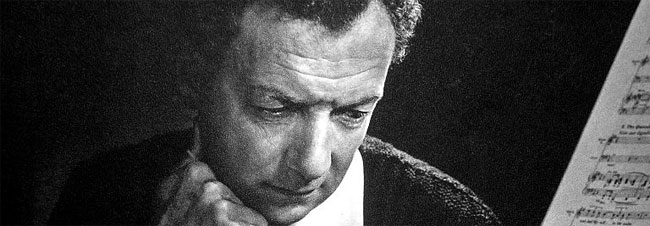
A number of artists who have participated in my Meet the Artist series are involved in concerts and events to mark the centenary of the birth of Benjamin Britten. In a series of occasional posts, I will be highlighting these concerts while allowing readers the opportunity to revisit some of the Meet the Artist interviews.

Britten at 100 – Kings Place, London: Thursday 7th – Saturday 9th February 2013

British pianist John Reid is presenting his first concert series in London at King’s Place as part of the celebrations for the centenary of the birth of Benjamin Britten.

Fellow-pianist Andrew Matthews-Owen and John have gathered together a wonderful group of performers to celebrate the life and work of Benjamin Britten, through his music, works by his contemporaries (composers, librettists and visual artists), the repertoire which he championed as founder and director of the Aldeburgh Festival, as well as through commissions by Simon Holt, Jonathan Dove and Martin Suckling.

Other performers include Nicky Spence, Nicholas Mulroy, Joby Burgess, Claire Booth, Andrew Radley, Oliver Coates, Richard Watkins and Christine Croshaw.

Saver ticket: Only £9.50! Your seats will be the best available left 1 hour before the performance. Book early as seats are allocated based on first come, first served.

Further information and tickets here

John Reid’s Meet the Artist interview
