As part of the Southbank Centre’s Festival of Love this summer, there have been three screenings of the classic love story Brief Encounter, with a live performance of the score (drawn largely from Rachmaninov’s perennially popular 2nd Piano Concerto) by pianist Leon McCawley with the LPO. The film screening took place during the second half of the concert and was preceded in the first half by a full performance of the Rachmaninov Concerto. The whole event was introduced by Lucy Fleming, daughter of Celia Johnson, who plays Laura, the female lead in Brief Encounter. Her introduction was full of wonderful anecdotes about the making of the film (which took place during the final year of the war), including extracts from Celia Johnson’s diary.

Trevor Howard as Alec and Celia Johnston as Laura in ‘Brief Encounter’

Based on Still Life, a one-act play by Noel Coward, and directed by David Lean, the plot centres around Laura, a suburban housewife married to a dependable but rather dull man. A chance meeting with a doctor, Alec Harvey, in the ‘refreshment room’ at the station (which is fiercely guarded by the wonderfully-named Myrtle Bagot, played by Joyce Carey with some of the best lines in the entire film) leads Laura into a brief but intense romantic liaison with the doctor, before circumstances and their own moral integrity forces them to part, never to meet again…. Much of the action is narrated by Laura, and despite the plummy, cut-glass RP accents of the main characters, the plot is sharply-observed, witty, very funny at times, and also heart-rendingly poignant. The story is underpinned by the wonderful score, and was in fact largely responsible for bringing this epic piece of music to wider fame. It has undoubtedly contributed to the enduring appeal.

It must be 20 years since I last heard the ‘Rach 2’ performed live (I think by Evgeny Kissin at the Proms) and I had forgotten what a gloriously rich and expressive work it is. Towering and climactic, it is demanding work to play, and one of the chief challenges is avoiding an overly-romantic reading of it. Leon McCawley’s warm tone was perfect for this work, combined with an exquisite clarity and an ability to highlight some of the less obvious details in the score. The entire work had a classical edge to it which avoided sentimentality, yet never detracted from the rich textures of the score.

Leon McCawley & the LPO (photo (c) Leon McCawley)

To perform the score with the film must have taken some very careful rehearsing to create such a smooth synthesis of film and soundtrack. In her introduction, Lucy Fleming explained that some complicated technical processes were used to strip out the original music from the film. A new soundtrack was commissioned especially for the RFH screening: this played while we watched the film was the most wonderful cinematic and musical experience, a nod back to the days of silent cinema, almost, when films would be accompanied and “narrated” by a resident pianist, small orchestra or organist.  A really superb evening celebrating great music and a great film, both of which have most definitely stood the test of time. Oh, and the enduring power of love…..

grahamfitchWho or what inspired you to take up the piano and make it your career? 

I was destined to read modern languages at Oxbridge but my heart wasn’t really in it. The piano was an all-consuming passion by my mid teens, and I’m afraid once the blinkers went on I couldn’t see myself being happy doing anything else.

Who or what were the most important influences on your musical life and career? 

Apart from my wonderful teachers Stephen Savage, Peter Wallfisch and Nina Svetlanova (each of whom gave me different parts of the puzzle), I was very influenced by András Schiff. Not only his playing (which blew me away the first time I heard it) but having the privilege of studying with him at Dartington in 1982 and then privately afterwards. Another profound influence was Leon Fleisher’s weekly piano class during my Peabody year, studying Chopin with Ann Schein and having some marvelous lessons with Julian Martin. Playing chamber music with some amazing string players and also playing the song repertoire have made me a more rounded musician than if I had just played solo.

What have been the greatest challenges of your career so far? 

I think juggling the various elements of what I do – playing, teaching, writing, adjudicating and now in my role as a principal tutor on the Piano Teachers’ Course (EPTA) UK. There never seems to be enough time to practise!

Which particular works/composers do you think you play best? 

I have played a wide variety of styles in my time, from the French and German baroque through to contemporary music. If push comes to shove I would have to say I identify most with the mainstream Classical and Romantic repertoire. I can’t imagine a world without Bach, Haydn, Mozart, Beethoven, Schubert, Schumann, Chopin – to name but a few.

What is your most memorable concert experience? 

If you mean as a listener, it would have to be Schiff’s Goldbergs at Dartington in 1982. One of the most memorable of my own would probably be playing the same work in Perth, Australia in the late 90’s – in front of an audience of pianists.

What do you consider to be the most important ideas and concepts to impart to aspiring musicians? 

A love of music, an appreciation of how music is built and how to communicate this in your playing. Aspiring musicians need a heck of a lot of discipline if they are going to amount to anything, but so often they don’t really know how to work. Part of my mission seems to be helping them learn how to practise.

Your ‘Notes & Notes’ recital on 14th September includes works by J S Bach and Haydn. Tell us a little more about why you selected these particular composers and works? 

I chose to play these particular works because I think Bach and Haydn go very well together. The B flat Partita and the G major French Suite are very often played, and I find I often teach them. The Haydn C major is such an inventive work – I just love the humour in it.

Why perform and talk about the music? How do you think this approach illuminates the music and composers for the audience? 

There is a growing trend for performers to talk about music, and to engage with their audience on a more personal and intimate level. If the venue is small enough, it can be a great way of enhancing the listening by offering what are basically spoken programme notes – and maybe some personal observations and anecdotes.

Graham Fitch’s ‘Notes&Notes’ recital is on Sunday 14th September 2014 at 3pm at Craxton Studios, Hampstead, north London. After the concert, the audience is invited to join Graham for a cream tea and a chance to socialise with other music lovers. Further information and tickets here. This concert marks the launch of the 2014/15 season of the innovative and popular South London Concert Series.

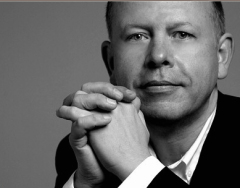
Graham Fitch, now based in London, maintains an international career not only as a pianist, but also as a teacher, adjudicator and writer. He has been appointed to the piano staff at the Royal Welsh College of Music and Drama, and runs private teaching studios in South West London, and the West End of London.

A published author, Graham has written several articles on aspects of piano playing and musical style. He has also produced a generation of teachers through his influence as a teacher. He is a regular contributor to Pianist Magazine, and is the author of a very successful blog, http://practisingthepiano.com/

www.grahamfitch.com


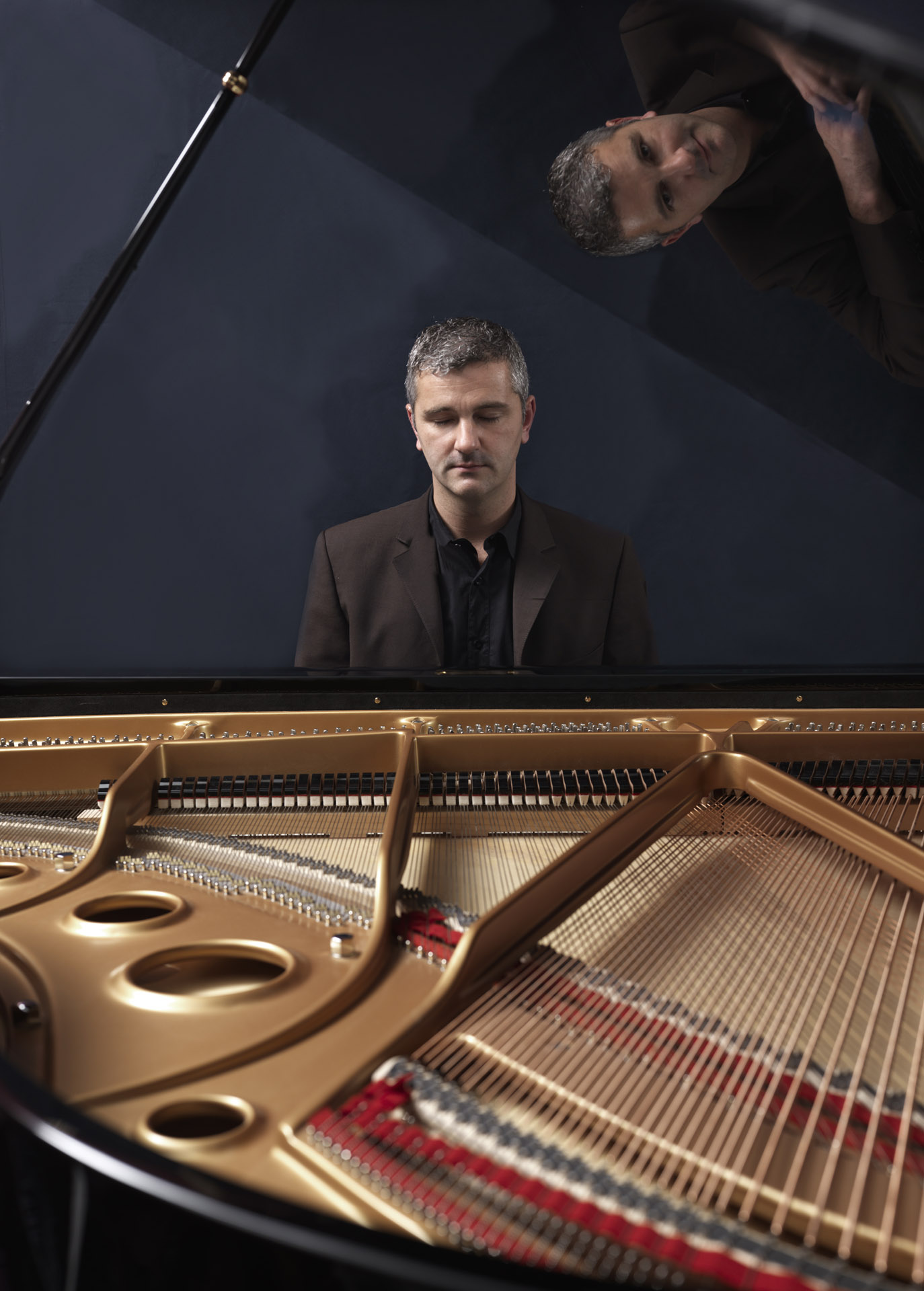
Daniel Grimwood (photo: Ian Dingle)

Who or what inspired you to take up the piano, and make it your career?

I owe everything really to Charlie and Ciss Hammond, who were our next-door neighbours when I was a toddler in Kent; they had an upright piano on which I used to fiddle around. Although I don’t come from a musical background it must have been apparent to my family that I was musically inclined very early on. I was too young to remember much about it, but my guess is that it was exactly the same instinct which makes us learn language as children. I was extremely fortunate that my first teacher, Dr Jennie Coleman currently of Dunedin, was beyond excellent and gave me a very solid foundation at a very early age.

Who or what were the most important influences on your musical life and career? 

Originally I had intended to be a violinist. At that time Yehudi Menuhin was it! I think the experience of having been a good string player has shaped my way with the piano.

Later on I hero-worshipped (and still do) Sviatoslav Richter and I am lucky enough to have been one of the few of my generation to have heard him live outside of Russia, an experience I shall never forget. No recordings represent what I heard on those evenings.

As I get older two figures return to my work over and over again; if I face a thorny technical problem or one of those little niggles where the head contradicts the heart I will ask, “what would Graham Fitch or Peter Feuchtwanger recommend?”. I believe the advice of these two men will always be a guiding light.

Being a pianist is less about playing the piano than it is about being a human being. The numerous extra-musical things which have made me who I am have also made me the artist I am. A musician can only express what they are and what they know.

What have been the greatest challenges of your career so far? 

I’m in my early forties and still a musician – that is challenge enough.

Which performance/recordings are you most proud of?  

My complete Faure Nocturnes. I recorded it in tremendously difficult emotional conditions. My whole heart is in it and it is the recording I feel most accurately mirrors my inner being.

Although I move forward from past stuff quickly, I will always take pride in my Liszt and Erard project. The concert at the Wigmore was a definite high point in my career and I can still bear to listen to the CDs, which is unusual for me. (http://www.youtube.com/watch?v=h_wSsz-K8Cg)

Which particular works do you think you play best? 

Schubert

How do you make your repertoire choices from season to season? 

I am a Gemini and my mind is always jumping from place to place, this has given me a very large repertoire so my choices are more often than not subject to passing whim.

Do you have a favourite concert venue to perform in and why? 

Give me a piano that works and people who want to listen and I will play.

Favourite pieces to perform? Listen to? 

This changes by the hour though I always seem to return to Schubert and Liszt who I think of as artistic brothers. Last year I subjected my home village of Brenchley to the entire first book of the Frescobaldi Toccatas, which I was in love with at the time – the following week I performed Liszt. I have a hungry mind and like not only to know the music posterity calls great, but the music around it.

Mostly I listen to music other than piano. I love the Organ and wish I were clever enough to play it well. I listen to the Symphonic repertoire most and lately I have been much impressed by the Symphonies and Cantatas of Sergei Tanayev.

I listen to the Monteverdi Vespers every Christmas and I love them.

Who are your favourite musicians? 

I favour different artists for different qualities. Some because they resonate with my nature, others because they challenge my nature. For example, I have long loved Ignaz Friedman, and there is something in his improvisatory streak that I recognise in myself. On the other hand, Daniel Barenboim, a pianist who couldn’t sound more different from me in many ways, fascinates me. The tone production is extraordinarily concentrated. I can’t get enough of his late Beethoven at the moment. I have worn out Stephen Hough’s CDs of the Saint-Saëns Concertos and I’ve lately very much enjoyed listening to Maria Joao Pires play Chopin with unusual depth. I just bought a splendid recording of Bart van Oort playing Field and Chopin Nocturnes on original pianos with highly original extemporisations. I could carry on…there are so many of us! But what is amazing is that we all have something totally different to say.

I can’t not mention Ingrid Haebler – hardly anyone I know has heard her Schubert Sonatas yet it is some of the most cultivated music making I have ever heard.

What is your most memorable concert experience? 

One in a London hotel where a leg fell off the piano.

What do you consider to be the most important ideas and concepts to impart to aspiring musicians? 

Follow your own instincts at all times. Arm yourself with as much knowledge as possible. Know your audience – all of them – and always remember that music is a birthright not a luxury. Never forget that we are the luckiest people alive; our job is our hobby – however difficult a life in music gets, and at times it really, really does – never lose sight of how much you love your art.


Where would you like to be in 10 years’ time?

In front of a piano

What is your idea of perfect happiness?

Dvorak in the bath by candlelight…

What is your most treasured possession?

My family

What do you enjoy doing most?

Outside of music, running

What is your present state of mind?

Contented


www.danielgrimwood.co.uk

Who or what inspired you to take up the piano and make it your career?

I started learning the piano when I was five after hearing my older brother play (he started learning a couple of years before me). I remember just being very excited at the prospect of having lessons as I always loved the sound of the instrument and, having heard my brother play a little, I just couldn’t wait to make those sounds myself. Deciding to make the piano my career came rather late for me, though: I didn’t grow up in a particularly musical environment, and the first time I ever saw a professional pianist play wasn’t until I was about 14! So I suppose I didn’t even realise it was a possible career until then. I think the real turning point was when I started having lessons with my second teacher Ian Jones. He used to lend me CDs every week and I’d listen to them obsessively. I grew up in the countryside and there weren’t many opportunities to hear live classical music, so my early knowledge of pianists came mainly from these recordings (Michelangeli’s Gaspard; Lazar Berman playing Rach 3; and Perahia playing Bach English Suites; and Aimard playing Ligeti Etudes to name a few). I think listening to these recordings was what made me decide to be a pianist.

Who or what were the most important influences on your musical life and career?

As I mentioned above I didn’t grow up in a particularly musical environment, but ever since I started studying at the University of York, I’ve been lucky enough to meet some amazing musicians and people, and it’s very hard to single one thing, or person, out. I learnt with a local piano teacher until I was sixteen, and, while she did cover the basics, I had all sorts of problems by the time I met my second piano teacher, Ian Jones (now teaching at the RCM). I owe a lot to him: he helped me through a really difficult period in my development. I was really quite behind as a pianist for my age, but he was a real inspiration and very supportive, and helped me catch up quickly. But I think the single most important thing that has inspired my musical life has always been the people that I have studied with, worked with, and met throughout my life (and not just musicians!). Anyone who thinks that western art music is on the decline should go to any university music department, festival, concert venue, or music college and they’ll see that there is just so much musical activity happening in every single direction, and involving such intelligent, creative, and interesting people. I find that extremely inspiring.

What have been the greatest challenges of your career so far?

Probably settling into music college once I got there! I had a real crisis once I arrived. It’s such an intense, competitive, and intimidating atmosphere, that I really struggled at first. It took me a long time to realise that you just have to focus on your own activities and ideas and that there’s not one right way of doing anything (even if your teachers say otherwise!). It’s so easy to get distracted by what other people are doing at a music college. Once I got used to all of that I had a great time.

Which performance/recordings are you most proud of?

I’ve been pretty lucky in the last 5 years, having done so many interesting and challenging projects. One of my favourite performances has to be doing Messiaen’s Turangalîla-Symphonie with the University of York Symphony Orchestra and Cynthia Millar, which was in 2011. It’s such an ecstatically joyous piece and so much fun to play that it’s a hard experience to beat! I’d love the chance to do it again someday……

Which particular works do you think you play best?

I’ve always been fairly proud of my Debussy Images (particularly book II). And Brahms’ 1st Concerto. Turangalîla is up there too.

How do you make your repertoire choices from season to season?

I never have total control over this, which I think is healthy. It’s great when you have to learn a piece you don’t know for a specific project and it ends up being a real discovery for you, and something you might not otherwise have come across. Obviously this does sometimes go the other way! The rest of the time I just try to programme the things I’m particularly interested in at that time. I also like to keep learning new repertoire each season. This makes things a little harder, but it’s so satisfying and you learn so much with every new piece you play that I try to include a new one per programme.

Do you have a favourite concert venue to perform in and why?

Wigmore Hall is a lovely place to play – beautiful acoustics and a wonderful instrument. I also love going back to where I studied for my undergraduate degree (University of York) – the Sir Jack Lyons Concert Hall there has such an intimate atmosphere. It is a little over-resonant, but for certain repertoire I haven’t yet found anywhere better. But every venue has its own pros and cons really, and you’d have to be unlucky not to find at least one piece in the programme that the venue really suits.

Favourite pieces to perform? Listen to?

I love Bartók at the moment. Any of the piano pieces or string quartets. Morton Feldman has been a recent obsession. I haven’t played anything big yet (but learning For John Cage very soon), so will have to get back to you on the joys of performing Feldman! Debussy has always been a favourite of mine to play. Recently, I’ve played a bit of Ives which was great to perform — really brash, eccentric, and full of life. Will certainly be doing more in the future. And I always love to hear or play anything by Cage.

Who are your favourite musicians?

It’s always the composers that interest me. John Cage is a real hero of mine – amazing ideas, amazing music, and such a positive influence on the 20th Century! Ives was a fascinating character – full of contradictions and astonishing to think that he was writing such experimental music so early in the 20th Century. Pianists I love are Wilhelm Kempff, Alfred Cortot, Myra Hess and Maria Joao Pires.

What is your most memorable concert experience?

Very hard to single one out. Probably seeing Anton Kuerti give a lecture-recital on Beethoven’s Diabelli Variations several years ago at the Chethams Summer School. He knew the piece so intimately and played so wonderfully that all the usual performer/audience boundaries seemed to break down: it just felt like we were inside the music. I actually found it hard to move from my seat afterwards.

What do you consider to be the most important ideas and concepts to impart to aspiring musicians?

Do the things you believe in; don’t be distracted by others; constantly re-assess everything; and don’t give up!

What are you working on at the moment?

Chopin’s Barcarolle; five Scarlatti Sonatas; Luigi Nono’s Sofferte onde Serene for piano and tape; Mists by Xenakis; Sposalizio by Liszt; and Mantra by Stockhausen.

What is your idea of perfect happiness?

Walking and wild camping in the Scottish Highlands.

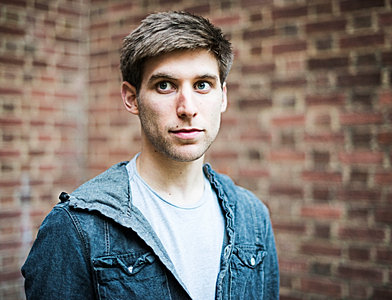
Joseph Houston performs at the Ryedale Festival on Friday 25th July. Further details and tickets here

Described by the Financial Times as a musician of ‘versatility and poise’, Joseph Houston is a London-based pianist specialising in Contemporary Music. He studied at the University of York and the Royal College of Music where he received a first-class honours degree in Music and an Mmus in Advanced Performance with distinction. While at the RCM he won the Frank Merrick Prize, the 2nd Prize in the Beethoven Piano Competition, the Emanuel Piano Trophy (North London Music Festival), and a place on the London Sinfonietta Academy 2010. His teachers have included Ian Jones, Ashley Wass, and Andrew Ball.

In his first year at the RCM Joseph was selected to perform British composer Michael Zev Gordon’s The Impermanence of Things for solo piano, electronics, and ensemble with the RCM’s New Perspectives Ensemble. Since then, he has performed at venues across the UK, including Steinway Hall, St Martin-in-the-Fields, Weston Auditorium (University of Herts.), the Sir Jack Lyons Concert Hall (University of York), Kings Place, Cafe Oto, the Southbank Centre’s Purcell Room, the Royal Albert Hall’s Elgar Room and Wigmore Hall. Soon after graduating from the RCM, Joseph was invited to perform a piano duet version of Brahms’ 1st Piano Concerto with his teacher, Ashley Wass, resulting in a performance at the RCM’s Brahms festival and conference in 2011. He has also been in demand as a concerto soloist, performing such classic 19th and 20th century works as Messiaen’s Turangalîla-Symphonie with the University of York Symphony Orchestra and Cynthia Millar (ondes Martenot), conducted by John Stringer; Tchaikovsky’s Piano Concerto No. 1 with the Henley Symphony Orchestra conducted by Ian Brown; John Cage’s Concert for Piano and Orchestra with the RCM’s Variable Geometries Ensemble; Brahms’ 1st Piano Concerto with the De Havilland Philharmonic Orchestra; and the UK premiere of Cheryl Frances-Hoad’s Ryedale Concerto for solo piano and orchestra at the 2013 Ryedale Festival. Also active as a chamber musician, Joseph is the principal pianist of the Octandre Ensemble, a collective dedicated to the promotion of young composers and rarely-performed Contemporary repertoire.

Full biography on Joseph’s website:

www.josephhouston.co.uk