This week I was delighted to attend a concert to launch British pianist Richard Uttley’s new CD Ghosts and Mirrors. Richard is a passionate advocate of contemporary piano music, and this CD, his third, follows his previous recordings with its focus on contemporary and 20th-century music. In addition to works by Toru Takemitsu and Luciano Berio, the disc includes the first recordings of Marvin Wolfthal’s Lulu Fantasy and Mark Simpson’s Barkham Fantasy which was written especially for Uttley and was premiered at the Royal Festival Hall in 2010.

Richard explains the title of his CD as “the works collected here [are] are reflection on something”, and the “ghosts” appear, in part, in memoriam to departed composers, namely Messiaen (Takemitsu/Rain Tree Sketch II and Murail/Cloches d’Adieu, et un Sourire). There are more metaphoric ghosts and reflections here too: Thomas Ades harks back to the Mazurkas of Chopin and Szymanowski in his Op. 27 Mazurkas, while Marvin Wolfthal’s Lulu Fantasy is a paraphrase on themes from Berg’s opera which charts the rise and horrific fall, ending in death at the hands of Jack the Ripper, of its eponymous heroine. In Mark Simpson’s Barkham Fantasy, the work opens with a fragment of an “alberti bass”, an eighteenth-century musical device in which chords are broken or arpeggiated to create continuous sound.

It can be hard to present a programme entirely comprising contemporary music in concerts (witness the BBC’s anxieties about this in its Proms broadcasts this year – more on this issue here) and some performers seek new ways to present contemporary programmes which challenge and excite the eyes as well as the ears. Thus, Richard Uttley, was joined onstage by Nat Urazmetova, a visual artist, who created the artwork for the CD, and who designed and mixed live visuals as Richard played. These were not a simple “accompaniment” to the music, but rather had been designed to reflect not only the mood and characteristics of the pieces performed (a selection from the CD), but also textures, colours, dynamics and articulation. From trembling, pulsing sea anemones to a dizzying, plane’s eye view of London at night, the frenetic rhythm of a weaving machine to an unsettling tour of a ruined Gothic church, these visuals enhanced and informed the music, without detracting it from it. Perhaps the most powerful was the film which accompanied the Lulu Fantasy, suggesting the horrible fate of the protagonist through shuddering black and white images, hinting at sexual depravity and violence.

It was evident throughout the performance that Richard really enjoys the challenges, both musical and technical, of playing this kind of repertoire. His total immersion in and understanding of this music produced a performance that was entirely convincing, and, more importantly, extremely absorbing.  A pristine sound, clean articulation and broad dynamic range combined to create one of the most exciting concerts of contemporary music I have attended. I was pleased to find even more to delight and intrigue in the CD, which is also elegantly designed with copious and intelligent liner notes by Richard, with contributions from the composer’s themselves.

Recommended.

‘Ghosts and Mirrors’ is available on the ARC label
www.richarduttley.com


(photo credit: Rory Isserow)

Who or what inspired you to take up the piano, and make it your career? 

I don’t remember not playing the piano! But as a career – the London-based Swiss pianist, Albert Ferber, with whom I was studying, encouraged me to make my debut at Wigmore Hall in 1974.

Who or what were the most important influences on your musical life and career? 

All my teachers in different ways; musical members of the family; friends and colleagues who believed in me. The composer William L Reed was a marvellous mentor and facilitator. Perhaps most important of all, a passion for the music I had found and a powerful desire to communicate it.

What have been the greatest challenges of your career so far? 

To focus on priorities.

Which performance/recordings are you most proud of?  

The ones where there has been that special communication with listeners – whether in the concert hall or in feed-back from far-flung corners of the world. I do not wish to be solely defined by the many Grainger ones, but they have presented much repertoire that is new, fresh, entrancing, life-enhancing – hard work, but what a joy!

Which particular works do you think you play best? 

The particular ones for which I feel a gut instinct, whether by Bach, Beethoven, Schumann, Brahms, Chopin, Ravel, Debussy, Rachmaninov …. the list goes on.

How do you make your repertoire choices from season to season?

That is dictated by the projects I am undertaking.

Do you have a favourite concert venue to perform in and why? 

I have enjoyed different venues for different reasons – the Melbourne Recital Centre is lovely, but so too is London’s Kings Place for its vibrant sense of enterprise (and very fine hall), and St John’s, Smith Square for its beauty. I have often relished the pin-point acoustics of Wigmore Hall, and the warm atmosphere of the Purcell Room. It was a thrill to play on the stage at Covent Garden for a gala Australia Day concert and at the Royal Festival Hall in Grainger’s ‘The Warriors’. By contrast, a good piano in a large music room can be perfect for a recital where one introduces the music.

Favourite pieces to perform? Listen to? 

Most recently Bach transcriptions and originals for a Bach CD on LIR Classics. And see above……

Who are your favourite musicians? 

To hear: I so loved the Pollini Beethoven cycle, and in different sonatas, Brendel (the last three) and, unexpectedly, Barenboim in some of the early ones. Of course, that force of nature, Argerich!  On disc – Dinu Lipatti, Solomon and Richter.

For many years I played two piano programmes with my friend and colleague, John Lavender. We gradually developed a way of creating one texture from two pianos. We recorded much new Grainger repertoire on three discs and John also made some splendid two piano versions of such works as Tchaikovsky’s ‘Romeo and Juliet’ overture as part of an all-Russian programme.

I have been lucky to work with so many fine artists – in earlier days, the mezzo Muriel Smith, more recently, certain outstanding singers – Stephen Varcoe, Martyn Hill, James Gilchrist and Della Jones, in the Chandos Grainger recordings and in concert. Wayne Marshall was a memorable colleague both as pianist and conductor. It has been a great pleasure to work with the cellist, Rohan de Saram, who has recently returned to the standard repertoire along with his extraordinary abilities and achievements in the field of contemporary music. Earlier women pianists who inspired me in concert included

Lili Kraus, Alicia de Larrocha and Rosalind Tureck. Also Hephizibah Menuhin, whom I knew and admired as a friend.

These are but a few names amongst many others…

What is your most memorable concert experience? 

Too many memorable experiences to choose one – but playing in 1980 in the Beijing Conservatoire and to a radio audience they told me averaged 50 million – was certainly the largest audience ever!

What do you consider to be the most important ideas and concepts to impart to aspiring musicians?

Be yourself. Find your unique path. Work hard. Know that beyond failure there is always the next step. Cherish your friends and the wonderful opportunities we have to share our music.

What are you working on at the moment? 

A concert at King’s Place, London, to mark 40 years since my London debut.

It will be a programme filled with melody and shared with some good friends, the Fitzwilliam String Quartet and a group of gifted young professionals, as we shall be premiering a piano concerto movement written by Grainger when he was just 13 years old.

I’ll start with mighty Bach arr. Liszt and progress through Grieg (lovely Grieg) by way of Grainger to the Dvorak Piano Quintet Op 81 – what an utterly gorgeous work.  

What is your present state of mind? 

Expectant.


Penelope Thwaites’ 40th Anniversary Concert takes place at London’s King’s Place Hall One on Wednesday 8th October. She is joined by the Fitzwilliam Quartet and outstanding young professional artists in a programme of music by Bach arr. Liszt, Grieg, Grainger and Dvorak. Further details here


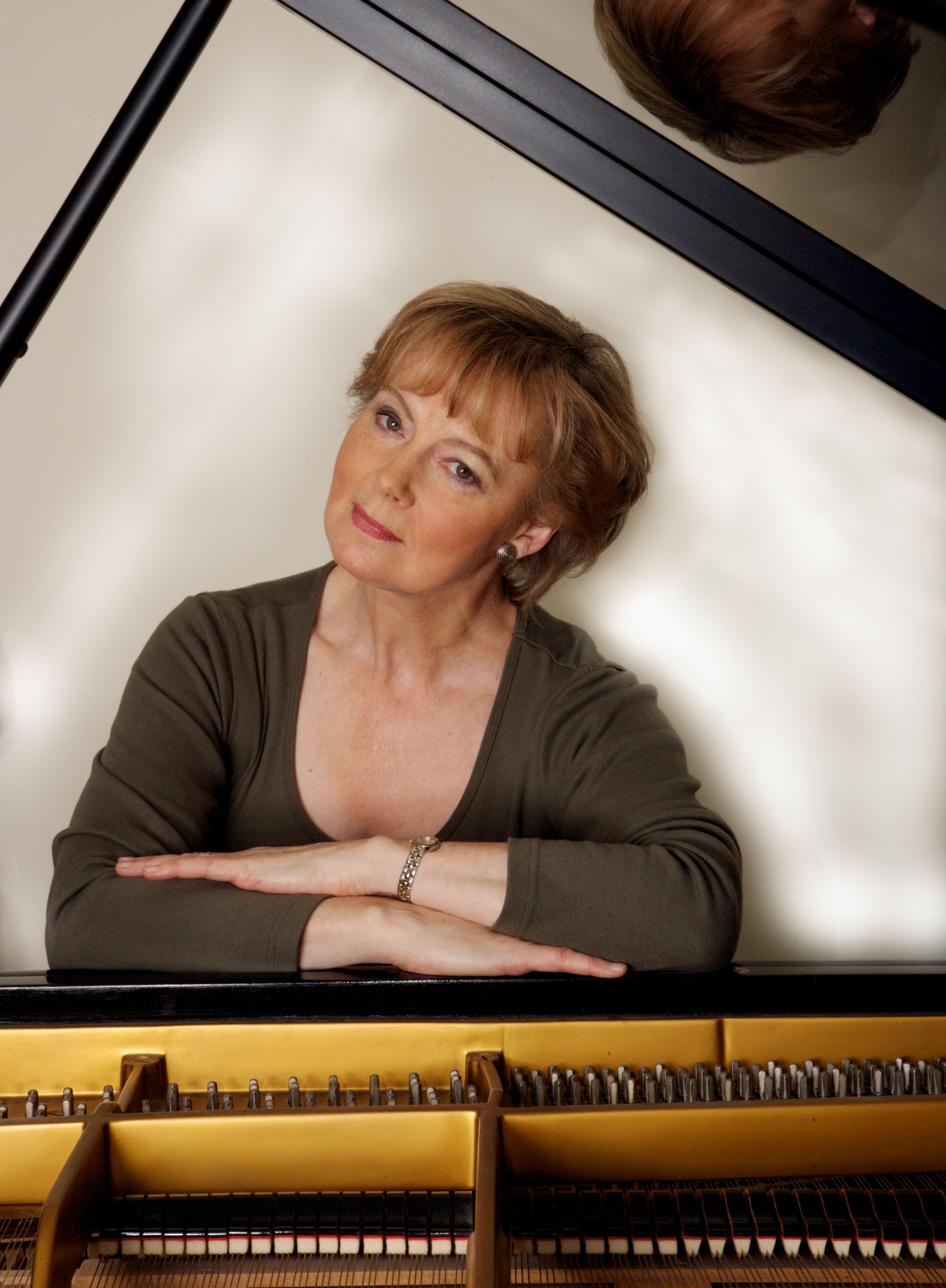
London-based pianist and composer Penelope Thwaites has performed and broadcast in over thirty countries on five continents. Since her Wigmore Hall debut in 1974, she has appeared regularly as recitalist in major concert halls, and in a wide repertoire she has built a reputation as an intensely communicative artist. As concerto soloist she has appeared with the Philharmonia, the London Philharmonic Orchestra, City of London Sinfonia and the BBC Concert Orchestra, and with leading orchestras in Australia, Europe and America.

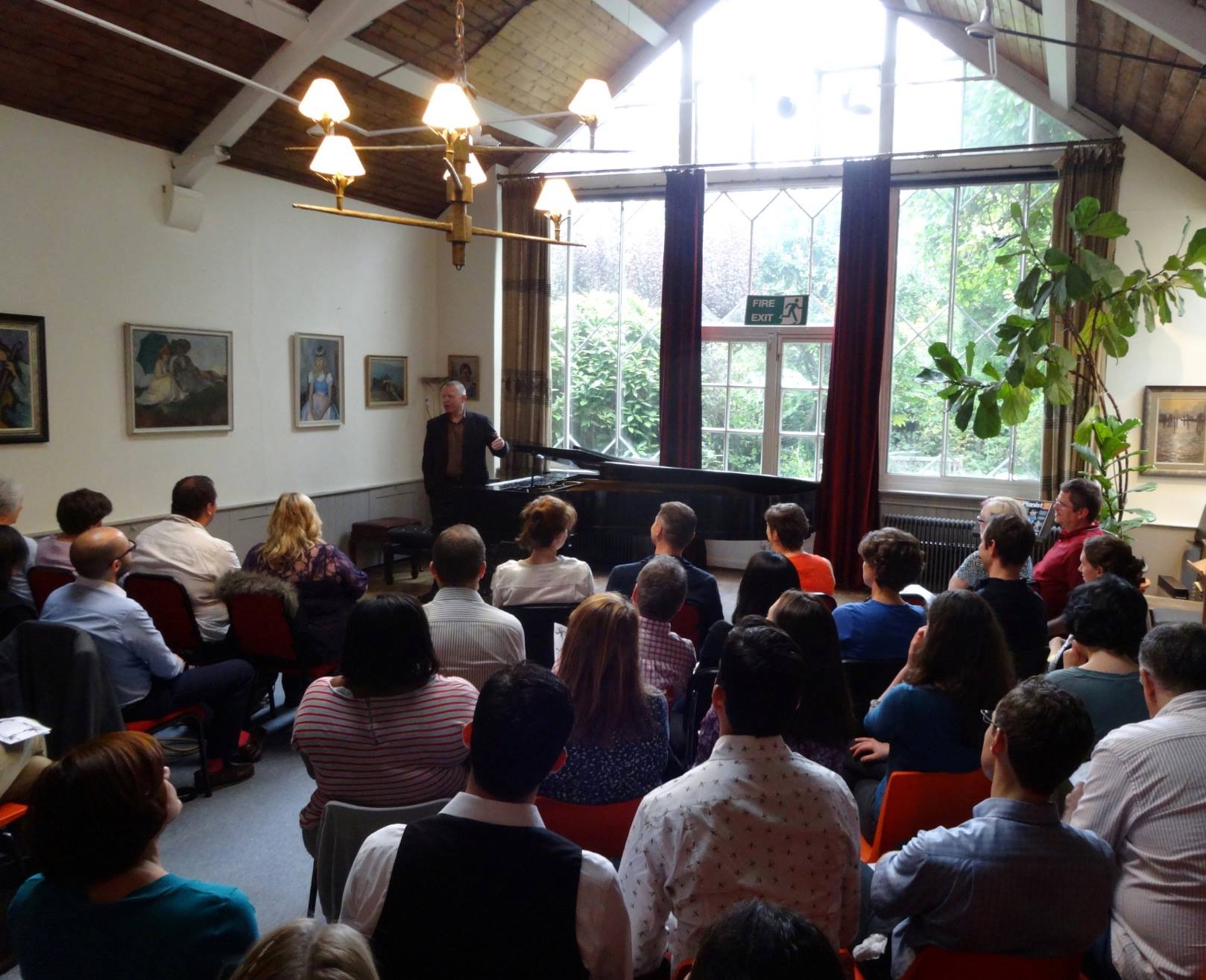
On a fine mid-September afternoon a group of adult pianists, piano fans and music lovers gathered at Craxton Studios for a recital and talk by acclaimed pianist, teacher and writer Graham Fitch.

Craxton Studios, a beautiful Arts & Crafts house in Hampstead, north London, has an important musical heritage and is therefore the perfect place for concerts and gatherings of musicians. Originally built by the artist George Hillyard Swinstead for his family and as his art studio, the house was bought by Harold Craxton and his wife Essie in 1945 after they and their family were bombed out of their home in St. John’s Wood during the Blitz. Professor Harold Craxton OBE was an eminent and much-loved pianist and teacher (he was a Professor at the Royal Academy of Music), and those of us of a certain age will know his name from ABRSM editions of Beethoven and Co, edited by him and Donald Francis Tovey. The house on Kidderpore Avenue became a meeting place for musicians to come together and the house became a focal point for the artistic and musical milieu of London. This tradition continues today, as the house is used not only for concerts but also rehearsals, auditions and as a film location.

When Harold Craxton died in 1971, a trust was established in his name to support young, extremely talented musicians embarking on a professional career.

I first visited Craxton Studios in December 2013 for a concert by pianist Sarah Beth Briggs. I was impressed by the warm atmosphere and particularly the special ambiance and decor of the venue. Concerts are held in the artist’s studio, a large airy room at the back of the house, adorned with paintings, which looks out over the garden. The piano, which was Harold Craxton’s own instrument, is an early 20th-century Blüthner. (There is another grand piano in the small rehearsal studio on the top floor of the house.) The Craxton family still manage the property and it continues as a lively hub for musical activities in London.

‘Notes&Notes’ with Graham Fitch was a new concert concept for the South London Concert Series. I have always found concerts in which the performer introduces the music most interesting, and I find audience members enjoy hearing anecdotes about the music or why particular pieces are important, and as such offer something more personal and interesting than a standard written programme.

Graham Fitch introducing his programme

Graham’s programme consisted of Bach’s Partita No. 1 in B-flat and the French Suite, No. 5 in G, both popular and accessible works, and Haydn’s Piano Sonata No. 50 in C, Hob. XVI/50, written while the composer was living in London. Graham introduced the music, explaining that Bach was drawing on a tradition of presenting a suite of stylised dances popular at the time (Allemande, Courante, Sarabande, Gigue etc). He also described his first encounters with this music and his studies with Andras Schiff, who has received high praise for his own intepretations of Bach, and who “gave” Graham the ornaments in the French Suite. Graham also explained that there is no “right way” to play Bach and that a romantic interpretation is as valid any other.

Graham combines a vibrant, colourful sound with an ability to highlight all the different strands of melody, voices and interior architecture in the music, together with subtle use of pedal, sensitive phrasing and restrained rubato. As his introduction to the Haydn Sonata, he explained that Haydn was working with John Broadwood, the London piano maker, and the Sonata shows the composer experimenting with the range of possibilities afforded by an English piano (as opposed to the Viennese instruments which Haydn had previously been used to). Graham’s performance sparkled with wit and humour, while the middle movement had a lovely arching melody, warm and supple.

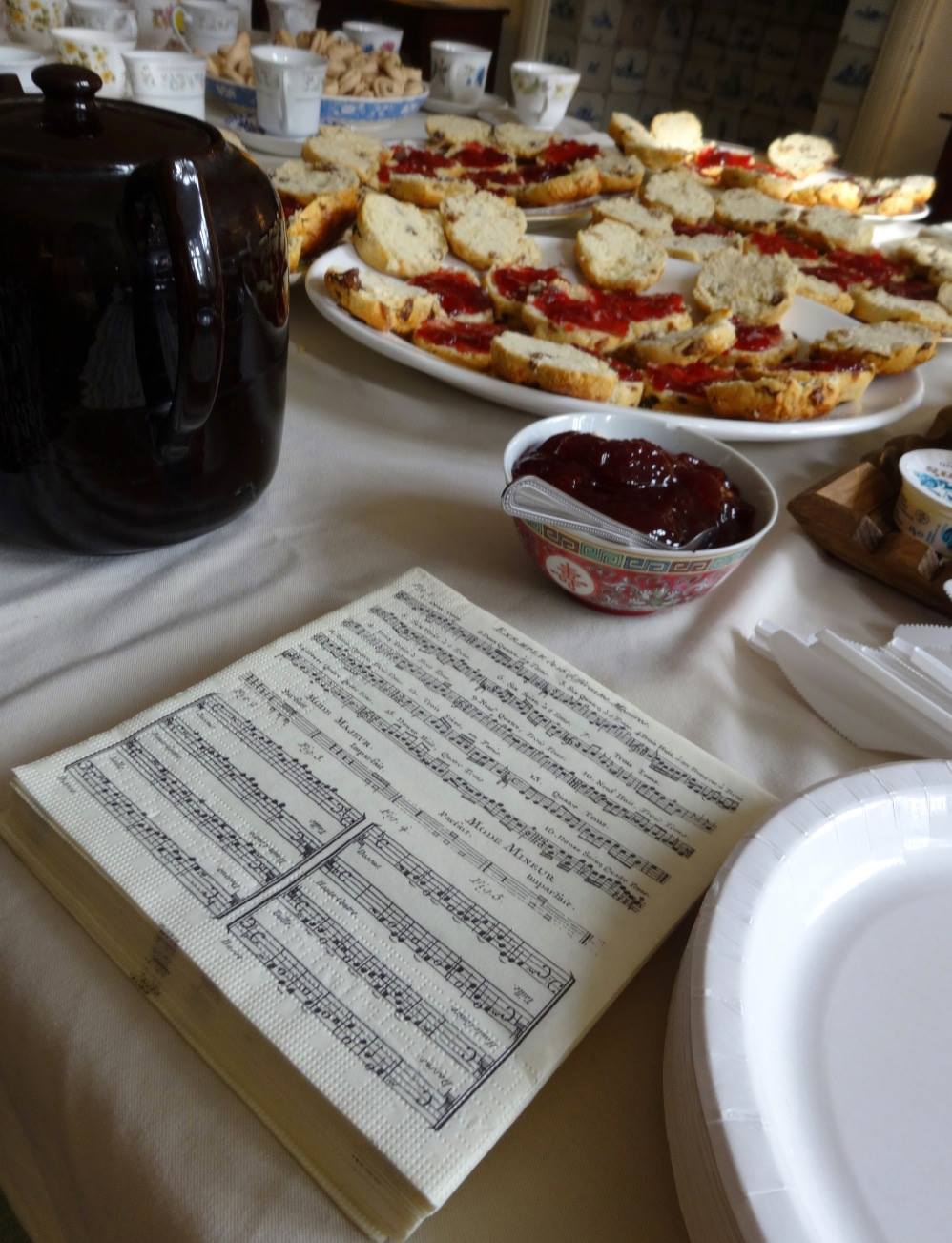
Afternoon tea & scones

After the music came the tea party and guests gathered in the dining room to enjoy tea and scones (with clotted cream, of course) and the chance to meet Graham and talk to other pianists and piano fans. There were many friends amongst the audience and the house was full of conversation. Some people even went to try the piano, before the studio was cleared ready for an audition the following day. The general consensus was that this was a really lovely event, combining music, words and conviviality, and we hope to host a similar concert at Craxton Studios next year.


Craxton Studios website

Meet the Artist……Graham Fitch


(picture credit – operaomnia.co.uk)

British pianist Benjamin Grosvenor is no stranger to the Proms: in fact, since he made his Proms debut, performing with the BBC Symphony Orchestra at the First Night in 2011, he has become something of a Proms veteran. However, this concert marked his debut in the Chamber Proms, held at Cadogan Hall.

The popular and precocious pianist presented a programme of music by Chopin, Mompou, Ravel and Gounod/Liszt, together with the world premiere of a new commission by Judith Weir, the newly-appointed master of the Queen’s music. A dance theme pulsated through this interesting and varied programme as Grosvenor explored the waltz from the contrasting perspectives of Ravel and Liszt, with interjections from Mompou, and opening with Chopin.

Read my full review here:

http://bachtrack.com/review-benjamin-grosvenor-chamber-prom-september-2014

Date reviewed: 1st September 2014