Guest post by Douglas MacGregor

My mother died when I was only seven years old, but I never grieved. It was not until twenty-five years later that all that suppressed grief hit me. The experience took over my life for a year and, as a musician and composer, I naturally turned to music to help me through.

At the same time, I was doing a Masters in ethnomusicology at SOAS and I completed my dissertation in the cross-cultural role of sacred music in grief and death rituals where I linked the ‘dual process’ psychological model of bereavement to musical practices around the world.

The culmination of these two experiences – one highly personal and emotive, the other more objective and researched-based – led me to found a new project called Songs of Loss and Healing, which aims to explore further the connection between music, loss, grief and healing.

Music and loss 

The link between music at times of death is virtually ubiquitous: from David’s biblical dirges and the myth of Orpheus to modern pop music, from hymns and requiems to traditional laments, folk songs and ritual musical practices the world over. Ethnomusicologist Steven Feld even pondered whether some of the earliest forms of music would not have been primitive polyphonic laments upon death.

Through my research, however, I noticed that despite the ubiquity of the link between music, loss and grief, very little was actually understood about the role of music. We might all have an inkling of how music has helped us with our own losses, but there is very little formalised or academic knowledge, especially when it comes to what is happening on the emotional and psychological level. Non-academically, there also seems to be little music-related information or guidance for those in times of loss save for a handful of articles and a few playlists.

In traditional societies, music has almost always been tied to rites and ritual surrounding death. It often harnesses raw emotion and channels it into the ritual outcome, bringing communities together in shared sentiment around collectively held beliefs in death and the afterlife. Numerous ethnographic studies indicate that many of these musical ceremonies have a very real psychological effect in helping the participants cope with loss and grief.

The Yolngu, aboriginal people in Northern Australia, for example, have highly performative musical funeral rites that last for two weeks. Women spontaneously start singing weeping songs upon a death and, over the coming days, these songs turn into personalised narratives of the deceased taking in kinship and ancestral connections and totemically related landscape. These rites lead the bereaved along a path from raw emotional outpouring to a culturally negotiated grief, separation from the dead and re-integration of bereaved back into society. Remembrance is then possible through such songs of place and kinship.

In modern Western societies, many have turned away from traditional systems of belief as funerals, grief and remembrance become ever more personalised and idiosyncratic. But this does not necessarily mean that people have found equivalent replacements, especially so when it comes to overwhelming experiences of grief.

Indeed, many taboos on death and grief persist, and the belief that grief is or should be highly personal leaves many alienated and suffering alone. Furthermore, low death rates mean that many have little or no experience of death while the secularised individualism of West often means for fragmented communities and scattered families. When death does strike, individuals and families may simply lack the necessary tools, community or guidance.

Music’s Role 

Music, however, is one of the most powerful tools we have in times of loss. Understanding the role it can play can help artist and listener better utilise and direct this power.

Firstly, music is a legitimate space for grief – even extended forms of grief that last long after society deems it acceptable to talk about. Art has always been a space that can communicate past taboo, express the unsayable, give new perspective and open dialogue.

Music therapists have long known that music can help externalise hidden feelings, help regulate emotion, and give that emotion direction. Furthermore, in music, emotion can be communicated, allowing for a sharing of experience – it shows us we are not alone in our internal worlds and can bring us together. Music can also simply allow us to feel a connection with someone lost and remember them.

Music is so fascinating as it finds itself on the border between articulable and the inarticulable elements of consciousness; on one hand, the intellectual and narrative, and on the other, the emotional experience, the subconscious or the soul. Especially in times of loss when we may most keenly feel our emotional undercurrents, music helps us connect with and discover ourselves. It can potentially bridge the gap between intellectual and emotional responses.

My personal experience

When I experienced delayed grief quarter of a century after my mother died, music not only helped me discover, explore and express what was just beyond my conscious view – grief, trauma, half-forgotten memories, intangible senses of place and presence – it also helped me to process those feelings, gain ownership of them, and direct them gradually towards a place of healing.

By the “end”, I had written 7 pieces of solo guitar music, manifestations of and meditations on grief, memory and healing. Each piece is being recorded and filmed in a different specifically chosen non-studio location. The pieces are being released each month along with an accompanying text designed to contextual the music and explore the role music played for me.

Songs of Loss and Healing

It seems to me, however, that a much wider conversation needed to be had and much more exploration to be done. The project Songs of Loss and Healing aims to open up that conversation, to explore this musical connection further, and simply to reach people through music.

In the modern world, our relation to death and grief is changing. With that, musicians and composers should be at the forefront, engaging with, responding to and re-interpreting the ancient link between music and death. For readers of this blog, it might be of particular interest, for example, to see a classical pianist such as Igor Levit in his new album ‘Life’ talk so directly about his personal grief and remembrance through classical music.

In grief, the more we discover and accept, and the more we allow ourselves to feel non-judgmentally, the more likely we are to experience grief as healing. Whether we want to feel and express the existential torment of grief or whether we would like to spiritually re-connect to the departed through song, music, with its keys to the transcendent and to our emotional inner-worlds, is uniquely placed to help us cope with loss. Music can be a consolation, but it can also be much more.

Songs of Loss and Healing aims toexplore and spur this on with a series of interviews, articles, podcasts, releases and collaborations across genres and cultures. It also aims to develop a community engagement angle by providing online resources, organising events, and raising awareness on the potential of music in grief.


Songs of Loss and Healing is still in the early and exploratory stages. Right now, we are looking for artists with relevant experience who would like to contribute or be featured.  

Links: www.songsoflossandhealing.com


Douglas MacGregor is a composer and guitarist. Read more
 

r_800x640

Who or what inspired you to take up composing, and pursue a career in music?

I began writing music during my first year at my secondary school, William Ellis School in North London, and received help from three of the teachers there.  I showed my early compositional efforts to the school’s Head of Music, Douglas Potts, who gave me some practical advice and programmed several of my works in school concerts. Lois Rycroft, my flute teacher, visited my (initially somewhat sceptical) parents with her husband, Frank  (then principal horn with the RPO), and managed to convince them that I should pursue a career in music.  Julian Silverman taught me A Level Music as well as piano and composition during my last two years at the school, and was the first truly inspiring musician I ever met.  Julian was hugely talented and very knowledgeable: to this day I look back on his teaching and encouragement with immense affection and gratitude.

Who or what were the most significant influences on your musical life and career as a composer?

I first became aware of the music of Brian Ferneyhough during my last year at school, and eventually met him in 1976 while working as Music Editor at Peters Edition, London.  Although I had barely begun writing music I felt to be satisfactory at this time, Brian was incredibly encouraging, and was largely due to him that I gave up full-time work in publishing and went to study with him at Freiburg between 1981 and 1982. It has been an enormous privilege to know and to have worked with one of the finest minds in music today, the creator of music that is among the most beautiful, sensuous, powerful, original, and provocative work produced in our time.

What have been the greatest challenges/frustrations of your career so far?

Like many composers, I have always found writing music to be immensely difficult.  I usually work very slowly, and find it very hard not to be over-critical during the composition process.

What are the special challenges/pleasures of working with particular musicians, singers, ensembles and orchestras?

During the time I have been active as a composer, I have come into contact with a sizeable number of musicians to whom I owe a great deal both for their hard work in making my music come alive in performance, and for the help they have given me in overcoming technical and other problems I have encountered during composing.  It is also a pleasure to share an after-concert meal or drink (or both) with the people who have played my music, and, of course, some of the performers with whom I have worked have become close personal friends.  Like most composers, I imagine, I have found the internet to be incredibly useful, for contacting performers during the composition process, researching into extended techniques, fingerings and so on and for sending scores and promoting my work.  It is hard to believe that, at one time, much of this was done by letter, or by phone (which could involve very expensive international calls).

Of which works are you most proud?

I am proud of all my work, but I would like to mention the following five pieces in particular: Music for 25 Solo Strings (1981-84), Tacciono i Boschi (1981) for soprano and piano, The ‘Traces’ Cycle for solo flute (1991-2006), Das Buch Bahir for 9 players (2004-5) and Elided Dilapidations (after C.P.E. Bach) for piano (2014-15).  I also have a special fondness for my “prodigal son” piece, Passeggiata for orchestra (1989-2017)

How would you characterise your compositional language?

As a Ferneyhough pupil, it is difficult for me to avoid using the “complexity” word.  However, while my music certainly features nested tuplets, microtones, extended performance techniques, and other elements of the armoury of the complex composer, it is not defined by them.  I like to think that the notable features of my music are harmonic clarity, structural integrity and lyricism, as well as a tenuous sense of optimism and a concern with intellectual and spiritual continuity diametrically opposed to much present-day musical culture. Underlying what I write are a wide range of references, including Renaissance and Baroque music, the music of South-East Asia, Jazz, Blues, Mediaeval and Renaissance philosophy, Kaballah, green politics, recent scientific developments, film noir, Jacobean tragedy, the Gothic novel and historical slang.

How do you work?

I have always had to combine writing music with teaching jobs and other activities, so I soon learned to fit composing into any available time slots.  I gave up teaching in July 2016, but, presumably owing to some special composer-related variety of Parkinson’s Law, I still find that there are many demands on my time, which take me away from the composing desk.

Who are your favourite musicians/composers?

I love the music of a large number of living composers.  Of those no longer living my special favourites include Dunstable, Dufay, the composers of the Eton Choirbook, Tallis, Victoria, Monteverdi, Schütz, Corelli, Bach, C.P.E Bach, Haydn, Beethoven, Schubert, Berlioz, Liszt, Brahms, Mahler, Scriabin, Zemlinsky, Schoenberg, Webern, Berg, Janacek, Varèse, Stockhausen, Boulez, Xenakis, Maderna, B. A. Zimmermann and Dallapiccola,.

What is your most memorable concert experience?

It would have to be a toss-up between Boulez conducting Stockhausen’s Gruppen, Berg’s Altenberg Lieder and Three Fragments from Wozzeck and Stravinsky’s The Rite of Spring in the Proms on 3rd September 1967 and Klemperer conducting the Philharmonia Orchestra in Beethoven’s 9th Symphony at the Festival Hall on 5th July 1970.

What do you consider to be the most important ideas and concepts to impart to aspiring composers?

Though (as stated above) I find composing to be difficult and often frustrating, it is ultimately rewarding. If you are sure you possess a gift for it, stick with it, and build up a body of work to show to potential performers or concert promoters.  Be generous to your fellow composers, even if you are jealous of their success, and try not to waste your energy getting depressed about the unfairness of the system that appears to reward other composers (who you may well consider less talented than you) with performances and commissions.  Don’t be put off by those who tell you that, if you are earning little or no money from writing music, you are somehow not a “proper” composer.    Above all, be grateful to those who perform your work.  They spend long hours practising in order to be able to play to the highest standard, and will often be performing new music because they believe in its importance, rather than for financial gain.

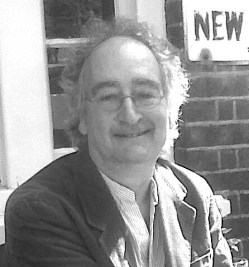
James Erber was born in 1951 in London. Having gained Music degrees at the Universities of Sussex and Nottingham, he spent a year studying composition with Brian Ferneyhough at the Musikhochschule, Freiburg-im-Breisgau. He has worked in music publishing and education.
His music has been widely performed and broadcast throughout Europe and in the USA, Australia and New Zealand by many eminent soloists and ensembles. It includes Epitomaria-Glosaria-Commentaria for 25 solo strings (1981-84), The ‘Traces’ Cycle for solo flute (1991-2006), two string quartets (1992-94 and 2010-11), Das Buch Bahir for 9 instruments (2004-2005), The Death of the Kings for 11 instruments (2007) and Elided Dilapidations for piano (2013-14).
Matteo Cesari’s recording of The ‘Traces’ Cycle and three other shorter works for solo flute is available on Convivium Records.  Other works can be found on NMC, Metier and Centaur Records (USA).

Why would a talented leading British composer include a document called a Failure CV on her website, alongside details of her extensive oeuvre and the many plaudits for her work?

British composer Cheryl Frances-Hoad is not alone in including such a document on her website. She prefaces it with the comment that “for every success I have, there are usually a LOT more failures that nobody ever gets to hear about”, and each entry on this Failure CV includes a note of how each project or submission turned out. On one level, it’s sobering reading – proof that composers (and musicians in general) must work hard and that success is often hard won. But it’s also rather inspiring and positive. Its honesty shows that Cheryl, and others like her, accept that a successful career trajectory is paved with many setbacks and failures, and it reveals a certain confidence which seems far more genuine than a list of accolades, prizes and press reviews.

The more usual kind of CV lists successes only, but this does not represent the bulk of one’s efforts. Nor does it acknowledge that failure is a necessary part of progress and without it, one cannot reflect on nor learn from those failures.

A composer can “hide” their failures. They need not mention the rejected funding applications nor the works which never got commissioned. A performing musician, however, exposes themselves to criticism in the very public forum of a live concert and errors will be remarked upon by audiences and critics. As musicians, failure can have a very profound effect on how we approach our music making and professional career. It can create feelings of personal humiliation which in turn may stifle our ability to learn and develop. Sadly for many of us, the “wrongness” of making mistakes is inculcated in us from a young age – by parents, teachers, and peers – and such prejudices combined with a constricted mindset lead us to blame and criticise ourselves for our failings

In fact, mistakes and slips in concert are a very tiny part of the “setback-reflect-progress” habit of the serious musician, who regards mistakes as positive learning opportunities rather than unresolved failures. Failure is part of creativity and mastery, and without it we cannot learn, explore, experiment, expand our horizons, and progress

It also fosters resilience and equips one with the tools to cope with the exigencies of one’s creative life. Being honest about failure is empowering, for oneself and for others, as it can help them deal with their own shortcomings and career setbacks, and encourage them to stick to the task.

What Cheryl Frances-Hoad’s Failure CV so neatly proves is that failure – and a willingness to learn from it – is a fundamental part of success: without those setbacks, Cheryl may never have reached the pre-eminent position she now holds in classical music in the UK and beyond.

Meet the Artist – Cheryl Frances-Hoad

Why would a talented leading British composer include a document called a Failure CV on her website, alongside details of her extensive oeuvre and the many plaudits for her work?

British composer Cheryl Frances-Hoad is not alone in including such a document on her website. She prefaces it with the comment that “for every success I have, there are usually a LOT more failures that nobody ever gets to hear about”, and each entry on this Failure CV includes a note of how each project or submission turned out. On one level, it’s sobering reading – proof that composers (and musicians in general) must work hard and that success is often hard won. But it’s also rather inspiring and positive. Its honesty shows that Cheryl, and others like her, accept that a successful career trajectory is paved with many setbacks and failures, and it reveals a certain confidence which seems far more genuine than a list of accolades, prizes and press reviews.

The more usual kind of CV lists successes only, but this does not represent the bulk of one’s efforts. Nor does it acknowledge that failure is a necessary part of progress and without it, one cannot reflect on nor learn from those failures.

A composer can “hide” their failures. They need not mention the rejected funding applications nor the works which never got commissioned. A performing musician, however, exposes themselves to criticism in the very public forum of a live concert and errors will be remarked upon by audiences and critics. As musicians, failure can have a very profound effect on how we approach our music making and professional career. It can create feelings of personal humiliation which in turn may stifle our ability to learn and develop. Sadly for many of us, the “wrongness” of making mistakes is inculcated in us from a young age – by parents, teachers, and peers – and such prejudices combined with a constricted mindset lead us to blame and criticise ourselves for our failings

In fact, mistakes and slips in concert are a very tiny part of the “setback-reflect-progress” habit of the serious musician, who regards mistakes as positive learning opportunities rather than unresolved failures. Failure is part of creativity and mastery, and without it we cannot learn, explore, experiment, expand our horizons, and progress

It also fosters resilience and equips one with the tools to cope with the exigencies of one’s creative life. Being honest about failure is empowering, for oneself and for others, as it can help them deal with their own shortcomings and career setbacks, and encourage them to stick to the task.

What Cheryl Frances-Hoad’s Failure CV so neatly proves is that failure – and a willingness to learn from it – is a fundamental part of success: without those setbacks, Cheryl may never have reached the pre-eminent position she now holds in classical music in the UK and beyond.

Meet the Artist – Cheryl Frances-Hoad


