Who or what inspired you to take up composing and make it your career?

I heard a ‘cello being played on the radio (I can’t remember who was playing) when I was about 6, and just knew that was the instrument I had to play. I fully intended to just become an internationally famous concert ‘cellist (as you do!) but gradually composing took over.

Who or what are the most important influences on your playing?

As a composer I think my greatest influences came from the music I played at the Yehudi Menuhin School (I studied ‘cello, piano and composition there for 10 years). But some of my favourite composers are Britten, Ligeti, Beethoven and Prokofiev, as well as many composers who are writing today.

What have been the greatest challenges of your career so far?

Trying to get a balance between composing and life: I’ve still not quite worked it out, although, after hardly going out the house for six months whilst writing an opera, I’m determined to be a bit better at it!

What are the particular challenges/excitements of working with an orchestra/ensemble?

Working with any group is exciting for me. I think as long as you treat musicians with the respect they deserve, and prepare parts properly (enough time for page turns!) then they will hopefully be receptive to your music.


Do you have a favourite concert venue?

Not really, as a composer you are just very grateful that your music is being played! Perhaps I’ll get pickier about this later in life! I had a mini opera performed in park in Hammersmith – a group of children gathered round and started answering the questions the singers were posing – it was fantastic!

Who are your favourite musicians?

I’ve mentioned the composers above…I’ve been so lucky and had such a fantastic time with all the performers who have performed my work: there are too many to list!

What is your most memorable concert experience?

I had my Concertino for Cello, Piano, Percussion and orchestra performed by the BBC Philharmonic as part of the BBC Young Composers Competition (when it still existed, back in 1996). I think that experience more than any other convinced me that I wanted to make composing my career. It was just mind-blowing to hear something that I’d only heard in my head played by a massive orchestra.

What is your favourite music to play? To listen to?

I don’t regularly play in public any more, but I play keyboards in a salsa band and am also learning jazz piano. I played in a rock band until recently and am soon to join a hip hop band – all very different from my composing life, and my past life as a cellist at the Yehudi Menuhin School!

Recently I’ve hardly been listening to music not directly related to my work (for my opera I listened to a lot of 1930’s dance music for instance as this was one of the main influences) because I’ve been writing so much – something I’m determined to rectify soon.

What do you consider to be the most important ideas and concepts to impart to aspiring musicians/students?

I think you just have to be determined to the point of utter bloody minded-ness. Part of the reason why I’ve managed to make a kind-of living out of composing is that I have always just refused to acknowledge that it might not be possible. I recently got a new composing job after applying for it twice – although I’ve applied for other opportunities up to ten times before I’ve finally been awarded them. A thick skin for rejection is very useful I think, and somewhere (however deep down) you need total self confidence in what you are writing, even if this partly achieved by self-deception…

What is your present state of mind?

My present state of mind is probably calmer and happier than I’ve ever been. Everything seems to be fitting into place recently and I’ve come to realise that life outside of composing is also very important (something which I perhaps didn’t when I was younger). The older I get, the happier I get, which is rather fortunate for me!


Cheryl Frances-Hoad was born in Essex in 1980 and received her musical education at the Yehudi Menuhin School, Gonville and Caius College (University of Cambridge) and Kings College London. She currently divides her time between Cambridge and Leeds, where she is the first DARE Cultural Fellow in the Opera Related Arts in association with Opera North and the University of Leeds. Cheryl won the BBC Young Composer Competition in 1996 at the age of 15 and since then her works have garnered numerous prizes and awards, including the Royal Philharmonic Society Composition Prize (UK, 2007), the Sun River Composition Prize (China, 2007), The International String Orchestra Composition Competition (Malta, 2006), The Bliss Prize (UK, 2002), the first Robert Helps International Composition Prize (University of Florida, 2005), the Mendelssohn Scholarship (UK, 2002) and the Cambridge Composer’s Competition (UK, 2001). In 2010 Cheryl became the youngest composer to win two awards in the same year at the BASCA British Composer Awards (her setting of Psalm 1 won the Choral category, and Stolen Rhythm for solo piano won the Solo or Duo category). Many of her works have been generously supported by the RVW Trust, the Britten Pears Foundation, the PRS for Music Foundation, the Nicholas Boas CharitableTrust and the Bliss Trust.

In 2008 Cheryl was awarded a Leverhulme Trust Artists in Residence Fellowship at the University of Cambridge, enabling her to investigate aspects of the mind at the Psychiatry Department, which resulted in a new work for piano premiered at the 2009 Cambridge Clinical Neuroscience and Mental Health Symposium. Also In 2008, Cheryl was awarded the Wicklow County Council Per Cent for Arts Commission (Ireland), which enabled her to compose her first piano concerto, premiered by Bobby Chen and the Greystones Orchestra in May 2009.

Cheryl’s work has been premiered in some of the world’s most important chamber music venues, including the Wigmore Hall (Melancholia (piano trio), Excelsus (solo ‘cello) and My fleeting Angel (piano trio)) and the Purcell Room (The Glory Tree (for soprano and six instruments), and The Ogre Lover (for string trio)). Her debut CD of chamber works, The Glory Tree, was released in 2011 by Champs Hill records and received excellent reviews in The Times, Telegraph and Guardian, and was chosen as “Chamber Music Choice” by BBC Music Magazine in October 2011.

www.cherylfranceshoad.co.uk

Interview date: January 2013

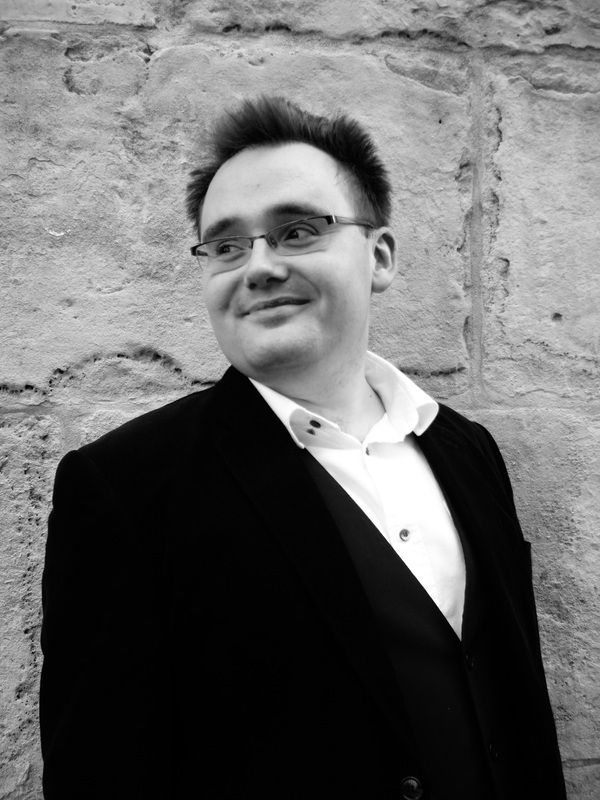
Richard Bates, composer & conductor (photo credit: Scott Inglis-Kidger)

Who or what inspired you to take up composing and make it your career? 

I would say that composing chose me, rather than the other way round. Almost as soon as I started learning to play piano, I started coming up with music of my own when I was bored of the pieces set me by my teacher. I always listened to classical music a lot as a youngster. And as a teenager, I suppose my writing mirrored what I was listening to – Beethoven in my early teens then later, Rachmaninov, Prokofiev, Poulenc, Morton Feldman…

Who or what were the most important influences on your composing? 

As I say, I always listened to music growing up, and I was lucky enough that my piano teacher in those years was interested in furthering the scope of my musical knowledge, and gave me music and recordings to explore that I otherwise would not have chosen. These expanded my horizons considerably. A great favourite of mine is Francis Poulenc, whose unique and instantly recognizable style really caught my interest. I also owe a great debt of gratitude to Michael Finnissy and Giles Swayne, who taught me my compositional craft, the guts to write what I want to write, the intricate skill of orchestration, and how to express what you hear with the instruments you have.

What have been the greatest challenges of your career so far? 

When I graduated from Cambridge, I thought: “nobody makes a living from writing music, and the world doesn’t really need another composer anyhow”, so I followed another passion of mine and went into music direction for theatre – leading pit bands and singers. Over the years since, I have taken every professional composing opportunity that arose for me, but it was only really embarking on Platinum Consort’s recording of my Tenebrae and commission In The Dark, and their subsequent commercial success, which exceeded my hopes, never mind my expectations, and that really convinced me writing music could be a viable life for me.

Which compositions are you most proud of?  

Of the works of mine that have been premiered so far, probably the Tenebrae are my favourite. I took a good deal of trouble to get each response just right, and the weaving of Renaissance-style counterpoint to create 21st-century harmonies was the biggest skill I had to master. I’m very proud of the result, and feel this is one of my most significant works to date.

Favourite pieces to listen to? 

I’m sure it’s a very infuriating answer, but I’m not the sort of person who has a clear favourite. It will depend on my mood and what I’m doing at the time. I also admire music for different reasons: some pieces are guilty pleasures – pieces which are not fantastically put together, but mean a great deal to me either because of their ambience, or a personal significance; other pieces are good for my musical health – pieces I admire because they are so perfectly ingenious in their construction or employ compositional tricks I can’t help but wish I’d thought of.

Who are your favourite musicians? 

Again, I’m going to be annoying and fudge that question and say it depends. I suppose my single, favourite group, is the Platinum Consort, for whom I was recently named Composer in Residence. I have worked with them over a long period, which is unusual in the music business, and have developed a very honest and open relationship with them and their director Scott Inglis-Kidger. I have great admiration for the dedication and skill they employ, and they in turn give me whatever feedback they honestly feel, without fear of my taking offence or umbrage. But I also have a great deal of admiration for the singers and musicians I work with in my conducting career, who turn up night after night and deliver consistently great performances.

What do you consider to be the most important ideas and concepts to impart to aspiring musicians? 

Stephen Sondheim once said that composition without craft is just masturbation. I agree. Without craft, and I would add discipline, you’re just improvising. That’s fun in the sense that you sit at your piano and think: “aren’t I jolly clever to be able to sit here and come up with this”, but the interest of what you come up with soon fades unless there’s a supporting framework. Musical ideas in themselves have little power; it’s their juxtaposition that gives them strength to move listeners. This is the message I would like to convey to my 14 year old self.

What are you working on at the moment? 

Two things: a motet setting of the plainchant Veni Veni Emmanuel for double choir and semi-chorus for the Platinum Consort; and The Vigil, a work for choir, soloists and orchestra – it’s a meditation on the stations of the cross – for Thomas’s Choral Society in London.

What is your present state of mind?

Relaxed. I am on holiday, just doing some writing, and unconstrained by the iPhone ringing or having to go out later and conduct a musical.

What is your most treasured possession? 

My steel tipped conductor’s baton. It’s the perfect weight and length for me, and the polished steel tip catches the light beautifully in darkened theatres and ball-rooms, so the musicians can see my beat. It’s also been around with me quite a few years.

Richard Bates was born and raised in London. He was educated as a music scholar at Winchester College and Cambridge University. He studied composition with Michael Finnissy and Giles Swayne, as well as participating in seminars with John Woolrich, Howard Skempton and John Rutter.

Upon graduation, Richard was appointed organist at the church of St Magnus The Martyr in the City of London, a position he held until 2008 when he moved to be Director of Music at Holy Trinity, Northwood. Richard also pursues a wide range of activities in the British and USA musical theatre and cabaret scenes. He is in demand as a conductor and accompanist and recently made his band‐leading debut in New York City.

Richard was officially appointed Composer in Residence to the Platinum Consort in 2012, after having written for the ensemble on an informal basis for a number of years. His music featured on their album In The Dark was described by BBC Music Magazine as “particularly impressive”, and the Observer said “Bates…knows how to raise hairs on the back of the neck with his smoky eight‐part writing”. 

Keep an eye on www.richardbatesmusic.com and @richbatesmusic on Twitter for details, premieres and performances coming up this Autumn and into 2013.

Platinum Consort will be performing at King’s Place, London, on Saturday 1st September, in a concert which features Richard Bates’ In the Dark. Further information here.