I hate to say it, but classical music still suffers from an image problem; an image crisis in fact. Despite the best efforts of performers, promoters, venues and music lovers, the artform is perceived by many as elitist and only accessible to the few, not the many. It wasn’t always like this: when I was growing up in the UK in the 1960s and 70s, there seemed to be classical music everywhere – on the radio and tv (including live broadcasts of orchestral concerts and wonderful programmes presented by André Previn), in tv adverts and in shops.

Now if you mention you are a fan of classical music, people may look at you slightly askance. Or, as has happened to me on several occasions, ask, “did you come to like classical music as you got older?” – because, yes, the demographic for classical music is generally in the over 50 bracket. (I’ve always liked classical music, ever since I was a little girl.)

Yet venues and promoters obsess about capturing that elusive (and often not especially interested) “younger/youth audience”, at the risk of alienating their core audience/demographic. One particularly depressing current example of this is London’s Southbank Centre, which is “leaning more heavily on describing classical music with a different language. Well-meant pieces to camera demystify the genre for this untapped, cynical and supposedly disinterested audience, the word ‘bangers’ used to describe popular works and sundry other nerve-jangling scores.” (Thoroughly Good blog). Alongside this, the venue has launched a classical music podcast for which “you don’t need a PhD to listen to”.

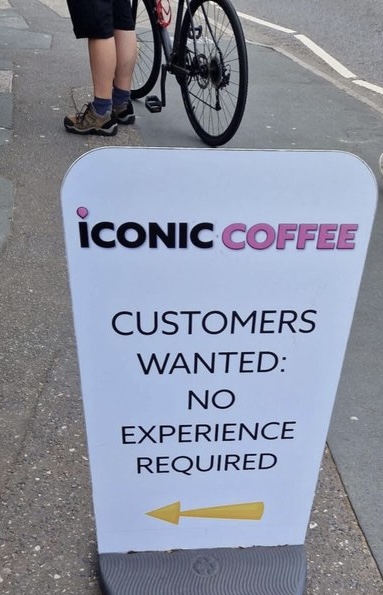
It has never been necessary to hold a PhD to enjoy classical music – or indeed any genre of music (though I might make an exception for jazz, which I find far more esoteric,  exclusive and mystifying than classical music – but that’s just me!). Which is why I am drawn to this phrase “audience needed – no experience necessary” (borrowed from this image):

The phrase “audience needed – no experience required” reframes classical music from something exclusive and intimidating into something open, welcoming, and participatory. It signals that listeners don’t need prior knowledge, training, or cultural “credentials” to belong – only curiosity and willingness to listen. Added to that, it doesn’t patronise or use “trendy” language. It tells newcomers that their lack of expertise isn’t a disadvantage but rather an asset, a starting point for discovery.

Musicians can use the message to bridge the gap between performer and audience. It frames them not as distant experts, but as fellow explorers eager to share something beautiful and immediate.

And instead of focusing on technicalities (composers, historical context, musical analysis), this kind of marketing can tap into the emotional and sensory appeal of live performance – the sound, the atmosphere, the shared moment. The phrase evokes a sense of adventure and discovery.

It also connects with modern cultural values. Today’s audiences respond to inclusivity, authenticity, and accessibility. “No experience required” aligns with those values, suggesting classical music is for everyone – not a rarefied art form, but a living, breathing experience.

This site is free to access and advert-free, and takes many hours each month to compile and edit. If you find value and joy in this site, please consider making a donation to support its continuance:

The first post-pandemic full season of Weymouth Lunchtime Chamber Concerts (WLCC) drew to a close with a beautiful rendition of Liszt’s transcription of Robert Schumann’s Widmung, played by pianist and artistic director of the series, Duncan Honeybourne. This glorious piece of music was written by Schumann as a gift to his beloved Clara; for Duncan, playing it at the close of his concert, and the finale to the series’ 20th anniversary season, it also felt like a gift to our audience to thank them for their ongoing support.

I’ve been Concerts Manager for WLCC since November 2019. Shortly after I took over the role, the pandemic hit and we were forced to suspend all our performances. We resumed in a limited way in the autumn of 2021, presenting just two socially-distanced concerts before we were obliged to suspend the series once again. Throughout this time, our audience supported us, returning enthusiastically, though in vastly reduced numbers due to the constraints of socially-distanced performances (we could only allow 25 people in a church which normally seats 80), and adapting to new ways of doing things, including an online box office and advance booking system.

Having now completed my first proper season as Concerts Manager (absent a Christmas concert due to the omicron wave), I have seen at first hand the importance of trust between artistic director/organiser and the audience. In fact, it was my husband, who has been regularly attending WLCC concerts in recent months, who highlighted this significant aspect of the series’ success. Our audience place a great deal of trust in Duncan Honeybourne’s stewardship of and artistic vision for the series and because of this, they reward us with their loyalty, returning to the concerts month after month, regardless of who or what we are presenting.

So how does this trust manifest itself? For some audience members, Duncan is a friend, and this friendship fosters a sense of trust. He is also well-known and highly regarded in the local community, as well as in the wider British musical world, with a 20-year record of running WLCC, a reputation that counts for a lot. But I think above all it is Duncan’s unsnobbish, authentic and enthusiastic approach to music-making which makes audiences feel confident that they will enjoy the concerts. (And it’s worth noting at this point that the series specialises in presenting lesser-known and rarely-performed music and composers alongside classical favourites and well-known works.)

Promoters, programmes and audiences

As concert life returns to normal after covid, promoters and venue managers – and musicians too – need to rediscover or reconfirm a sense of trust with their audiences. From the most basic aspect of making people feel comfortable and safe when visiting the venue to the planning of programmes and featured repertoire, I believe a sense of trust should be cultivated at all times.

Unfortunately, it strikes me that some venues have a rather casual, untrusting or even antagonistic attitude to their audiences, and I see this most clearly in the type of programmes being presented. I sense a certain unwillingness to trust audiences’ taste/discernment and instead to impose programmes, repertoire and composers on the audience. In some instances, especially with regard to contemporary music, a didactic, almost patronising attitude prevails – that one must listen to this music because “it is good for you” or because it has “an important message”. This misses the point of why, in general, people go to concerts: most of us want to escape the hectoring and finger-wagging of politicians, public health “experts”, commentators and others, at least for a few hours, rather than endure a polemic in music. And now, more than ever, because of the lack of live music over the past two years, many of us want to go to concerts to socialise as well.

Concert managers and promoters need connect with their audience in such a way that shows they understand them: the most basic aspect of this is presenting the music the audience wants to hear. If you’re spending upwards of £25 on a concert ticket, in addition to the effort and expense of traveling to the venue, you probably want a guarantee that you’re going to enjoy the concert.

The anti-popular, anti-classical favourites advocates seek to impose their ideas of what audiences should be listening to and then wonder why tickets don’t sell and concert halls are half-empty.

Sadly, an attitude prevails in the contemporary music world in particular that the music matters far more than the audience and that considering the audience is an egregious form of pandering which devalues the “art”.

Music is there to be heard – a particular concern for contemporary classical music. But that music won’t be heard if the audience feels alienated by the way it is programmed and/or presented. Advocacy of new or neglected music is important, and audiences should be given the chance to hear that music for themselves. But in the end, however hard you argue a case for the music, audiences either will or won’t like the way it sounds, and there’s not much one can do about that!

A more trust-oriented way of doing things would be to plan programmes which include well-known repertoire as a “hook” to entice audiences, while also featuring more unusual, less familiar, rarely-performed, or contemporary music. Presented in a non-didactic way, audiences may enjoy the chance to discover new music, while hearing it alongside the more familiar. Thus, you can build a degree of trust with your audience by gradually expanding the repertoire alongside popular classical favourites. Open the concert with something familiar, so people don’t arrive late, then give them something new or less familiar. Programme another such piece after the interval but close with a box-office favourite so people stay to the end.

Musicians and audiences

The relationship between the musician and their audience is, or at least should be, founded on mutual trust.

If the audience doesn’t trust you, it won’t turn up for the concert. If there is no trust, people will be reluctant to listen to and engage with the performance – and, by the way, audiences are very good at sensing whether or not the performer trusts them!

When I hear of A Famous Pianist complaining about audiences or insisting that they sit through 2-hour programmes without applause or a comfort break because that would “interrupt the flow” of the performance, or who sneers at a perceived ignorance or lack of discernment in current audiences, I sense a lack of trust between performer and audience. In fact, this musician perhaps does not trust audiences at all, instead preferring to impose his will upon them.

Many performers are expert at creating a sense of connection and trust between themselves and audience from the moment they walk on stage – or even beforehand through posts and exchanges on social media (the British pianist Sir Stephen Hough is particularly skilled at this). Verbal and non-verbal cues can quickly set up a sense of shared experience and even friendship between artist and audience. Speak to the audience but in a language they can understand. Introduce the programme in a way that allows audiences to feel a connection to the performer – why is this music meaningful to them, for example? – rather than simply parrotting programme notes. Know your audience and where they’re coming from and respond accordingly. Show your gratitude to the audience – by playing encores (if appropriate) or by greeting them after the concert in the green room or at a CD signing, for example.

Concerts are a customer-facing activity, and while some may baulk at such a phrase in relation to classical music, accepting and understanding this can go a long way to making audiences feel welcome and trusting. Do more “Put the customer first”, and audiences will reward you with their support and loyalty.


Photo by Melanie Deziel on Unsplash


In response to my article Where Have All The Audiences Gone, a reader, and a keen concert-goer, makes this response:

First, we need a functioning transport system at a price that normal people can afford.  We need trains outside London running 24/7 as tube and bus has inside London for years.

Second, we need to radically reduce the “cost of experience”. I have no issue with venues making a profit but a sandwich in Waitrose is about £3 so a 10% uplift would seem reasonable – say £3.50.  Drinks likewise.  And have everything open!  Covid is being used as excuse for poor customer service – plain-as.

Tickets – bring the cost down and fill all the seats. The Proms was a case in point – much better to have ALL the seats filled for £10 each rather than the 50% empty I witnessed. I found £44 stalls seats for the Labeque Sisters on StubHub for £11, a sure sign that the market has collapsed. Have transport-included/subsidised offers – buy two tickets for concert X and get the associated rail fare for 50%.

And start giving out tickets for students and children for free via schools and heavily reduced for their responsible adults – get young, really young people back just as the Schools Opera and Robert Meyer concerts did for my generation.

And. Stop Talking about COVID! My view is that our reaction to it was totally overblown, likely to kill more people through a depressed economy than the illness itself. My generation (50s) has always been the cultural backbone audience and so many that I know have taken Covid as an excuse to curl-up into early retirement. I rage against the dying of that light.


Comments are open if you would like to join in this discussion, or respond via Twitter

There has been a fair amount of commentary and angst in recent months about a noticeable drop in audience numbers for concerts as live music returns to (almost) normal post-pandemic. The subject of a number of articles in the press, the issue was also aired in an episode of BBC Radio Three’s Music Matters series. In almost every article and discussion, ongoing anxiety about Covid was cited as the main reason why audiences are not returning – whether anxiety about catching Covid in a crowded concert venue or opera house, or the possibility that the programme may be changed, or the concert cancelled at the last minute due to illness amongst performers.

In fact, audience surveys reveal that Covid is fairly low on audiences’ list of concerns (source here: https://www.audienceoutlookmonitor.com/post/june-27-executive-briefing-with-alan-brown-goodbye-again-hello-uncertainty).

So if it’s not Covid that’s keeping people away, what is it?

  1. Cost of tickets. Concert tickets have noticeably increased in price since the pandemic as venues try to recoup lost revenue when they were closed or forced to operate with limited capacity (West End ticket prices are about c30% since the spring). This is in the face of a serious cost of living crisis which means people have less discretionary spending, even those from the more affluent demographic which tends to comprise classical concert audiences. As pressure on personal finances bite, people cut back on activities and spending which they may deem to be “non essential”. Unfortunately, for many people concert-going may now fall into this category.
  2. Additional costs of attending a concert. On top of the concert ticket (c£25-£30 on average in London), there are additional costs such as travel and food and beverages (a glass of wine at a leading London venue now costs nearly £10!). Add these to the ticket price and it’s already turned into quite a pricey night out. (See 1. above.)
  3. Time value. Is this concert worth my time? Will I get value for money and value for my time if I attend? High ticket prices raise the level of audience expectation: the higher the price, the less likely that expectations will be met, leading to disappointment (see also 5. below).
  4. The seductively low or zero cost of streaming services at home. Why schlepp up town with all the additional costs of going to a concert or opera when you can watch from the comfort of your living room, the only spend being a reasonably-priced bottle of wine from Lidl.
  5. Programmes. Audiences are reporting that some promoters/artistic directors/venues are simply not offering them the kind of music they really want to hear. We have an inherent cognitive bias rowards minimising disappointment over maximising enjoyment; this especially works against ‘new’ content.
  6. Ease of booking. Organisers and promoters report that audiences are booking later and later, which is deeply anxiety-making for concert organisers. Because there is an assumption amongst concert-goers that there will be last-minute availability, and online booking is easily accessible via your smartphone, concert-goers will act accordingly and book at the last minute. This also ties in with 3. above, whereby people are weighing up the benefits/value to them of attending a concert and then deciding at the last minute whether or not to go.

Some possible solutions:

  1. Dynamic pricing — in which ticket prices increase as demand increases (a pricing model favoured by airlines such as EasyJet). To make this work, you have to first open with a low ticket price and step-up prices as demand builds. So, for example, you might run an ‘Early Bird’ ticket offer in the first instance, and increase prices as the concert date approaches. Audiences may be incentivised to book earlier because of the special offer.
  2. Lower prices across the board. Venues are reporting low audience numbers and while all of the points above may be contributing factors, price is the single most important issue at present. Most concert tickets are priced according to seat position in the venue – the best seats cost the most. While some people may enjoy the kudos of being in the most expensive seats in the house, I suspect many more would happily pay a lot less. Why not offer lower prices across the entire venue and enjoy potentially higher attendence?
  3. Give audiences the programmes they want to hear. It is possible to offer programmes which include both the well-known/popular works of the classical canon alongside lesser-known, rarely-performed or new music. Remember that people go to concerts for entertainment (in the best possible meaning of that word), to escape from life’s daily grind for a few hours, to meet up with friends, and because they enjoy live music.
  4. Build greater trust between promoter/organiser/artistic director and audiences. Nurture and respect your audiences and they will repay you with their presence. (I will write more about trust in a future article.)

Photo by Kilyan Sockalingum on Unsplash