Review of Frances Wilson & Friends, South London Concert Series at Brunswick House, 22nd January 2015

by Lucy Butler Gillick

Brunswick House
Brunswick House

The last time I visited LASSCO Brunswick House, my husband and I were looking at furniture for our house in Clapham. Back then it was the place to go for interesting bits and pieces at prices that wouldn’t break the bank. It still is. But in those days the area was very far from a prime location. In the 10 or more years since, I have occasionally looked across from a car or bus as I pass through Vauxhall Cross and noticed the isolated Georgian house, standing in defiantly Dickensian splendour, on an island surrounded by sleek riverside architecture and brutally thundering roads.

Without the encouragement of my dear friend Fran [Frances] Wilson – the energetic co-founder and Artistic Director of the South London Concert Series – I would probably never have bothered to park the car or get off the bus or tube to explore any further. But her invitation to come along to an evening of intimate piano music was far too appealing to refuse. And the venue is practically on my doorstep…

Now, apart from the occasional school event, endured for the sake of my children, or dinner at Fran’s where the piano would inevitably form part of the programme (and a welcome one at that), I have never really experienced such a concert. So it was as a complete outsider to this exclusive piano playing world that I arrived last Thursday evening and finally re-entered the pillared portals of LASSCO Brunswick House. To be frank, I was slightly fearful that my bottom would end the evening sore from a long and laborious sit, after having my eardrums assailed by music that could potentially mean nothing to me at all.

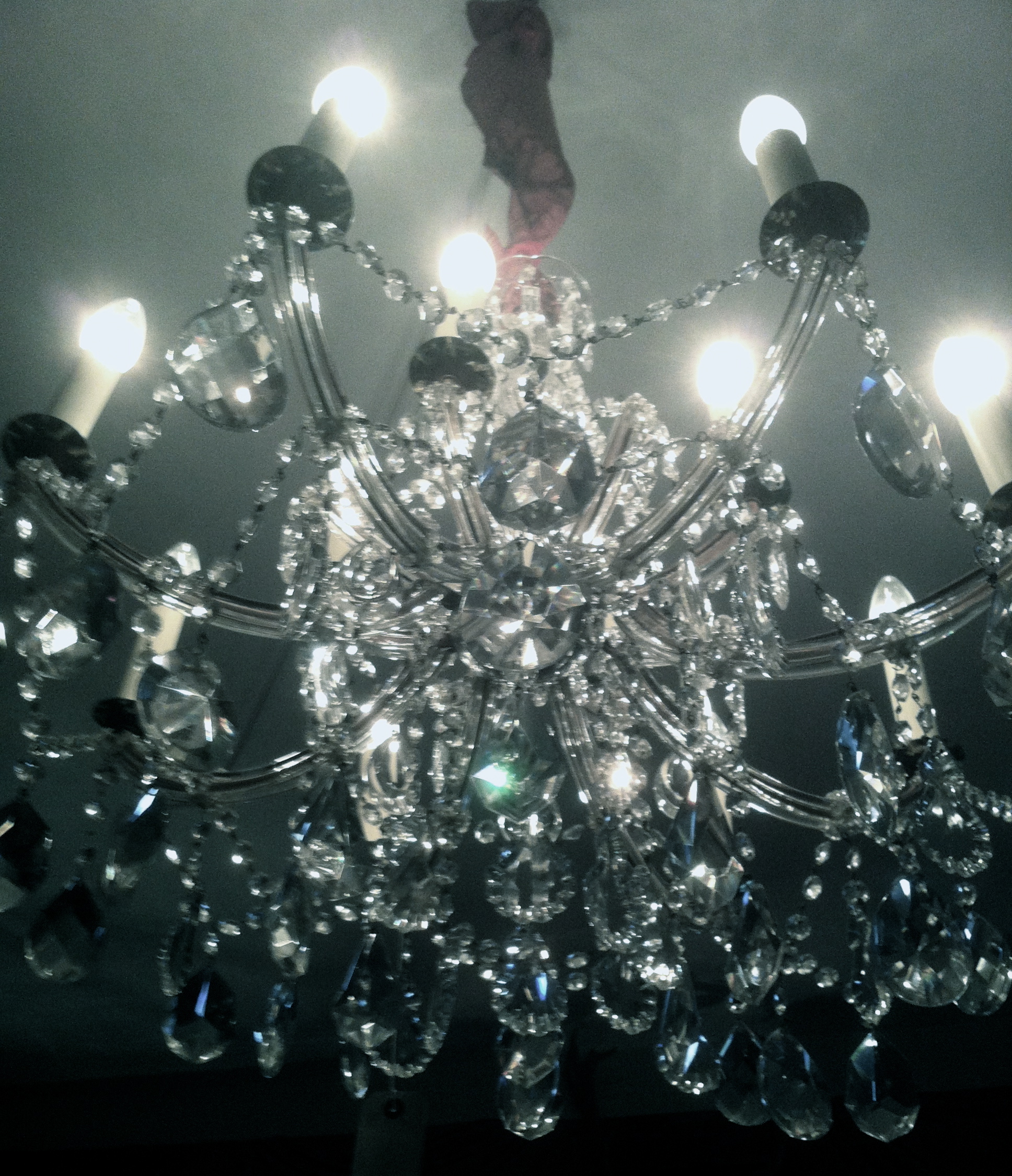
ChandelierBut what an appealing setting and pleasurable event it turned out to be. Downstairs is a cosy bar and lively restaurant, lit and furnished with scene-setting antiques that are – so far as I could tell from the tags – all for sale. For your starter you could order Mussels, Kale & Parsnip plus a Venetian chandelier; with perhaps Roast Lamb Leg and a sideboard to follow. Not bad going for the time-poor, multi-tasking city worker, en route home.

DSC_4092But it was upstairs that the salon vibe really took hold. The private concert room, the opulent Saloon with its belle epoque Bechstein grand piano, heavily swagged stained glass windows, old-fashioned school room-style chairs set in neat rows, lamps, lanterns, chandeliers and ephemera, was a genuinely atmospheric space. The very height of old-world decorous gentility, slap bang in the middle of one of London’s busiest junctions (better known for its gay clubs and pubs). Who’d have thought? It even smelt old-fashioned – a sort of pleasantly musty, sandalwood tang.

Once the concert kicked off, after a short introduction from Fran – dressed to the nines in a floor-length slinky red and mauve gown – the evening progressed apace. The concert included the ‘world premiere’ of a new piece by composer and guitarist Matthew Sear, as well as preludes, fugues, sonatas and impromptus from the likes of Debussy, Shostakovich, Menotti, Rachmaninoff, Scarlatti, Schubert and Satie – all favourite pieces of the artists performing that night. There was even a piece by the incongruously named Bryan Kelly (who sounds more like an Irish builder than an Australian composer to me), and a somewhat ‘difficult’ discordant work by Olivier Messiaen – apparently taken from ‘one of the greatest works for piano of the 20th century’ (the Vingt regards sur l’enfant Jésus) expertly played by Fran, who I think fancied challenging her audience into hearing something unusual at the end of the night.

The South London Concert series typically combines performances by talented amateur musicians with a special “guest spot” featuring professional and semi-professional players. On the evening I attended we enjoyed performances by José Luis Gutiérrez Sacristán, Petra Chong, Lorraine Womack-Banning, Rob Foster and of course our genial hostess Frances Wilson herself. They all looked and sounded amazing to my untutored ears and I would heartily recommend the South London Concert Series to anyone who fancies a very reasonably-priced introduction to the world of glorious piano music in an intimate setting, followed by an opportunity to meet and talk to musicians who are as passionate about their piano music as you probably are about your food, wine and chandeliers. What’s not to love about such civilisation? The only jarring note was re-entering the real world and wintry fug of Vauxhall Cross when it was finally time to head home…


Lucy Butler Gillick is ex-chief sub editor of The Sunday Telegraph Magazine and Harpers & Queen. She has written for many magazines and supplements over the years, on a variety of topics, but mostly on issues related to parenting. She now works in education. 


The South London Concert Series returns to LASSCO Brunswick House on 21st May for a concert by Australian counter-tenor Glenn Kesby. Full details here

www.slconcerts.co.uk

The UK Masterchef competition for amateur cooks has reached its series finale, won by Ping Coombes, a 32-year-old full-time mother who wowed the judges and tv viewers with her original, flavoursome and exciting dishes inspired by her homeland, Malaysia.

2014 Masterchef winner Ping Coombes kisses the trophy

Throughout the competition, contestants’ dishes were critiqued and judged by “external moderators” in the form of previous Masterchef winners, “celebrity” chefs, including Tom Kerridge and Marcus Wareing, and food critics Jay Rayner and William Sitwell, amongst others, many of whom expressed surprise that a bunch of “amateurs” could produce such classy, technically complicated, restaurant-standard food. When it was Marcus Wareing’s turn to judge the semi-finalists, in a nail-biting round for he is famously acerbic and downright scary, he said of one dish “that is remarkably good – for an amateur” or words to that effect. And after that, every time I heard the word “amateur” on the programme, a little bit of me died.

I have blogged before about the definition of “amateur”. The word suffers, in the English language at least, from its association with the hobbyist, the “Sunday painter” or dilettante, and suggests cack-handedness and lack of finesse or refinement. Things which are described as “amateurish” are usually badly done or poorly put together. Not so these finalists in Masterchef: their dishes showed imagination, creativity, highly-developed technical skills and, above all, love for what they were doing. Ping’s sheer enjoyment and delight in producing delicious food for family and friends was evident from the moment she first entered the competition and remained the abiding theme of everything she did, endearing her to judges and viewers alike.

The debate about amateur versus professional is one that continues to run (and will go on running) in the sphere of music and the arts (and beyond), and particularly within the narrow sphere of classical music. I co-host a piano group for adult “amateur” pianists in which the standard of playing is quite varied, but it must be said that the majority of members plays to an extremely high standard. A number have attended specialist music schools or conservatoire but chose a different career path, not having the requisite temperament to hack it as a professional musician (and perhaps preferring a more reliable salary!). Many of us enjoy performing, and we practise and finesse and perform our pieces with a professional mindset.

In a recent post for his own blog, pianist Stephen Hough gave a perfect definition of “amateur”, citing the Latin origin of the word – the verb amare = to love:

An amateur is not someone who is less good than a professional but rather someone for whom love overcomes obstacles…. (Stephen Hough, 7 May 2014)

This sensible and, to my mind, very accurate description struck an immediate chord with myself and many pianist friends who struggle with the word “amateur”. Those of us who play at a semi-professional level, intermediate players, beginners, returners, “Sunday pianists” all share this profound love for the piano. Eavesdrop on any conversation between members of my piano group and this passion is more than evident as we discuss the myriad aspects of our craft: practising, repertoire, exams, concerts, performance anxiety, favourite professional performers, memorable performances and recordings. The only difference between many of us and the pros is, as a professional pianist friend said to me recently, “the pay cheque”.

The author performing in the South London Concert Series at the 1901 Arts Club

I take issue with those rather ungenerous people in the music world, and beyond, who suggest that people like me and the other members of my piano group should not be performing in public, nor posting our performances on YouTube or Soundcloud (in the same way as I take issue with “professional journalists” who seek to undermine the value of blogs such as this and many others). It suggests a certain envy or resentment – for we are not trying to touch the professionals, but we might just conceivably touch the audience with our fidelity and commitment to the piano and its music. Sometimes the most hesitant performance can move because the audience knows the amount of hard work, and anxiety, that has gone into preparing for that performance. Playing for one another at piano circles, piano groups and at people’s homes offers a supportive environment to put repertoire before a friendly audience, and many amateur pianists use opportunities like these to prepare for exams, festivals, diplomas and concerts. Many amateurs practise seriously, sometimes for several hours every day, and cite the therapeutic benefits of playing the piano, the chance to escape and lose oneself in the music, after a busy day at the office. Those who perform more regularly understand the necessity to conquer performance anxiety and hone their stagecraft in addition to pulling off a polished and convincing performance.

Alan Rusbridger’s book Play it Again (2013), in which the editor of the Guardian charts his learning of Chopin’s G minor Ballade, a famously difficult work even for the most seasoned pro, offers some interesting glimpses into the world of the amateur pianist. There are piano circles, performance platforms, concerts in people’s homes, informal get-togethers, courses and more which bring amateur pianists of all levels together to play, share repertoire and socialise. Meanwhile, popular summer schools at home and abroad offer amateur pianists the opportunity to study with, and gain inspiration from international concert artists and renowned teachers from some of the top conservatoires around the world. The most famous summer school at Chethams, known affectionately as “Chets”, boasts a large and impressive faculty, including “greats” such as Peter Donohoe, Leslie Howard, Noriko Ogawa, and Boris Berman, and is held over two weeks in August. Summer schools like this offer not only specialist tuition, both one-to-one and in a masterclass format, but also performance opportunities, faculty concerts, recordings, chamber ensembles and choirs, and plenty of “piano chat” between students. Firm friendships are made on courses and piano weekends such as these as like-minded people come together to share and express their love of the piano and music-making.

And so back to Masterchef, and Ping and her fellow finalists. Just as my friends in my piano group show a deep passion for the piano and everything connected with it, so these three “amateur” cooks display a deep and consuming love for food, for creating and preparing it and sharing it with others. If Ping and the other finalists Jack and Luke go on to pursue a “professional” career in the food business, I hope they won’t ever lose that love. And just as food is created for sharing, so is music.

Practising for Lovers – Stephen Hough’s blog

London Piano Meetup Group

South London Concert Series


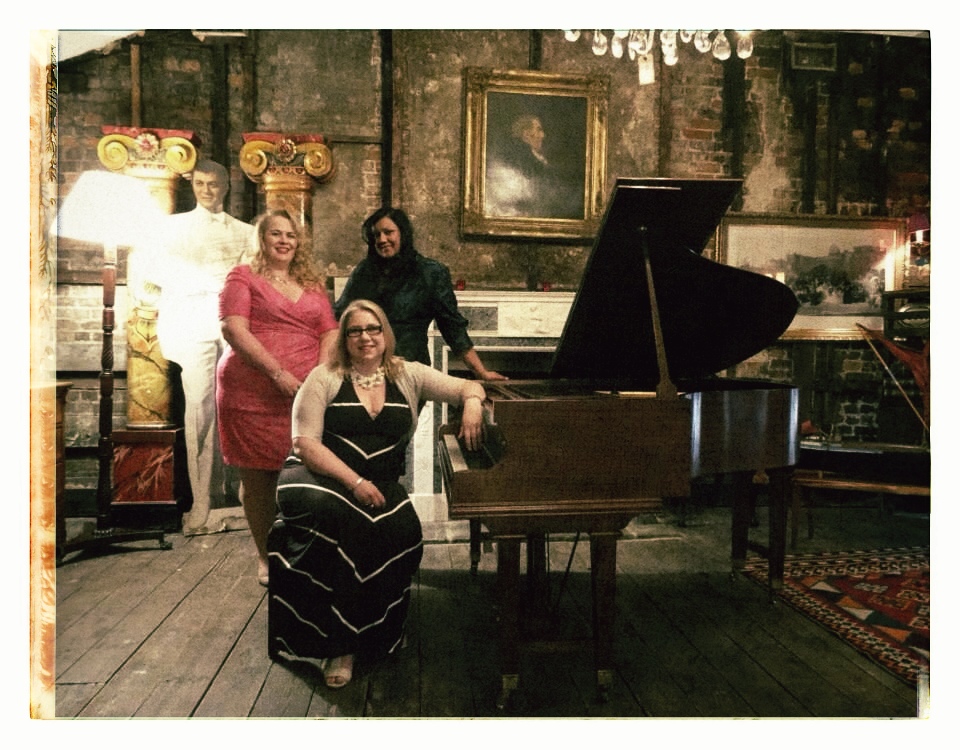
A stag with an impressive set of antlers surveys the room, while a white-tuxedo’d Tony Curtis keeps watch over the proceedings from his niche in a corner near the piano, a John Hopkinson baby grand with a rosewood case. Glittering chandeliers hang from the ceiling, illuminating the exposed brickwork on two walls of the room and highlighting the colours of the stained glass panels in the elegant sash windows. Exotic oriental rugs are draped over vintage British Rail first class seats, and at the back of the room, a glass cabinet is filled with antique pharmacy jars. Welcome to Brunswick House, part of the London Architectural Salvage and Supply Co, a Georgian mansion just five minutes from London’s Vauxhall Station, flanked by the brand new 5-star hotel and luxury apartments of One Nine Elms. Brunswick House is a treasure trove of antiques and salvaged curiosities, and on Thursday night last week, it provided a wonderful and eclectic venue for a fine evening of music making and conviviality.

IMG_2438
Lorraine Banning, Frances Wilson & Lorraine Liyanage (and Tony Curtis) at Brunswick House

“A superb evening – huge fun was had with a mix of musical genres in a delightfully decrepit and stylish Georgian mansion. Best of luck promoting these salon recitals, the way music is meant to be played and heard.”

Rosalind, audience member

The concert was part of the South London Concert Series, and featured a recital by BBC Music Magazine’s “rising star” Emmanuel Vass, together with supporting performances by three talented members of the London Piano Meetup Group, who despite not being “professional” pianists, played with equal poise, musical sensitivity and professionalism. The diverse programme matched the unusual setting, with music by Bach, Chopin, Turina, and Mozart together with Emmanuel’s own transcriptions of pop songs by Queen and The Prodigy. In keeping with the SLCS ethos of recreating the nineteenth-century musical salon, an hour of music was followed by much conversation and socialising in the ante-room next to the Saloon, and continued downstairs in the restaurant adjacent to the house.

View more photographs from the Brunswick House concert


All the enjoyable and engaging features of ‘Pianist’ magazine are included in this new piano techniques app: informative and easy to understand articles on technique and repertoire, how to play a particular work with guidance from a top teacher, free sheet music (18 pieces in fact, from beginner to advanced level), an interview with Lang Lang, contributions from expert teachers, and more, all presented in an interactive and accessible format.

The organisation of the content will be familiar to anyone who reads Pianist magazine regularly. Clear, well laid out articles are enhanced by video tutorials by renowned teachers and pianists, and soundclips, which enable the reader to listen to the pieces presented in the free sheet music section.

The app is easy to navigate, with clear swipe commands and helpful notes and asides which enhance the articles. In effect, the app offers the very best of ‘Pianist’ magazine in a user-friendly and portable format – read it at the piano or in bed – and is ideal for the beginner, intermediate or more advanced pianist.

Download the app from the iTunes app store