
Unearthed manuscripts reveal a new side of the eccentric French composer, brought to life by pianist Alexandre Tharaud in a recording of previously unheard works
A century after the death of Erik Satie, 27 never-before heard works are released to the public for the first time. The landmark digital album, Satie: Discoveries, performed by acclaimed pianist Alexandre Tharaud, is now available on Erato, just days ahead of the centenary of Satie’s death on 1 July 1925.
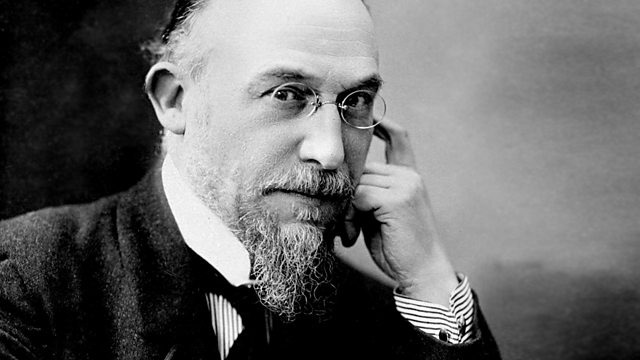
The collection sheds new light on one of music’s most enigmatic figures. Reconstructed from forgotten manuscripts and unfinished sketches, these pieces, ranging from playful cabaret songs to minimalist nocturnes, were originally written by Satie for performance in the bohemian cafés of Montmartre, where he worked as a pianist in the late nineteenth century.
The album is the result of painstaking musicological research by Sato Matsui, a Japanese composer and violinist, and James Nye, a British musicologist and composer. The duo independently tracked down lost materials in the Bibliothèque nationale de France and a private archive in Boston, piecing together and reconstructing Satie’s sketches into fully performable scores. Some of these are to be published by Éditions de la Fabrique Musique.
Among the newly discovered gems are pieces in the same free, minimalist style of Satie’s Gymnopedies and Gnossiennes (for example, Réflexions nocturnes and Autour du 1st Nocturne). Other works draw on familiar dance styles, (including several Parisian Valses), the café-concert song and operetta arias (‘Le Champagne’, ‘Pousse l’amour’ and ‘Chanson andalouse’).
Further pieces reveal a more experimental Satie, such as the Esquisses bitonales (Bitonal Sketches) or the Soupirs fanés (Faded Sighs), a collection of miniatures with evocative titles such as ‘Poil’ (Hair), ‘Barbouillage’ (Daubings), ‘Familial désespoir’ (Domestic Despair) and ‘Souvenirs fadasses (Dusty Memories).
Though most of the tracks feature pianist Alexandre Tharaud performing solo, three also feature the acclaimed Serbian violinist Nemanja Radulović. Radulović’s violin takes on the role of the singer in a mélodie and two cabaret songs where the lyrics are now lost.
In addition to these 27 world-premiere recordings, two already familiar pieces are included: the hypnotic ‘Chinese Conjuror’ from the ballet Parade, for piano four hands with Gautier Capuçon, and the ‘Chanson andalouse’, originally intended for the never-performed operetta Pousse l’amour. The ‘Cancan Grand-Mondain’ (High-Society Cancan) from La Belle Excentrique is recorded here in a new version for solo piano by Tharaud himself.
Alexandre Tharaud said of the album: “Satie remains very much an enigmatic figure today, held in enormous regard at the same time as being largely misunderstood and almost unknown…it is up to us to look beyond the Gnosiennes and the Gymnopédies, to try our sincere best to get closer to the music and to pay real attention.”
Satie: Discoveries is out now on Erato on all streaming services
Source: press release





 The Cross-Eyed Pianist