Find all previous episodes here
This site is free to access and ad-free, and takes many hours to research, write, and maintain. If you find joy and value in what I do, why not

Find all previous episodes here
This site is free to access and ad-free, and takes many hours to research, write, and maintain. If you find joy and value in what I do, why not
Guest post by Ingrid on the experience of studying with Dr Michael Low
Like many musicians, my journey started thanks to a fabulous piece I heard one day (and for sure so many more, but it has been a while so I can’t quite tell) that moved my heart and soul so deeply that I started daydreaming about it and about being able to do that same thing with the piano. I was maybe 10 or 13, but it took a while until I finally got to convince my parents to allow me to start learning the piano.
This led me to begin music lessons at the National Conservatoire here in Guatemala, and, as all music schools based on tradition, the curriculum included not only piano per se, but also Solfege, History, Tonal Harmony, and other subjects that are intended to nurture (and they actually do) your musical understanding and therefore your musical interpretation. A couple of years later I decided to pursue a music degree at university, and I obtained a Teacher’s Diploma in Music and a bachelor’s degree in music composition.
All of this gave me the tools to finally “play the piano”, which we normally say when we hear someone “play” that instrument. But little did I know that there is a huge dimension behind the mere study of any artistic discipline, that is sometimes overlooked and underestimated – that is, the Human Dimension, with all its intricacies and complexities.
And why is it overlooked? Well, maybe because we usually assume that as artists (musicians, painters, writers…) that dimension is an obvious part of us, and even if that is true, no one ever prepares us for the setbacks and negative experiences that are inevitably part of the journey. As musicians we may suffer from stage fright, we may face abusive/authoritarian teachers, we may be immersed in a toxic competitive environment, we may be the target of intended mean critics, and none of that has to do with the subjects that we learn in during our studies, and that prepare us to become professional musicians – but it has a lot to do with who we are as human beings and how we practice our art.
These setbacks may lead us to reconsider our career path and that maybe we need a change. Some of us may decide to make a radical change, some of us may decide to make a small change. But all of this raises the question of how we can thrive when facing such difficult challenges.
I started searching for answers and began to read blogs where other musicians shared their own experiences in similar situations; blogs where teachers shared their thoughts on how to build a healthy technique and learning environment; blogs where authors shared their thoughts on creativity and how to foster it in your own practice; blogs that shared research based tips to better manage performance anxiety; and I found great resources in authors like Noa Kageyama, Forrest Kinney, William Westney, Graham Fitch, Penelope Roskell, Frances Wilson (The Cross-Eyed Pianist), Rhonda Rizzo, Zsolt Bognár and Michael Low.
In one of those blogs, I was particularly struck by an article that Dr. Michael Low shared where he talked about his own journey with the piano, performance anxiety and the tradition in music education. It really resonated with me, so I started following his work closely.
At some point we also started sharing our musical impressions through social media and video chat. I shared with him that I was re-studying the Brahms’ Intermezzo in A, op. 118 no. 2, and sent him a recording I made of the piece. I remember he gave me some observations about it and his enthusiasm to work on it musically. I am not exaggerating when I say that this experience has been life changing.
I have to say I’d never had the chance to really discover and experiment with that (or any other) piece, nor I have had the chance to “think outside the box” musically speaking, because you are normally taught that there are “rules” that you must respect as interpreter, and sometimes even “fear”. There is nothing wrong with rules, but as an artist you can always trust your own criteria to use them; however, only an open-minded teacher and artist can help you discover that, and one of them is Dr. Michael Low.
It amazes me how spontaneously Dr. Low fosters that safe environment for experimentation, and how through funny examples and direct questions he challenges your own beliefs: be it about the piece or the composer or your own playing, always in a very kind and respectful manner, going beyond the surface and helping you to start thinking more as an artist than just a “piano player”. And the best part is that there are plenty of Eureka! moments, when you discover all the possibilities you have in your own hands, under his guidance.
And even if I have been in piano lessons before, there has always been a rush and a pressure to play a particular piece “perfectly”, not giving any space to really discover it (besides the obvious aspects of technique and analysis that are intrinsic to the music study), and to find one’s own voice as a musician and, most importantly, as artist. When there is too much noise outside, we get distracted from what we must look for on the inside.
After working all this time with Dr. Low and sharing interesting discussions about music, while also applying and following all of his very insightful advice in my own practice (both as teacher and as pianist), I have come to various conclusions that make me think about how we can thrive.
As Vincent van Gogh wrote to his brother Théo, in a letter from May 1882, with relation to the meaning of being an artist:
“(…) Those words naturally imply always seeking without ever fully finding. It’s the exact opposite of saying ‘I know it already; I’ve already found it’. To the best of my knowledge, those words mean ‘I seek, I pursue, my heart is in it’.”
This article is translated from the original Spanish, which you can read here:
Dr Michael Low is a pianist and teacher based in South Africa. If this article has piqued your interest in his work, why not come along to a masterclass at Coach House Pianos London showroom on Saturday 1 June to observe Dr Low teaching advanced amateur pianists in a variety of repertoire. The event is hosted by Frances Wilson AKA The Cross-Eyed Pianist.
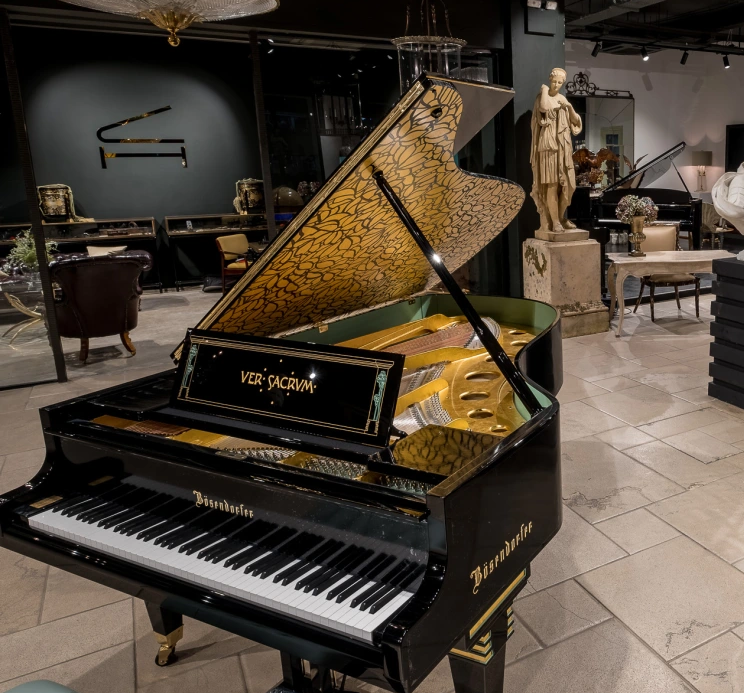
The decision to leave one’s piano teacher and move on can be a difficult one, especially if the relationship is longstanding. I have written more about this subject here.
Ann Grogan, a poet and adult pianist, contacted me after reading my article to share her own thoughts on the issues surrounding the decision to leave a teacher, and I am sharing a excerpt from her article on this subject here:
In appreciation because they help me reach my goals, I fall into a kind of deep music-love affair with each of my teachers. Music and piano lessons open up my heart and emotions, and make me feel raw, vulnerable, and exposed in a way that other kinds of art lessons have never done. Music is special in this way, at least for me.
THE DANGER OF BEING OVERLY IMPRESSED: Sometimes this specialness causes me to set aside what I note is out of place in a lesson or in the teaching relationship, in favor of long-term hopes and dreams. That is usually never a good thing to do. I’ve learned to speak up earlier and more often when I’m fairly certain I’m not enjoying something I am trying to learn or a particular approach the teacher insists I apply.
In one case, I’m certain that I was initially overly-impressed by a teacher’s many published CDs featuring original compositions and pianistic talents in a preferred musical genre that was not mine, and another teacher’s stature as a well-known professional pianist with ubiquitous “how to” vlogs. However, I failed to do my due diligence and had no clue about their teaching ability in general, or if their approaches and policies were compatible with what are certain basic requirements I have for piano lessons.
For many seniors, the process of learning the piano is critical, in that it must function in the nature of a partnership and not a top-down affair. Being overly-impressed hinders my ability to observe what is happening as lessons unfold. I stray from my desire to learn in partnership with my teacher. Sometimes I continue studying with the teacher beyond what is reasonable and productive.
“I wish I’d kept up my piano lessons!”
How many people do you meet who express this regret, that they’d continued childhood piano lessons into adulthood?
At my piano club, there are people who have played all their life; others who, like me, gave up, often in childhood or their teens, only to return to the instrument later in life; and those who have taken up the piano from scratch as adults, setting themselves on a path which brings pleasure and frustration in equal measure. For all of us, there is a huge sense of personal growth, self-determination and fulfilment.
The idea that once one reaches adulthood it is “too late” to take up the piano – or indeed any other instrument – is nonsense. The body and, more importantly, the brain is still receptive and highly malleable, and research has amply demonstrated that the brain remains “plastic” (able to adapt and change) throughout our life. Learning a musical instrument stimulates almost every part of the brain, especially those areas associated with memory. Contrary to common misconceptions, the adult brain continues to carve new neural pathways throughout life, and learning an instrument stimulates this and improves cognitive function.
Dismiss any idea that it is “harder” to learn an instrument as an adult. Unlike children, who may be compelled to learn an instrument by their parents, the adult learner makes the personal choice to pursue music and has the motivation, intent and self-discipline to stay the course.
It takes a degree of courage to decide to learn, or return to, an instrument, and to take lessons with the teacher and the first few lessons can be extremely daunting, but find the right teacher and the activity is an extraordinarily fulfilling experience. No dull exercises or drills or exams, but a stimulating flow of ideas and inspiration, exploring repertoire and honing one’s skills, while life experience and maturity bring a special dimension to lessons and learning.
I first started to learn the piano when I was about five years old, took all my grade exams, and then abruptly stopped playing when I left home to go to university (to study not music but Anglo-Saxon and Medieval literature). I hardly touched the piano for 20 years, but when I returned to it, I did so with an all-consuming passion. I took lessons with master teachers and attended masterclasses with leading concert pianists. I set myself the personal target of learning and preparing music at a very high level to fulfil the requirements of professional musical qualifications (two performance diplomas which I passed with distinction) and organised and performed in my own concerts. Today the piano is my life – and my work – and it has put me in touch with so many wonderful, inspiring and interesting people. I certainly intend to go on playing the piano and engaging with the literature and those who play it for as long as I can.
It’s never too late!




 The Cross-Eyed Pianist