
The second in Dakota Gales series of guest articles, Notes from the Keyboard, aimed at adult amateur pianists
When my wife gifted me a smooth and shiny Yamaha keyboard for my birthday in 2020, I couldn’t play Chopsticks or even find middle C on it. As an adult learner, I also had limited time, so focused practice was of the essence.
After flailing about, I developed the most effective practice mindset and routine that I could. I’ll share it below.
Over the next four years, I dug into playing piano, but also into how to learn to play piano. Four years later, I’m playing pieces I thought were a decade out. Chopin. Beethoven. Debussy. I sometimes can’t believe my fingers can fly the way they do.

A portrait of Debussy I did while learning to draw people.
None of this magically arrived in a brain chip from Amazon. I didn’t buy Pianist Hands on Ebay and splice them onto my arms.
Nope. This progress was achieved through good old-fashioned dedication. *yawn* I know, I know…show me the TikTok video that has you playing 650 pieces in a week using JUST FOUR CHORDS!
Riiight. The faster success is gained, the shakier it is. Get Rich Quick with this money-making scheme! Learn a language in a week! Get a six pack sitting on the couch! Earn a college degree between episodes of your favorite Netflix series!
Hogwash. Easy come, easy go. There’s so much satisfaction to be found in the effort, the daily scales, the consistency. I’d wager that every pianist who continues to play must embrace the daily grind.
After years of doing this, I’ve realized something important: the toughest part of learning piano is… BEING PATIENT.
It takes as long as it takes. Want to learn a Beethoven sonata or Chopin etude in your first year? That’s nice. It’ll be built on a shaky foundation. Even pros like Andras Schiff didn’t even feel capable of tackling Beethoven’s sonatas until he was in his 40s!
However, if you create a smart practice routine and stick to it, you will improve. Not a matter of maybe: you will.
Ten minutes of practice per day is 60 hours per year. Thirty minutes is 180 hours! I’d wager that you can find 10-30 minutes each day to learn a new skill. Trade some social media or Netflix time for piano. Your future self will thank you.
That said, I’ve wasted plenty of time in the four years since a piano dropped in my lap. Since we’re adults and lack the time to futz about, we’ve gotta maximize our time at the piano!
Here are four key things that benefited me the most:
- Learning about (and implementing) deliberate practice.
- Learning basic music theory.
- Hiring a piano teacher (and listening to them).
- Not biting off too-difficult pieces.
Deliberate Practice
When I started playing piano, I’d do some scales, arpeggios, whatever to warm up. Then straight into repertoire, which consisted of just trying to play something, over and over. I had no plan, just “start at the beginning and wear this down via submission.”
Picture me with a catapult outside a Piano Piece Castle. If I lobbed enough rocks at the walls, eventually I could break it down! The problem: I wasn’t being thoughtful about where or when to throw the rocks. Sometimes I attacked Castles that were WAY too big for my artillery.
Since then, I’ve learned to use deliberate practice to simplify things and hammer concepts into my brain in smaller chunks.
I break pieces down into their smaller parts (e.g. only working on 2 bars at a time, or breaking an arpeggio into block chords, or an octave into only the root note). I slow pieces to 50% and only increase the tempo once I can lights-out play it. I might play the same bar 25 times in a row, firehosing it into my brain, coating that brain circuit in myelin so that it’s a superhighway, not a goat trail.
It feels slow in the moment, but I learn pieces not just better, but faster, one bar at a time. Deliberate practice builds a stronger structure, brick by brick, versus throwing up a stick built house that blows over in the wind of live performance.
Book recommendations: The Musician’s Way by Gerald Klickstein, Effortless Mastery by Kenny Werner, and The Art of Practicing by Deline Bruser. These have helped me dial in my practice routine and develop a different mindset around performing (and mistakes—they’re just feedback!).

Scoring a couple hours of piano in a friend’s studio on a sweet grand piano.
Learning music theory
BLERGH. Music theory, the Brussels sprouts of learning piano. Give me the repertoire, the chocolate cake!
Well, I quickly realized that trying to learn pieces without knowing the basics of theory meant it took forever to figure out a piece. If we compare it to reading, I was basically sounding out letters vs. reading sentences. Th…e. THE. C…aaaa CAT.
Painful. By learning key signatures and basics like major and minor triads (and then their inversions), I made much faster progress. I also developed the ability to memorize pieces quite well because I was thinking in chords and chord progressions instead of individual notes. Now I play all my pieces from memory.
In my experience, spending some time on music theory will drastically speed up your learning progress. I’ve grown to enjoy the analysis that I do with pieces before even putting my hands on the keys. Brussels sprouts as the appetizer, thank you very much.
Resource: This Skillshare course by professor Jason Allen is fantastic.
Hiring a teacher
There are SO many resources for online self-paced piano lessons. They’re affordable and easy to use. They help. I still occasionally do.
Let me encourage you to also hire a teacher, local or online. I cast about for nine months before starting lessons and am so so so glad I didn’t wait longer.
Mine, a Brazilian named Antonio, offers me feedback and insight on my playing a video course could never provide. “Hey, what if you shifted your wrist 10 degrees? In most renditions, pros play that piece like ____. Perhaps this fingering for that passage works better for your hand?”
I’ll write more about my experience with online lessons, but real quick… Not only are online lessons more affordable, they offer the benefit of being portable. When I travel, I can bring my keyboard and still take lessons.
My progress accelerated dramatically when I hired Antonio for a weekly lesson. He corrected things I’d never even considered (like pivoting on my 3rd finger for big left hand arpeggios, not the 2nd finger). If almost every pro had a teacher when they were learning, it’s probably worth it for us amateurs!
Resource: Just search “online piano teacher.” Many popular YouTube pianists also teach lessons.

Piano with a view in my camper van.
Don’t get too big for your britches
Many intro piano pieces felt too simple or boring for me. Right out of the gate, I wanted to play the beautiful pieces.
When the Saint’s Come Marching In? HAH. March on OUTTA here: give me Chopin’s Nocturne in Eb, baby!
The problem: I had zero piano skills. I couldn’t even read music or play a scale!
I was learning how to bungee jump by wingsuit jumping. Less risky on a piano (no bridges to smash into), but certainly a waste of time.
I spent HOURS learning the melody line to the Chopin nocturne…with zeroooo chance I’d be able to actually play it with the left hand added in. I didn’t even know what the key of Eb meant.
My teacher helped me understand which pieces would push me vs. shut me down. Instead of expending hours on a piece I had no chance of playing, I started grabbing achievable pieces. They still took work (I’m looking at you, Consolation No. 3 and your mind-bending triplets), but I could do it!
But I still dream, keeping a list of “goal” pieces. These are pieces that I really want to be able to play that are too difficult for me to learn efficiently at this time. This gives me a long-term set of goal trajectories, which helps me focus on what to work on now. (I’ll also work hard sections of pieces slowly, over months, such as the fast cadenzas in Liszt’s Liebestraum #3 or Chopin’s Db nocturne.)
To keep track of pieces, I created a spreadsheet that I update regularly. I also have an ongoing Spotify playlist to which I add pieces that catch my fancy. (After four years, it’s a tour of my listening.) I listen broadly to different eras of piano music as well as different continents. Albeniz from Spain, Villa Lobos from Argentina, Copland from America, and of course the core canon from Western Europe.
Keep dreaming, but stay reasonable! No wingsuiting just yet…
Your future self will thank you
In college, on a whim I test drove a Lexus I had zero chance of affording. The sound system was top-notch, crystal silky magic.
Later, I chatted with a friend about how I couldn’t wait to own a car like that and listen to classical music while I drove.
“Don’t turn into an old man TOO fast,” she cautioned.
Now I’m an almost-old man at the ripe age of 42. I get to listen to classical music while I drive…but I can also PLAY a bunch of it!
Sure, it took focused work and required shifting time from other activities.
It was worth it. I’ve launched a ship I can sail on for the rest of my life, a journey into a whole new language—nah, world— I hadn’t visited before.
A gift my younger self forwarded to future me that I gratefully accept.
When he isn’t playing piano, Dakota Gale enjoys learning languages (especially Italian) and drawing. He also writes about reclaiming creativity as an adult and ditching tired personal paradigms in his newsletter, Traipsing About. He can often be spotted camping and exploring mountain bike trails around the Pacific Northwest.
This site is free to access and ad-free, and takes many hours to research and maintain. If you find joy and value in what I do, why not






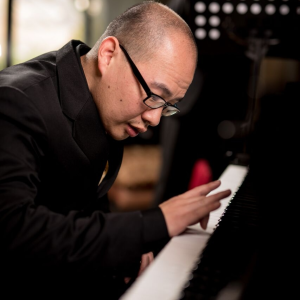 Praised for his innovative approach and passionate insight into piano playing, Dr Michael Low’s teaching career in Asia and Africa has spanned almost a quarter of a century. As a student, Michael studied piano with Richard Frostick (the current director of the BBC World Voice Programme) before enrolling as a member of London’s prestigious Centre For Young Musician where he studied piano with the international pedagogue Graham Fitch. He obtained his Honours at Surrey University under the tutelage of Clive Williamson before completing his Masters of Music whilst studying with Nils Franke and Niel Immelman. An International Scholarship brought Michael to Cape Town where he completed his Doctorate under the supervision of South African greatest living composer, Hendrik Hofmeyr. Michael has also worked with numerous eminent teachers and pianists including, Nina Svetlanova, Frank Heneghan, James Gibb, Phillip Fowke, Renna Kellaway, Carolina Oltsmann, Florian Uhlig, Gordon Fergus Thompson, Francois du Toit and Helena van Heerden.
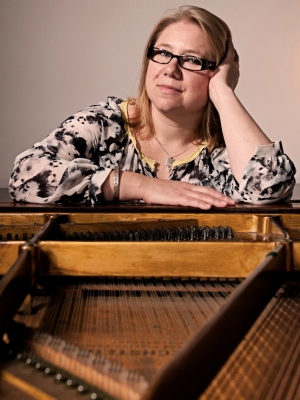 Frances Wilson is an advanced amateur pianist and writer under the pen-name The Cross-Eyed Pianist. Established in 2010, The Cross-Eyed Pianist blog has become “an important voice in the piano world” (Peter Donohoe, international concert pianist) and enjoys a wide global readership with c25,000 visitors to the site per month. The Cross-Eyed Pianist is now one of the UK’s leading blogs on classical music, with a special focus on pianists and the piano.






 The Cross-Eyed Pianist