Pianist Anastasiya Bazhenova explores the fragility of the human condition in her debut album
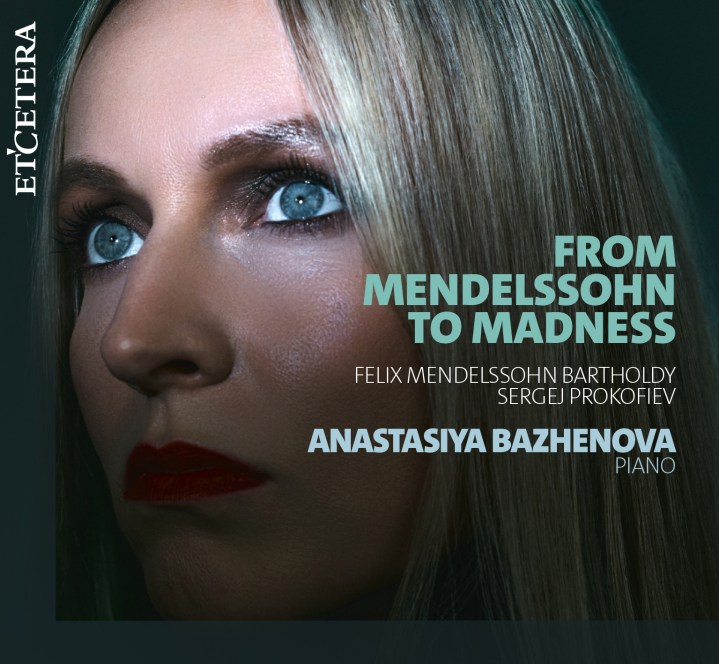
In her debut recording, pianist Anastasiya Bazhenova presents a programme that goes beyond a simple chronological survey of keyboard music. From Mendelssohn to Madness is not just about contrasting different historical periods; it is a deep exploration of the human condition and how our inner worlds change when external stability starts to fade.

For me, the tension is already present in the Mendelssohn. His music often sounds lyrical and balanced, but there is also something fragile in it, as if the stability could break at any moment. The Fantasia in F-sharp minor begins to open up that tension — it is more restless, more searching. And by the time we reach Prokofiev, the tension is no longer hidden. It becomes direct, physical, almost violent. So the “madness” in the title is not only the destination. It is something that slowly reveals itself along the journey.

Anastasiya Bazhenova (interview with Indie Boulevard magazine)

The album begins within the world of Felix Mendelssohn Bartholdy, a composer whose music hails from an era where form offered a sense of reassurance. In his Songs Without Words, Bazhenova uncovers a serene human voice that communicates with the confidence that it can still be heard without exertion. During this period, qualities such as clarity, proportion, and beauty were not merely ornamental; they were fundamental tools for understanding both oneself and reality.

However, even within this transparent beauty, a subtle tension begins to emerge. In the Fantasia in F-sharp minor, this balance is no longer an automatic state but a conscious effort. Here, the music becomes a battleground where light and darkness clash, symbolising an inner struggle to preserve wholeness against forces that seek to dismantle it. For Mendelssohn, form serves as a final battleground against chaos.

The narrative takes a sudden turn with Sergej Prokofiev’s Sixth Sonata, which opens the space beyond the rupture of the old order. This is music for a world that no longer promises stability—a world where the pace of change has quickened beyond our ability to comprehend.

Within this sonata, intense emotional states coexist in a raw, exposed form: fear, fury, despair, irony, and paranoia. The music forsakes the pursuit of traditional harmony, opting instead to record reality in its most unfiltered state. As the album moves from Mendelssohn to Prokofiev, the listener undergoes a inward shift: a transition from trusting in form to living without guarantees, and from viewing beauty as a support to acknowledging the need to live without it.

Rather than viewing these pieces as a collection of separate works, Bazhenova considers the programme as a single internal trajectory. The album does not seek to resolve the tensions it presents or provide simple explanations. Instead, it allows the music to unfold as a continuous process – a musical narrative of a human being who keeps feeling, thinking, and searching for meaning even when the structures of the past have broken down.

We often think of madness as something extreme or pathological, but in reality it is much closer to ordinary human experience. It can grow out of fear, obsession, loneliness, or simply from the unbearable tension between what we feel inside and what the world expects from us. In that sense, “madness” in this album is not something distant or theatrical. It is something that lives quietly inside many people. Music simply gives it a voice.

Anastasiya Bazhenova

From Mendelssohn to Madness is released on CD and streaming 1 April 2026 on the Etcetera Records label

Anastasiya Bazhenova performs in London at the 1901 Arts Club, a delightful salon-style concert venue, on 24th April. Details here https://www.1901artsclub.com/24-apr-2026-from-mendelssohn-to-madness.html
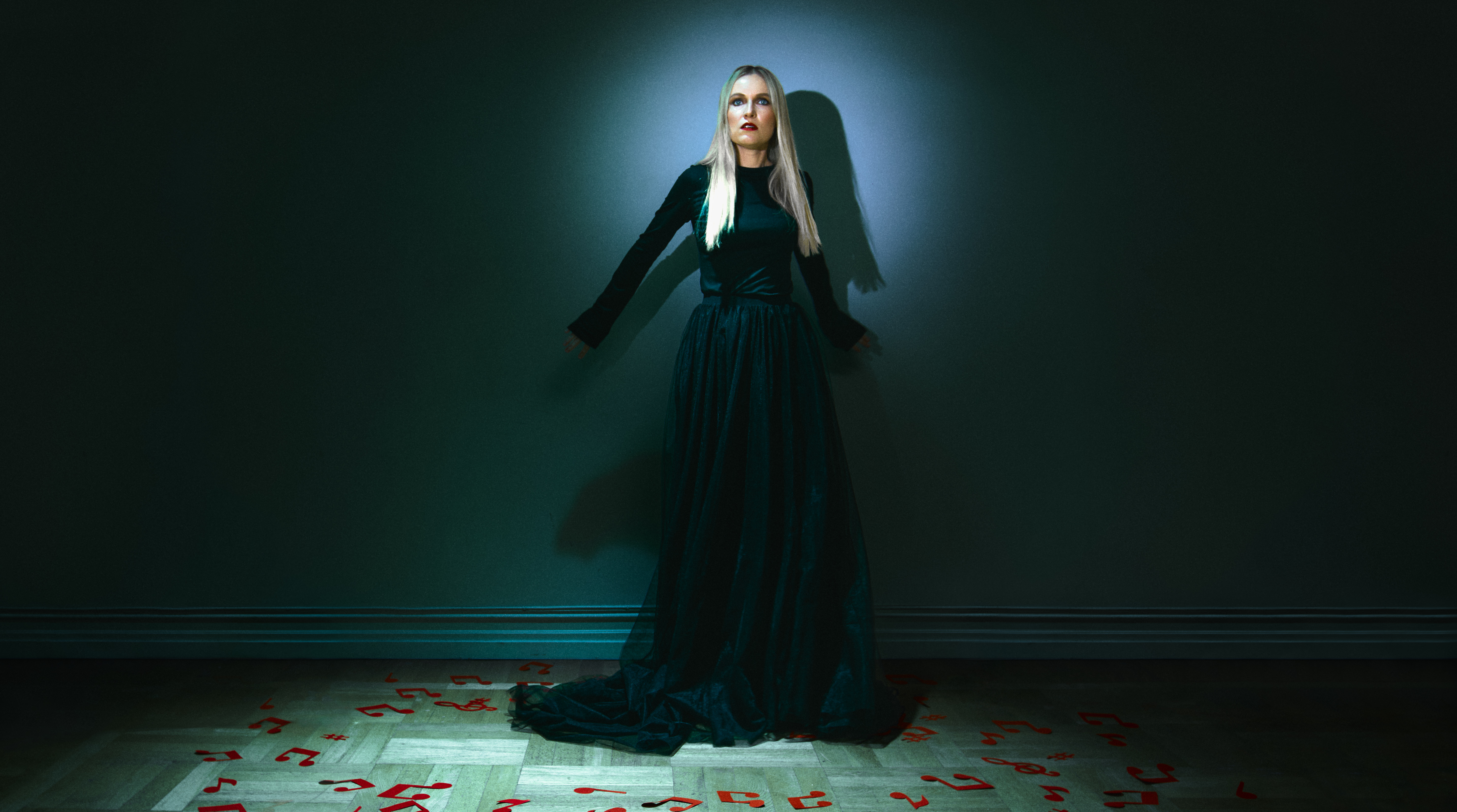
Anastasiya Bazhenova pianist

Photo credits Torgeir Rørvik

For his autumn concert tour, which begins on Sunday 9 November, British pianist James Lisney places Beethoven’s late sonatas at the centre of this rich programme of masterpieces, not the least of which is the ricercar that Bach performed for Frederick the Great in Potsdam in 1747. “Old Bach of Leipzig” improvised on the King’s theme while using a newly developed fortepiano; the finished composition can thus lay claim to be the first major piano work.

The preludes by Chopin and Shostakovich are similarly written out versions of improvisatory pieces, whilst Myra Hess’ beloved chorale prelude, “Jesu, Joy of Man’s Desiring”, is a reminder of her close association with Beethoven’s final triptych of piano sonatas, and is included in this programme to honour the anniversary of her death on 25th November 1965.

James Lisney says, ‘I have returned to Beethoven’s late sonatas on many occasions over the past forty years. Each study period is a time of intense contentment that reveals new insights, greater pianistic authority, and a reflection of personal growth in terms of musical and extra-musical experience. The great Chilean pianist Claudio Arrau stated that passion deepens with age, and Beethoven’s late works are certainly ‘appassionato’, communicating ideas that stretch human experience.

There is a lifetime in this music, an inexhaustible well of ideas that defeat our perceptions of time during performance. I have long wanted to add preludes to this music, easing the listener into a new universe and refreshing the palate. The death of Shostakovich fifty years ago provided inspiration; Dame Myra Hess (d. November 1965), a peerless interpreter of these sonatas and the music of Bach, provided further items for the programme, not least her enduring transcription of the chorale prelude ‘Jesu Joy of Man’s Desiring’.

Johann Sebastian Bach’s Ricercar à 3 is a further example of a composition that represents a preludial improvisation, one executed by a master of the increasingly archaic art of counterpoint who was not above adding galant flourishes to a theme provided by Frederick II of Prussia. An example of an artist “speaking truth to power?”’

CONCERT DATES & VENUES

9 November, Bradshaw Hall, Royal Birmingham Conservatoire

18 November, St George’s Bristol

21 November 1901 Arts Club, London

22 November, The Red Hedgehog, London

28 November, The Quay Theatre, Sudbury, Suffolk

4 December, The Stoller Hall, Manchester

5 December, Stamford Arts Centre, Stamford, Lincolnshire

7 December, The Red Hedgehog, London

Find out more

The penultimate weekend in March saw me in London for two exceptional concerts in particularly lovely settings. The experience was enhanced by the company of friends and a delicious meal with a wonderful view across Smithfield (former meat market, now the new site for the Museum of London) to St Paul’s cathedral.

A Season to Sing is a reimagining of Vivaldi’s evergreen The Four Seasons for mixed voices by British composer, vocalist and music director Joanna Forbes L’Estrange. A co-commissioning project between the composer, The Royal School of Church Music (RSCM) and over 50 choirs around the world, A Season to Sing was written to mark the 300th anniversary this year of Vivaldi’s The Four Seasons.

The London ‘launch concert’ took place on Saturday 22nd March at historic St Bartholomew-the-Great, a beautiful ancient church in the City of London. Luminosa Music, an exceptional amateur choir (who impressed with their pitch-perfect timing and exquisite, colourful sound) performed the music, the first half comprising choral pieces by Joanna, her husband Alexander L’Estrange, and works by Monteverdi and Thomas Morley, all with a seasonal theme. This set the scene nicely for the second half and A Season to Sing.

The Four Seasons is a perenially popular work, and this is is not the first time it has been ‘reimagined, Max Richter’s Recomposed, being the most famous example. But A Season to Sing is the first time this music has been reimagined for voices. As Joanna says in the concert programme notes, ‘...re-imagining in no way diminishes our respect for the original compositions. On the contrary it offers a new perspective….’ – this latter point being the most striking and magical thing about A Season to Sing.

Think you know The Four Seasons? Think again! Here, the orchestral version is transformed into a colourful extravaganza of sound which makes full use of the human voice (and other parts of the body) to bring Vivaldi’s seasons vividly to life – from whistled birdsong in Spring to “body percussion” to evoke the storm, a bagpipe’s drone and even some Swingle-style wordless ‘scat’ (Joanna was music director of The Swingle Singers for seven years, and the middle movement is dedicated to the group’s founder, Ward Swingle). New details from the original orchestration are revealed by the choir, such as interior lines and textures, and the entire piece feels as fresh as a spring shower. It’s full of affection too, and wit and warmth. It’s a wonderful tribute to this much-loved music.

The Four Seasons is the first piece of classical music I remember listening to as a child. I have very vivid memories of dancing around the room to the 3rd movement of Autumn

Joanna Forbes L’Estrange, composer

A Season to Sing is being performed around the world by the choirs who took part in the commissioning project (find details of all performances here). The score will be published by the Royal School of Church Music on 1st June (pre-order here).


Sunday afternoon and another concert at a lovely venue, this time the 1901 Arts Club, London’s most stylish and convivial small venue. This was a special concert to celebrate the 340th birthday of J S Bach and to launch American pianist Eleonor Bindman’s new album ABSOLUTE – her own transcriptions for piano of Bach’s Lute Suites BWV 996-998.

A lifelong love of J S Bach has led Eleonor Bindman to produce a number of important transcriptions for solo piano and piano duo of his music for other instruments, including the evergreen Cello Suites and the Brandenberg Concertos. In this latest addition to her catalogue, Eleonor has turned her attention to works originally composed for the lautenwerk or lautenwerck (lute-harpsichord), one of Bach’s favourite instruments, similar to the harpsichord, but with gut (or nylon today) rather than metal strings.

The small size of the music salon at the 1901 Arts Club lends itself to “haus konzert” style performances (such as Bach might have known) and the ambiance at this concert was warm and friendly.

Like Joanna’s reimagining of The Four Seasons, Eleonor sees transcriptions as a vehicle to “revive interest in original compositions”, shine a new light on the original work and “increase their popularity”. And just as in A Season to Sing, new details of dynamics, texture, counterpoint and more are revealed in this transcription for solo piano.

But for me the most satisfying aspect of Eleonor’s concert was her ability to bring so much colour and nuance to the music. Her range of sound was impressive, but never too much nor too little. Perfectly balanced to suit the small size of the venue, she brought both intimacy and grandeur (we can thank Bach for that!) to the music. I don’t think I have ever heard the Steinway at the 1901 played better!

The following day I met Eleonor for a most enjoyable, leisurely lunch, replete with much ‘piano chat’ and conversations about food.

ABSOLUTE is out now on the Orchid Classics label and on all major streaming platforms.

ABSOLUTE

J.S. Bach: Lute Suites BWV 996-998Transcribed for piano and performed by Eleonor Bindman

All my transcriptions are motivated by the desire to play my favourite music on the piano. – Eleonor Bindman

A lifelong love of J S Bach has led pianist Eleonor Bindman to produce a number of important transcriptions for solo piano and piano duo of his music for other instruments, including the evergreen Cello Suites and the Brandenberg Concertos.

In addition to recordings demonstrating ‘Bach playing of the highest order’ (Pianodao), Eleonor has also produced sheet music and anthologies of her transcriptions, primarily aimed at amateur pianists and piano teachers. Her two-volume ‘Stepping Stones to Bach’ features intermediate piano arrangements of the Baroque master’s most famous tunes, including the Gavotte from the Violin Partita, No.3, and the Badinerie from the Orchestral Suite, No. 2. In making these transcriptions, she is following in the footsteps of the master himself: Bach regularly transcribed his own and other composers’ music and created different instrumental versions of the same piece.

The resulting musical statement may be a faithful reproduction …, a transformation beyond recognition or something in between. Regardless of the outcome, the original source is of such exceptional depth and appeal that for the past three centuries it attracted a steady stream of pilgrims, ready to sacrifice their time and energy for the joy of communion.

Eleonor Bindman

In her latest project, she has turned her attention to works originally composed for the lautenwerk or lautenwerck (lute-harpsichord), one of Bach’s favourite instruments, similar to the harpsichord, but with gut (or nylon today) rather than metal strings, which results in a more mellow tone. Generally performed on harpsichord, lute, and guitar, Eleonor’s new recording of the Lute Suites brings a fresh perspective on these rarely-explored masterpieces, showcasing their intricate structures, rich textures, and emotive character on the modern piano.

Eleonor Bindman’s Bach pianism is all about clarity and order. Her strong and assertive fingerwork complements her firmly centred rhythm

Gramophone magazine

Highlights include BWV 997 and 998, featuring stunning fugues with ornate middle sections unlike typical keyboard fugues, and a heartfelt arrangement of “Betrachte, meine Seele” from St. John’s Passion, which serves as a moving conclusion to the album.

Fans of Eleonor Bindman’s previous transcriptions – such as The Brandenburg Duets and The Cello Suites – will appreciate this latest addition to the pianist’s catalogue, recorded on a Bösendorfer piano which truly captures the remarkable richness of Bach’s writing.

Eleonor Bindman writes, ‘Transcriptions can revive interest in original compositions, and I am hoping that a piano version of Bach’s Suites BWV 996, 997, and 998 will increase their popularity. Just like Bach’s other solo collections, these suites present a technical and musical tour de force for their performers and deserve their rightful place alongside Bach’s suites for keyboard, violin, and cello.’

Eleonor Bindman celebrates J S Bach’s 340th birthday and launches her new CD with a special concert at the 1901 Arts Club, London’s most stylish small venue, on Sunday 23 March at 3pm. Tickets/info here

ABSOLUTE is released on Friday 7th March on the Orchid Classics label. Available on CD and via streaming. Pre-order here

eleonorbindman.com