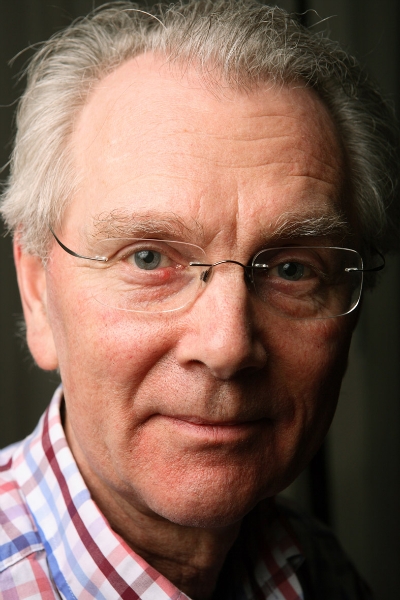
Image credit: Yuja Wang © Felix Broede / Deutsche Grammophon

It’s hard to ignore Chinese pianist Yuja Wang, and sometimes for the wrong reasons (remember all the fuss last summer about That Dress?). So it was that I went to hear her in the Southbank Centre’s excellent international Concert Series with a mixture of curiosity and trepidation. The programme was an ambitious mix of music which showed off more than just her technical prowess….. Read my full review here

This suite of 100 prints comprises significant, exciting and fascinating works in their own right, which go to the very heart of Picasso’s creative mind, and his personal life. Here we see the creative impulses and preoccupations that inspired and drove Picasso, set down, sometimes in just a few expressive lines, on an etching plate. Read my review for OneStopArts here:
http://onestoparts.com/review-picasso-prints-vollard-suite-british-museum

20120501-181321.jpg

Leon McCawley (Photo credit: Clive Barda)

Who or what inspired you to take up the piano, and make it your career?

My parents didn’t come from a musical background but bought an upright for my two older sisters to learn so I am eternally grateful for that decision. For some mysterious reason I was drawn to the sound of the piano as an infant. I finally got my way and started piano lessons at the age of 5. It was my own choice and by the time I was 12, I had decided that I wanted to be a concert pianist.

Who or what are the most important influences on your playing?

My amazing teachers: Heather Slade-Lipkin, Eleanor Sokoloff and Nina Milkina. I feel very fortunate to have studied with the right teacher at the right time in my development. My playing is also very inspired by my wife, the artist Anna Paik. As she works hard on achieving a subtlety of different colours and nuances in her studio upstairs, I’m not that far away from these creative concepts in my own studio downstairs.

What have been the greatest challenges of your career so far?

An artistic career will inevitably have its ups and downs and often many aspects of it are out of one’s control. The greatest challenge is remaining true to oneself, to forge an individual path without any compromises and not to be shattered by any frustrations that one may experience along the way. I feel so fortunate that I am pursuing my childhood passion and making my living out of something that I thoroughly enjoy. When I face any challenge, I always remind myself of this.

Which recordings are you most proud of?

With every recording I feel I am growing and learning more as a musician, as in every concert season. Recording the complete Mozart Piano Sonatas for Avie Records in 2006 was a huge undertaking and I am very glad to have accomplished this early in my career. I am happy to have a wide variety of repertoire in my discography: Barber, Beethoven, Chopin and Schumann to the less familiar Hans Gál and British composer Ronald Corp. I have two more discs out this year of Brahms solo piano works (Somm) and Beethoven’s Choral Fantasy (Naxos).

Do you have a favourite concert venue?

We have so many good ones in the UK so it’s hard to single out one. I love Wigmore Hall, The Sage Gateshead, King’s Place and Symphony Hall Birmingham to name but a few. I have happy memories of playing in the Rudolfinum in Prague and also the fine acoustics at the Meyerson Symphony Hall in Dallas.

Who are your favourite musicians?

From the past, I aspire to the pianism of Sergei Rachmaninov and Artur Rubenstein. I’m a great fan of Murray Perahia and always try and attend his concerts in London whenever I can.

What is your most memorable concert experience?

Performing at the Musikverein when I won the Beethoven Competition in Vienna back in 1993 is high up there. Also the sheer thrill of walking out on stage at the vast Royal Albert Hall at the BBC Proms is special.

What is your favourite music to play?

I love the music of Schumann and am currently wrapped up in his glorious Carnaval. As a pianist there is endless scope and I am constantly updating my repertoire from season to season.

What do you consider to be the most important ideas and concepts to impart to aspiring musicians/students?

Concentrate on your own goals and try not to be affected by all the pressures around you or make unhealthy comparisons with other musicians.

What is your idea of perfect happiness?

Lounging on the sofa with my cat on my lap!

What is your most treasured possession?

My wedding ring: a gold band with a blue sapphire, designed by my wife.

English pianist Leon McCawley leapt into prominence when he won both First Prize in the International Beethoven Piano Competition in Vienna and Second Prize in the Leeds International Piano Competition at the age of nineteen in 1993.

Since then, McCawley has given highly acclaimed recitals that include London’s Wigmore Hall and Queen Elizabeth Hall, Berlin Konzerthaus, Lincoln Center New York, Prague Rudolfinum and Vienna Musikverein. McCawley performs frequently with many of the top British orchestras and has performed several times at the BBC Proms at the Royal Albert Hall. He broadcasts regularly on BBC Radio 3 in recital and with many of the BBC orchestras. Further afield he has performed with Cincinnati Symphony, Dallas Symphony, Minnesota Orchestra, Netherlands Philharmonic, Philadelphia Orchestra and Vienna Symphony among many others. Conductors he has worked with include Daniele Gatti, Paavo Järvi, Kurt Masur and Simon Rattle.

McCawley’s wide-ranging discography has received many accolades including two “Editor’s Choice” awards in Gramophone and a Diapason d’Or for his boxed set of The Complete Mozart Piano Sonatas.

McCawley studied at Chetham’s School of Music, Manchester with Heather Slade-Lipkin and at the Curtis Institute of Music with Eleanor Sokoloff. He also worked with Nina Milkina in London.

Leon McCawley is a professor of piano at London’s Royal College of Music and is married to the painter, Anna Hyunsook Paik.

www.leonmccawley.com

(Original interview date: April 2012)


Several people have asked me to complete the ‘Meet the Artist’ questionnaire myself – so here is my version!

Who or what inspired you to take up the piano and make it your career?

I was a very young child when I started playing the piano (around 5 or 6). There was always music in my home as I was growing up: my father played the clarinet in an amateur orchestra and with various ensembles, and my parents regularly attended classical music concerts and operas (the Welsh National Opera had a residency in Birmingham in the 1970s when we lived there). My paternal grandfather had a wonderful Victorian piano (complete with candelabra) on which he played Methodist hymns and bits of Beethoven (whom he adored) and Haydn. The piano stool was full of songs from the 1930s and 1940s, all speckled with age with that special musty smell. I used to sit next to my grandfather as he played.

The piano, or rather piano teaching, has only been my career for just over 5 years. I worked for 10 years in specialist art bookselling and publishing before I had my son. And I didn’t play the piano for a long time after I left university. Coming back to the piano as an adult was hard, and when I started having lessons again in 2008, I realised how much I hadn’t been taught in my teens. I’ve crammed a great deal of study of technique into the last three years: as a result my playing has improved hugely.

Who or what are the most important influences on your playing?

My music teacher at school was enthusiastic and encouraging, and my friend Michael, owner of a magnificent Steinway Model B, has always supported my playing: he often leaves music on the rack of his piano for me to look at when I visit. Last time it was Schumann’s ‘Kriesleriana’. A few years ago, I would have looked at it and thought “there’s no way I’ll ever be able to play that!”. Now, when I pick up new music, I think “where shall I start?!”.

My current teacher is very supportive and encouraging, and has taught me confidence and self-belief. Through her courses, I have met other pianists and piano students who have helped to broaden my musical horizons.

What have been the greatest challenges of your career so far?

Setting up my own piano teaching studio from scratch and learning “how to be a piano teacher”. I have no formal training as a teacher, but when I started teaching I knew how I didn’t want to do it! (remembering dull lessons as a child). Overcoming my lack of confidence about my own playing, trusting my musical instincts (I am horrendously self-critical), and learning how to become a performer have also been important, positive challenges.

Do you have a favourite concert venue?

The Wigmore Hall is my spiritual home, but I also like Cadogan Hall and the Queen Elizabeth Hall. St John’s Smith Square is a beautiful venue, but cold in the winter! Each has its own distinctive atmosphere.

Who are your favourite musicians?

I particularly admire musicians who are able to stand back from the music and allow it to speak, who do not place their personality/ego before the music, and who are able to get to the very heart of what the music is about. My pianistic heroes/heroines are Sviatoslav Richter, John Lill, Mitsuko Uchida (especially in Mozart and Schubert), Murray Perahia (Bach, Chopin and Brahms), Maria Joao Pires (Schubert), Claudio Arrau (Beethoven), Pierre-Laurent Aimard (Messiaen and Liszt). Surface artifice, “look at me” antics, and flashy piano pyrotechnics do not interest me.

What is your most memorable concert experience?

British pianist John Lill playing Chopin’s B-flat minor Sonata at the Southbank Centre in the early 1980s. Lill was in tears as he took his curtain calls, and members of the audience actually threw red roses onto the stage.

A concert of Baroque music in a tiny Byzantine church in Zadar, Croatia, c.1985.

As for my own performances (which are growing more frequent), my Diploma recital in December remains memorable: the setting (a lovely 18th-century room in Trinity College of Music), the pianos (both warm-up piano and concert instrument were fine Steinways), and the recital itself. I was surprised at the tricks one’s mind can play in such an intense and very concentrated situation like a performance: I had several “out of body” moments as I played, and at the end of the Schubert E-flat Impromptu, I recall thinking, “halfway through now – we can go to the pub soon!”.  I enjoyed every minute of it, including the river bus trip to and from the college in Greenwich, but the actual performance was very special for me: it confirmed and endorsed all that I do at the piano, day in day out.

What is your favourite music to play? To listen to?

At the moment, I am working on music by Bach, Mozart, Liszt, Debussy, Rachmaninov and Messiaen. As a pianist, I feel it is essential to always have some Bach somewhere in one’s repertoire as his music offers so much: instructional and intellectual. Liszt is a fairly recent discovery for me: I’d avoided learning him for years, fearing it would be just too difficult (not true!). I’ve stayed clear of the more flashy, popular, virtuosic works, preferring to explore his more intimate, spiritual and intellectual music. Likewise, Messiaen is very spiritual and intellectual, and his music puts us in touch with concepts that are far bigger than us. He was also a synaesthete (as I am) which interests me.

My tastes change quite frequently, and I am often inspired to learn something after hearing it in concert or on the radio. I listen to a wide range of music, and my reviewing role for Bachtrack.com has enabled me to enjoy even more fine live music. I feel it’s important to keep one’s ears open to as many musical influences as possible.

What do you consider to be the most important ideas and concepts to impart to aspiring musicians/students?

A love of the instrument and its repertoire; that one should strive for accuracy and musicality at all times; that music is for sharing.

How has blogging informed your teaching/playing?

I started this blog originally as a place where I could set down ideas and thoughts I had while at the piano, but it has gradually expanded into something more wide-ranging. I enjoy the exchange of ideas that comes when people leave comments, and the opportunity to share thoughts about music and teaching with other pianists and teachers around the world. The ‘Meet the Artist’ series is proving fascinating, with so many varied, and sometimes very honest, responses.

What are you working on at the moment?

Bach – Concerto in D minor after Marcello BWV 974

Mozart – Rondo in A minor, K511

Debussy – Images: ‘Hommage à Rameau’

Liszt – Sonetto 104 del Petrarca

Messiaen – Prelude No. 2

Rachmaninov – Etudes-Tableaux, Op 33, nos. 2 and 7 (sometimes listed as No. 4 – in E flat)

Read my reviews for Bachtrack.com here

The ‘Meet the Artist’ series continues on this blog: the next interviewee is pianist Leon McCawley.