

Who or what inspired you to take up the piano, and make it your career?
First of all, the piano chose me. And secondly, I’ve always felt myself to be a musician who happens to play the piano. Both of these clichés seem to have more than a grain of truth in them in my case. Music has been at the heart of my life for as long as I can remember, but there was a period of over twenty years between the time my parents would put me in front of the record player or radio to keep me quiet and my first day as a postgraduate student at the Royal Academy. My childhood and formative years were spent in the world of church music; as a cathedral chorister, playing the organ, dabbling in conducting, trying to be a good academic. I was a decent all-rounder.
I made the decision to pursue further piano studies, quite consciously, as an adult. I had always been drawn to the keyboard instruments because I could be self-contained, playing multiple musical lines and harmonies without the need for anyone else to be involved. The irony is that I was compelled, in the end, to concentrate on the piano because I found the organ such a lonely and dauntingly mechanical instrument – and I needed to make colours, dynamics and nuances with my own fingers, in close proximity to other living and breathing musicians.
Who or what were the most important influences on your playing?
Singing was at the centre of my life as a child. That’s why accompanying singers has always felt the most natural thing in the world to me: my default setting, as it were. I was bitten by the Lieder bug later on and, of course, I’ve had to learn a good deal about the technicalities of playing with singers; but I’ve had to work much harder when taking on other, far less instinctively-felt, roles as a performer. I still tend to think of a vocal ideal when I’m learning all but the most thornily anti-lyrical pieces: how a singer might phrase, or colour, this or that idea.
I’ve been very lucky with my teachers: most have appeared like good angels at exactly the right time for me to absorb their particular ideas and qualities. I also owe a huge debt to the many wonderful colleagues with whom I’ve worked – I’ve learnt something from every single one of them.
What have been the greatest challenges of your career so far?
When you start out as a musician, nobody will ever tell you that it’s an easy life. And the doomsayers are right, of course! But, if you can rise above the insecurities and uncertainties of what can often seem a cruel and arbitrary profession, then challenges can energise and inspire. Finding a reasonable work-life balance requires constant reappraisal for any freelancer: you’re either too busy, or panicking if the diary looks blank. In terms of performing and preparing for concerts, I tend to find the moments of anticipation the hardest. How will I ever learn this music for this time next week? Will I have the courage to walk out onto the stage (even with the most sympathetic colleague by my side)? Taking the suitcase out from under the bed is never fun. But once I’ve played the first note, or have closed the front door, I tend to be fine.
Which performances/recordings are you most proud of?
I’ve never listened to my few recordings beyond the final edit. There will be an interesting psychological reason why I have a horror of doing so, I’m sure. I feel very proud of some of my performances, although I suspect that these concerts take on a kind of retrospective glamour in the memory. Generally speaking, the tougher the preparation (for whatever technical or musical reason), the greater the sense of achievement at the end of the performance. This summer, for example, I played the Korngold Suite for piano left hand and string trio at Wigmore Hall: a remarkable piece, but not one I would have ever chosen to learn (for fear of its difficulties). But I accepted the challenge, the months of work paid off, and even my right hand forgave me in the end…
A handful of times, when I have felt totally connected to the music, the adrenaline has kicked in during performance and I’ve thought, fleetingly: Yes! This is why I do it!
Do you have a favourite concert venue to perform in?
It tends be easy to understand why the prestigious venues develop the reputation that they do. And it’s always a pleasure to play on a wonderful instrument in a hall with a glorious natural sound; indeed, it’s much, much harder to give of your best on a sub-optimal or anodyne piano in an unforgiving acoustic. But, in my experience, it’s the quality of listening from the audience which determines (strongest of all) whether or not a concert might fly; and the most responsive and open audiences are not necessarily to be found at the ‘ideal’ venues.
Favourite pieces to perform? Listen to?
One of the reasons why I would never wish to concentrate exclusively on one area of expertise or repertoire is that I would miss everything that I wasn’t specialising in: the grass would always be greener on the other side. I would never wish to be without the Mozart concertos on the one hand, or the songs of Schubert and Wolf on the other. Having spent ages not missing playing alone one bit, I now hanker after learning vast tracts of the solo repertoire – and the several lives needed in order to achieve that goal. But I don’t believe in reincarnation, so some music – like the 48 – will almost certainly, and regrettably, remain private practice material, if that.
My listening history, viewed chronologically, would come across as being somewhat quirky; I first became obsessed by Wozzeck when I was sixteen or thereabouts, but I only discovered Traviata and Steely Dan about five years ago. These days, it’s hard to find time to listen to music regularly, but I hope that my tastes are more discerning and wide-ranging in spite of (or as a result of) my relative selectiveness.
Who are your favourite musicians?
I’m drawn to artists who risk intimacy even in large concert halls, who draw you in, who challenge any preconceived ideas that you might have about the music (or them), and who command your attention from first note to last.
I don’t listen much to piano music, although I hear recordings by Arrau, Gilels, Lupu, Barenboim (also live) Argerich, Nelson Freire and Geoffrey Parsons, hoping that I might absorb something from their playing as if by osmosis – quite a vain thing to do, come to think of it! I listen avidly to singers in all kinds of repertoire. I’ve become fascinated by the string quartet repertoire, largely through my wife who is a wonderful amateur violist and chamber musician. I’ve heard so many evenings of wonderful music making direct from our living room; these players come directly from the office, hungry to play late Beethoven quartets. That’s inspiring!
What is your most memorable concert experience?
This is an impossible question to answer in brief. Certain experiences from last Autumn, however, will always remain with me: playing Janáček’s The Diary of One Who Disappeared at the King’s Place Festival, and then hearing and seeing (in close succession) Boulez and the Ensemble Intercontemporain in Pli Selon Pli and Abbado and the Lucerne Festival Orchestra in Bruckner 5.
On another note, I could write a book about numerous carry-on style exploits at concerts, especially incidents relating to page-turners: memorable experiences for all the wrong reasons…
What do you consider to be the most important ideas and concepts to impart to aspiring musicians?
To develop an exceptionally thick skin for the practical side of being a musician, and as thin a skin as you can bear for the creative side. To be open to inspiration from wherever it might come. To find a balance between work and play during the necessary long hours at your instrument. To know your musical values, but to know when and how to be flexible. To go into the profession with aims other than being rich and famous. To develop some long-term objectives, while tearing up the five-year plan. To have integrity.
What are you working on at the moment?
I’m co-curating a series for the Britten centenary at King’s Place in February 2013. Over the course of three concerts (and a few talks), we’ll be exploring some of Britten’s lifelong preoccupations (his pacifism, his work as pianist, festival director and conductor at Aldeburgh) through his own music and the composers that he championed, alongside a handful of new works from representatives of the post-Britten generations in the UK.
Otherwise, I have a large pile of music by the piano, ready for learning or revising.
What is your idea of perfect happiness?
Standing on top of a mountain, having climbed it: that moment when the clouds part and you see the view.
John Reid will be performing at the Music at Malling Festival, which runs from 27th-30th September. Further details here.
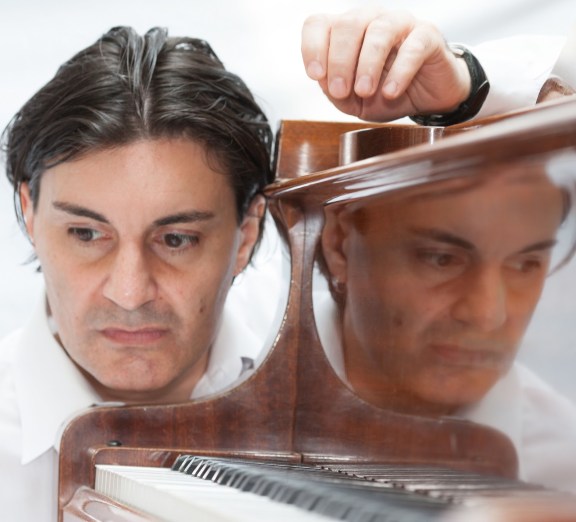
John Reid’s career to date has shown him to be a pianist of notable versatility and range, with wide experience as an outstanding chamber musician, song accompanist, soloist and exponent of new music.
Current and recent projects have included a Brahms and Schumann series with The Sixteen in London, Manchester and Bruges; recitals to mark the centenary of Kathleen Ferrier’s birth in Manchester and at The Sage Gateshead with mezzo-soprano Diana Moore, and at Wigmore Hall (in a programme devised by Graham Johnson); and collaborations with Maxim Rysanov (at Kings Place in London) and clarinettist Sarah Williamson (at Wigmore Hall). He is a regular guest with the Northern Sinfonia in the chamber music series at The Sage, and is a principal of the Aurora Orchestra, with whom he has appeared at the major recital venues in London, and at the BBC Proms and BBC Proms Plus series.
John Reid studied at Clare College, Cambridge and at the Royal Academy of Music with Michael Dussek. As a student, he was the recipient of the Gerald Moore Award and the Kathleen Ferrier and Maggie Teyte prizes. He currently works with Christine Croshaw.




 The Cross-Eyed Pianist