SEBHow long have you been playing the piano? 

25 years – since I was about five.

What kind of repertoire do you enjoy playing, and listening to? 

My big love is the middle-late Romantic period.  But pretty much anything by Beethoven, Liszt or Rachmaninov is heaven to me!

How do you make the time to practise? Do you enjoy practising? 

I find it very difficult, actually – as you get older, there’s so much else to get in the way.  I learned pretty early on that I’m terrible at making myself do anything, so it has to be something I desperately want to do.  Oddly enough, when it’s to enable me to play something I love, it’s not a problem at all!  I’ve pretty much never practised scales and exercises, except for exams, but at least I can appreciate their use these days, so I do try and force myself to battle through some Hanon exercises every now and then!

Have you participated in any masterclasses/piano courses/festivals? What have you gained from this experience? 

I was fortunate enough to attend music college as a piano student for a while, before leaving to pursue a different career, so I had the opportunity to participate and attend loads of masterclasses.  They’re the most daunting, rewarding, terrifying, exhilarating, useful thing you can do.  Everyone in that room speaks exactly the same musical language, and, without exception, you’ll come away with some ideas you never would have thought of on your own.

If you are taking piano lessons what do you find a) most enjoyable and b) most challenging about your lessons? 

For me, the most enjoyable thing about piano lessons is the opportunity to play for and with someone whose musical opinions and knowledge I respect and admire.  It sounds clichéd, but a piano teacher is much more than a teacher; mine have always pretty much been life mentors too.  Every emotion or difficulty you will ever experience in life is perfectly encapsulated somewhere in musical form.  Discussing it and experiencing it with someone else is actually a terribly intimate thing to do.  This is brilliant when you’re on the same wavelength as your teacher, but it’s why you need to find the teacher that’s right *for you*.

What are the special challenges of preparing for a piano exam as an adult? 

I finished my grade exams by the time I left school.  There has been a gap of 10 years or so, and I’ve finally decided to go for the DipABRSM and ATCL exams at some point in the near future.  I never used to worry about whether I was good enough, or whether I’d look an idiot, but these fears creep in as you get older, particularly if you stop being used to playing in public and for different people.  I have a memory of coming to a halt and completely drying up in front of Stephen Hough from when I was at music college – one of the most embarrassing moments of my life (although he is loveliness personified!).  It keeps creeping back in when I play in public, and it’s something I’m going to have to work through!

Has taking piano lessons as an adult enhanced any other areas of your life? 

Definitely.  Music encompasses all, in my opinion, and the older you get, the more you’ve experienced and can put into the music, and vice versa.  Music, and an appreciation for it, has got me through some very difficult times.  It’s all very well being able to rattle through Liszt’s Piano Sonata when you’re 15, but do you *understand* it?  Very occasionally, there are people not of this world (I’m looking at you, Evgeny Kissin!) who do, but for the rest of us mere mortals, a deep understanding and love for music, and life, comes only with age.

Do you play with other musicians? If so, what are the particular pleasures and challenges of ensemble work? 

I don’t at the moment, and it’s something I’m really missing.  The problem with being a pianist, though, is that it’s much harder to find ensemble work – people only generally ever need one at a time!

Do you perform? What do you enjoy/dislike about performing? 

I haven’t performed in public for some years, and it’s something I’m really going to try and correct in the very near future.  It terrifies me, but in a good way, I think.  I must find a church with a decent piano or something and book the hall.  Rather pathetically, I do keep a couple of concertos under my fingers “just in case” an opportunity to play with an orchestra ever magically presents itself!

What advice would you give to other adults who are considering taking up the piano or resuming lessons? 

If I had a pound for everyone who, upon finding out that I play the piano, tells me that they wish they’d kept up childhood lessons, I’d have, well, at least twenty pounds!  I always say the same thing: “Do it!”  And I mean it.  They will immediately protest that they “aren’t musical”, or “don’t have the time”, or “are too old”.  All of these things are utter rubbish.  I truly believe that everyone has the ability to play something.  Some of us are incredibly lucky and find the right instrument when we’re a child, or the right instrument finds us, but if you haven’t yet, you should bloomin’ well do something about it!  Now!  Go online and find someone.  What’s the worst that can happen?  The right instrument for you may well not be the piano, but you can be absolutely certain that it’s out there, somewhere.

If you could play one piece, what would it be? 

Oh, gosh!  So many!  I’d love to be able to play Ravel’s Gaspard de la Nuit.  I saw Ashkenazy play it when I was a teenager, and it’s mesmerised me ever since.


Simon began piano lessons at the age of five, after what he is assured were months of “pester-power”.  His later formative lessons were with the late and very-much-missed Tony Cross of Birmingham Conservatoire, following whose sad death, and after further excellent tuition from Margaret Newman of Trinity College of Music, Simon decided that piano playing was going to be a large part of his future.

In 2000, Simon gained a place to study piano at the Royal Northern College of Music, before sadly finding the experience too suffocating and leaving to pursue a more “normal” career, whilst maintaining a deep love for the instrument.

Simon lives in Birmingham, and is currently seriously considering gaining the necessary qualifications to change careers from law to piano teaching in the long term.  His hobbies include cooking, gardening, and flying light aircraft on the rare occasions that funds allow.
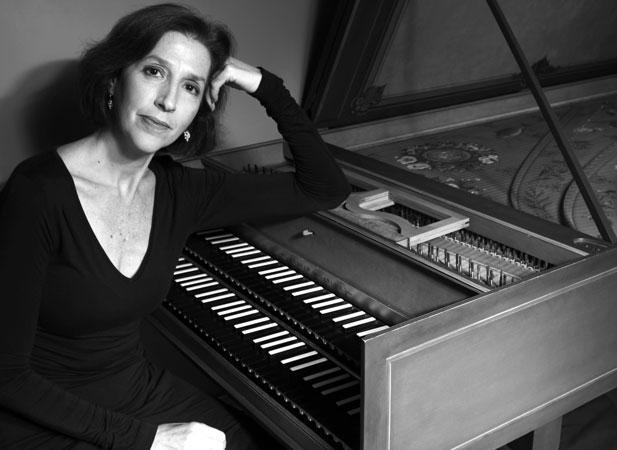
Maggie Cole
Maggie Cole

Who or what inspired you to take up the piano, fortepiano and harpsichord and make music your career?

We had a piano in my family home and it called out to me at an early age. My much older brother played a bit of jazz piano. This sounded great to my 4 year old ears and made me want to play. Much later, after years of playing “modern” piano, I became very intrigued and then passionate about the possibilities of sound and phrasing that the harpsichord and fortepiano suggest. The instruments themselves have somehow always been my main teachers and inspiration.

Who or what were the most important influences on your playing? 

I loved J S Bach as a child and happened to be growing up when Glenn Gould was making such an impact with his playing of Bach. Other huge influences came from non-Classical music. I was glued to the radio waiting to hear what people like Aretha Franklin, Stevie Wonder and Marvin Gay would do next. My first piano teacher was also a huge influence particularly for the degree of seriousness with which she took my young self!

What have been the greatest challenges of your career so far? 

Staying with it. There have been many moments when I’ve felt that perhaps I could be of more use in the world doing a different job. This has faded with age and I feel extraordinarily privileged to have music as my profession.

Which performances/compositions/recordings are you most proud of?  

I particularly like the recording of Haydn trios that I made on fortepiano with my very dear colleagues in Trio Goya – Kati Debretzeni and Sebastian Comberti. It still sounds “right” to me and that is an unusual feeling.

Do you have a favourite concert venue to perform in? 

I’m always happiest and most interested when I play in places that don’t get live music very often. Little islands in the very north of Norway stand out as a memory – the audience mostly arrived by boat. Also, the performances that I do in the States in facilities for young offenders are very dear to me. We (the Sarasa Ensemble) can be in a room with terrible acoustics and often, I will be playing a beat- up electric piano but the exchange of creativity with the young people that grows out of these performances is always moving and very exciting.

Favourite pieces to perform? Listen to? 

To play: The Goldberg Variations – always a journey, always rewarding.

To listen to: it’s still really jazz for me. Like many others in the world, I’ll always come back to “Kind of Blue” for sustenance. Also,Nigel North playing Bach on the lute.

Who are your favourite musicians? 

There are way too many to list. A very random and short list would include Tony Levin, Steven Isserlis, Michael Chance, Dionne Warwick……. I could fill many pages!

What is your most memorable concert experience? 

Playing Bach at midnight in the Court of Myrtles at the Alhambra. As I played, a black cat crossed the stage, bats swooped overhead and a pine martin rustled in the myrtle hedge looking for dead birds. Unforgettable.

What do you consider to be the most important ideas and concepts to impart to aspiring musicians? 

Keep remembering to use all of your experience as food for what you create musically. Paintings, the natural world, cinema – whatever it is that touches you can inform what you play.

What are you working on at the moment? 

Schubert Trios, Bach Preludes and Fugues, Haydn Sonatas and Trios.

What is your most treasured possession? 

Good health. It isn’t to be taken for granted but at the moment, I feel full of energy and able to do all the things I love doing.

Maggie Cole enjoys a richly varied musical life with performances on harpsichord, fortepiano and piano. Born in the USA, she began playing the piano from an early age. A keen interest in early keyboards led her to England where she now makes her home. Maggie’s teachers were Jill Severs and Kenneth Gilbert and she is pleased to be part of this harpsichord “family tree” which began with Wanda Landowska. Best known in Britain through numerous recitals on BBC Radio 3 and appearances at leading festivals, abroad she has performed in venues from Seattle to Moscow, and from Finland to India. In addition to solo recitals – with Bach’s ‘Goldberg Variations’ a speciality, given in London, Paris, Cologne, Basel, Mallorca and Chicago – she frequently performs in duos with partners including Nancy Argenta soprano, Michael Chance counter tenor, Philippa Davies flute, Catherine Mackintosh violin and Steven Isserlis cello. She is also particularly devoted to the Classical chamber music repertoire and explores this with her fortepiano trio, “Trio Goya” (Maggie, Kati Debretzeni, violin and Sebastian Comberti, cello).
 

www.maggiecole.net 

Pianist Clare Hammond (photo credit © Angela Dove)

The Monday Platform at Wigmore Hall, presented by the Park Lane Group, showcased the impressive and varied talents of the Lawson Trio and pianist Clare Hammond.

This was an enjoyable programme which combined the elegant and witty classicism of Haydn with the intimate lyricism of Schubert, the mercurial passions of Schumann, Bach’s Italianate arabesques, and the earthy nationalism of Ginastera. The mix of ensemble and solo piano works made for an extremely satisfying concert experience.

Read my full review here

Ronald Stevenson

A concert exploring a selection of piano works written by two distinctive voices of Scotland’s classical music scene in the 20th century. Ronald Stevenson, whose 85th birthday year it is, is a recognised giant of British Music and an authority on the life and work of Ferruccio Busoni. Perhaps most renowned as a composer for his gigantic Passacaglia on DSCH, the programme will feature some of Stevenson’s smaller piano works.

Ronald Center

Stevenson is honoured in conjunction with a composer rarely heard of even within Scotland during his own lifetime, Ronald Center, whose centenary passed this April. Ever a reclusive character, it is only recently that his music has begun to re-emerge with the first ever survey on record of his complete piano music, by Trinity Laban’s Richard Carne Junior Fellow in Performance, Christopher Guild. A classicist at heart, Center’s music, with its influences of Britten, Prokofiev and Hindemith, stands very much in contrast to much of Stevenson’s.

This FREE, unticketed concert will appeal anyone with an interest in British Music, and those with a passion for making musical discoveries.

PROGRAMME:

Ronald Stevenson: Komm, Susser Tod
Ronald Stevenson: Sonata Senerissima
Ronald Center: Giglot and Toccata
Ronald Center: Six Bagatelles
Ronald Stevenson: Wegenlied aus Alban Bergs Oper ‘Wozzeck’
Ronald Center: Piano Sonata

Performed by:

Alex Lewis, Madelaine Jones, Sally Halsey, Clare Simmonds and Christopher Guild.

Venue:

Thursday 27th June, 6.30pm, Peacock Room, Trinity Laban Conservatoire of Music and Dance, King Charles Court, Old Royal Naval College, Greenwich, London SE10 9JF (public transport: DLR Greenwich Cutty Sark, Riverbus Greenwich Pier)

Pianist Christopher Guild will feature in a forthcoming Meet the Artist interview.


