brittencurated

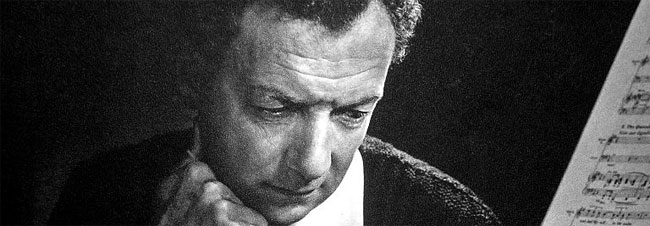
An intimate portrait of Benjamin Britten, as seen through a sequence of bittersweet songs for voice and piano and voice and guitar, provided the perfect antidote to the Wagner marathon at the Proms. The concert included an intense and very moving performance of the Canticle ‘Abraham and Isaac’ with tenor James Gilchrist, soprano Ruby Hughes and Imogen Cooper at the piano.

Read my full review here

Watch the entire concert (click on the picture to go to the BBC Radio Three website)

pcm

It has long been my ambition to perform all 5 Beethoven Concertos in one evening, and it is great to be able to do this in a concert in aid of the Musicians Benevolent Fund. This charity has done so much over many decades to support musicians who have fallen into difficulties of one sort or another and provides invaluable scholarship money to talented students. The icing on the cake is that this will happen in my old Alma Mater, the RNCM in its 40th anniversary year, with an orchestra comprising many of its students past and present, with the very talented young conductor Daniel Parkinson. (Martin Roscoe)

All five piano concertos in one evening, performed by Martin Roscoe, one of the UK’s most acclaimed and versatile pianists, and conducted by Daniel Parkinson, together with an introduction by John Suchet. This promises to be a marathon feast of music, culminating in Beethoven’s Fifth ‘Emperor’ Concerto in the final concert at 9pm. By presenting all the concertos in a single day, audience members attending all three concerts will be offered a unique window on Beethoven’s creative life, and insights into the evolution of the piano concerto in the late eighteenth and early nineteenth century, from the youthful post-Haydn Nos. 1 and 2, through the No. 4, which marked a major turning point in the development of the concerto with the piano entering before the orchestra, to the sweeping proto-Romantic and virtuosic No, 5, the ‘Emperor’.

The concerts take place at the Royal Northern College of Music on 5th October, from 5pm, and tickets are available now. For further information, please visit the Beethoven Piano Concerto Project website: www.beethovenpianoconcertos.co.uk

I recently interviewed conductor Daniel Parkinson for my Meet the Artist series. Read his interview here.

BeethovenPCP A5 FLYER1

I am without a piano until early August when my new (old!) grand piano arrives. After the initial sense of loss after saying goodbye to my trusty Yamaha upright has worn off (on seeing my despondent face this morning, the time when I am usually busy practising, my husband suggested asking for the Bechstein to be delivered sooner), I am going to try practising in a different way – without a piano.

There is much to be gained from working away from the piano and the ‘distraction’ of the keyboard: reading, analysing and annotating the score, marking up fingering schemes, cutting through the music to the heart of what it is about, its subtleties and balance of structure, studying style, the contextual background which provides invaluable insights into the way it should be interpreted, listening to recordings by others.

Reading: I habitually read scores in bed, having given up reading novels when I embarked on my diploma studies. I tend to read a score in a general way initially, for overall structure and shape, patterns and “colours” (this visual aspect is very important in my learning method, my synaesthesia assisting in the process). In a busy or complex score, such as the Messiaen I am learning at present (Regard de l’Etoile and Regard de la Croix), where there are some awkward chord clusters, I like to have a good idea of the shapes of the music imprinted in my mind’s eye. This also helps with memory work. Detailed reading comes with a careful analysis of the structure of the music, including a careful reading of the separate parts for left and right hand, and highlighting any potential pitfalls, or very tricky/awkward sections.

Another aspect of “reading” is reading around the score – i.e. books on music and composer, from detailed analaysis to performance practice and general commentaries, and programme notes.

Listening: Another important aspect of the learning process, there is useful work to be done by simply listening to other people’s interpretations of a piece or pieces on which I am working. This is not to imitate another’s reading of a work, but to gain insights or ideas, particularly for performance practice. For example, I have been enjoying Schiff’s recording of Bach’s Fifth French Suite, which I am working on at present. His treatment of ornaments in the repeats of the ‘Allemande’ is interesting and worth considering when I return to the keyboard.

And like “reading around”, there is useful work to be done “listening around” the music I am studying – again for historical context, stylistic considerations, interpretation etc. (I have a Spotify playlist called “For Reference” which I where I collect tracks which inform my current learning.)

Thinking: This may seem rather vague, but I spend a good deal of time thinking about the music I am learning, often when I am far away from the piano, such as on the District Line on a Monday morning on the way to my other job. This includes memory work (aural, visual and kinesthetic), “imagining the sound”, considering interpretative aspects, communication and emotion. This sits rather well with my teacher’s maxim “think before you play”.

Inspirations: Going to concerts provides me with some of the most potent and exciting inspirations – and it doesn’t have to be piano music either.

Fryderyk Chopin’s evergreen Mazurkas lend themselves to a wide variety of interpretations, and on her CD on the Delos label, Korean pianist Klara Min shines another light on them in a personal survey of her favourites.



The mazurka is a Polish folk dance in three time with an accent on the second or third beat. Chopin elevated the form into the concert miniature, in effect creating a new genre that became known as the “Chopin genre”. The sixty-nine Mazurkas that he composed in his lifetime remain amongst his best-loved music for piano. They offer some of the most intimate musical insights into Chopin’s relationship with his homeland, with their lilting rhythms and harmonies, poignant suspensions, tender, meandering melodies and falling cadences, and the subtle use of rubato. Others are more lively, with bright rhythms and piquant textures; yet all seem imbued with zal, that untranslatable Polish word so often associated with the music of Chopin, suggesting nostalgia and longing.

Klara Min’s approach to these works is sympathetic and thoughtful, if occasionally a little too studied in some of the phrasing and use of tenuto. But overall she neatly captures the individual idiosyncrasies, and shifting nuances and textures of these miniatures, with melodies sensitively highlighted, though never at the expense of the interior architecture of the music (the Mazurkas are replete with complex harmonies and counterpoint). A warm tone and wide-ranging pianistic colours, combined with supple tempo rubato, a plaintive tenderness, which runs through all the works on the CD, and Min’s technical acuity result in a charming reading of these exquisite miniatures. The selection closes as intimately as it opens, with the heartrending Op 68, no. 4, Chopin’s last composition – a piece which my piano teacher says she never teaches to students “because it is so very special”.

The CD comes with detailed notes and is produced with vibrant, clean sounds.

Klara Min will feature in a forthcoming Meet the Artist interview