The decision to leave one’s piano teacher and move on can be a difficult one, especially if the relationship is longstanding. I have written more about this subject here

Ann Grogan, a poet and adult pianist, contacted me after reading my article to share her own thoughts on the issues surrounding the decision to leave a teacher, and I am sharing a excerpt from her article on this subject here:

In appreciation because they help me reach my goals, I fall into a kind of deep music-love affair with each of my teachers. Music and piano lessons open up my heart and emotions, and make me feel raw, vulnerable, and exposed in a way that other kinds of art lessons have never done. Music is special in this way, at least for me.

THE DANGER OF BEING OVERLY IMPRESSED: Sometimes this specialness causes me to set aside what I note is out of place in a lesson or in the teaching relationship, in favor of long-term hopes and dreams. That is usually never a good thing to do. I’ve learned to speak up earlier and more often when I’m fairly certain I’m not enjoying something I am trying to learn or a particular approach the teacher insists I apply.

In one case, I’m certain that I was initially overly-impressed by a teacher’s many published CDs featuring original compositions and pianistic talents in a preferred musical genre that was not mine, and another teacher’s stature as a well-known professional pianist with ubiquitous “how to” vlogs. However, I failed to do my due diligence and had no clue about their teaching ability in general, or if their approaches and policies were compatible with what are certain basic requirements I have for piano lessons.

For many seniors, the process of learning the piano is critical, in that it must function in the nature of a partnership and not a top-down affair. Being overly-impressed hinders my ability to observe what is happening as lessons unfold. I stray from my desire to learn in partnership with my teacher. Sometimes I continue studying with the teacher beyond what is reasonable and productive.

Read more

9-16 June 2023

Principal Artist: Emma Johnson, clarinettist

Box office now open

Hertfordshire Festival of Music celebrates live classical music in Hertfordshire with an exhilarating programme of magnificent classical music, both traditional and modern – an opportunity to enjoy world class music in the heart of Hertfordshire.

“The friendly, accessible vibe of Hertfordshire Festival of Music was accompanied by the very highest level of music-making and extremely imaginative programmes in beautiful locations.” – Judith Weir CBE, Master of the King’s Music

With a theme that explores the fascinating relationship between music and art, HFoM will unite the local communities of art and music lovers through illuminating talks and imaginatively devised concert programmes. The Festival will also mark the Coronation of King Charles III with two special events.

HFoM is honoured to have Emma Johnson, one of the world’s finest clarinettists, as this year’s Principal Artist, performing a captivating recital with the talented pianist Gregory Drott. There is also a special opportunity to observe her artistic insight in a masterclass for young and aspiring players at the beautiful Queenswood School in Hatfield. Emma Johnson will also be in conversation with Artistic Director James Francis Brown to talk about her musical journey, her passions and her interests, and to share insights and opinions on music, art and life.

Featured artists at this year’s Festival include:

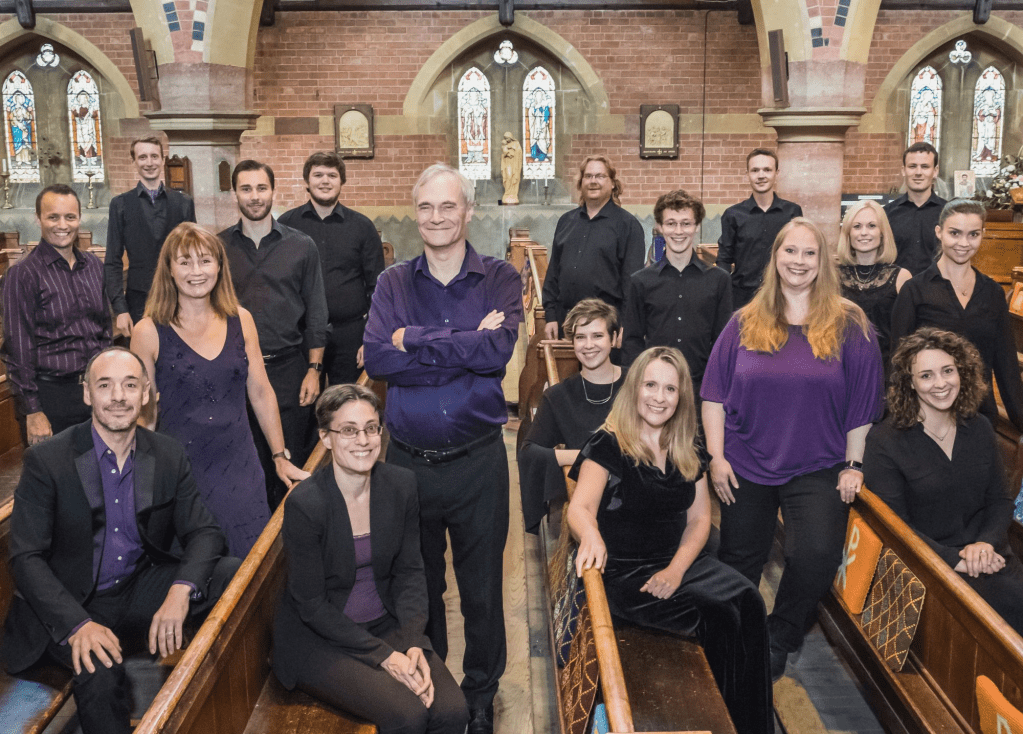
Emma Johnson, Katya Apekisheva, Gregory Drott, Jack Hancher, Hertford Chamber Choir, Manvinder Rattan, Rossetti Ensemble, Daniel Swain, Litsa Tunnah, Daniel Grimwood, William Whitehead, ZRI

Highlights of this year’s Festival include:

Coronation Celebrations in Hertford

HFOM marks the coronation of King Charles III with two special events in Hertford. At Hertford Castle, the HFoM Community Concert Band musicians will perform arrangements of music associated with royalty in a fun, relaxed performance. The Hertford Chamber Choir and Manvinder Rattan take up the theme in a special performance at All Saints’ Church, including exquisite solo works for organ performed by William Whitehead.

The ever-popular ZRI ensemble return to HFoM with their genre-bending and audience thrilling ‘Cellar Sessions’, recreating the atmosphere of the legendary Red Hedgehog bar in Vienna, at the McMullen Brewery courtyard in Hertford.

Pianist Katya Apekisheva makes her Festival debut performing one of the war horses of art-inspired music, Mussorgsky’s Pictures at an Exhibition. Festival newcomer violinist Litsa Tunnah shares her passion for music and colour in a recital, and she will be in conversation with Artistic Director James Frances Brown exploring the rare phenomenon of synaesthesia, where sounds can trigger colours or shapes, and discussing how music can create visual impressions.

Guitarist Jack Hancher returns to Hertford with a solo recital of music inspired by art, and there will also be a special appearance of the highly regarded Rossetti Ensemble in a performance of music by David Matthews and Festival Artistic Director, James Francis Brown.

HFoM plans 15 events/outreach projects in community venues, anticipating engagement with around 1,500 individuals (performers, audiences, participants/beneficiaries).  Eight of the events are free, with discounted ticket prices for concessions where possible.

As part of the Festival, and with the support of community sponsor, Network Homes and collaboration with Sing from the Heart, HFoM’s Music in Mind project offers a series of interactive sessions for people living with dementia, as well as their carers and families, in selected care homes across Hertfordshire. These sessions are led by specially trained musicians who share the gift of music with compassion and sensitivity. Music can have a positive impact on the symptoms of dementia, as well as bringing joy and happiness to those who participate.

In addition, HFoM is delighted to continue its vitally important education projects with exciting plans to get schoolchildren up and singing, in collaboration with Hertfordshire Music Service and Queenswood School, taking place later in the year.

Full details of this year’s Festival at hertsmusicfest.org.uk


Hertfordshire Festival of Music is the vision of the late Tom Hammond and composer James Francis Brown, and is registered as a charity supported by a board of Trustees and a team of volunteers.

Now in its eighth year, HFoM has grown rapidly from a small weekend event to one of the UK’s major summer music festivals, featuring international artists and ensembles alongside innovative outreach and educational projects, all based in and around the attractive historic county town of Hertford. Since its launch, HFoM has presented concerts that have inspired extraordinary audience responses to artists such as Tasmin Little OBE, Dame Emma Kirkby, Stephen Hough CBE, Steven Isserlis CBE, Ben Goldscheider, the Carducci Quartet, the Galliard Ensemble, Chloë Hanslip, ZRI and The Prince Consort.

HFoM is fortunate to receive support from a number of charitable trusts and foundations, county, district and town councils, while a growing Friends Scheme allows individuals to play an important role in supporting the Festival and furthering its scope and potential.

The Festival offers affordable ticket prices, several free events, concessions for those under 24 in full-time education, free tickets for the under 8s and a complementary ticket for a carer accompanying those patrons with access needs.

HFoM exists to celebrate and nurture exceptional music-making, featuring some of the world’s finest performers. The Festival also supports professional and young musicians from Hertfordshire, presents fascinating music by living composers and devises major, innovative projects for education and participation. Hertford is just over twenty miles from central London, easy to get to by rail and road but nestled in the beautiful countryside of the Lea Valley. Most concerts take place within a ten-minute stroll of the town’s centre, which boasts excellent restaurants, many independent shops and accommodation.

Website: www.hertsmusicfest.org.uk

Twitter: @HertMusicFest

Facebook: https://www.facebook.com/Hertsmusicfest/

Instagram: @hertsfestofmusic

Registered Charity Number 1175716

For further press information, please contact Frances Wilson | frances_wilson66@live.com

Mathilde Milwidsky (violin) and Annie Yim (piano) at Dorset Museum, Dorchester

  • Robert SCHUMANN Three Romances
  • Claude DEBUSSY Sonata in G Minor
  • Eugène YSAYE Sonata No 3 in D Minor
  • Lili BOULANGER Deux Morceaux
  • BEETHOVEN Violin Sonata in G major No 10 Op 96

When, in spring 2018, I told my music-loving friends that I was leaving London for the depths of west Dorset, many exclaimed “but how will you cope without the Wigmore Hall?!“, knowing that London’s “sacred shoebox” was (and remains) one of my favourite, regular concert venues. When I moved, I was determined to find music down here, and shortly after moving to the Isle of Portland (the southernmost tip of Dorset), I discovered all sorts of music-making, festivals, opera and more. And in autumn 2019, I took over the concert management of Weymouth Lunchtime Chamber Concerts, working with the pianist Duncan Honeybourne.

There is, in fact, a feast of music outside the capital, if you know where to find it.

Dorset Museum Music Society, now in its 48th season, presents 6 concerts per year in the wonderful Victorian Hall at Dorset Museum in Dorchester. I’d known about the music society for some time, so it was serendipitous when the pianist Annie Yim invited me to a concert given by her and violinist Mathilde Milwidsky in the beautiful Victorian Hall at the museum.

The concert was well-attended; like the Weymouth lunchtime series which I run, these regional music societies tend to have a loyal local audience. The venue and ambiance were friendly, and the interval wine pleasant.

The music was exceptional. Mathilde has recently been named as a Classic FM Rising Star: 30 under 30 (this is a prestigious shortlist narrowed down by industry experts) and Annie Yim has already established a reputation as a thoughtful and imaginative musician whose programmes showcase lesser-known repertoire and make connections between music and art.

This programme paired two of the greatest sonatas for violin and piano – Debussy’s mercurial and elegiac sonata in G minor, the composer’s last work, and Beethoven’s uplifting Op 96. These works were interspersed with shorter works by Robert Schumann, Lili Boulanger, and virtuoso violinist and composer Eugène Ysaye.

The Romances by Schumann were attractive, contrasting introductory pieces which quickly gave a taste of the talent on display and the mutual understanding between these two musicians. In Debussy’s Violin Sonata. Mathilde and Annie gave us shimmering colours, vibrant rhythms and a clear sense of the music’s poignancy. It’s very much an autumnal farewell, yet its finale is, in the composer’s words, “filled with tumultuous joy” with the violin spinning off into a new episode and the piano following to bring the music to an ecstatic close. It was a wonderfully imaginative and engaging performance.

Two short works by Lili Boulanger followed, somewhat in keeping with the nostalgic nature of the Debussy (Lili Boulanger’s short life was beset by illness and she died in 1918, the same years as Debussy). Here, an elegant, songful nocturne contrasted with a spirited little morceau.

The second half of the concert opened with Ysaye’s Violin Sonata No.3 in D minor, written for solo violin and dedicated to Georges Enescu. It’s a work rich in technical and musical challenges, in two movements but played as a continuous work, almost like a fantasy. Mathilde demonstrated not only fine technique, but a real command of this highly virtuosic piece, bringing to it spontaneity, colour and drama.

Beethoven’s last sonata for violin and piano was composed in 1812 and dedicated to his most favourite pupil, the Archduke Rudolph. A work of serene beauty and lyricism, characterized by its intimate and conversational nature, violin and piano engage in an almost seamless dialogue throughout – the perfect vehicle for these two musician friends who play with such natural understanding and synergy.

There was so much to enjoy in this concert. Mathilde is poised, direct and committed, with understated vibrato and a clean yet warm tone. She was amply complemented by Annie’s sensitivity and glowing, elegant sound. Despite a small grand piano, the shape of the Victorian Hall at Dorset Museum (very nearly a Wigmore shoebox) produced a wonderfully resonant and bright acoustic, well-suited to these fine musicians.

I came across this phrase on Twitter, to describe doing short bursts of practicing, rather than long stretches. This may seem counter-intuitive: surely we should be practicing for long stretches of time to see noticeable progress?

It’s a myth, which unfortunately persists, that professional pianists do hours and hours of practicing, cloistered in solitude with just the instrument and scores for company. In reality, many of the professional pianists I know personally or have interviewed acknowledge that after about 45-60 minutes the law of diminishing returns starts to kick in, one’s concentration and energy starts to flag, and it’s time to take a break.

Practicing the piano requires commitment and consistency, but many people, especially amateur pianists and children, may feel overwhelmed by the prospect of long practice sessions; this can be dismotivating too.

Time is an important factor for the busy professional, amateurs pianists who need to fit practicing into the realities of daily life, and children. While it may be tempting to cram in hours of practice at a time, small amounts of regular practice can be much more beneficial in the long run.

Enter the notion of ‘practice snacking’.

When I taught piano, mostly to children and teenagers, the hardest aspect of the job was encouraging them to do their practicing. 30 minutes can seem A Very Long Time to a young child or a teenager who wants to be hanging out with friends rather than with Chopin and Co. I often pointed out to my students that 3 slots of 10 minutes each adds up to 30 minutes, and that it is possible to do very useful work in just 10 minutes.

I didn’t confine this advice only to my students. I applied it to myself, because when I was working towards my performance diplomas, I was having to fit in my practicing around my teaching and other work, and I became adept at practice snacking. Doing small amounts of practice allowed me to focus more intensely on specific aspects of the pieces I was studying.

A “little and often”, snacking approach to practice can be extremely beneficial. It is a truth universally acknowledged that consistency and quality of practice wins over quantity. Mindlessly hacking away at that Etude for 2 hours is not only boring, but is largely wasted time. It’s far better to take a focussed approach, to know exactly what needs to be practiced – perhaps that tricky arpeggiated passage or the left-hand accompaniment – and to break down the practicing into manageable, ‘snackable’ sections. Focusing on specific areas during shorter practice sessions can help you to identify and address any problem areas. When you only have a short amount of time, you are forced to be more efficient and targeted in your practice. You can work on a specific passage, technique, or even just one hand at a time, and really work at improving it. Additionally, breaking down more complex pieces into smaller, more manageable segments can make learning them feel less daunting. Keep a regular note of what needs work and know exactly what you want to do/achieve at each practice session.

One of the most significant advantages of doing small amounts of piano practice like this is that it helps build consistency. Consistency is key when it comes to learning a new skill and by committing to a few minutes of practice every day, you are more likely to build the habit of practicing regularly. Regular, ‘practice snacks’ can help you build good habits, routine and discipline. It’s much easier to commit to practicing for 15-20 minutes a day than it is to find hours at a time to dedicate to the piano. By making a habit of practicing every day, even for a short amount of time, you are actually setting yourself up for success in the long run; over time, this consistency will result in noticeable progress.

Small amounts of piano practice can also help you avoid burnout and fatigue. Practicing for hours at a time can be mentally and physically exhausting, leading to frustration and even injury. By breaking up your practice into smaller chunks, you give yourself time to rest and recover in between sessions. This can help you stay motivated and engaged with the piano over a longer period of time.

Nutritionists tell us that snacking can be bad for us, but in the case of piano practice, it’s definitely beneficial!

Related content

Are you practicing enough?


This site is free to access and ad-free, and takes many hours to research, write, and maintain. If you find joy and value in what I do, please consider making a donation to support the continuance of this site

Make A Donation