David Hockney: Two Boys Aged 23 or 24, 1966. Courtesy of David Hockney

‘Hockney, Printmaker’ coincides with the 60th anniversary of David Hockney’s first print and celebrates his long and diverse career as a printmaker. David Hockney is Britain’s best-known and arguably best-loved artist, and one of our most talented and innovative printmakers. Showcasing over 100 works, including rare early lithographs from his time at Bradford College of Art in the 1950s (a Self Portrait redolent of Stanley Spencer) and his recent experiments with the iPad and iPhone (Rain on the Studio Window, 2009), this engaging exhibition offers an insightful and entertaining overview of Hockney’s long career. Read my review here

‘Hockney: printmaker’ is at Dulwich Picture Gallery until 11 May 2014. Further information

Who or what inspired you to take up composing, and pursue a career in music? 
When I started playing piano and clarinet at Gnessin Music School, Moscow,  my first influence for composing was my performance – playing music with very bright and talented musicians. The main trigger, however, was performing in Messiaen’s Quatuor pour la fin du temps together with cellist Alexander Knyazev. It was a profound experience which unveiled to me the mysterious and cathartic power of great music.

Who or what were the most significant influences on your musical life and career as a composer? 

Paradoxically enough I would refer to great performers rather then great composers: Vladimir Horowitz, Glenn Gould, Rostropovich, Jascha Heifetz and other masters. Through their art of interpretation of great music I discovered the link between their endeavour to rediscover the composer’s world as they saw it, and the composer’s world as the composer saw it in its entirety.

What have been the greatest challenges of your career so far? 

Any new work or project seems the greatest challenge at the beginning and less so nearer the end.

What are the special challenges/pleasures of working on a commissioned piece? 

To be focused on the specific task of forming the project and then… to share an excitement with parties involved.

What are the special challenges/pleasures of working with particular musicians, singers, ensembles and orchestras? 

Probably the most pleasurable experience for me which unifies all these types of musicians is to the opportunity to discover musicians and their ability to respond the music.

This premise is based on my belief in the uniqueness and versatility of every singer or a member of ensemble or orchestra.

Which works are you most proud of?  

There are few, among them are two the most recent choral works: Prayers for Mankind, the Divine Liturgy of St John Chrysostom, and 24 piano pieces  written in 24 different keys.

Do you have a favourite concert venue? 

I would leave it to the audience, however a good church acoustic always adds something extra to the performance.

Who are your favourite musicians/composers? 

People like Miles Davis, John McLaughlin, Glenn Gould and some Spanish Renaissance composers.

What is your most memorable concert experience? 

The recent London première of the Divine Liturgy with the choir Tenebrae.

What do you consider to be the most important ideas and concepts to impart to aspiring musicians?  

Complete honesty in writing music. For performers – relentless striving in achieving the most eloquent and original interpretation of the music.

What are you working on at the moment? 

I have just finished writing a piece for VOCES8 and about to start revising my Second String Quartet which I wrote for the Tippett Quartet.

Where would you like to be in 10 years’ time?

Alive and with my family

What is your idea of perfect happiness? 

Absence of unhappiness

What is your most treasured possession? 

My family.

What do you enjoy doing most? 

Making people smile

What is your present state of mind? 

Enlightened and connected with my inner self.

Born in Moscow in 1955, Alexander Levine studied piano from the age of six at the Gnessin Music School (Moscow), and later he took up the clarinet. Upon graduation he was offered a place at the Moscow Gnessin Music Academy where he studied from 1976-1980. During his college years he also held the position of Principal Guitar in the Orchestra of Russian National Radio and Television.

In the years that followed he established himself as a composer working in collaboration with a variety of highly acclaimed performers in Russia. His compositions won prestigious awards from the Russian National Radio and Television in 1989, 1990 and 1991.

Since 1992 Alexander Levine has lived in the United Kingdom.

In 1993 he was awarded the honored Wingate Foundation Scholarship to study in the Postgraduate Composition course at the Guildhall School of Music and Drama. In that year many of his compositions received awards and won prizes at various composers’ competitions.

In 1994, in recognition of his achievements, he was awarded the GSMD Bursary to continue his studies in the Advanced Postgraduate Composition. He also did his Master Degree (MA) in Composition at the GSMD in 1995, studying under Prof.Gary Carpenter and Simon Bainbridge.

In 1994 he was commissioned to write music for the Barbican production of War and Peace, directed by Peter Clough, which was performed by the GSMD Symphony Orchestra on stage. The Times wrote about this work: “It is not often you go to the theatre and get an orchestra thrown in: not providing cues for numbers but underscoring dialogue with a grand swell, like a soundtrack for the big screen.”

He also was engaged as music director for the restoration of The Beggar’s Opera and Love’s Labour’s Lost.

In the following years Alexander collaborated with various artists such as Maria Freedman, Christian Forshaw, Stanzeleit/Jacobson Duo, Darragh Morgan, Mary Dullea, Fidelio Trio, Konstantin Boyarsky, Jonathan Powell, Andrew McNeill, Bozidar Vukovic, Tippett Quartet, Orlando Consort, BBC Singers, 21st Century Choir, Tenebrae, Mariinsky Opera Choir. Russia State Orchestra “Novaia Rossia”, Bel Canto Chorus.

alexanderlevine.com

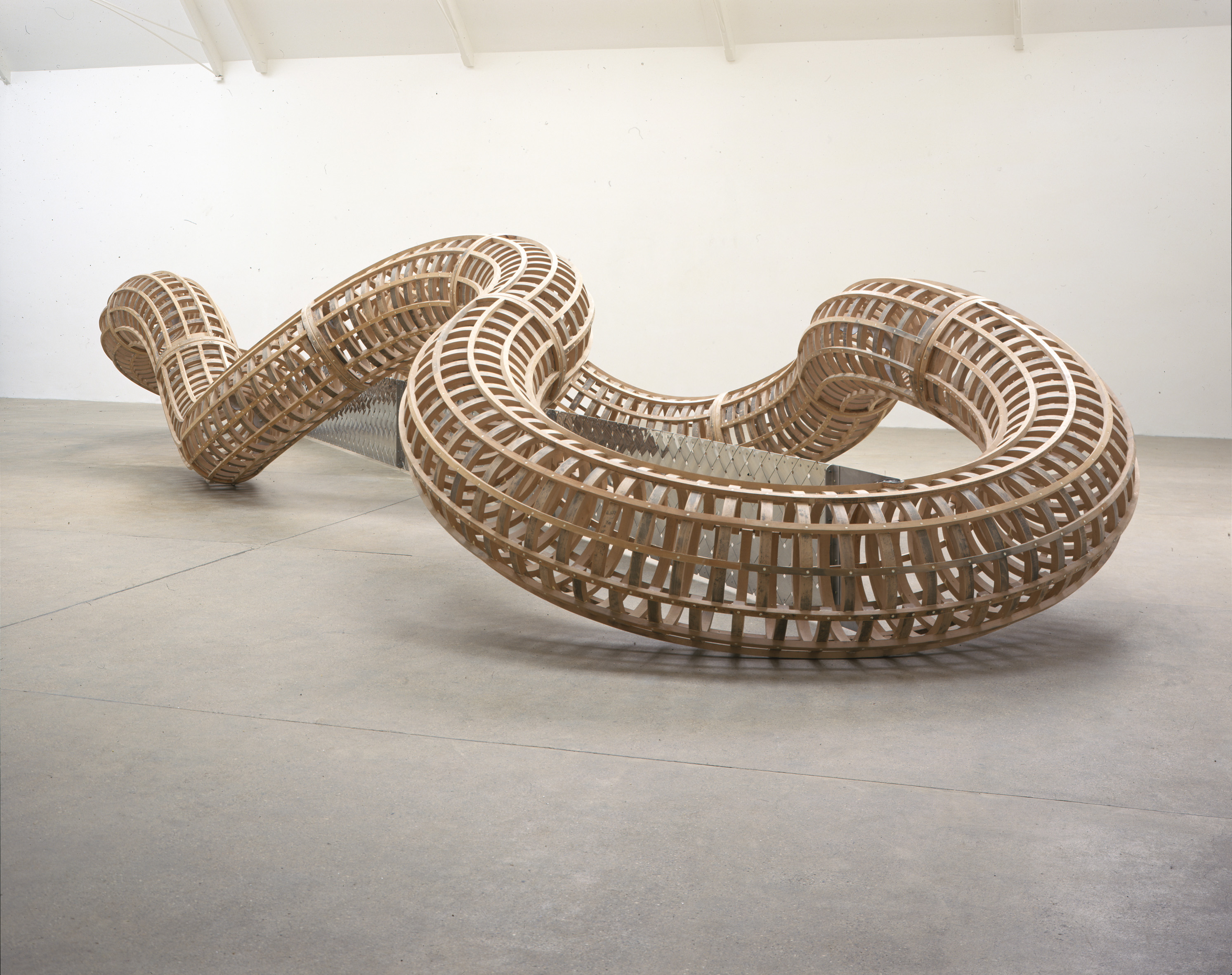
Richard Deacon - After 1998 ©Tate
Richard Deacon – After 1998 ©Tate

Tate Britain presents the first major survey in 25 years of pre-eminent British sculptor Richard Deacon’s work. Deacon is best known for his lyrical open forms and works displaying organic fluid movement, a recurring feature notable in serpentine structures such as ‘After’ (1998), which occupies Room 5 of the exhibition like a giant somnolent latticework python.

Read my full review for CultureVulture.net here

American cellist David Finckel, who has just embarked on a series of seminars entitled ‘Being a Musician’ at Stony Brook University, identifies the important habits of those musicians who have built and maintained successful careers. (This article first appeared in The Strad.)

1. Know thyself
Being a musician begins with you. Knowing and being able to articulate why you love music, and why you must make a life of it, are the first steps to convincing the world that you are in the business to stay. Understanding how you stack up in the music world, and knowing what you have yet to learn, is equally important. If you are tougher on yourself than others, you’ll be ready for anything.

2. Be an artist
There are many musicians, but few real artists. True artists remake and replenish themselves perpetually, and are the ones followed by a loyal public. Decide what you need in order to honestly call yourself an artist and go get it. Study the people you consider to be great artists and emulate them. You can’t go wrong by spending a day as Mendelssohn, Picasso or Charlie Chaplin. Put yourselves in their heads and you’ll see the world differently.

3. Keep learning
Artists never stop absorbing knowledge and ideas that enrich their minds. Read, listen, watch, ask questions and surround yourself with interesting people. Don’t discount unconventional sources of knowledge. People who are constantly learning are the most interesting, always changing and always growing. Be one of them.

4. Work on your performance
Don’t be afraid to compare your performance to your own ideal. Be relentless in your determination to improve. Tape yourself on your mobile phone. Ask your friends for honest opinions. Listen and watch those musicians you admire most. Ask to play for the best musicians you know. You will only show yourself to be more dedicated than others.

5. Make friends
Careers are not made in isolation. Your friends, colleagues, mentors and industry contact list should be large, ever-growing and well-maintained. It will likely be one of these people who opens opportunities for you, recommends you, or shares a new idea that changes your life. A large musical family is not a bad thing to have.

6. Visualise possible lives
Keep an open mind as to the variety of ways you could be a musician. There are many.

7. Ask not what the industry can do for you…
Everyone who works in the arts industry faces enormous challenges on a day-to-day basis. The best thing a musician can do for them is to offer solutions, not present problems. These people appreciate all your ideas about programming, creative ways to appeal to the public, and help you can offer to run their organisations more powerfully. Ask what you can do for them.

8. Lead by example
The ideas and ideals of an artist are often beyond the comprehension of most around them. As a rule, the most effective way to stand out in the field from the rest is to live the life you believe in. Inspire others through your own work, and opportunities will surely come your way.

9. Give back
It is never too soon to begin sharing your experience, knowledge and inspiration with those poised to become classical music listeners, supporters and practitioners in the near and far futures. As an artist and a musician, you always have something to share. That you are perceived as thoughtful, generous and forward-thinking is completely in your favour.

10. Stay the course
Commitment to your art – respecting your initial reasons for becoming a musician and rejecting all unprincipled derivations from the course of integrity – is essential for ultimately commanding the respect of your colleagues, public, supporters and the entire industry. Today there are numerous temptations in the music world to stray from the highest standards of a pure course of study and practice of great music. Musicians, educators and administrators desperately employ short-lived ideas for getting engagements, creating opportunities for students and selling tickets. At the end of the day, not being among those who doubt the staying power of our art is the only safe way to ensure that you will be trusted and taken seriously.


