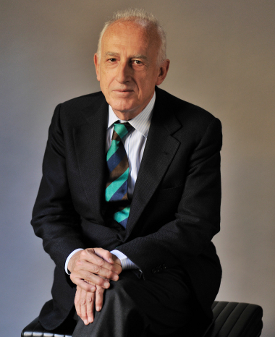
Who or what inspired you to take up composing, and make it your career? 

It wasn’t an instantaneous decision. More like a big hole that I fell into – ha ha! In studying an Arts degree with a music component, I became more interested in composing, having heard some student concerts. I though “I could do that”. In fact I had been composing throughout my teen years, but never thought it to be a ‘proper’ activity. Playing Beethoven was the serious thing to do. I won a couple of composition competitions in my early 20s and decided to ‘give it a shot’ after that. Having said that, it has been a long pursuit full of considerable heartache at times. There have been some points of wanting to ‘throw in the towel’ but I have persisted and I’m glad I’ve done so.

Who or what were the most significant influences on your musical life and career as a composer? 

A few personalities here. Firstly, Peter Sculthorpe heard some of my music at a very fledgling stage and said “keep going”. Those two words from someone as influential as Peter meant an awful lot. Later I studied with him and it was as fascinating process. I’ve also had tremendous support from Ross Edwards – never strictly a teacher but more a friend and mentor and someone I’ve looked up to over the years. My good friends and fellow composers, Matthew Hindson and Stuart Greenbaum, have helped me a lot too. We give each other feedback about new works and develop a sense of trust and mutual support.

What have been the greatest challenges of your career so far? 

There was a point in my early 30s, when I had finished a period of scholarship study in London and returned to Australia when opportunities dried up. This was a moment of crisis, wondering if I would have to re-evaluate things. Things changed again when I won a major international composition award. I guess you can never know what is around the corner and that is a big challenge!

What are the special challenges/pleasures of working on a commissioned piece? What are the special challenges/pleasures of working with particular musicians, singers, ensembles and orchestras.

The knowledge of the opportunity at the other end, especially when working with a major symphony orchestra or the level of musicians that I have been able to work with of late. That provides both challenges and pleasures – you want to do your absolute best for them and for yourself. There is a lot of pressure to deliver your best piece every time. The technicalities of writing for large forces alone are huge. Commissions help, of course, in giving you enough of a fee and an impetus to get a new work up and running. I have only probably written one or two non-commissioned works in the last decade.

Which works are you most proud of?  

Ha ha – they are all my little children in a way! But over time you realise that some pieces stand out. I think my Second String Quartet stands up pretty well. Two orchestral works – my Fantasia on a Theme of Vaughan Williams and Machinations are, having heard them a few times now, strong essays in music for large forces. Some of my choral works get performed quite a bit, and it may be those pieces that last the distance.

Do you have a favourite concert venue? 

Not the Sydney Opera House, I’m afraid. Beautiful piece of sculpture – problematic inside space! I really like the Adelaide Town Hall for its balance of clarity and warmth, and in Sydney the City Recital Hall is terrific for its clarity. Melbourne Recital Centre is also outstanding in music for small forces. I’ve conducted a concert in the Taiwan National Concert Hall, and that is probably the best concert space I have been in so far!

Who are your favourite musicians/composers? 

I’m a big fan of early music and tend to listen a lot to the likes of Palestrina, Victoria and Monteverdi. Stravinsky is a real hero of mine, and of late I have been impressed by the modern Brits from Birtwistle through to Adés.

What is your most memorable concert experience?

Probably two of these which both happened at the National Music Camp, hosted by the Australian Youth Orchestra – the first was a performance of an early String Quartet when I was in my 20s. The response from the audience and the really terrific performance was a huge shot in the arm. And another was a performance of a chamber orchestra piece while I was on the staff at the same camp some 18 years later, when the yelling and screaming from the audience brought on an encore performance. Not sure that will ever happen again!

What do you consider to be the most important ideas and concepts to impart to aspiring musicians? 

Patience, inner resolve. Obsession with music as a living entity and a tradition – realising that you are a part of something bigger and that it is a tremendous privilege to be involved in making music.

What are you working on at the moment? 

A new dramatic cantata called “Jandamarra: Sing for the Country”. It’s a choral/dramatic work for the SSO in collaboration with Gondwana Choirs and members of an indigenous community from the Kimberley in Western Australia.

What is your idea of perfect happiness?

Having a proper break, not having to worry about deadlines, and enjoying the company of friends and family.

What do you enjoy doing most? 

Swimming in the surf. Enjoying a really good glass of red. Probably not simultaneously…

Paul Stanhope (b. 1969) is recognised as a leading composer of his generation not only in Australia but internationally with prominent performances of his works in the UK, Europe, Japan, and both North and South America. After studies with Andrew Ford, Andrew Schultz and Peter Sculthorpe, Paul was awarded the Charles Mackerras Scholarship which enabled him to study for a time at the Guildhall School of Music in London.

He writes: “My music presents the listener with an optimistic, personal geography . . . whether this is a reaction to the elemental aspects of the universe or the throbbing energy of the inner-city”.

In May 2004 Paul’s international standing was confirmed when he was awarded first place in the prestigious Toru Takemitsu Composition Prize. In 2011 he was awarded two APRA/Australian Music Centre Awards for Instrumental Work of the Year and Vocal/Choral Piece of the Year and in 2012 was again a finalist for the Instrumental Work of the Year. Paul is also the recipient of a Sidney Myer Creative Fellowship for 2013-2014 – the first Australian composer to be granted this honour. In 2010 Paul was Musica Viva’s featured composer: his String Quartet No. 2 received nation-wide performances by the Pavel Haas Quartet as part of this season as did his Agnus Dei – After the Fire for violin and piano, performed by the stellar duo Alina Ibragimova and Cédric Tiberghien. Other choral and chamber works received national tours by the Choir of Trinity College, Cambridge and the Atos Piano Trio from Berlin. Paul’s music has also been featured at the Vale of Glamorgan Festival by the BBC National Orchestra of Wales in 2009 and also at the City of London Festival in 2011.

Recent works include his Piccolo Concerto (2013), premiered by the Melbourne Symphony Orchestra and subsequently performed by the Adelaide and Tasmanian Symphony Orchestras, The Magic Island (2012) commissioned by the Hush Music Foundation which was recorded and premiered by the Tasmanian Symphony Orchestra, Qinoth (2011) written for the Australian Chamber Orchestra and Exile Lamentations (2007-2011) a cantata written for soloists, choir and the virtuosic talents of oud master Joseph Tawadros.

Forthcoming works include a large choral-orchestral cantata about the life and deeds of Western Australian indigenous hero Jandamarra written together with librettist Steve Hawke as well as a new piece for string quartet.

Paul Stanhope teaches composition part-time at the Sydney Conservatorium of Music.

Gareth's avatarSomewhere Boy

My weekend has been piano recital-heavy, not that I would have wanted it any other way. On Saturday I saw Piotr Anderszewski at Peterhouse in Cambridge, and last night I saw Yuja Wang at the Barbican. You can currently listen to the latter recital here. Two very different recitals, but I came away from each one thinking about the same thing: the encores.

Anderszewski gave two, both by Schumann — ‘Einsame Blumen’ from Waldszenen and the Novelette, op. 21 no. 8. Wang gave five (five!) — a transcription of Rachmaninov’s Vocalise, elephantine and spangly by turns, Prokofiev’s op. 11 Toccata, Chopin’s Waltz in C-sharp minor, op. 64 no. 2, the Bizet-Horowitz Carmen Variations, and finally ‘Tea for Two’, after Art Tatum. Tatum is one of those pianists it is foolhardy to try and imitate, but it was a performance of winning insouciance.

What is an encore? It’s…

View original post 625 more words

This post is inspired by an article on the Terribleminds blog of Chuck Wendig, a novelist, screen writer and games designer, which I found on Twitter. Although the original article is about the habit and practice of writing, I found much of what Chuck says chimes with the musician’s routines and practice of practising.

Practising is a habit. If we are serious about our music, our progress with our repertoire and our technical and artistic development, we need to establish good and regular practising habits, as regular as cleaning one’s teeth. No one, not even professional musicians at the top of the game, is born with an innate talent which negates the need to practice and to hone one’s skills. Regular practice equals noticeable progress.

The days when you don’t feel like practising are the days on which you should be practising. Even it it’s nothing, or it’s awful, or you feel you achieve little, it’s important to do it, to prove you can still do it, and that you are constantly feeding the artistic temperament, whetting the gears, keeping the grass growing.

The activity of playing and practising creates momentum. There is negative momentum in not practising. Miss a day, or two days, or three, and you might start to wonder why you bothered in the first place, whether this activity really for you? You stop being a pianist and turn into Not A Pianist. The more you don’t do it, the harder it becomes to convince yourself that you should be doing it, and the more likely you are to procrastinate.

Fight inertia with activity. Go and practise! Practising is energising. The physical activity of playing the piano releases endorphins, the same ‘happy hormones’ which produce that feel-good glow that comes from a good training session, or a race well run.

You could argue that forcing yourself to practise will be counter-productive. Believe me, it’s not. Even if you’re just doodling, improvising, playing chords, scales, cadences, it’s the act of doing that is important. When I was learning to drive, as an adult in my early 30s, my instructor told me to get as much time at the wheel as possible, whether I was practising three-point turns or simply experiencing the activity of driving. Piano practise is the same – and you don’t have to be working on set repertoire to be doing useful practising.

Practising is an act of doing, creating, living with the music. It defines who we are as musicians and gives us a reason for being. Live and breathe your work, begin every practise session with the question “What can I do that’s different today?”. Feel excited and stimulated by your music. Fall in love with it.

Remind yourself that it is a huge privilege to be allowed to play these great works, works that rank alongside Aristotle and Shakespeare in their magnitude and importance. One can feel like a conservator, or a gardener, taking responsibility for them, sharing them with others. It is a cultural gift, a gift to oneself, and a gift to those who love to listen to the piano.

On the days when it’s hard to practise, that’s when it’s most important to practise.

The days when you don’t feel like writing

Mick Jagger by David Bailey, 1964 © David Bailey

A giant blow-up of a young Michael Caine, with his trademark black-rimmed glasses perched on his head, greets the visitor on arrival at the gallery, and sets the theme for the greater part of the exhibition, for David Bailey is most famous for his pictures of the glamorous and famous. In our celebrity-obsessed age, do we really need a large-scale exhibition of portraits of – well – celebrities? Clearly, Bailey and the National Portrait Gallery think so, and, judging by the crowds seething enthusiastically through the rooms, this is set to be London’s most popular museum show of 2014.

Read my full review here