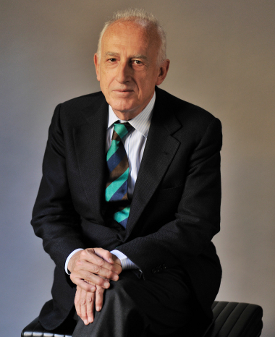
1538879_10152137519852220_1092949528_nWho or what inspired you to take up the violin, and make music your career? 

I originally began my studies on the piano, but I was a very bad student and very lazy in my practice.  One day I saw my piano teacher with a student on her main instrument (the violin) and I fell in love.  Over the following months I constantly nagged to learn the violin and eventually my mother and the teacher gave in.  I took to it very quickly, practiced relentlessly and progressed rapidly.  I never really felt that the violin would be my career (my parents wanted me to be a vet), it was always an obsession.  But when it came to higher education I could think of nothing I’d rather do than play my violin.  After my formal education I was quickly asked to perform both recitals and as a soloist with orchestra and I have continued to do so and love every second of it.

Who or what were the most important influences on your playing? 

Drama and imagery. My pianist Daniel Roberts and I always say the music must not interrupt the drama.  Also I often (and without meaning to) associate the pieces I perform with literature.  For example, I often associate The Lark Ascending with Thomas Hardy.

What have been the greatest challenges of your career so far? 

Performing a chamber recital in a windy concert hall, the music blew closed and the pianist’s page turner had to rescue me (this was also broadcast live).  I have also created my own Orchestra (The WPO) which performed in  February 2014 – this has been quite a challenge.

Which performances/recordings are you most proud of?  

I’m very proud of a recital I gave at Southwark Cathedral with Daniel Roberts: it was the first time we performed the Franck Sonata together and there was electricity to the performance.  I am also proud of my recording of The Lark Ascending.

Do you have a favourite concert venue to perform in? 

I particularly like the sound of St. Brides (Fleet Street) and would like to record there in the future.  I also quite liked performing in the Foundling Museum.  It’s quite a small venue, but seems extremely well suited to chamber concerts with a perfect balance.  I was performing Mozart, and it felt like I had gone back in time.

Favourite pieces to perform? Listen to? 

I change my mind like the weather on my favourite pieces.  But currently it is Brahms Violin Sonata No. 3, Beethoven Violin Concerto and I really love the contemporary composer Nimrod Borenstein’s work.  His latest piece (If you will it, it is no dream) is extremely good.

Who are your favourite musicians? 

Any musician who can give me inspiration.  This would include pianist Daniel Roberts, violinist Leland Chen.  I love the Primrose Quartet and I’m a huge fan of Julia Fischer.  Plus Heifetz.

What is your most memorable concert experience? 

It was actually when I was a child.  I had joined the county youth orchestra (I was accepted younger than the minimum age restriction because of my standard of playing, so I was the youngest and least experienced there).  I didn’t really know too much about the pieces we were playing or the composers.  In fact, I didn’t even know that the inside player turns the pages.  We played this boring piece with very little melody, which I hated.  On the day of the concert a solo violinist stood up and it turns out our ‘piece with very little melody’ was the accompaniment.  The piece (and the playing) was so beautiful that I forgot to play and just stopped to listen.  The piece was The Lark Ascending, and to this day I have a love of Vaughan Williams’ music.

What do you consider to be the most important ideas and concepts to impart to aspiring musicians? 

Love and enjoy every aspect of music.  Enjoy the physicality, enjoy the technique, and enjoy the emotions.  Read about the composers, watch concerts.  Play solo, chamber and orchestral and love the variety of ways we can make music.  Teach others to play.  Listen and appreciate other instruments and styles.  But most importantly always question and always learn.

How do you make repertoire choices from season to season?

As far as repertoire for my chamber music goes, Daniel and I have developed a close friendship over time and are often suggesting pieces that would suit each others playing, the only problem is that we can’t play it all at once. With Concerto and solo repertoire, I often choose pieces that touch me in some way, that I feel a need to perform.

What are you working on at the moment? 

I am working on Delius Sonata No. 3, which I’ll be performing in the Wales Millennium Centre and Anteros Arts Norwich with pianist Daniel Roberts. I’m also working on ‘Autumn’ from the Four Seasons and the Beethoven Violin Concerto but these are more long-range projects.

Which pieces do you think you perform best?

I think it would have to be ‘The Lark Ascending’, though I am pleased with my performances of the Brahms Violin Sonata No. 3.

What is your most treasured possession? 

My most treasured possession is obviously……my violin

Hannah Woolmer is a highly respected violinist with prolific experience as a recitalist.  She has performed in many of the UK’s classical music venues including St. Brides, Southwark Cathedral, Ely Cathedral, Bristol Cathedral, the London School of Economics and the London Festival of Contemporary Music.

Hannah’s performances have been broadcast on radio and 2012 saw the release of her  single ‘Lark Ascending’ which has been distributed on iTunes and with Amazon and reached #14 in the classical download charts.  Hannah also enjoys performing regularly as a soloist and has performed ‘The Four Seasons’ with Baroque Orchestra in London, Southend and Chelmsford, ‘The Lark Ascending’ with the University of Cambridge Philharmonic Orchestra in 2011 and Bruch Violin Concerto in 2012.  

Hannah has performed with conductors Mark Galtry, Patrick Bailey and Jacques Cohen.  She has attended masterclasses and workshops with Bernard Gregor-Smith, John Thwaite, Susanne Stanzeleit and Robin Ireland.  Hannah has a great passion for the tradition of chamber music, and tries to bring aspects of her chamber experience into her solo performance, often resulting in a great rapport with the conductor and an intimacy with the audience very rarely seen in large scale works. 

Hannah’s collaboration throughout 2012 with Ukrainian Pianist Larysa Khmurych was met with critical acclaim.  They toured their recital programme to large scale concert venues, with Bristol and Ely Cathedral standing out as particular highlights in their calendar this year.  They quite quickly made a name for themselves with their fiery and heart-felt performance of Beethoven at the centre of their programme.  Hannah’s most recent collaboration is with pianist Daniel Roberts.  As well as continuing their busy recital schedule together which includes Wales’ Millennium Centre, Southwark Cathedral, the Anglo Japanese Society and The Foundling Museum to name a few.  They are currently recording their debut album together. 

Leon McCawley (Photo credit: Clive Barda)

BEETHOVEN: Sonata in C minor Op. 10, No. 1
MENDELSSOHN: Song Without Words, Op. 38, No. 2 in C minor
MENDELSSOHN: Song Without Words, Op. 19, No. 6 in G minor
MENDELSSOHN: Song Without Words, Op. 30, No. 1 in E flat major
BRAHMS: Two Rhapsodies Op. 79 (No. 1 in B minor and No. 2 in G minor)
RACHMANINOV: 13 Preludes, Op. 32

Leon McCawley, piano

Deep in the heart of Belgravia, just five minutes from Victoria Station, is St Peter’s Eaton Square, an early nineteenth-century neo-classical church which has undergone extension modernisation following a fire some years ago. It is home to Eaton Square Concerts, now in its fifteenth season, which showcases established artists and rising talent.

For the first concert of the Spring 2014 season, Leon McCawley, one of Britain’s foremost pianists, performed works by Beethoven, Mendelssohn, Brahms and Rachmaninov. The concert was introduced by managing director Carl Anton Muller, and Leon McCawley was received most enthusiastically – and indeed throughout the entire evening.

Beethoven’s early piano sonatas should never be dismissed as “juvenilia” – for in them we find a composer already fully conversant with this genre. Many of the early sonatas display characteristics of style, form and expression which prefigure the later, more well-known piano sonatas, and the Opus 10, No. 1 in C minor is no exception. This sonata looks forward to the more famous ‘Pathétique’ with its robust outer movements enclosing a middle movement of great serenity with a beautiful cantabile melody.

McCawley gave an energetic account of the first movement, its dark and angular opening sentence contrasted with a lyrical second subject, the entire movement crisply articulated with fine attention to the string quartet and orchestral writing and startling dynamic changes. The middle movement offered a respite from the darkly-hued outer movements. Scored in warm-hearted A -flat major, it was an opportunity to enjoy some fine legato playing. The final movement was a burst of nervous energy, only just held in check by McCawley, which allowed him to highlight not only the dramatic possibilities inherent in Beethoven’s writing, but also the composer’s wit: the movement ends with a slower coda and a final sentence which is almost a whisper.

In the Songs Without Words by Mendelssohn there was further opportunity to enjoy McCawley’s exceptionally fine legato playing. Beloved of Victorian salons, Mendelssohn invented the concept of the Lieder Ohne Worte, and produced eight volumes of these varied and lyrical miniatures. McCawley’s selection of just three from the Opp 38, 19 and 30 was intimate, expressive and poignant.

Brahms’ Two Rhapsodies Op 79 closed the first half of the evening, McCawley giving free rein to the climactic nature of these works and capitalising on the rich bass sonorities of the piano. It also set the scene for the Rachmaninov which followed after the interval.

Rachmaninov was following the precedent set by Chopin’s Preludes, and his two sets Op 23 and 32 complete the twenty four. In the Op 32 set, Rachmaninov uses four pairs of parallel keys (E, F A and B, major/minor) but no relative keys. Each Prelude opens with a tiny melodic or rhythmic fragment on which the whole is built. Alert to the contrasting and varied nature of these short works, McCawley gave an account that was committed and emotionally charged, highlighting both the expansiveness of Rachmaninov’s writing as well as the interior details of each piece.

What better way to close than with an encore of Schumann’s Traumerei, tenderly delivered.

This was my first visit to Eaton Square Concerts and I was impressed not only with the fine acoustic of the venue, but the high quality music. I very much look forward to attending further concerts at Eaton Square.


Meet the Artist……Leon McCawley (interview from April 2012)

www.eatonsquareconcerts.org.uk

Bach wrote his Inventions as exercises for amateurs and students of the keyboard (including his own sons), as he put it in a preface. The works were intended as an introduction to counterpoint and to demonstrate to the student that both hands could have equal importance in a piece of music.

For many young piano students, these short works are their first contact with Bach’s music and can lead, certainly in my own case, to a lifelong love of Bach’s music, in particular his keyboard music. They offer a wonderful introduction to contrapuntal writing and Bach’s musical wit and inventiveness, and offer valuable insights for further study of works such as the Well-Tempered Clavier, the Partitas and the French and English Suites. In spite of all this, these minor miracles are rarely performed in concert.

Simone Dinnerstein’s new recording for Sony Classical of the Inventions (BWV 772-786) and Sinfonias (BWV 787-801) makes a convincing case for the elevation of these works from student studies to concert pieces, for her reading is anything but dry and academic. While they may be all about form (as distinct from the Partitas and French and English Suites which are dances), Dinnerstein brings vibrant colour and life to these modest works, highlighting their individual characteristics and differences through the sensitive use of tempo, articulation and rubato. Some are sprightly and open-hearted, others introspective and thoughtful. Throughout, her tone is pure and bright, her interpretation honest and unfussy, allowing the beauty of Bach’s writing – and, at times, his modernity – to shine through. In the Sinfonias, with their three-voice writing (sometimes called “three-part inventions”), the sound is richer, more textural, warm but with no loss of clarity. The final Sinfonia, in B minor, is fleeting and witty, with the ghost of a harpsichord in the resonance and strummed sound which Dinnerstein brings to this work. No longer student exercises, Dinnerstein turns these short works into album leaves to be enjoyed and savoured.


Image
Bobby Chen (photo credit: Sussie Ahlburg)

Who or what inspired you to take up the piano and make it your career? 

When I was 7 years old, my parents moved into a new neighbourhood in a satellite town in Kota Kinabalu, Sabah, Malaysia, and I heard some piano sounds coming from just across the street. I went over, met the lady, had a few informal lessons with her, and felt fascinated by the piano. I never had proper lessons with her, but the fascination remained.

Who or what were the most important influences on your musical life and career? 

Firstly, my parents, who had introduced me to the gift of the music and piano. Second, my first teacher in Kota Kinabalu, who played me a recording by Glenn Gould, and travelled overseas with me for extra tuition. Third, to Geoffrey Smith, who was the Regional Consultant in charge of South-East Asia for the ABRSM in 1991, he suggested that I audition for the Yehudi Menuhin School, and guided me through that process. Lastly, my teachers in the UK, who were Ruth Nye, Hamish Milne and Nikolai Demidenko.

What have been the greatest challenges of your career so far? 

I can find it easy to lose focus, and to not push myself 100%. This can make me fall away slightly in my pursuit when trying to understand certain works and ways of playing.

Which performances/recordings are you most proud of? 

I remembered very fondly: a) touring Britain with Lord Menuhin and the Beethoven Triple Concerto in 1996; b) making my Italian debut recital at the Fazioli Hall in Sacile, Italy in 2011; c) performing at my 4th solo recital at the Wigmore 2011; d) recording an all Prokofiev solo disc for SOMM Recordings in 2009; e) as one of the pianists in the first ever complete Beethoven sonata cycle for South-East Asia in 2008. Also, I am also very proud to have organize my first winter piano course, taking place at the Yehudi Menuhin School. So these were some of my favourite moments!

Which particular works do you think you play best? 

Recently, I have been working a lot on Prokofiev’s piano music. Also on Debussy and Schubert.

How do you make your repertoire choices from season to season? 

If I play Prokofiev in season 2012-13, it is because in 2010, I started to find his music increasingly fascinating. I find it lovely to explore works in this way.

Tell us a little more about your duo partnership with Douglas Finch. What are the particular pleasures and pitfalls of playing duo repertoire? 

I got to know Douglas many years ago, when I started to play his works. In 2010, I invited him to come to my winter piano course at the Yehudi Menuhin School. After performing a complete Liszt programme with Leslie Howard at the Wigmore Hall in 2011, Douglas and I struck up a piano duo partnership.

With 4-hands, the entire keyboard register can be used, the instrument transformed into this amazing orchestra, with exciting possibilities! One major pitfall is that any minute lapses of concentration from one player can be glaringly exposed!

Do you have a favourite concert venue to perform in and why? 

I love playing at the Wigmore Hall, the intimacy there is unique. Also Fazioli Hall, so state-of-the-art, and a gorgeous piano there.

Favourite pieces to perform? Listen to? 

This season, performing Prokofiev’s and Debussy’s piano music. I love listening to Fischer-Dieskau singing Bach. I love watching ballet at the Royal Opera House.

Who are your favourite musicians? 

Dietrich Fischer-Dieskau and Ferruccio Busoni.

What is your most memorable concert experience? 

Bernard Haitink and the Berlin Philharmonic live at the Proms in 2011. Incredibly awe-inspiring.

What do you consider to be the most important ideas and concepts to impart to aspiring musicians?

To stay true to your art, and to find all sorts of ways in order to fulfil your musical/artistic ambitions.

What are you working on at the moment? 

I am currently learning the Sonatine by Ravel, Impromptus Op.142 by Schubert, and revising the 4 Chopin Ballades.

Where would you like to be in 10 years’ time? 

Performing music in public.

What is your idea of perfect happiness? 

Spending time with family and good friends.

What is your most treasured possession? 

My teapot.

What do you enjoy doing most? 

I love watching films in cinema, going to concerts and chatting with interesting people.

What is your present state of mind? 

Fairly good, I think! Although a bit Prokofiev-ian.

Bobby Chen performs duo piano works with Douglas Finch as part of the Bristol International Piano Duo Festival, 7 March 2014, at the University of Bristol. Full details here

Described by International Piano Magazine as: “…an armour-clad player of complete technique,  a thinking musician, a natural Romantic. Young bloods come no better”, Malaysian pianist Bobby Chen studied at the Yehudi Menuhin School and the Royal Academy of Music with Hamish Milne and Ruth Nye. He burst on the scene in 1996 with a sensational season of concerts, which included a British tour with Lord Menuhin in a performance of Beethoven’s Triple Concerto and a recital at the Royal Festival Hall as part of the South Bank Prokofiev Festival.

Chen has performed under conductors Lan Shui, Mathias Bamert, Maximiliano Valdés, Sir Neville Marriner, Pierre-André Valade, Giancarlo Guerrero and with several orchestras including the Academy of St Martin-in-the-Fields, Malaysian Philharmonic Orchestra, Warsaw Sinfonia, Singapore Symphony Orchestra and the London Sinfonietta.

In recent seasons, venues Chen has played in included Beijing’s Forbidden City Concert Hall, Dublin’s National Concert Hall, Singapore’s Victoria Concert Hall, Italy’s Fazioli Hall, Holland’s Hermitage Amsterdam, Poland’s Antonin Palace, Hong Kong’s City Hall, Malaysia’s Petronas Twin Towers, UK’s Purcell Room, Bridgewater Hall, Royal Concert Hall, Cadogan Hall, and Wigmore Hall. He has performed under the special auspices of Australia’s Southern Highlands International Piano Competition, at Brazil’s Musica Nova Contemporary Music Festival, Sweden’s Lidköping Music Festival, Ireland’s Music for Wexford and Wicklow Arts Festival, UK’s Worcester Three Choirs Festival, Guildford International Music Festival and Marlborough College Summer School. He has recorded six commercial discs, and broadcast live for UK’s Classic Fm, Hong Kong’s Radio Television Hong Kong and USA’s Pianoforte Chicago.

Chen was awarded ‘The BrandLaureate – Country Branding Award’ from The Asia Pacific Brands Foundation, appointed a tutor at UK’s Chethams International Piano Summer School, elected an Associate of London’s Royal Academy of Music (ARAM), and runs the Overseas Malaysian Winter Piano Academy (OMWPA) at the Yehudi Menuhin School.