Who or what inspired you to take up the accordion, and make it your career? 

After beginning piano lessons at the age of eight, my initial interest in the accordion came from hearing Scottish traditional music and one day I just walked past the local music shop and decided that I would like to begin learning the accordion. A few years later I attended a concert given by the Russian accordionist Oleg Sharov who is professor of accordion at the Rimsky Korsakov Conservatoire in St. Petersburg. A whole new world of possibilities was opened to me as I realised that the accordion could also be a serious classical instrument.

Who or what were the most important influences on your musical life and career? 

My father was a professional violinist and so I was immersed in classical music whilst growing up – his well honed performance skills and immense knowledge of repertoire, both orchestral and solo motivated me to focus on music as a career. I was very lucky to study with the Serbian teacher Dr Djordje Gajic, one of the most accomplished and inspirational performers I have met.

What have been the greatest challenges of your career so far? 

The classical accordion is still a very unfamiliar concept to many people, who tend to think of the accordion as purely a folk instrument. I have worked hard to promote it’s diverse repertoire and bring it onto the concert platform as an equal with other instruments.

Which performance/recordings are you most proud of?

As an undergraduate at the Royal Conservatoire of Scotland, I gave a recital which won me the Governors Recital Prize for Keyboard – a competition which was completely dominated by pianists, and this helped to raise the profile of the accordion within the Conservatoire.

In February 2012 I performed what I believe was the first solo accordion recital in Manchester’s Bridgewater Hall, as part of the Manchester Mid-Day Concert Series which was a great privilege.

Do you have a favourite concert venue to perform in and why? 

The Bridgewater Hall would have to be one of my favourite venues due to its wonderful acoustics which allow the sound of the instrument to fill the hall, but maintain pure clarity of tone. I have also greatly enjoyed performing in the beautiful setting of cathedrals such as Peterborough, Ripon and San Francisco.

Favourite pieces to perform? Listen to? 

I enjoy performing baroque works such as Bach and Scarlatti as they transcribe very nicely onto the free-bass accordion. ‘Romance’ by Franck Angelis is a contemporary work which allows the listener to descend into pure tranquility and is another of my favourite pieces to perform.

I listen to a wide range of music and have become fascinated with Tango – Astor Piazzolla took the genre from the dance halls to the concert stage and I am a founder member of the Scottish Tango Ensemble. Listening to the music being performed live by the Tango Orchestras on a visit to Buenos Aires in 2010 was an amazing experience.

Who are your favourite musicians?

There are so many to choose from, but I admire the playing of Alexander Skylarov and Mika Varynen and I very much enjoy listening to the recordings of Horowitz as his musical mastery shines through.

What is your most memorable concert experience? 

This would have to be attending a concert of the Halle Orchestra conducted by Sir Mark Elder in a performance of Berlioz’s ‘Symphonie Fantastique’ in Manchester. He brought it alive in a terrific way, conjuring up such vivid images with the music.

As a performer sometimes the more intimate venues can be some of the most rewarding, and when in California earlier this year I gave a concert in Santa Cruz public library. Almost all of the audience were completely new to the concept of classical music being played on the accordion and had no idea what to expect. I began with Bach’s famous Toccata & Fugue in D Minor, and they were completely engrossed. A huge number of the audience came to speak to me afterwards and were astounded by the repertoire and possibilities of the instrument and it was humbling to hear their kind comments.

What do you consider to be the most important ideas and concepts to impart to aspiring musicians? 

Trying to understand what the composer is really trying to convey in his music so that we can interpret it, taking into account things such as their influences, religious beliefs, emotional state. Just as an actor would get into character, as musicians we must do the same in order to fully engage with music and convey its message to the audience. I believe that the use of mental imagery is a great tool as the associations it creates, help to shape the performance and project it to the audience.

Being focussed and efficient in practise is essential, as is an understanding of the business and promotional aspects of being a musician so that they come out of music college knowing how to actually find and make work for themselves.

What are you working on at the moment? 

I am currently working on some repertoire for a new CD to be released in July, which will include full transcription of Weber’s ‘Concertstuk’ as well as Piazzolla’s ‘Grand Tango’ for violin and accordion.

What is your idea of perfect happiness?

My idea of perfect happiness is being able to balance professional and personal life so that my practise time and performance schedule allow me to spend quality time with my wife and young daughter.


Paul Chamberlain’s new album ‘Accordion Sensations’ is released on 1st July. Further information and soundclips here

Paul Chamberlain was one of the first classical accordionists to graduate from the Royal Conservatoire of Scotland in Glasgow, where he studied with Djordje Gajic. He completed a BMus (Hons) degree and subsequently graduated from the conservatoire with a Master of Music Performance with Distinction.Whilst studying there he was awarded the acclaimed Governors Recital Prize for Keyboard, and was also one of the keyboard section finalists in the 2011 Royal Overseas League competition. Paul  is a highly accomplished player with appearances at international music festivals such as Baltica Harmonica in St. Petersburg – Russia, Sata-Häme Soi Accordion festival in Ikaalinen – Finland, and the world famous Edinburgh Fringe Festival, held annually in Scotland. He has also performed in France, Italy, Greece, Bahrain and the USA. In February 2013 he undertook a very successful tour of concerts around the UK and California which included his Bridgewater Hall debut with a solo recital as part of the long established Manchester Mid-Days concert series.In 2011, Paul released his debut solo album entitled “Classical Accordion” featuring a mixture of transcriptions of works by J.S. Bach, Rameau, Moszkowski and Khachaturian, as well as original works by Alexander Nagayev and Franck Angelis.He has also performed with the Paragon Ensemble as part of their “Travelling Home” concert celebrating their thirtieth anniversary, with the Scottish Opera Connect orchestra, and is a founder member of the Scottish Tango Ensemble.Paul has been featured on BBC Radio 3’s ‘In Tune’ programme with Sean Rafferty, performing live in the studio, BBC Radio Scotland’s ‘Classics Unwrapped’ and California’s KDFC Classical Music Radio Station in San Francisco.

Paul Chamberlain’s website


What is your first memory of the piano? 

A dark black shiny upright in my parents living-room that I couldn’t stay away from. Never mind dolls and toys…..this became the most irresistible, exciting, time-consuming and total love of my earliest years

Who or what inspired you to start teaching?

I’ve always loved people and helping/ sharing: even as a child if I learned something myself – my joy was to share it with others, in order to derive complete enjoyment and satisfaction from it.

Who were your most memorable/significant teachers? 

I was lucky with my teachers throughout: firstly, my earliest teacher (an unknown German lady called Else Schumann) inspired me, through her belief in my talent (I was 10 or 11 years old) and her encouragement of my natural gifts. Then, the wonderful Sidney Harrison who selected me (from those auditioning for the Junior Department at GSMD) to study with him, from the age of 11, and who continued to boost my confidence with his encouragement and delight in my abilities. Finally, the significance and importance of the legendary Greek pianist, Gina Bachauer, my mentor and “musical mother” and my beloved Ilona Kabos (the distinguished Hungarian teacher to so many of the great pianists) from the age of 15, who changed my way of thinking, attitude, and started me on the “road to artistry”. I also spent a wonderful six months in Paris, concentrating on French music with another legendary figure, Jacques Fevrier. Altogether the strongest and best influences one could ever hope for.

Who or what are the most important influences on your teaching? 

I think my work with Ilona Kabos planted the seeds from which my own “methods and ideas” grew: the importance of sound, understanding the depths and possibilities, the keyboard has to offer and how vital is stylistic awareness.

Most memorable/significant teaching experiences?

All my teaching experiences have brought their own memorable and significant moments……but, I think (in terms of working with great young talent) the years of teaching for the Horowitz Foundation, in Kiev, Ukraine have been the most exciting and rewarding.

What are the most exciting/challenging aspects of teaching adults?

If you mean, late beginners……. I have not much experience in this area but, would be fascinated by the challenge of dealing with the physical problems that may hamper the speed of learning to “make music”!

What do you expect from your students? 

A huge sense of responsibility to serve the music, at all times.

What are your views on exams, festivals and competitions? 

Wonderful experience, if dealt with correctly………from an emotional/psychological standpoint.

What do you consider to be the most important concepts to impart to beginning students, and to advanced students? 

I repeat, that all we do has to serve the music………i.e. that every technical problem, ceases to be that, if making sense of and finding the spirit of the music, is the goal. Obviously, with beginners an understanding of how the hands and keyboard connect, and the raison d’etre, is vital.

What are your thoughts on the link between performance and teaching? 

Again, vital! I do believe it is imperative to have an understanding of what it means to perform, at a certain level, before one can deal with the problems the would-be-performer has to face. Also, it is only when one has prepared oneself at the highest level can one understand how to help prepare another.

How do you approach the issue of performance anxiety/tension? 

Very difficult and requires much thought and understanding of the student’s mentality and personality. Everyone is different and these different problems have to be dealt with, accordingly.

Who are your favourite pianists/pianist-teachers and why? 

I adore Murray Perahia and, on the odd occasions, when I’ve heard him teach……..I adore his logic and humanity. I’m sure, my idol, Grigory Sokolov, would make a fantastic teacher (if he were to have the time and desire!) as his understanding of sound quality/ quantity, is second to none.


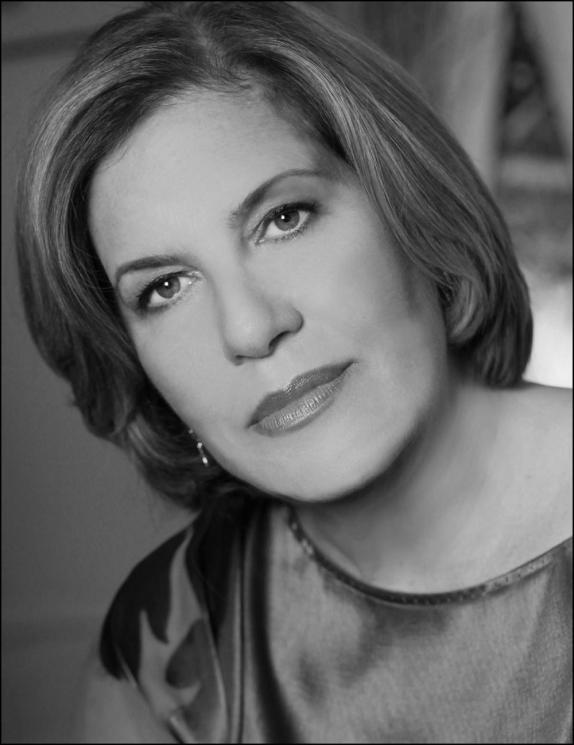
Norma Fisher will be teaching at London Master Classes 2014 Summer Master Course, July 8 -13 at the Royal Academy of Music and Purcell Room, Southbank Centre, July 8-13 www.londonmasterclasses.com, Accademia J.S.Bach, Sardinia, July 19-29 2014, and MusicFest Perugia, Italy, August 2014 

Norma Fisher is acclaimed internationally as one of the UK’s leading pianists and teachers.  As a child she was recognised as ‘a rare musical talent’ winning an exhibition, at the age of eleven, to study with Sidney Harrison at the Guildhall School of Music.  At the age of fourteen she came to the attention of the celebrated Greek pianist Gina Bachauer who became her mentor, introducing her to the distinguished Hungarian teacher IlonaKabos, with whom she subsequently studied. A period was also spent in Paris studying French music with Jacques Fevrier. 

Her many, highly acclaimed, early performances for the BBC led to an invitation by the German radio station RIAS, in Berlin, to make her debut with the Berlin Symphony Orchestra – which launched her career in Europe. Success in the Busoni International Piano Competition as a top prize-winner followed and in 1963, when she shared the much-coveted Piano Prize in the Harriet Cohen International Music Awards with Vladimir Ashkenazy, her international reputation was sealed.  That same year she made her debut at the Proms in the Royal Albert Hall and became a favourite soloist with leading British orchestras including the London Philharmonic, Philharmonia, London Symphony, Royal Philharmonic, BBC Symphony, Hallé, Bournemouth Symphony, and the City of Birmingham Symphony orchestras. 

Norma Fisher is known for her versatility as a performer, receiving recognition worldwide as one of Britain’s leading pianists. This versatility extends to chamber music, which she plays with leading musicians throughout the world.  Her early relationship with the Dartington, Allegri and Delme String Quartets led to a much sought-after partnership with the Stamic Quartet of Prague, both in the UK and the Czech Republic. She has also performed regularly with the International Chamber Ensemble of Rome, Carmina Quartet and Reykjavik Wind Quintet and partnered such well known soloists as Stephanie Gonley, Alan Hacker, Maurice Hasson, Emanuel Hurwitz, Ralph Kirshbaum, Steven Isserlis, Peter Lukas Graf, GyorgyPauk, Hu Kun, Sylvia Rosenberg, GrigoriZhislin, Yossi Zivoni and singers Benjamin Luxon, Sherrill Milnes, Nelly Miricioiu and Sir John Tomlinson. 

Her reputation as a teacher is widely established and many of her top prize-winning students are well known on the international concert circuit. She is aProfessor of Piano at the Royal College of Music and a Fellow of the Royal Northern College of Music.She is invited to give masterclasses throughout the world and has taught at the International Musician’s Seminar at Prussia Cove, UK, the International Summer Academy in Lenk, Switzerland and the Horowitz Foundation Summer Music Academy in Kiev, Ukraine, amongst many others. She is regularly invited on the Jury of leading international piano competitions including Gina Bachauer (USA), Horowitz (Kiev, Ukraine), Joanna Hodges (USA), Boston Grand Amateurs (USA), Newport (Wales), Sydney (Australia), Tbilisi (Georgia) and Virginia Waring (USA),  

She is the Artistic Director of London Master Classes (www.londonmasterclasses.com) whose courses attract major talent from around the world to work intensively with top performers/teachers in London. London Master Classes 2014 will celebrate 26 years of offering these prestigious events. 


Brighton-based actor, singer, writer, dramaturg, director and trainer, Emma Kilbey brings vividly to life Ayn Rand,  American novelist, philosopher, playwright, and screenwriter whose questionable beliefs still resonate strongly today.

Emma Kilbey

The play, written and performed by Emma Kilbey, will explore why Rand’s beliefs, including her philosophical system of objectivism, still resonate today, and the  impact of a powerful life lived without empathy.

The drama attempts to crack through the Russian-doll layers of this self-styled individualist, author and philosopher.

Expect thorny issues, heartbreak, humour and accents.

Emma introduces ‘The Ayn Lady’ here

‘I have seen many finished pieces that were much less cleverly constructed and consistently enjoyable than this. The company managed to give a lesson in both history and economics without ever falling into boring or hectoring the audience. The scenes from Rand’s life cleverly indicated where her “all about me” philosophy ends up, and the introduction of more contemporary quotations (Boris, Thatcher et al) made it plain that Rand’s insouciance about inequality and the most vulnerable in society not only persists but very much continues to inform the political debate.’ 

Ferment audience comments.

‘The Ayn Lady’ is a part of Ovalhouse’ FiRST BiTES series of new performance pieces, currently in development and presented as work-in-progress showings.

‘The Ayn Lady’ is at Ovalhouse, London SE11 from 2 – 5 July. Full details and tickets here

Penny Woolcock’s visually arresting “The Pearl Fishers” returns to the Coliseum in London in a revival of the 2010 English National Opera co-production with the Metropolitan Opera of New York.

The original production was praised for its stunning effects and staging, and this updated production proved mesmerizing, beginning with a beguiling underwater sequence in which pearl fishers, viewed through a gauzy screen, dive and swim, digitally-generated air bubbles trailing their lithe, fluid bodies (in fact, actors suspended on harnesses). When the curtain goes up, the scene is an exotic Ceylonese shanty town: rough wooden houses crowd higgledy-piggledy around the shoreline, tiny lights prick the early morning sky, telegraph cables sag between the buildings, and a cleverly conceived reflective surface across the entire stage creates the sense of water. The villagers gather around the ghats, dressed in sarongs, dhotis and saris in turmeric and paprika colors, and go about their business — hanging out washing, bathing, cooking at the water’s edge, gossiping. You can almost smell the masala dosas frying.

In later scenes, the houses have gone, leaving the glittering ocean across which a fishing boat glides. The illusion of waves is created through ingenious lighting effects and air-filled pillows, set low on the stage, which billow and swell like the sea. Longer scene changes are made behind the gauzy screen onto which are projected images of waves, including an impressive tsunami between Acts II and III.

Leila (Sophie Bevan) arrives (photo credit: ENO / Mike Hoban)

Bizet finished “The Pearl Fishers” in 1863, a year after Ingres painted “The Turkish Bath,” when Europe was gripped with a fervor for Orientalism, the term used by 19th-century Western scholars and artists in their study of Eastern cultures and peoples. At the time, the East was regarded as highly exotic — and erotic — and “The Pearl Fishers” resides in this tradition, with its recreation of an imaginary geography inhabited by ignorant, superstitious people who engage in transgressive sexual practices. The narrative is the age-old love triangle, with the added frisson of friendship, loyalty and religious observance.

In fact, Bizet’s opera is rather thin, particularly in comparison to his much-loved, vibrant “Carmen.” The libretto borders on cringe-making, and in this production unfortunately more than highlighted by the fact that it is sung in English and the language doesn’t always sit comfortably with the phrasing and shape of the music, as it surely would if sung in French. Apart from the famous aria (of which more later), there is little to hold the attention, musically, and while others might highlight inventiveness and variety in Bizet’s writing, this reviewer found it wanting, with Act III verging on turgid. Added to this, the characters are wooden and the narrative hardly believable. But of course, “The Pearl Fishers” is saved by the glorious tenor-and-baritone duet “Au Fond du Temple Saint” in Act I (with fragments and reprises in subsequent acts), whose sweepingly romantic melody stays with you throughout, and long after you have left the opera house, a pleasing earworm which will have you humming on your commute to work. On this occasion, what should have been a voluptuous celebration of friendship and unrequited love lacked conviction and depth: this was the first night and one hopes that as the singers (George von Bergen and John Tessier) settle into their roles, the richness of this great aria will come to the fore.

Soprano Sophie Bevan, making her role debut as Leïla, Priestess of Brahma, was a delight. Arriving by boat, veiled and submissive, her palms pressed together in obeisance, she proved a charmingly winsome and flirtatious Leïla, and full credit must go to Bevan for singing the role so arrestingly while recovering from a bug. By comparison, Zurga, sung by von Bergen, was underplayed, given his role (again one hopes his character will develop over forthcoming performances), but Nadir (Tessier) was more convincing, torn between his friendship with Zurga and his passion for Leïla. An attempt, via the setting, to comment on global warming and developing-world poverty seemed overly worthy and self-conscious, and an amused nod to the exigencies of Indian bureaucracy in the Act III scene in Zurga’s “office,” piled high with friable papers and bulging ledgers on rusting filing cabinets, felt unnecessary.

But if the music doesn’t always hold your attention (and all credit to the orchestra, whose muscular playing contributed much-needed vibrancy, together with some fine chorus singing), the visual effects will, along with the costumes: Nourabad, the High Priest of Brahma, could have stepped straight off a sculptural frieze on a South Indian temple, with his sadhu’s ash-smeared body, draperies, dreadlocks and top knot. Worth seeing if only for the arresting and finely wrought visual effects and staging.

The Pearl Fishers continues in repertory at ENO.

Date reviewed: Monday 16th June 2014.

Leïla, Sophie Bevan; Nadir, John Tessier; Zurga, George von Bergen; Nourabad, Barnaby Rea; Director, Penny Woolcock; Conductor, Jean-Luc Tingaud; Set Designer, Dick Bird; Costume Designer, Kevin Pollard; Lighting Designer, Jen Schriever; Video Designer, 59 Productions Ltd; Choreographer, Andrew Dawson; Translator, Martin Fitzpatrick. English National Opera, London Coliseum 

(This review was first published on CultureVulture.net)
