
Music education, particularly for young children in state primary school, and beyond, has been the subject of much debate in recent weeks, not least because of a new initiative and accompanying TV series Don’t Stop the Music headed by pianist James Rhodes, and the publication of a report on music education by the Associated Board of the Royal Schools of Music (ABRSM). While the ABRSM report highlights increased access to music tuition amongst schoolchildren, James Rhodes’ tv series presents a much bleaker picture of little or no funding, woefully inadequate provision for music lessons in the state school sector, and untrained teaching staff. His campaign, Don’t Stop the Music aims to right these wrongs, and, working in conjunction with Oxfam and Yodel, the courier company, Rhodes is asking people to donate unwanted and unused instruments so that schoolchildren across the UK can have the chance to play an instrument, join a school orchestra and generally experience the joy and wonder of making music. This is all very laudable – and there is no doubting Rhodes’ passion and commitment (akin to Jamie Oliver’s campaign to reform school dinners) – but without the trained staff to teach the children how to play these instruments, the project may not be as successful as Mr Rhodes hopes, which would be a great pity.
I don’t want to dwell too much on this subject as my knowledge of music education in school is based largely on my own experience at school in the 1970s and 80s, but I would like to offer some of my own thoughts and observations on the value of music tuition, based on my experience over the last 8 years as a private piano teacher.
But first, a little background as to how I arrived at my current career path. I was very fortunate when I was growing up to be surrounded by music: at home my parents listened to Radio 3 and classical and jazz LPs. I was encouraged to begin piano lessons around the age of 6 and although I remember being quite bored a lot of the time with my first teacher, I can still recall the pleasure that came from being able to sit at the piano and play for my own enjoyment and to escape into my own fantasy world that was music. In addition, my parents took me to many concerts and operas. At senior school, I had an inspiring music teacher who took me through O- and A-level music, and who led the senior choir, orchestra, madrigal group and baroque ensemble with great energy and enthusiasm (he retired quite recently, having remained at the school for nearly 30 years). Alongside this, I had a very good private piano teacher with whom I learnt fast. Music was part of my day-to-day landscape, at home and at school. In fact, it seemed to be everywhere in my life. Looking back, I now realise that I was very privileged to be surrounded by music and to be encouraged in my music by supportive parents and music teachers. What I enjoyed was very much the preserve of a comfortable middle-class upbringing, but I do not believe that music and music lessons should only be the exclusive preserve of the better off.
Fast forward 30 years, and now I am involved in music education, in a tiny way, as a private piano teacher in an affluent area of south-west London. I didn’t choose this profession (I worked for 10 years in art and academic publishing and bookselling before I had my son); rather it chose me when I was approached by a friend to teach her daughter. At the time, I had no great desire to become a piano teacher, but I quickly grew to enjoy the job because it gave me an opportunity to share my passion for the piano, a passion that had been reignited after a long period in hibernation while I was busy working in London, getting married and having my son. And I could work from home.
Children in the leafy suburbs where I live now are very lucky indeed – as lucky as I was when I was growing up in an affluent part of Hertfordshire in the 1980s. In addition to excellent state and private schools, they have parents who are interested and keen to invest in their children through extra-curricular activities, and piano lessons take their place alongside tennis, French, Kumon maths, judo, gymnastics, horse riding and much more. The children who attend private schools in the area have access to fantastic music facilities (Hampton Boys’ School, for example, has a new purpose-built theatre/concert hall, complete with a Steinway D grand piano), and even those at state school receive good music tuition in class and via visiting peripatetic instrumental teachers.
So why is music so important? For me, music, of all the arts, puts us in touch with what it means to be human. I suspect we were drumming on the floor of the cave with sticks long before we started painting on the cave wall, and we are driven by an internal drumbeat, if you will – our pulse. Music (and indeed all the arts) is important in broadening our horizons, both culturally and socially.
The benefits of learning a musical instrument are well-documented and I have observed many of them at close quarters through my teaching and my own recent studies when I returned to piano lessons as an adult. One of the key benefits is building confidence, and I’d like to illustrate this with an anecdote about one of my students, who I’ll call Jane.
Jane came to me as a complete beginner about five years ago. At the time, her mother decided to have lessons as well, to help support her daughter. Jane was a very timid child (until very recently her mother would sit in on her lessons), but obviously bright and keen to learn, and she progressed quickly. I was impressed by her determination to learn notation, musical terms and signs, and the “language” of music without much input from me during lessons, and by the time she took her Grade 1 exam, it was clear that she was developing into a rather fine young musician. Despite her shyness and anxiety, she would perform in my student concerts and was rewarded with a special prize at one of the concerts. This endorsement of what she could do, from an independent observer (a teaching colleague of mine), together with a high merit for her Grade 1, signaled a wonderful transformation in Jane and she quickly grew noticeably more confident, eager to progress to Grade 2. Meanwhile, her playing was showing great poise, sensitive sound, and a solid musical understanding. It was no surprise to me when she achieved a Distinction for her Grade 2 exam earlier this year, around the same time as she gained a place at a prestigious local grammar school. This week she came for her first lesson after the summer holiday – she literally ran in the door and was at the piano and ready to play before I had time to ask her about her summer break. And she played beautifully.
I would not dream of taking all the credit for Jane’s new-found confidence, but I have no doubt that her piano lessons have contributed to this in no small way, and I have seen other students make similar strides in confidence and self-esteem as a result of their music lessons.
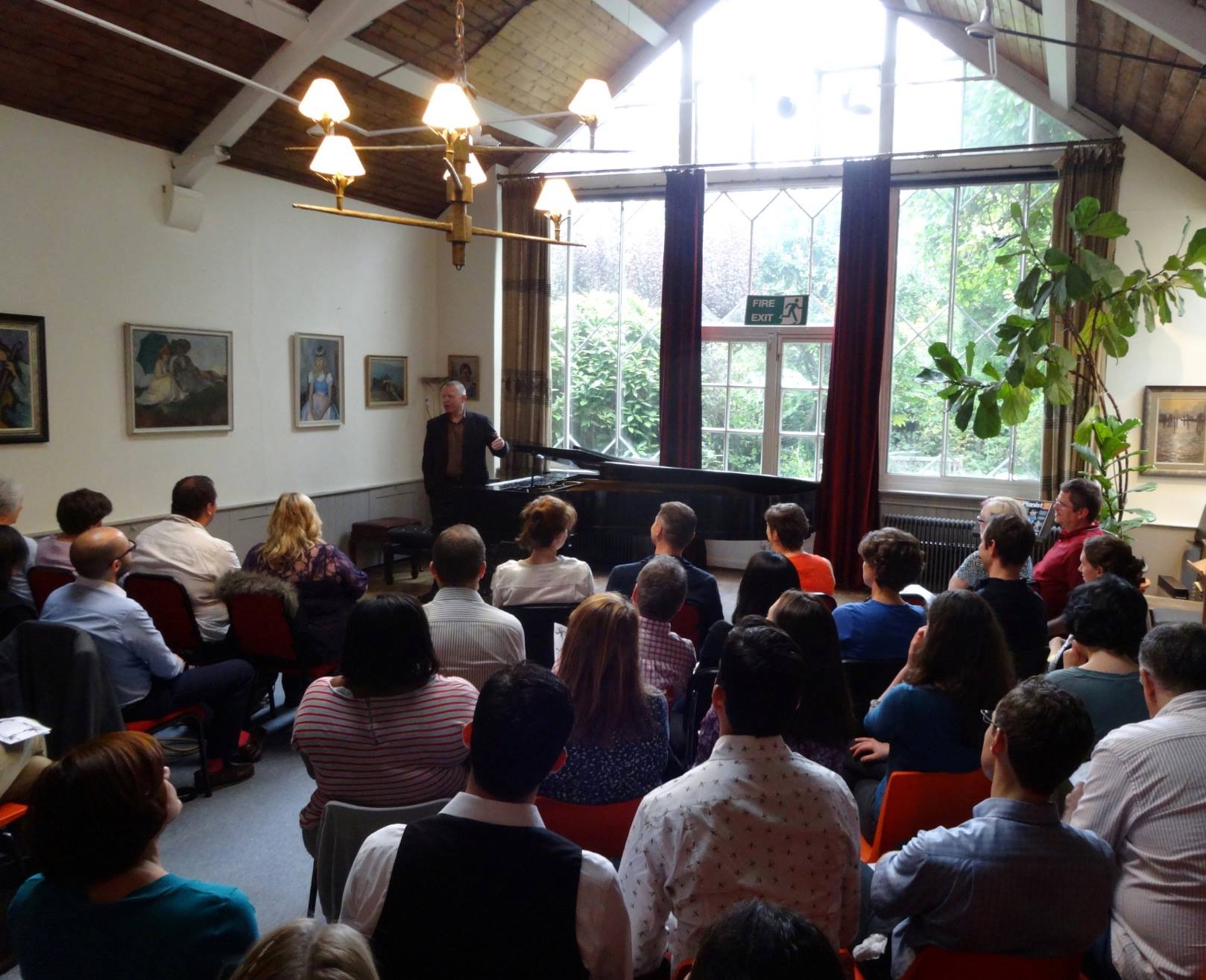
Learning a musical instrument equips us with important life-skills. If you can perform in a student or school concert or a public music festival, you can also stand up before a room of people and give a paper at a conference. Music stimulates brain function and can improve memory, cognitive and motor skills, concentration, time management and organizational skills, and creative thinking. Playing an instrument is both stimulating and therapeutic, as the physical activity of playing releases the same “happy hormones” (endorphins) which sportspeople enjoy. Learning and playing a musical instrument fosters self-expression and relieves stress, and can also bring a deep sense of fulfillment and personal achievement (I have observed this many times in recent months when hosting events for the London Piano Meetup Group). Meanwhile, playing in an ensemble, orchestra or band, or singing in a choir, offers a wonderful sense of a shared experience while also encouraging team building, sociability and cooperation. For children with special needs or learning difficulties such as dyslexia and ADHD, music can offer an important outlet and allow them to shine when they may be struggling in other areas of their school life.

We need music, and we need committed, skilled and enthusiastic people to encourage and train the next generation of musicians and to foster an appreciation of and excitement in music, whatever the genre. The devaluing of music, along with the other arts, by former education secretary Michael Gove, was an outrageous attack on a crucial aspect of our cultural landscape and heritage, and music and arts education is still not safe in this government’s hands.
We need music. Support music in schools, music hubs, local ensembles, national orchestras. Encourage your children to learn music, sing in a choir, join a band, form their own band, go to concerts, talk to musicians. Write to your MP and urge him or her to take music education seriously. Listen, engage, and above all enjoy. Please.
Don’t Stop the Music – a response from My Music Classroom
Don’t Stop the Music – Starting on the Wrong Note?
Look to the Informal – Abigail Amore








 The Cross-Eyed Pianist